SteamyTea
-
Posts
23863 -
Joined
-
Days Won
200
Everything posted by SteamyTea
-
One of these, £112 https://www.amazon.co.uk/Machine-Automatic-Cordless-Rechargeable-Electric/dp/B07TN6QL26?psc=1&SubscriptionId=AKIAILSHYYTFIVPWUY6Q&tag=duckduckgo-brave-uk-21&linkCode=xm2&camp=2025&creative=165953&creativeASIN=B07TN6QL26
-
But he probably already assumed that there was something wrong, He should have done the heat calculations first, then based on that, looked for evidence. (he may have, but my experience of dealing with ecology students is that they assume that 'man' will change everything for the worse, and the food chain will always collapse)
-
If you know the maximum power of the windfarm, the length, diameter, resistance and specific heat capacity of the cable, then look at the conductance to the round, you should be able to get a figure.
-

How can I draft proof this kitchen cabinet?
SteamyTea replied to H F's topic in General Self Build & DIY Discussion
Just ask for a smart meter to be fitted, they will be out like a shot. -
Always worries me when I see something mistypes. (I am the master at mistyping, I do it all the time)
-
How can I draft proof this kitchen cabinet?
SteamyTea replied to H F's topic in General Self Build & DIY Discussion
That looks like an old meter, they are meant to be changed every 20 years I think. What are the chances of moving it a bit, would it help. -
Wholesale pries have dropped recently, so current fixed deals may not be the best. Should have an update from OFGEM about new pricing soon.
-
Rust Removal Adventures: Electrolysis, Acid etc
SteamyTea replied to Onoff's topic in Tools & Equipment
True. It really is amazing how well the bodies last these days. Last 'rusty' car I had was a Merc C class from about 20 years ago. Thankfully it was a company car. -
Power consumption, summer?
SteamyTea replied to JamesJJJ's topic in Mechanical Ventilation with Heat Recovery (MVHR)
It is following a log curve, which is probably correct. Power needed to move air via a fan follows a cube law, multiplied by the efficiency. The efficiency is set by Betz Limit. -
Would do me a treat, I may have to look at it. I can easily charge everything up in 4 hours. I suspect that the rate won't apply for a second year.
-
You still using an abacus. Very modern. They have a new system that uses two sliding sticks. Better than putting notches in a twig.
-
Did anyone do any paperwork this weekend then?
-
Won't they just say they cannot supply at the price? They could just refund any advance, or go bust. There may be cheap windows to be picked up at bankrupcy auctions. As windows seem to give so much trouble, should they not be made second, after the foundation, then build the walls around them?
-
I built a new house today...
SteamyTea replied to NSS's topic in General Self Build & DIY Discussion
Where they cleaning up the food waste in St. Pauls? -
I built a new house today...
SteamyTea replied to NSS's topic in General Self Build & DIY Discussion
Because they get poisoned when they eat Great Crested Newts. I see lots of badgers 'sleeping' on the side of the roads. When I worked in London, my Sales Manager had to pick me up as we were going to the very exciting plastics show at NEC. I told her to drive up the M40 to High Wycombe, wiggle though the town and take the road past Hughenden Manor, turn right by the pub, then left at the end of the road towards Chequers Estate. Eventually you find Aylesbury. She was amazed at the amount of road kill, or supper, as she assumed us swedes called it. -
That was your personal salary, I suspect that the median of £25,000 now (or whenever the survey was done) is household salary. The way it was measured changed sometime in the 1990s. It also now includes benefits, which as anyone knows who has claimed Working Credit, knows is a pigs ear of a system.
-
Yes, I suspect it is the same economically too.
-
A few years back there was an area of St. Ives that was one of the poorest in the EU. Median household wage was 60% of national average. Was 'cured' by moving the people. I park in one of the streets as it is free, but a steep climb back to the car. Places like Ruan Major and Minor on the Lizard are so remote they are effective out side the economy.
-
In all fairness, for every 1 of you, there may be 100 others doing minimum wage jobs. A mate of mine is an experienced ME, but after all the free hours he does to keep his job, he is not earning much over minimum wage. But most of us put up with the very low wages for the other benefits.

-
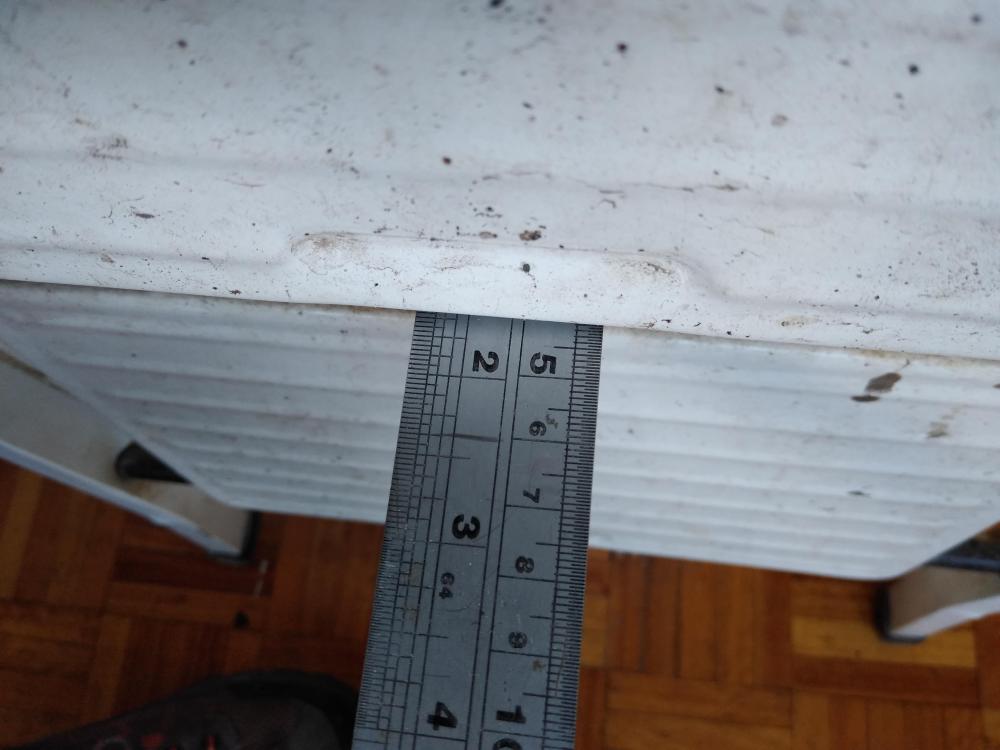
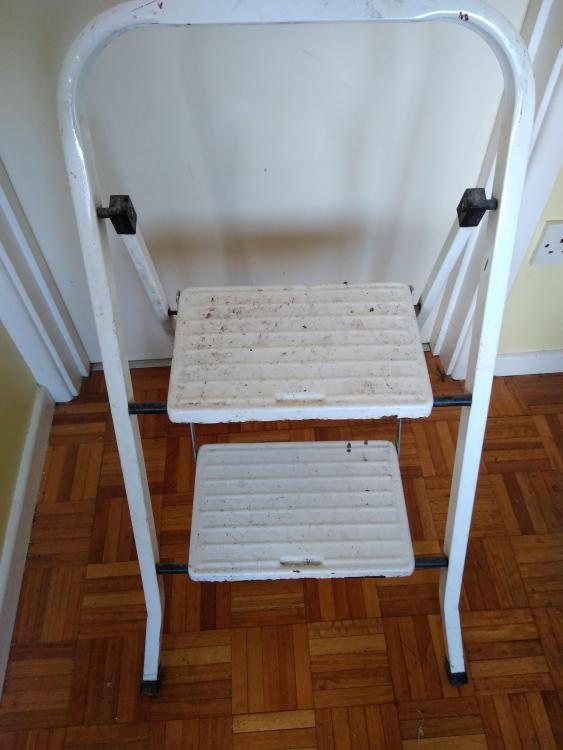
Got around to measuring them, will easily fit in a 2 inch gap. Think I got them at B&Q.
-
Generically they are very closely related. Can follow a migration path up from Northern Spain, through West France, Cornwall, Wales, Ireland and Scotland. But the genetics flow both ways and sea routes to the Mediterranean were also common. There is the theory that the 'Briton' comes from 'Picton', which is meant to be 'painted people'. The Romans said 'get some tin from those painted people'. No idea how true it is, but an interesting idea, especially as the Celts were a very large and dispersed group in Europe.
-
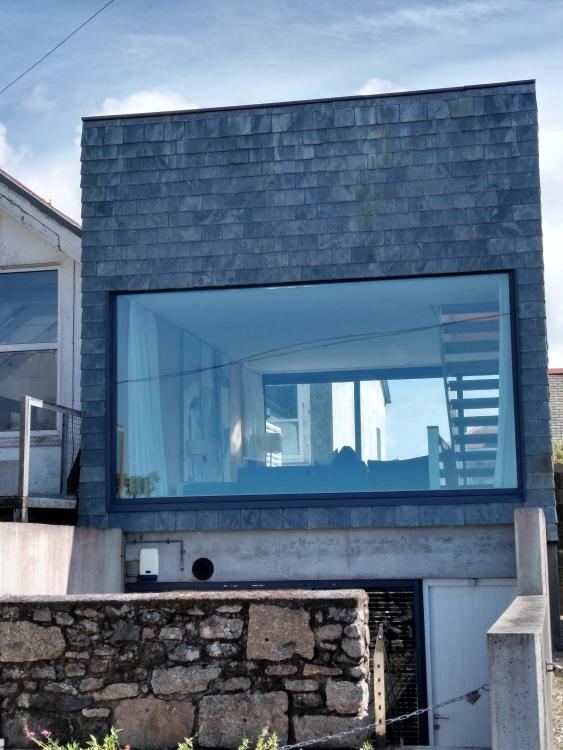
Not really sure, I intend to go and have a proper look sometime. I think it must be on 3 floors, though the top floor may be a bit grey, unless there are roof lights in it. I do quite like it, but then I like a lot of contemporary (odd) places. Judging by the large concrete beam, I suspect it was a relatively new build, but no idea if it was gobbling up an old place. There is a lot of very old, badly built, places down here. They get sold as holiday homes to up country folk. I want to build a new shed, may take some design cues from this, and if the people from World Heritage come around, I shall just point them to this house overlooking the long term car park and say 'and your point is'.
-
Don't worry, you will be with EDF come Christmas. https://news.google.com/articles/CAIiEGLomCYWjgsxaWzbOmV6hrcqFggEKg4IACoGCAowl6p7MN-zCTDlkko?hl=en-GB&gl=GB&ceid=GB%3Aen
-
This place has come up in conversation because a new member is building here. I meant to say welcome to @Ruben, so hello. St. Ives is an interesting place, I like it a lot. But I thought I would show you a house I spotted last week while I was working here. They have mixed traditional with modern. Be fun to work out the price per metre squared, I think about 450 quid.
-
Many people decide to do paperwork on a rainy day. I do it on a sunny day, makes me work more effectively so I can go out and play.