


SBMS
-
Posts
1064 -
Joined
-
Last visited
Everything posted by SBMS
-
What were they asking for?
-
@JohnMo great pictures and explanation thanks v much. What u value did your roof makeup achieve? Did you consider keeping your 256mm rafter depth and using an insulated plasterboard - and if you did how come you decided against it? Is 256mm the maximum posi rafter depth or could you have gone deeper? @Iceverge if we went blown cellulose what depth gets us to 0.1? I’m thinking of doing what John did but either increasing the depth with counter batten, or lining with an insulated PB to get to the u value.
-
What is your airtight detailing at the wall plate?
-
Thanks @Iceverge. Would posi rafters be able to span from the ridge to the wall plate without a purlin (or supporting upright like an attic truss). With rooms in the roof/ part vaulted ceiling that would provide a better internal aesthetic.
-
Would trusses be out due to the intersecting roofs? Do you think posi rafters could work?
-
Was yours an ICF build?
-
Thanks @SteamyTea @Iceverge would you ever recommend this plus an insulated plasterboard? I know you seem to favour Rockwool if more insulation is needed? Still intrigued that no one has advocated SIPS?
-
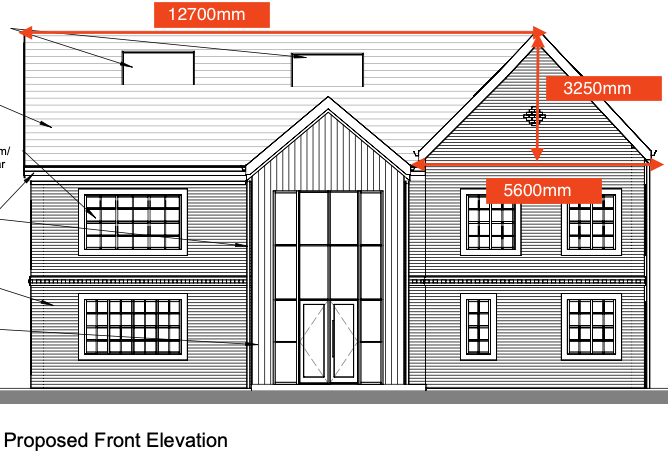
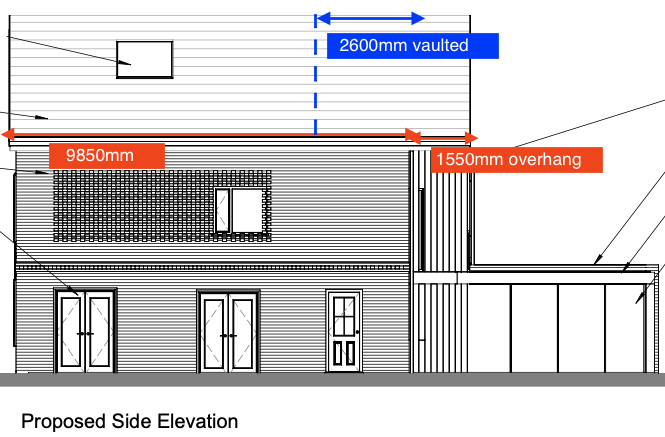
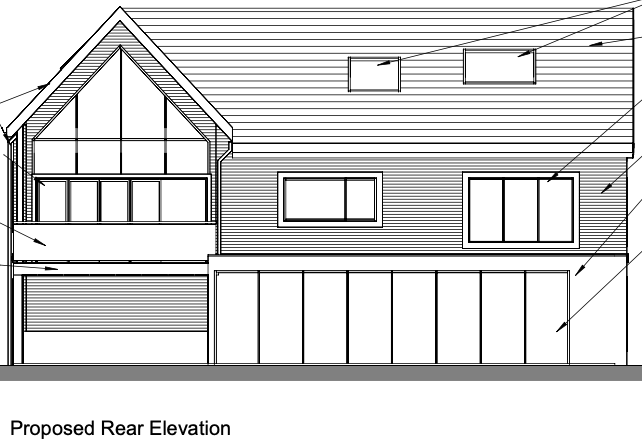
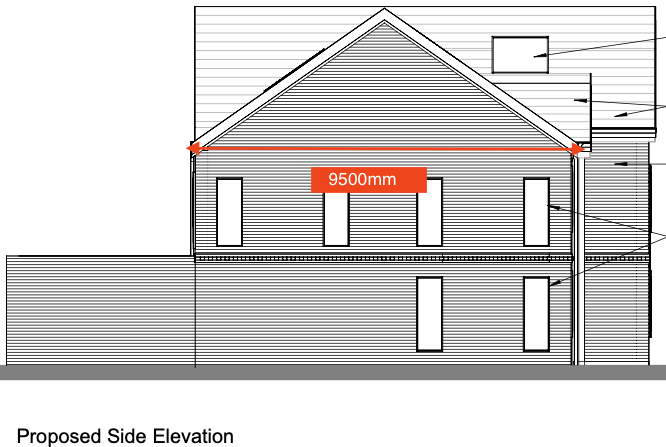
Just for reference, this is the elevation with some measurements for the roof sections:
-
Thanks @JohnMo - really interesting. A portion of our roof is vaulted and the other portion isn't - how would you incorporate a second floor in that instance? Would it preferable to hang it from the internal block, or sit it on the wall plate, and then sit the posi joists on top of the floor?
-
Posi Rafters look interesting... They'd be useful for the vaulted section. Do they typically rest on a ridge beam and purlins, without the need for a bottom chord?
-
Thanks @Iceverge - any reason you'd discount SIPS? Will Elevations drawings suffice?
-
We're in the process of putting together a design spec and discussions with the architect for our roof construction method, and insulation. We have a 2 storey house, with rooms in the roof, and one part of the roof is vaulted from the first floor to the roof (so no bottom chord on that part). We have a bit of balcony overhang as well. We've decided to go traditional brick and block with a 200mm cavity with EPS beads. There are two primary construction methods we're looking at for the roof: SIPS roof Engineered attic trusses Both options probably require a steel ridge beam, although SIPS might get away with a glulam ridge (and glulam purlins - which are a nice feature exposed in the rooms). SIPS roof A local SIPS company make a 195mm SIPS panel which achieves 0.13 u-value, so this plus a 37.5mm insulated board, or even higher would get us the U-value needed. No issues with having to be accurate with insulation. Makeup is relatively slim @ 200mm as well. The primary negative that I have seen for a SIPS roof is complaints of increased noise, particularly when raining. Is this others' experience, would a 195mm panel reduce this, and is there an easy option to mitigate if it is? Engineered trusses If we go the engineered truss route then we have some decisions to make regarding how we insulate it. I've put the commentary (mainly negatives) underneath each insulation method: A 150mm PIR board between the joists (either with or without an air gap dependent on membrane) with an insulated plasterboard underneath would get us to 0.1 Concerns regarding fitting - we could use gapotap, but timber can shrink and there are fiddly bits around the wall plate junction to ensure thermal bridging is minimal Blown in cellulose (with or without an insulated plasterboard underneath?) No real concerns with fitting, but would potentially need a much deeper joist? I don't know what a 200mm cellulose U Value gives, we could possibly go for deeper joists but then we're losing headroom potentially inside Blown in EPS Beads (with or without an insulated plasterboard underneath?) Same as cellulose but probably the same questions/concerns - however easier as the walls are going to be EPS beads the same firm could do it Rockwool/mineral wool batts (again, probably would need an insulated plasterboard underneath) Would be fitted by hand, so would need to be on top of the fitters Spray foam is OUT - so will not use for reasons that have been done to death on this forum Has anyone any advice or feedback on the above, their experience, and what they would look to do? Thanks in advance
-
Absolutely. Fairly unlikely your architect has the same deep knowledge of local planning, planners themselves, cases they can reference etc that a planning consultant has. I would speak to a consultant and briefly give them your idea of what you want and if it looks like a go-er engage an architect to draw up your design, perhaps prepare the design and access but get the planning consultant to submit your application along with the planning statement. They’ll do things like find and reference similar applications that were passed recently, cite proper planning policy in detail and - at the end of the day present your application as serious and professional. Planners won’t want to risk rejecting an application if it’s policy compliant in the event you appeal (and win). Most councils are nearing broke and expensive appeals costs are a priority concern for councillors that sit on planning committees. Good luck!
-
I would speak to a planning consultant that’s got a good history of applications with your local council. They will probably know the planners and might even know the planner that made the determination for the current application - it’s likely they would be assigned if you went in for another application. The consultant would have a good view of what the planner might say. Design can often be very subjective so can come down to the planner assigned. Also - read the current report from the planning officer and see what weight they gave to the design elements - if they called out how it was suitable as a traditional design for example it might give some insight into how much weight they gave it. I would recommend you definitely pursue the design you want; in the context of what you’ll spend on the build it would be money worth spent - especially if it’s not a design you’re particularly happy with.
-
Garry this seems really expensive. Is your design particularly complex and/or are you paying London prices?
-
You’re not way off, that seems very expensive.
-
I think it’s achievable with that budget. We were roughly £5k for up RIBA stage 4 (drawings for planning) and then another 4500 for the full drawing package. This is with a small boutique architect firm of 4 architects. Fantastic job, they did spatial modelling, massing of the building (in a 3d clay). They designed the whole house in a 3d game engine from the start so we can interact with it. We even did a VR session in their offices where we walked through the design and snagged any issues. It was pretty amazing. We benchmarked another architect practice that was well known and did similar things and they were a similar price. I would be asking questions like what technology do you use to produce designs. Both the firms we looked at build the model in a 3D engine (effectively unreal games engine) and this was a key thing. It meant we didn’t have to pay for ‘renderings’ or visuals. We had a link that we could jump to in a browser as we iterated on the design to walk around the house in detail. Other architects we talked to were clearly using more antiquated techniques, CAD tools etc but for us the use of technology in the design process was great. That and the usual flare for good design, comfort with innovative use, a wide portfolio of designed houses, comfort with one off build design and a design language that correlated with the type of house we were looking to design. And I refer back to the earlier point that this was all under 10k. So definitely do able.
-
Is that 10k to get you to planning drawings or to a full Building regs/builders drawing pack?
-
SIP wall thickness: diminishing returns?
SBMS replied to joshwk's topic in Structural Insulated Panels (SIPs)
There's a local company near us that do a 195mm SIPS panel that achieves 0.13 U value. Or a 140mm that achieves 0.16. https://flitcraft.co.uk/injectawall/ Out of interest, have you modelled the difference between a 0.16 and a 0.1 u value? Its about a £80 in additional energy costs per annum when modelled for our build (YMMV, but its worth checking). -
SIP wall thickness: diminishing returns?
SBMS replied to joshwk's topic in Structural Insulated Panels (SIPs)
Have you looked at a thicker SIPS panel to do away with the 25mm insulation? -
Fabric and ventilation heat loss calculator
SBMS replied to Jeremy Harris's topic in Heat Insulation
Which aspects of the spreadsheet do you think are inaccurate or not achievable? It sounds a bit defeatist to plan the construction of a build but ‘accept’ the quality required to bring that build to reality is not achievable? -
Fabric and ventilation heat loss calculator
SBMS replied to Jeremy Harris's topic in Heat Insulation
Thanks @TerryE, makes sense why your overall energy input is lower. We just seem to be coming out with a high energy requirement per sqm which I’m struggling to reduce down. Even dropping walls to 0.1 and removing all glazing doesn’t help. One figure that does shift the needle is the internal volume as it’s 950m3. But I would expect as your floor area increases as does your volume so wouldn’t expect to get 390 sqm in a smaller volume (we optimised the house design for this, with rooms in the roof). ultimately it probably doesn’t hugely matter as the energy input is acceptable. Am just intrigued as to how a reasonably large well insulated, airtight house can hit the PH energy per sqm target. -
Fabric and ventilation heat loss calculator
SBMS replied to Jeremy Harris's topic in Heat Insulation
Got you thanks. Is my understanding of the passivhaus recommendation for kWh per sqm correct? I wasn’t sure whether the kWh per sqm figure was adjusted for the heat source (eg if using an ASHP then the energy input would actually be circa 3.5x lower). If not I’ve no idea how one could get to a 15 figure using Jeremy’s spreadsheet anyway. It’s not that I’m arbitrarily aiming for that figure but it’s something that gives some context to energy requirement when assessing u values, insulation depth etc. -
Fabric and ventilation heat loss calculator
SBMS replied to Jeremy Harris's topic in Heat Insulation
Ah! So the passivhaus level of 0.6 is not the target here? I assumed that ACH on the spreadsheet is the target measure of airtightness (or, I guess, a result of the level of airtightness?) -
Fabric and ventilation heat loss calculator
SBMS replied to Jeremy Harris's topic in Heat Insulation
So the ‘air changes per hour’ column is not the airtightness figure?
