Tom
-
Posts
866 -
Joined
-
Last visited
Everything posted by Tom
-
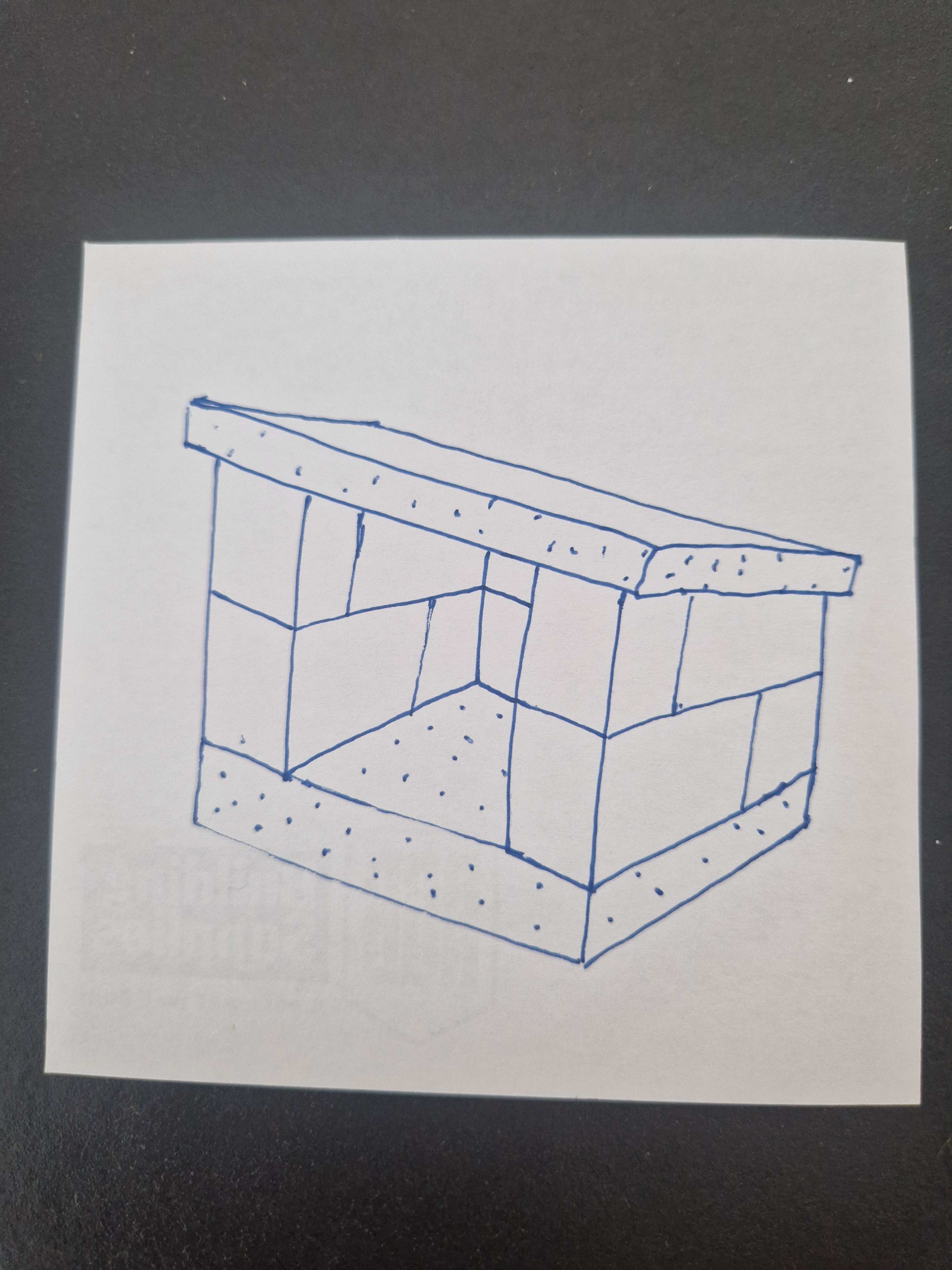
Not sure I follow you - are you saying just stack some blocks up on earth? Here's a picture of what's in my mind at the moment. Block walls on small poured slab, paving slab roof with slope front-back. Then I would need to close the opening at the front.
-
Good idea, just tried it with mine and not enough "head room" to sit the blower on a block unfortunately (guess your STP uses an additional riser). I think a remote, block-build little enclosure is the way to go, just need to sort the design. Good idea to use a paving slab as a roof. The thing I need to resolve in my mind is what to make for a door. Twin OSB skin with some acoustic isolation material in the middle? How/where to place an air intake? I guess some sort of baffled penetration that goes through the door? I'll try and draw what I'm thinking...
-
Hi all. I've got to get round to building a soundproof enclosure for our treatment plant air pump as I'm fed up with the faint drone when I'm sat outside. We've got a Conder, so the air pump currently sits under the main lid of the unit. I'm thinking I need to build a structure with some mass to prevent transmission of sound, so was thinking I'd pour a small slab, say 50cm2, then build a tiny enclosure with concrete blocks. I guess I'd include a short length of ducting up through the slab for the power and air hose. Is this the right way to go? I'm not sure what I'd use for a "door" on the front, or what to use as a roof - I have some (block and) beam offcuts so could use these to make a flat solid concrete roof perhaps, with some corrugated tin over the top. Has anyone built their own enclosure, have any tips for what works well or even some pictures? Thanks all!
-
I recently bought quite a bit from DC Iron, couldn't fault them TBH, way cheaper than local suppliers and it even arrived next day: https://www.dciron.co.uk/?srsltid=AfmBOorMgWX6jcChzIoFm5Rh_rRsEgVeKigE0O2kJNMZiDA5C40rWjth
-
Noisy clicky corrugated metal roof- please help!
Tom replied to jakeR's topic in Roofing, Tiling & Slating
If you think it's where the sheets overlap you could run a strip of roofing membrane in between the sheets at these points (cut just shy of the edges so you don't see it. This might allow some slight movement between the sheets without the noise. Actually, thinking about it, when we put our sheets on the roof (same as yours, 13/3 black corrugated) we used a mastic strip where they overlap to effectively stick them together but allow some movement. Did you do this? Our roof isn't that noisy at all, though we do have a ton of PV covering most of it. -
Noisy clicky corrugated metal roof- please help!
Tom replied to jakeR's topic in Roofing, Tiling & Slating
Stick a load of PV panels on it? -
Just when you think something can't go wrong, it does. It also goes wrong when you think it will. Basically, it always goes wrong. I'd be asking the kitchen supplier for a partial refund of their storage fees as clearly not all the kitchen was in storage!
-
I remember that @SteamyTea, think they made osb boxes on site that slotted together, then filled with blown cellulose.
-
So, as an update, after conferring with the installer and the Mitsubishi Ecodan helpline, it seems I can't set the system to do what I want it to do. If the hot water is scheduled to come on it will always come on, even if only half a degree below the target temp. Seems like an expensive way to heat the water by half a degree. If I take it off the schedule, it will purely be controlled by the thermostat, so switch itself on when it has dropped 10 degrees. Oh well, first world problems I guess.
-
Thanks @ProDave, but the issue for me is that while it's set at a 10deg drop, which is what I want, it isnt doing it.
-
Thanks @SimonD, it's an Ecodan ASHP (monobloc so no indoor unit) and the cylinder is from Tempest designed for ASHPs. I have entered the installers menu on the Mitsubishi controller and see that you can set one parameter "max temp drop" which is set at 10deg, research today indicates this is the hysteresis. So, with this set as it is, it should mean the cylinder doesn't call for heat unless it has fallen by at least 10 degrees below the set temp. However, as above, mine does - so I'm wondering if it is the lack of a second temperature probe - the one further up the cylinder - that is causing the problem and making the controller always believe the tank is >10deg below target.
-
One at a time please. So, on further I research I see that the hot water cylinder should have two temperature probes: one half way up that calls for heat, and a lower one that shows when up to temp and shuts the heat off. Here's the thing: my cylinder only has one probe, the lower one. So does this mean that, assuming the lower probe remains below temp and not "shutting of" the heat, the absence of an upper probe means it will always call for heat?
-
Hi all - my Ecodan ASHP comes on once a day to heat water but is set up in such a way that if it is only 1deg below target it comes on. Is there a way to set it so that it would say need to drop 10deg before calling for heat? I cant find this in the normal or installer menus. Thanks all
-
Yep, clearly the better option, thanks for the reality check 👍
-
Thanks @Oz07, there wont be a skirting board along this side, and the joists run perpendicular to the gap. I could run a circular saw down the gap and cut off the "tongue" of the chipboard flooring, then use a 35mmx22mm strip of wood to fill I guess.
-
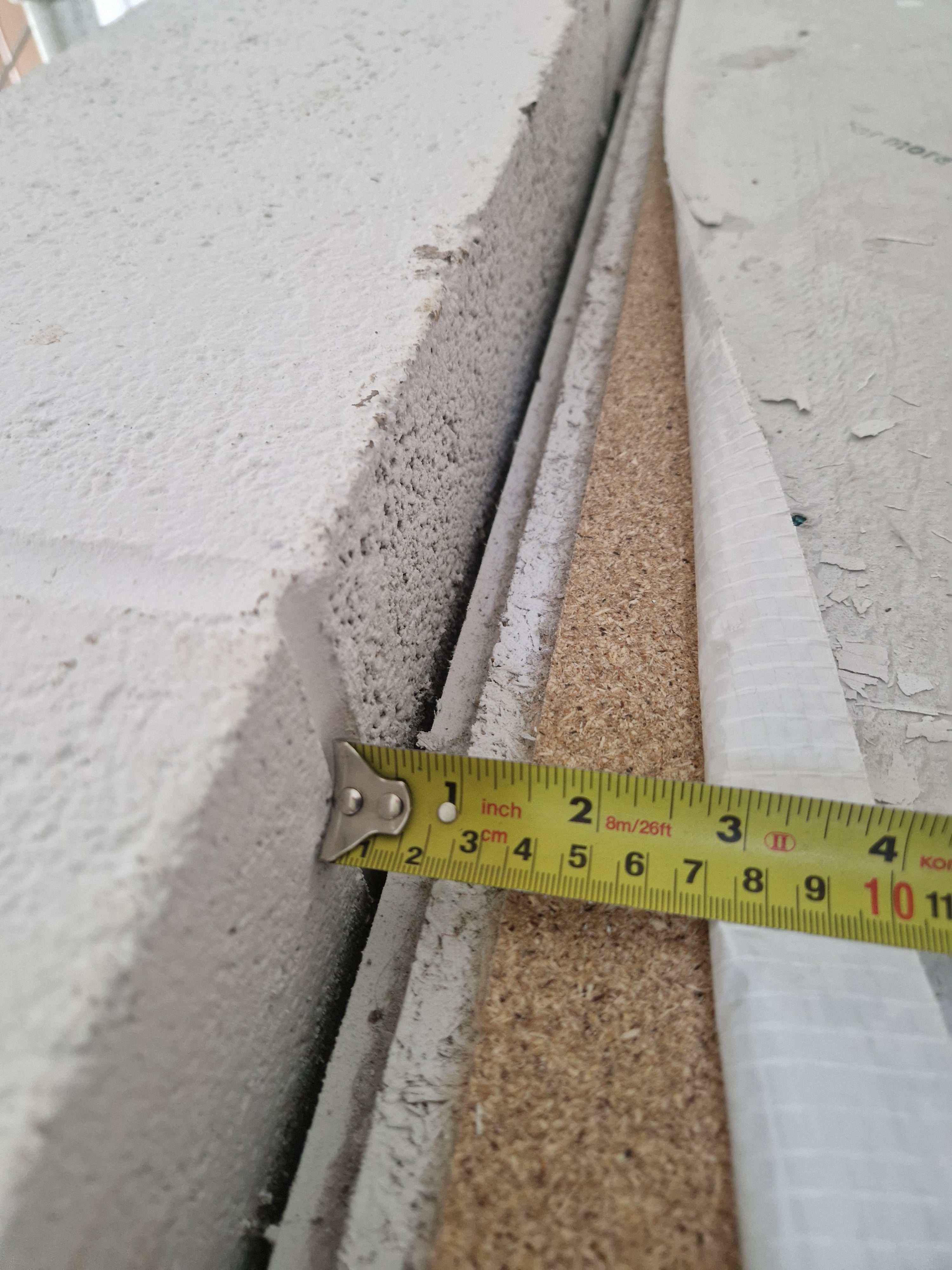
Hi all - we have a mezzanine area that we need to get carpeted and unfortunately the chipboard flooring boards don't go quite to the edge (see pic). There's about a 35mm gap x 5m, which is just too wide to be covered by the carpet gripper strip. I'm unsure what to fill this with, the timber just visible is the wall plate and there are a few gaps that extend in to the ceiling void, so anything liquid will flow into these. What would you suggest? I don't have any more of the woodchip to use unfortunately. Thanks
-
A lot better. Eh? What makes you think this? It's what they call "sintered stone" I think, basically a mad made stone created with immense temperature and pressure. It's very like pocelain, but better. It's practically impervious to any scratching, solvents, staining etc - unlike the resin composite worktops. The downside is it has to be cut, machined etc by specialists.
-
You're right there are lots if stone resin manufacturers, they're all probably much the same. Dekton is a very different material though
-
Just Google dekton worktops and you get lots of suppliers popping up. If you do some on-line quotes you soon get the salesmen coming out of the woodwork, then play hardball 👍
-
Got a few quotes, including from an on-line national supplier, the latter seemed to get bored with all the re-qotes/questions i was firing his way and came back with something ridiculously cheap. I then took that to our local, preferred supplier who had a price match guarantee - they agreed to it, and the rest is history as they say. Just goes to show how much of a margin there is in these things though, so worth pushing and pushing some more.
-
We've got Dekton worktops including for an island, and they are fantastic. The initial quotes were eye watering but we shopped around and got it down from £6k+ to just over £2k - and this was for essentially two kitchens and large island.
-
Thanks both, have pulled the trigger on Intelligent Go and will see how things, er, go 👍
-
Hmmm, I think it makes more sense, but check my working: with the Cosy tariff it's 8hrs at 14.2p/kWh versus 5hrs (at night) at 8.5p for the Go - so a bit cheaper for the EV tariff and you avoid the premium rate of 3hrs at 43.45p in the evenings. (we only need the ASHP on for 4hrs or so) We have 13kW PV on the roof, so often during the day we import very little/none (and virtually none every day for 5 months or so from spring-autumn), and the night time rate will make a good dint in the import we can't reduce with the PV. Does that seem reasonable thinking?
-
So, has anyone experience of signing up for an EV tariff if they don't have an EV? Octopus asking for make/model and charger make. I can easy enough find the former, but I would guess i need to indicate i have a "dumb" charger - or is it just easier to say i charge via a 13amp plug?
-
We plan to add some LED strip lighting to "up-light" our vaulted ceiling. Total run will be about 40m but I think it would make sense to split this up and have several shorter runs that we can switch on/off. It will all be installed by an electrician, so should we go for mains voltage (which would do away with the need for transformers) or is lower voltage "better" in any way? Thanks all