garrymartin
-
Posts
553 -
Joined
-
Last visited
-
Days Won
7
Everything posted by garrymartin
-

Hello! And, err... our appeal was dismissed :-(
garrymartin replied to garrymartin's topic in Planning Permission
Exactly this. *VERY* expensive approach and they'll look at the various Acts and Written Ministerial Statements, and not specifically the NPPF which simply advises on how policy should be applied. As mentioned previously, this is sort of the developing plan, albeit an outline application with some matters reserved and just covering access to keep the architect costs out of the equation until we have secured permission. -
Hello! And, err... our appeal was dismissed :-(
garrymartin replied to garrymartin's topic in Planning Permission
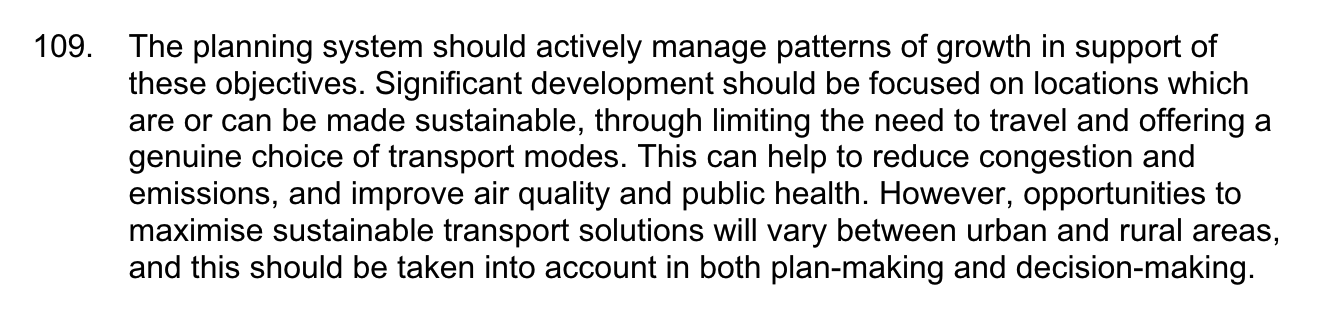
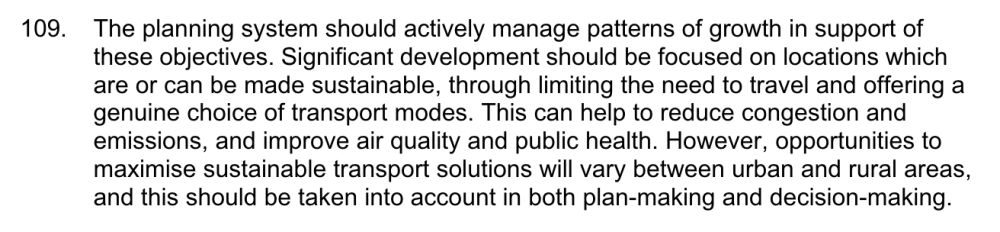
I work for a Global IT Service Provider so I've been using AI for some time, and even though I say it myself, I'm pretty good at working through questions and spotting the (sometimes) flawed responses. 😉 I have numerous references to the various documents in my Statement of Case. The problem is that they are often very much open to interpretation. For example, the 5km distance that seems to be acceptable in relation to cycling is almost universally agreed upon and can't really be argued with. However, as another example, the NPPF in Appendix 2: Glossary says the following; So *any* efficient, safe and accessible means of transport, *including* those mentioned. Paragraph 109 says the following; So the second sentence *should* ONLY be applicable to "Significant development" and yet is universally applied almost always to ALL development. Equally, if we just consider the five examples of sustainable transport modes from the Glossary, from an English language perspective, only providing one would not present a choice. But two (or more) presents a choice. So even if we accept the error of applying that to development that is not "Significant" I should only need to show I can meet at least two (which I do). Even so, the application and appeal were refused solely on the grounds of sustainable transport... 😞 The issue is always that it is a planning judgement, that the rules are not binary, and hence, unfortunately, it very much depends on the views of the individual. I am 100% certain that had my Inspector been someone else, the result may have been different too. If you @ToughButterCup or anyone else is interested in reviewing the various documents and offering any insight either here, or by personal message or email (if you think it is sensitive), I'm more than happy to send the links.
-
Hello! And, err... our appeal was dismissed :-(
garrymartin replied to garrymartin's topic in Planning Permission
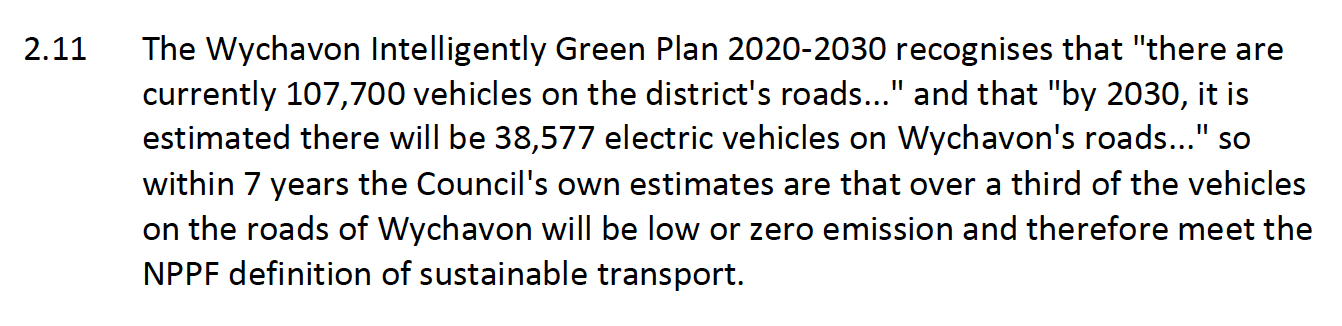
I'm with you 100%. Also part of my appeal Statement of Case; So my Local Authority themselves estimate that in less than six years, a third of the vehicles on their roads will be ultra low or zero emission. When you also consider the location, size of plot, potential value of house to be built etc., the odds of any future occupants driving an old, dirty, petrol or diesel car start to drop quite considerably from a demographic perspective. Whilst I'm frustrated that the Inspector seems to have disregarded much of the information I provided, it is nonetheless very heartening to have the support and bewilderment of the buildhub community to console me... 🤗❤️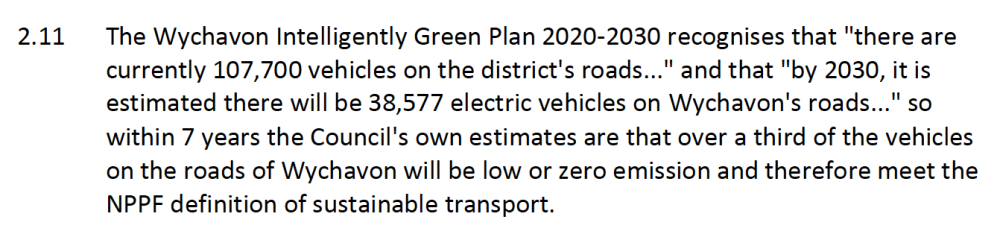
-
Hello! And, err... our appeal was dismissed :-(
garrymartin replied to garrymartin's topic in Planning Permission
I think it's slightly worse than that because they are also arguing about the lack of control of choices of "future occupiers" in the context of a market housing development when, as a self-build, I *am* the future occupier!! 🤪 -
Hello! And, err... our appeal was dismissed :-(
garrymartin replied to garrymartin's topic in Planning Permission
Seems you're not allowed to include an EV as a sustainable transport choice (despite ultra low and zero emission vehicles being listed as one of the five sustainable transport modes in the NPPF) as you can't force people to use one, and if you accepted that they were a sustainable transport choice, that would make *any* site sustainable. Can't force someone to use a bike either but cycling is accepted... The whole point is that you do things to encourage use. Local policy says I *have* to include secure cycle storage in any development proposal to encourage the use of a bike. BRegs now require you to fit an electric car charger for the same reasons. My argument was that not only was I planning for two 22kW chargers, but that I'd also be generating more energy than the primary demand of the dwelling, and hence there were not only environmental incentives but also financial incentives to use an EV (and of course I'll owned and driven one for over 4 years). Deaf ears. -
Hello! And, err... our appeal was dismissed :-(
garrymartin replied to garrymartin's topic in Planning Permission
The appeal was filed on 28 July 2023, and decided on 24 June 2024, so 10 months and 27 days. -
Hello! And, err... our appeal was dismissed :-(
garrymartin replied to garrymartin's topic in Planning Permission
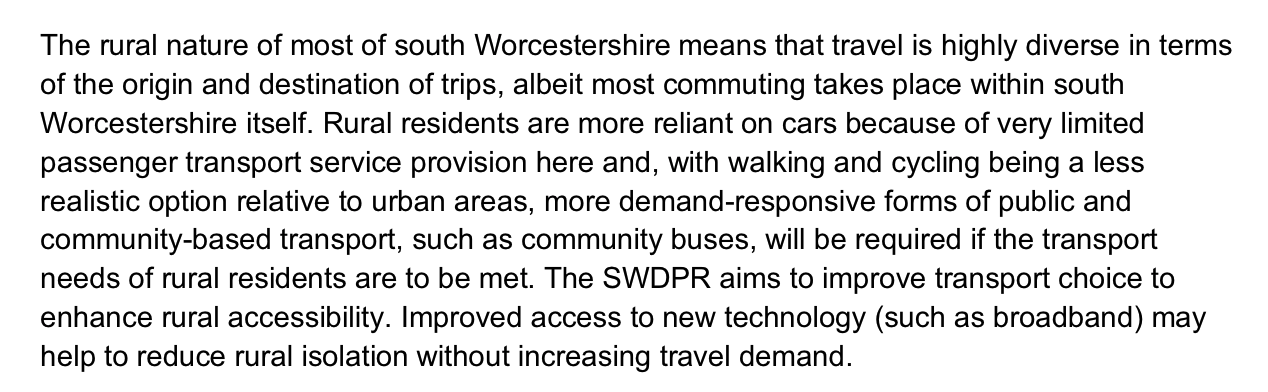
Agreed. It's a catch 22 though. Council removes funding for rural bus routes because the volume of users doesn't make them economically viable, in essence, then preventing development due to lack of sustainable transport choice. Ironically, this is the wording in our Local Plan...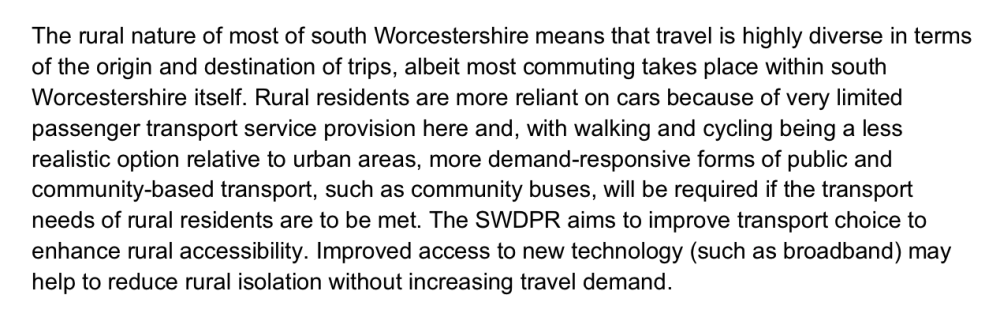
-
Hello! And, err... our appeal was dismissed :-(
garrymartin replied to garrymartin's topic in Planning Permission
Thank you. That's the plan, although I've also asked a few specific policy questions of the Head of Planning as a precursor so I am 100% clear on how the LPA would interpret some fundamental wording. -
Hello! And, err... our appeal was dismissed :-(
garrymartin replied to garrymartin's topic in Planning Permission
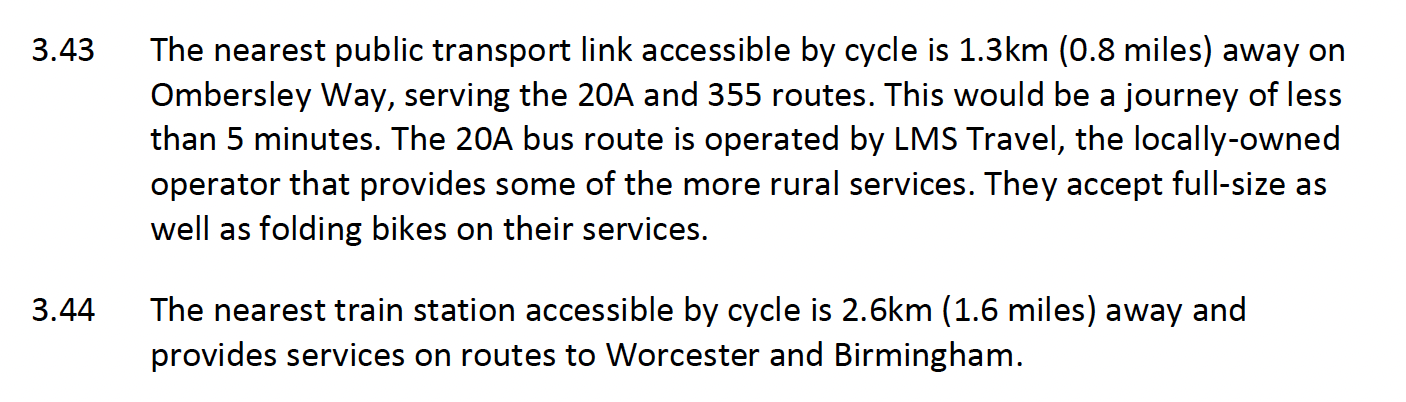
- 20A and 355 Bus Stops – 1.3km (0.8 miles) - Droitwich Spa Train Station – 2.6km (1.6 miles) Unfortunately, the Inspector commented "I am also not persuaded that occupiers would prefer cycle-bus and cycle-train travel options, over the convenience of vehicle related trips. In particular, for day to day requirements." As far as I can tell, what the LPA Officer and the Inspector appear to be implying is that unless you can walk to a bus stop or to local services, it's not sustainable because people will prefer using a car.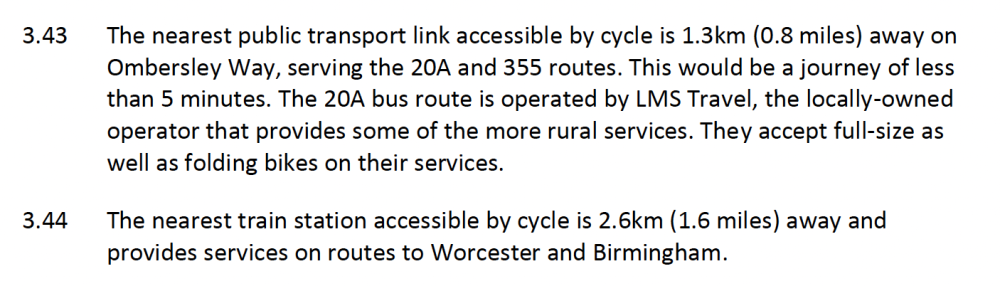
-
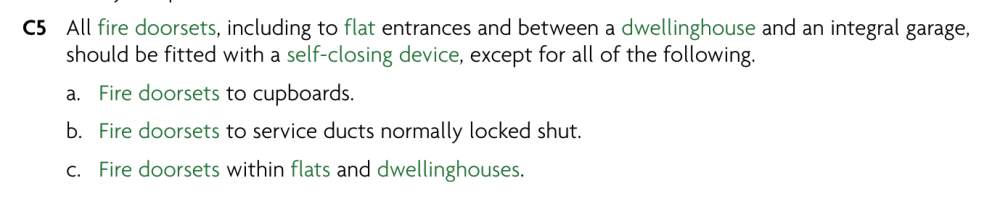
The BCO is correct. Building Regulations Approved Document B, specifically Appendix C.
-
Hello! And, err... our appeal was dismissed :-(
garrymartin replied to garrymartin's topic in Planning Permission
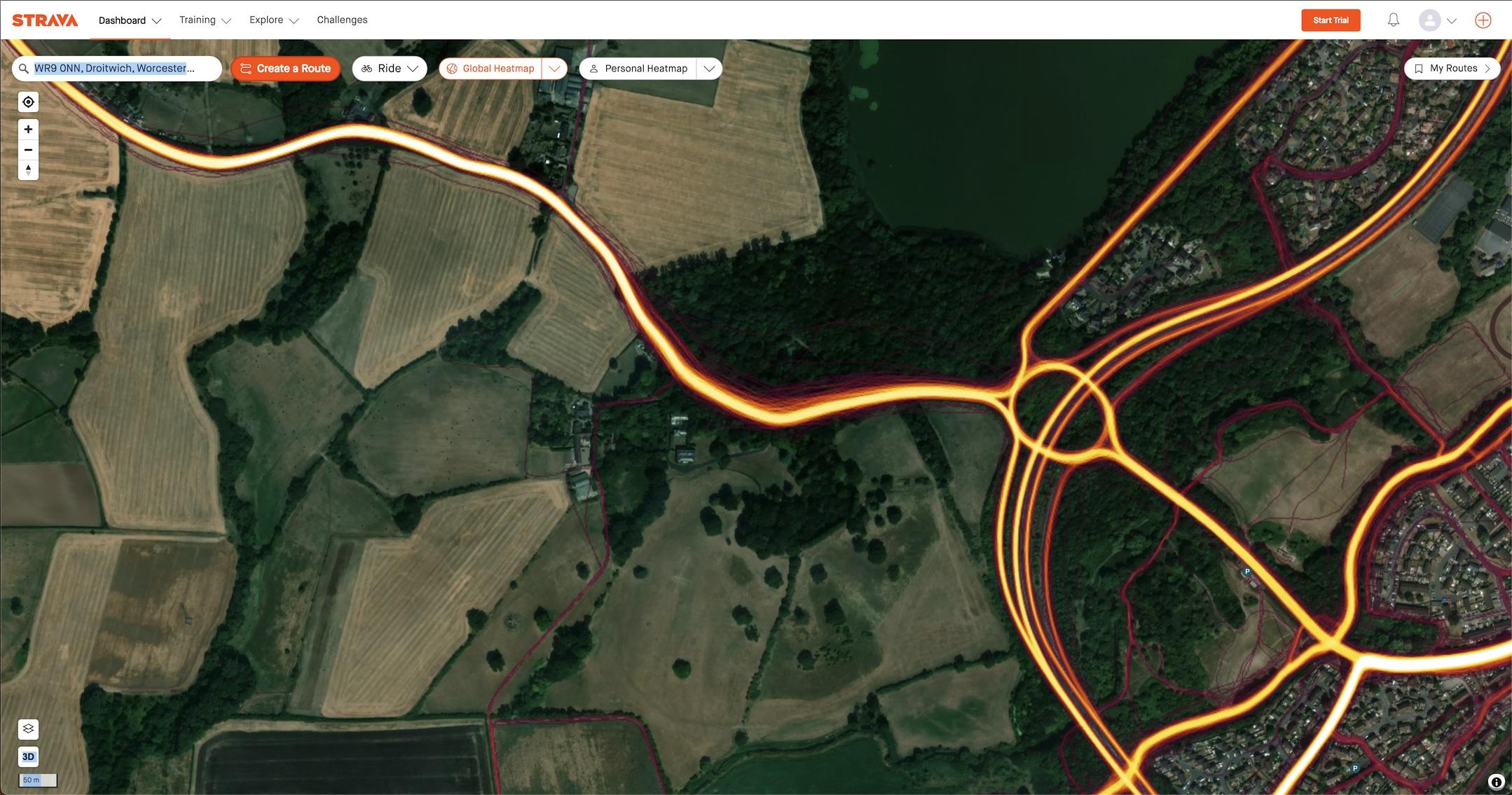
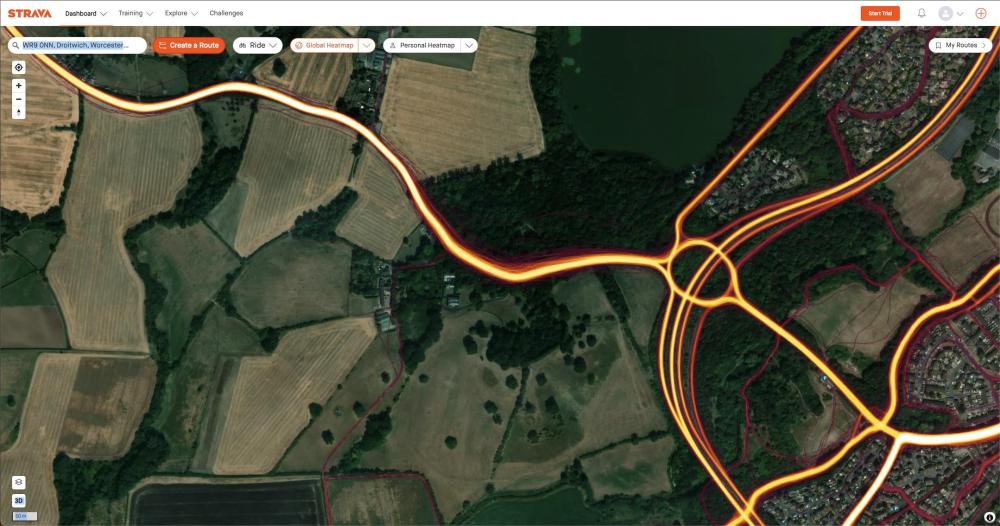
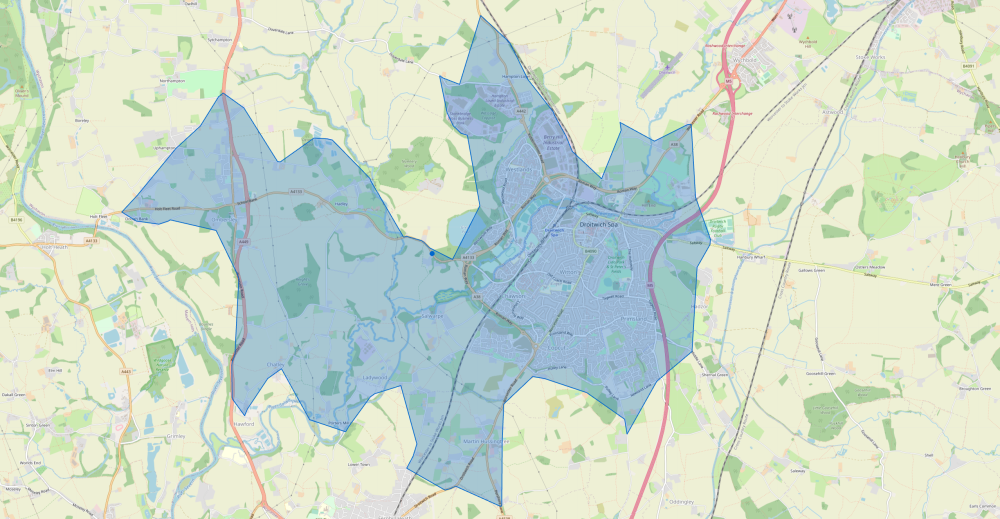
No need Mike! I think I've already mentioned it somewhere but there's a bridleway that skirts the development and joins National Route 46 of the National Cycle Network. This route down to St Michael's Church leads onto the very same Copcut Lane. Despite an unaccompanied site visit by the Inspector, he commented "Even so, I have limited details of the quality of these cycle routes." It really makes very little sense to me I have to be honest... 😞 Bridleway in purple... Just for a laugh, let me note that there have been no recorded cycle accidents for at least the last 10 years on the A4133 from the exit of the development until a cycle lane begins on the Ombersley Way - a distance of less than 1 km. Considering the following graphic is also *only* people who record their journeys on Strava, you can also see it's pretty well used as a route into Droitwich (even more so than the bridleway or indeed the private access road which some scoundrels seem to also make use of) 😉 Isochrones map of 5 km journey reach - the whole of Droitwich Spa is accessible; Distances to various local services and facilities; - St Michaels Church – 1.0km (0.6 miles) - Droitwich Community Woods – 1.0km (0.6 miles) - 20A and 355 Bus Stops – 1.3km (0.8 miles) - National Route 46 of the National Cycle Network – 1.5km (0.9 miles) - Chawson Barn Community Centre – 1.5km (0.9 miles) - SPA Convenience Store – 2.0km (1.2 miles) - Droitwich Spa Leisure Centre – 2.0km (1.2 miles) - St Josephs Catholic Primary School – 2.0km (1.2 miles) - Droitwich Spa High School and Sixth Form – 2.0km (1.2 miles) - Westacre Middle School – 2.1km (1.3 miles) - Droitwich Spa Train Station – 2.6km (1.6 miles) - ALDI Supermarket – 2.7km (1.7 miles) - LIDL Supermarket – 2.7km (1.7 miles) - Spa Medical Practice – 2.9km (1.8 miles) - Morrisons Supermarket – 2.9km (1.8 miles) - Droitwich Spa Hospital – 3.4km (2.1 miles)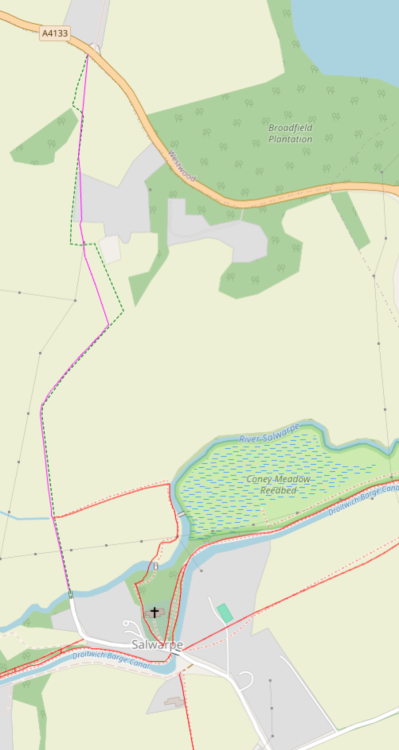
-
Hello! And, err... our appeal was dismissed :-(
garrymartin replied to garrymartin's topic in Planning Permission
Did that. Previous similar appeals in less ideal situations that had been successful were included, as well as case law, and examples of where LPA Planning Officers had determined similar cases in a more positive way. The Inspector's response was "The appellant has also referred me to the assessment by Officers of other proposals. Even so, I am not bound by these decisions. Irrespective, each proposal is considered on its own merits as is the case here. It is for the decision maker in each case to undertake the planning balancing exercise." The landowners have tonight confirmed that they are happy for me to continue to seek planning approval, so let's see what happens this coming week in the election and then in the weeks after that as the new planning policy becomes clearer. -
Hello! And, err... our appeal was dismissed :-(
garrymartin replied to garrymartin's topic in Planning Permission
We're currently tied to the area as we are primary carers for my 80-year old mother. I'd be more than happy to move otherwise. Ironically, I work almost exclusively from home as much of my contact is with distributed teams, often in other countries. As a consequence, I can pretty much work from anywhere. Indeed, I left the house for work less than 15 times in 2023! -
Hello! And, err... our appeal was dismissed :-(
garrymartin replied to garrymartin's topic in Planning Permission
Same here. But due to the lack of a demonstrable 5-year housing supply, the "tilted balance" is applied and everything is essentially then weighed as a whole. There should be a high bar for refusal here. It is not enough for there to be some harm or negative effects, or for a scheme to be less than ideal. The harm must be significant and demonstrable. In this circumstance, if the sustainability of accessing the site is all about carbon emissions (i.e. the hierarchy of walk, cycle, public transport, etc.), then demonstrating that the building will more than offset any emissions coming from any transport choices made in accessing the site should surely discount that harm being significant? At least, that's my view. -
Hello! And, err... our appeal was dismissed :-(
garrymartin replied to garrymartin's topic in Planning Permission
You are allowed to put numbers. It's all a learning game, Mike. If I make another submission, I'll include hard numbers. In my first submission, I honestly didn't think I needed to spell out the transport options available. After all, you don't *need* to include any commentary with an application for PIP. Even though I did, again, I didn't expect that I'd have to spell things out in quite so much detail to the people whose job it is to be professional planners. You live and learn... -
Hello! And, err... our appeal was dismissed :-(
garrymartin replied to garrymartin's topic in Planning Permission
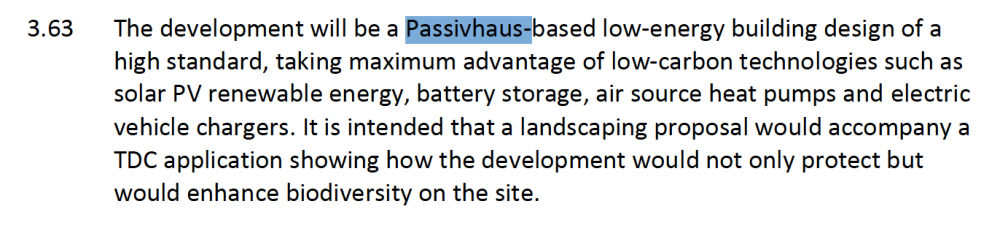
I'd hope so. I was fairly explicit... 😉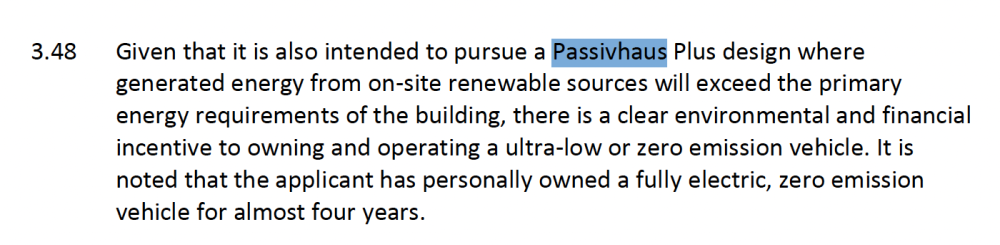


-
Hello! And, err... our appeal was dismissed :-(
garrymartin replied to garrymartin's topic in Planning Permission
Thanks Kelvin. It is a special place. I'm 55 next year and in a good financial position so we'd sort of convinced ourselves that if the appeal wasn't successful we'd give up on the self-build dream and I'd just take early retirement; maybe find somewhere for a deep retrofit. But the day after we found out we'd lost the appeal, we lost my father-in-law only five weeks after he was diagnosed unexpectedly with Stage 4 Pancreatic Cancer. He was 77 and before the diagnosis, was in good health and enjoying his life. It sort of puts a lot of things into perspective and I'm not sure I could restart the whole "find a plot" thing again. -
Hello! And, err... our appeal was dismissed :-(
garrymartin replied to garrymartin's topic in Planning Permission
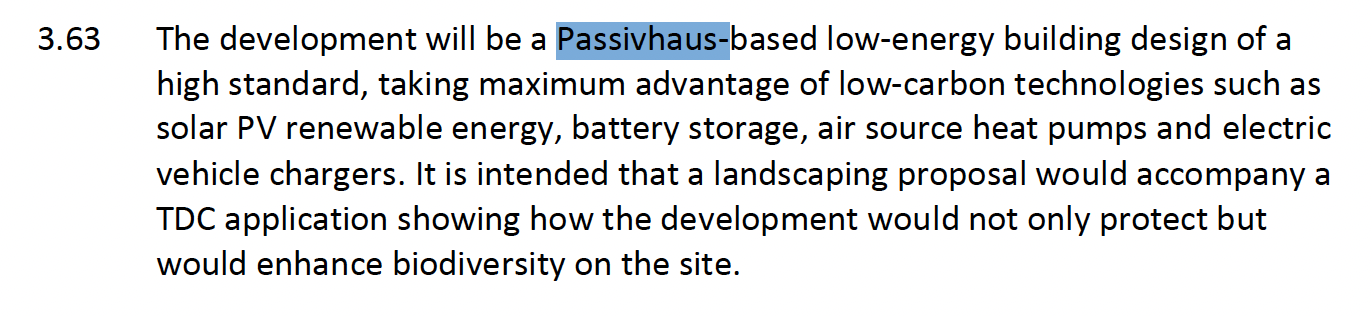
100% - I digested a lot of planning appeals for research and preparation and IMHO, most of the decisions were correct and the Inspectors were not biased towards agreeing with the planners. Unfortunately, there are always outliers. I'm pretty good at looking at things objectively and I just can't find it in me to give the Inspector in my case the benefit of the doubt; I do believe he was not only wrong in his conclusion, but included observations and assumptions that he should not have done, some of which were completely wrong. On another day with another Inspector I'm sure it would have flown through. BUT, as I mentioned earlier, in a back-handed way, looking at it dispassionately and objectively, I do think he gave me a clue as to how I might be successful - i.e. that he couldn't condition certain elements of the scheme to ensure they would happen and so couldn't really attribute a significant weighting to them in the planning balance. Those things *can* be conditioned in other application approaches such as outline planning, and so the same scheme may well be approved with conditions following such a route. After all (and here's another great statistic for those who may find themselves in the same boat, and one I've only very recently researched ready for the potential next application), an average car in the UK emits approximately 1,394Kg of CO2 per year based on average emissions of 211.2 g/mile and an average mileage of 6,600 miles. A Passivhaus Plus dwelling emits 1,810Kg of CO2 per year *LESS* than a dwelling built to Building Regs 2021 SAP 10.2, and those savings are *LOCKED IN* year after year. So my scheme would still be emitting 416Kg of CO2 per year less even if I wasn't using a zero emission, battery electric car as I have been for the last four and a half years... 😉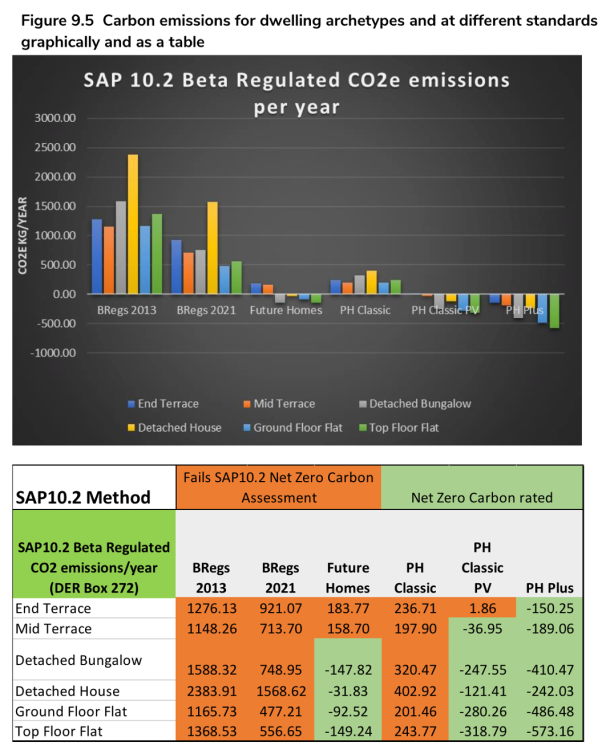
-
Hello! And, err... our appeal was dismissed :-(
garrymartin replied to garrymartin's topic in Planning Permission
Do you have some suggestions? Is it best to get someone who is used to dealing with a particular LPA or just the best at what they do? -
Hello! And, err... our appeal was dismissed :-(
garrymartin replied to garrymartin's topic in Planning Permission
Incidentally, I did actually point out that my appeal was not in relation to 'significant development' in my statement of case, but the Inspector seems to have disregarded it... Oh, and did I mention my LPA can't demonstrate a 5-year housing supply... 😲

-
Hello! And, err... our appeal was dismissed :-(
garrymartin replied to garrymartin's topic in Planning Permission
Probably. I am wary as I can clearly see evidence of good and bad consultants, and it's often not clear who, in a particular consultancy, is responsible for various responses. I'll maybe interview some when my plan moves forward a little. I already have previous appeals as reference that specifically mention "Significant" in the context of rural development and sustainable transport; example, for 20 residential dwellings (in 2022) - "In addition to the above, I would add that Paragraph 105 of the Framework states that 'significant development should be focussed on locations which are or can be made sustainable' and 'opportunities to maximise sustainable transport solutions will vary between urban and rural areas, and this should be taken into account in both plan-making and decision-making'. In my judgement, the proposal does not quite meet the threshold for being 'significant' development..." So 20 residential dwellings doesn't meet the threshold for 'significant' according to that Inspector. This is the problem, they're applying their own judgement and so you can't get consistency and can only challenge an appeal on the grounds of law, not of judgement. -
Hello! And, err... our appeal was dismissed :-(
garrymartin replied to garrymartin's topic in Planning Permission
My currently developing plan is to wait for the answers to my policy questions (which include incidentally whether the Head of Planning considers a single dwelling to be "significant development"), see what happens with the new government, and then go for pre-planning advice and an outline application with some matters reserved, including menas of access as the only reserved matter. In that way, I can offer various conditions to secure the environmental benefits I mentioned previously (electric vehicle charging, dedicated home office, Passivhaus Plus, etc.) I can't really see any more effective options but am open to suggestions. -
Hello! And, err... our appeal was dismissed :-(
garrymartin replied to garrymartin's topic in Planning Permission
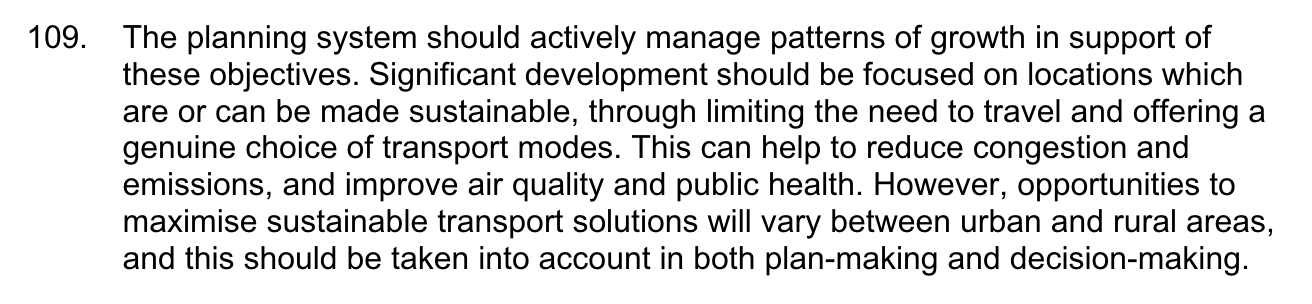
And therein lies part of the problem to my approach. Coming from a background where I'm very well versed in contractual wording, I naively assumed that the NPPF, although guidance, is very selective in its choice of words. For example, and the one that drives me nuts... So this is the paragraph that keeps being quoted in relation to limiting the need to travel and offering a genuine choice of transport modes, which is the reason for my refusal. Note it says "Significant development should be..."? It doesn't start with "Development should be..." Is a single dwelling "significant development"? I don't think so. Also, I'm technically rural, so that should have been taken into account when considering access to walking and public transport and really wasn't.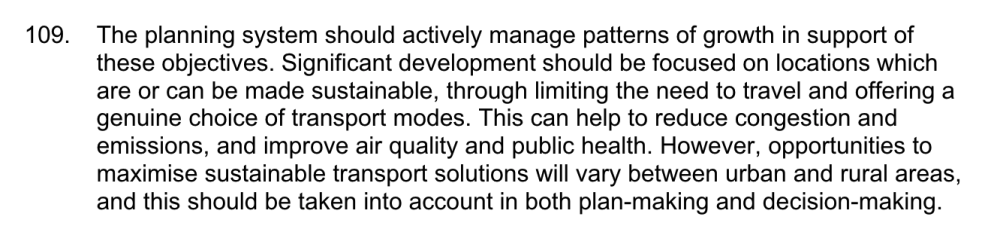
-
Hello! And, err... our appeal was dismissed :-(
garrymartin replied to garrymartin's topic in Planning Permission
I've asked some specific policy questions of the Head of Planning (who is incidentally new in role this year so may shake things up), and I'll wait to see what changes to the NPPF come in with the new government and will then decide from there. -
Hello! And, err... our appeal was dismissed :-(
garrymartin replied to garrymartin's topic in Planning Permission
I do believe the Inspector has been particularly harsh, and his comments do not align with those of other Inspectors in previous appeals. Unfortunately, you can't select a particular Inspector or control their mindset and feelings at the point they consider your case. I provided details on two different cycle routes - one via the A4133 and one via a bridleway that joins National Route 46 of the National Cycle Network. I demonstrated that the whole of Droitwich Spa and all of its comprehensive services were available by cycle with an isochromes map, and listed specific key services and the distances to them. The response - "Even so, I have limited details of the quality of these cycle routes. Moreover, the most direct would be along the A4133, which is particularly busy and is a journey only likely to be undertaken by competent cyclists. Also cycling would not be suitable for those with mobility issues. I am also not persuaded that occupiers would prefer cycle-bus and cycle-train travel options over the convenience of vehicle related trips. In particular for day to day requirements." So lesson learned - you need to also provide details on the quality of a route not just its existence! Also, the statement regarding cycling and mobility is in serious error. Sustrans, CyclingUK and many others are clear that cycling is one of the most inclusive forms of sustainable travel and that it often acts as a mobility aid for people who find walking difficult, people who can't walk far, and even those who cannot walk at all. E-bike technology has only broadened that accessibility. The Inspector also mentions "visitors to the proposed dweling" and that they will also largely be reliant on private motor vehicles. I've never seen the needs of visitors mentioned before in anything other than non-residential applications such as shops etc. So I do think I got a particularly harsh Inspector on maybe a bad day. ☹️