soapstar
-
Posts
218 -
Joined
-
Last visited
Everything posted by soapstar
-
One other question I had is given we have a 100kVA transformer how does this effect the power available at each phase? If this was a 50kVA transformer for example what different would this make to the available power at each phase?
-
Thanks. The transformer has 2 wires opposed to 3 which I assume means 2 phase? I notice some lines have 3 lines. What determines the fuse rating for each phase? ie why are they both 100amps - Is it as simple as saying if several appliances were being used which totalled over 100amps of current this would trip the fuse? Yes my knowledge of electrics truly is shocking ?
-
Hello @markc thanks for confirming. So given the fact that the transformer is deemed at 100KVa does this mean we have scope for a larger output if the fuses for the split phases we increased? Or does it not quite work like that? I guess the main question are we currently running at full capacity with the current setup?
-
Hi Guys, This area of electrics has always confused me and I have just taken it for granted. We are looking to determine our current power supply for our business. From what I believe we have a 100Kva transformer on a split phase supply. Our board has 3 x 100amp fuses to which only 2 seem to be utilised - I assume this is the split (or dual) phase? With the other 100amp not used is for a 3 phase setup I also assume that we have 100amp per phase? I can provide photos to clarify. Sorry my knowledge of electrics is very limited so be kind to me ?
-
@newhome thanks that's interesting regarding privet Griselinia seems to be a popular choice, although more expensive than the typical conifer types you mention. We may have to bite the bullet and try conifers and hope we dont get any wind burn! @Ferdinand Cotoneaster is interesting, seem to be recommended for the scottish climate although they are only semi evergreen unfortunately. And Holm Oak and Myrtle dont like Scotland apparently!
-
Thanks for the replies - It sounds like the Oleaster or Eleagnus x ebbingei as @Mr Punter (which is the same i think?) mentioned is something to look into. @SteamyTea Gorse is certainly an option and is everywhere in our area, however its so common in our parts it would be great to have something different, although it must grow here for a reason! No experience on privet hedging?
-
Hi Folks, One the better 'issues' to have, picking a hedge! We are close (within half a mile) of the coast and can get some quite bad wind gusts/rains etc - all that comes with being coastal! I wanted to ask what hedging would be recommended living in a coastal location? Has anyone had experience with this? Our main reason for hedging is to create a privacy barrier down one side of our property, approximately 100 metres of hedging. The initial thoughts were the usual leylandii however upon further research we have been told this can suffer from severe wind burn and even die off - this would be a disaster given the length (and cost) of the hedge! We have been considering privet hedging? Has anyone used this? We are mainly looking for a quick growing hedge that can grow rather tall (6 feet plus?) but be able to withstand winds - also evergreen is an added bonus. I dont pretend to have green fingers so I know nothing about this kind of thing, any help would be great!
-
Basic ASHP Efficiency Questions
soapstar replied to soapstar's topic in Air Source Heat Pumps (ASHP)
Thanks @Ultima357. I can confirm we are running oversized radiators with a 50 litre buffer tank. I have attached a picture of our UFH manifold setup. The thing that confuses me is if the ASHP is set at 50 degrees for heating will lowering this thermostat contradict the ASHP and cause issues? Where will the 'extra' heat go if we were to set the thermostat to say 45 degrees?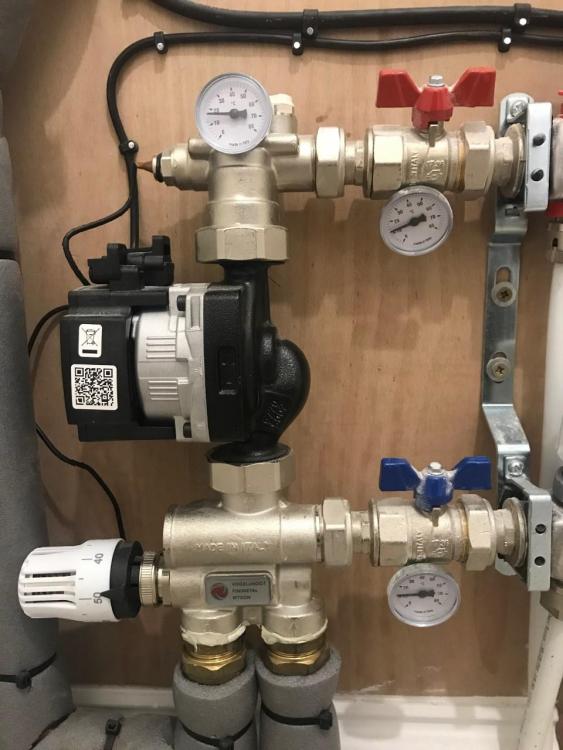
-
Self build in Scotland - advice please?
soapstar replied to 2nd Time Around's topic in Introduce Yourself
Building in the Aberdeenshire area also - from the size of the house I don't see how it would cost 300k (excluding land). PM me if you want any advice from my experience! -
Basic ASHP Efficiency Questions
soapstar replied to soapstar's topic in Air Source Heat Pumps (ASHP)
I have noticed by reducing our heat setting lower overnight does indeed save us money, all be it small but it is a saving! Can anyone shed any light on the query regarding the UFH temperature? I would like to know what determines the correct thermostat setting at the UFH manifold if our ASHP output is 50 degrees for heating - therefore should the UFH heating be set at 50 degrees also? -
Basic ASHP Efficiency Questions
soapstar replied to soapstar's topic in Air Source Heat Pumps (ASHP)
I believe the output temperature on our ASHP for space heating is set at 50 degrees with the hot water set at 55 degrees if this helps -
Basic ASHP Efficiency Questions
soapstar replied to soapstar's topic in Air Source Heat Pumps (ASHP)
Thanks @SteamyTea Is there anything which can assist me in calculating the heat loss? On another note I understand there is a thermostat connected to the UFH manifold which is set at 45 degrees - how can I determine if this is an adequate temperature? I assume if this is set too low the ASHP will struggle to heat the rooms to the set temperatures and never be off. On the other hand what are the consequences if this is set too high? -
Basic ASHP Efficiency Questions
soapstar replied to soapstar's topic in Air Source Heat Pumps (ASHP)
Hello @SteamyTea Yes we have a 50 litre buffer tank fitted. Sorry can you explain in simple terms what a room/room heat analysis consists of? My thinking was to try out different scenarios and keep an eye on the meter which reads the ASHP only, although this is not very accurate as there are a lot of other factors at play -
Basic ASHP Efficiency Questions
soapstar replied to soapstar's topic in Air Source Heat Pumps (ASHP)
hi @ProDave thanks. We looked into having UFh heating throughout however the costs involved were quite pricey! Sorry I should have mentioned we do have programmable thermostats, these can be set at different times. My main query was how low can you go for an 'unused' room and is it wise to set the thermostats really low overnight (or off if possible?). -
Hi Folks, This is probably a controversial subject and there is (before anyone points it out! ? ) lots of information out there regarding how to calculate the most efficient methods of running ASHP's. However for a simple minded person like myself I would like to understand the system better to allow me to make a judgement on how I should be running our ASHP. We have an ASHP which feeds UFH downstairs and radiators upstairs. Heatmeisser stats are in every room downstairs to control the temperature of each room or UFH heating loop for that room as I understand. And one stat upstairs on the landing to control the radiators on the top floor for every room - each radiator has its own thermostat also. Obviously the main goal here is to reduce running costs. We have several rooms downstairs which I feel do not need any heat as they will never be used (spare bedrooms). From a running cost perspective what is the consequences of setting the temperature very low in these rooms? Lets say 10 degrees (with the rest of the house at 19) - would this be detrimental to the overall running costs of the house? Is there a point where it can be too low? I understand the cost involved to bring these rooms up to temperature when required would be quite pricey however if your not using the room what's the point in heating it?! Going even further is it beneficial at all to turn the heating off completely for these rooms? This part confuses me as I have been told its good practise to keep the flow running around each UFH loop - now if it was turned off this is going to stop correct? In regards to 'turning off' the heating this begs the question how is this possible with thermostats in every room. These are set to keep a constant temperature, so if I wanted to turn off the heating for say between 10pm - 6am do I simply set the thermostat to 0 degrees between these hours, then at 6am set the temperature back to the normal temperature of 19 degrees? And hope the temperature does not drop considerably over night... Obviously there are other variables like weather, drafts, insulation etc however lets assume these are all constant - I just want to get an understanding of how to reduce the ASHP output before it gets to the stage where its doing more harm than good. Thanks
-
To anyone interested down the line it was actually the cap that was leaking, it was changed out for a different style and this has fixed the issue! Yay on to the next issues!
-
I will have to investigate later on, looks very suspect! Thanks
-
I was thinking that myself ?
-
Sorry I have just realised I have no close up photos of the external flue!
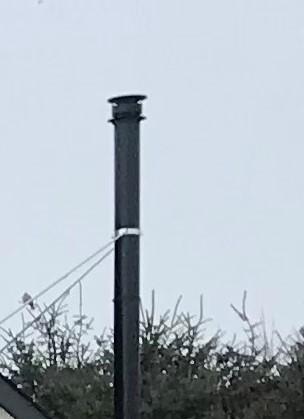
-
Yes twin wall. At first the liquid was quite oily/watery to touch, when hot it stained the stove white. Now this time it seems to be just water, there is no oily consistency to it now. It certainly isnt black or sooty coloured Your theory seems the most likely actually. It would make sense as there is no wetness inside the stove. What exactly is inside the insulated part of the flue, would the water be absorbed into anything? Hence the time it takes to reach the bottom of the flue?
-
Sorry I am confused with this bit, do you mean the flue diameter shouldn't reduce before the stove?
-
The last time we had rain was at least 3/4 days before this and we last had the stove lit around 1 week ago. The flue pipe goes through a rubber seal at roof level. @TonyT far as im aware its just solid twin wall flue pipe sections straight up Either way I will get the installer back out, I just wanted some advice encase I get told some BS
-
Hi @Carrerahill That does make sense what you are saying about damp wood. We aren't in our house yet so have been trying to burn off the 'new smell' you get from a new stove with only logs, no other fuel. This wood should be very dry, I wouldn't say its 100% dry but it was cut 2 years ago and left to dry under cover. The only thing perhaps is because we haven't got the stove up to max temperature yet? We just light it with a couple sticks now and then, given we aren't living there we don't want to be waiting for hours until it goes out! Thing is this water doesnt appear the day after we light it the stove, its more like a few days or even over a week. We do not have any moisture or wetness inside the actual stove, only on the top. The stove is only a 4.1kw so not massive.
-
thanks @ProDave I assume this would mean if water is getting out then smoke/gas will almost certainly get into the room?
-
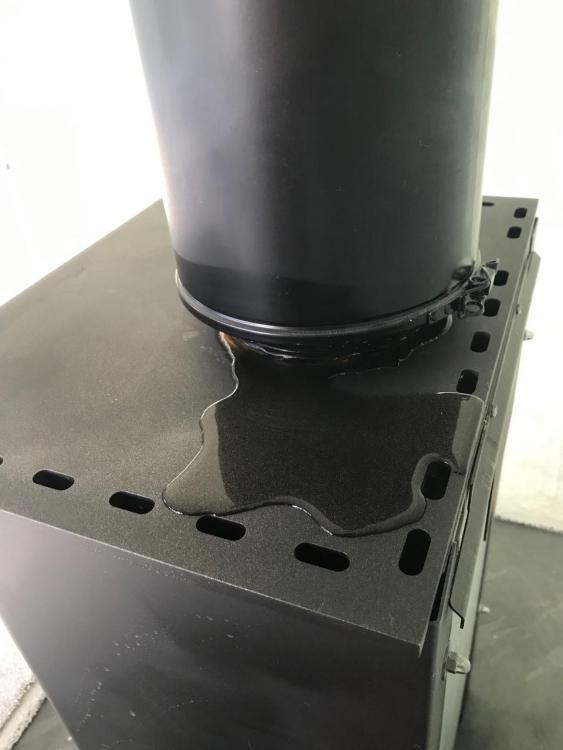
Hi Folks, Recently had our wood burning stove installed (all above board) by a qualified stove fitter and noticed the other day we have moisture on the top of the stove, didn't think much of it as we have hardly used it (maybe twice before this) and thought perhaps its condensation etc. However yesterday we now have a little pool of water sitting on top of the stove (picture attached), strange thing is we haven't had rain for a few days - only frost. Twin wall flue with cowl on top etc What on earth could cause this to happen?! ?