MarkH
-
Posts
113 -
Joined
-
Last visited
-
Days Won
1
Everything posted by MarkH
-
Thanks everyone. That seems to be the bottom line - that for now at least FLA is the way to go. If increased home storage happens - and it seems likely - maybe NiFe or flow batteries or something will become a consideration. It seems the wisest move is to hold off, wait and see. I'm not sure why I've lost two batteries in two years (with a single cell failure each time), maybe Crown batteries are prone to failure (supplier says not) or maybe my setup is lacking somewhere. Buying a new battery at £200+ every year is a nuisance though.
- 34 replies
-
- 1
-

-
- electricity
- off-grid
- (and 2 more)
-
I don't know what the extent of knowledge on here is for this sort of thing (probably deep and wide) but all opinions appreciated as always... We're properly off-grid as far as electricity goes. The quote for connection was well over £20k eight years ago, the nearest juice-poles are half a mile away and coming off the back of a few years living off all of the grids on a sailing boat it made sense for us to remain un-connected - we were familiar with the demands and had got used to a low-consumption boat-based existence. Our current P.V. array is only 1kW but together with a small wind turbine it easily keeps up with our demands living in a caravan. Once we're in the house the array will increase to 4kW and I don't anticipate problems with juice abundance. The fly in the ointment is the battery bank. We currently have a 345ah, 48V bank of flooded, deep-cycle lead-acid batteries made by Crown. Despite regular equalisation and diligent maintenance we've had two fail in two years necessitating a eight hour round trip for a replacement in the first instance and in the second recent case the purchase of a new battery - £170. I'm contemplating replacing the bank with something more robust, reliable and if possible lower maintenance. I've thought about AGM, about lithium and about NiFe... I'm wondering if anyone has any opinions or even better - real world experience - of living with a bank?
- 34 replies
-
- 1
-
-
- electricity
- off-grid
- (and 2 more)
-
We've homed in on something called 'tadelakt' as a possible finish, anyone heard of it?
-
Ok. Thanks. I might have to do an experimental cube or something.
-
Yeah I'm not fussed about the floor either, it's the cupboard/unit part that's interesting.
-
Yep, that much.
-
I've been looking at bartop epoxy-based finishes for wood, I think they're food safe when properly cured and very tough.
-
It's already planked and been drying for a while. And really nice wood. Most of the tree was logged and left to rot by a previous owner, such a waste.
-
When I started hacking at the tree-meat I asked a friend about picking up the right waterstones to sharpen my chisels, he said he'd started with a double-sided oilstone, graduated to waterstones & freehand, bought a jig, got involved with diamonds and strops before eventually realising it's all a huge pain in the arse unless you have very abundant time/are an obsessive and invested in a Tormek powered water whetstone. My friend suggested I'd do the same but looking at the price of Tormeks and the alternatives I thought otherwise. I was wrong. Faced with hours sorting out my main chisels and plane-blades (I've been bashing a lot of oak) I bit the bullet and bought a Sorby Pro Edge. In short, to anyone stuck in sisyphean sharpening limbo and considering a similar purchase - go for it. In less than an hour I'd brought my four most used chisels to mirror, shaver sharpness, restored several battered second-hand acquisitions to near-perfection and honed some garden shears to a level where just glancing at them removed your eyebrows. It is very good kit.
-
Thanks for the thoughts. Cast concrete seems overkill, ply maybe the opposite although inch thick would give solidity. Maybe rendered/painted blocks would be the one... 100mm might be too chunky though. When we cleared the plot there was a previously felled oak which we had slabbed down and which has been clamped and drying for 18 months now, it has great grain. We like wood but probably need to be careful we don't go wood-crazy.
-
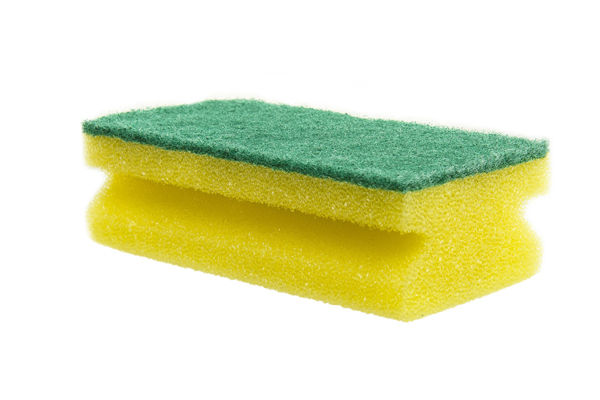
SteamyTea has told most of what you need to know there. As with most things, maybe slightly more so, working with GRP is all about good preparation. Otherwise not trying to do too much and working clean are very important. Concerning the above-mentioned itchyness, here follows what will undoubtedly be my greatest contribution to this forum, maybe even to humanity:
-
I need one of those... Just need to work out why now.
-
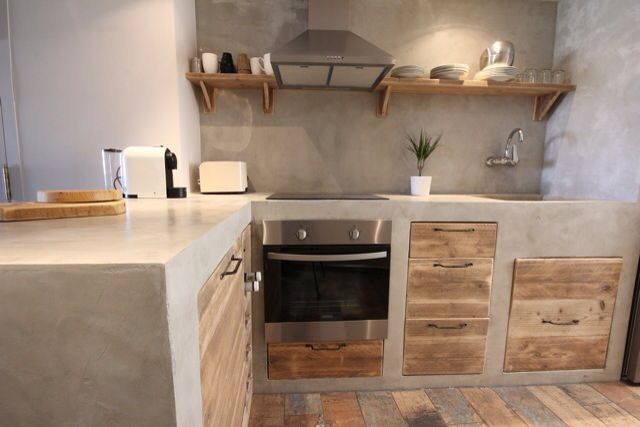
In our hunt for something that sits rightly(?) in our open plan house we chanced upon this style of kitchen: - and I'm considering the options as far as building something like it goes. We might not go quite as chunky as the above but the general idea feels like it might sit well in our house with our thick walls and heavy oak beams visible... Has anyone made something like this? Any thoughts on a good method of construction?
-
If you're going to be using it a lot, the Festool is well worth the money. I've done more sanding with a 150mm rotary than any sane person should and I've killed four Bosch and a Makita and tried most of the other brands. I eventually bought a Rotex 150mm for a worrying sum, it turned out to be a bargain - powerful, refined and very effective) especially with good extraction. A day of sanding is almost (but not) a pleasure and I never had the numb vibro-hand I had with ALL other sanders. Plus the Festool warranty is excellent: 3 years (not that you're likely to need it) during which time they'll fix your tool and get in back to you in short order. Mine developed a bad connection (turned out to be the power lead), it was collected and returned to me in twenty minutes by a butler who arrived by jetpack. My Rotex outlived every other 150 RO and was as good as new after three years of very, very hard use. Sadly it died in a swimming accident.
-
I'll probably use my compressor to blow out the holes. Last time - with no compressor or puffer thing to hand - I used a toothbrush attached to a drill whilst hosing water down the holes, they were very clean afterwards. I was using vinylester resin so a moist hole wasn't an issue.
-
Thanks very much chaps. Stuff ordered.
-
This is an obscure topic but I don't suppose anyone would have an idea of the size of studs we'd need to attach 225x75mm timbers to our walls (using vinylester resin)? The timbers will support joists (also 225x75) spanning 4.8m (on hangers). I used M12 in the smaller part of our house but I'm wondering if I should size up...
-
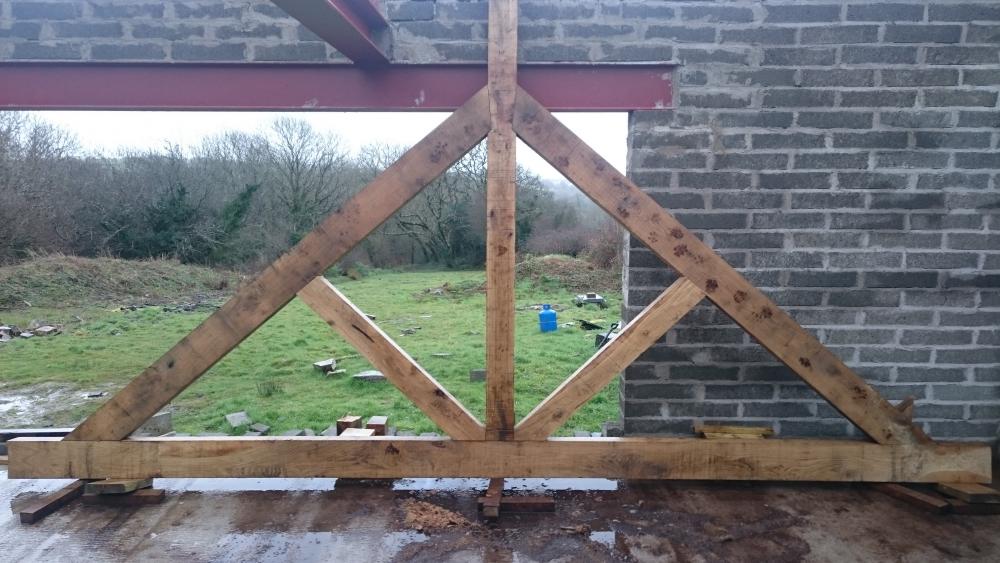
Trusses done. Here's one of them (kingpost yet to be cut down, by the way). I might leave those dog footprints...
-
Thanks - that's worth knowing!
-
You took the glass out of the doors and fixed sashes???
-
We don't ever plan on selling our house (having by a very unlikely sequence of events landed this place) but just in case a blog might be a bad idea. We are to some degree making it up as we go along. We're in Pembrokeshire, down in the bottom left-hand corner.
-
I've got these (but with 1.5m sashes) to install too. Yep the instructions are crap so if you find anything out please fill me in! And that sliding internal diagonal measurement thing the guy in the vid has - anyone know what it might be called?
-
Would anyone capable of removing their own compliant flow regulator not do so before BC had reached the end of the road?
-
No, that field wouldn't be fun. The runway field is behind us and has clean air from most of the compass.
-
Mmmm, yes. The bath idea has become an outdoor wood-heated tub. Not a hot tub, just a one-person seated thing. And I'm eying up the field behind us for a microlight runway.