Omnibuswoman
-
Posts
475 -
Joined
-
Last visited
-
Days Won
8
Everything posted by Omnibuswoman
-
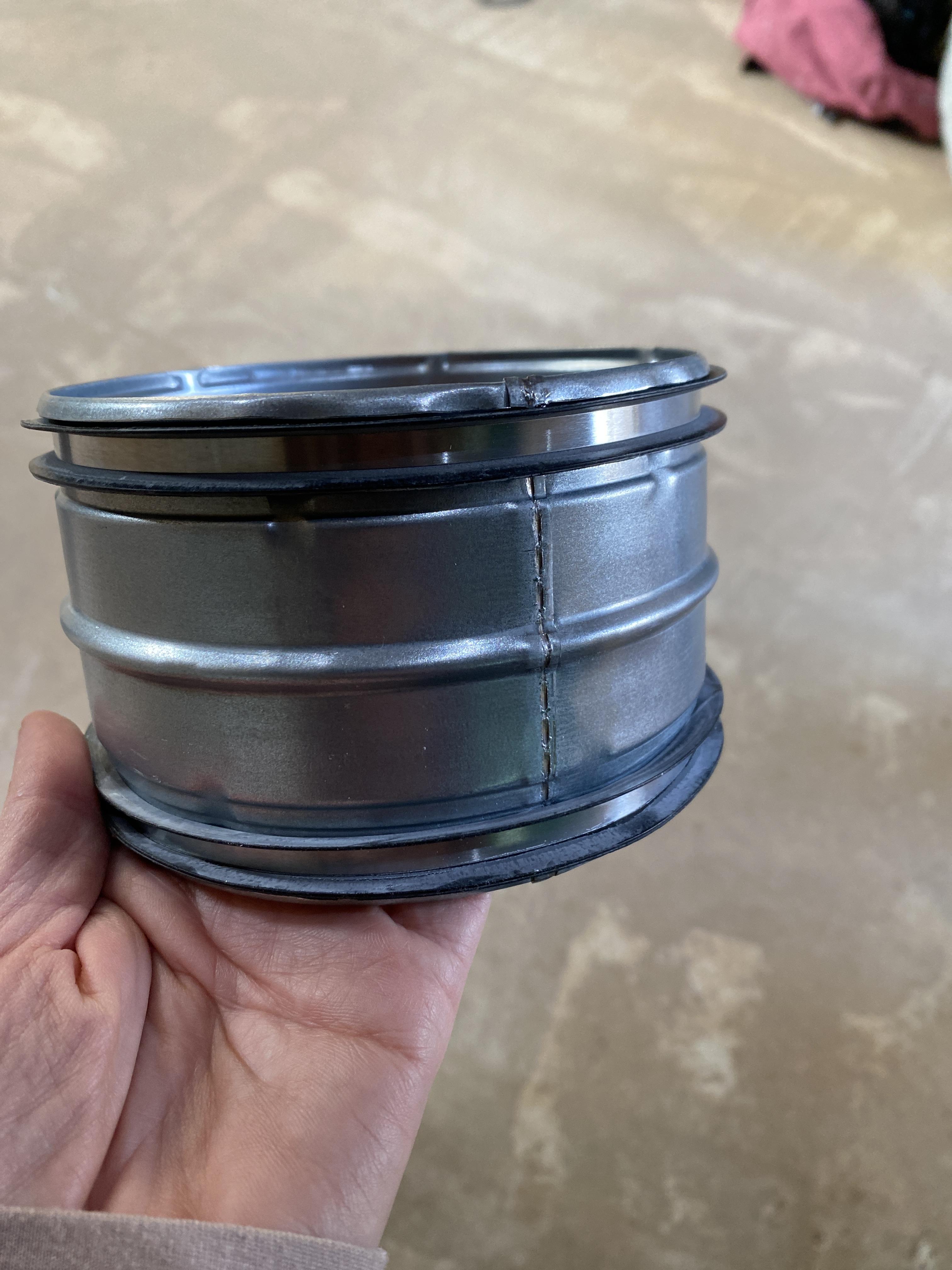
 For the long runs through the joists it’s about 10 400mm pieces, joined with a male/male gasket (right word?) like this: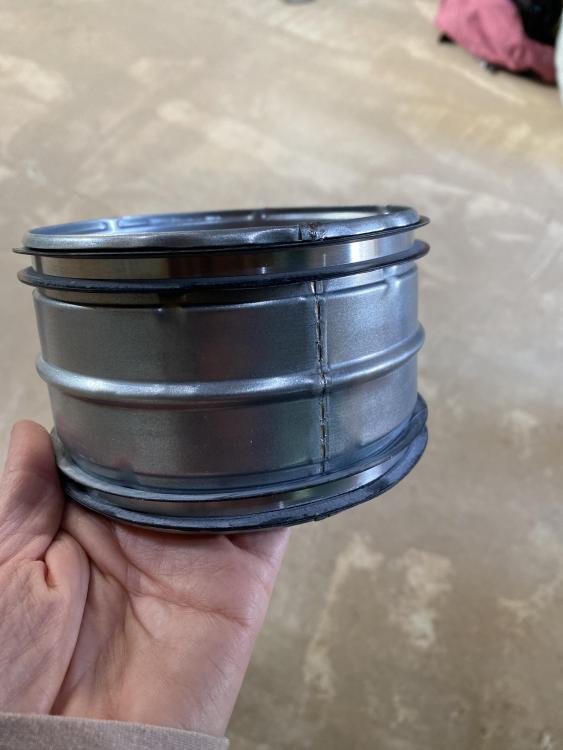
-
We proposed it in our BC application because we don’t have the required access for a fire appliance. I took your recommendation from a previous post to use the Welsh company you are familiar with. They’ve been great so far.
-
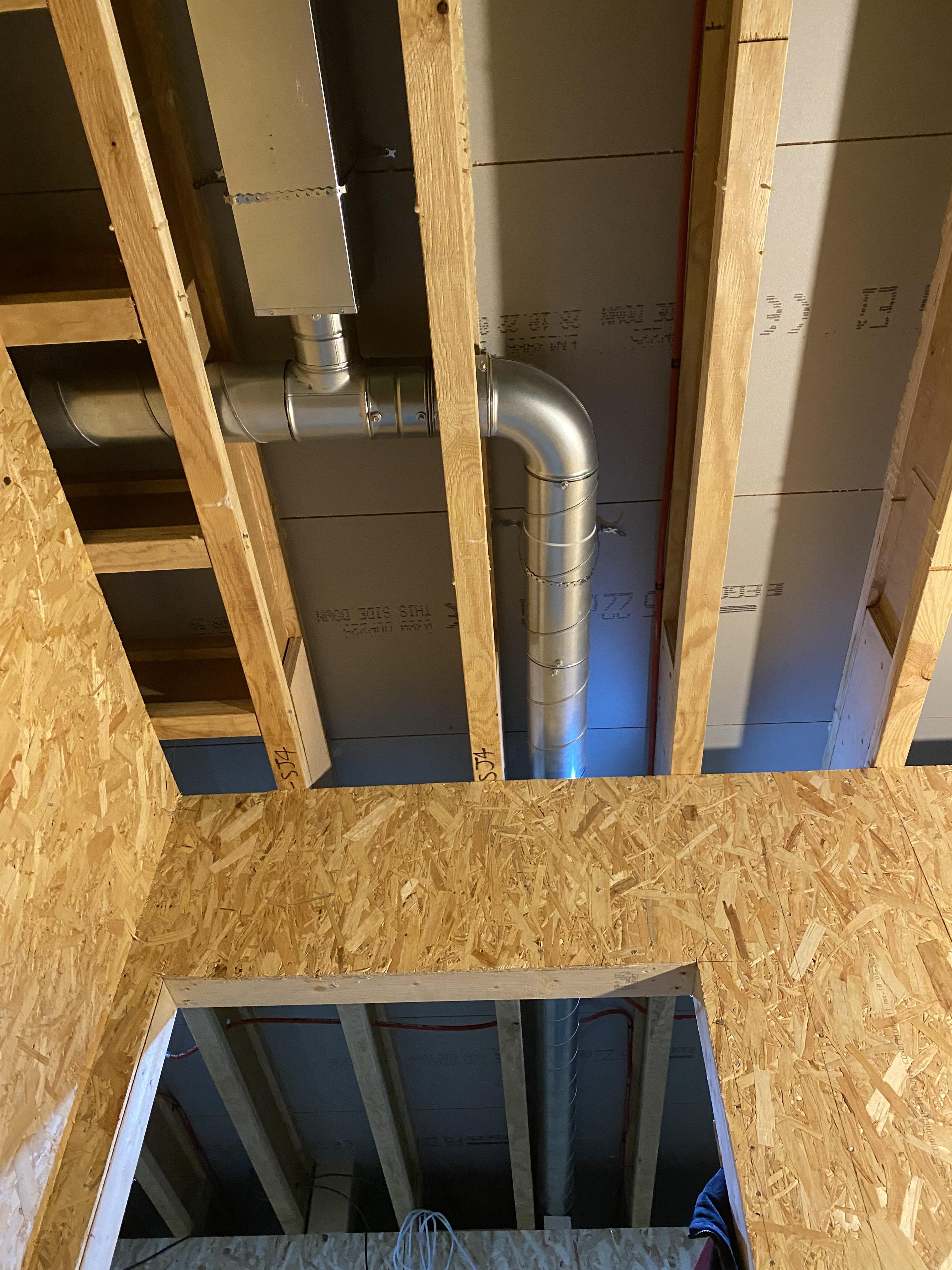
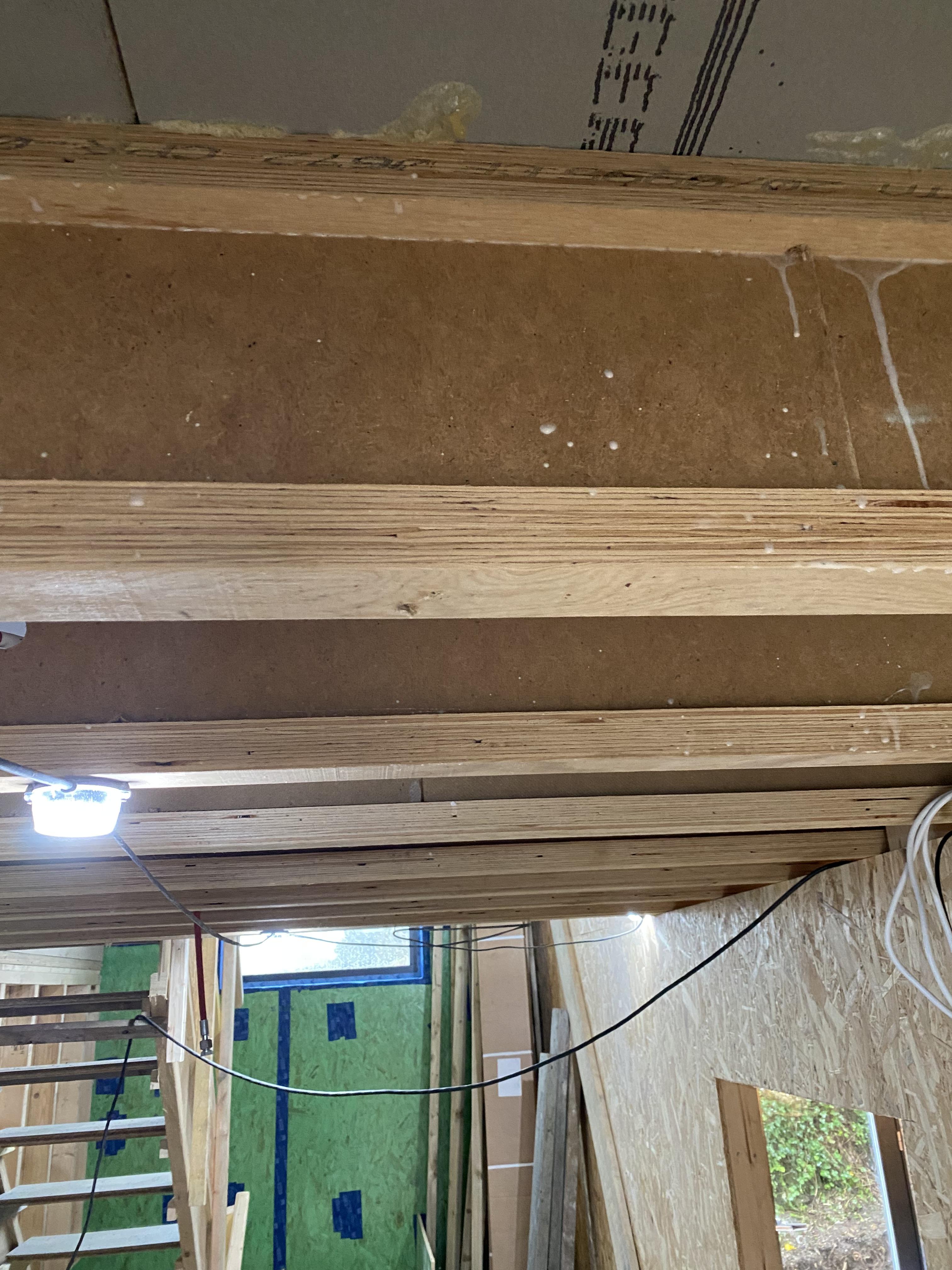
Brief update: I decided to keep the rigid system as it had already been delivered, and have outsourced the cutting of the ducts to a local guy who is a skilled metalworker. GBS amended the design to make it simpler, and jettisoned any 160mm ducts crossing joists. It all feels more manageable now, and we’ve made a start. Below is the fruits of several hours’ labour yesterday.
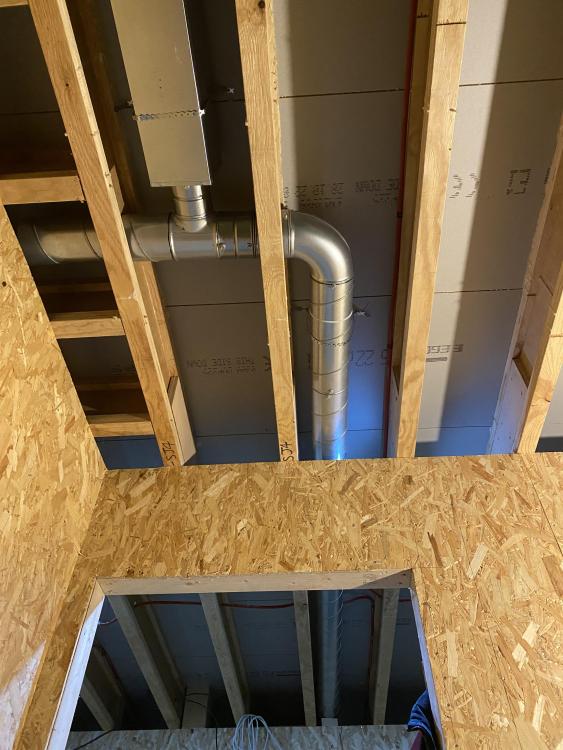
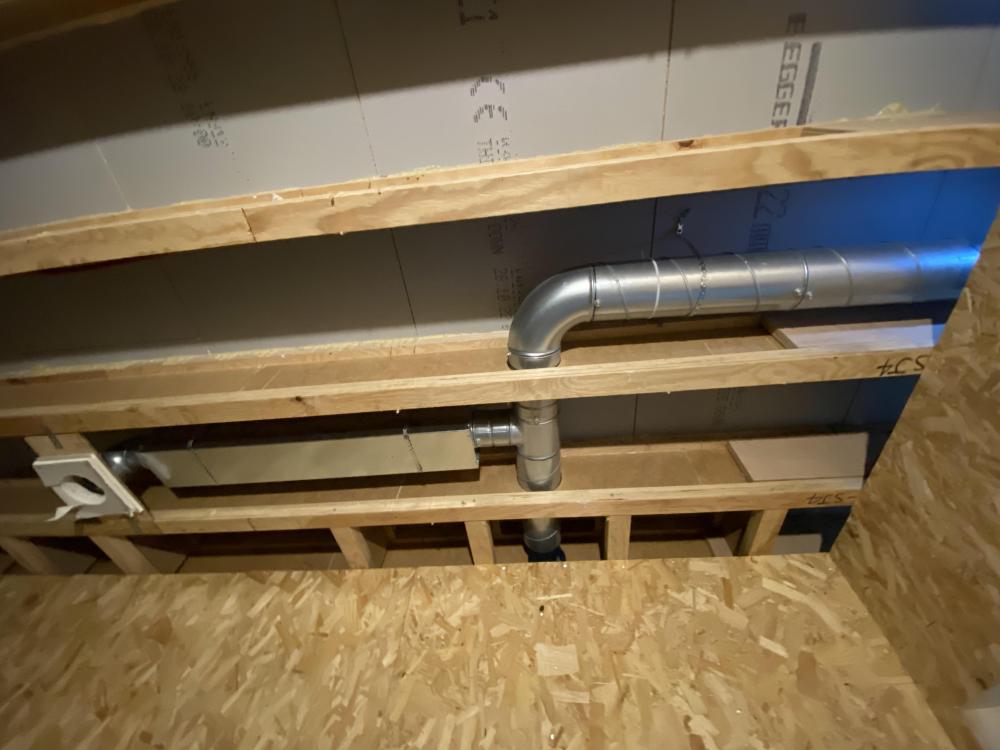
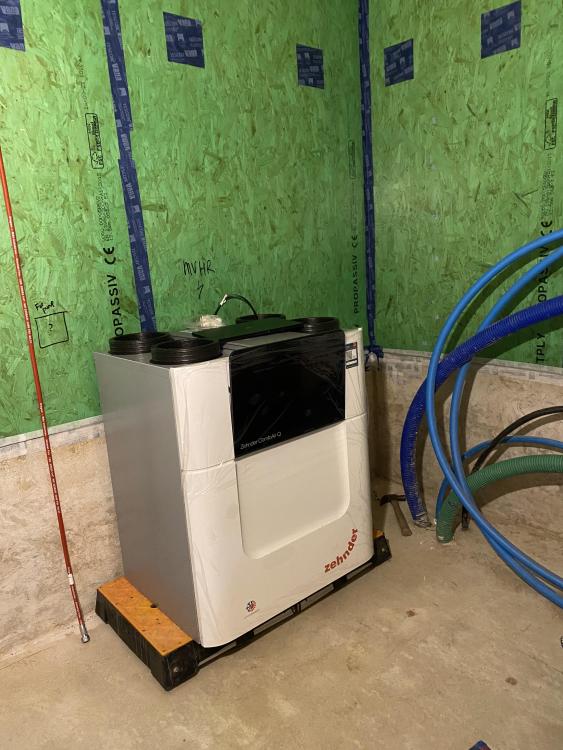
-
Accessible plumbing options with double ended bath
Omnibuswoman replied to Richini's topic in Bathrooms, Ensuites & Wetrooms
No, it is on my list of things to look at, but I haven’t actually got to it as yet. -
Thank you Botus… I actually gave you a little wave this morning as I drove past on my way to Topps Tiles. Despite their protestations about how easy it is, I’m just not up for learning to angle grind galvanised metal pipes. I lost a thumbnail on a vacuum cleaner at Christmas, so I know how easy it is to do oneself a nasty injury! They knew full well what and where our joists were when designing the system. I actually checked with the guy I was dealing with asking him the question about how we would get the pipes in, and asked shouldn’t we have flexible or semi-rigid pipes to make it easier. I regret accepting his assurances now!! I’m taking out my frustrations on the floor, chipping off bits of concrete. Very cathartic!
-
I’ve just spoken to GBS designer who said that it’s “very easy” to cut the rigid pipes into pieces to fit into the joists, and “hundreds of happy customers” have found this “easy to fit”. I’ve asked him to have one of these “very happy” people to call me to explain to me just how easy it is…
-
Update: I just spoke to the builder who built the house who said: “We designed it based on semi flexible duct. The rigid stuff you have to install as you do the joists which we didn’t want…” … which is useful information, about three months too late 🤦♀️ What I’m astonished by is that the company who did the design & supply knew that the house was built, and still designed a system that we wouldn’t be able to install.
-
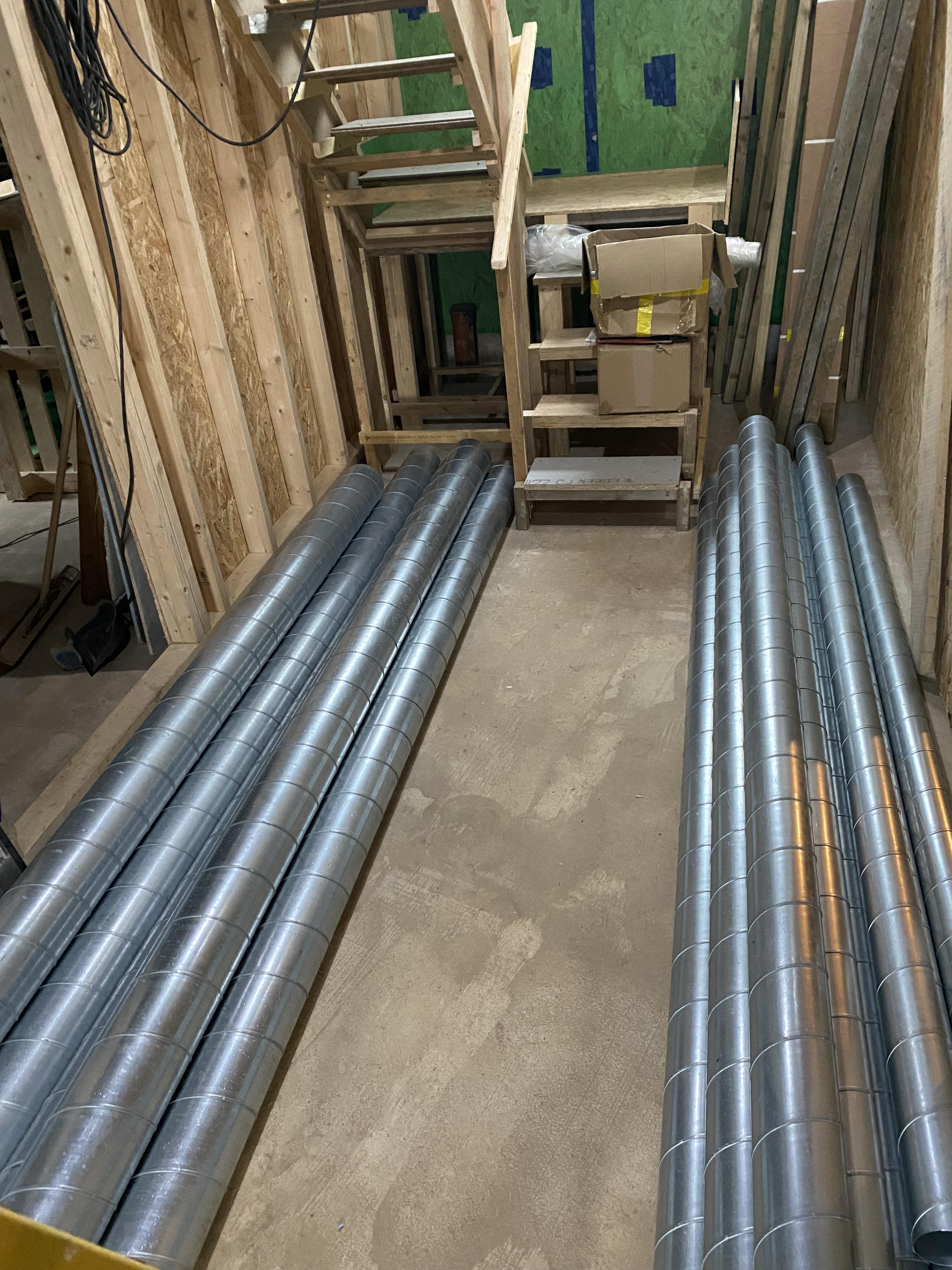
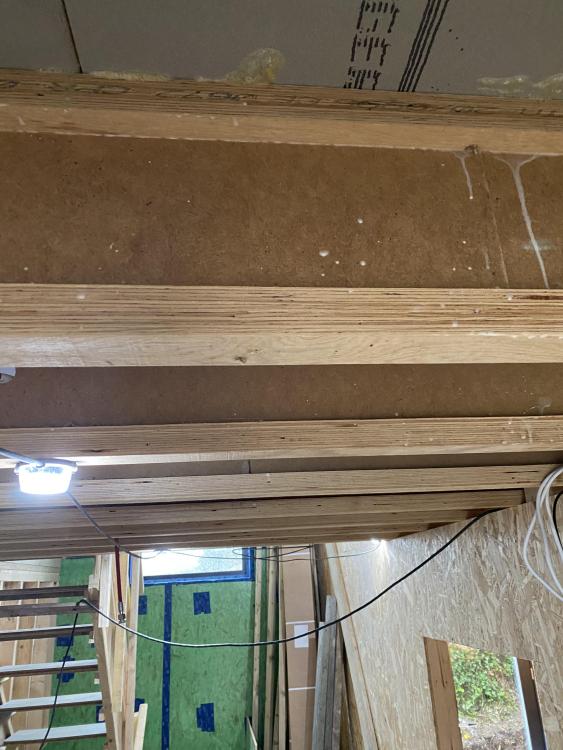
As well as doing the plant area we are starting to fit our MVHR system this week. The ducting has just arrived in 3m lengths of 160mm, 125mm and 100mm diameter. I’m now looking at our ceiling thinking how the chuff am I going to get these long runs of pipe at right angles to the run of the 400mm centre I-joists without cutting it all up into 400mm lengths… I have a sinking feeling that the answer is “you can’t”… I’m also concerned that the web depth is only 160mm, and the pipes are 160mm, which means undermining the structural integrity of the joists. So my questions are: Should I jettison the 160mm pipe and do it all in 125 and 100mm diameter pieces? how do I feed rigid pipe through the joists? how do I cut rigid metal ducting? should I go back to Green Build Store (who did our design) and ask them to amend the design? Does anyone have any good advice for me? thanks!
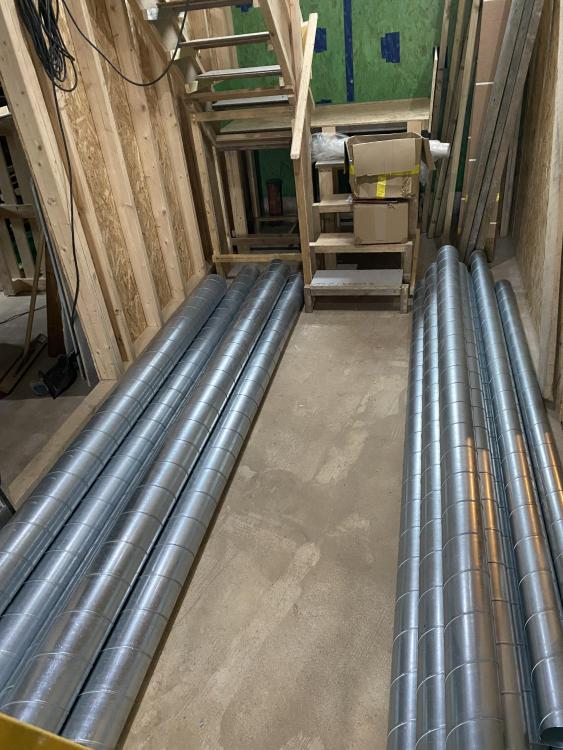
-
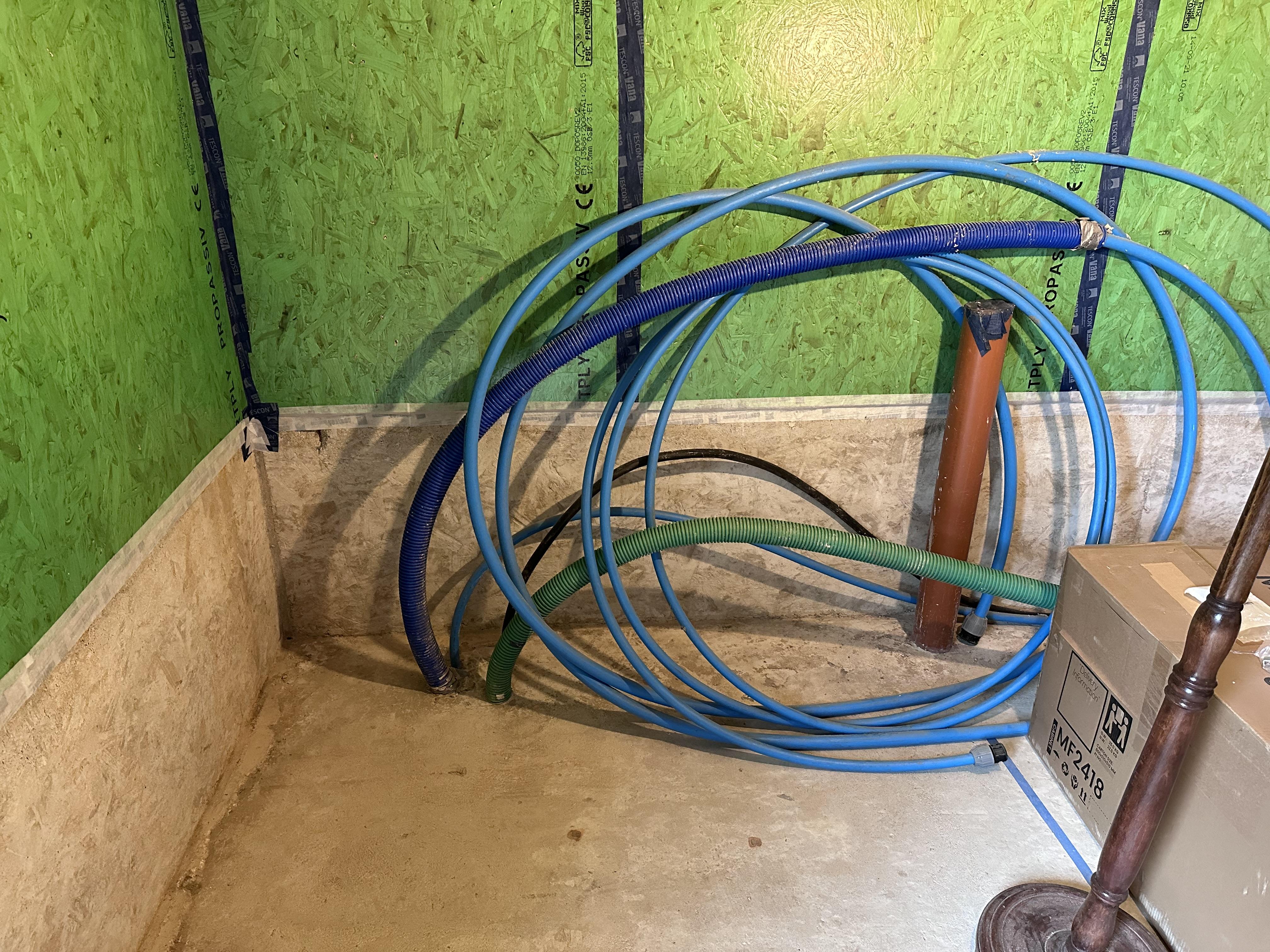
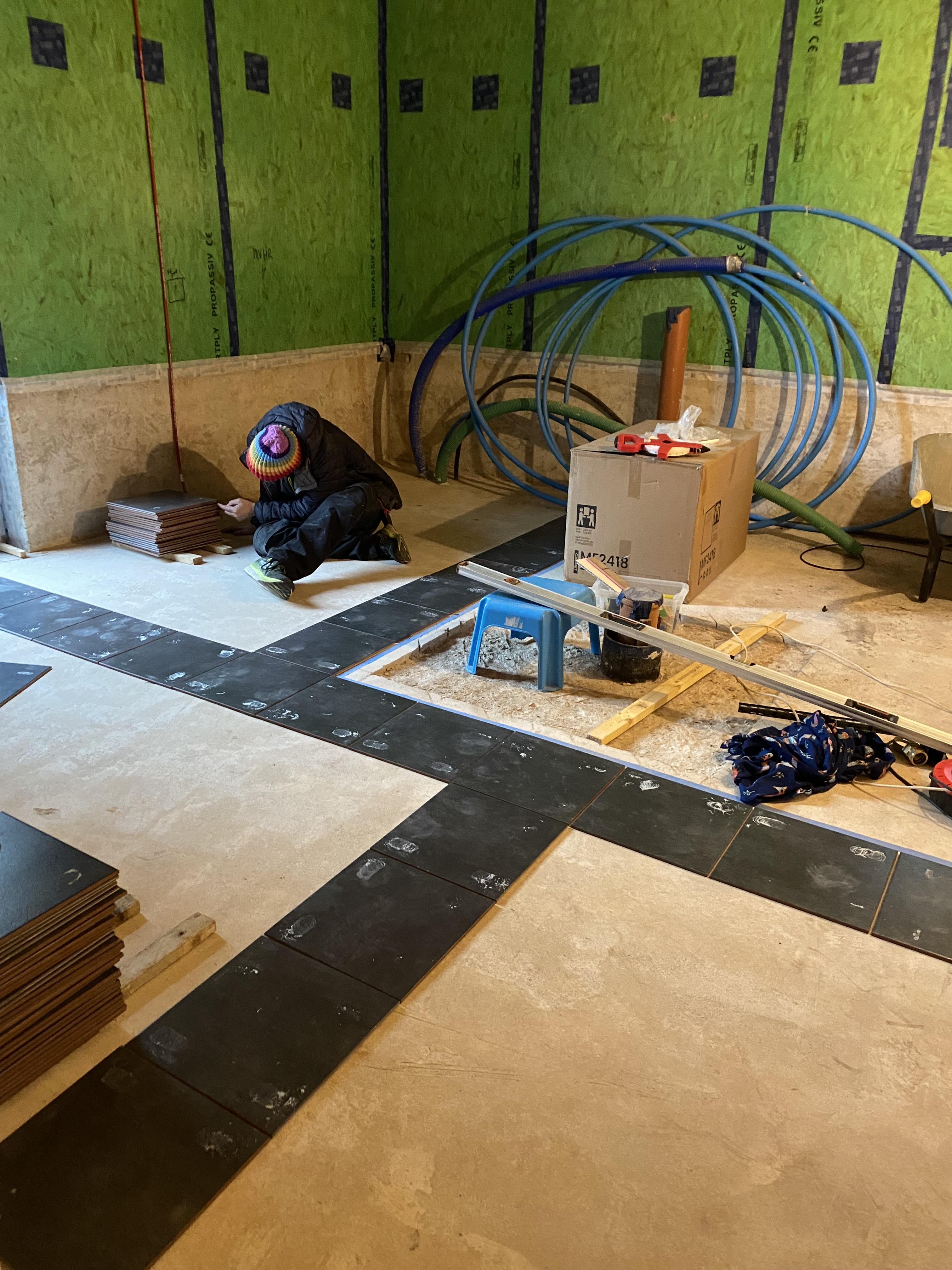
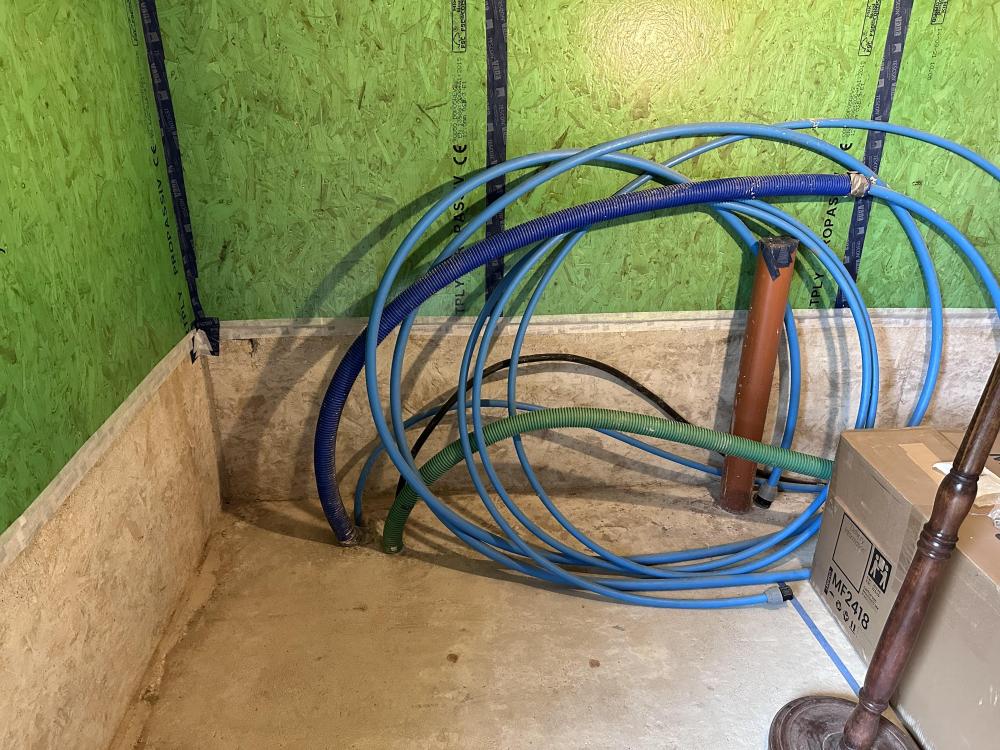
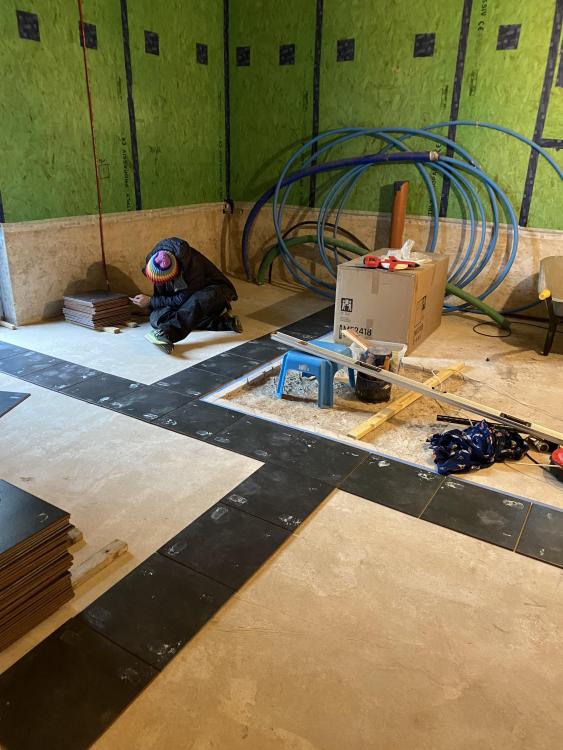
I am starting work lining and tiling the plant room this week. The conduits for internet, electricity and water come up through the slab and I’m not sure what to do with them. Any thoughts? photo below: The plant area is behind where HWMBO is sat, with the black tiles on his left marking out the right hand boundary wall.
-
We don't have any other equipment going in there other than the MVHR and DHW tank, so the risk is def lower than areas such as kitchen and laundry, but at this point the extra cost of lining with something more fire retardant than osb is so small as to be insignificant. We will definitely put a smoke/ heat detector in there too, and put intumescent strips around the cupboard doors (which will be fire door rated), and fire rated plasterboard on the ceiling. At least then I won’t have to worry about a hidden fire going undetected ( I can focus on the myriad of other things that I have to worry about!)
-
The plant cupboard has the MHVR and the DHW tank. So yes, some risk of electrical or mechanical fire, but probably a low risk. There’s no mister head inside the cupboard, only outside of it, so I would be wise to line the cupboard with a more fire resistant material.
-
Accessible plumbing options with double ended bath
Omnibuswoman replied to Richini's topic in Bathrooms, Ensuites & Wetrooms
We also plan to have a double ended bath with central filler/waste, and I’ve been mulling this question myself - how to access for repair or replacement. We will have a separate shower cubicle. I will be sitting the filler/waste on the side opposite the wall, for access. For an over-bath shower, I don’t know your layout but could you build a freestanding low level false wall at one end of the bath with an access panel on the back, and attach a thermostatic mixer shower to the face of it? -
Hmmm good question. No, I’ve not had any specific requests. The ceiling will be plasterboarded and plastered, which is the fire resistance strategy throughout the house, alongside our mister system.
-
Is there any benefit to me using fermacell rather than OSB? The walls are already insulated and air tight (it’s a timber frame design with blown cellulose inside the external walls).
-
Amazing! Thank you all. I wouldn’t have thought about floor levels! I’ve already got the tiles for the utility room where the plant cupboard is situated so I will get those down and will order some OSB. Will get it painted before the DHW tank gets sited next week.
-
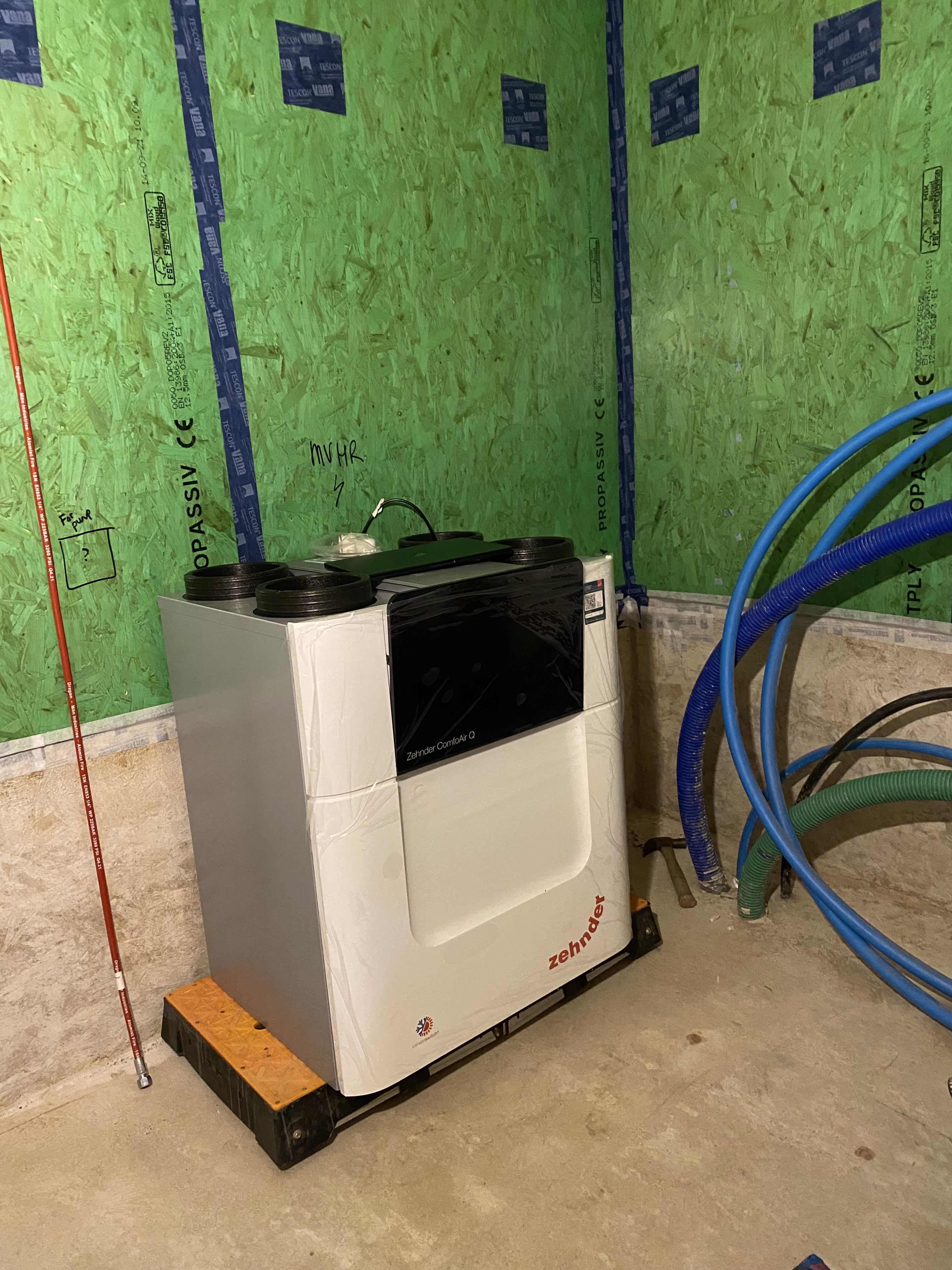
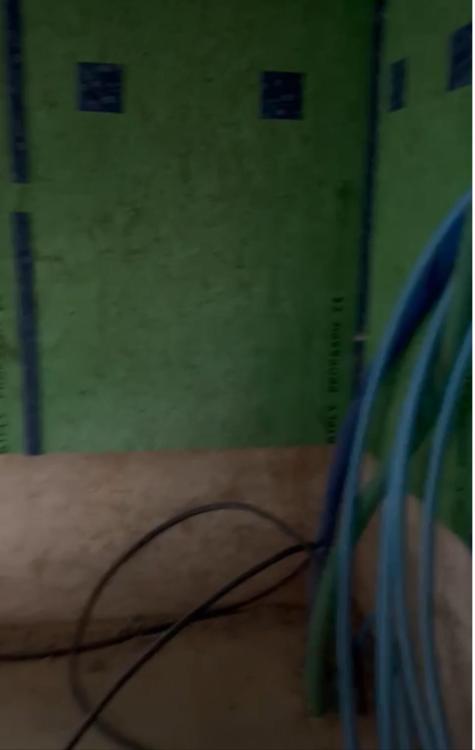
Our plant area for DHW tank and MVHR currently only has Pro-passiv OSB and airtightness tape on the walls. Before the plumber arrives next week to begin installing the hot water tank and pipe work, should we put up a wall lining to make it look a bit neater? The plant area will become a cupboard eventually. We’ve not yet battened out these walls, but can do so if necessary. Thanks!
-
I am very seriously concerned about rising sea temperatures and the impact on the strength and frequency of storms across the UK, especially in the South West. We asked our structural engineer to spec to withstand hurricane force winds, and got a rather sceptical look. I also over specced the drainage system as I’m concerned that 1:100 year storms will become much more frequent. Sadly the government seem hell-bent on demonising people who are worried about the climate, rather than recognizing the need to inform/educate and prepare our society for what is likely to unfold over the next 30 years.
-
Self Build in progress - North Wiltshire
Omnibuswoman replied to knobblycats's topic in Introduce Yourself
I will DM you! -
Self Build in progress - North Wiltshire
Omnibuswoman replied to knobblycats's topic in Introduce Yourself
Well done knobbly! Interesting to hear what you have done. We used Build Collective for SE plans, so are interested in your experience! -
Hi Angus, I’m probably one of the least DIY-skilled of those you will find on this forum, with only basic prior DIY experience such as putting up shelves. My husband and I have paid a builder to construct and roof the house, and are engaging professionals for electrics, plumbing, plastering and joinery. What we have done ourselves is build a workshop, and we are doing basic labour for the house such as air tightness taping. When the time comes we will install the MVHR system, do the internal insulation/sound deadening, and the decorating. We both work full time, so have limited time to be on site. Hope this is helpful, Omnibuswoman
-
Need for noggins in supporting wall?
Omnibuswoman replied to Omnibuswoman's topic in General Structural Issues
Thanks all. Helpful as always! I will give the workman the definitive opinion that these are not needed because of the OSB (which I have already told him), and if he continues to insist, I will let him add them once everything else is finished, as long as he only uses leftover timbers 😂 -
We have a workman on site at the moment whose primary hobby seems to be slagging off the work our builders did. Among other things, he is critical that our two supporting walls, that are timber frame with OSB for racking strength, don’t have noggins. I’ve checked our SE drawings and no noggins were specified. The workman is keen to get me to allow him to add in noggins, so I’m looking for some external opinions about this. I don't think he is generating work for self-enrichment - there’s no shortage of work and I know he isn’t even charging me for all of the time he spends on site - I think this is a genuine concern from him. My assurances that the SE would have specified noggins if they were needed have so far fallen on deaf ears, so would value others’ experience - especially anyone with the same design. thanks!
-
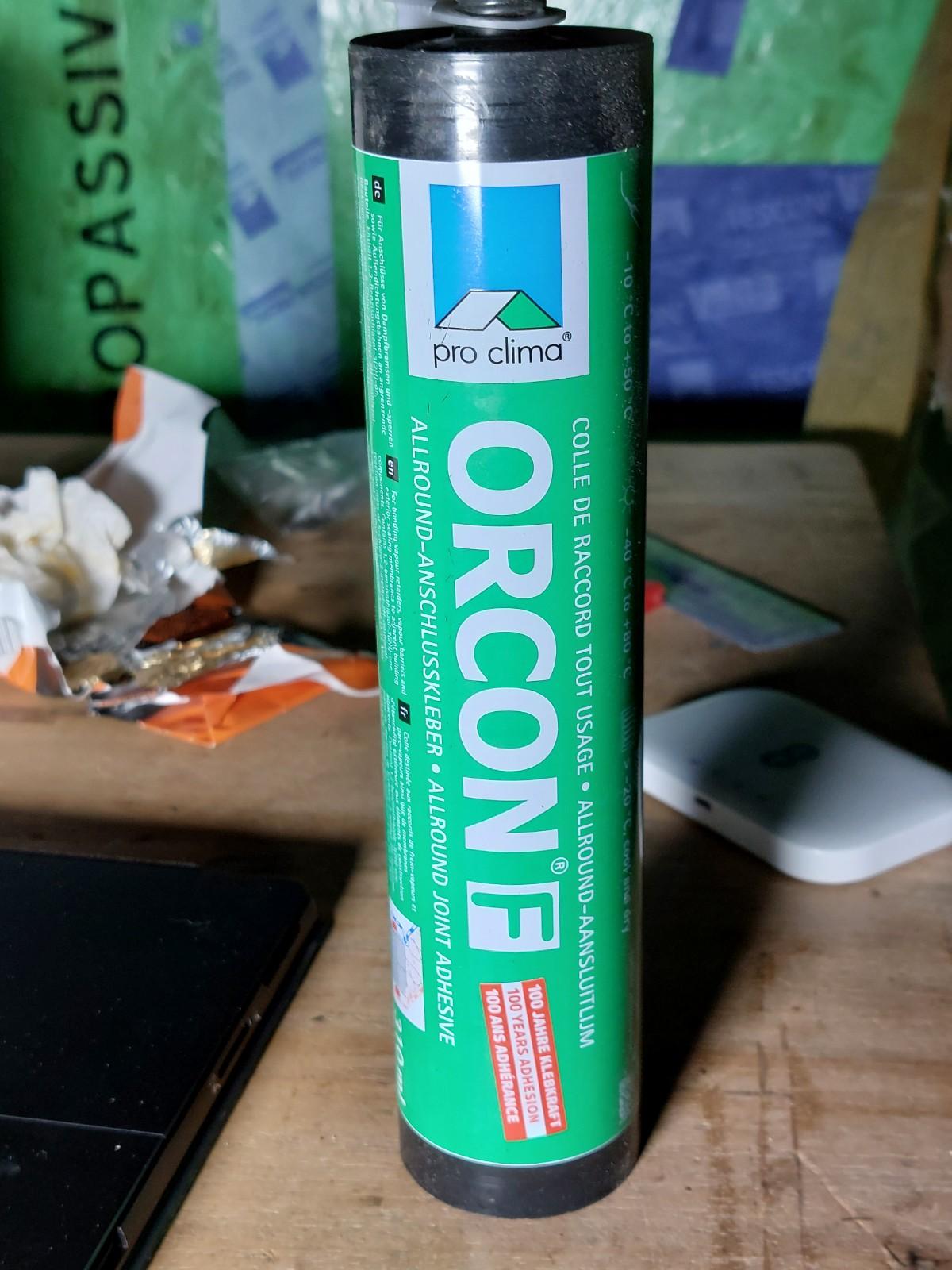
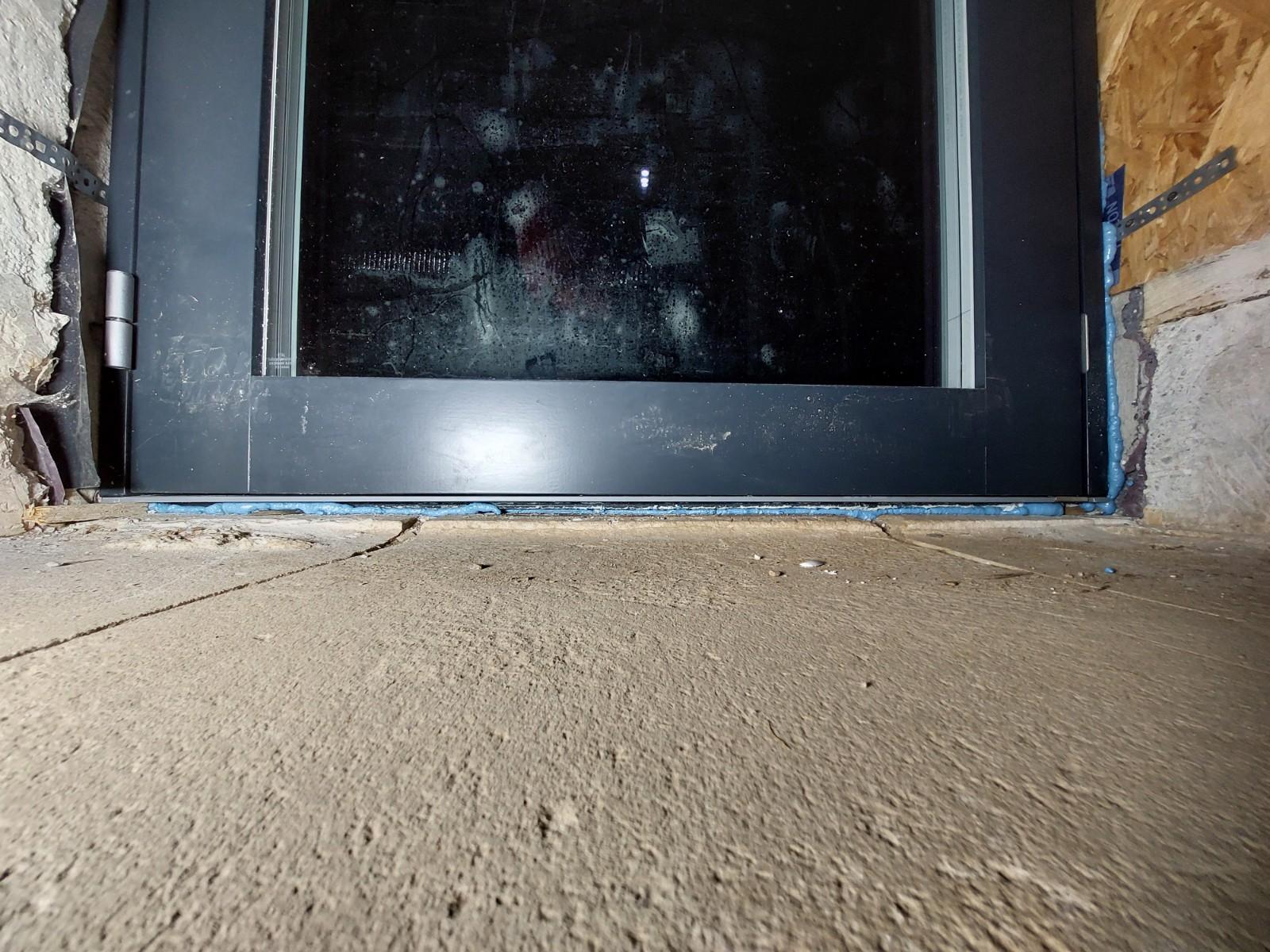
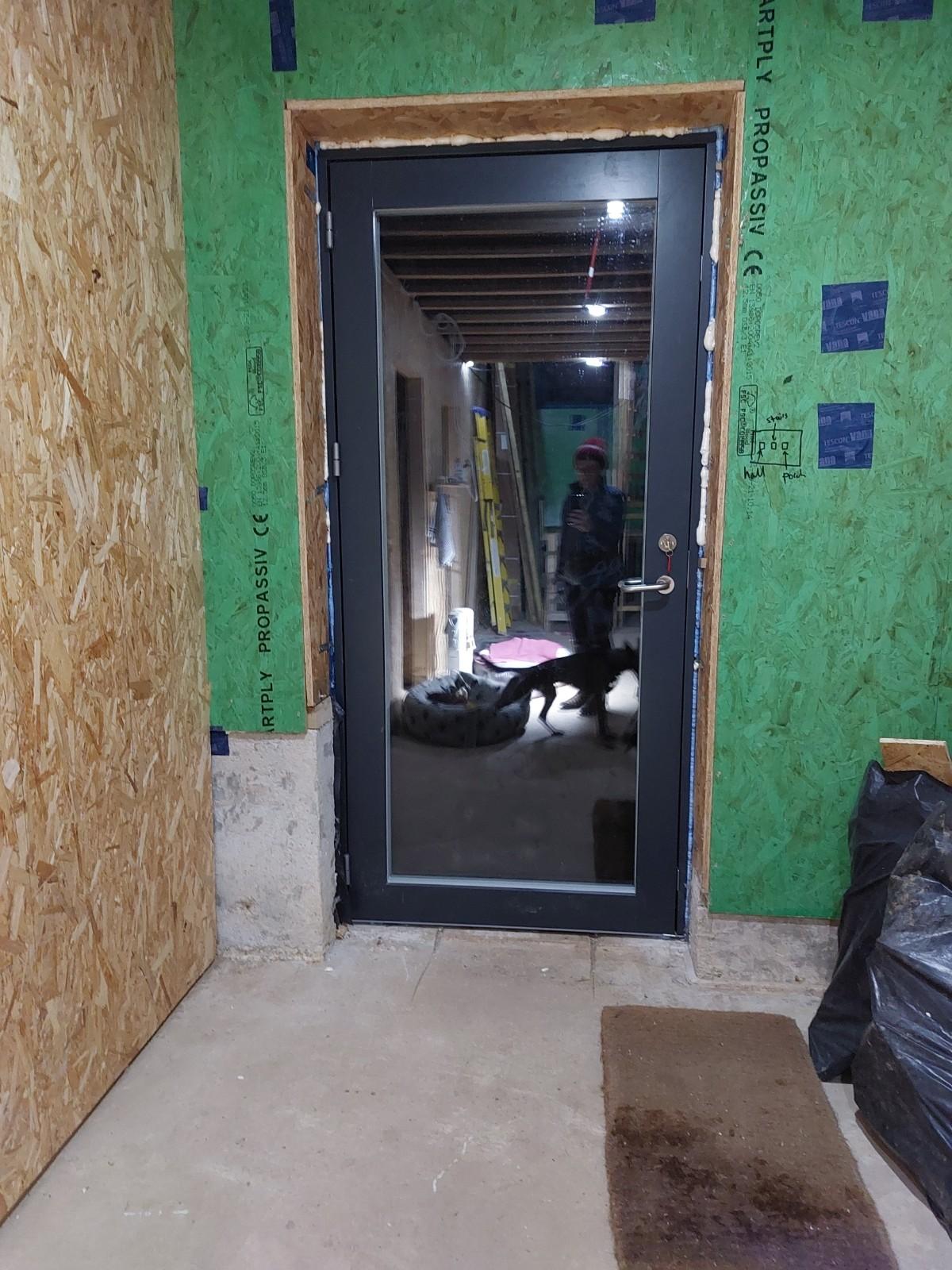
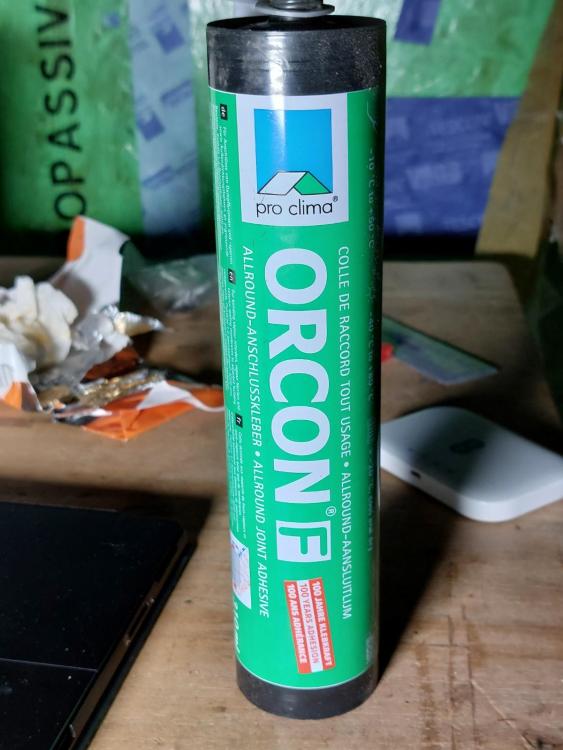
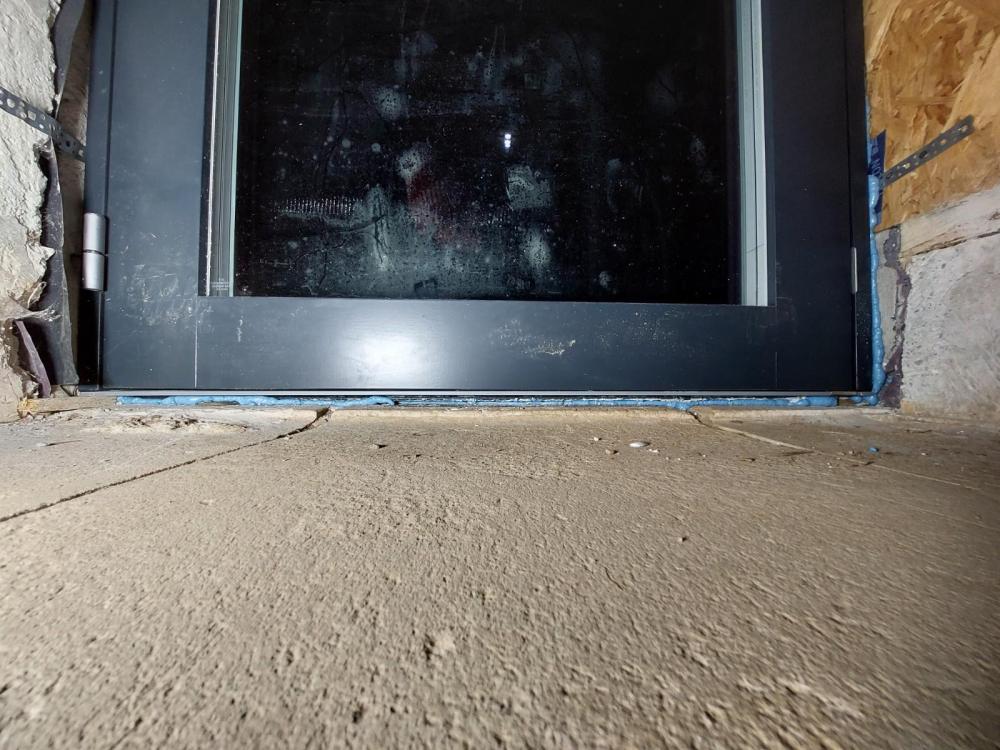
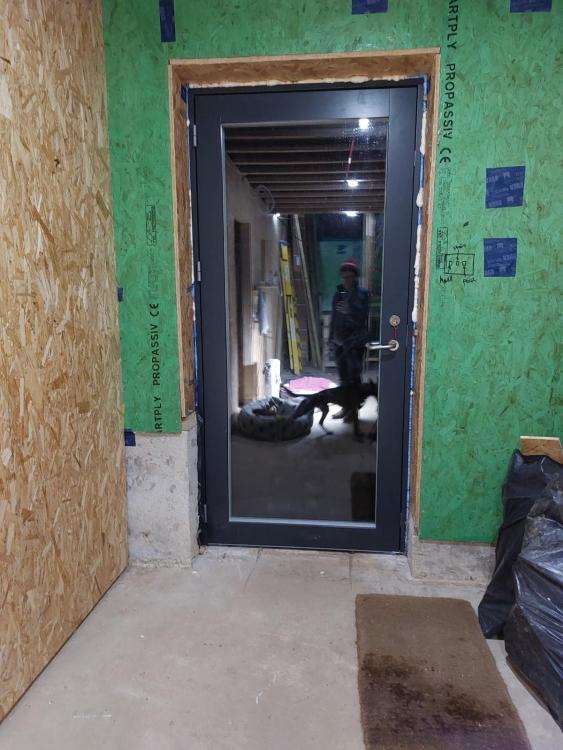
Our front and back doors were changed last week, correcting an error the builder made last year. The replacement doors have been installed slightly higher than the others, to allow sufficient clearance for the hallway flooring. Underneath the front door is a small gap which the builder said we could fill/cover with Orcan F before taping with air tightness tape. Is this right? I can only find videos that show Orcan F as an adhesive, like OB1, rather than as a sealant. All advice greatly appreciated.
-
Welcome to the forum! We are just up the river near Calstock.
-
What was the outcome in the end? Did the stairs go under or over the LVT? How did you fix the landing? My set-up will be v similar so following with interest…