
puntloos
-
Posts
1575 -
Joined
-
Last visited
-
Days Won
1
Everything posted by puntloos
-
My use case: I'm 80% sure I want Timber Frame in the first place. But I have a few concerns (that will probably have to be addressed regardless of construction method, but let's take TF as a starting point): 1/ Acoustic Properties Nothing other than a meter of concrete will be perfect here, but I want to reduce sound travelling as much as possible between in particular my home cinema and any (bed)rooms above it. I think there's a lot of 'layering' needed, so perhaps the main materials are not that important. 2/ Creakiness/movement. Creakiness is mainly (?) due to wood's natural movement properties in particular if it gets wet. Once it moves, other things layered on top of it will start to shift&creak. This is where Cross Laminated Timber was suggested. It has much less movement 3/ Heat characteristics. Providing mass to the building, ideally with large capacity to absorb heat before its temp rises, seems helpful here. Mass needs support - stronger joists, perhaps stronger, more rigid building materials.. 4/ Underfloor heating Primarily a combination of the above concerns If you want to add mass, e.g. screed to lay the UFH in you need to be able to carry it If your material moves/creaks it could have some impact on the UFH (this has been mostly debunked by the forum here, but I'll leave it as a small note) The material type that seems most helpful here is something pretty rigid.. would CLT be a good candidate? What are the downsides? And more importantly perhaps, are there any actual TF companies that can work with them and provide a CLT-based timber frame in the first place?
-
Ha, I might actually start a new thread on that one, but honestly I think 'heat management' is one of the #1 subjects out there when it comes to major failures of a house design, so regardless of where this is being worked out I am interested in the discussion. As an engineer in my former life I understand some of these words, but frankly the "actual implications" so far elude me. It's clear(?) that: - Solar gain is a major issue, so you better have some way from stopping the sun even entering your house - TF-based houses can have the same, or very similar characteristics. - If you want to create a large amount of heat (or cold) storage, effectively increasing the heat inertia (am I making that term up?) of your house, you can use "cellulose based" as well as "silicon based" to great effect, I can't tell who the ultimateabsolute winner is, but you can have good results with either. Fun fact, I spoke to a structural engineer yesterday at "Don't Move, Improve" and they suggested Cross Laminated Timber for extra structural rigidity, although they suspected it would be harder to get as a self-builder.. Thoughts?
-
Awesome JSHarris post I hadn't seen yet. It's weird, instinctively we all know the "cool church in a heat wave" feel, and the "sweltering wood sauna" Perhaps that's the root of our biases?
-
Perhaps it's worthwhile to list the Advantages/Disadvantages on timber frames somewhere. Couldn't find such a post so I'll start this one. My current impression of the Pro/Con, quickly jotted down, please correct/suggest changes and I will update, perhaps elaborate on the items a bit etc. Benefits of Timber Frame: - Faster construction once started - Easier transport to remote sites - Sustainable - Accuracy of design - Increased certainty of cost - Lower running costs (easier to insulate) Downsides of Timber Frame: - Material Costs (compensated partially with less labour cost) - Harder to fix calculation mistakes, or if caught short during build - Large cash up front - Noise between floors harder to mitigate - Larger potential for floors to be creaky/bendy - Harder to insert cabling/ducting in walls - Extra work/cost needed for upstairs Underfloor Heating (fortification to carry the screed?)
-
It's quite possible I misunderstood. Let me inquire. Are there any major downsides conceivable then? I mean, speccing joists for some extra weight might add cost but surely not dramatic - a few %?
-
Timber frame being as it is (a bit more 'moveable') our Architect noted it's typically problematic to have first+ floor underfloor heating since movement can break pipes etc. Has anyone tried UFH on timberframe? Bad idea? Can be done?
-

Size and layout of your networking cupboard?
puntloos replied to puntloos's topic in Consumer Units, RCDs, MCBOs
All of this stuff in one place? Not bad.. how much volume are you using for it so far? Perhaps just a section of a wardrobe would suffice for this.. -
Size and layout of your networking cupboard?
puntloos replied to puntloos's topic in Consumer Units, RCDs, MCBOs
Hm, surprising. I'm a pretty computery guy, but I'm currently doing still fine with about 10 ports (as well as a few broadband router's ports) But yeah, 32 sounds sensible to spec for.. to be fair though I think wifi will mostly cover the last meters while I think a single cat 6 can go to most rooms.. or? I expect i will do something like - One central access point near the broadband router - A few 'orbi/google wifi' style sattellite access points (these also have an 'ethernet out' so you can connect a switch, that I would star-out to 1-3 room ethernet sockets per room..) But effectively this amounts to 'one ethernet plug per room' at most.. so 6-ish I guess... and then a few dedicated lines to e.g. media player, server..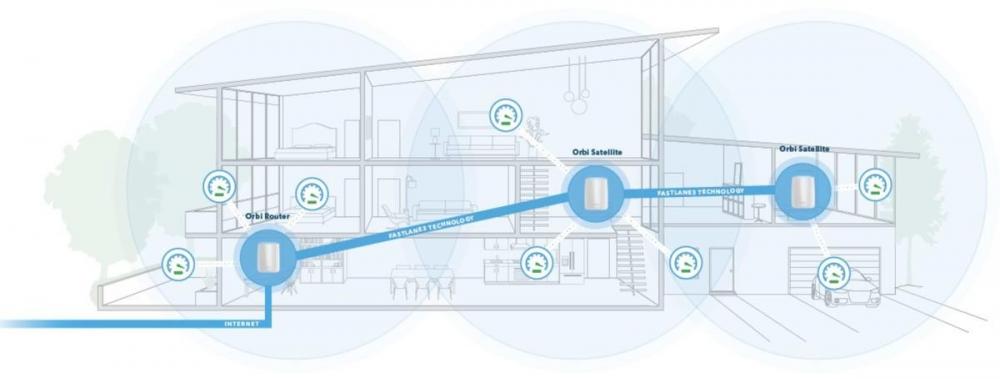
-
Hmm good to know, I might try to accellerate my process to ask for tender before Brexoween..
-
Or alternatively, timber businesses would be easier to get a good price off right now, exactly because of this worry. Yes they might be a bit less dependible but if you give them extra time to rally they could just prove to do well? FWIW I only care about the frame, I have no intention of using timber anywhere else, Buying them with GBP you mean? Yeah that's not an ideal transaction at this point, although you could 'bet' that things will go south even more, still? Or am I misunderstanding your historical data point? Ah but you forget, with Brexit there will be no paper work! It's all "uh, we have no clue, just go about your business", no? Slightly more seriously, I suppose you're right, and I don't think I want to be handling importing tiles myself. That said, I've imported smallish "toys" frequently enough, most things I will leave to the pros but ee.g. that "toto" toilet might be something I could manually do. Also, this is actually a gap in my knowledge but how does the financial transfer process go here - we just give the builder all the $$$ (or £££) we have, and they will go off and buy stuff, in the UK. But what if the purchase has to be done in the EU anyway? If I want rare hungarian featherstraw for my roof, will my builder only accept this insanity if they can find a local sourcing company, or would they (at least today, pre-brexit) be happy to do the importing? Or will for example a QS-type guy do the sourcing directly with our money (if we give them access to our account..)? Fair Alsofair.
-
Seems to me our points are not mutually exclusive? I talk mostly on getting people in and out, and you are focusing more on the contraction of building activity due to (presumably?) other factors... Do you have a link? If this is true, what would be the best moment for us to get builders' quotes? Doesn't sound unreeasonable to me. No idea about that 20%.. where did you pick that number? (why not 10 or 30?)
-
This is an interesting point, thank you. I wonder if you can have a contemporary 'sleek' design that does allow for such marks and scuffs, up to a point. For example, a white worktop indeeed seems asking for annoyance, but some darker materials with a more noisy pattern seems helpful to obscure such problems.
-
Sapienstone seems to be one of the contenders for 'perfect' worktop, given that they are claimed to be heat, scratch, and mark-proof. I hear corian is indeed too brittle.
-
Size and layout of your networking cupboard?
puntloos replied to puntloos's topic in Consumer Units, RCDs, MCBOs
Why not? How much extra did it cost? In general I do think this is a good option to save, clearly it mainly makes ''management' easier but that's a one-off not a day to day thing in a residence. -
Why gone? There's useful info in here. Surely you can lock it if you feel the need? Anyway, on Brexit impact. My main worry indeed is labour primarily, supplies only second. On Labour, my suspicion is that 'for now' there is no meaningful actual change going to happen at Brexoween, these things happen gradually rather than slamming the gates shut. Sure, you could, but the repercussions would be too severe to be worth it. UK government incompetence being such as it is, there might be a few months worth of hiccup, and I suspect the default response to this will be 'everything open' rather than trying to quickly implement a more protectionist approach. (because a functioning approach requires a level of subtlety that you can't rush while implementing) On materials, well I've been listening to the discussion here with interest. I suspect you would do well to aim for UK sourced stuff but again, if anything the UK seems to be opening its gates rather than blocking stuff out just to keep up a modicum of competitiveness internationally. Terrible for the goverment coffers but if anything, for building this might be helpful. Fewer funds for running government services like building inspectors, planning reviews As for specialized stuff like a toto toilet (japanese), sure, I think they will be harder (a.k.a costlier) to source but I imagine that larger brands like 'Miele' (even though they are.. german I believe?) will not really be impacted much if they have local presence No idea how the pound value holds up, but perhaps it is a good idea to actually keep your funds outside of the UK (in USD?) and pay directly in that currency to foreign suppliers? Has anyone tried this?
-
Ah but I don't. - but maybe I'll just route all my discussions through the Buildhub forum. "Hey, please initiate the discombobulator spec size gauge, is there enough current maximizer potential in the flux inductor? " <taptaptap, give me a second here..> "Steamytea's birthday math calculator says no." Seriously though, I think I'd like to know more but the whole point of getting a pro is that you pay them to bring specialism to a job that I don't have, no? Naturally, I'd need to find a good heatingcoolingperson..
-
Not sure if it's hard to get such ducts to the first floor, but I think my main concern is the living room anyway, which sounds reasonably doable.
-
So 6000 + 1900something and well, a bit is either 1 or 0, but I'll split the difference.. 7950.5. Doable.
-
Understood. Indeed noise would be bad (ish.. I am not sure I would mind too much if it's incidental, but of course ideally avoided..) I guess the bottom line here is that I need a 'heating/cooling expert" who can design this system, perhaps by selecting the right equipment, building larger or separate ducts etc etc. Anyone on this forum know the price for this added complexity? Is this 'a few bigger ducts and an extra AC unit, set you back 3000 bob and we're done'.. or do we need some industrial designer making this their life work for the coming 6 months..
-
Yep, I understand it's intended to be a low ongoing flow. I guess the only thing I'm missing from the story is if I can use the MVHR ducting to blast more air occasionally.
-
Ah funny I forgot anbout UFH. Of course. I don't think I need any powerful heating in most cases. It just seemed mildly helpful if the air was already available (e.g. perhaps the exhaust from that AC...)
-
Fair, although the noise would (perhaps?) hopefully be mostly in the plant room(garage? loft?) rather than in the specific room in question? Probably only a few rooms though. Livingroom, 2 bedrooms, maybe an office? Do you mean this: http://www.coolingandheatingsolutions.com/brochures/water_chillers_Mini-Chiller-Range.pdf ? Why not something more like this - an AC-Heater-Cooler: https://www.amazon.com/EdgeStar-AP14001HS-Portable-Conditioner-Dehumidifier/dp/B003PCSR82 Not unusual nowadays obviously. So far, naively I'm sure, it doesn't sound insanely pricey. You'd need the chillerheater type device, perhaps x3 - and "clever ducting" and some sensible control system...
-
Thanks @JSHarris - this is great info, I think I had most of it 'here and there' but it's good to get the whole picture, thanks for taking the time to explain. So your passive house will not be heated 'actively' in strong winters? Is this a worry? I imagine bad winters haven't happened since you built.. As I said below I think in "most cases" I would want to design my house to indeed be MVHR/passivhaus style. But funds permitting I do want to have engineered a solution (even if the actual AC unit isn't installed yet, or sits idle most of the time) that can respond to extreme cases. I would indeed be very tempted to install super powerful fans into the system for 'those cases' The 'cooled air supply to devices' thing sounds nice, but really is only a nice to have - perhaps as a freebie..
-
OK, so how do I untick that box? Seriously though can you be a bit more specific? Obviously offices can be poorly designed with pretty much everybody except the janitor being uncomfortable. But my system would be for example: 1/ on-demand low cooling duct (where a tiny bit of cold air can hit some sensitive equipment - the projector, a PC, the fridges maybe. Ideally the AC on, but in 'powersave' mode) 2/ on-demand high cooling (If things get beyond the MVHR's capabilities - climate change?) - just turning on the AC and blasting the results into all rooms evenly 3/ on-demand heating (I'm still not clear if MVHR can do this? How do you heat your house if it's a surprisingly long winter?) 4/ boost heating Clearly I think I'm just thinking of how a car works, where you can control the various outputs in various places, and internally there's standard outside air, heated air and cooled air.. Can't we replicate this in a house?
-
Even if it's rainy outside? Serious question - I'm wondering if cracking a few windows is a good idea overall. (if I'm out of the house and can't respond to rainfall, will that make things worse..)