


puntloos
-
Posts
1575 -
Joined
-
Last visited
-
Days Won
1
Everything posted by puntloos
-
 When you hear, say, "1000/sqm", which sqm are counted? Purely the actual livable rooms? What about toilets, halls, garage? Or simply the raw footprint of the house because 'cheap' rooms counter the 'expensive' ones and it all averages out in the end? https://abi.bcis.co.uk/measuring_your_house/measuring.aspx seems to be saying 'raw footprint' - is that correct? My current house design gross external size is 240sqm (not counting the loft).. but for example we have a double-height hallway in the current design and a 6x3 garage.. etc
 -
(simplifying a littlte) Bulbs have their own unique serial, so when they sign on to wifi, your network can remember it that way. A bulb doesn't know where it is, so you will have to do manual work giving location names to them, so Alexa will know if you say bulb West1, that you actually mean the bulb with serial 17ab51ee.. Do you find any use in being able to control different groups in the same room? I can totally get controlling an entire room on/off/dimmed, but is it helpful to have the left corner bright and the right corner dark and.. My sense (as a Dutchman) is that Hue is probably one of the more solid/trusted setups, but they are probably too expensive for me without adding any benefit. Kinda like Apple, they perhaps go the extra mile in support but their hardware is great but not superior to cheaper alternatives. As noted, so far Ikea Tradfri seems a lot better there: For example: - 2x Hue GU10 - 37.95 - 2x TradFri GU10 - 24.00 The lights have basically the exact same spec and - at least theoretically - they use the same wireless protocol although Philips might be incentivised to intentionally break these working with each other .. You're probably right but 8 for a kitchen is pretty close to what i had in mind anyway. My calculation sample is one-per-meter coverage, how far apart are yours?
-
I wasn't aware there are such dimmers but makes absolute sense. That said, with only smart bulbs, you can very closely control the lighting with some areas lighter than others etc. That said I'm not sure if one would ever actually use that...
-
Nah I don't mean an actual 10x10 room, just that assuming every room in a 100sqm floor has such lights, things start to add up. A more realistic version is a 4x4 room would maybe have 9 lights, and then another 4x4 room, and.. etc
-
Populating ceilings with GU10 down facing lights is pretty common (is it a good idea?). But if you want to do that exercise with smartlights (e.g. IKEA Smart GU10) the numbers start to add up. I could imagine a 10x10m floor could need 9x9=81 lights.. 2 floors.. 162.. I'm worried about: (in general, 'ikea' is my go-to for value for money (brightness lumen/$) but happy to consider others..) 1/ The non-internet control not working well (I think it uses zwave). Do these have limits on # of lights? 2/ Non-internet controls disagreeing (multiple zones(rooms)) 2/ The internet control not working well And by 'not working well' I primarily mean that say only 9 out of 10 lights respond to the commands given. Has anyone ever attempted this?
-
Angled wall: Pretty, but worth it?
puntloos replied to puntloos's topic in New House & Self Build Design
Ah - I do think I catch your drift, so a square roof, but the window angled towards the light (which would come roughly from the picture's camera position at 1pm, and then moves towards the left of the picture..) Interesting idea, i'll mention it, thanks! -
Angled wall: Pretty, but worth it?
puntloos replied to puntloos's topic in New House & Self Build Design
1 Kid. Car.. well, the location is strongly tuned towards public transport commuting, and walking but by local ordinance we probably need to have 3 parking spots (sigh), which we catered for Interesting idea but not allowed I'm afraid! (we have both a minimum of 120sqm rear garden as well as min 10m from back of the house, back of the garden. So assuming I'd want to roughly keep the same footprint I'd have to cross into that 10m treshold.. (also, this plan would sacrifice quite a bit of garden that kids might enjoy running around in..) The current design is 3m30 wide, so yes it's tight but a car should fit. That said frankly most people here (and we are definitely included) mostly see garages as 'storage' with cars outside. Yes, self build. Indeed I heard of the idea of using it as a shed! But my idea was more to put said shedgarage right at the front.. Nope, we've hit the minimums. -
Angled wall: Pretty, but worth it?
puntloos replied to puntloos's topic in New House & Self Build Design
I'm not sure Modern UK Health and Safety will approve of the message that you can fly like that, if you are only determined enough.. -
Angled wall: Pretty, but worth it?
puntloos replied to puntloos's topic in New House & Self Build Design
We have planning approval for an extension of similar dimensions, but without the 'fancy angles'. No permission applied for yet with the current new build design. I assume some minor angles (that are not *too* ugly) are not a factor in such a decision? -
Angled wall: Pretty, but worth it?
puntloos replied to puntloos's topic in New House & Self Build Design
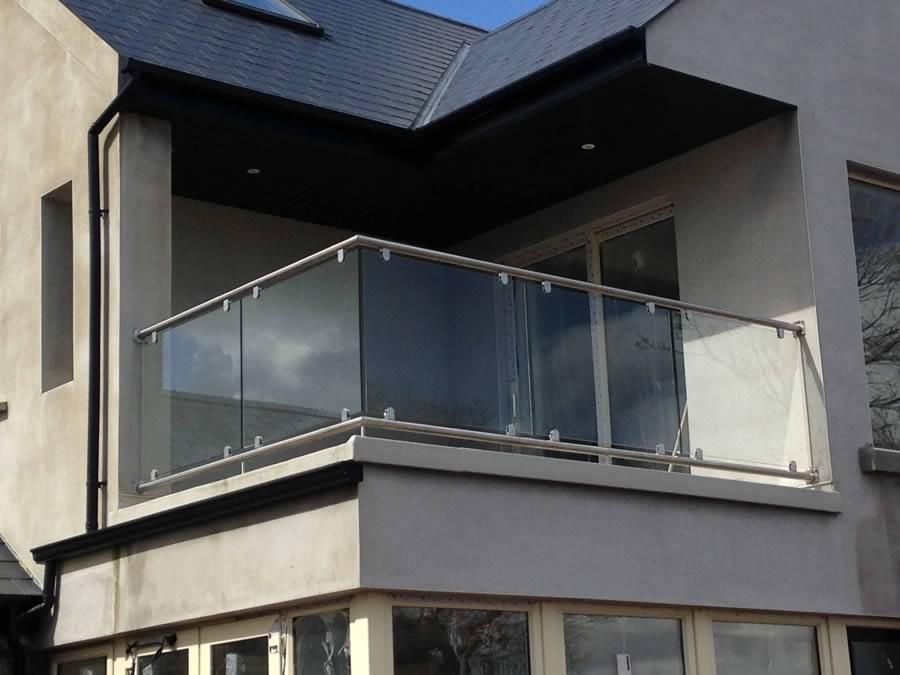
This is a rough version, but see here: Again, the roof is auto-generated, I don't know why there's a hump above the front door. "eh" - the plot is 15*27m, and the target house size is 225sqm. It's reasonably 'fair' for this area - a town center. Well, there is a garage, as you can see. And there is about 1m on both sides to come round. 4 Yes, they're accurate (the foot print is very accurate, the actual shape is accurate-ish for sure, the colors, ornaments, window types etc, are all not accurate, I only used the program's defaults). Of course (?) I only drew the houses that are directly relevant to me, I didn't model the entire street further out than direct neighbours. Frankly this is mostly the product auto-drawing the roof. "eh" - it seemed like a good idea at the time, else the roof would have to be a lot flatter.. We considered this but it feels like extra maintenance, it would catch water, harder to keep clean.. but maybe i'm wrong? (also- I'm not too convinced we would be allowed to have such an area, privacy of the neighbours etc.) Something like this:? Well, I think most houses in that area are indeed exactly our target ratio- 200-odd sqm on 400-odd size plots. Yep, that's roughly what we're aiming for, places near us at 225sqm with similar gardens went for a little more than what we hope to pay after all is said and done. To be clear, resale value is only a secondary motivation for us. We intend to live there for a long time. Of course we don't want to financially shoot ourselves in the foot either, but we'd favor something that works very well for ourselves rather than something that 'the generic buyer' would want. By the way thanks for the detailed responses! Keep em coming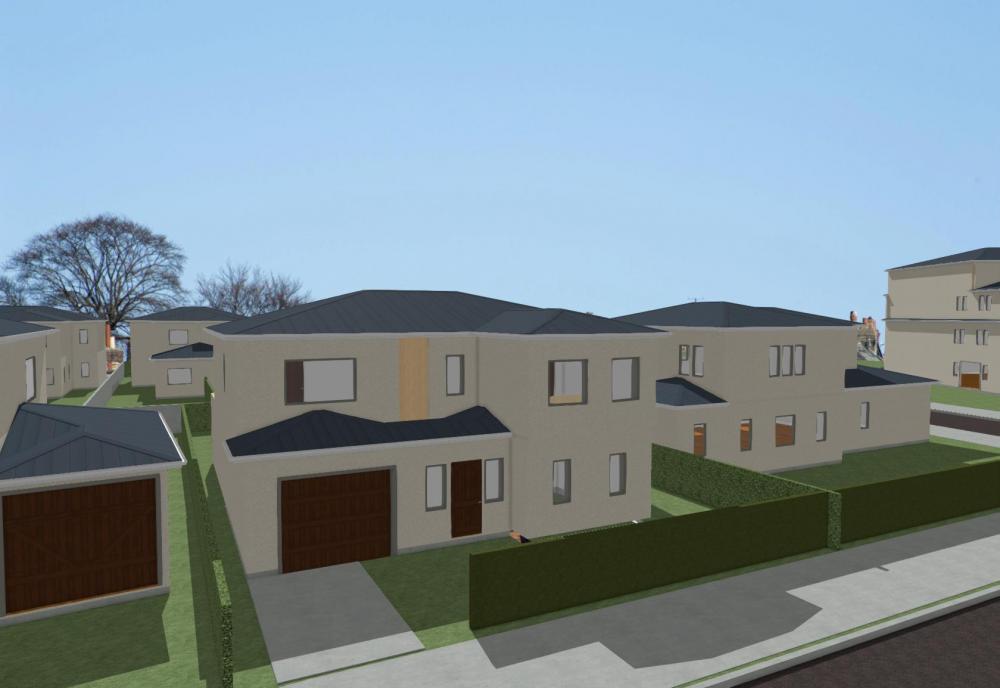
-
Angled wall: Pretty, but worth it?
puntloos replied to puntloos's topic in New House & Self Build Design
Not the case though, which - ha - is worrying. That said this design is not my architect's - it's her job to do it 'properly' - my stuff is just playing around with what's possible. Can you elaborate though? Here's the full overview picture: Granted, if you think away the single-story bits and the small dual-story 'tower' I guess you're close to a 'box' design, but uh, at some point you have to have a functional house. What would you do to create something that looks 'built from scratch' then? @mvincentd your comments are a bit tough to parse for me, let me respond inline" OK agreed - what's the point if you do something bog standard. Do you perhaps have an example of a modest house with more consistent divergent angles? My main purpose of the divergent angle was indeed to have the house 'hug the corners' a little and back away to give maximum garden space while retaining decent floorspace. You mean replace the 'box' to the far right with a large bay window? Sure, that could work fairly well, the idea of actually sitting in that 'box' to catch the last light was quite appealing. Not sure I understand, are you suggesting to turn the 'box' into a 'cheese wedge'? Perhaps not a bad idea but of course the tip of the wedge would be next to useless, no? Also mind that we have some local regulations that disallow facing windows to be closer than 27m. The side of the box can be a blind window in my design, preventing overlook windows looking inside. Given that I don't see how a cheese wedge shape can be rectangular oblong I think I lost your meaning somewhere - do you have a sample picture to illustrate?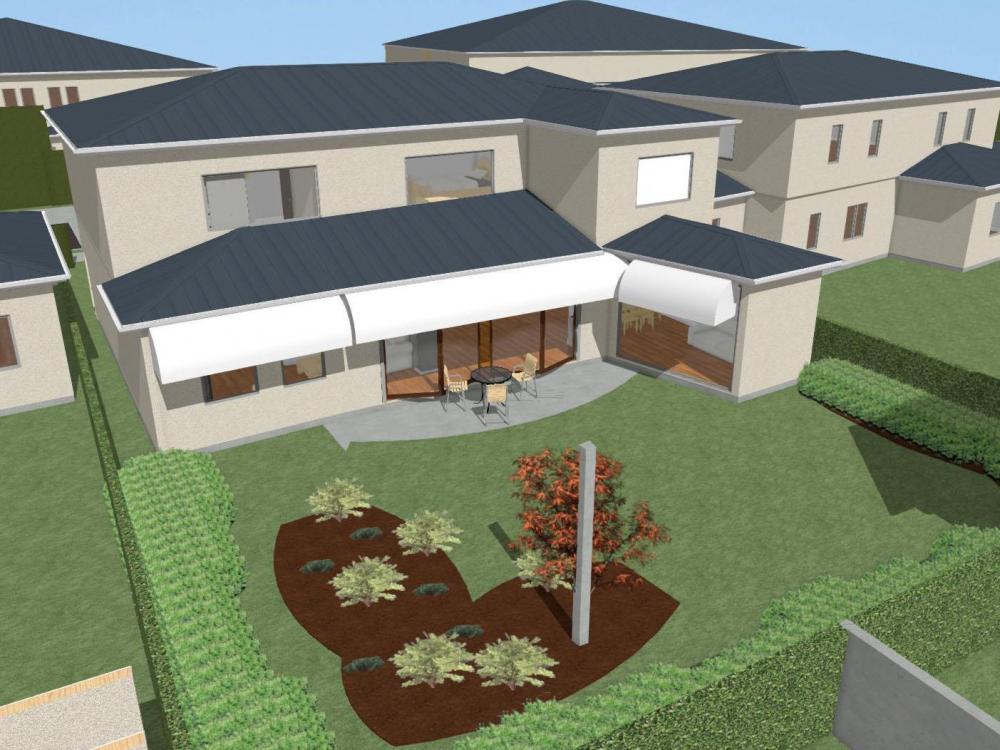
-
Angled wall: Pretty, but worth it?
puntloos replied to puntloos's topic in New House & Self Build Design
This could turn into quite the philosophical discussion.. and why not In my town, there's a clear distinction between cookie-cutter houses - nothing wrong with them, but indeed very much optimized for space usage, so usually a 'cube' with some minor variations, and 'signature houses'. Doubly so for newbuilds. I am not wealthy enough to go anywhere near a signature house, but I do have some breathing room to not ultra-optimize for space and/or price. At some point, a certain fun psychological fact comes into play, which is "showing that you can.." As an example, a peacock is very poorly designed, to be able to get away from predators, it's probably better to be a small grey bird, not a massive blue thing with a super heavy tail. People (not just females) are impressed with the ability to do something non-standard. Now before you think I'm trying to attract new mates(m/f) with my house, lots of research also seems to back up that even if the origins are evolutionary, having things in your life that play with the variables, challenge ideas is actually related to happiness. See: art. So the question indeed becomes, how much of a peacock's plumage am I saddling myself with. Note that having that angle will actually add floorspace to the house too - as you can see the house is slightly "hugging" the curves, so it's actually quite an optimal way of adding a bit of it. Well, those windows are already there, no? ? To be clear, the orientation of this house means that we lose the last ray of light from the livingroom at about 3:30pm. Having the angled design without the extra 'room' makes that only slightly later, but the room at the end, especially with a white reflective wall, will catch a LOT of extra brightness. (but indeed a 90% angle will do just as well as a fancier angle) Uh. The question answers itself, no? ? I want better audio characteristics! To be fair it's possibly not a major return. What is 'resolution' here? But yes, it clearly adds complexity. That said, I was intending to go timber frame, which - I assume? - will make it work more easily? Well, that's the plan regardless of whether or not I do the strange angle thing (I'll have to find those dream sequences.. but it's a good idea. No, the house is SE facing, so loses light at 3:30 but the main house bulk is the thing that'll start to throw shade. Useful call, I think currently my angles are arbitrary but I can see how 22.5 looks. Can you be more specific? If say the 'dry' design is 500,000 how much would adding the 'weird' angle to it be? How does one determine the wow factor? Serious question, upgrading the quality(price) of materials, fittings, devices doesn't really add major 'wow' either. Of course just having a larger plot (and therefore house) works.. but if you actually want to stay compact, what type of things would make a difference? Frankly I can imagine that subtle design features might give a more subdued show of taste and refinement rather than stuff that jumps up and down screaming 'fancy' like e.g. a swimming pool. Yeah I did this real quick just to give a small idea of difference, not intended to be 'solidly built' ? -
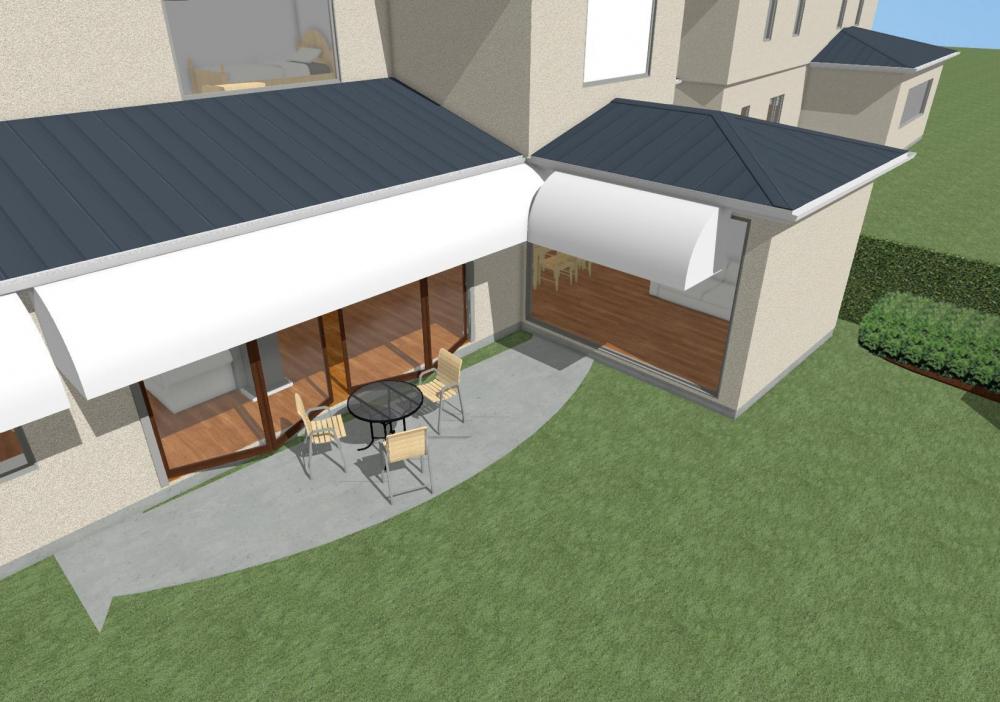
Angled walls - from a prettiness point of view, I like this design: As can be (kinda) seen, there are 2 unusual angles, one, to the far left between the two awnings, and the corner in the center. Pro: Prettier? More unusual design might add to resale value? Pro: Catches slightly more sun (plot is southeast-facing) Pro: Audio characteristics of an angled wall are better than straight Con: ? I can guess at the Con's, but I'm not sure: Con: Costlier to build? (how much?) Con: Harder to design properly (risk of e.g. leaks if done improperly?) Con: furniture harder to fit in non-straight corners? For what it's worth, a straight angle house would look like this: (please ignore the awning clash). I tried to make total floorspace about equal What do you all think? Better to keep it straight? Better to angle? Am I missing, or wrong, about a few Pro/Con?
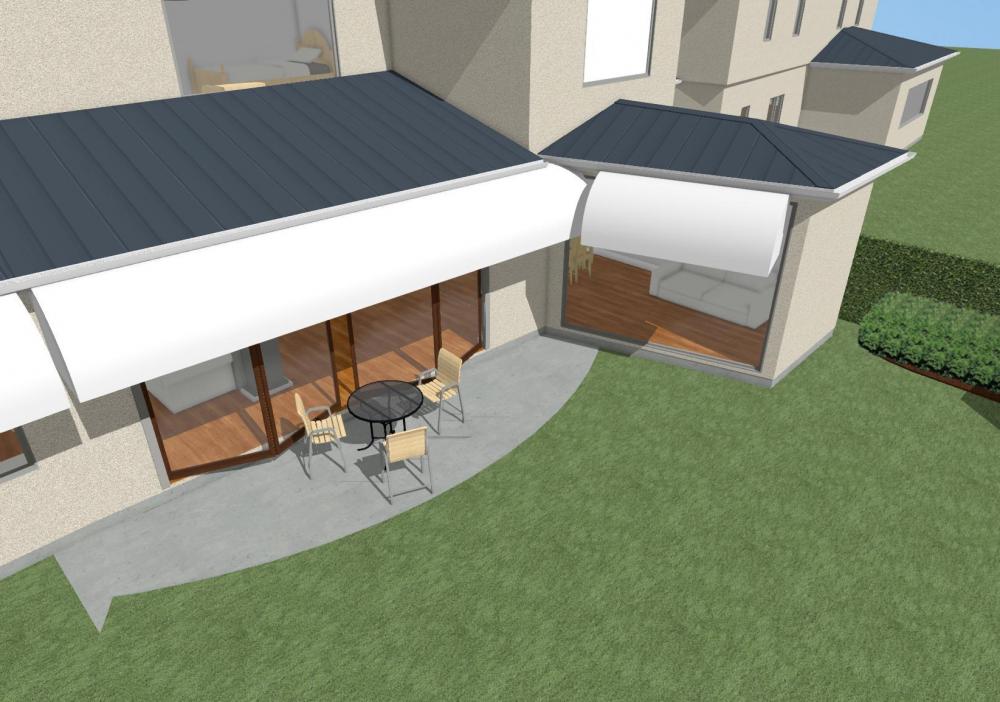
-
Fair, hence specifying what they need to know to not get this wrong? https://www.aliexpress.com/i/32896514433.html Fair enough, I guess my main point is my own ignorance of which things have deep knock-on effects (and should therefore be accounted for at the design stage) and which things you can add at the very last minute
-
Got it, thanks! OK, fair enough, it was just an example really, but just to nail down: ideally even coolin/extraction is needed near the device, hence my point about knock-on effects. Fair. To re-iterate, my spreadsheet is intended as a master document that contains 'all we know'. Instead, the various specialists probably need a narrowed view, indeed not to bother the arch with a tap etc (just noticing that as a non-expert I actually don't know the knock-on effects of some of our wishes. Thanks again for your thoughts so far! Really great perspective
-
You're not wrong but that's exactly what we wanted to do - set only the guardrails - we tried to be as specific as we could on things we value, but left as much as we could up to the artist, for example the shape and size of the rooms are completely open. As @Sensus suggested, the graph is great to have, but I'm not sure we should be the ones creating it. More in particular, perhaps I'm wrong but part of the Architect skillset is understanding how often people need to go from room A to room B and under what circumstances etc, versus for example the benefits and downsides of having a walk-in closet vs a bigger bedroom etc. Anyway I did sketch suchlike now, but I'm not quite sure this is just my idea vs if this really is not the remit of the artist?
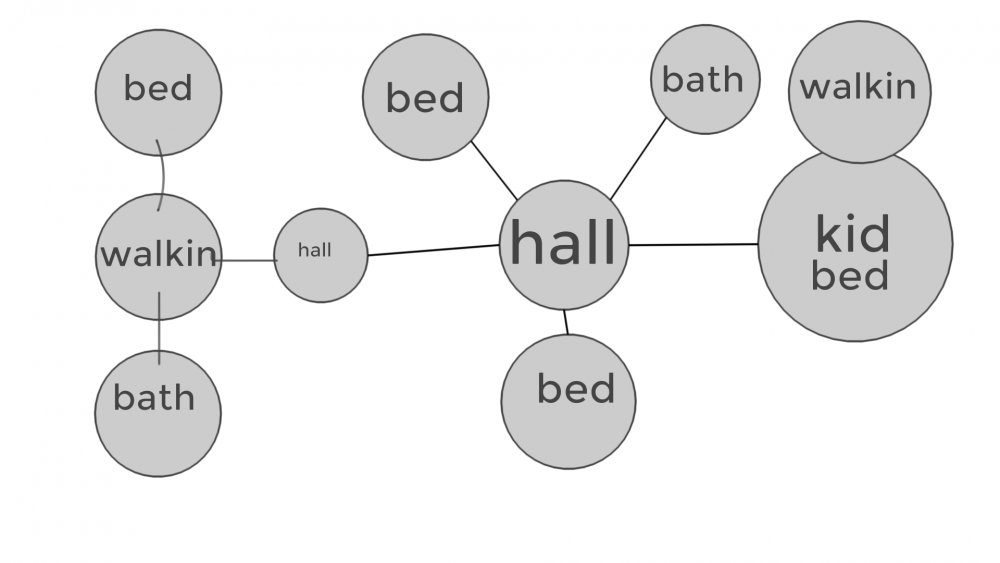
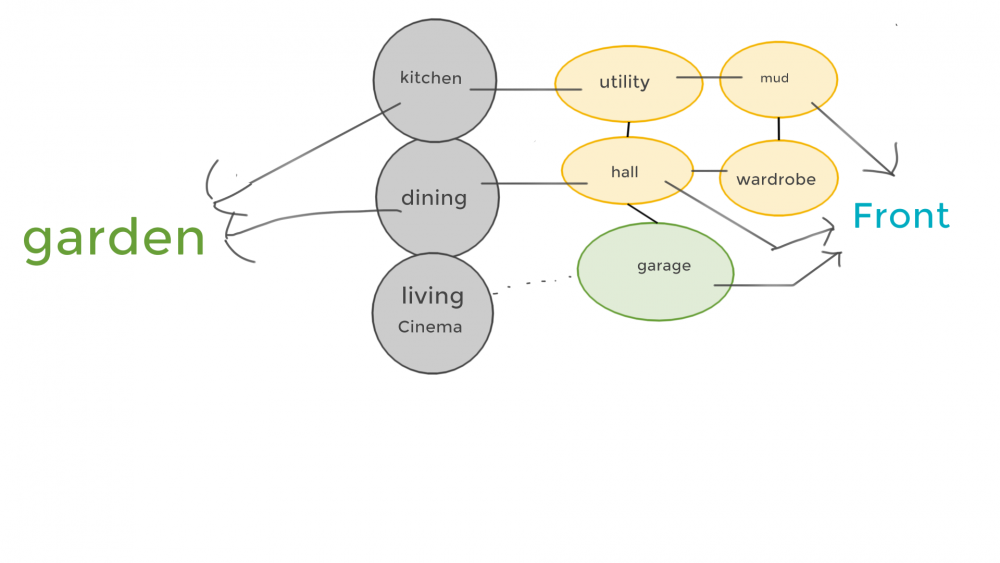
-
That'a super helpful. As I said earlier I think I lack the awareness of such tools to clarify things.. this helps a ton. Any other ways to 'sketch the forest' you reccommend? One fact is that we don't truly have an idea of what we want connected to what, we figured that was the Arch's job to optimize? No? As noted I updated my verbal description: We want a house that is tailored well to our needs. We care fairly little to 'resale' value, but of course don't want to do absolutely off-putting things. Through our talks so far we don't seem to be too eclectic in our tastes. We care about light a lot, dark houses depress us, especially in winter when things are already gloomy. That said, too much light means a poor cinema experience, sleeping experience and quite possibly heat isses, so we want to carefully control the light situation, probably through some motorized shading. We're particular about how the environment is working, father is an audiophile and appreciates great music, our default will probably be everybody (parents+kid) in one area, doing their things, incl watching TV, cooking, studying but sometimes we just need to do our own thing, retreat to a quiet space. Effectively we need 3 spaces suitable for daytime/evening living, perhaps the living room, the office and the kid's room qualify well enough for the individuals to be separate. Care a lot about green/low carbon footprint living, so things like solar panels, near-passivhaus, MVHR, electric car, water from roof etc are all things we want to include if sensible. But comfort trumps these, so we do want 'powered' compensation for extreme days, e.g. have an AC/Heating circuit next to the MVHR to take over if things get too toasty. We're not big fans of traditional hints, e.g. wooden beams, fireplaces in every room, or sash windows. The place might have to look in-keeping-with from the outside, but internally we care about warm but contemporary. Few frills, no elaborate patterns in kitchen doors, cornices etc, simple geometric shapes, easier to clean too.
-
Agreed, we have done this a bit already but need to separate out what is for which stages. Many things have implications of course. For example the brand of projector matters in how big the hole in the ceiling has to be and which types of cables need to go to it, and then the size of the freezer impacts the kitchen dimensions (a little) etc, the hob dimensions matter to the island design.. (I'm tempted by the Novy Panorama, which is 4 burners in a row, not the usual 2x2 grid ) Do you have any specific examples? I think I might lack the vocabulary for deeply expressing housing concepts. A wine taster might know about the 'nose' and 'dryness' of a wine, are there such terms with universal meanings that architects all know? I want an airy place with warm hues... Interesting! you might be right, someone else in this thread also said that some people might get dollar signs in their eyes.. Any specifics that stand out as 'pricey'? Of course(?) details I specified like 'rainwater collection' or 'gas to the garden shed' (just as examples) will of course cost a bit, compared to not doing it, and I imagine the rule of thumb of 2250/sqm doesn't include 'cute things' like that? No I will check it out. I imagined that sageglass can block light from entering, but the heat would be created on the 'darkening layer' which is already kinda inside the house. Of course awnings serve the dual purpose of providing shade (and occasional rain cover) on the terrace too, but Sage is worth considering if it helps to substantially reduce the solar gain.. Interesting you say that, my hunch is/was that a great architect would be interested in how the lighting works since it impacts the colors, warmth of the space etc etc. Perhaps not? Also when it comes to electrics I imagined having space for the ducting had some knock-on effect for architect. And indeed the physical size of the AV stuff matters, no? E.g. the size of a subwoofer matter if you want to enclose it a little inside a feature. Ha, honestly we have less interest in the outside. Of course 'nice' is good and 'in keeping' is probably required, and resalability is perhaps a factor but we care a lot more about the internals. Do you mean the walkways, how rooms are connected? That is specifically what I imagined the Arch to be an expert in? That bit we specified in detail thogh.. I consider that an Arch job? Yep but we specified the temperature ranges we'd be happy with. It's a fair approach, but I have the impression you would give the architect too many constraints for my tastes.. the above things I'd prefer the Arch to come up with rather than that I dictate them without knowing the downsides. E.g. if I 'demand' hard wood floors, can I not have underfloor heating that's effective etc etc. This is great stuff thank you. Like noted I think you are more 'hands on' than I imagine myself to be, since I just don't know what things affect each other, so I prefer the Arch to come up with a harmonious house concept rather than that I demand things just because I saw them in a picture once.. Hmm not sure putting the Arch in our bath is appropriate. Yeah, I think we really do want an architect to get a coherent house with as much freedom as we can give them, but nailing down things we are certain about.
-
I was wondering about what to really call it. Brief, by definition is 'short', but IMO it is also well, a definition. (heh). And if you care about things you should define them. Added (the Arch did know) Prioritisation column is in there ? Ha, the arch isn't charging per hour though, so not an issue. Ha, kindasorta. I'd like to see it more as going into a restaurant and telling the chef that I want a rice dish. We tried to have our items only reflect what goal we wanted (at least the high level ones) not how to get there, so for example 'large open living space' but not prescriptive of the shape or where the kitchen and dining sections would go.. Thanks @Carrerahill for the detailed response! Indeed I'm hoping to give them space to do their part, and focus on their creativity and experience, because that's exactly the thing I lack. (well, amongst others Im sure) Ha interesting! That's really helpful, I might see if I can provide such a view. Of course (?) you can sort the spreadsheet amongst topics and areas. I don't think I have the level of insight to go into great detail around mech/elec/joinery Great idea, I might give that a shot. Of course we're also paying the architect to do suchlike, but I am a big fan of templates, so my thinking can be guided a little in areas I might've not thought about. I don't know anything about joinery or skirting to make a sensible choice (yet) Fair, it's better to have one document per specialist, indeed this one is really our master doc that aggregates most/all of our knowledge/wishes/ideas Fair Not sure I quite understand. Surely the architect would want to know a few of our routines so they can be optimized for? As an example from my own area, computer software, you would want things in the interface (menus, icons) both grouped, as well as in a logical progression, so for a certain set of actions everything is within arms reach... So.. exactly, the .. designer.. needs to design the building around our lifestyle? The Architect is the designer so they need to know? To be clear, I understand that we are doing more legwork than most clients typically do, but we expect the architect to compose this all into a coherent whole, we are not trying to do that job.. Well, as a simple example, the projector I have in mind is 25x50x50cm so if you want to design a ceiling lift, the hole in the ceiling needs to be that big? Or I want a kitchen tap that's attached to the wall, not to the sink, so someone needs to know the pipe has to come out of the wall? But granted, these details are perhaps best split out (again, agreed it's better to give the specialists customized docs, this is the master doc) Good point.
-
In general - I'm cutting out comments we all agree on or that are a bit repeated - thank you for them - but to keep things clean I'll stick to some details. If I left out responding to important stuff please re-highlight! Not unfair but with a spreadsheet it's fairly doable to sort e.g. by subject. Once the arch is focusing on say the kitchen it's easy to get the 10-odd points about the kitchen in a row. Fair point, we had this in words, and also a few .. (ha).. bullet points. We are both engineers, I guess that makes us think in spreadsheets I've added that, and (gasp) paragraphs of text now. How's this? ("High Level" tab) We've done that in full 3D, but stopped ourselves from giving it to the Architect since we don't want to constrain them to thinking about our ideas initially. Once they come up with first sketches we'll def give them a tour of our ideas. As we mentioned elsewhere, yes the Arch's remit is definitely the overall product so we do not want to step in and 'DIY' the design. The arch seemed to be enthusiastic about it. More info is better. Nice. True, and cognac. I'm pretty light on this, agreed. But my thinking was that as long as the cabling is all there (e.g. ethernet to all the places, good wifi, networking closet), then I can do most of the rest later? Or do you figure there are home automation things that need to be designed early? I just need to be able to play Bach's Dracula song such that it seems to be emanating from below the wooden beams. Indeed, for us the architect is responsible for the "flow" of the house, making sure everything has been designed not as individual tickboxes but somehow everything works together Not sure what you mean actually? (more responses later, gotta go)
-
Hi all, Wow tons of responses - I will get to them but a few important common themes: - Completely agree there is some structure missing - you just haven't seen it -We did lay out our "In a few paragraphs" definitions, also the Architect has come by and talked with us for 3 hours, following her own process as well. I should find it and include. - Ordering - we actually ranked/prioritized our items in the 'real' version of the spreadsheet, where L1 is high level points, L2 was more narrowed down ideas and L3 was small details probably not worth fretting about. I removed those for privacy reasons (I was in a bit of a rush) Funny, that some of you saw the list as "If anything is missing, it's an excuse not to do it" while so far I was reading things as "if anything is there, there's no excuse to leave it out" OK gotta run. More responses later
-
Well, as discussed: - We are a small family living in Herts. - We've created a *detailed* requirements document in the form of a spreadsheet. The spreadsheet is here Would love to hear: - What do you think in general - What are we missing to give the Architect all the info they need - What are great ideas or terrible ideas - Any items that you think will greatly increase the cost? Comments should be possible in Google drive, just rightclick->comment or use the keyboard shortcut. Make sure you're signed in to google if you want us to respond to the comment, or post it here on buildhub as well.
-
Custom Room Separator Feature - How to do it?
puntloos replied to puntloos's topic in General Joinery
Junk in the trunk, clearly. That's quite interesting, I could imagine it would be some sort of solution to my projector issue at least. And store some junk from the trunk too. It's pretty but a bit non-functional, ornamental-only. -
Custom Room Separator Feature - How to do it?
puntloos replied to puntloos's topic in General Joinery
Not sure I understand the question. I guess though if the thing is integrated in the house then the UFH would go around it? Electric Sheep Dreams mostly. -
Custom Room Separator Feature - How to do it?
puntloos replied to puntloos's topic in General Joinery
Ah I think I read ornaments as small loose trinkets like a statue or a novelty glass. (and agreed: no). But maybe you're thinking more of like a gargoyle etched in wood. (also: no) Indeed sliding doors could work a bit better! 3D.. I guess so, but eh, I'm a bit of an amateur. Would a good joiner be able to design this themselves if I give them basically the room dimensions at the spot it has to fit in? Also, would this effectively be a loose standing thing, or would you want to deeply integrate it with the house structure, perhaps almost literally make it loadbearing etc?


