


Dan F
-
Posts
1431 -
Joined
-
Last visited
-
Days Won
2
Everything posted by Dan F
-
yes, except it'd be 5-core you need between tapes and RGBW dimmer. RGBW -> (5-core) - > tape 1, RGBW -> (5-core) - > tape 2. You don't need the E and something flexible may be easier to work with than standard T&E IMO, but yes. In this example though, you'd have over 6%/1.5v voltage drop if you used 1.5mm, so you'd need to go once size up for 190W.
-
Single RGBW compact (assuming total watts <200W), but wire up the two LED tapes to this seperatly. Rather than i) go around the corner with one 10m length ii) connect end of first tape to the start of the a second tape. This is general rule though, depends on max lengths recommended by LED tape. Using the Loxone RGBW tape as an example only. You'd have a total of 170W for your 10 m, which would be fine with one RGBW compact. This is 7A though, so you'd need at least 1.5mm 24v feed.
-
This works with 5m of 12W/m LED and a 10m feed, but if any of these three parameters are much higher, you really need more than 1mm2 or move the driver closer. Local drivers saves calculating voltage drop of course. Also, if you have an LED >5m and/or going around multiple walls, you really need to run the multiple strips in parallel rather than in series. So if you are going around all the way around a 3mx4m room (depending on the LED product you use and recommended maximum length) you'll probably want to 2-4 feeds. You could use a single chunky feed and then split off in to 4 somewhere in the bedroom, or you could run 4 thinner cables all back to the same driver (assuming you are withing wattage of driver). These save you running 5 core, but you still need to be careful with voltage drop as they are 24v in, not 230v.
-
Depends on length and wattage of the strips as you need to keep voltage drop under control. Do you know length of feed, length of LED and wattage of LED strip? I initially wanted to wire everything back to plant room, but this wasn't practical so I have some going back to plant room and then various locations around the house that have a 230v+DALI feed to them to allow for more localized drivers. Yes, or DMX drivers or DALI drivers etc. I'm not using any of the Loxone drivers as all downlight are DALI so it makes sense to have all lighting DALI-based. Also from what I remember the PWM frequency of the Loxone kit wasn't great. Lots of ways to do this.
-
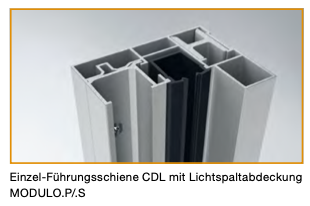
The Z slats are good, but supposedly CDL are better for dark room according to Roma. The other thing Roma have with the CDL ones are these side-profiles that overlap edges of the slats to minimize light coming in the sides.
-
I actually got the crimp tool 😀. If you are doing a few of them not worth it, but when doing the whole house it is marginally better then a pair of piers. Just means you don't have to be as careful not to apply too much force, also helps ensure even pressure on both sides and that the far-side gets fully crimped.
-
Normal venetian blinds are probably around 75%, these are fair bit better but not 100%. Shutters are likely better, but this will depend on the shutters; cheap shutters might not be much of an improvement over these, good ones you'd expect to be closer 100% I would have thought.
-
Used these too. Got them and tool from TLC https://www.tlc-direct.co.uk/Products/GPJC2C.html. Mostly 2-way, but did use 3-way in a few places for some reason.
-
Whole House Cooling
Dan F replied to sargan's topic in Mechanical Ventilation with Heat Recovery (MVHR)
I maybe be wrong, but I don't think the extrapolation should be linear should it? Thre is only a maxiumum you can cool with 100m3/h regardless of the size of the comfopost and, while I haven't done the sums, I'm pretty sure it's less than 3kW. -
What did you go for in the end? All european toilets are washdown AFAIK, the rest (assuming wall-mounted) comes down to: - Brand/quality - Rim/rimless - Size (how much they stick out from wall, some brands have standard/compact) - Glazing (standad or optional on some brands to help stop things sticking to the inside) - Look - If it has built-in bidet or not.
-
Put a T&E to pump location to control from Loxone relay.
-
It goes back into the UVC (lower down) I thought, it doesn't feed back into the hot manifold. It will also need a pump.
-
Use the gerebit recommended height and account for flooring? Our plumber was putting our in crazy-high until I noticed and told him to follow the geberit sticker.
-
There are about three different types of CAT6A though, not all have screening. U/FTP, F/FTP, F/UTP etc. Also some are solid core and some are stranded. Always go for solid-core, but I never understand the pro-cons of the shielding options. Somewhere I read that shielding on network cable can be a bad thing (unless you use the proper shielded plugs/keystones which involves more work) as otherwise the sheilding acts as an antena and it's worse than no shielding at all. Our electricians used a mix of: https://scpcat5e.com/bulk-cables/category-data/hdbaset/hncproplus-6a-lszh-cat6a-category-bulk-data-cable-low-smoke-zeero-halogen. <- quite stiff, nightmare to terminate and I'm not sure they have correctly terminated the shielding. https://scpcat5e.com/bulk-cables/category-data/cat6a/cat6a-category-bulk-data-cable-augmented <- easy to terminate, no sheilding, does the job.
-
Thats exactly what i did. 2 TV locations, office and loft I think. Apparently fibre is good for audio equipment, reduces electrical noises and improves sound (or so the guy I got the bluesound powernodes from reckoned). None of what I put in is terminated though, and may never be. You have to get the right type of fibre with enough fibres for it to be useful though.
-
Fibre is overkill too, but for some reason I ran it to some locations anyway! 🙂 Next time, conduit might be a better approach to future-proofing though..
-
Maybe that was my fault for mixing up "infrared" and "radiant" and the OP was asking about electrical infrared heating! From what I remember Zehnder saying, the in-wall/ceiling systems produce more radient heat than UFH does and therefore you don't have to heat the house as much.
-
Sketching it out helps a lot. Create a draw.io diagram, import your floor plan and make it semi-transparent, and then start planning out your runs. I found this helped me. I also used a consistent approach between rooms: - Cabinet to touch pure next to the door, then daisy chain from there. - Blue & blue/white for window DI's, Brown and brown/white for door DI's - etc.
-
Your reasoning is sound, but if the price difference is minimal I'd go for HDBaseT tested/approved Cat6a. I don't quite understand the "HDBaseT enchanced" thing though, as you can get cat5e cables that say they are "HDBaseT enchanced" e.g. https://scpcat5e.com/bulk-cables/category-data/hdbaset/hncpro-bl-cat5e-category-bulk-data-cable. Maybe it comes down to the different versions of HDBaseT? Some info here it seems https://products.hdbaset.org/avcat/ctl19001/index.cfm Be interesting to understand what you plan to do, and why video distrution rather than Apple TV's. Cable to each device is over the top and not necesary, but at the same time daisy chaining all tree devices from room to room I don't think is ideal either. I did exactly the half-way house that you suggested, one cat7 to each room (in general) and then daisy-chain within the room. This way you have 4 spare cores available per room for DI's for door, window sensors or retractive switches. If you need more than 4 DI's in a room you can run two CAT7's to that room. I don't have retractive switches (went for touch pures next to the bed to be able to control blinds & curtains easily) but I do use the additional cores for DI's for door and window contact sensors. (I ordered the windows with these factory installed) I followed Loxone recommendation to use CAT7, CAT6 would have probably worked too, but there wasn't much difference in the price. Aside from CAT7 to each room I have a CAT7 loop around the house picking up a number of temperature sensors (in slab any for bathroom UFH) and here the additional shielding the CAT7 I used had was very useful for ensuring relaible signal from a lot of sensors. For loxone tree AWG23 is ideal given you are running 24v everywhere, but not a must and less important if you have a run to each room. You can't run any loxone lighting off of CAT6 or CAT7 though, you'd need tree cable for that, or seperate cable for 24v supply. Why do you need T&E for touch switches? You will use additional twisted pairs for DI's, I never said they aren't used 🙂 And you don't need more than CAT cable if you aren't doing Loxone lighting anyway. What other help do you need? BTW what approach are you using to lighting in the end?
-
Zehnder have a system which they have setup and can demoed to us in their camberley office, don't know much about it though. We were told it could be used for cooling and heating. https://www.zehnder.co.uk/products-and-systems/heating-and-cooling-ceiling-systems
-
Whole House Cooling
Dan F replied to sargan's topic in Mechanical Ventilation with Heat Recovery (MVHR)
@LinearPancakes CW12 is big. What is you building volume? Are you planning to hook up the whole house via CW12 or only part? -
All blinds/curtains have a dedicated RCBO in the Loxone cabinet which you could turn off to isolate all blinds. Same with UFH in bathrooms (seperate RCBO though). Our elecrician didn't suggest local isolation.
-
It depends who you are. For most people it is enough for avoid blackout curtains, but it's just not quite enough for my wife! They are a significiantly better than most venetian blinds though. Look for "Roma CDL" on yourtube and you'll find some videos that show how the slat is different. Maybe, expect you can have blinds and shutters really and using shutters during the day in the summer to prevent overheating (and block out daylight) is far from ideal I think. Venentians have the ability to block direct light, but reflect indirect light up towards your ceiling internally so house is still nice and bright. It depends on the type of slats you use and the size of the windows. The Roma technical manual has all the wind tables. The CDL slats are quite good in wind house in most areas are fairly sheltered anyway, so we're never going to needto raise them due to wind speed. In the storm earlier in the week we had them down and they don't lift in any way at all, in stong winds they do make a little bit of noise though. If casual vandalism bends the think aluninum slats that's not good news as it'd be hard to bend them make and them be perfectly straight.
-
No, why would a fused isolator be required? I can see that it makes sense for the connector to be accesible in case the blind motor ever needs replacing, but I can't remember where this connector is in our case or if it's acessible externaly, I'd have to check. We don't have any accessible points internally. The motors that are supplied with the Roma blinds are these: https://www.elero.com/en/products/electrical-drives/ja-comfort Yeah, pros and cons. Local relay means a (visible) accessible location next to windows and more CAT7 cabling, remote relay means more 230v cabling.
-
Yes, supplied by @craig. The external textile screens are interesting too, we never considered them but I know of another project that used these. We used the standard motors and simply wired them back to 2 Loxone relays. Works really well. We could have upgraded to SMI motors and then done SMI->KNX->Loxone, but after looking at this I didn't feel it was going to add any practical value given Loxone already does a good job at controlling slat position. Early on I also debated using a shade actuator or tree relay close to the blinds to avoid wiring everything back to the Loxone cabinet or replaceding the supplied motors for the Loxone (Geiger) ones, but I ended up deciding simper was better and went for the dumb motors and loxone relays and don't regret it.

