


GEO-PAR
-
Posts
52 -
Joined
-
Last visited
Everything posted by GEO-PAR
-
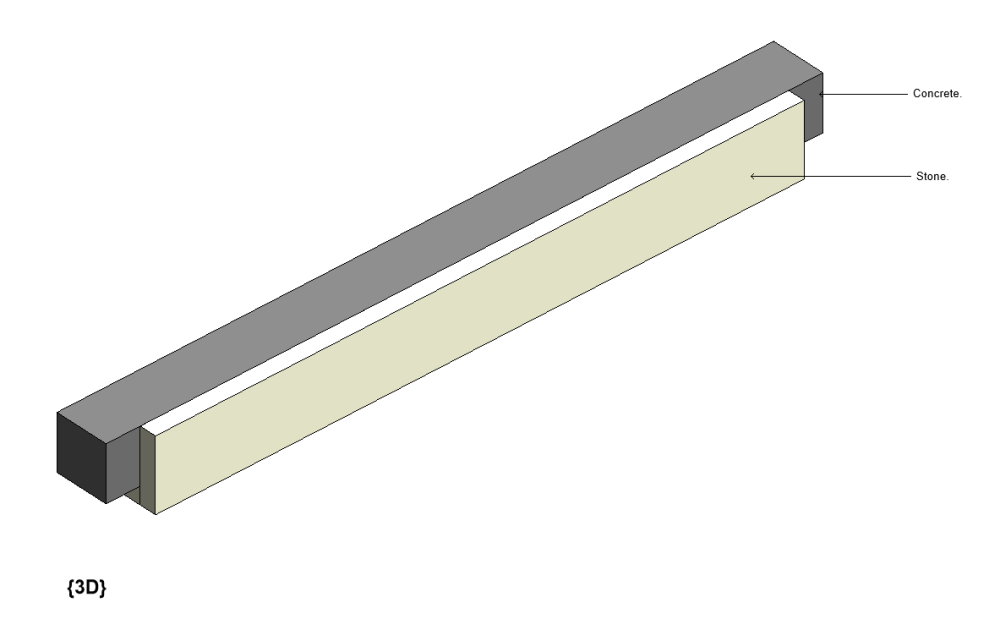
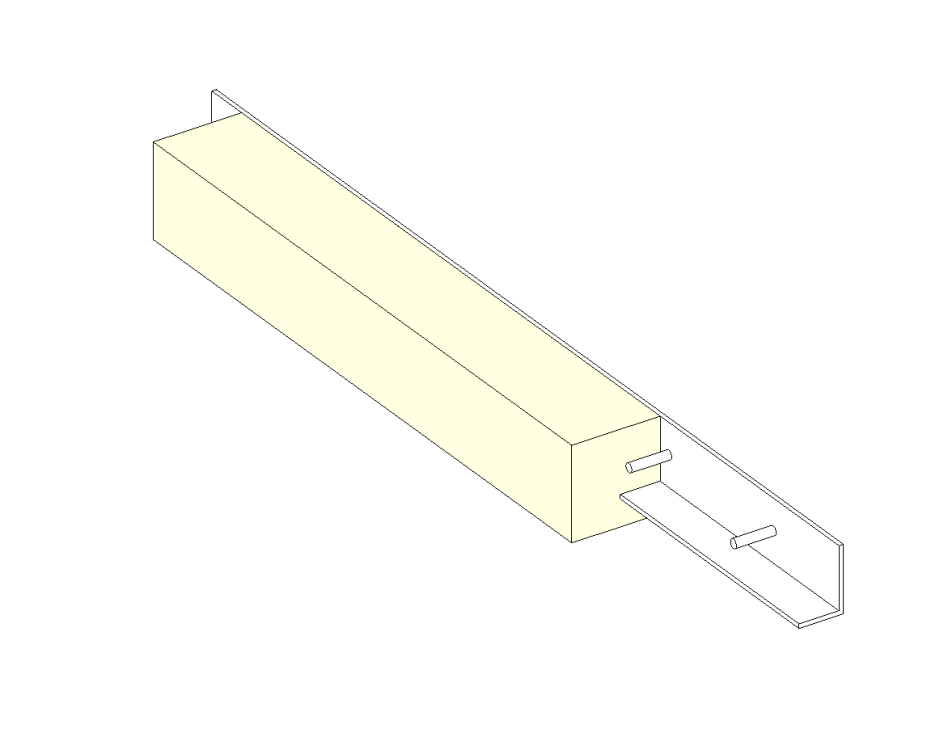
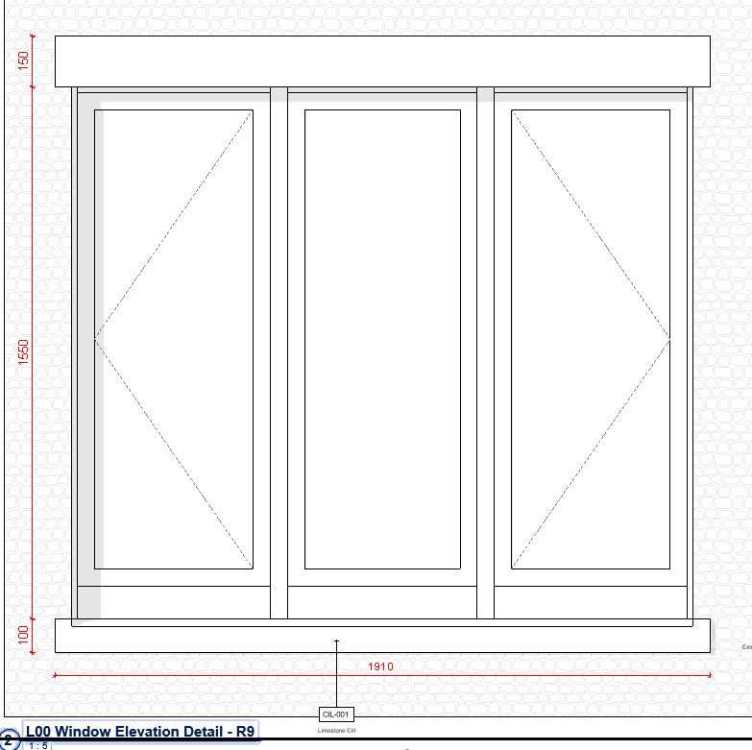
Cheers for all the feedback guys. I don't know if this makes much difference to your suggestions above but my lintels are going to be chunky beasts (I want the traditional cottage look where you get very deep external reveals). For the doors, they're H210 x D325 and for the windows they're H210 x D230. I'm currently exploring two options: 01: Purchase stone in 50mm thickness to act as a veneer. There will be a joint to the underside but i'll need a drip detail anyway so I'm thinking I can obscure as the drip. We did this on a big commercial project I worked on where most of the facade was stone faced precast but we had traditional hand-set stone for the two entrances. They made timber moulds, placed the stones in the mould, and then pour concrete over the top. Unfortunately I'm too small fry for the company that did it to be interested but I have found a much smaller pre-caster that have said they'll price it up. Not 100 percent sure this is going to be the cheapest option but exploring it at the moment. It feels like the most robust option and will enable me to put lifting eyes in so I can telehandler them into position with less risk of damage to the stone. Option 02: This is based on your suggestion above: Metal angle that is cut into the stone. I'm thinking it might be a good idea to weld some rods to the angle and chem fix them to the stone to prevent any rotation or slipping (or am I over thinking / is this a bit daft?). It feels to me like this could be a much cheaper solution to be fair. Not sure what size angle I'll need for my size of lintels - Will have to ask the S.E I guess Cheers
-
Not really sure what you mean - Are you able to sketch? Did you just cut the slot about an inch above the bottom of the brick?
-
Sorry - Didn't see these additional comments until now. I'm attempting to go down the precast route... 50mm stone veneer to the front and underside (using the joint to form a drip detail) pinned into a reinforced concrete lintel. This way the stone will only need to oversail the opening by 50mm and the concrete can oversail by the typical 150mm. Just exploring the option not so not sure how expensive it will be.
-
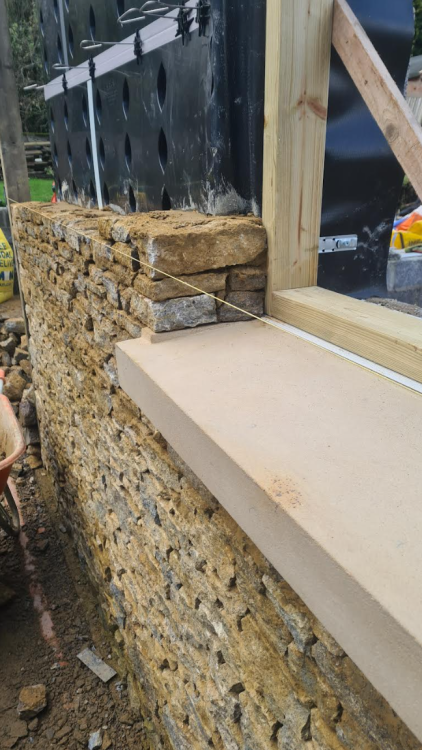
Yeah I think I'm going to boost it up to at least 100 if not 150 like you suggest. I found this picture where the bearing looks about 50mm, but it's granite so being a harder stone, I guess this makes it possible
-
Yeah I appreciate it will make it a whole lot cheaper but it's not a house I'm intending to flip, so want to get it right. But equally think what I've drawn may cause issues. I'm wondering how they managed to achieve this - Super deep reveals with no exposed lintels. My guess is that they cast the stones into some kind of concrete lintel.
-
Okay cheers
-
I did wonder this. I've seen it don't before where the edge of stone head aligns with the opening reveal (I.e so no bearing at all). No idea how you'd do this.
-
Because then you'll see the underside of the steel when you look up below the window
-
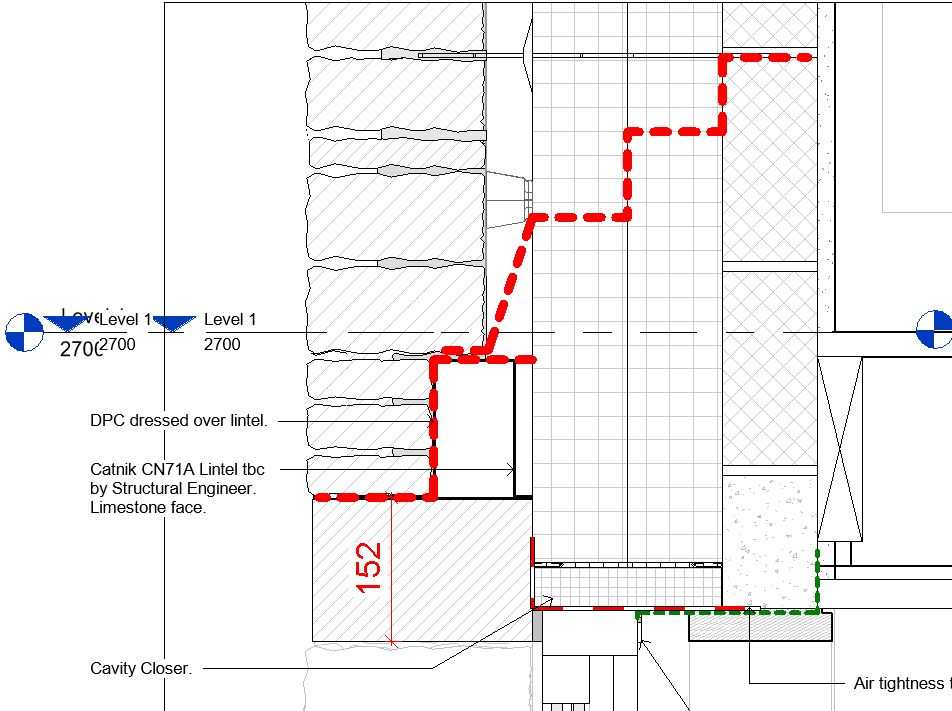
I need to order my stone cills and lintels asap but getting cold feet on how I planned to do it. Interested to know what others think - Whether I'm being a little mad or if it will be okay? My intention was to have a natural limestone lintel self supporting. I only wanted it to bear onto the stone walls either side by 50mm (for visual reasons) but now questioning if that's enough. I'll then stick a Catnik CN71A (or similar) above it with a 10mm gap for deflection (so the steel doesn't crack the stone if it deflects). This steel will have your typical 150 bearing each side. I want to keep this above the limestone lintel so when you look up at the window, you don't see any steelwork.
-
Reposted here and cannot delete (links don't appear to be working on this post):
-
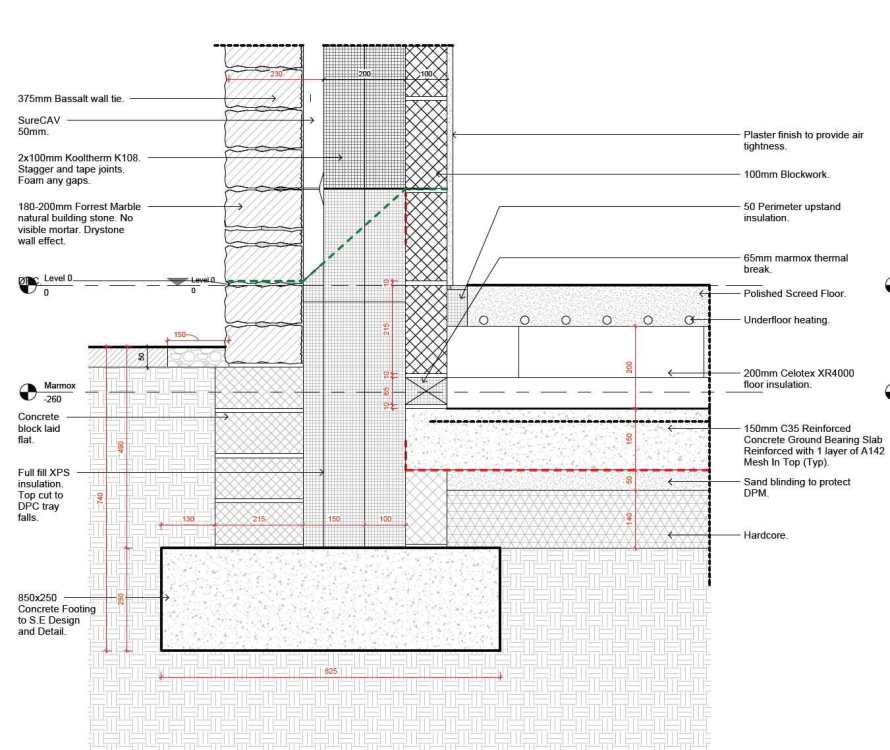
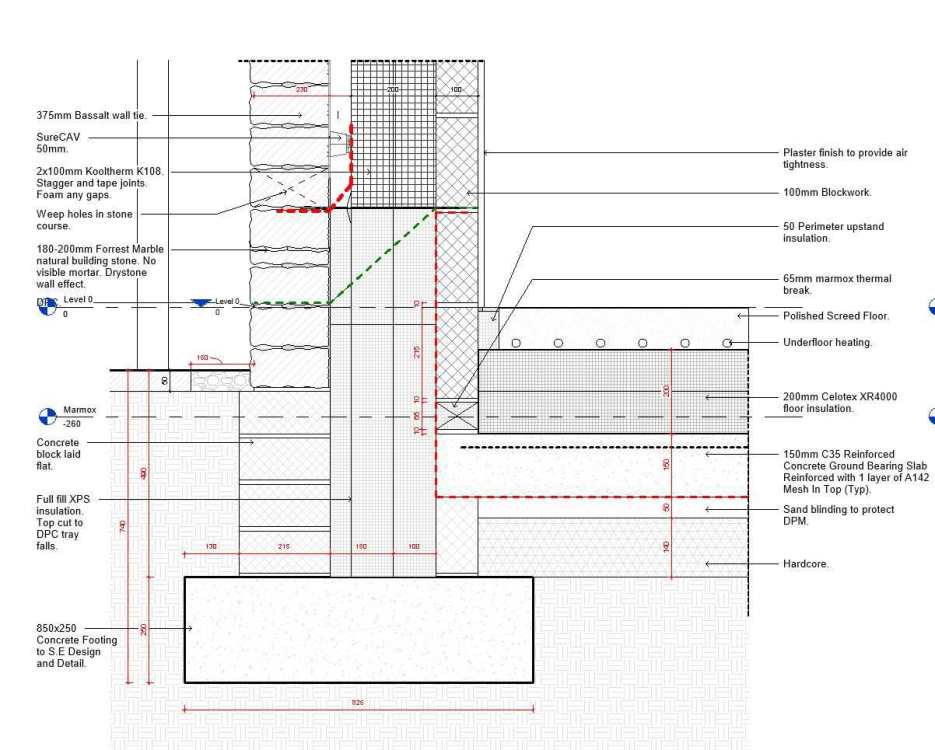
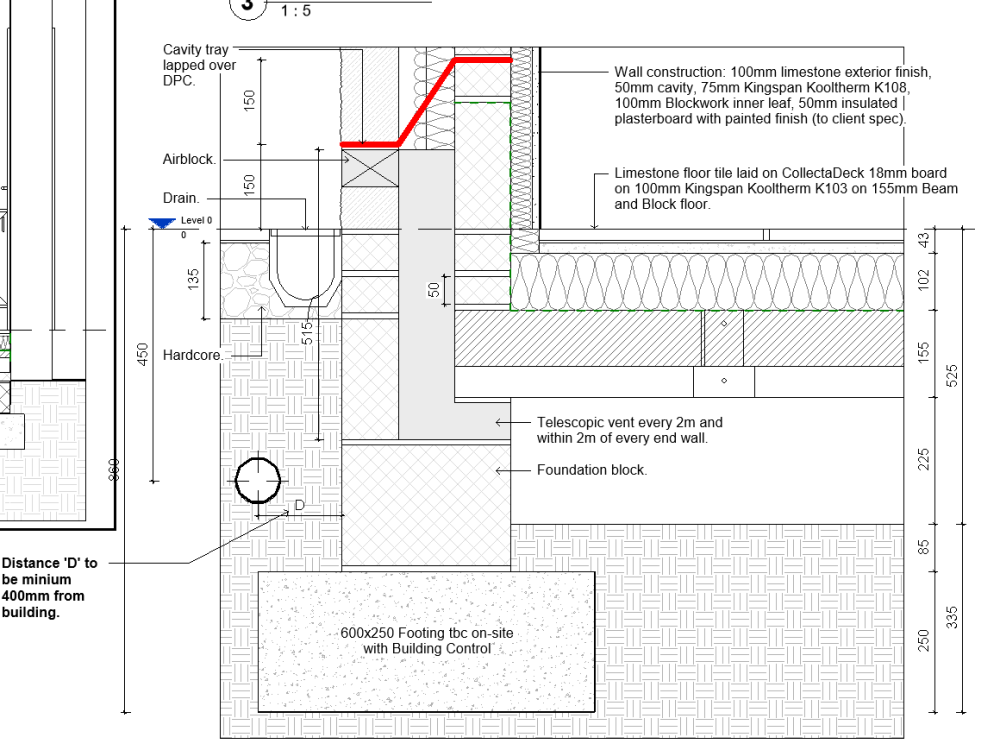
Hi All, Reposting this as I originally put it under 'General Construction Issues' and haven't received any comments. I'm just looking for a sanity check on my foundation detail (to hopefully provide some peace of mind before I keep building up). I'm constructing a highly insulated new build (200mm PIR above DPC, full fill XPS below DPC). My foundation detail is based on a Greenbuilding Store case study: https://greenbuildingstore.co.uk/golcar-passivhaus-ground-floor-foundations/ I originally designed it as per below, where the Surecav meets the DPC: Full fill XPS below cavity tray. Then the offcut pieces of the XPS are used above the tray below the first wall tie. Kingspan PIR is then used above the first wall tie up to eaves. The problem occurred when attempting to add the XPS back in above the DPC (to fill what would otherwise be a triangle cut out). The thickness of the DPC caused the XPS to get kicked out compared to the PIR above. This meant that there would have been a step in the SureCav. To get over this, I introduced a second cavity tray that lapped up the face of the bottom board of PIR and effectively did a solid fill cavity below where the stonework just got built up to the back of the XPS. Does anyone foresee any issues? My worry in hindsight (after building up past this to about 4ft, is that the cavity tray I inserted only laps up the face of the insulation. Any water ingress behind the insulation has nowhere to go. Am I over thinking this and it will be fine, or do people think I may have issues in the future?
-
Hi All, Just looking for a sanity check on my foundation detail. I have a highly insulated build (200mm PIR above DPC, full fill XPS below DPC). Based on a Greenbuilding Store case study: https://greenbuildingstore.co.uk/golcar-passivhaus-ground-floor-foundations/ Cutting the insulation to the falls of the DPC cavity tray was an absolute headache. We ended up setting up a jigg and then using the offcuts to bring XPS up to create a flat ledge below the first wall tie. We then started the PIR above this. When installing the XPS above the cavity tray, it kicked out compared to the PIR above. This meant that there would have been a step in the SureCav. To get over this, I introduced a second cavity tray that lapped up the face of the bottom board of PIR. Will this work? Does anyone foresee any issues? I've already constructed up to about 4ft along one wall so hoping this works but equally stressed about continuing as it will only get more expensive to rectify if there is a problem. Kind Regards, George
-
I had the same issue recently and was quoted 13.5k to move it. I asked about wayleaves and she said they'd move the pole for nothing but wouldn't allow me to connect into it for the new property. Managed to solve it in the end for much less (just putting in a taller pole which isn't ideal but gets' me out of trouble). I would suggest getting clued up on wayleaves before having NatGrid out.
-
£18 an opening sounds crazily cheap?! Do you mean per length? When I priced it up in Timloc, it was about £30 ever 2.4 metres. Worked out about 1k for the whole job and I feel I don't have that many openings. That's also not including the cavity closer at the eaves, but I was thinking of just closing that off with cementitious board?
-
Building Control were happy with this? I thought it had to meet certain fire requirements, which the cavity closers you buy have been tested against?
-
Also how have you guys got around the cavity closer issue? Where I have wide cavities, the only closers I can find are about 30 quid each. Over £1k for my whole job 🤦♂️
-
Just done the same. A few people whispering in my ear though that they think damp will track across, even with the o rings. Any issues so far for those that have used them? Also are they tricky to install with PIR? Don't know if they will not sit very well and cause the insulation to kick up where they are quite thick? I may be over thinking it though 🤷♂️
-
No Idea on price - Does this sound weird?
GEO-PAR replied to GEO-PAR's topic in Bricklaying, Blockwork & Mortar
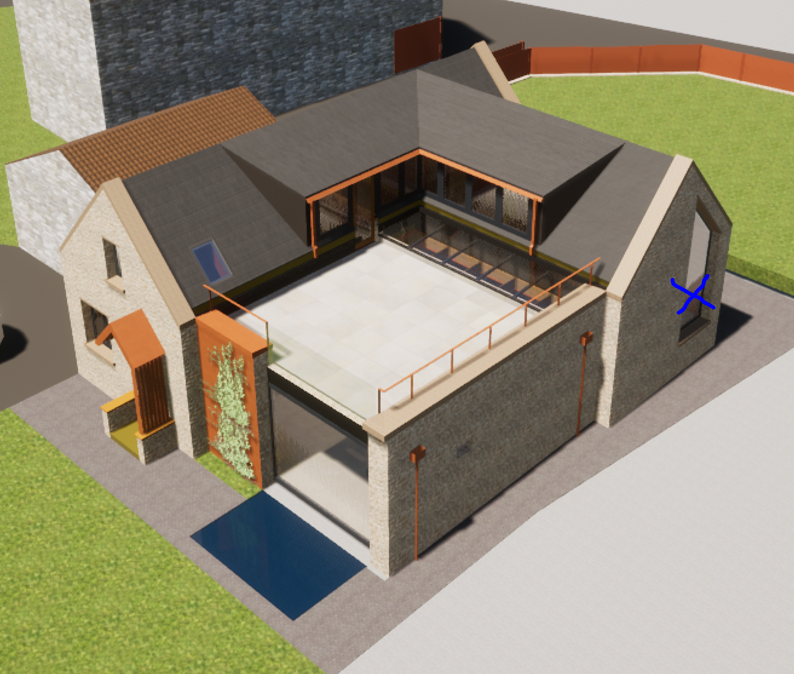
Thanks for the advice and you've mostly summarised what I have been feeling in my gut. Just ordered both books - thanks! Pretty much planning to do exactly this but potentially with different people now - Someone to stick up the blockwork and insulation (same guy that did my retaining wall. Hiring direct as opposed to through the groundsworker). & spoke to a stone mason who wants to do just the stonework. Also scaled back a lot of the stonework based on what his m2 rate. Yeah you've hit the nail on the head with this one. I wanted a drystone wall look, which is why they're reluctant to price per m2. In all honestly, I'd rather they work day rate and put a little care and attention into it as opposed to just wacking it up (not doing this as a project to flip). All I wanted from them was a very approx m2 rate so I could see if my desire for a drystone look was completely unrealistic, or whether i needed to scale the quant back (as I have now done after speaking to a different mason, who has come back with approx 180 per m2). Yeah - I'm on site most of the time (working from home but heading out every hour or so to answer any questions, provide any missing setting out info etc). In terms of materials - I'm calculating quant's for everything now - Pretty long process but getting there. I'm ordering materials myself so planning to phone around the builders merchants to try and get the best deals possible. They said they don't use labourers (not really sure why?). But all 3 of them wanted 190 a day each... £2850 a week. Going to start adding up quickly.. I attempted to keep it simple whilst also keeping the planners happy (going for a modern cottage vibe). Distance between neighbouring garage and site is 700mm, and the same applies the other side where there's a 1.2m retaining wall). Planning to make these elevations timber or render now to save on cost so access for stone laying is not longer an issue. The only stone will be the three gables and the bit where the bi-fold door is shown. The rest will be charred timber (including the bit that I originally intended to be corten, which I have discovered is mega bucks). The window with a cross through it is also going (to reduce cost). Cheers for the advice!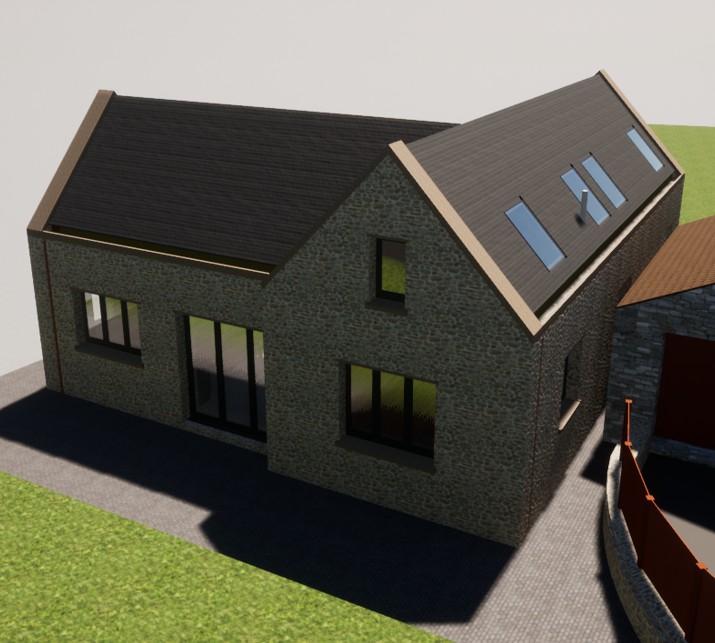
-
Doing my first self build and project managing it myself. Just had a big retaining wall done and footings up to DPC level by a groundswork sub-contractor, who has done a good job. Now I need to get someone in to put the walls up (blockwork, cavity, surecav and natural stone on the outside). To keep my costs down, the intention was for me to get all the materials to site ready and then have a few guys on day rate putting it up (with some idea on how many m2 they'll do a day). I was given a recommendation for some guys, but they have been consistently reluctant to give an idea on timescale, overall cost or what m2 they can achieve in a day. The only thing I know is they charge £190 a day each and they're planning to have three of them on site (so £2850 a week for the three of them). I have a lot of respect for and trust the person that recomended them, and he assured me you will get a day's work out of them for the money. However I'm getting very nervous and feel like I could be potentially handing someone a licence to print money, and if we fall out mid way through, no other builder will want to touch it? I also worry I could be going into this a bit blind? Is this normal? I feel like paying someone day rate for small jobs like garden walls etc is fair but not to stick up the walls on a whole house?
-
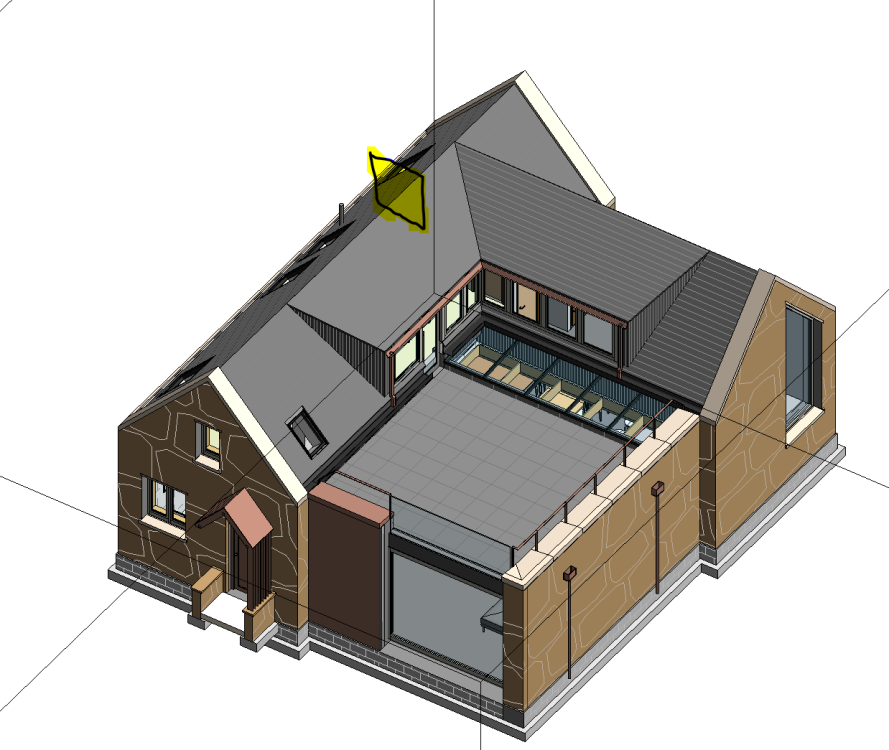
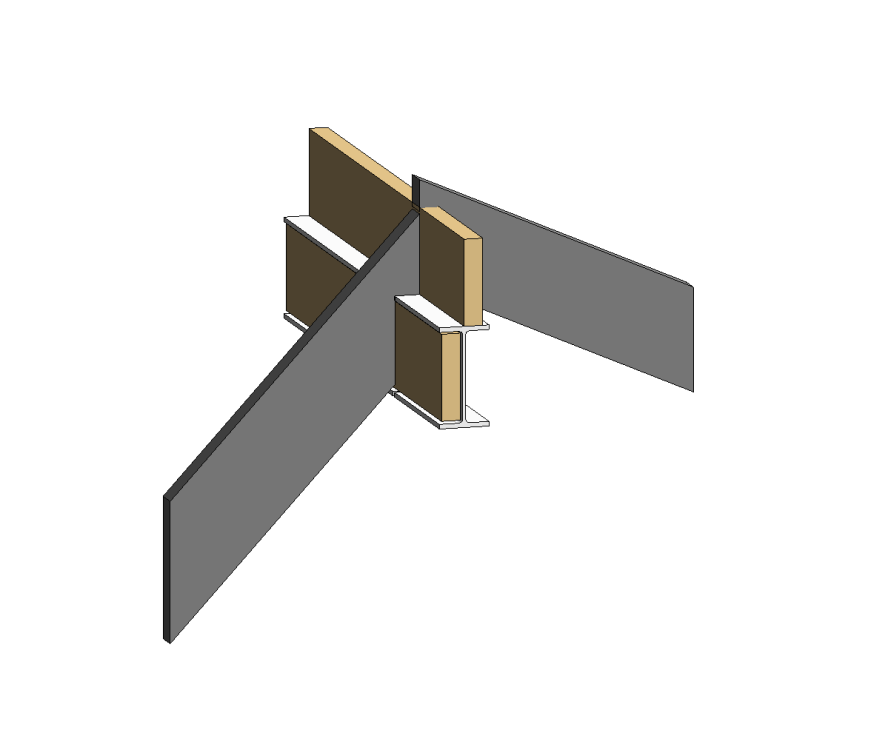
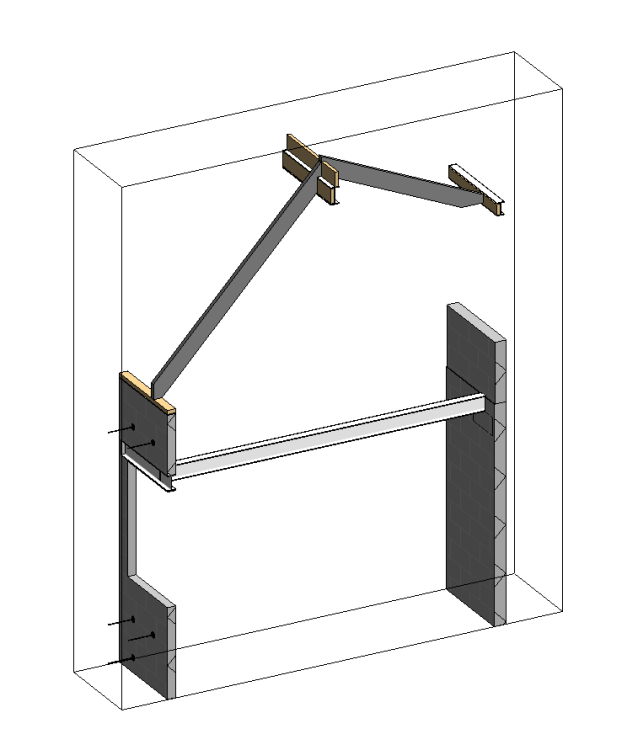
Appreciate this thread is 5 years old but just seeing how you got on? I have the exact same issue. 47 degree pitch one side and 24 degree pitch the other (for a dormer window). 3d below shows where its taken through. This is roughly what I'm thinking - Any thoughts, lessons learnt etc? Or am I barking up the wrong tree with this approach? \
-
Any of those that comment run with Corten? Looking for advise on a new build. I have been told you need minimum 6mm sheets to prevent them simply rusting away? Often seeing people say theirs is 1.5 to 2mm - how are they holding up? Cheers
-
Drainage help needed - House extension
GEO-PAR replied to GEO-PAR's topic in General Self Build & DIY Discussion
okay will do - thanks -
Drainage help needed - House extension
GEO-PAR replied to GEO-PAR's topic in General Self Build & DIY Discussion
Okay cheers - Sound like the easiest thing to do is leave in situ and apply for a build over notice, and just have it run below the extension in the current position? -
Drainage help needed - House extension
GEO-PAR posted a topic in General Self Build & DIY Discussion
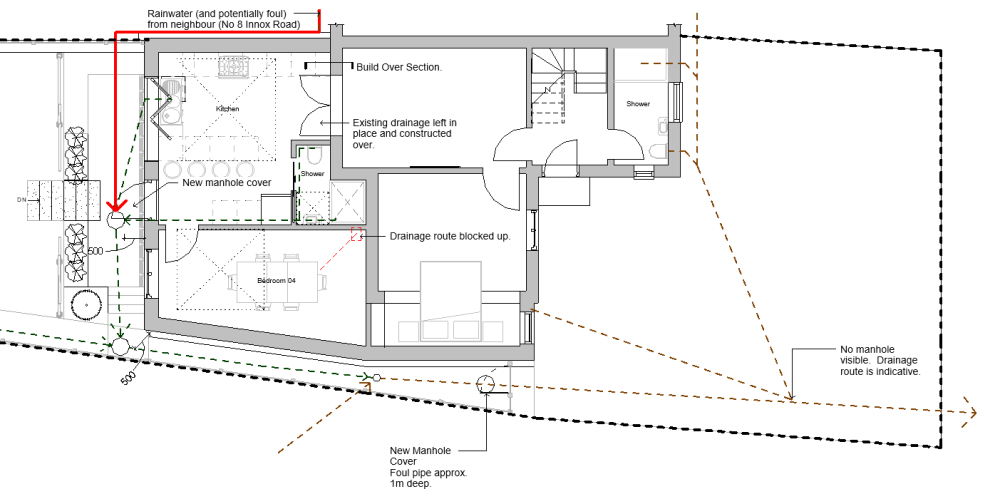
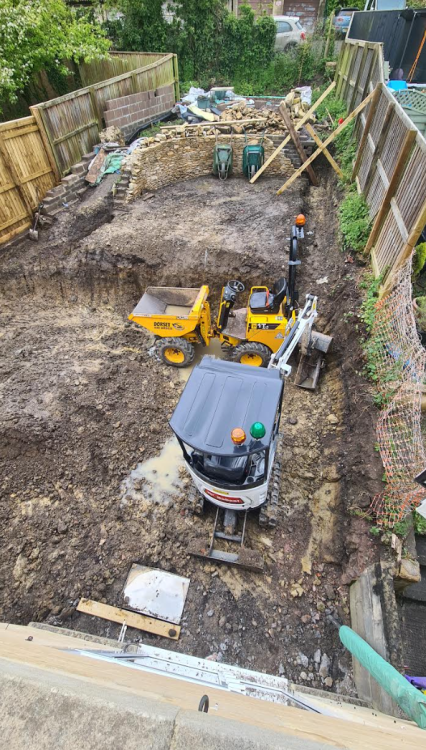
Hi guys, Helping my brother build an extension down the side and out the back of his house. We've done a big chunk of the digging but now at the drainage and are a little stuck on how to go about it, where we need manholes, rodding points and so on. Here's a photo of what the site is currently looking like. When comparing to the existing plan below, I'm stood above the living room looking down. The metal cover at the bottom of the image is not a manhole - We located the pipe and put this over the top to stop any dirt or stones from falling down in the hole. This is the existing situation. An existing drainage pipe runs parallel along the back of the house and connects to the manhole as indicated. This drainage pipe is for next door's rainwater (and potentially foul but we're not 100 percent sure). The houses are circa 1940's (Bath, Somerset) so it appears to be a combined sewer? This is something along the lines of what I am thinking. So we don't have a drainage pipe running below the house, we re-route it to run around the outside of the extension. Does this look sensible or is it better to just leave as is and build over it? I'm thinking all the new drainage pipework goes to the back of the house as shown. In terms of foundations, we're going down the approach of beam and block as the existing house is suspended timber ground floor (and therefore need to preserve air flow). I believe we need a min of 400mm between the pipe and the house, although ideally we'd be able to get this closer and use the same trench as the footings. Any help is massively appreciated!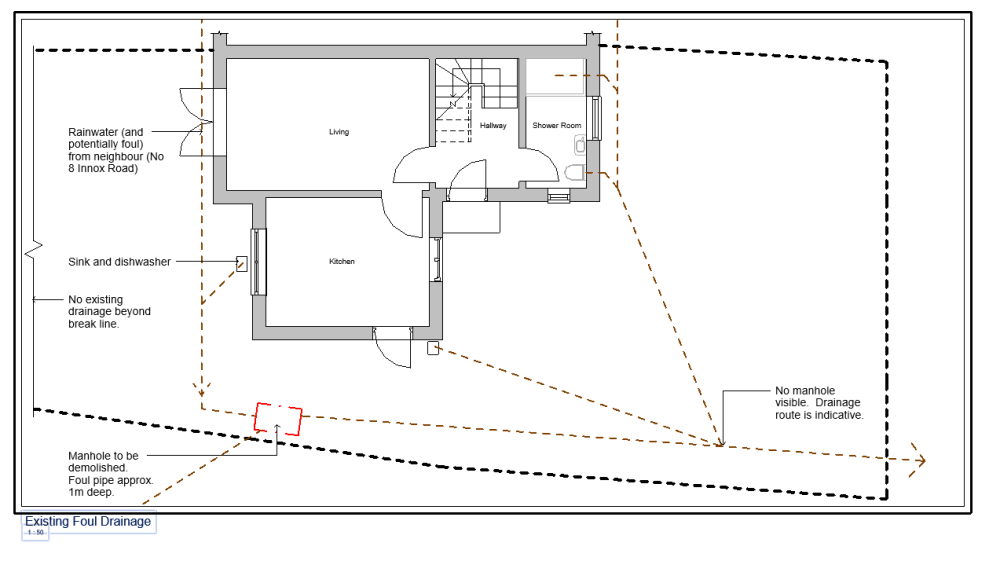
-
Is there any particular size/type of Basalt fibre rebar I need to look for? Currently going through the same process where I'm struggling to justify the cost uplift of extra wide cavity wall ties (375mm cavity) and this seems like a great solution. How did you get over the lack of drip detail?


