Novice Becky
-
Posts
60 -
Joined
-
Last visited
Everything posted by Novice Becky
-
Thanks @BotusBuild. OK I will def get the condensate to an internal drain (really irritating that the expert installer ignored me in the first place and then I doubt myself). Your fears are the same as mine! I sent photos to installer to prove it was seriously frozen but obviously they weren't taking any blame for this. VA seemed to think it was all ok and couldn't see any installation errors other than tipping the machine back slightly (installer looked relieved at that news). I'm now not so sure. The date was being weird for a week a while ago and it wouldn't let me or the installer set the date to the correct date. It has since corrected itself. Today when I pressed the momentary boost switch with the installer here it went to 18 hours 11mins! It should be 15 mins. Does that sound like dodgy/damaged pcb?
-
Thanks @dpmiller. Yes. Yesterday (warm day) it was in humidity-controlled boost all day - even when machine said RH was 61%. Humidity threshold is set to 70%. I read that the machine can go into boost even if it's below the set threshold (70%) if it detects sudden or sharp increases in humidity. But there wasn't a lot going on in the afternoon - just me at home. Surely it should have switched off boost at 61% rather than just slowed down a bit? 14 March Air Temp (C) Time external internal RH % supply speed % extract speed % Mode 13:19 16 20 65 Humidity controlled boost 13:38 17 21 64 54 47 Humidity controlled boost 14:04 17 21 63 54 47 Humidity controlled boost 14:13 17 21 64 55 48 Humidity controlled boost 14:40 16 21 61 51 42 Humidity controlled boost 16:09 14 21 70 61 60 Humidity controlled boost 23:29 12 18 71 20 20 switched to low 8 hrs overnight (88% outdoor) (Zone 1: 22) (Zone 1: 51%) In the evening I discovered some extra pages on the app. See 11:30pm. Internal air temp 18C. How does it even know the room temp is 22C? There's no thermometer or hygrometer/humidistat linked to the machine but it's correct and has been correct each time I look. 18C is quite a lot colder than 22C. Room humidity is 51%? And why is machine humidity much higher 71%? SCRAP THAT - just looked on the app. It says Zone 1 is 25C! It's actually 21C. The sun is shining. Maybe heating up the loft?
-
Thanks. Do you mean the large steel attenuators? I assumed they weren't insulated because they have insulation inside them. Do the attenuators need insulating?
-
Thanks @JohnMo. Do you mean dry trap? There wasn't clearance under the machine for a dry trap. I'm lucky I have a trap at all - they are still saying it doesn't really need a trap because it's going straight outside?! Helpful comments - I've been thinking about running the condensate to a bathroom. I've calculated I could get a fall of at least 3.3 degrees to a bathroom. Instructions say min 3 degree fall. Building regs say 5 degrees. Has anyone been ok with a 3 degree fall or do I need a pump or maybe I need to conceal the pipe at ceiling level.
-
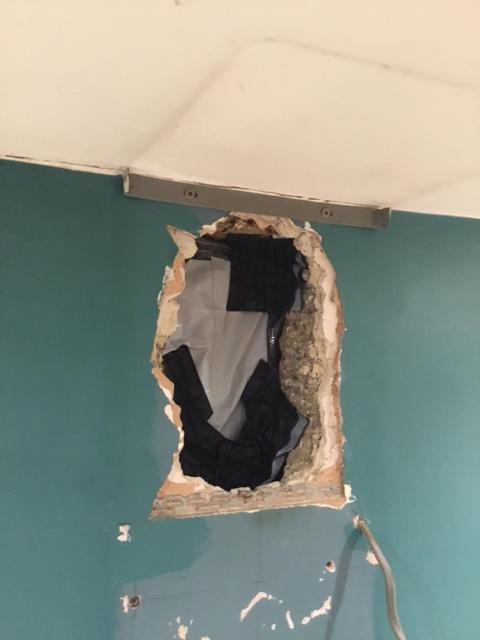
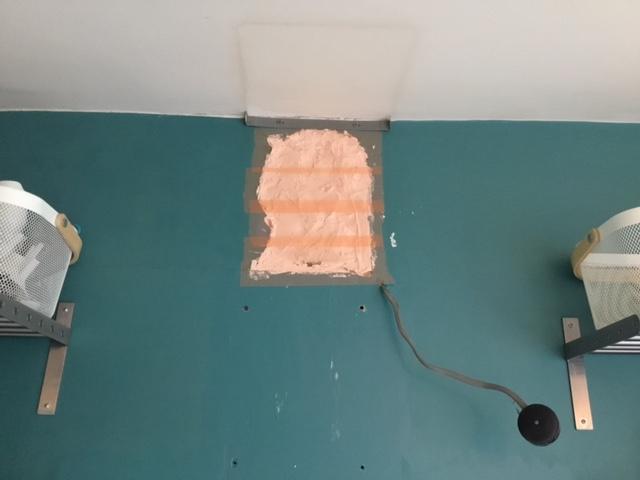
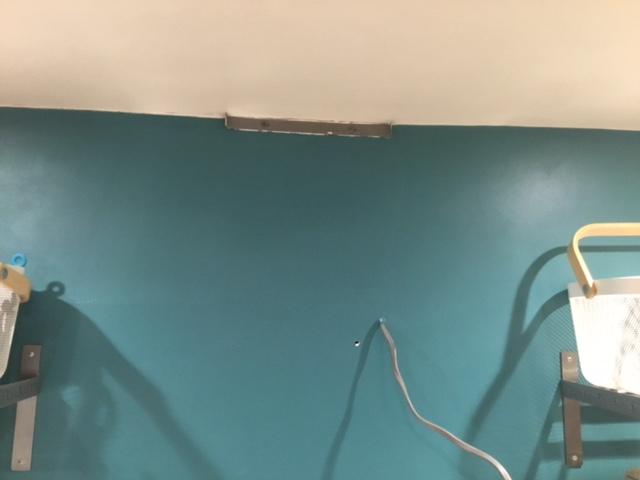
@Conor and @markc a belated thank you for your help! I managed to block up my extract vent holes - first time for everything. The cooker hood one was nasty - the builder years ago had hidden his shoddy job and there was a massive double hole to fill. I stuck some ME508 airtightness tape at the back of the inner leaf, filled with FM330 and then plastered over the top. Now all covered up with a new recirculating cooker hood. Cheated slightly on the brick work outside and happened to find a builder to come and brick up the holes. Thanks again.
- 9 replies
-
- 1
-

-
- extractor fan ventilation
- airtightness
- (and 1 more)
-
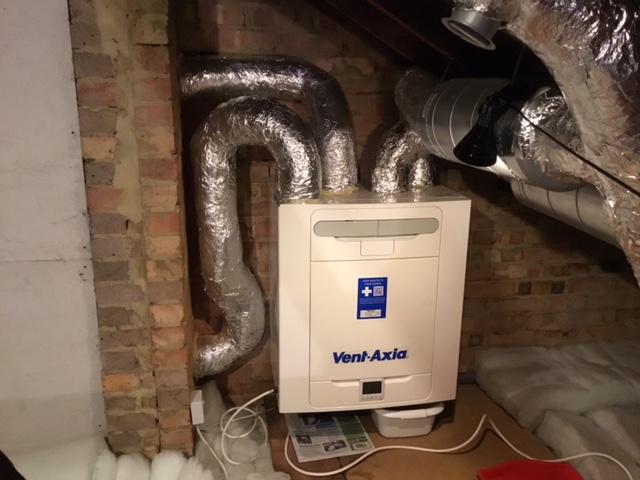
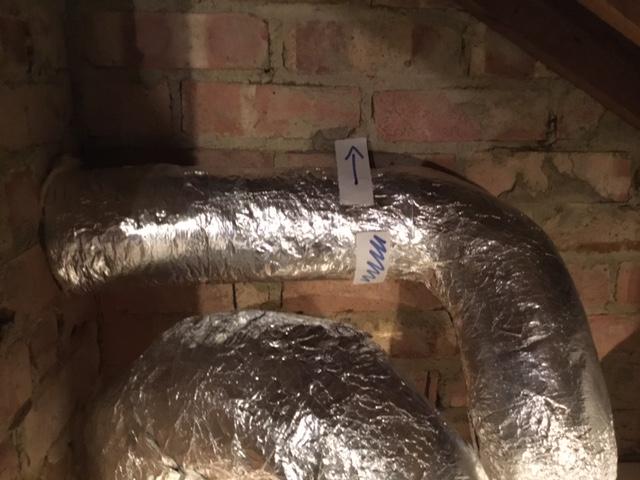
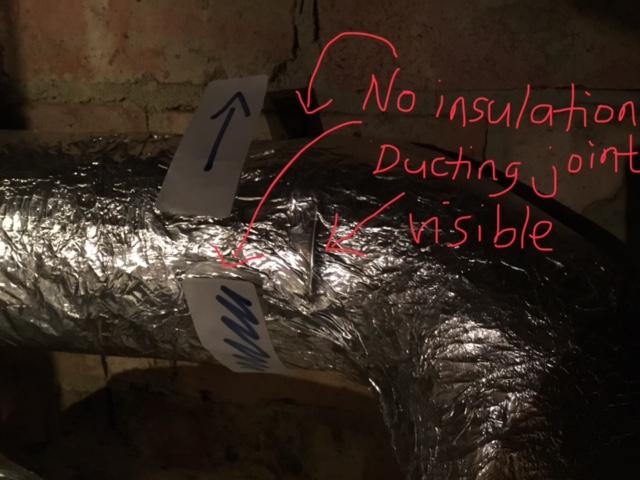
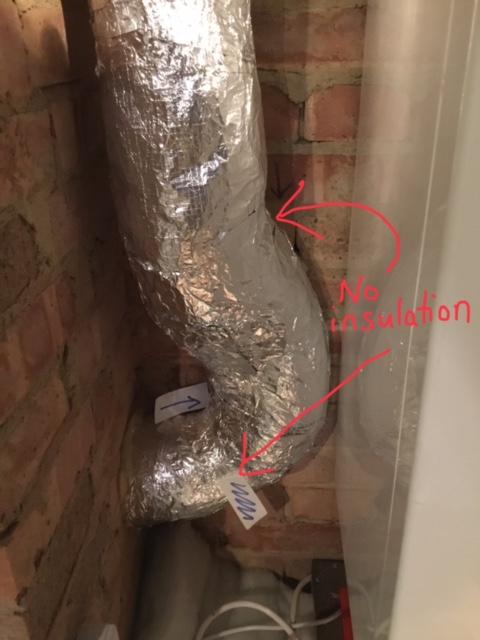
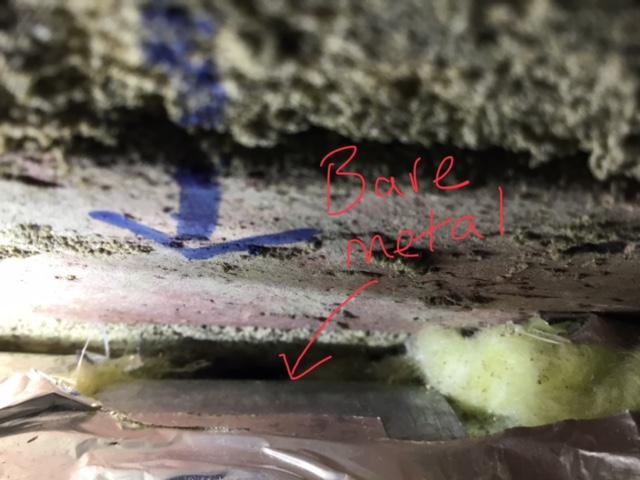
POORLY INSULATED DUCTING TO ATMOSPHERE Today I have closely inspected the insulation on the ducts to/from atmosphere. There are sections of uninsulated ducting on the supply and extract to atmosphere (photos). There are some areas where I don't think you can get insulation on the ducting because the ducting is right up against the brick. And some areas are covered with aluminium tape but there is no insulation under the tape. I've asked the installer to reposition the duct work so there's room for insulation. The installer is currently saying no - he says the main reason for insulating the ductwork on the air intake and exhaust to atmosphere is to stop condensation forming on the outside of the duct, not inside. Could this poorly insulated ducting be the cause?
-
MACHINE ON BOOST The machine seems to be on boost the whole time (but often at a lower fan speed % than on the preset value for boost). The installer upped the fan speed on the settings to about 60% but that didn't do anything. I let it do what it wanted for several days and it continued to be on boost. The house is not damp. This morning 7am info said 9 degrees outside, supply air temp 16 degrees. Living area was 21 degrees. RH 72% on MVHR (63% on hygrometer in bathroom) This afternoon was unusually warm and sunny - MVHR said 17 degrees OUTSIDE (correct), supply air temp 21 degrees. Living area was 22 degrees. RH on MVHR 64% (about the same in bathroom) but machine was still on boost (intake 54%, extract 47%).
-
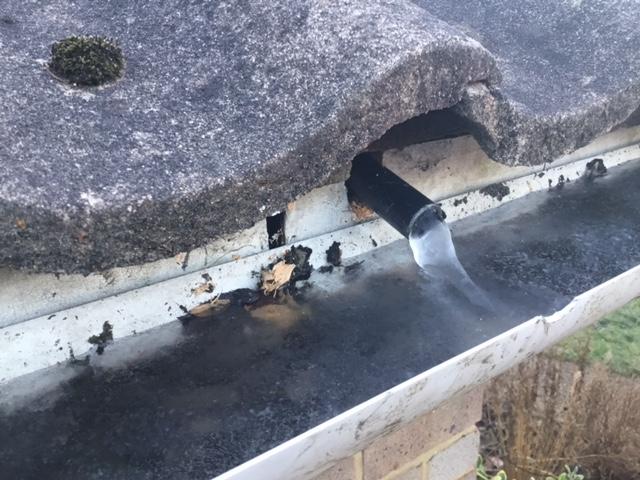
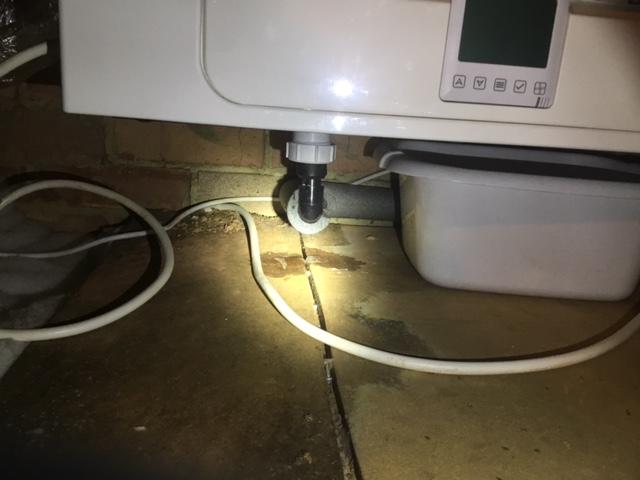
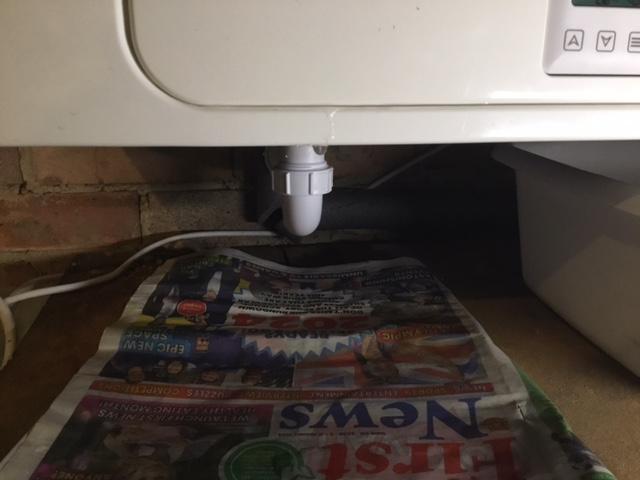
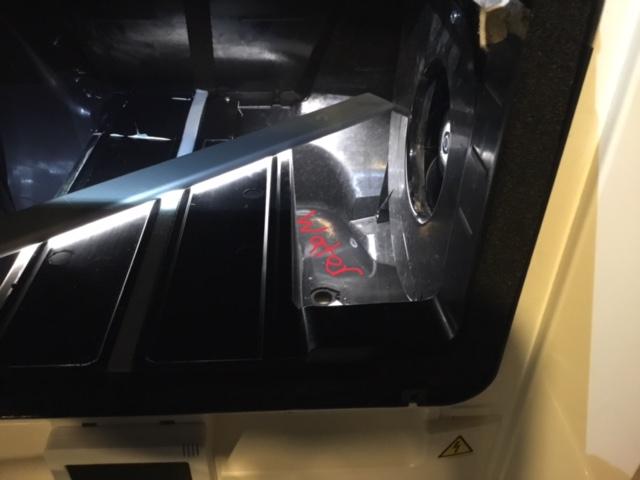
FROZEN CONDENSATE The installer initially refused to insulate the condensate pipe (I told them building regs and instruction manual said this was essential) then it froze (and machine was leaking) and so they decided they would insulate the pipe (they claimed they'd never seen a loft freeze before). They didn't insulate along the entire length into the eaves so when we had the very cold weather it froze and the machine was leaking out of the RH drain cap. I was concerned that the machine had been damaged by this but Vent Axia seemed to think the machine was fine when they inspected this week. They agreed that there shouldn't be water in the RH drain. They said there was excess water coming from the duct/ducts connected to the atmosphere but they didn't know why. Their tech team said they might replace PCB but engineer didn't think that was the problem. I've never had an error message. I've insulated the condensate pipe.
-
Vent Axia Sentinel Kinetic Advance S (405215) - The installation engineer has come back quite a few times and Vent Axia came on Monday but it's still not clear why I have this problem. Wondered whether anyone has any suggestions? In colder or wetter weather (maybe both?) I have water leaking out of my MVHR unit - I've had it leaking out of drain and front of unit. Also the heat recovery seems very poor to me (eg 0 degrees outside, supply temp 11 degrees, room temp 20.5 degrees). And the machine reads a significantly higher RH than my hygrometer in a bathroom and the house doesn't feel damp (eg. 76% vs. 66% RH). First of all it seemed to be working brilliantly and condensation disappeared overnight (weather was warm for December), supply air was around 19 degrees on the app. We had a very cold spell in January and I don't think it's been working right since then. We also had ASHP installed at the start of the cold spell. Last Friday it was leaking out of the front of the machine near the bottom. I took the cover off and removed the heat exchanger which had condensation on the outside and lots of water slooshing around inside it. I tipped it up and emptied most of the water out. There was also water in the RH (unused) drain which there shouldn't be as the unit is left-handed. I removed the RH blanking cap and got rid of the water. I poured a jug of water and Milton down the LH drain - def not blocked. This week I removed the drain cap on the RH side and put a bowl underneath because the unit still sounded very wet after Vent Axia visit but since I drained the water that was sitting in the RH drain there's hardly been any water from the RH side (over 2 days). The weather has been warmer and dryer. I put the RH drain cap back on today. I have the installer coming to fit a drain on the RH (supposedly redundant) drain. VA engineer thought this might be a good idea even though it shouldn't be needed. The unit can be left- or right-handed depending on where you vent to the atmosphere and you use either a left or right drain. Background: I bought an MVHR system from BPC and had it installed by someone BPC suggested in December 2023. retrofitting a 1961 bungalow, 134 m2 main purpose - to get rid of condensation problem and allow me to get more airtight secondary purpose - heat recovery (save energy) unit and ducting in cold loft, ducting is insulated (25mm foil backed glass fibre - should I have got 50mm? I was told no one uses that) unit is mounted on the north gable wall (brick) this is a branched system with 125mm METAL ducting (my choice) 4 extracts, 7 supply vents commissioned normal extract 35% / supply 55% speed setting boost - extract 45% / 56% supply speed setting condensate drains into a gutter (under the eaves) because there isn't a bathroom near enough to get a 5 degree fall I changed filters a few weeks ago as they were very dirty.
-
Measuring for composite front door and threshold design
Novice Becky replied to Novice Becky's topic in Doors & Door Frames
@Roger440 Yes, I'll take pics but you may beat me to it. I'm very slow. In which case you'll have to take pics! I'm also wondering whether it might be a more attractive job for someone if I've measured and ordered so I can't blame them for getting it wrong (but now I'm having visions of a brand new badly fitted leaky front door). -
Thank you. We're 5 mins from Junction 9 of M25 (Surrey)
-
Measuring for composite front door and threshold design
Novice Becky replied to Novice Becky's topic in Doors & Door Frames
Thanks @Conor for your reply. I'm now calling this an experiment so I can allow myself to fail and risk wasting money (strange but works in my head somehow!). I don't want to have any more people to blame/chase for bad jobs. I just want it done and done well with no shortcuts, so I'm ok if I get it wrong. The potential gain is a warmer front door, being able to progress my retrofit and boosting my confidence and ability in general building. I'll start with the two windows down a side passage so by the time I come to the door I'll have had some practice. I've attempted lots of DIY jobs in the past and generally manage to get there even if it takes me a while. I'm sorted on the width and I'm getting my head round the threshold design, allowing for the doormat etc. And a timber frame is a bit more forgiving/adaptable if it all goes wrong! -
Thanks. This is really useful to know in case I do other windows (I did get a leak at the top of my expert fitted windows a few years ago) but once I've fitted these windows I'm having the failed CWI insulation sucked out and replaced with EPS beads and THEN I can finally convert the side passage into a sort of shed/store so I don't think water ingress will be an issue for me.
-
@CrofterReally encouraging to hear that your windows worked out. Recip saw noted - I've been wondering about how I'll get the old ones out! Once I've ordered there'll be no going back and I'll have 8 weeks to swot up on how to do it. @Gone WestGood to hear that other people had a first time for installing windows. I'll make sure I have plenty of help - also need to find a friend with Netflix to watch White Gold suggested by @Onoff. @Mike @nod I like how there's always more than one way to do anything on this forum and you have to use your own judgement. I'll have a final think through my fitting tolerance. Having seen other people's windows I'm not too scared now - I don't have rendering to deal with and I have a 1.5m steel ruler. Tremco and Illbruck products are very popular on this site so I'll go with them. I have FM330 if I need it - just need to practise getting the quantities right (been a little over-enthusiastic in the past!)
-
Measuring for composite front door and threshold design
Novice Becky replied to Novice Becky's topic in Doors & Door Frames
Thanks @saveasteading. I totally agree! Expertise does have a value and I'd much rather leave it to an expert. However I can't find anyone round here to fit a timber frame door that I supply - I really have tried very hard. And I'm too far away for the suppliers to install. The builder who quoted £1750 was no expert when it comes to fitting windows - he fitted some of my other windows and they are leaky (I have a Flir camera) so they're on my to do list. He'd heard of Compriband but not airtightness tape. However he wasn't keen to rake out the cavity - that would be extra. All the FENSA people didn't want to know which I understand. I think part of the problem is that currently there is a real lack of experts for retrofitting anything. So I've concluded that I need to get on with it and give it a go but you're right - it could be an expensive mistake. If I get it wrong and have to buy a second door I could perhaps console myself that it would still work out cheaper than supply and fit from the swanky companies AND I will have learnt a lot and gained confidence. Apart from that I am currently suffering from a job done incorrectly by experts - I paid over £4k just for the install of an MVHR system (rigid metal). I queried the condensate drain going into the gutter and pointed out that building regs and manufacturer said pipes in a loft must be lagged but he dismissed this. He did eventually lag some of the drain pipe after water was leaking out of the bottom of the machine. Then it all froze solid in the extreme cold weather and water was leaking out of the bottom of the machine. He said he'd never known something to freeze in a loft!! This is an expert. Anyway, the machine is damaged - heat recovery is very poor and it's not boosting - so I'm in a courteous battle with him. Also my new ASHP is not working properly so having similar hassle with that. Do I want to go through this again with a window/door fitter? Not really. But genuine thanks for making me reconsider and look back through all the old quotes. I've found that helpful. And I can see I need to ask my questions in a different, more specific way as people don't want to give me advice that leads me to expensive mistakes. -
Measuring for composite front door and threshold design
Novice Becky replied to Novice Becky's topic in Doors & Door Frames
It's a bit difficult to draw as I don't know what's inside. It would be good to know what to expect because I don't want to be without a front door for too long when I come to replace it. Please keep me posted if you gather any knowledge on how to fit a front door. Just looking for somewhere to buy one of these thermal supports. You can get them in Ireland but they don't seem to ship to UK. https://www.prodomo.ie/online-shop/#!/Thermal-Support-70-80-100-120-140mm-x-85mm-x-1-175mm/p/163970650/category=45495629 -
Yes, it's the Russelltimbertech one. Thanks for this, people. Really helpful. I think I'll go for 10mm all round (so 20mm on each dimension) as I want to use Compriband (or equivalent) and airtightness tape.
-
Thank you @Mr Punter. Yes, you're right ... delivery is £500! But the windows (3G) and door were £2300 which works out good value compared to everything else I looked at. If I went for the same windows I have elsewhere it would be £6k+ plus install. Very open to suggestions. The quote is from the summer so I'm going to have to get a new quote.
-
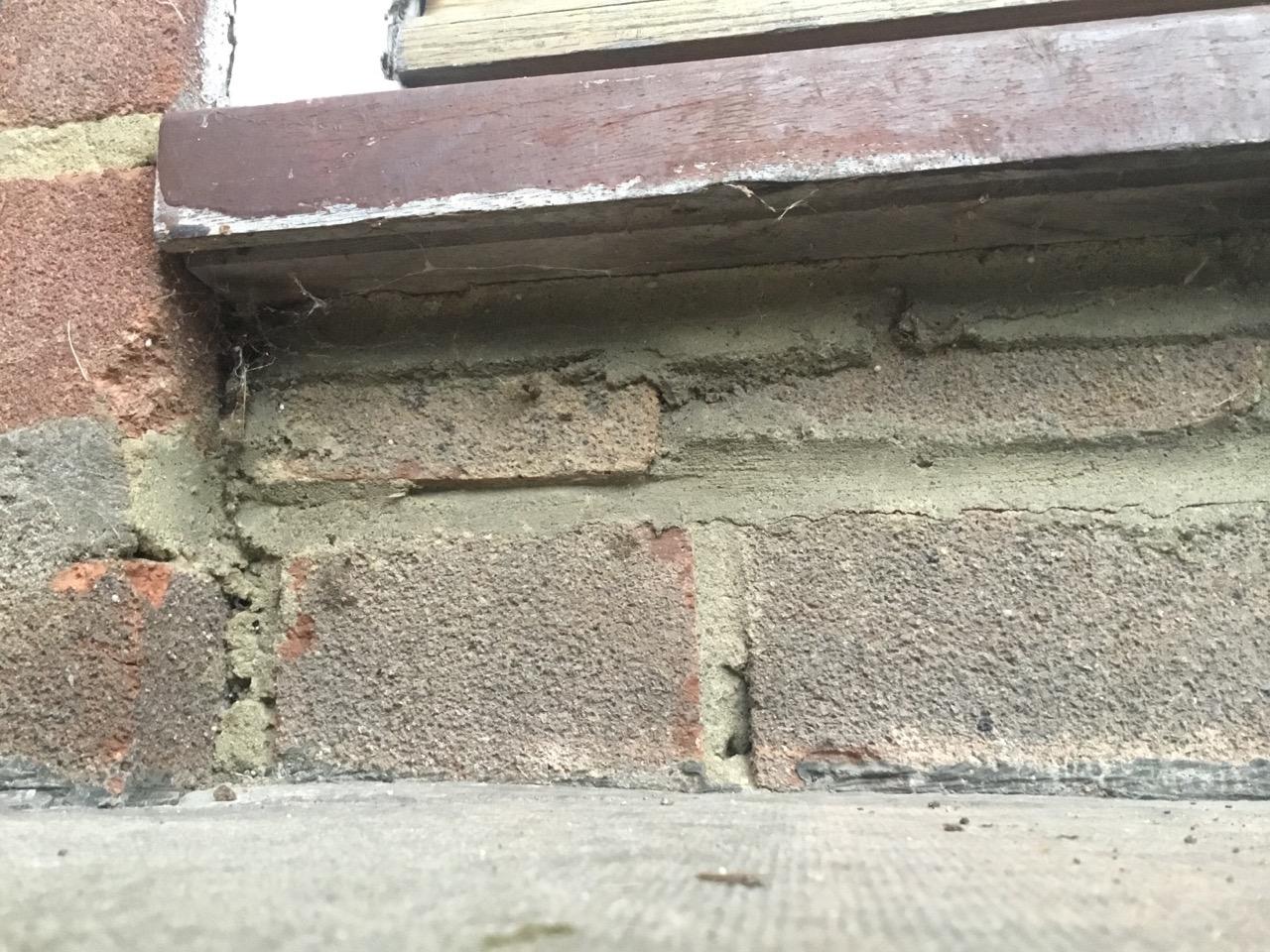
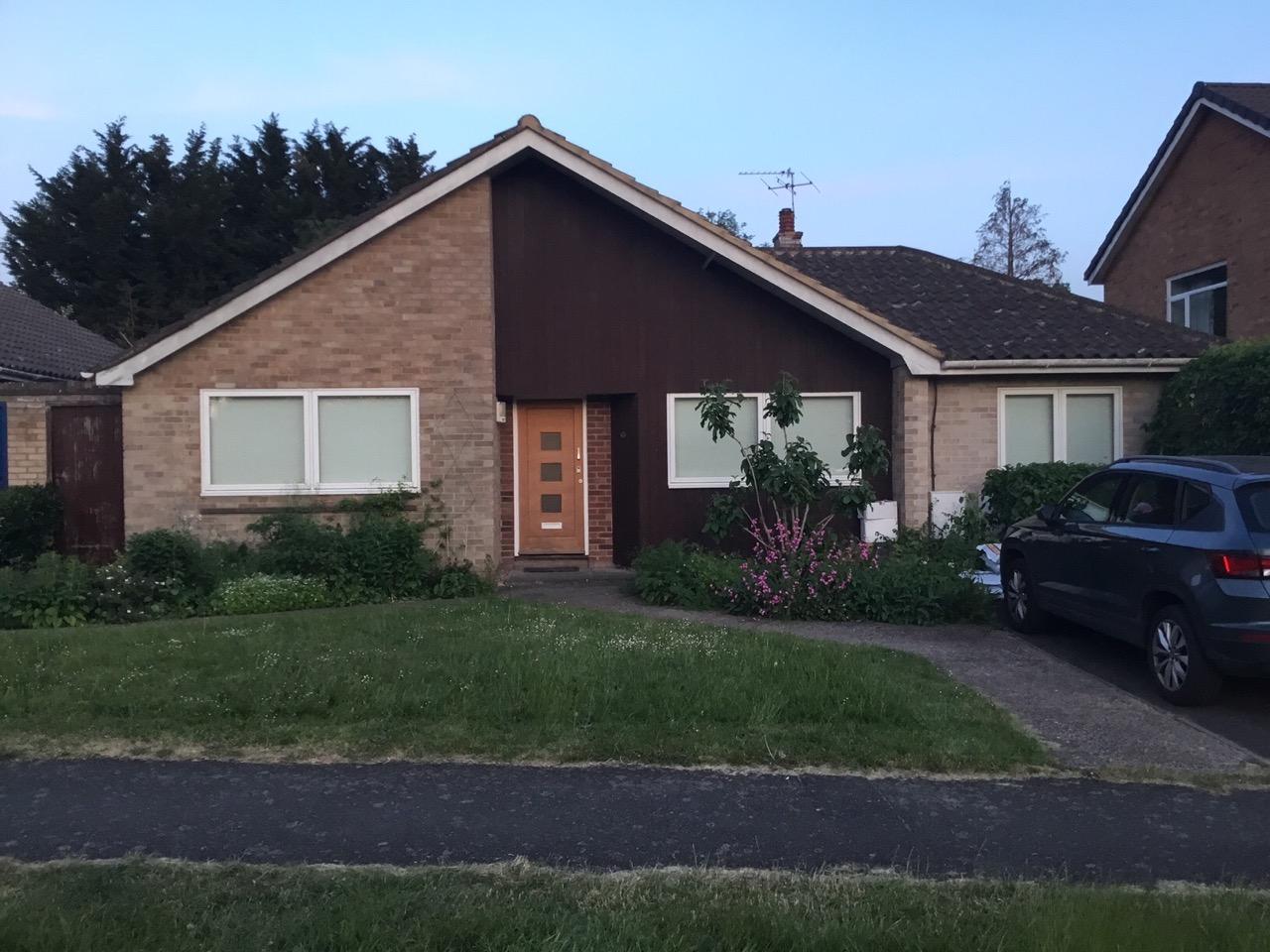
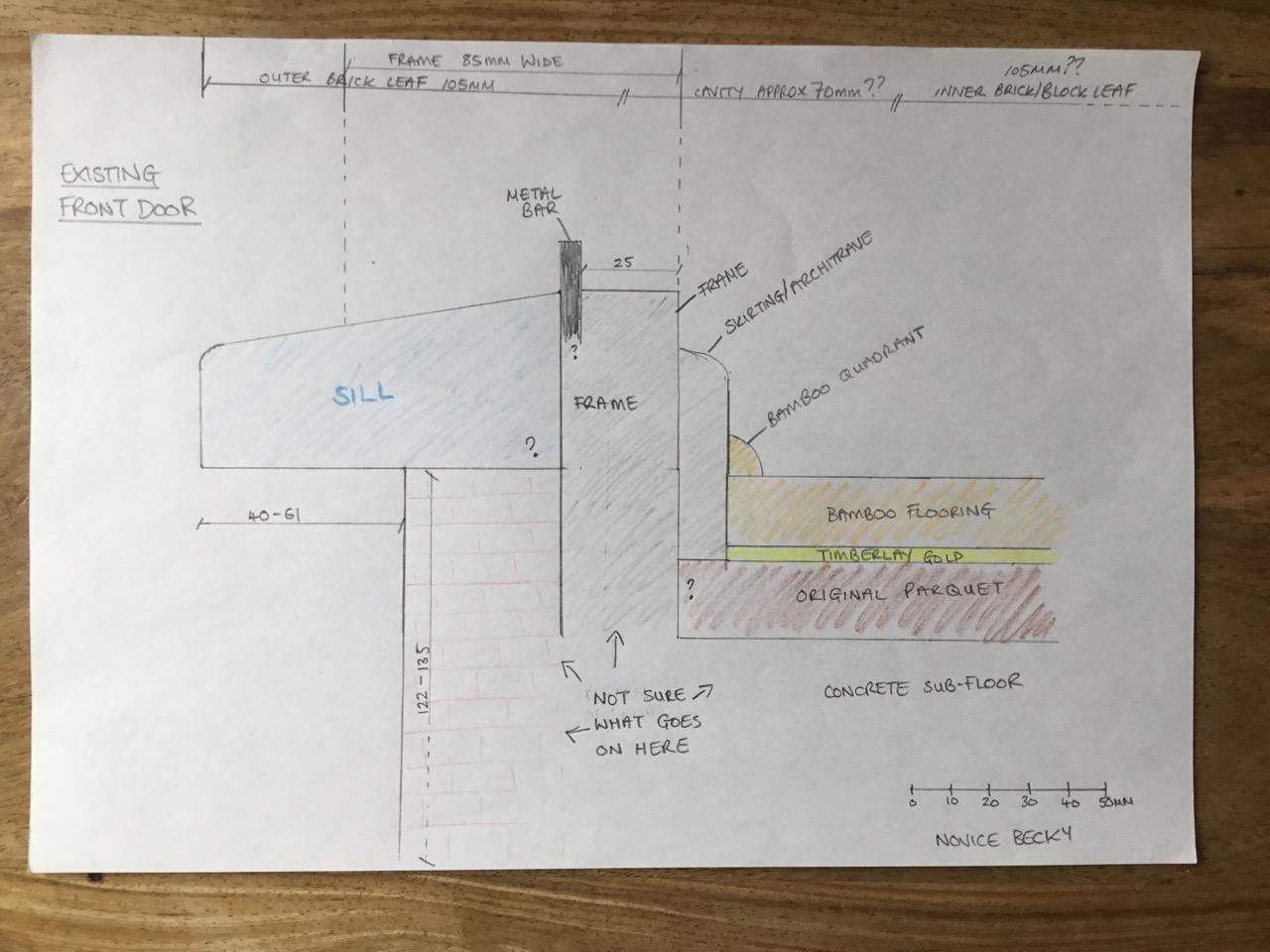
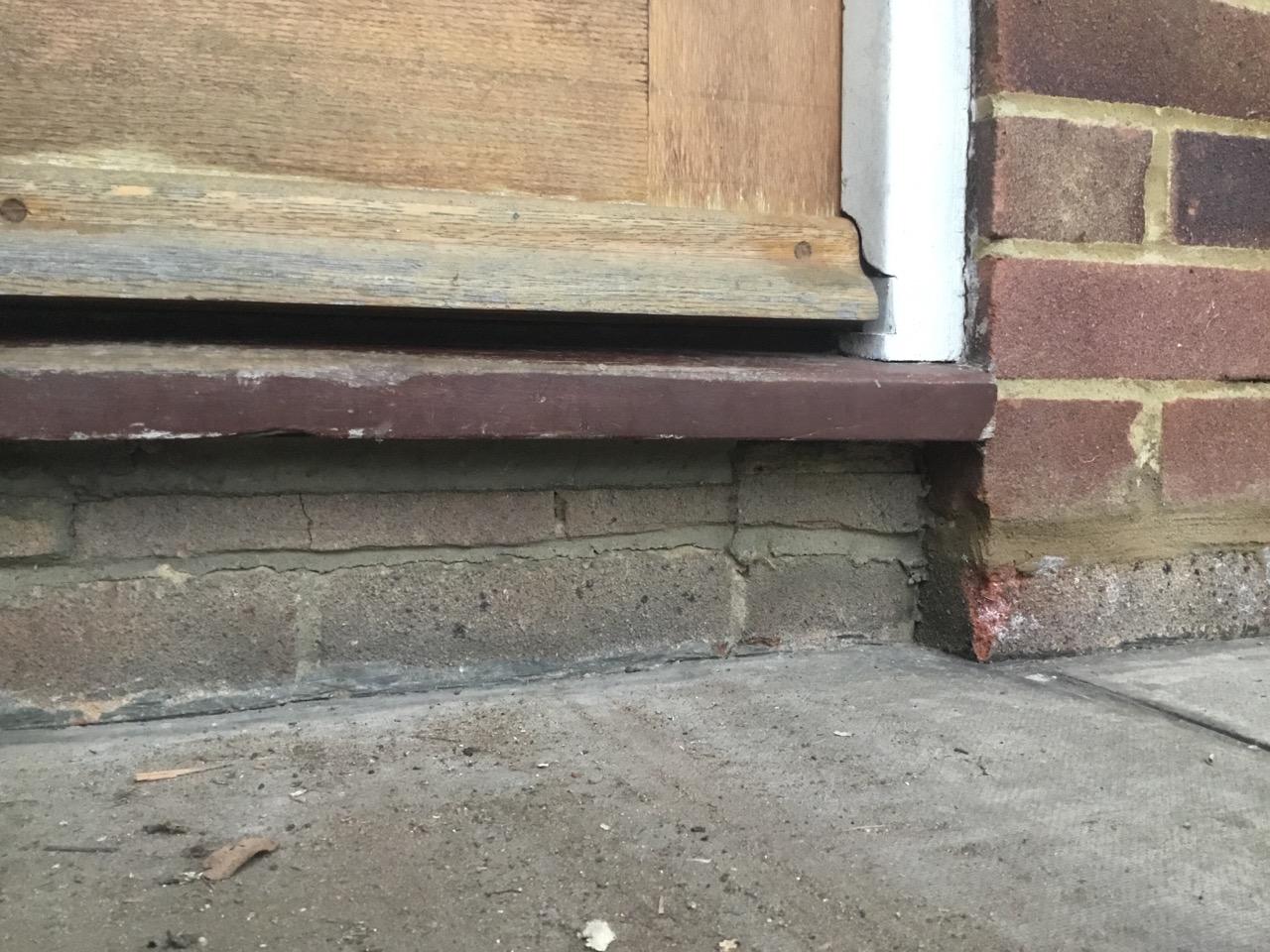
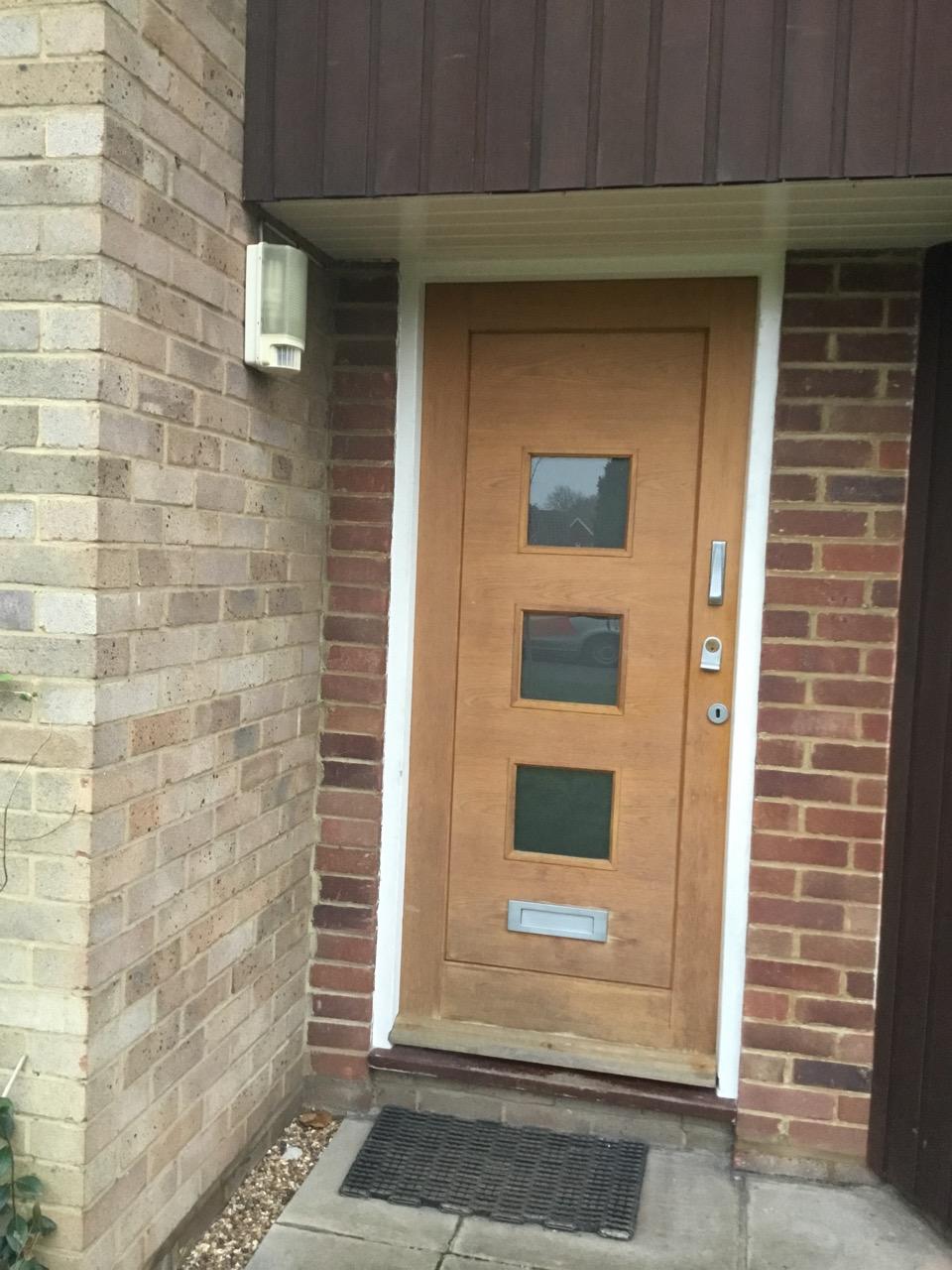
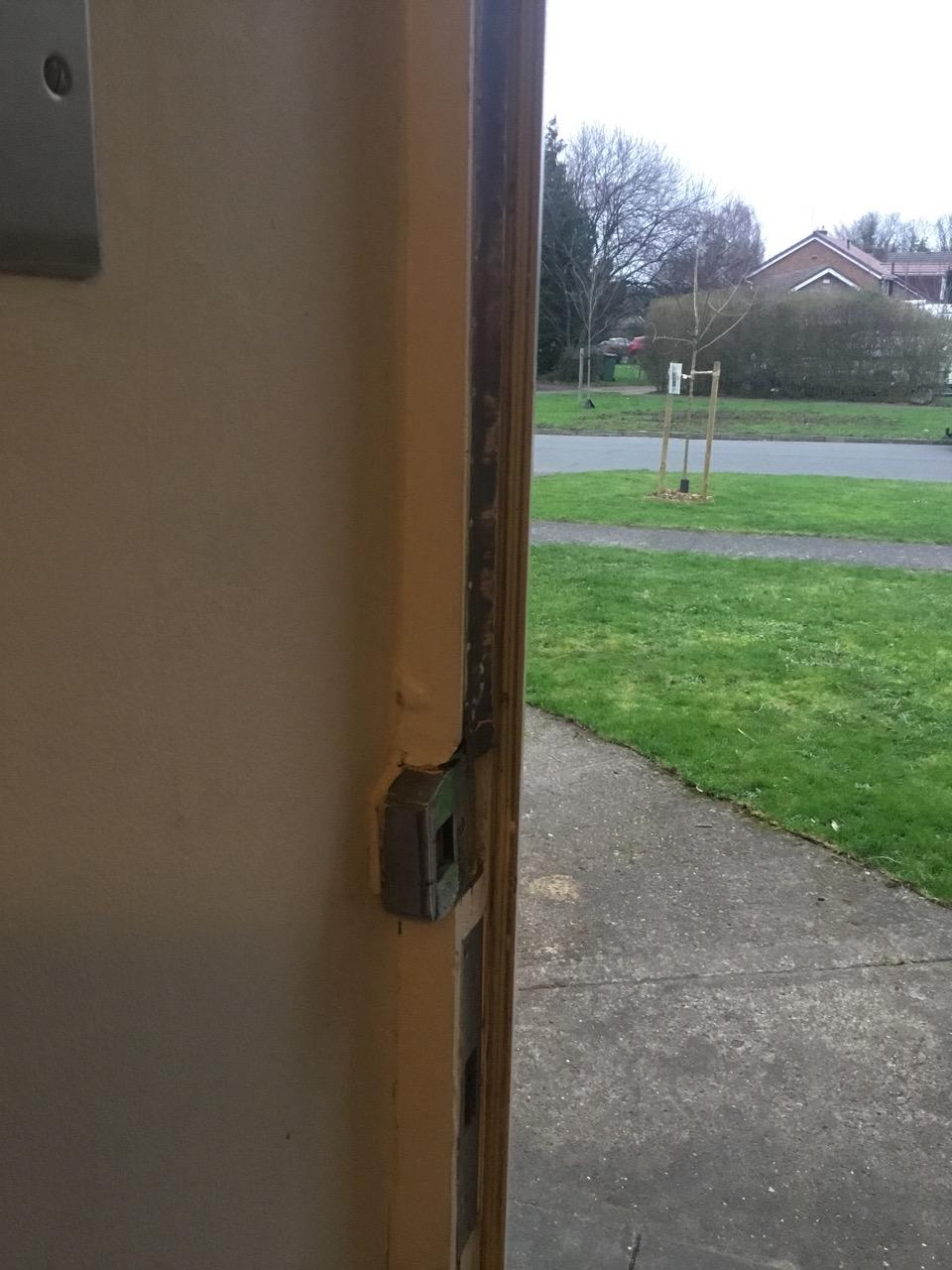
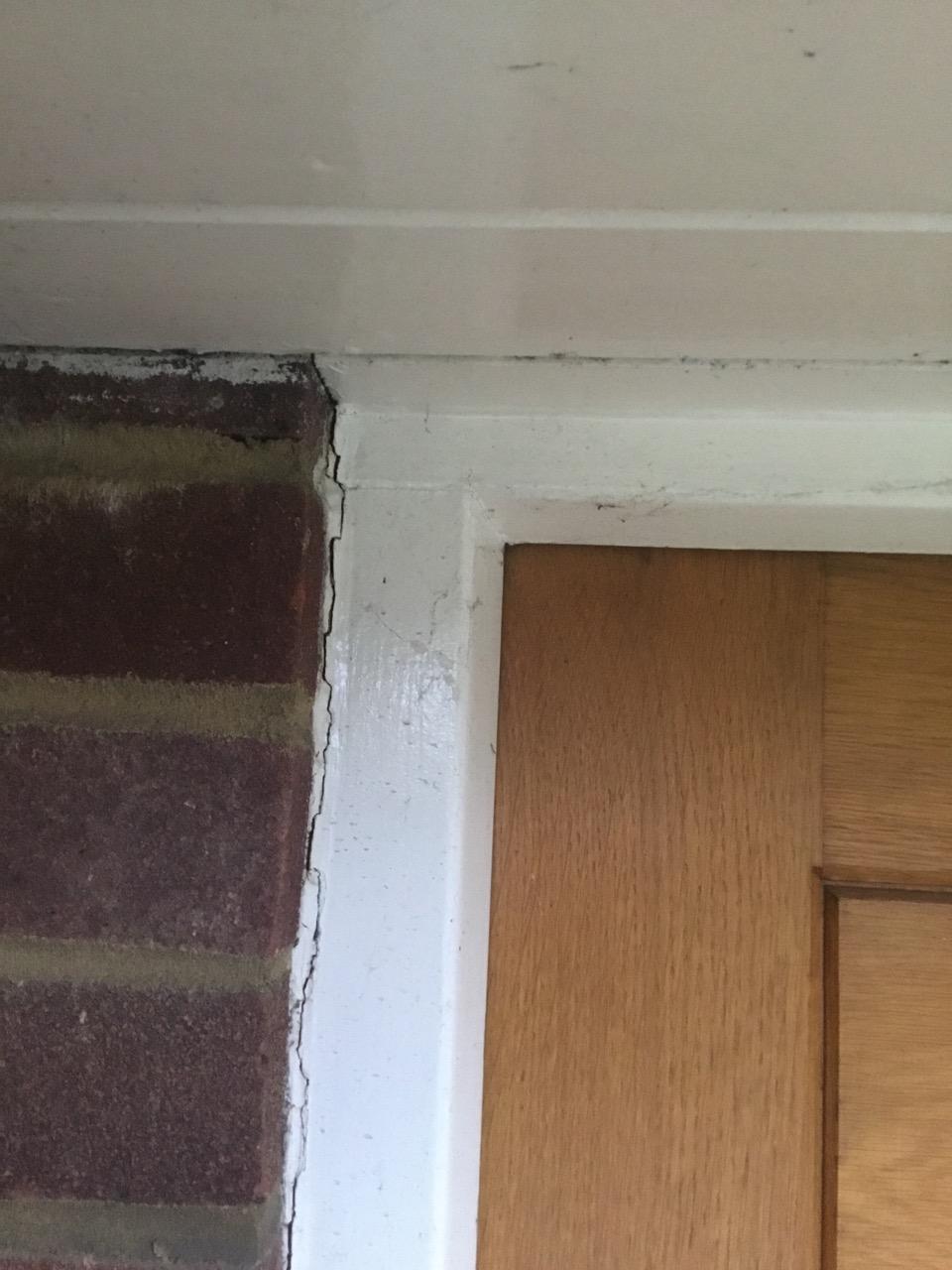
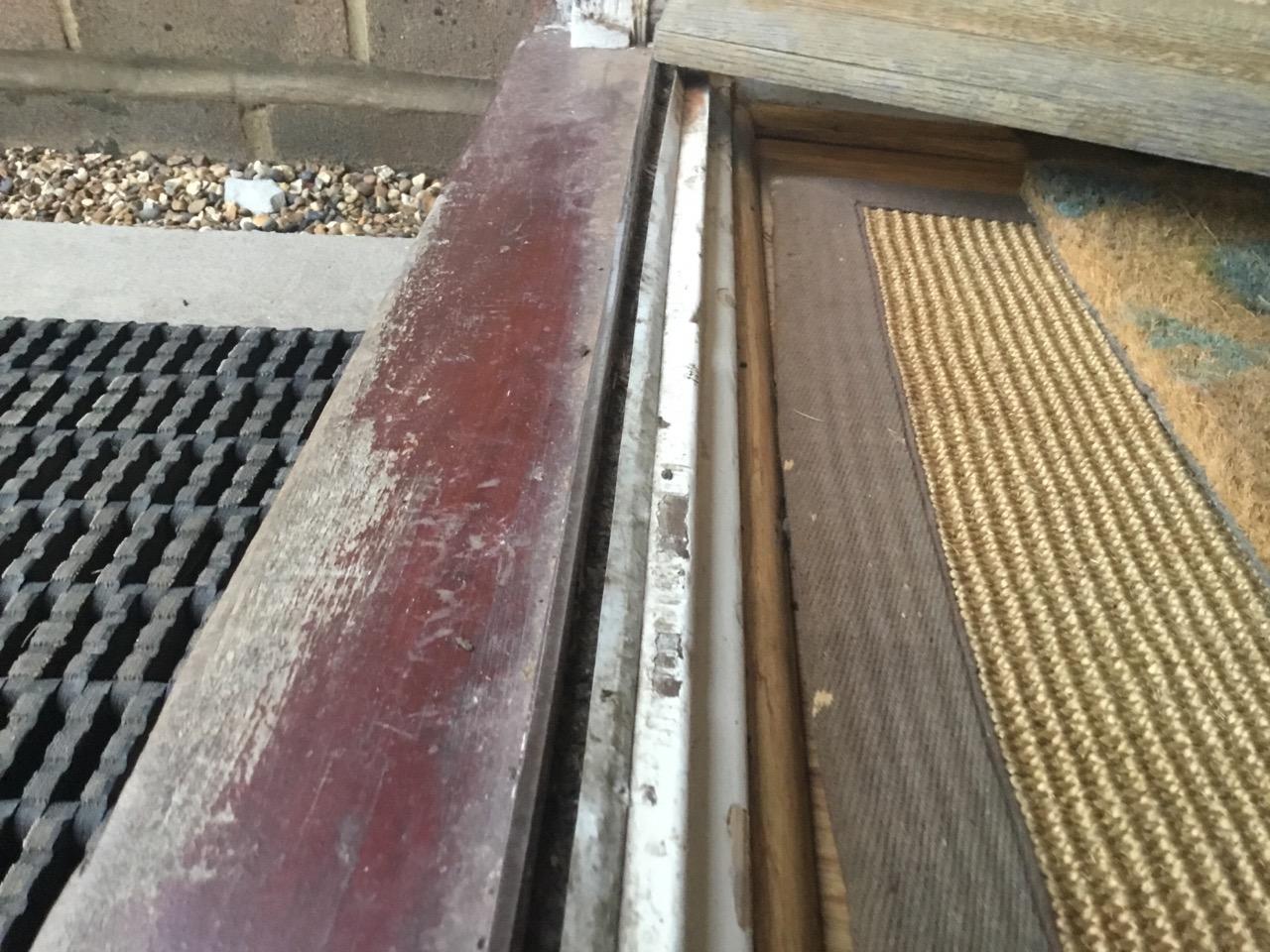
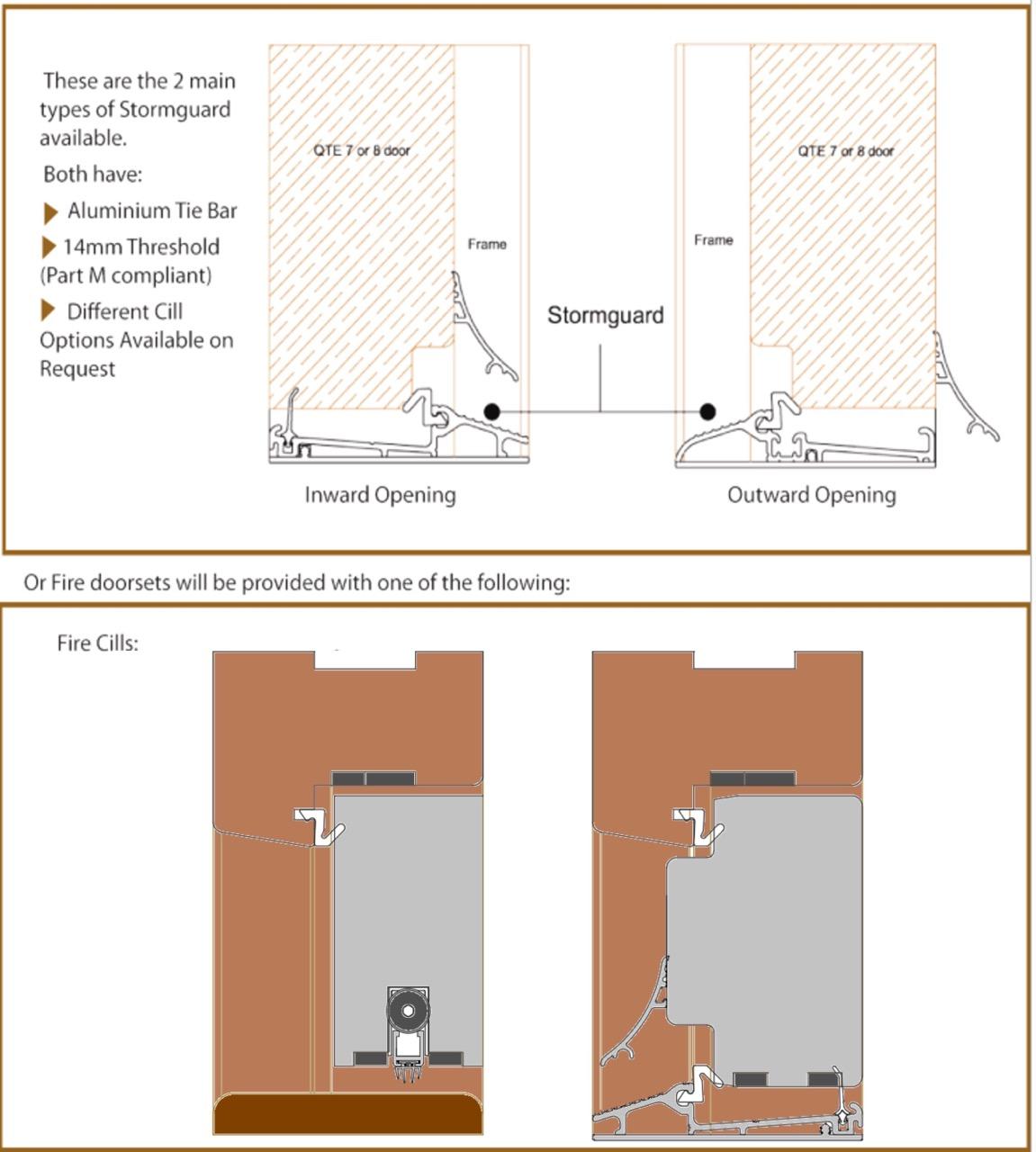
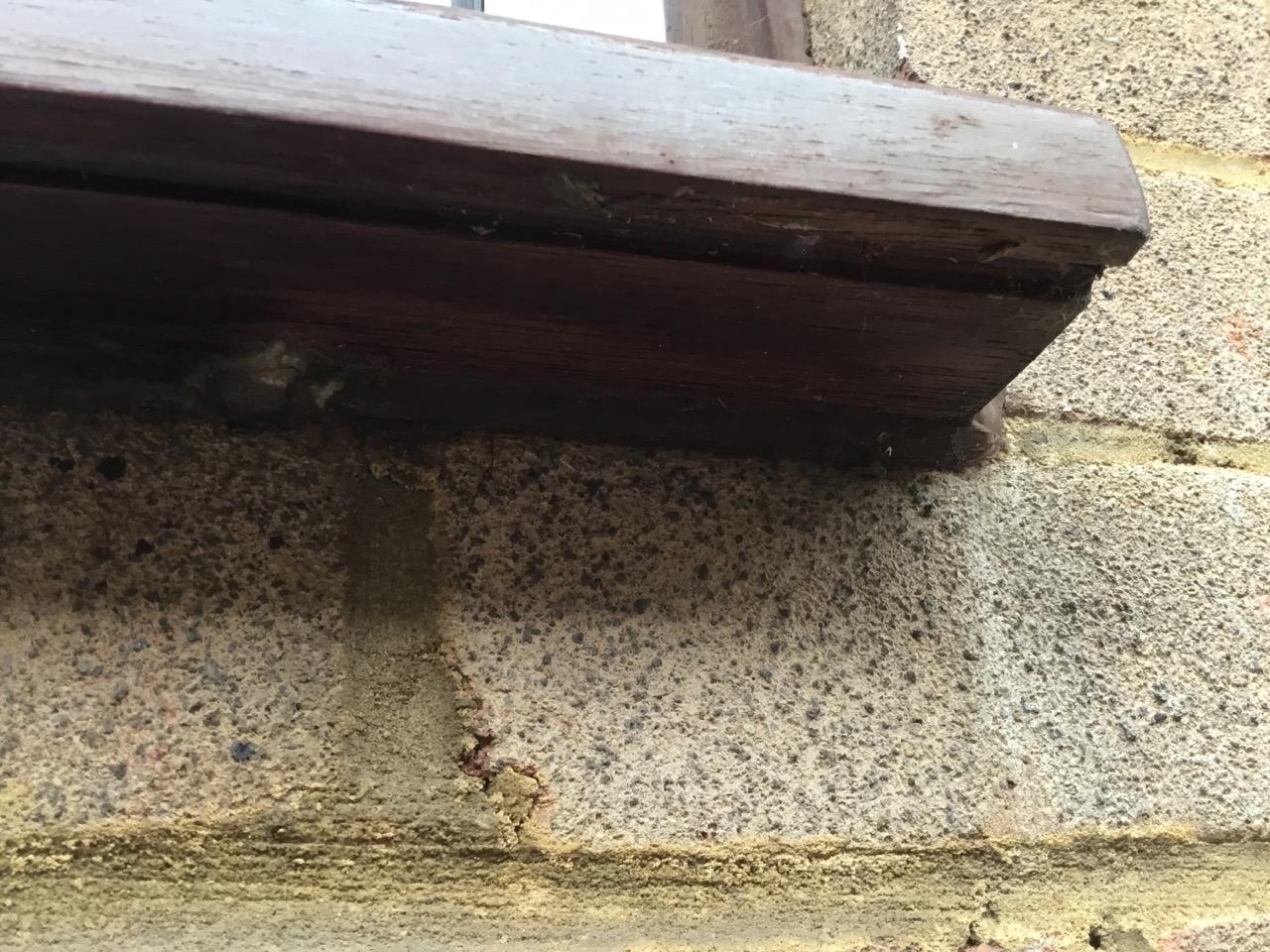
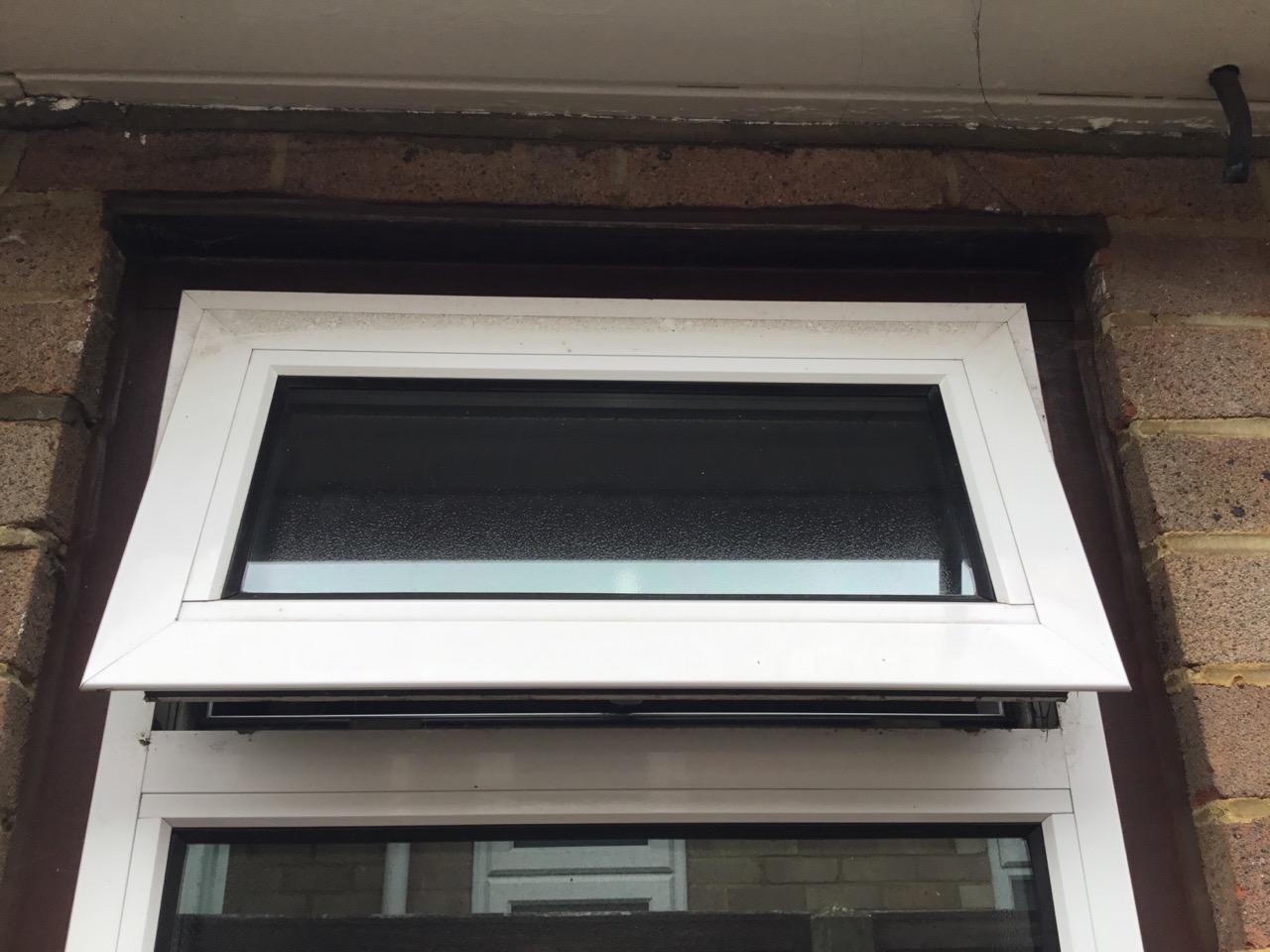
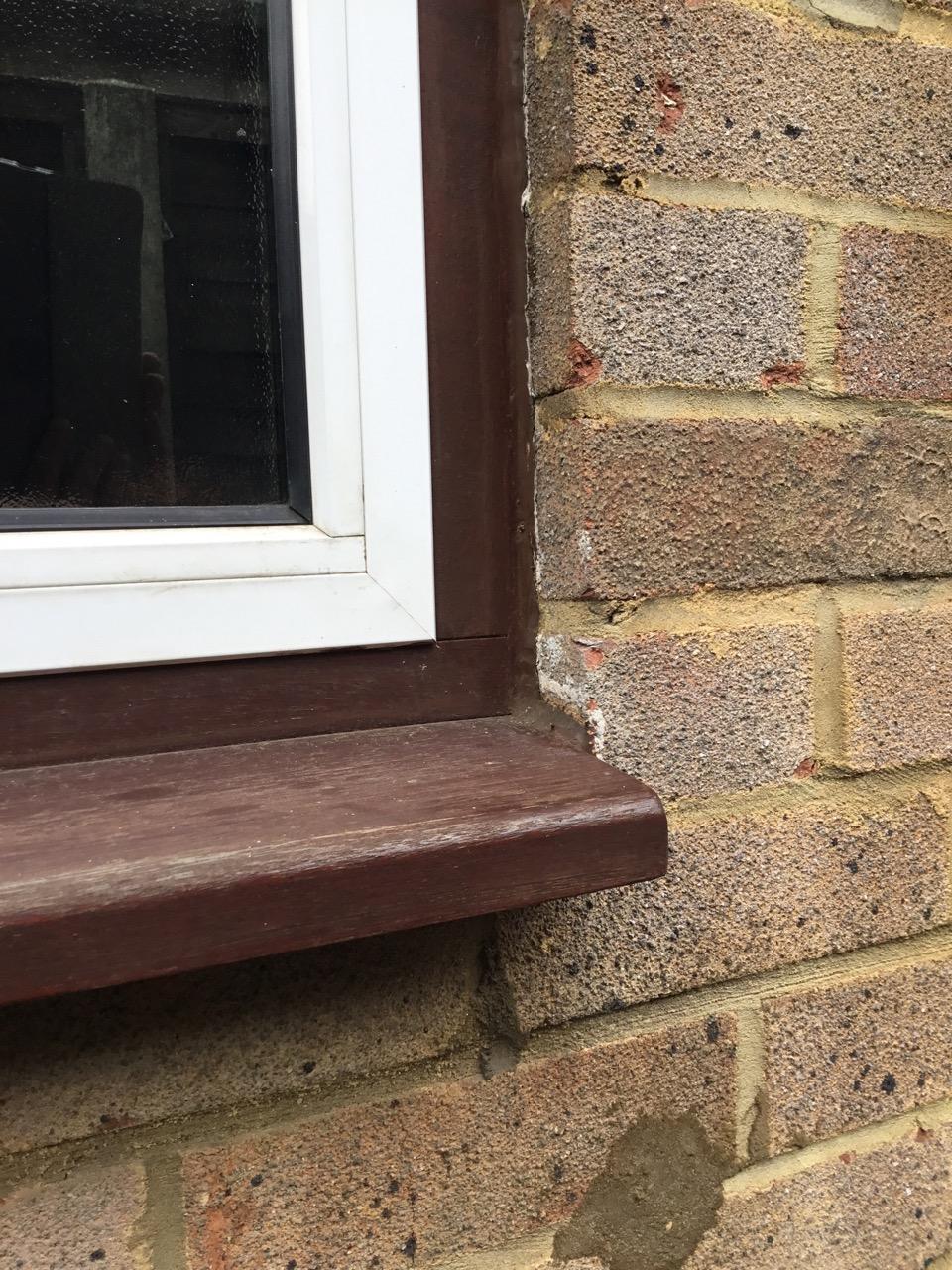
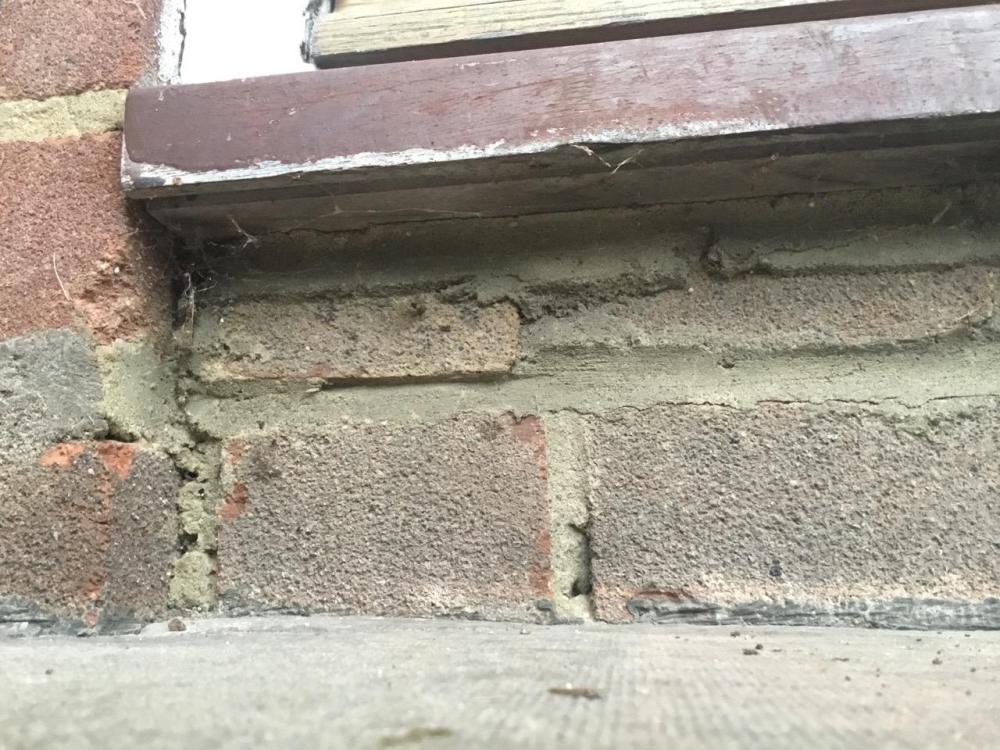
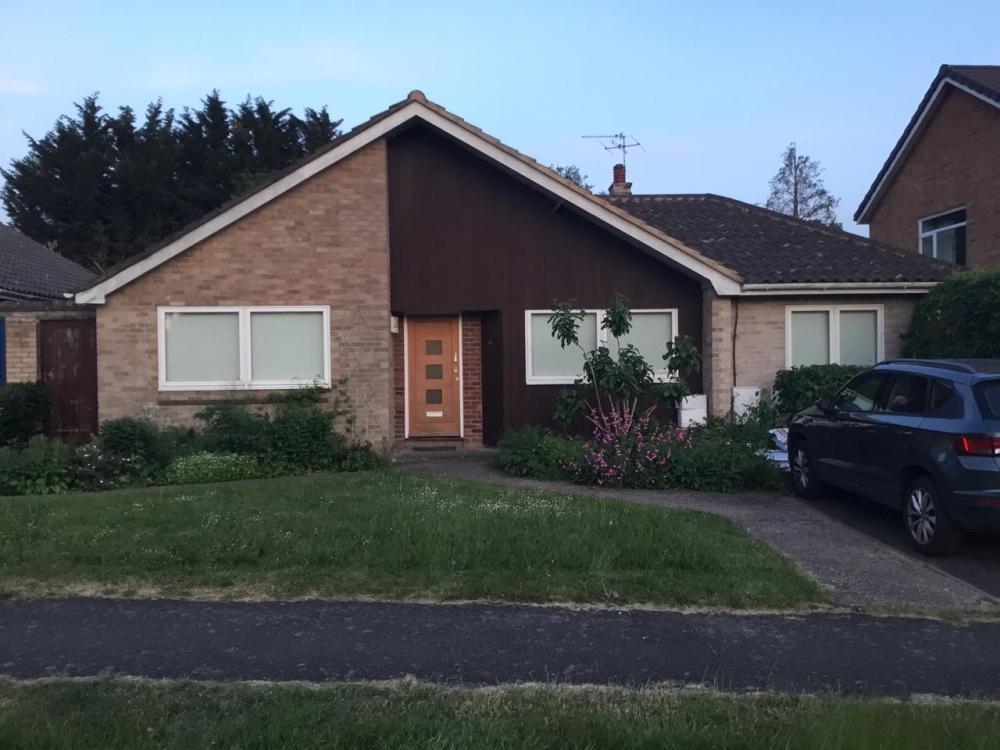
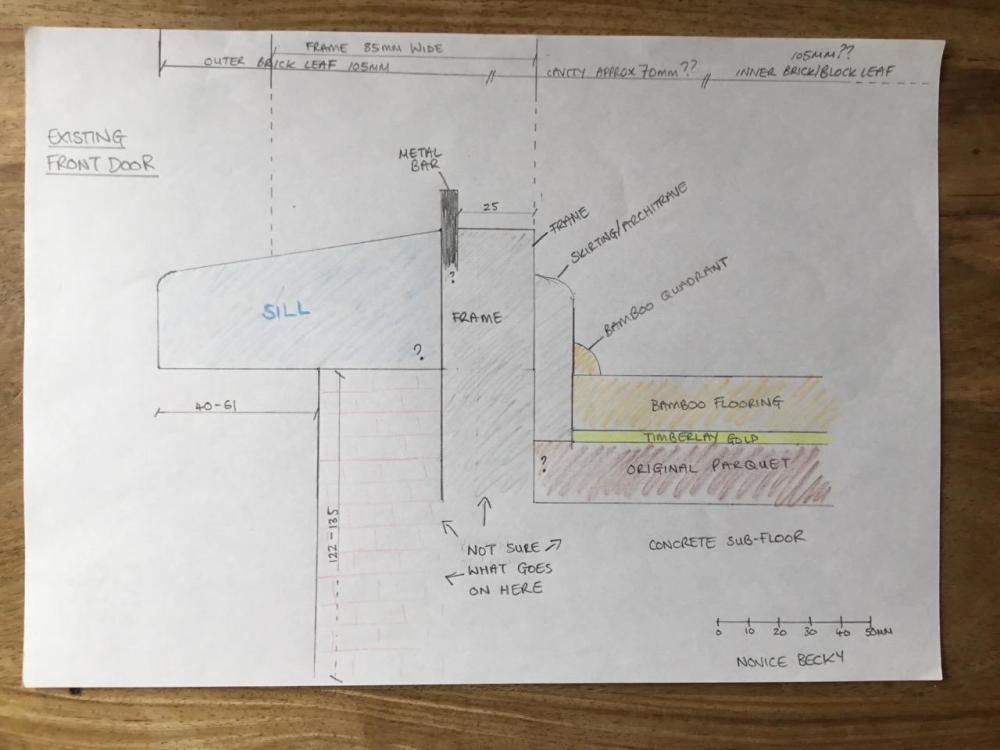
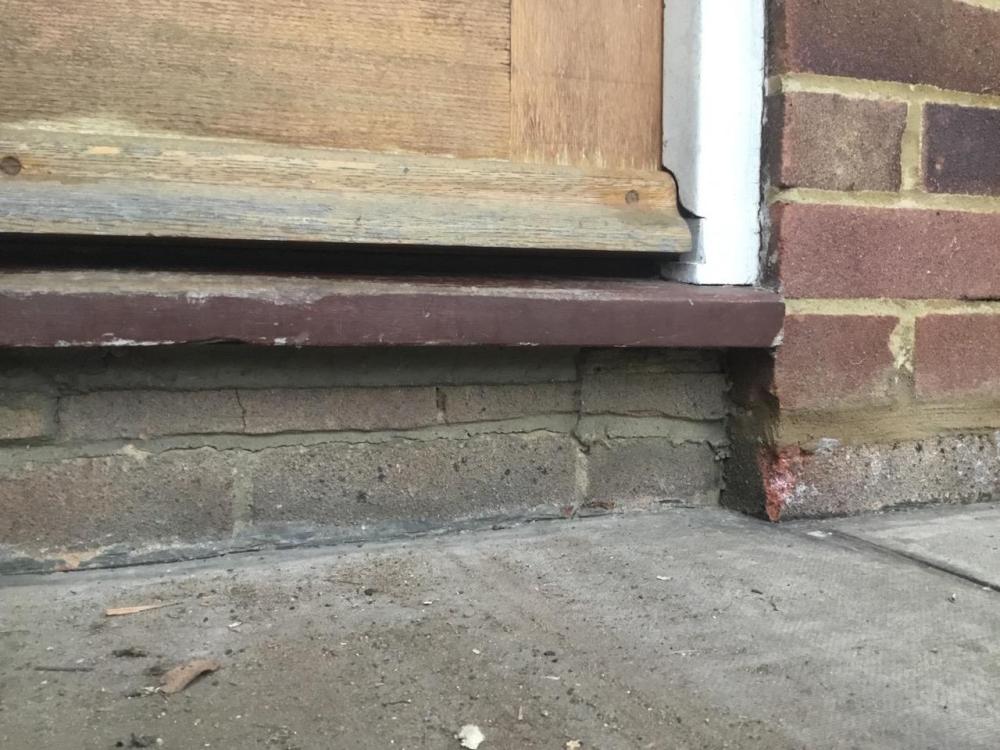
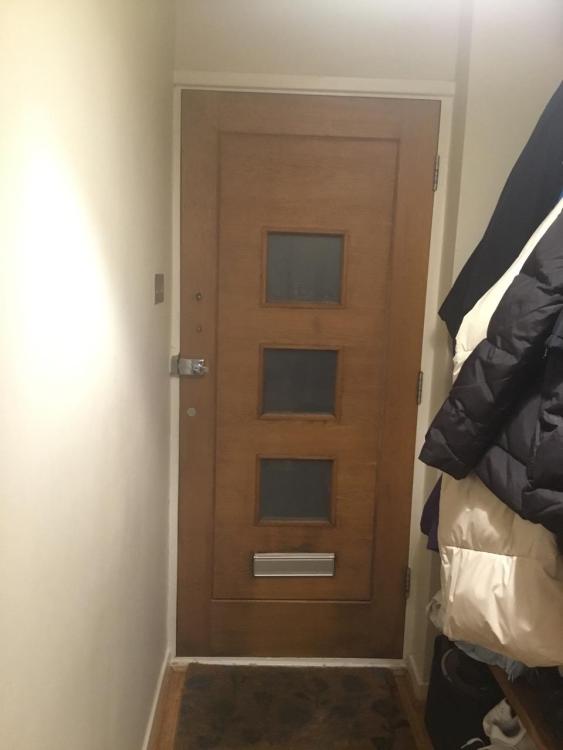
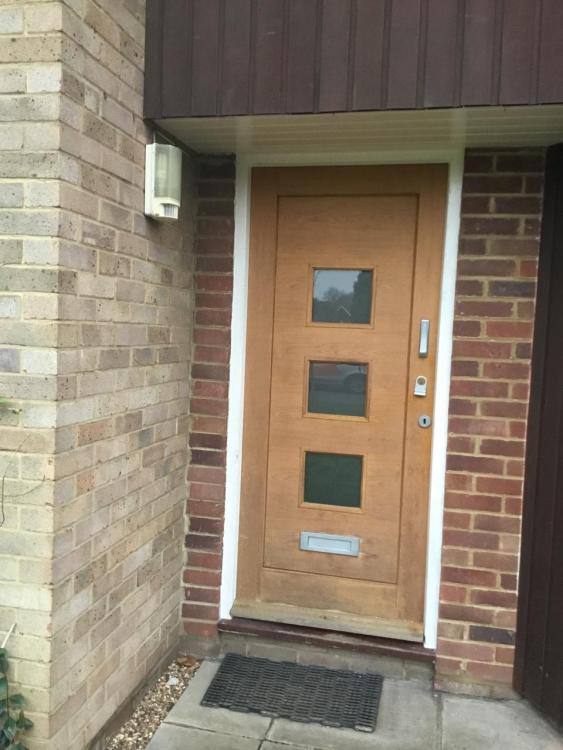
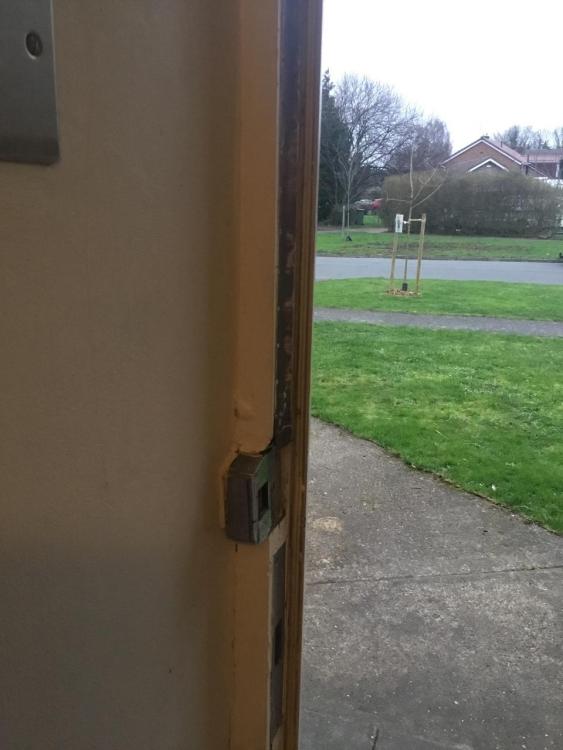
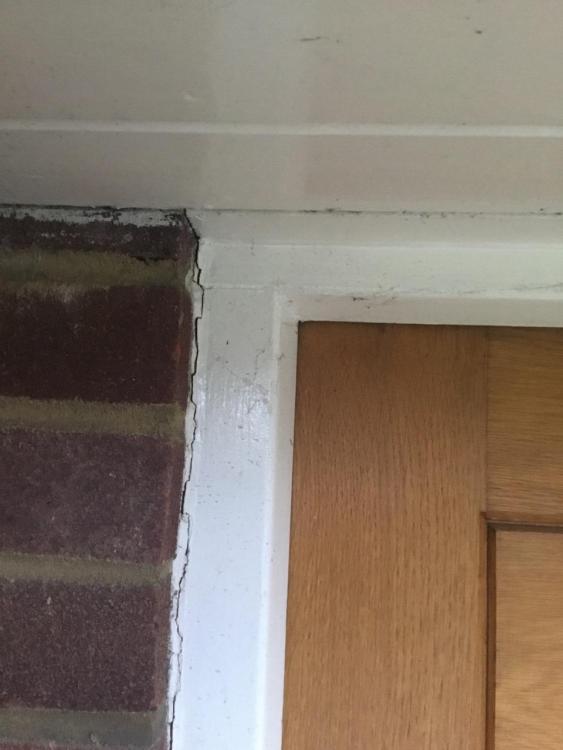
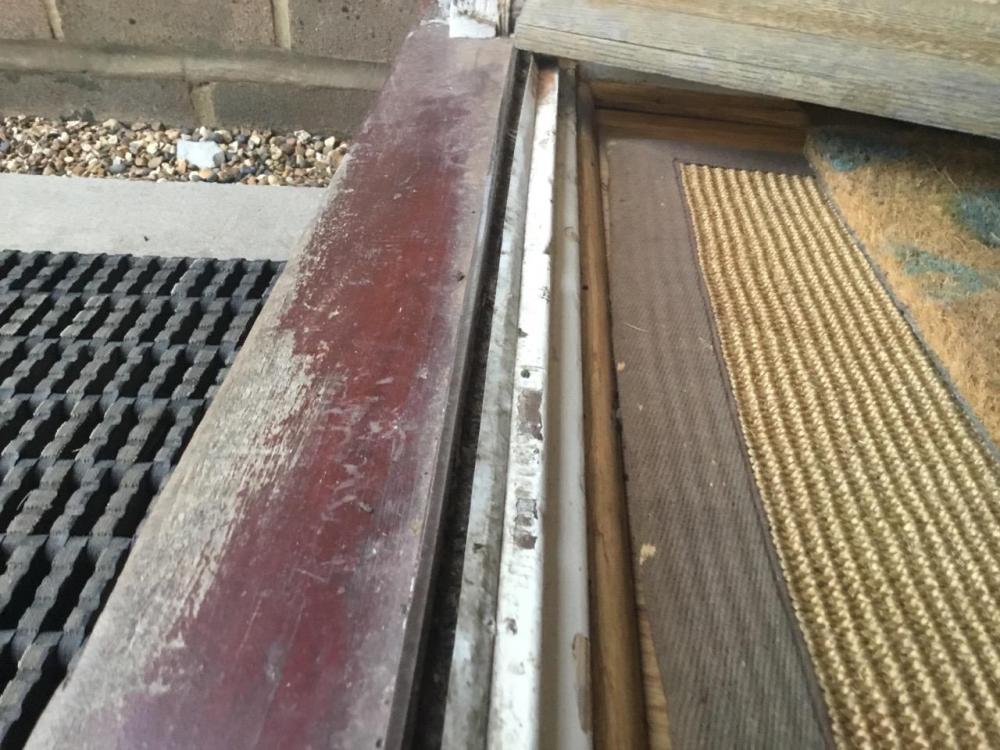
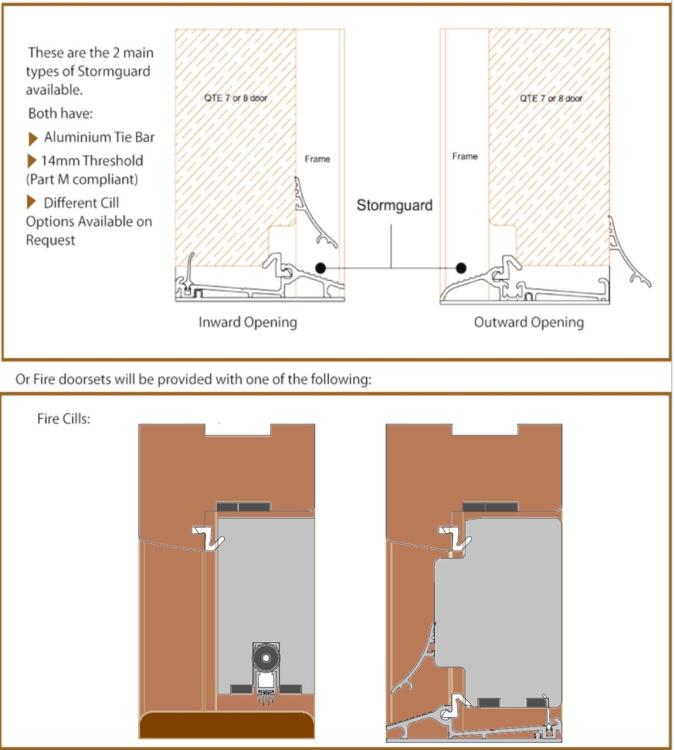
I'm measuring for 2 replacement windows and a composite front door in my 1960s bungalow. I've been putting it off as I can't find anyone to install only (I supply) but I really need to get on with it so I can get the failed CWI sucked out and replaced ... looks like I'll have to learn how to DIY. I think I'm going to order from Russell Timber. They're good value/spec and the windows look pretty similar to my other (expensive) windows. Door says it's 58mm Insulated Timber Veneered Composite Door hung in a 80*57mm Hardwood Laminated Frame. I'm stuck on how to work out the threshold details so I can measure the height of the door - and the width. HEIGHT I think I have to measure from the top of the existing door frame where it meets the horizontal wood bit (not sure what you'd call this? Soffit maybe). I've measured to the bottom of the sill outside at the threshold which is almost at the level of the finished floor inside (I'm not planning on a new floor, it's solid bamboo laid on top of old parquet with something like Timberlay gold underlay). I need to work out where the bottom of the door will end if that makes sense. The new door just has a thin aluminium threshold bar (see drawing) - Russell say they have different sill options. THRESHOLD DETAIL The existing door seems to be plonked on top of messy bricks and cement/mortar (photos). I’ve done a sketch but I don’t know what’s inside the threshold! The composite door will need to sit on something? I'd like something with better thermal properties than concrete. Do I need to remove some/all of the bricks under the existing door? I've been looking at insulated thresholds and came across Partel and Triotherm insulated door thresholds (there's also Compacfoam). Anyone used any of these products? see https://www.prodomo.ie/thermal-brackets/triotherm-as-thermal-base-for-doors/ So where do I want the door to end in terms of measuring for the height of the unit? It's not going to be a level threshold because there's a step down outside. What would you do? the wall is 280mm deep on the left (from outside) so will I need to place the door further back so it spans more of the cavity? DOOR WIDTH I've measured the door width outside - basically just brick to brick. The smallest measurement is 928mm. However the internal width is 898mm and if you look at photos there's not much room to play with internally. If I ordered 928mm less 20mm tolerance = 908mm wide this is still 10mm wider than the internal measurements. Does this matter? I don't know how thick the plaster is. The plaster is wet plastered straight on to block walls. Any suggestions/comments would be appreciated. This is all new to me. Or suggestions for people who could install (J9 of M25). Thank you
-
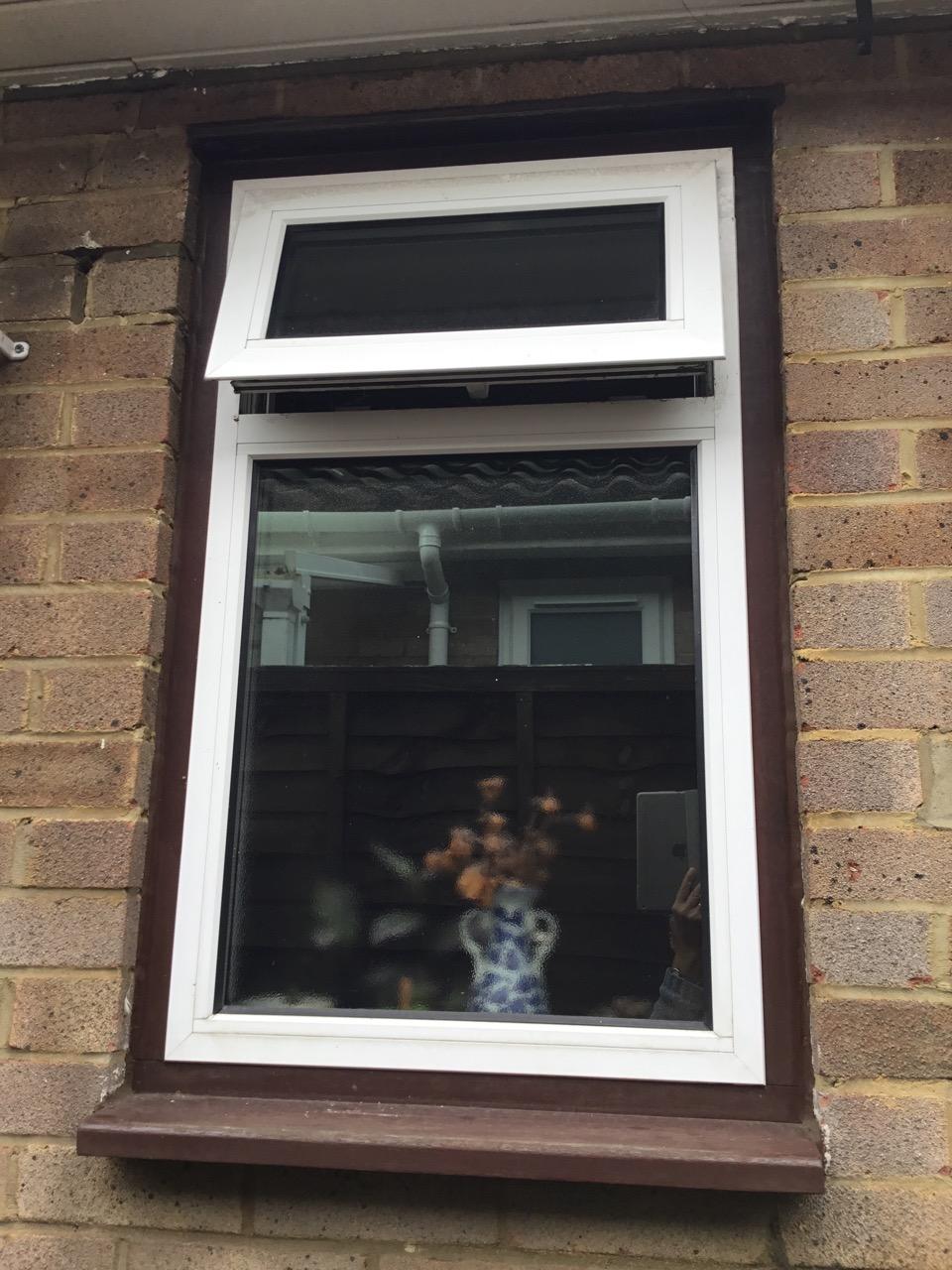
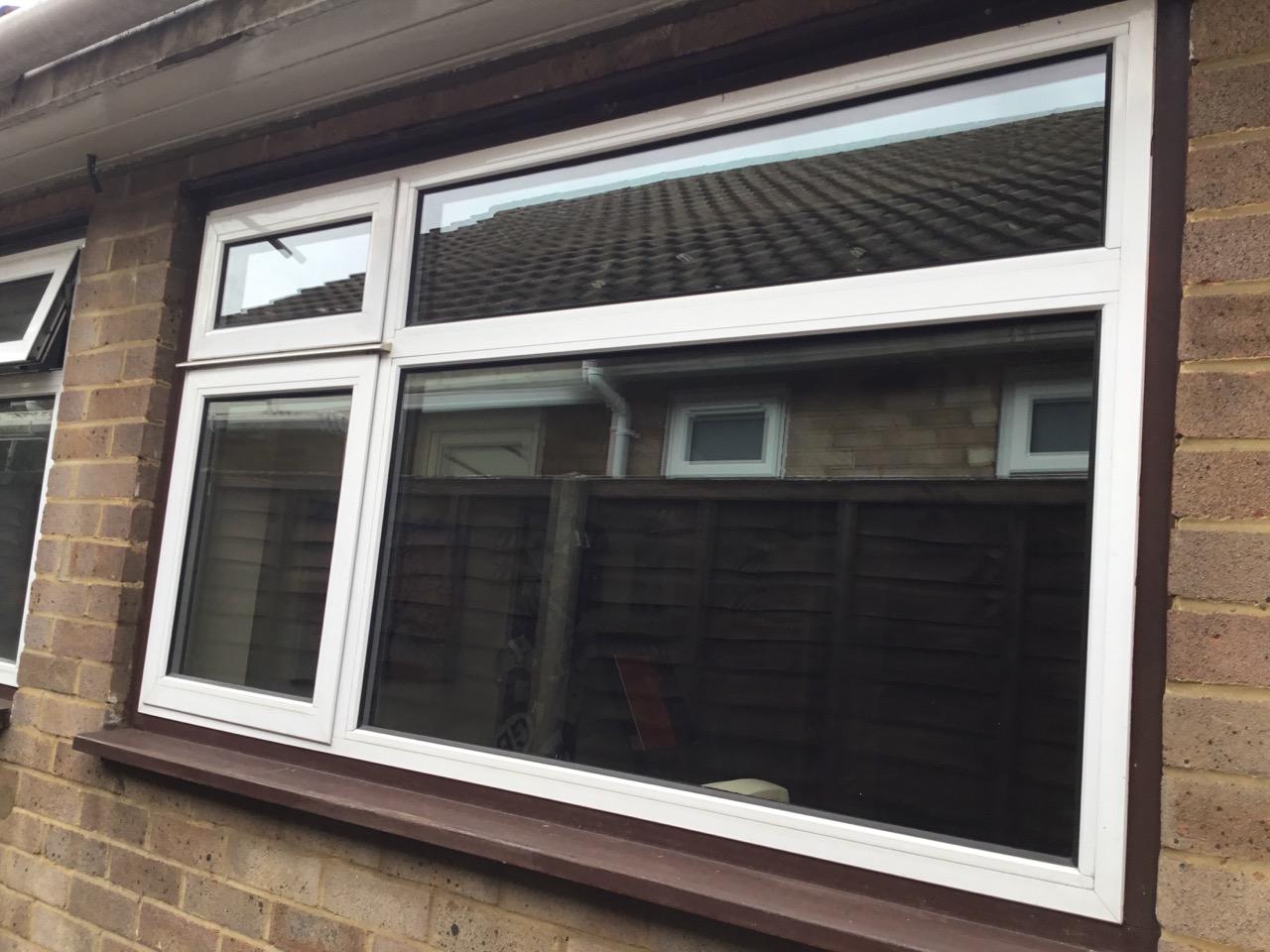
Hope it's ok to pick up this old discussion or am I supposed to start a new one? I'm measuring for replacement windows and I've been putting it off as I can't find anyone to install only (I supply) ... looks like I'll have to learn how to DIY and rope in some friends. It's just two windows down the side of my 1960s bungalow (plus a composite front door - on another discussion). I replaced all the other windows 15 years ago. I think I'm going for timber frame, triple glazed from Russell Timber. They're good value and look pretty similar to my other (expensive) windows. QUESTION: when measuring do people take off 10mm all round, so subtract 20mm from both the height and width? There's no rendering, just brick, so I've measured from brick-to-brick on the width and on the height I did from mortar under the brick at the top to the bottom of the sill (see photos). I'll use the smallest measurements. @nod sounds like you've done this lots. Any advice? Or any recommendations of builders/window fitters near J9 of M25? FENSA installers won't do it. Local builder quoted £1750 to fit 2 small windows and a composite front door (I supply windows and compriband and air-tightness tape). Sounded a lot to me. Thanks for helping
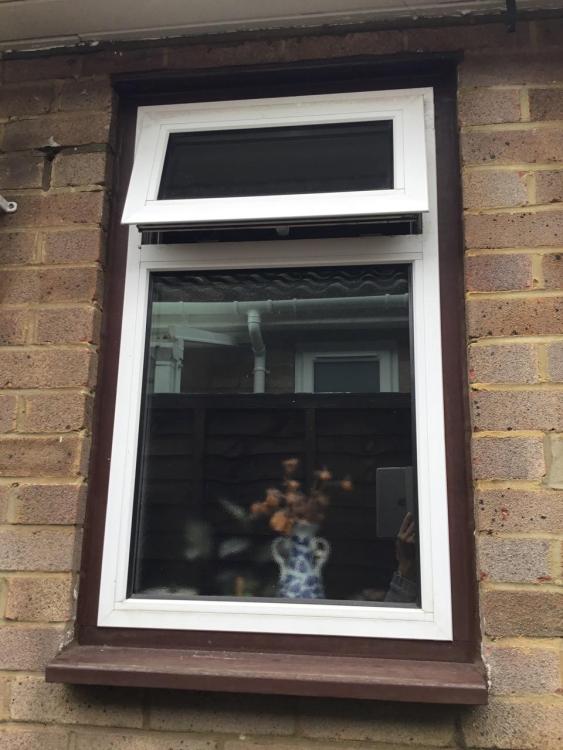
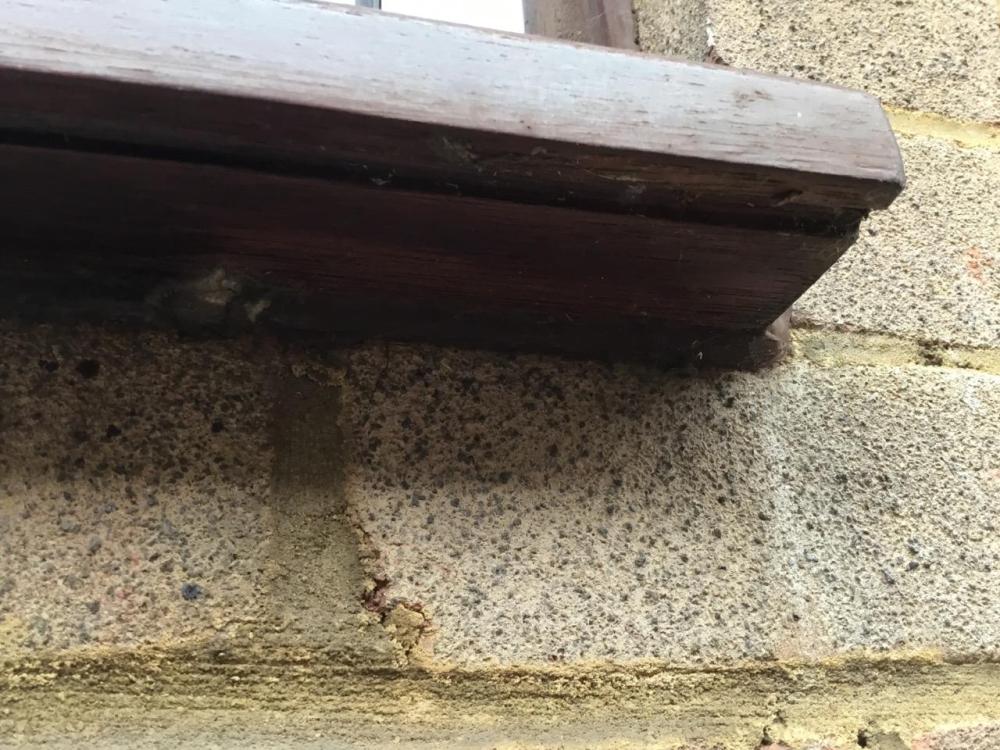
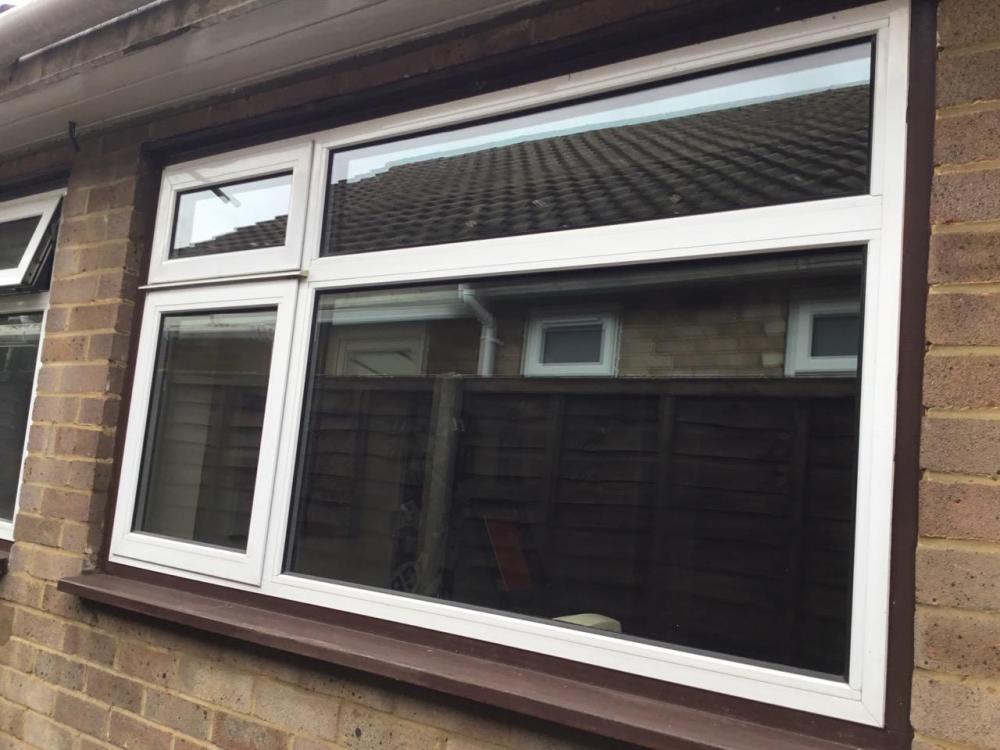
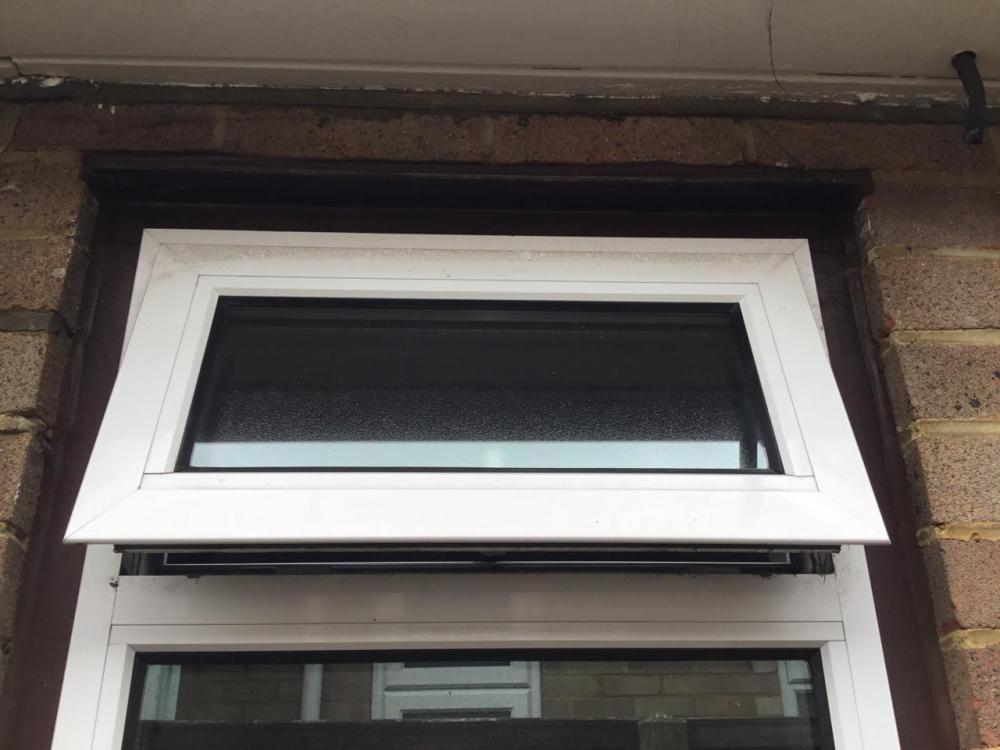
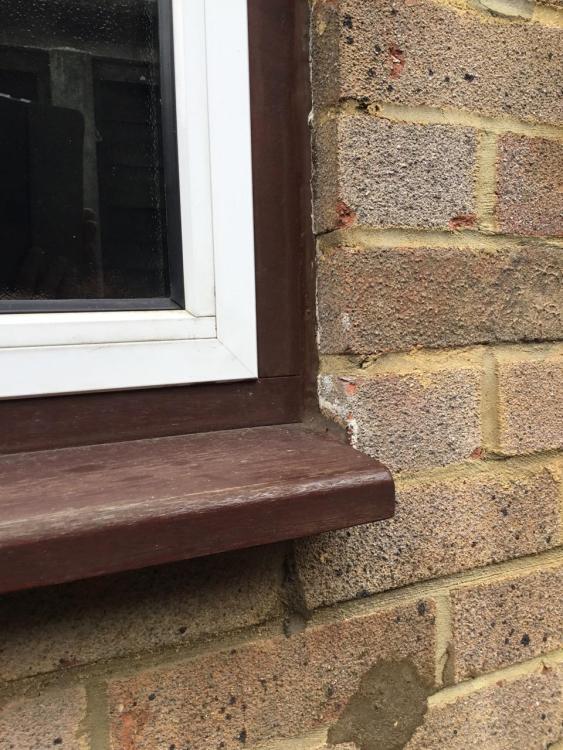
-
Thank you @markc. This is helpful
-
How to insulate loft hatch with existing ladder
Novice Becky replied to Novice Becky's topic in Heat Insulation
Thank you @ToughButterCup. Very helpful. Just got distracted with the MVHR install.- 7 replies
-
- 1
-
-
- insulation
- loft hatch
- (and 1 more)
-
Thanks @markc. Apologies, I've been distracted by the MVHR install! That's good to know about illbruk FM330 foam - it's been mentioned on lots of window discussions. I'll try and do the replacing bricks method. If I do this then how do I block up the hole inside? It's a 1960s house so the cavity walls are block on the inside with plaster (not dry-lined). I assume I need to put a patch of plasterboard (or wood?) in the hole, leaving enough space for a coat of wet plaster. But how do you secure and stop the plasterboard patch from falling down the cavity? And does something need to go behind the plasterboard? Once everything else is done I'll be having the CWI sucked out and replaced with EPS beads. One of the bathroom extracts (not in photo) is in the extension so this one is dry-lined on timber studs - I think I'll do this one with foam as it's not visible and not having replacement CWI. I hope this makes sense - I don't know all the correct builder terminology.
-
Thanks @markc. Would I fill the entire space with foam, so from the internal to external wall? what foam would you use? Are some expanding foams more insulating?
-
Thanks @Conor. Would I remove bricks that aren't whole bricks and replace with a new whole brick? What would you do on the internal wall?