Novice Becky
-
Posts
60 -
Joined
-
Last visited
Everything posted by Novice Becky
-
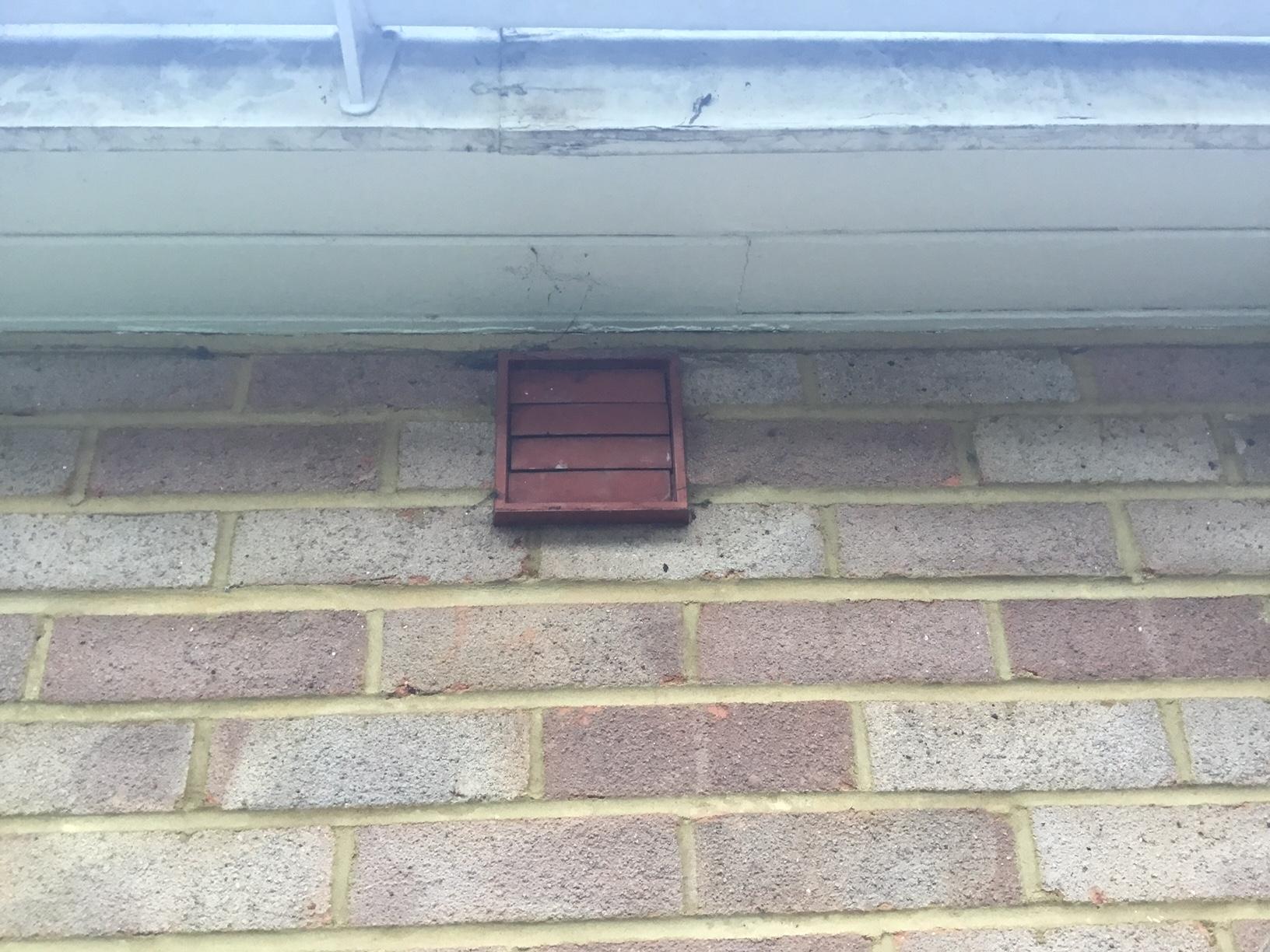
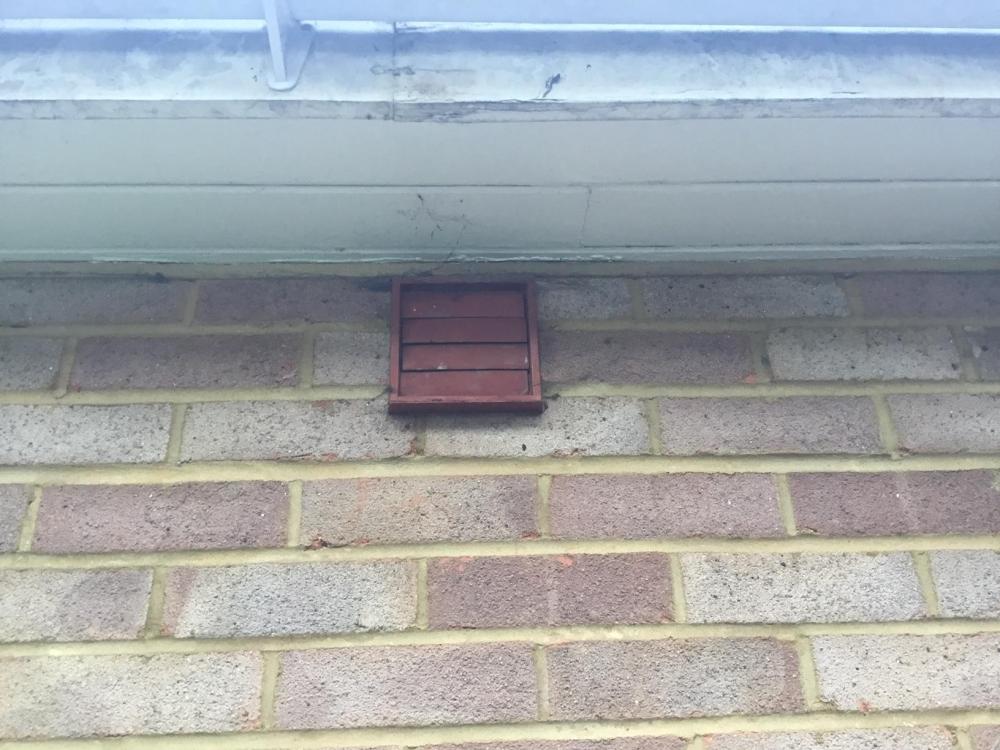
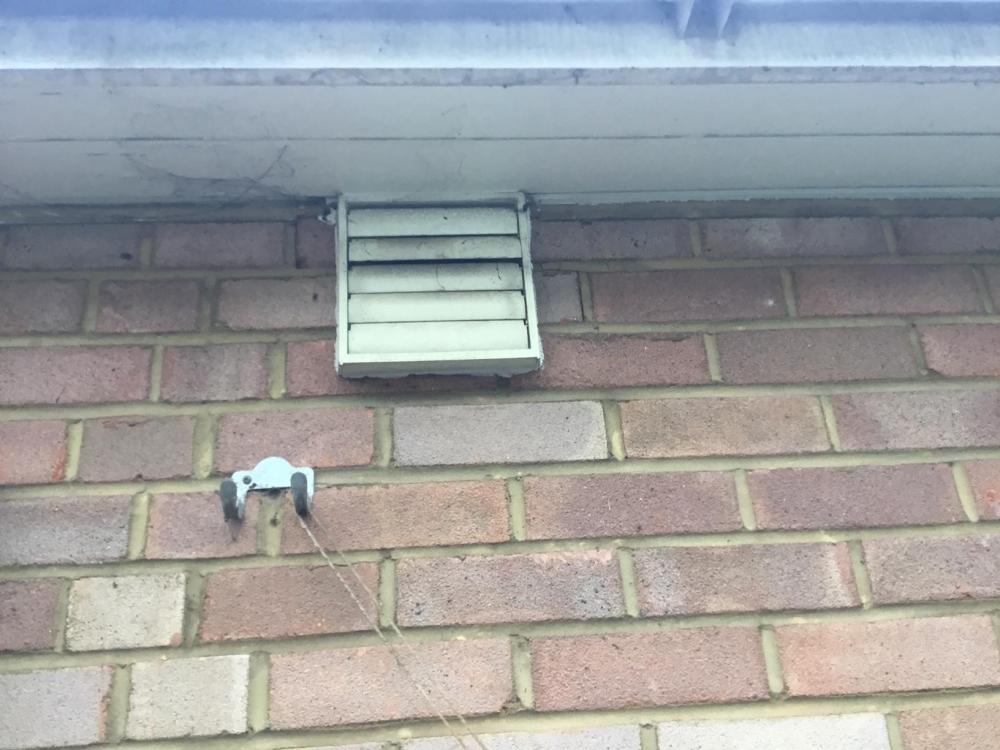
Question from a novice (not sure where to post this). How would you go about blocking up 3 extract fan vents? 2 bathroom extracts (100mm) and 1 kitchen extract (150mm) - I'm having an MVHR system installed next week (retrofit) so I want to remove and block up these 3 vents. (Obviously I'll work on airtightness elsewhere) - Walls are brick and block. - Bungalow so it's all accessible - I'll then have the failed CWI extracted and replaced with EPS beads - overall objective of retrofit is to get rid of condensation and make my home more sustainable (use less energy) Do I need to try and leave a cavity? Would people just use expanding foam? How do I prevent a thermal bridge? Any recommendations of products please? The vents are close to the soffits.
-
How to insulate loft hatch with existing ladder
Novice Becky replied to Novice Becky's topic in Heat Insulation
Thank you people. I didn't know about having 2 hatches and boxing in the ladder. I will try and space the ladder away from the hatch more, then glue PIR on and see if that works. -
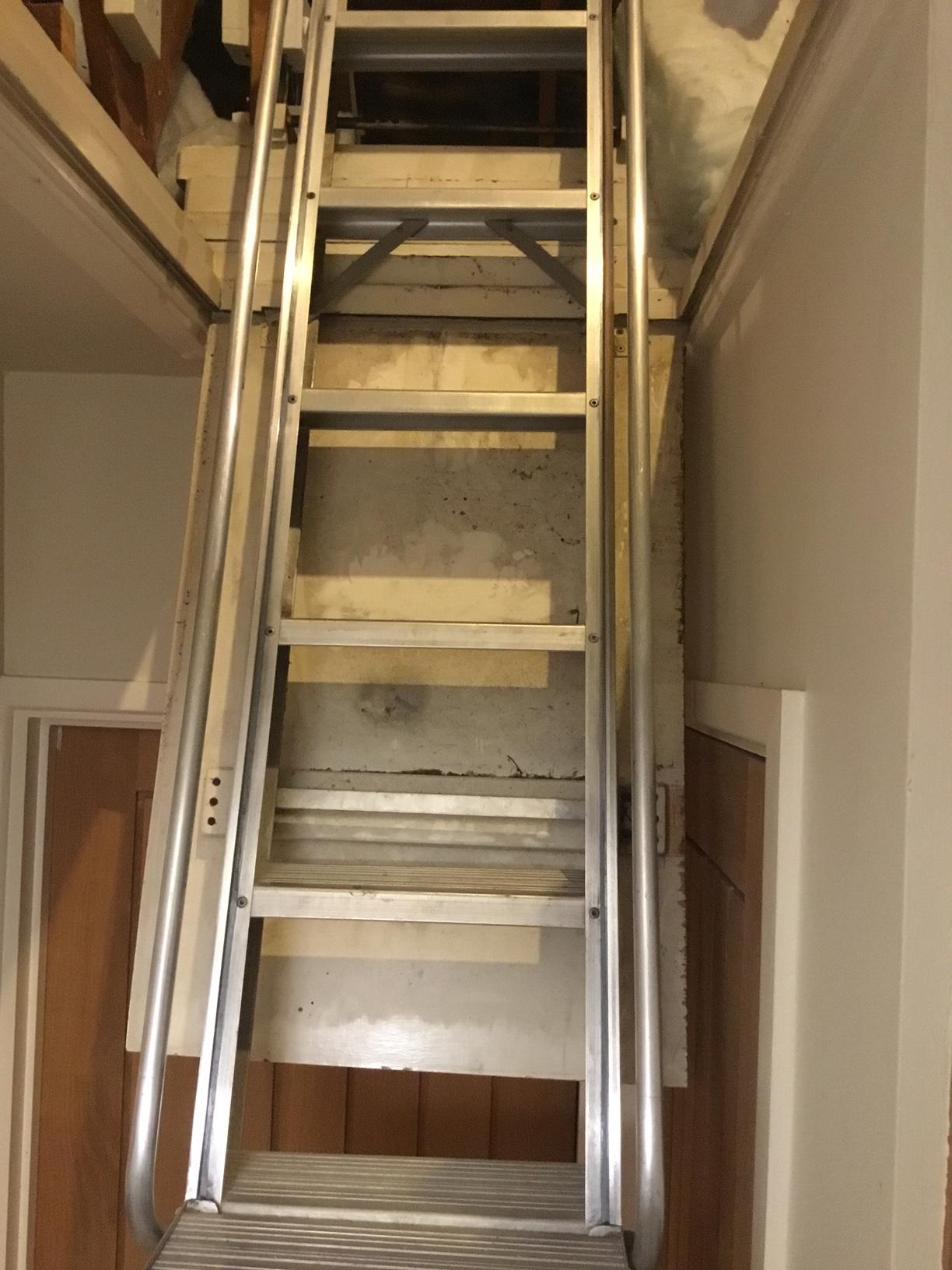
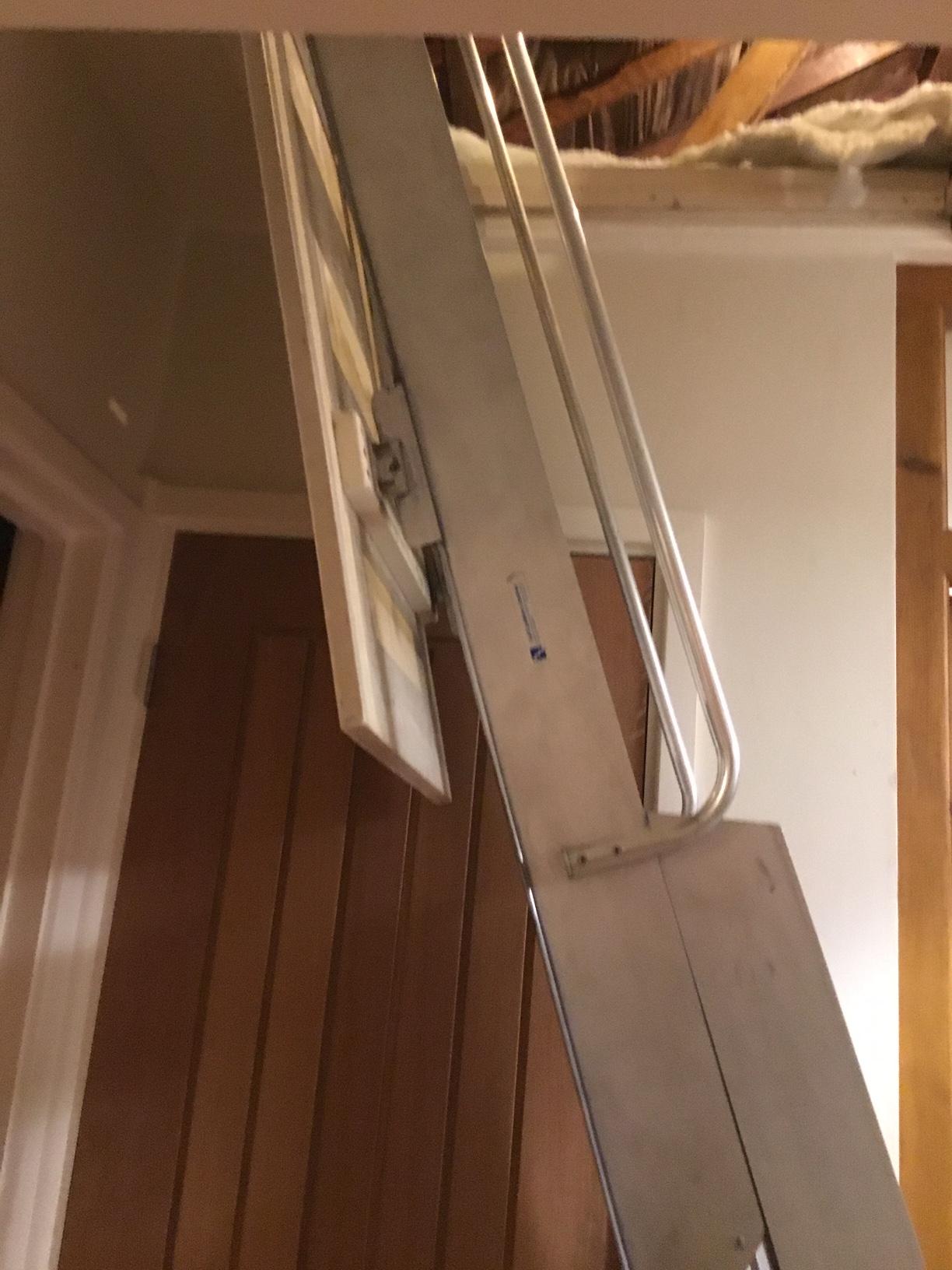
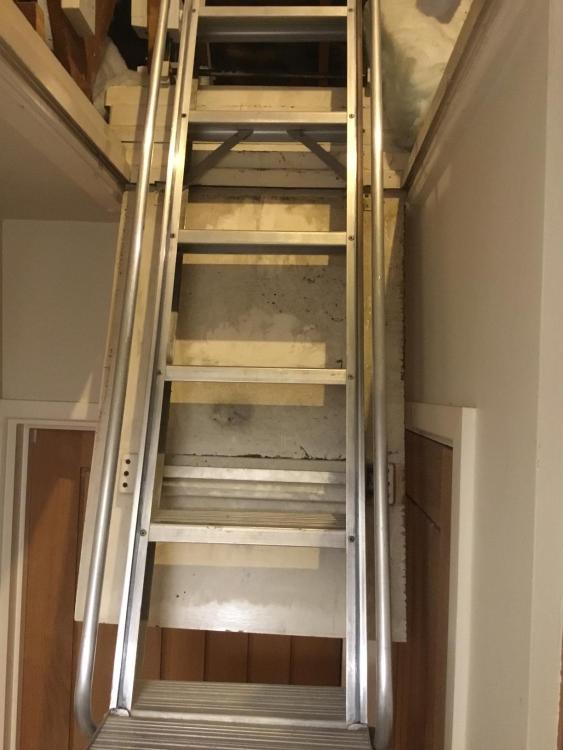
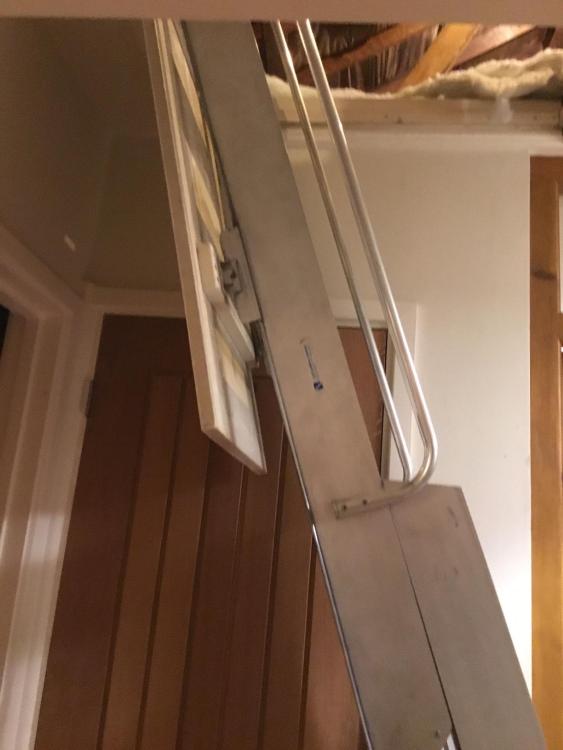
Any ideas as to how you would go about insulating a loft hatch with a ladder attached? Any examples? We inherited the loft ladder - it might be 40+ years old but does a good job. The ladder is fixed to the hinged loft hatch door as well as to the joist/binder at the top. Would you just stick some sort of PIR insulation board on, cutting around where the ladder is attached to the hatch, and just accept that there will be breaks in the insulation? Is there a thinner insulation board I could use? There's not much space between the wooden hatch and the ladder at the top of the ladder. Or would you remove the ladder, fix insulation to the wooden loft hatch and then remount the ladder on top of the insulation. (I need to remove the ladder anyway in order to get a new MVHR unit through but there's a lot of rusty looking screws.) In which case what (screwable) insulation material would you use? Would I need to relocate the top of the ladder? Or would I need a different ladder? Open to suggestions! Thanks.
-
I'm in the process of having MVHR retrofitted in my bungalow. I've spent ages getting quotes. In the end I went with BPC Ventilation who design and supply MVHR and other ventilation systems. They don't install. BPC gave me numbers for two installers who work in my area - So far I've only had the design done so can't yet recommend anyone but lots of people on this forum speak positively of BPC. Because this is a self-build website lots of members would install MVHR themselves. If you want a one-stop shop then Total Home Environment were recommended to me and very nice to deal with and they offered installation (or DIY). The only reason I didn't use them was because BPC were about £2000 cheaper just on design and supply. I'm having rigid metal ducting which is less popular and more difficult/expensive to install. There are lots of seemingly decent semi-rigid plastic systems out there. I think the scare stories you've heard may well be true - if you use flimsy ducting it will be prone to breaking and getting squashed. Not sure building regs even permit this type of ducting now. I'm south of London. BLA Ventilation were quick to quote and included installation (semi-rigid plastic). I found them on Google. They also came up on NAPIT which I think might be like Checkatrade. I don't know if they are any good. As SteamyTea said, there are other (cheaper) methods of dealing with damp and condensation (if that is what's causing the mould). Annex D (p.168) of the LETI Retrofit Guide has a good easy to read explanation of ventilation options (https://www.leti.uk/retrofit). Yes, MVHR brings a constant supply of fresh, filtered, warmed air into the house. Different MVHR units come with different grades of filters - if you are allergy prone then it may be worth noting that not all machines take F7 filters (some G4, M5). PIV (Positive Input Ventilation) systems also bring in a constant supply of fresh filtered air but it's cold air, not warmed and there's a lot of debate about these systems too!
-
Thank you for your comments @Sparrowhawk. Great to be part of a 'retrofit community'. Thanks for flagging up insulation behind wooden cladding. I wasn't very clear. There is a brick & brick cavity wall behind the wooden cladding. The CWI firm put a camera in that cavity too. It's only 6cm wide and currently empty but they said they can fill it. I read the DIY blower door posts with great interest a while back. I'll have to take another look at them as I was contemplating having a blower door test at some point. But a basic Flir camera was more instant and luckily it was -7C outside! Gas usage - I'd love to keep the house at 18C but it's too damp! The living area is around 21C in winter, the bedrooms are 18-20C but there are lots of cold spots so it feels colder. I'm hoping for it to feel comfortable with the heating turned down once we have MVHR, new CWI and improved airtightness/thermal bridges. Floor insulation - apart from the hassle of ripping up every floor covering, floor insulation seems to have a very long payback period (not that all this stuff has to pay back - as I see it, I'm in debt to the planet). So not much incentive at the moment. Is there a cheap/easy way of insulating concrete floors? Thermal imaging showed more heat loss around the edges of the floor which concurs with what the retrofit surveyor said (most heat loss will be where the floor meets the wall). Maybe the floor coverings are helping?? - we have Timberlay Gold under all the bamboo flooring (kitchen/living/hallways/study) and I did cork T&G flooring in 3 bedrooms during lockdown. And the suspended concrete floor in the extension (2009) would be insulated to building regs standards. Heat loss modelling - good suggestion. I like a good spreadsheet so I'll look into this. My Retrofit Survey was by a relatively large 'eco' company specialising in retrofits. I was expecting some detailed, specific advice but it was really generic, based on lots of assumptions. The person who came and took measurements was actually an estate agent who had been trained to measure and take videos of my home! The person who wrote up my survey was qualified in building and retrofit and I had an hour or two on Zoom with them but he wasn't able to advise on specifics. So it hasn't given me the reassurance I needed and hasn't stopped me procrastinating! I think you gain a lot more from reading around on Buildhub with lots of opinions. There's always more than one way to do something eg. Retrofit Surveyor didn't think MVHR was suitable and MEV would be better. Two other experts (not selling me anything) and LETI suggested MVHR is entirely appropriate.
-
@Gone West No problems with cross talk with just one attenuator? Any cross talk between your lounge and study? How can I predict where I'll need an attenuator - is it where there are short runs of ducting between rooms? I read that you need one between bedrooms. What about noise from a TV?
-
Thank you Gone West and Conor. This is very reassuring! So is the decreasing diameter on a branch system just applicable to larger/industrial applications? ie. overkill for 134 M2?
-
Thanks!
-
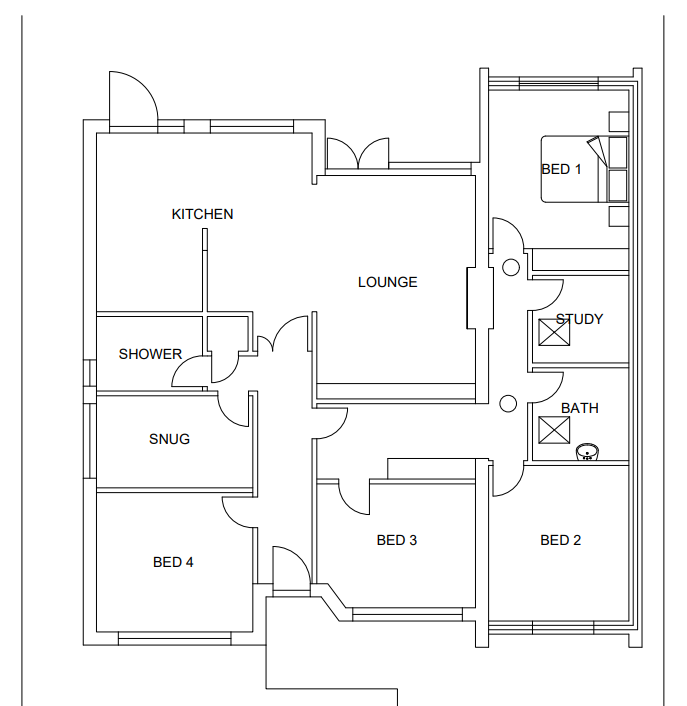
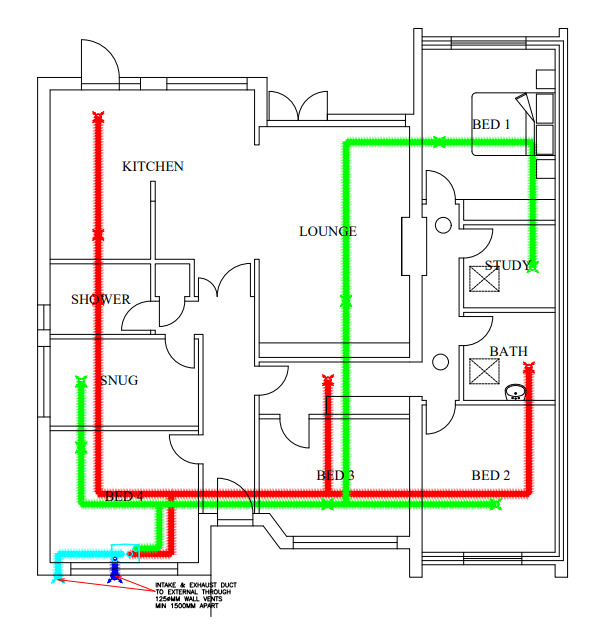
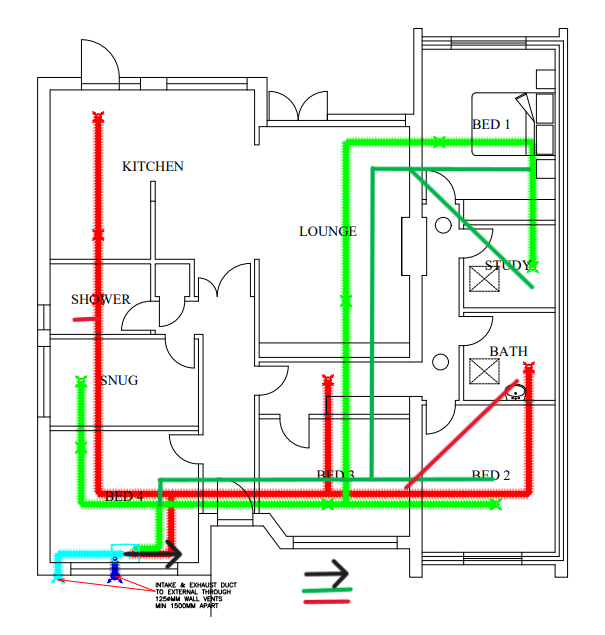
What diameter ducting should you use for rigid metal ducting in a branch layout? I'm having a retrofit MVHR system (rigid metal ducting) - see attached floor plan/layout. I'm using BPC as they are a lot cheaper than the swanky MVHR companies and will pay an installer. However they are saying that ALL the ducts should be 125mm diameter. This is not what I've read anywhere else and it doesn't make sense to me. eg. Heat Space and Light say: "Rigid steel ducts will start at between 200mm – 125mm diameter at the MVHR unit, gradually reducing to 125mm and 100mm diameter ducts to each room." I have questioned BPC: ME: The layout shows 125mm ducting throughout. Being a branch system, I was expecting larger ducting nearer the MVHR unit. Would it improve airflow if the ducting nearer the MVHR unit were a wider diameter with smaller diameter ducting on the 'branches'? Or is there a reason for it all being the same size? BPC: This is the correct ducting size for your MVHR unit (125mm or equivalent). If you wish to go for a larger size of ducting, it will just reduce the P/A rating. ME: I'm still not convinced on using the same size ducting throughout on a branch system and I can't find any examples of this. I thought the main runs of ducting needed to be larger than the branches in order to carry the higher volumes of air at a low velocity (less resistance - making it quieter and more efficient). The branches will be carrying a lower volume of air and where they join up there will be a greater volume of air. If all the ducting is the same size surely it will be noisier and less efficient as all the air would be 'squeezed' into a smaller space? This is why when you have radial ducting the entry spigot on the manifold distribution box is always larger than the distribution spigots. I'd appreciate people's thoughts on this. Can anyone explain BPC's thinking? PROJECT DETAILS: 1960s bungalow Surrey, England 134 M2 Condensation issues (but also want to make my home more energy efficient) Vent Axia Sentinel Kinetic Advance S (large but chosen because it takes F7 filters (good for my headaches) and it looks to be very efficient for a smaller price tag) https://www.vent-axia.com/sites/default/files/474957.pdf Specified rigid metal ducting - I know radial with semi-rigid plastic is quicker, easier and cheaper but I've chosen metal ducting because of headaches linked to plastics and for longevity. Fan unit and ducting to be located in loft area, insulated ducting. Another Question: Not clear yet on whether I need to insulate the fan unit mounted on gable wall. See my intro post today for more details of my retrofit Also any other comments or suggestions welcome. And where do I need to put rigid silencers? I've asked for several revisions (see floor plans): the ducting to the atmosphere is too close to the eaves. I've asked for the fan unit to be moved to the right (more clearance height in the loft) and for the exhaust and intake valves through the (north-facing) gable wall to be positioned vertically near the RH corner of Bed 4 (I think this will look neater) extract ducting to be run diagonally across bed 2 (45 degree bend instead of 90 degree bend) extract in hallway (by Bed 3) is 'to balance the system'. I've asked whether I can have 2 extracts in the bathroom (think aftermath of teenage showers) instead of one in a hallway (there is another post on BPC putting extracts in hallways). Is it possible to balance the system just by having more air extracted per ceiling terminal compared to the amount of air being supplied per inlet valve? We have 4 (or 5) extract valves and 7 supply valves. Some minor repositioning of ceiling terminals but I am concerned about the one in BED 1 - The ducting run (Lounge to Bed1) needs to be moved down nearer the door because of the restricted roof space. There's a steel beam across the middle of bed 1 and I was avoiding traversing this but I would like the ceiling terminal away from the door so it needs to go in between the bed and the cupboard. I'm concerned that this would be noisy as it's near a 90 degree bend. I suggested a 45 degree t-piece above the bedroom door with ducting branching off to the study at a 45 degree angle to avoid a ceiling terminal being near a bend. Any thoughts? BPC didn't like this idea as it's longer Add a T-junction for the return air in the Shower room and make a short branch - there are some pipes running diagonally across the shower room and I'm not confident that it will be possible to fit the plenum in line with the straight duct run. Novice Becky obstructions for MVHR system.pdf
-
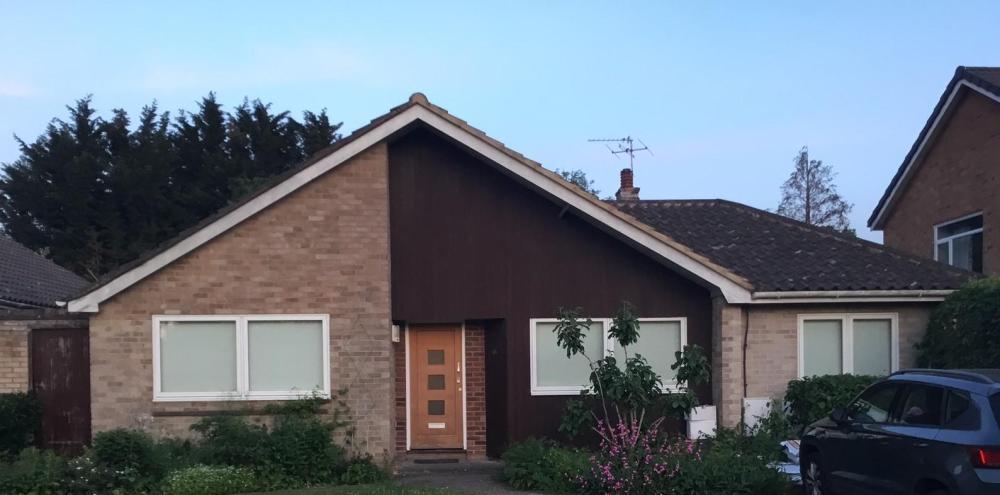
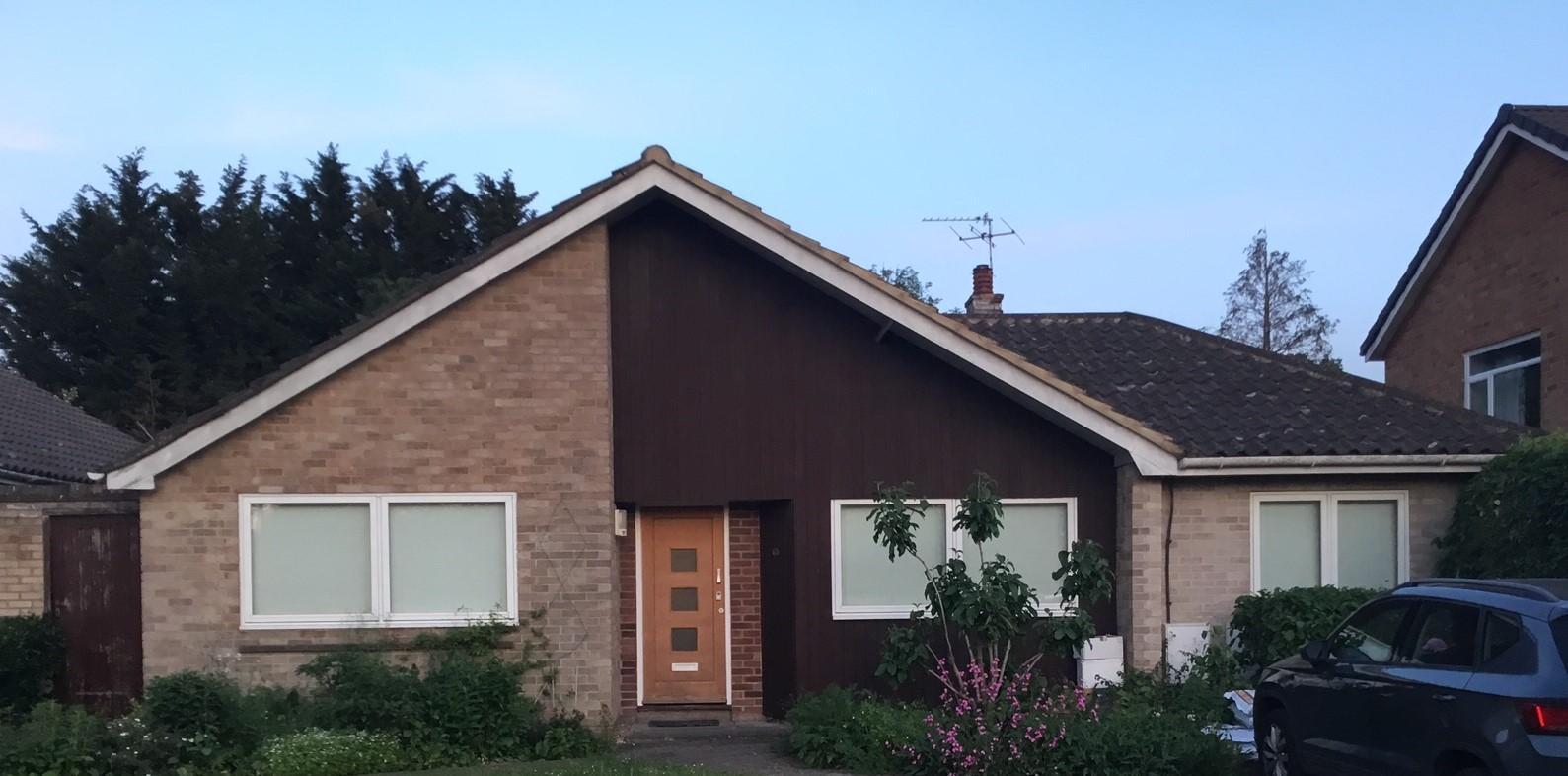
Hi. Just officially joined so I can ask some questions on this amazing forum! I'm a novice but I enjoy DIY (when time permits), so far mainly designing and building storage/fitted cupboards/kitchens, working with wood. Never built a wall in my life - but this forum gives me confidence to try things. A LONG introduction to my ongoing retrofit project (lots of questions to follow) ... I'm reattempting a retrofit project that started 15 years ago when we moved in. We're in Surrey (M25 J9) and have a 1960s bungalow: AIMS: Reduce our fuel bills and CO2 emissions, heading towards net zero Stop using fossil fuels so stop using gas. Resolve our condensation problem - cold and north-facing spots get mouldy. Very high humidity readings in winter. It's got worse, I think, because 15 years ago we fitted high-spec argon-filled wooden framed double glazing to all but 2 windows, I insulated loft with recycled plastic insulation (laid over old mineral wool) and our children are now all teenagers so bigger lungs and bigger baths/showers. All bedrooms have trickle vents. We also have 1980s CWI which has failed (a surveyor put a camera in the cavity a few years ago). BACKGROUND: When we moved in (2007) and did a load of work it was hard to find any 'green' trades/expertise and I just had my Green Building Bible. I was told MVHR wasn't appropriate for my leaky house. People were clueless about underfloor heating let alone heat pumps and timber frame building etc. so we just did what we could. I've put off getting things done/repaired because of a string of situations and I was desperate to have a retrofit assessment first to make sure everything worked together - Whole House Approach. I've finally found and had a retrofit assessment which was incredibly underwhelming and didn't shed much light (because my home is, on paper, already above average in terms of efficiency measures, despite the fact we consume more than our fair share - approx 22,000 kWh of gas and 5,300 kWh of electricity PA). TO DO LIST: MVHR (Leti guidelines suggest this is a very good option for ventilation for me) ... so remove and block up 3 external vents/fans Replace 2 old windows and very leaky front door CWI - extract mineral wool and replace with EPS beads (waiting for the above to be done first) and the company will also fill the smaller empty cavity that is behind the wooden cladding at the front of the house (Bed 3). ASHP coming in January (I want to get this done before I have a big repair bill on my 15 year-old gas boiler - or panic replacement) re-lay loft insulation and insulated boarding after it's been trashed with MVHR and ASHP installations. Then work at making the house more airtight- I bought a Flir camera and this highlights some problem areas that need insulating/draughtproofing, particularly around windows. Windows are high spec wooden-framed windows but fitted by a general builder with no attention to thermal bridging (I've learnt a lot since then). Two at the front were fitted by a FENSA fitter but they're possibly even worse. Also in the extension I can see that the CWI does not reach to the top of the ceiling and we have problems with thermal bridging across the ceilings with two steel joists Looking into retrofitting airtightness tape around windows - looks like I have to strip back the plaster. And something like Compriband on the outside. Not sure about sills Draughtproof windows/doors, loft hatch plus plumbing that goes through external walls. Chimney in lounge is still in situ but not used (currently insulated with a 'chimney sheep') Bathroom and shower room both need refurbishing, insulate bathroom ceiling (steel joist) Kitchen and bathroom lighting (retrofit LEDs didn't last) And building storage for the endless 'stuff' my family accumulate External Wall Insulation is very expensive (esp for the smaller gains it would seem to bring) so I'm thinking creatively and may build a wooden lean-to along the side passage (with thick polycarb sheets on roof) for storage and drying washing which would also act as a buffer zone. And I could construct something to act as a buffer zone along the other narrow side of the house. Maybe some EWI at the front (north). Shading at the back (south-facing) - my first attempt at making shade sails out of organic cotton sheets was not very successful!! Back to drawing board on this I'd like to replace the loft insulation with something breathable and use a vapour control layer etc but because it's a bungalow there's a large surface area so expensive to do and lower priority (I found this website helpful https://www.eco-home-essentials.co.uk/how-to-install-insulation.html)