
marshian
-
Posts
1605 -
Joined
-
Last visited
-
Days Won
6
Everything posted by marshian
-
They don't look sodden but then you've not got to the one near the drain? I was trying to work out if the floor is ply or OSB but either way I would not expect tile grout on wooden floor to be acceptable as a wet room...
-
looks at location - thinks "Blimey your are a quick driver.................."
-

Boiler short cycling with low flow temperatures
marshian replied to seanblee's topic in Central Heating (Radiators)
Yes it’s still cycling but the important bit to consider is if the boiler still overshooting the set point with more open rads? -
No shank for the boards to rub on - threaded from head to tip 😉
-
Boiler short cycling with low flow temperatures
marshian replied to seanblee's topic in Central Heating (Radiators)
Interesting but my set up never did that - it would just intervene when rads were close to temp - knock the boiler off for anywhere between 2 and 8 mins and then call for heat again like nothing ever happened. That was enough to annoy the heck out of me hence the various approaches I took to limit it's influence over the heating circuit I'm almost 100% sure it hasn't intervened at all in the last 2 months since I've been heating 24/7 with TRV's set to elevated room temps (that the weather compensated flow temp from the boiler cannot hope to achieve) If it had intervened then I'm very sure I'd be removing it all and going back to a simple clock timer set to a heating schedule for the shoulder months and switched to constant "24/7 On" for the winter months -
Boiler short cycling with low flow temperatures
marshian replied to seanblee's topic in Central Heating (Radiators)
I think that's what he is doing - he's running it at the minimum elevated temp he can - he wants to run the boiler at lower flow temps but can't because it cycles like heck (more than it's doing now) Marginal?? The difference between the red arrow and the green arrow is marginal?? That's like saying the difference between running a heat pump at 55 versus 45 is marginal in terms of COP!!! On this we agree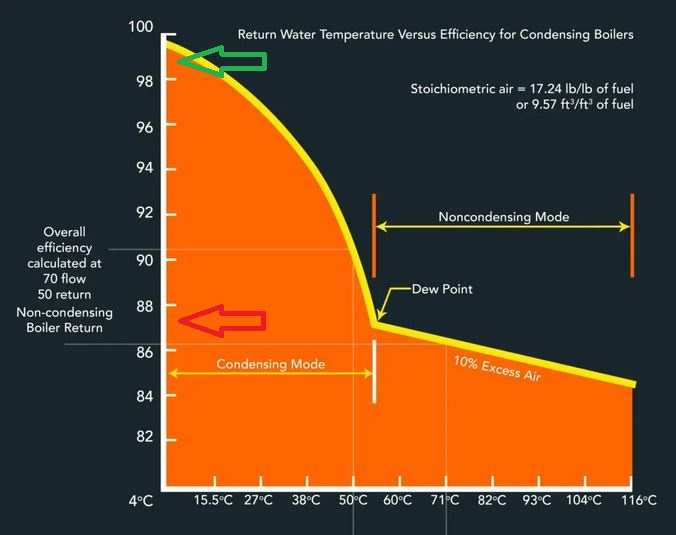
-
I would not be happy with that if I'd done it myself!!! I'd be really Expletive unhappy if I'd paid for it to be done like that!!!
-
Boiler short cycling with low flow temperatures
marshian replied to seanblee's topic in Central Heating (Radiators)
Can I have a bit more detail on this end of the graph please??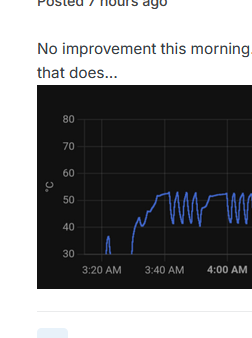
-
Boiler short cycling with low flow temperatures
marshian replied to seanblee's topic in Central Heating (Radiators)
Yeah 13 TRV's managed by the hub and when a number of them get close to target the system goes into save energy mode and actually uses more For me on the old boiler (Glow worm) I'd dialed in 10 mins of pump over-run and in the shoulder seasons nearly 30 mins of anticycle time at the lowest flow temps I could realistically run (So as the POR runs concurrently with ACT a max of 30 mins between burns) This was down to 10 kW min of the boiler and a heat loss requirement of max 1.5kWh - I wanted to do everything I could to maximise the burn time and allow the system to coast for as long as possible And then when the boiler finally fires up Wiser says "oh no you don't" It nearly went in the bloody sea!!! -
Boiler short cycling with low flow temperatures
marshian replied to seanblee's topic in Central Heating (Radiators)
Whoa!!! You witnessed it doing that?? That's bloody nuts!!! I never got those symptoms - it would always switch off the call for heat (like a single house room thermostat reaching temp) - you would see the CH light go out on the hub - the pump over run would kick in and then 2 mins later the CH light on the hub would come on again and it would re-fire if the return/flow temps had dropped enough to call for heat. -
Boiler short cycling with low flow temperatures
marshian replied to seanblee's topic in Central Heating (Radiators)
So in a nutshell "smart" can be "really bloody dumb" - Anyway this is OT for the original post and I'm damn sure it's been discussed elsewhere -
Boiler short cycling with low flow temperatures
marshian replied to seanblee's topic in Central Heating (Radiators)
OK let me help @Nickfromwales The Wiser Hub has some "smart" functionality inbuilt into the software where it tries to save energy It's looking at the delta between "actual room temp" the TRV is feeding back to the hub and the individual target temp set point if the delta between them both is a very small the Wiser hub can turn off the call for CH. The boiler as a result shuts down and waits for the return temp to reach a point where it can fire again Trouble is this "smart" approach can result in additional cycling where none would actually be required so maybe "not so smart" It's bloody annoying to have a few rooms not yet up to temp and the boiler switching off as soon as it's just fired just because one or two rads as saying they are close to target. If it's installed in a house with a traditional higher flow temp (60/70/80) this sort of intervention will actually work quite well - it did when I was using higher flow temps and scheduled heating However in a lower flow temp system 30/40/50 it's very much an unwanted interruption to the boilers normal cycles There are a number of ways you can limit the impact 1. You can tell the Hub it's managing an oil boiler - that should drop the hourly cycle limit from a gas boilers 6 to an oil boilers 3 per hour (other options include telling wiser it's connected to an "Opentherm" managed boiler - it really cops the hump with that one and gives you a warning triangle on the app but it worked for me 2. You can restrict a couple of rads in areas not used all the time to never achieve the target room temp (thereby ensuring that there are always a number of rooms where the set point hasn't been achieved and this minimises interventions for the hub 3. You can set some rooms to have a higher target temp than can be achieved - your room temps in the app will go bright red cos of "overheat potential" but this is the "(expletive deleted) you wiser" option but in reality has same impact as 2. -
Boiler short cycling with low flow temperatures
marshian replied to seanblee's topic in Central Heating (Radiators)
OK so how close are the rooms to target temp? Is it wiser trying to minimise overshoot in room temps? -
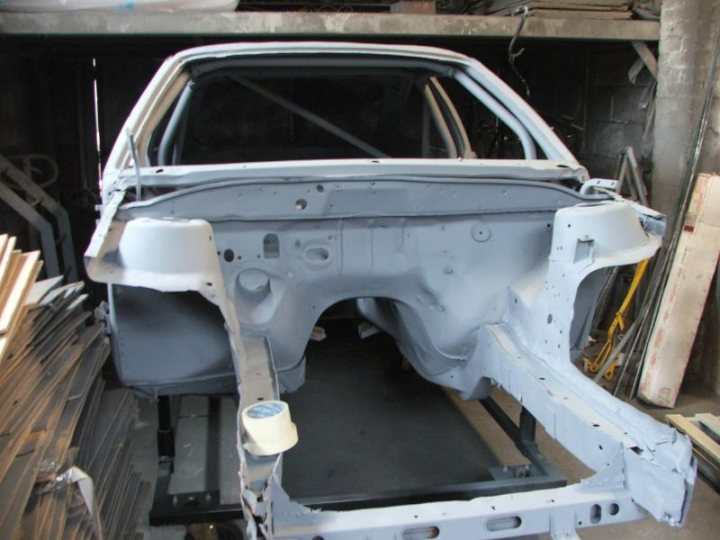
Some progress - the barn that it was stored in burnt down around it - front end was so soft I had to cut it away Shell has been shot blasted and etch primered - gathered an awful lot of parts for it over the last few years but retirement is still a few years away and other cars* keep me busy Oh that will go well * Other cars.....

-
I can understand why that would keep you awake at night but as you say if the job is creative and rewarding I hope the number of sleepless nights are minimal I'm with you on the fun bit - I work in manufacturing in a slightly weird role (started in manufacturing management - moved sideways into logistics and then sideways again into finance before my most recent role as a the sole business analyst but linked closely to operations As a result I deal with everything from automation optimisation, scheduling, costing (lab, RM and OH recovery) as well as capital projects - That might get me a a label of "A jack of all trades" and probably the back ground I have mean the std "master of none" doesn't actually apply 😉 For me it's a consequence of text or rather the English language being easily miss interpreted - emails can be even worse!!! I do try to see any comment as "meant in a good and constructive way" I find that helps avoid issues or poorly worded responses that result in tensions The Design guide was very useful and yes gave me food for thought The roof bracing is exactly as it was built - where boards intersect with the bracing - the boards get cut to suit 🙂 Anyway - I'm pleased to say last night I completed phase one - 1/3 of the accessible area is fully insulated and boarded - I can already see the difference in the ceiling temps of the rooms below (with an IR thermometer - only 2/3rds of the rooms below are covered by the improved insulation right now)
-
Well that was sub optimal!!!
-
Boiler short cycling with low flow temperatures
marshian replied to seanblee's topic in Central Heating (Radiators)
Then it must be because that’s what your house needs to keep it warm 😉 -
Boiler short cycling with low flow temperatures
marshian replied to seanblee's topic in Central Heating (Radiators)
Just to explain why you don’t see the same thing on initial heat up On initial heat up you have a cold circuit even if the flow is a little low (and I think it is) the water has a lot more capacity to take the heat from the boiler so it doesn’t overshoot in the same way - once the circuit has some temperature in it the capacity of the circuit and flow to take the initial purge and hi level burn before the boiler modulates down is much reduced -
Nice - very nice indeed My retirement project is to restore this To as it was in the COI back in the late 80's But it has a bit of a troubled history


-
Regardless of the regs if there are any - both my ground floor flow and returns have drains out side if the house (actually under the decking in the rear garden) - conventional drain points - just foam lagged in case of freezing temps
-
Diagrams are handy - I'm pretty sure I have FInk style Trusses I took note - just had other things going on As far as drama and real life examples go - be careful using examples like cutting holes in aeroplane windows with a multitool - you might think it's humor/fun but it may not be received in the same way - that's the problem with text on the internet - you don't get to see the facial expression as the humor/fun is delivered the storage up there is pretty minimal (xmas decorations, empty suitcases, my stock of foam pipe insulation and the odd tote bin of things I don't want to throw away) and items are well spread out I'm not using it as another room but I do want to be able to get access to all areas of the loft easily - I'm not happy with 400 mm of loft insulation over the top of trusses so I don't have a clue where I can stand safely without putting a foot thro the ceiling below (that's why it was boarded originally) You raise a valid point but 30 years my loft has been boarded out and I've seen no evidence that it was in any way excessive loading - no sags or cracks in the ceilings They (trusses) are actualy marked up with manufacturer (swedish I think) and a BS std - I think from memory BS 5268 because the cold water storage tank is in the loft framed off the trusses - I need to check and note down the details One thing I would say they aren't the spiders web of skinny timber I looked at in a friends new build house - they looked like match sticks holding the roof up!!! Appreciate that it's my neck on the line and I do have a habit of "over engineering" stuff so the advice is appreciated
-
Boiler short cycling with low flow temperatures
marshian replied to seanblee's topic in Central Heating (Radiators)
so you need to increase the flow rate thro the boiler to stop this overshoot - open all the lockshields 1/2 a turn (except the towel rails) see if that stops it - if it does wind them back a 1/4 and see how it reacts - if it doesn’t add another 1/4 turn and see if that helps if you get to a point where the boiler isn’t overshooting then you can drop the flow temp and you’ll get longer burns at lower flow temps but you’ve got to get the boiler happy on initial purge and burn -
Boiler short cycling with low flow temperatures
marshian replied to seanblee's topic in Central Heating (Radiators)
Mine (wiser hub) doesn’t any more - I set it to oil boiler and that halved the number of cycles -then set it on open therm boiler settings (even though it’s not wired for open therm) - that fixed it when I was running scheduled heating slots. Noe it doesn’t do it at all but I’ve set the majority of TRV’s to 0.5 deg above actual room temps and that can’t be achieved with WC flow temps But that isn’t @seanblee‘s issue I’m sure of it and it’s a bit off topic -
Boiler short cycling with low flow temperatures
marshian replied to seanblee's topic in Central Heating (Radiators)
9 cycles an hour between 12 and 1? And in the afternoon way more - I’d not be happy with that at all -
Do I have enough radiators
marshian replied to tommyleestaples's topic in Central Heating (Radiators)
I’d be doing something very different - I’d be sizing my rads for the lowest flow temp my boiler can run at but I’d be looking to do that for the whole house in order to get the boiler efficiency to high 90 % efficiency (ie 97-98%) that would make me heat pump ready for when the boiler needs replacement with just the addition of a HW tank (cos you currently have a combi so no HW tank) However I appreciate that everyone has a budget and sizing for 60 deg might be what your budget accommodates. I wouldn’t mix and match and have part of the house with oversized rads and the rest of the house sized for 60 deg C flows.