


mickeych
-
Posts
91 -
Joined
-
Last visited
Everything posted by mickeych
-
I had a design spec'd for us last year by Omni and they where mostly using floor supply outlets and in the planning, as Jack says, they recommended that they work fine if they are in a remote part of the room that won't be covered by furniture. We may still opt for a floor outlet in 1 bedroom, so good call @Sparrowhawk I had almost forgotten with everything else going on at this stage! 🫠
-
Does anyone have any photos of what their beams look like with different finishes? I have seen and been recomended Danish Oil but have used OSMO on other raw wood projects succesfully too, but interesting to see a side by side comparison and hear any anecdotes...
-
Just on the off-chance someone might pick up on this thread again. We have 9 large trusses and 8 or 10 large purlins to clean off. I am veering towards bead blasting, but when should we do this? If we do it before plaster it is easier to clean up the mess caused by the blasting and any covering (Osmo or Danish Oil) or do we leave it will after plaster and then have to clean off the inevitable plaster from the wood which will also be a pain!
-
I'm guessing that the options are limited to throwing more money at making the building more airtight vs fitting trickle vents and leaving out MVHR. What do you suggest are the options?
-
We were aiming at around 3 -3.5 but this what the SAP calcs came in at: Air permeability [AP50] = 5.0 m³/h.m² (assumed) Since we had these done we have opted to tank the whole of the original barn up to eves so I presume if this is all lapped into the membrane well, it should give us a greater level of tightness.
-
Ok. I looked at the Fresh R option a few months ago and reckoned that the same principle could be used with connected lower cost dMVHR units such as the Blauberg ones. We are using a single centralised MVHR in the new build part of the build (kitchen, breakfast, utility, boot-room and laundry) as we were able to design it into the fabric, but much more tricky with the old stone barn as we have no capacity for ducting. I spec'd trickle vents for the bedrooms as I am not entirely sure that we will have the capacity or desire to put additional units into these rooms (and holes in 600mm listed stone walls), but we do need something to provide airflow into the open plan living area and snug. My idea was to use a pair of linked in/out dMVHR one in the hall and one in the main open plan area which we set to run so that one 'pushes' air whilst the other 'pulls' air hoping that this then helps deal with the issues of using a single unit. Thoughts on this...
-
We are using a decentralised approach to MVHR in part of our build and we are ordering windows right now. Does anyone know whether building control will still need trickle vents in a room that is served by a single room MVHR? (No response from Building Control after asking the question!)
-
Alternatives to Ecology Building Society?
mickeych replied to FelixtheHousecat's topic in Self Build Mortgages
Agree with @Alan Ambrose they all have limits on the amount, risk and geographical splits for their book of lending to keep within their loan book tolerance. We tried a number of direct including ecology and the biggest brokers but eventually went with Glenn @Mayflower mortgages. They are a self-build mortgage broker but what a breath of fresh air. Incredibly helpful and a real source of intelligence when most responded 'computer says no' -
Allowing for Insulation up to frame in a stone building
mickeych replied to mickeych's topic in Windows & Glazing
Old stone barn conversion so no blockwork only 500mm stone walls with no cavity -
Allowing for Insulation up to frame in a stone building
mickeych replied to mickeych's topic in Windows & Glazing
The windows are also tricky...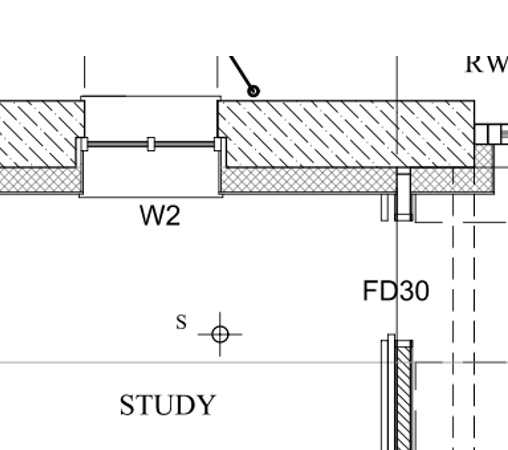
-
Allowing for Insulation up to frame in a stone building
mickeych replied to mickeych's topic in Windows & Glazing
These are the large screens with double doors at the front elevation. and this and the rear elevation carry the most insulation -
Allowing for Insulation up to frame in a stone building
mickeych replied to mickeych's topic in Windows & Glazing
Sorry yes of course. It's original stone with membrane on top then studwork containing the in insulation layup.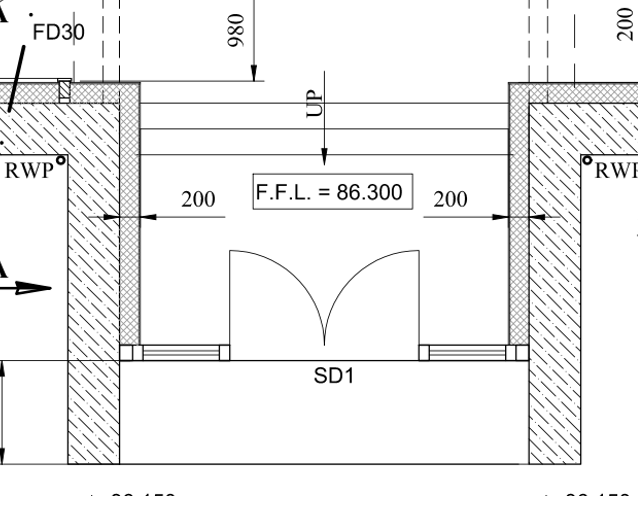
-
Allowing for Insulation up to frame in a stone building
mickeych posted a topic in Windows & Glazing
We have 185mm of Celtex each side of our stone openings which we will be fitting aluminium frames into. Has anyone had any experience/have suggestions as to the best way to deal with insulting up to the frames? We clearly want to avoid seeing the edge of the insulation from the outside, so what are the options? -
Done that twice! A lot of the problems seem to stem from the product companies (in this case Origin and Rationel) providing poor training/education around their products being more interested in getting the products sold than supported. These are complex technical products designed to meet specific needs and yet the distributors, (or at least the 3 we have engaged with) do not seem to know (and less care) about how or what they should be recommending to the consumer and not asking the questions of the consumer and the builders to offer appropriate advice. The latest twist to this is that after 2 separate calls to Origin directly to check the correct threshold details we have 2 different answers. Tomorrow we will try again directly and then place our bets that we have the final correct answer.
-
OB36+ for the doors. Thanks for the heads up on the handles. Have you got any suggestions for aftermarket replacement?
-
Stepped
-
That has been done and this mail convo is the result!
-
The builder does not have a good word to say for the glazing companies, and the glazing companies we have been trying to work seem unable to understand or provide adequate answers to his questions. Any help understanding what it is that each side is missing would be much appreciated as its driving me nuts! We have chosen Origin doors and glazing and the builder has been asking for some cill and threshold measurements. All good so far... Origin have good documentation, but they have some measurements missing her and there and there are a number of additional questions that the builder wants answer to before he builds the masonry to support the windows. These are the questions that the builder is asking along with the answers provided by the glazing company. What am I missing and is there an answer? 1. Do the Origin Weathered Thresholds for Residential Doors and OB36+ have front weep vents? The weathered thresholds have concealed drainage unless specified – we can make them face drained if this is preferred although won’t be necessary unless the door is set back too far from the face of the masonry. They do not contain weep vents - we would expect these to be in the masonry below. 2. Ideally, how far should the masonry be set back from the front of the frames? The doors are usually set back 20-30mm from the face of the masonry. 3. Ideally, how large should the gap be between the bottom of the cill and the top of the masonry? If the masonry is level we can fix the cill directly to it, if not we’ll pack the cill up until it is level and seal any gaps. We allow 10-15mm tolerance for this in all installations. The builder had the following comments: '1. No way would we be putting weep vents in the masonry below large glazed units 2. We wanted the set back for the bottom of the cills from the masonry not the frame to the edge of masonry 3. WTF is this?' All my builders own words, but having already burned through a number of potential suppliers that haven't come up to scratch or my builder won't work with because they are 'Shit' Any suggestions or thoughts welcome... Thanks
-
We are at the point of placing our order for windows and doors and I am getting conflicting information so wanted to find out what others have experienced on this. We have spent 3 months choosing a supplier and had 3 quotes for like for like specs, 2 are similar and 1 is 30% higher (large well publicised brand) which I don't think is too unexpected. The costs of the other 2 are broadly in line with the original budgets. Of the 2 lower cost firms, our preference is very local firm who we have met with twice and are comfortable that they will do a good job, but... When trying to agree terms, all of the firms are requesting for 50% upfront (we are fine with that) and the remaining 50% plus installation fees 2 weeks before installation. Is this normal practise? Is there not normally a fee retained to deal with the inevitable snagging? My feeling is that I would like to retain a minimum of 10% of the cost until we have installed and are happy with the outcome, I've had a 'serious' conversation with our preferred supplier and the best they are prepared to offer is retaining 10% of the install fee until we sign off. Am I being unnecessarily cautious? The total cost is a large amount of money and my (trusted) builder has stressed that we should have a 10% retention as in his experience there are nearly always snagging issues with window and door suppliers - his other major project has 12 outstanding glazing snags and he has retained 10% of the glazing cost which is creating urgency with the supplier. What are others thoughts and experiences, advice?
-
You might want to have a look at the Rationel range https://rationel.co.uk/windows/. Very competitive and with good U values for the aluclad version (not sure whether these are the frames or glass,) Checking the price we have for our most recent quote we are almost exactly the same as the comparable product from Windows24.com and from the local supplier with a decent warranty and backup. We have had a number of quotes for both local and international providers and they do fit into ranges IMO
-
👍
-
Yes I was hoping that internal blinds and solar glass would really nail that and I just feel that if we can go the single ASHP route it has to make sense from all counts.
-
This is now really making me nervous that we have overspecced our system and maybe got the design wrong. We have been given a calculated heating loss of 12.2kW and a heat gain of 26.5 kW (for cooling). We have opted for FCU's rather than radiators to go alongside our UFH to provide active cooling. Due to the distance between the main plant room and the far end of the building (around 75M) we were advised that we should have a second ASHP unit in the middle of the house. So we now have a main plant room at one end of the house and a minor plant area in the middle of the house each with a separate ASHP and UFH system also driving a number of FCU's. We have been recommended a 16kW for the main unit and an 8kW for the smaller unit. Question is if the single unit could drive all of the heating needs for the house from a single unit, we would lose some of the cooling capacity but cut a lot of cost. BTW we are being quoted more than £30K for this setup so this sort of confirms that this is a nonsense amount of money!
-
Yes - this is what we are doing for a stone barn conversion too. The reason we chose it was similar to your thoughts in that with every quote there were so many caveats and exclusions due to the age and complexity of the project. It doesn't stop you worrying about how you are going to afford it but it does give you a high degree of transparency. For the conversion of an old barn, no matter how detailed and careful you are in estimating or how brilliant a group of engineers and architects are in creating the original tender document, on my current experience there is absolutely no way that any estimate could capture the variables that we are seeing in this build. For example we surveyed the roof and timbers and estimated that 30% might need replacing - In reality the roof timbers were in far worse shape than the original survey suggested and we had to replace and repair a huge amount more than was planned. All in all, the roof finally came in at 125% of the highest estimate range (including the 25% contingency we used) which whilst not great, at least this was not 'an extra cost' over and above the tender quotes that we would have had and we did have some choice in the way things were done. I don't for a minute think that the cost+ is a perfect model, particularly as the contractor is not incentivised to find the cheapest materials so I do tend to get involved with larger purchases. As i see it, I am employing the contractor to build a property not manage my expenditure, and I do get a little concerned that the model relies on the accurate reporting of the teams time on site. We live in a cottage on site so we are able to be involved in making any and all key decisions and this also plays to what works for us. I would rather be over-asked than under-asked and with the cost+ everything is double checked

