


sharpener
-
Posts
1492 -
Joined
-
Last visited
-
Days Won
1
Everything posted by sharpener
-
Has anyone used this insulated 4 bore pipe
sharpener replied to Post and beam's topic in Air Source Heat Pumps (ASHP)
You will be absolutely fine with the 4 bore assuming the 2 x 25mm dims upthread are correct. In the UK* the Arotherm plus just needs 1 power cable and one ebus data cable back to the indoor VWZ AI Interface unit and system controller. Almost all other connecions terminate there. The ppl who have just installed my 12kW Arotherm plus used 25mm and 20mm flexible conduit respectively. Also IIRC the 7kW only needs 2.5 sq mm power cable not 4.0. There was plenty of room for the additional data connections I wanted (e.g. to shut it off in case of grid failure - until I can switch it to Low Noise Mode so the battery will last twice as long). If you have sensitive flooring materials you might conceivably want to run another twisted pair to the limit stat connection on the HP itself. Can't think of anythng else that is not duplicated on the indoor Interface Unit, e.g. you can connect the HW diverter valve to either. *In Germany there are some setups where the utility can interrupt the supply, sometimes this means you need to split the control board and compressor power feeds but in the UK they are just jumpered together inside the outdoor unit. -
In short, get a second inverter to suit the new panels (?higher voltage rating). The interface to yr existing system will then be at 230V AC so the exact rating of the panels themselves is not important, only that they are matched to one another. It is clear from yr table reproduced below that the old and new panel voltages are almost identical. From this we can deduce (i) they probably both have the same number of cells as the volts per cell is pretty much a constant (ii) it is the current capability that is different in order to account for the different nominal power (iii) so you will not be able to mix old and new in a series string. I don't see a way of connecting the new panels to your existing inverter to make use of its spare capacity, so you will have to replace it or, cheaper, add a second one. There is a company somewhere in the SW that advertises second hand ones on ebay. If you have a battery system you could alternatively - depending on the capabilties of yr existing inverter - add the new panels on the DC side (I have 16 x 230W panels installed in 2011 on a grid-tied inverter and 8 x 405W installed in 2022 on the 48V DC bus via a Victron DC-DC MPPT). 320Watts panels 435Watt panels STC NOCT STC NOCT Power 320 237.1 Power 435 325 Voc\V 40.9 38.2 Voc\V 39.33 36.93 Vmp\V 33.9 31.3 Vmp\V 33.04 30.15
-
Yes but the output from the 12kW unit is so much that it would be highly desirable to be able to run the compressor at less than the 50% setting that Eco mode gives you. Then there would be less delta T across the coil and even better CoP. Have been in correspondence with Vaillant tech about this but they have not been able to suggest anything useful. Just back from hol and will post some more analysis when I have crunched the figures a bit further.
-
Midsummer Wholesale are in Milton and supply a lot of HP kit, you could ask them for suggestions from their customer list who buy a lot of yr mfrs stuff (you do not say what make/size you have got).
-
DHW heating up when Heating is on
sharpener replied to Helene's topic in Air Source Heat Pumps (ASHP)
Depends. If the heating flow is at the temp you would expect and is hotter when the outside temp gets colder then your weather compensation is working OK. At worst the flow through the DHW coil may abstract some heat from the tank but if you have enough HW for yr needs then nothing to worry about. If the heating flow is at a fixed high temp, 50 or more then there is a hardware problem and/or the weather comp is not set up correctly. I would try and find a heating electrician with (your type of) heat pump experience, it may just be a question of rewiring the valve or adding a relay. A plumber is more likely to want to change the valves which will be more disruptive and cost you more. -
Is this normal behaviour - cycling ??
sharpener replied to mk1_man's topic in Air Source Heat Pumps (ASHP)
I would say that looks normal for mild weather. The HP accumulates error degree-minutes i.e. how much the integral of temp differs from the setpoint and switches the HP on when the total reaches a trigger value (by default AIUI -100 or maybe -60) and switches it off when it reaches 0 again. You can change the trigger value somewhere deep inside the installer settings but default is OK for many ppl. This accounts for the cycling. Up to 3 cycles/hr is reckoned OK and you have a lot less than that. Also depends on control strategy. If you have the SensoComfort controller it has 3 possible modes for "room temp mod": off, active and extended. Active uses the sensor in the controller to tweak the flow temp according to actual room temp so if yr controller is sensibly sited in living room you can probably use that. Extended turns the whole system off when the sensor is up to temp which is prob OK for you but no good for multizone systems. Arotherm FB page is good for this stuff also. Worth following for useful hints on setup though a bit repetitive. @JohnMo will no doubt be along soon to add to this, IIRC he has commented on the energy integral approach in the past so I imagine Ecodan use it too. Open Energy Monitor, has separate power, flow and temp sensors. -
Yes, a reputable brand, the UK-made ones are OK I think, my father had a little ST pump for a fountain in the garden which we brought in every winter. Which is why I was annoyed to find they did not do spares for the jet pump that had been installed by the rainwater system ppl for the previous owners but since discontinued. When the first one failed (not their fault, garage flooded) I consulted their sales dept and was advised that the current model was ideal for the purpose. But when its shaft gland went they said it was imported from the Far East and just branded ST so only warranted for 1 year. I wrote to the Sales Director to argue this was not fit for the purpose described, but they would not budge and I had no choice but to pay for a third pump. The shaft gland was a particularly poor design as the torque was transmitted through the flexible polymer bit and I think it sheared when trying to unstick the carbon/ceramic seal interface after not being used for some weeks. Eventually I found a replacement on ebay which also had a metal dog to transmit the torque. The third failure was a crack in the plastic impeller shroud leading to a partial loss of delivery head which meant it did not reach the cut-out pressure. No obvious cause but equally annoying bc on their advice I had bought a new pressure control module which did not fix the problem. So I now have a working pump, a spare with a working motor and shaft seal but broken impeller shroud, and a spare pressure controller I do not need. I will buy DAB next time.
-
Flat multiplate HX like these, have heard good reports of inhouse SWEP brand by these people. Quite widely used in UK domestic HP installations so stocked by some plumbers' merchants here. Note their pH 7.5 to 10 limits for ordinary copper brazing, and get water properly analysed for sulphur content and other things as well. I have found test strips are not reliable (especially for pH measurement) on naturally occuring waters e.g. my harvested rainwater. Universal Indicator drops like these are OK and more sensitive. Check with pump mfr but an all stainless steel/plastic construction would probably be OK as no intermetallic effects. My rainwater is slightly acidic even after treatment but s/s pump shows no corrosion. (However 2 have failed for other reasons, cracked plastic impeller shroud and failed shaft gland, don't buy Stuart Turner! They consider them non-repairable so no spares available, but I have built one good one out of the bits from two. A bit like the old joke about why you need two Hasselblad cameras. /rant) Of course if you have enough head available from the spring then ideally you would not need a primary side pump at all. Forgot to add theory link earlier. Explanation here of why only half heat transferred, coil in holding tank will be an approximation to this. HTH.
-
Insulated flow & return pipe recommendations
sharpener replied to Post and beam's topic in Air Source Heat Pumps (ASHP)
Jon Cantor's calculator gives 395mbar for a single 20m run, so similar. Vaillant 5 and 12 HPs can do 560/550 respectively, the 7kW is the outlier at 440. Yes you can run pumps in series subject to the static pressure limit but better to use a multistage centrifugal which is essentially multiple series pumps on one shaft. I think this is the correct answer if you are going to have such a long run. -
Insulated flow & return pipe recommendations
sharpener replied to Post and beam's topic in Air Source Heat Pumps (ASHP)
Assuming you mean m/s think you are being a bit conservative. For reasons already discussed I have got up to 17 l/min (as measured by Vaillant flow sensor) going through the original 15mm feed to the coil and, rather to my surprise, it doesn't make any flow noise at all despite lots of elbows. According to my old friend here that equates to 1.9 m/s. John Hearfield suggests 3 m/s max acceptable from noise POV. Re-reading my linked post I also found this from @JohnMo. That would give you 19 l/min in 22mm plastic so about 7kW. For 9kW you would want 25.5 l/min so 1.7 m/s, too high for plastic on his criterion which I assume is for erosion, maybe he can give you the source for this? -
You would need to do a proper heat loss calculation using e.g. the free Heatpunk app from Midsummer Wholesale. It will then guide you to correct rad sizes for the flow temp. (If you had got radiators already then upsize them by 1.9x for 50C flow). I am too, you will be in good company here. Electronics Engineers seem to have a better grasp of pressure, flow, thermal resistance, heat transfer etc than most plumbers bc all quantities have analogues in electrical engineering. With a limited heat source (max 8.4 kW as above assuming you could transfer it all to the target rooms) I think you will only get half of that into the load (think load matching/load lines). So as an inspired/informed guess you will be best off picking a heating flow temp midway between the two i.e. 35 deg. The larger model is rated at 30kW with "approximately" 50K delta T, so 4.5kW at 15K which is v close to what you want. This might just be enough for a small well-insulated house but will require very big rads. You might be better off piping the hot water into a conventional HX bc then you could have a proper counterflow arrangement which will be more efficient from the thermodynamic point of view. The secondary flow temp will then be closer to the source temp, and the waste spring water will be closer to the return temp from the rads, so you harvest more of the heat available from the spring. @JamesPa has done quite a lot of modelling of this kind of thing so may have some more insights (or may be able to demonstrate I am completely wrong!) Fascinating project, ATB with it.
-
Insulated flow & return pipe recommendations
sharpener replied to Post and beam's topic in Air Source Heat Pumps (ASHP)
Plausible. The Cu erosion mechanism seems to be removal of the CuO layer forcing it to be formed anew. This won't happen with PEX though; who knows whether mechanical/acoustic erosion of the parent material is more or less a problem? The material is softer but also has more internal damping. For my money it's significantly above my 6kW rule of thumb for 22mm. What do the detailed calcs show? My worked example was for intermittent HW use, your case is round the clock. -
Insulated flow & return pipe recommendations
sharpener replied to Post and beam's topic in Air Source Heat Pumps (ASHP)
There was this discussion including a link to an external erosion calculator here, that might help, took some finding again though! -
Insulated flow & return pipe recommendations
sharpener replied to Post and beam's topic in Air Source Heat Pumps (ASHP)
Rate of heat loss (in kW) is what you need to worry about, it is quantifiable as additional cost. OTBE this will be proportional to exposed surface area. Hence smaller pipework better. Temp drop of water in pipe will be proportional to heat loss, and multiplied by vol flow rate in l/hr /860 will equal the heat loss in kW. So temp drop inversely prop to flow rate for a given heat loss. Not in itself important assuming it is small compared with dT across the HP. Not directly a measure of heat loss hence not a measure of avoidable cost. Volume of pipework is however dead volume which we can assume has to be heated to flow temp once per cycle and mostly lost when HP stops. This is a direct function of pipe size, small pipe is better. -
Insulated flow & return pipe recommendations
sharpener replied to Post and beam's topic in Air Source Heat Pumps (ASHP)
Right answer for the wrong reason! Assuming the flow temp is the same then the dwell time does not matter. The heat loss is more bc for a given delta T and insulation thickness (measured radially) there is more surface area to lose it through. 7kW Vaillant can put out 10kW under reasonable conditions so needs 28mm pipework. For 5C dT the rule of thumb says 22mm is good up to 6kW and 15mm up to 3.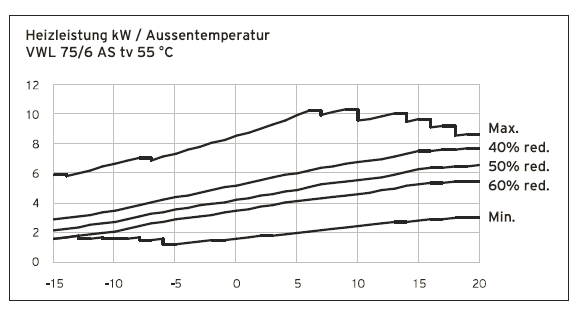
-
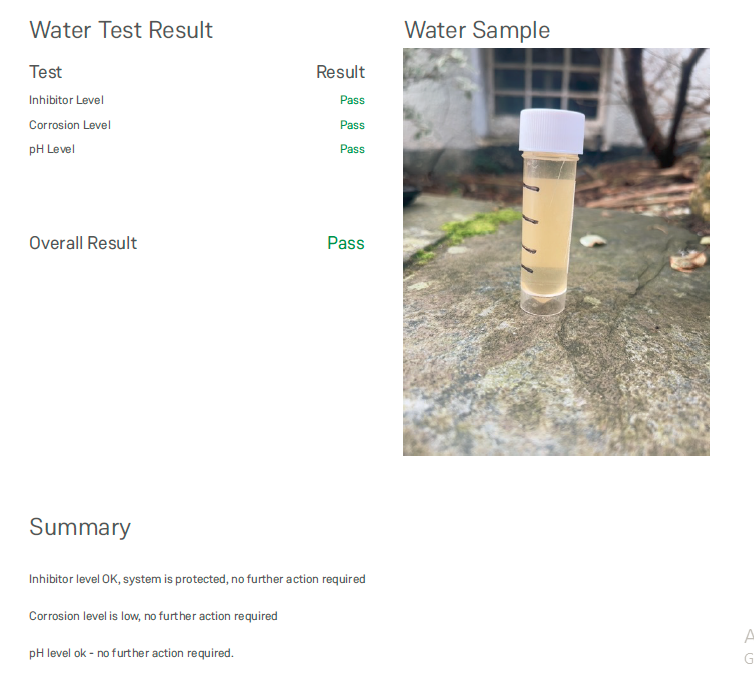
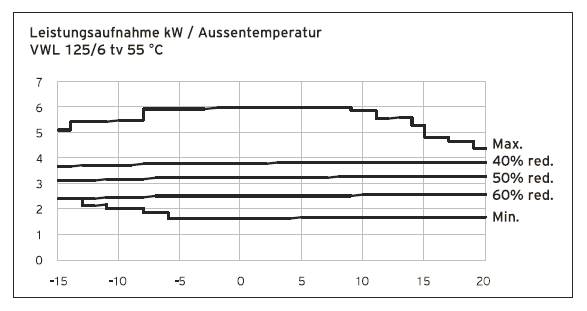
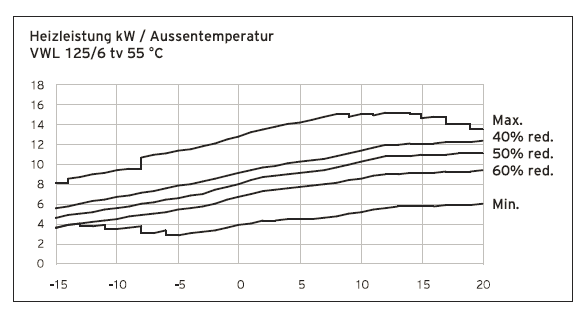
Some musings on the hydronics side of things. Installers included a power flush in their scope of work. It didn't produce much in the way of discolouration or debris but good to have it confirmed. When I added 3 rads a few years ago I did a de-scale with Fernox DS-1 (citric acid based), followed by 3 flushes, neutraliser and inhibitor so I was pleased to see it had all stayed clean thereafter. Flushing was done with treated rainwater (free) but the final fill was with mains water as it is slightly alkaline, so I was able to meter the volume, 348 litres which includes the 270 l thermal store. Slightly surprised that te rest including 11 rads was only 78 l but it is possible it was not completely drained to begin with. I would have preferred glycol (see this thread) but the cost for 20% of 348l would have been prohibitive. I asked Hydratech for progress on their cheaper alternative to Fernox HP-5C (which has a min conc of only 10%) but didn't get any meaningful response. So went along with installers' plan to fit 2 x Intatec AFVs which they did neatly and in strict accordance with the MFIs. To treat up to 375 l they then added 1.5 l of Adey MC1+ inhibitor and 1.5 l of MC11+ biocide which they have found necessary in the past. They then tested water samples from the HP itself and the extremities of the system. All three confirmed by the Adey app as OK for pH, corrosion and inhibitor level. Finally when the M.D. came to inspect two weeks later I got him to open the Magnaclean up, there was a small amount of deposit collected by the magnet but nothing on the knitted s/s filter. I was amused to see it was just like an enormous kettle fur collector, and a surprisingly coarse mesh. However its primary function is to trap particles big enough to block the passages in the HX so presumably adequate for that. All in all I felt they had done a very diligent job on all this. Some of the plant room lagging was a bit ragged but they left me some spare lengths and different rolls of tape for inside and outside which I have been using as and when. The pipework external to the house is however lagged with Armaflex inside 2x black plastic ducts so looks very neat. The sparky has done a good job too, and hidden the mains wiring in one and the l.v. in the other to keep them apart. The mild weather has meant that so far we have had no real opportunity to put the heating system to the test. As upthread the HW side is still a bit of a puzzle, I will write up the results as a separate exercise, meanwhile ATM there is mostly enough sun for the immersion heater to cope from the free PV generation. NGED have finally agreed I can increase the battery inverter max power setting to 4.4kW, which gives us a chance of now running the HP at 60% of full output entirely on battery power. This will give us 9kW thermal output down to 0C while leaving 600W to spare for other loads.
-
1kW is 860 litre - degrees per hour. So 4 litres/min x 30 deg x 60 = 7200 litre -deg / hr = 8.4 kW free heat for space heating, lucky you. I would definitely use a heat exchanger, suitable for the water analysis of the hot spring, and put the whole flow through it after a fine mesh filter e.g. a 500 micron Y-strainer or a Magnaclean. Also fit isolating valves and a bypass valve so all can be taken out of service for maintenance. If the water is acidic (quite likely) then you would need a nickel brazed HX which will be expensive. And de-zincification-resistant (gunmetal) valves and fittings on the primary side. Then put inhibitor (not glycol) in the secondary circuit esp since you have rads not UFH. Use an S-plan or 3-way diverter setup for the HW. As you have a low delta T you would want a high-gain or HP type with large coil area. 8.4 kW will heat 240l/hr from 15 to 45C if you have a big enough coil so, depending on usage pattern, heating it in the small hours once a day might be enough.
-
Agree the £1698 seems high. Do you really need a buffer? If so there should probably be an external pump. Maybe one anyway, IIRC some Samsung units do not have an internal one. If it is configured as a volumiser then (i) it won't need a pump (ii) it won't have such a deleterious effect on efficiency as a buffer would. They should be fitting two antifreeze valves, one to let air in one to let water out. Glycol might be cheaper, depending on system volume and design OAT.
-
When the UFH flow Temp is <35C, dhw?
sharpener replied to Post and beam's topic in Air Source Heat Pumps (ASHP)
Yes, I have fitted an external trimpot to get the WC right with the HW temp I want. It is not perfect bc adding external fixed resistors whether series or parallel will necessarily reduce the sensitivity to changes in the WC sensor resistance. I don't think these workarounds should be necessary, as they are way beyond nearly all users and most installers too. As upthread it would be sufficient for the mfr to add (i) an HW demand input and (ii) firmware which will store the HW temp setting if you adjust the knob while the demand is present and the WC curve otherwise. Knob is a s/w setting anyway, it does not directly define the h/w temperature. Not rocket science. Marginal manufacturing cost essentially zero. -
When the UFH flow Temp is <35C, dhw?
sharpener replied to Post and beam's topic in Air Source Heat Pumps (ASHP)
I had a boiler installed in 2010, the installer (subcontractor to loft conversion ppl) had never heard of WC, I specified a Vokera bc it was the smallest I could find with WC but he had no idea how to wire it. I consulted Vokera technical who said to fit an external relay to inhibit the WC when HW calls for heat. Not a neat solution, they could easily have put a HW demand input on the pcb at no cost to themselves. Even so there is no independent setting of the flow temps, if you want to increase the WC curve it also increases the HW temp. -
See also this thread. Clearest explanation of the myriad G99 options I have found recently is here https://connections.nationalgrid.co.uk/downloads/24747.
-
Need a copy of paperwork to submit to dno for panels
sharpener replied to CalvinHobbes's topic in Photovoltaics (PV)
Hardest part was establishing that A1-2 was the correct form amongst the many alternatives for a G99 application at the time. I imagine if you do it for a living you will know what is required and complete the application in one go. Occasional users are the ones who will fall foul of this. Hopefully the above pointers will help ppl avoid these pitfalls. But being able to save your work and resume later is hardly novel, it is a feature of the commercially-run gateway for Planning applications which you are now obliged to use (at an additional charge of IIRC £70 or so on top of the LA fees). -
Are R290 heat pumps permitted beneath/under a window?
sharpener replied to Dan G's topic in Air Source Heat Pumps (ASHP)
I am assuming if it goes to a soakaway it doesn't also take grey water from e.g. the kitchen sink as you often see with pre-WWII houses. Depending on the age of the building it will probably be a trapped gully, in which case the propane which is denser than air but not denser than water cannot get into the underground pipework so you are OK. If not you could either replace it with a trapped gully (if it also takes surface water) or use a rainwater downpipe to underground drain connection which is not open to the air/propane. I would think the simple rubber cap type is adequate. In the extreme you could build a gas-tight housing round it higher than the top of the HP. This might be as simple as extending the 110 mm underground pipework upwards and doing the transition from downpipe above the level of the HP. But I don't think they care about drains much, even if they used to. Have just checked the MIs for my new Vaillant R290, they expressly state (section 4.2) "Open gullies or downpipes within the protective zone do not pose any safety risk." -
Need a copy of paperwork to submit to dno for panels
sharpener replied to CalvinHobbes's topic in Photovoltaics (PV)
Tried this as an experiment tonight, some observations: Does apply to NI Will enable you to apply to connect individual approved devices or combinations thereof, but not request specific export limits etc. You need to have a decent picture of the DNO cutout and files of any supporting information to hand e.g. single line diagram of any export limiting device before starting. You can't proceed to the next step without uploading pictures/files when requested If you go to any other menu options you will without warning lose all the data you have entered and have to start again Can't save an incomplete application and return to it later MPAN is looked up and completed application is forwarded to your DNO based on address (address lookup didn't work for me though so I don't know it this would have been successful) The process is certainly simple but it is not clear how your DNO will proritise it in relation to direct applications All in all a greatly simplified process compared with the myriad different forms for G98/G99 I had to complete in 2022. But no help in the current situation where I have been waiting 6 weeks for a callback from NGED to discuss uprating an existing installation simply by changing software settings. -
Are R290 heat pumps permitted beneath/under a window?
sharpener replied to Dan G's topic in Air Source Heat Pumps (ASHP)
and there has been some discussion on the Vaillant FB group about drains and airbricks which were formerly not allowed in the exclusion zone, but now apparently it is OK so long as they do not communicate directly with habitable rooms. So in a typical UK house with a suspended floor it is OK for a flammable air/propane mixture to accumulate in the void beneath it. Sometimes it is clear that the advice is based on German house construction methods without much consideration of what is done elsewhere. Given the quantities of gas involved (900g in a 12kW HP) the whole business is a farce when you consider what you see done with twin propane gas bottle installations for cooking off the main gas supply.

