


MikeSharp01
-
Posts
5693 -
Joined
-
Last visited
-
Days Won
16
Everything posted by MikeSharp01
-

Advice on painting 1.5km2 of plasterboard
MikeSharp01 replied to saveasteading's topic in Decorating
Do we have an Gargoyles on here? ( @Pocster please take a breath before answering that if you are watching!?) -
Why would you want water leaking into your, or anybody else's, house?
-
Creativity, for people who are no longer children, is all about rediscovering your inner child and dumping all your baggage so it does not constrain your thinking.
-
Agree - and it is only trained on code people have shared so there are whole domains, including some languages, it knows very little about in real world terms although it generally has all the theory it is not able to deploy it, in its word, 'cleanly'!
-
Seems a waste of a perfectly good nuke - all they will need to do is provide a few strong streams of water and play them on your build - pretty soon your life will be consumed with finding and fixing leaks leaving no time for chat! On another matter I see that Claude has released Mythos (well a slightly cut down version) to the general public - that might improve things for you although I strongly suspect you will quickly exhaust its patience - and yours along with its capabilities....
-
Sadly, although by then its context memory might be very large, today's conversation histories will have melted into nothing or at the very least TLDR - "what ever"!
-
Yes and the trouble with Toddlers is they grow up and become very stroppy teenagers. My beef this week has been to get copilot to ignore all the metadata that goes along with the prompt - somehow it thought that this was part of the prompt and kept telling me that my code would not work because you have loads of 'edge' metadata in it. Even though it has now agreed with me to ignore it it keeps telling me its an issue.
-
For UKPN you can do it all yourself - we are on single phase, applied for an account, used the web form and off it went we got 7kW peak output set at the inverter with no haggling or anything from UKPN.
-
Phone Charger under Kitchen Worktop ?
MikeSharp01 replied to Spinny's topic in Kitchen Units & Worktops
That's different - usually those leads only have the power lines connected. -
I was worried about you in your last post - I still am, you need to someone not talk to something! You are clearly getting in deep - well beyond coding support and into emotional support - and I thought that was our job and you have no idea how dismayed I, and perhaps many fellow members, was to find that we are being cast aside for a machine that just spits out tokens on the basis of probabilities.
-
Phone Charger under Kitchen Worktop ?
MikeSharp01 replied to Spinny's topic in Kitchen Units & Worktops
I think the 30mm will be reduced by: This is still going to be a problem unless you: Get a long range charger: This guide will help - https://invisqi.com/blogs/all-about-qi/quartz-countertop-wireless-charging-guide Get the recess so that only about 10-12mm of the quartz remains between the charger and the phone. -
Ah, perhaps not a sensible assumption - it seems that your GPT (LLM) is not telling you about the self attention (is all you need - where all these machines spawn their approach from) 'quadratic bottle neck' it is trying to manage in helping you. If you double the context you effectively quadruple the compute needed to handle it so stuffing your context window with the problems you created with the last stuffing is effectively melting the planet and means that 5.6 won't sort a 5.5 generated mess because the whole thing is an exothermic reaction of sorts (compute runaway) . It creates problems and in trying to sort them it creates 4 times the problem unless you can tail the context back at every step - not easy because you a creating something which is growing. You will have already found that bigger contexts have interesting effects on the attention between tokens, it starts to weaken the connections between them - the LLM effectively has a weaker grip on the whole context. You can help by reiterating important stuff in the context / prompts (teachers will know all about the power or reiteration in learning situations). You can read more here.
-
I have been an SQL server & MYSQL user until about a month ago when one of my students was showing me some work they were doing on a knowledge hub with Postgres and I thought I should give it a go for my next mini project idea and I found it very good all kinds of ways the pgAdmin software is excellent.
-
I did try to say! 🙄 No, not the way I discussed above - for single cables, much tougher for multiple. Just cut a square of EPDM (0.7mm) punch a hole just smaller than the diameter of the cable (or its smallest dimension for the flat stuff - invention of the devil) then just pull the cable through the hole and tape the square of EPDM to the airtight layer
- 15 replies
-
- 1
-

-
- pv
- insulation
- (and 1 more)
-
You need to get a proper workstation else you will do your back in.
-
Then all will be well - except! You need to think about how the cables come through the airtight layer as you will need to make that interface airtight as well. I used some squares of EPDM with hole punched through smaller than the cable then pushed the cable through and sealed the EPDM to the airtight membrane once it was installed - it does mean pushing the cable through the airtight membrane so you need the end free to do it.
-
Fan Coil Units for use with a (cooling) ASHP
MikeSharp01 replied to ProDave's topic in Air Source Heat Pumps (ASHP)
The is very good- why is it so good, what insights can you give us into getting that good? Our COP was all over the place until I let it settle at 16oC today we are getting above 3.4 at the moment I will keep an eye on it and we where it goes 7 is miles off. -
Fan Coil Units for use with a (cooling) ASHP
MikeSharp01 replied to ProDave's topic in Air Source Heat Pumps (ASHP)
Interesting stuff Gus, The challenge is the pipework, we have 25mm insulation around nearly all our pipework - not sure how much condensation is forming on the pipework beneath that but our Underfloor Heating (UFH) manifold is not insulated and that is my tell tale. Humidity is hovering around 46%. -
Fan Coil Units for use with a (cooling) ASHP
MikeSharp01 replied to ProDave's topic in Air Source Heat Pumps (ASHP)
I have had ours at 16oC for a couple of days. It have brought the slab temp down, at 15 we get the faintest of condensation on the manifold at 14 it drips off! -
How do they know it is battery export, do they have some sort of local monitoring? More importantly does that mean that the GAS based generators, and everybody else because of the contracts system, are getting £1+ for every kWh they generate at specific times?
-
It is still coming through the fabric of the house so maybe it's picking up heat from the ductwork etc?
-
Ours is closed, tung & groove, detail is the same though. If the drops are long you need a gap at the joins. I am hoping we don't need them.
-
You might see it that way BUT there is very little research I have seen that shows that people without any coding skills can drive LLM code developers successfully - ie taking the basic output of requirements engineering, in English if you like, and just expecting a fully worked solution. So I speculate that what we have is apparent, stress apparent, productivity improvements for the coders that are left but where that productivity as measured by the normal metrics is coming out much less than expectations and that may in the medium term, because of maintainability, be even less. This is not to say I would advise cutting back on LLM coding but rather seeing it for what it is - more of a challenge than expected as it is now. The advent of more " agentic" LLM coding along the road Codex seems to be heading will change the perspective again. Anyways it's all good clean fun and I am off for cream cakes and lashings of ginger beer - tallyho.
-
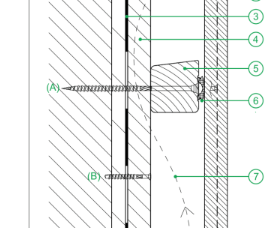
Could be - but at least I am following the manufacturers recommendations so I should be able to have some comeback if it does not work. This is the drawing I will be following in spirit at least.
-
Probably lots more to come, scuttlebut on the street is that complex system coding with LLMs is not as effective a professional team almost no matter how much compute you apply the directional control takes vast amounts of work, the smells are far greater, the code is much more complex - longer and much harder to maintain and it looks like you are finding similar challenges.


