Piers
-
Posts
67 -
Joined
-
Last visited
Everything posted by Piers
-
True, that makes sense. Are you suggesting a heat pump just for cooling the pantry room? Wouldn't that be quite expensive? Can one connect 2 heat pumps to the same ground array or would I need to double up on that? This is where my understanding of GSHP ends!
-
I'm not sure I follow, though it's probably my rudimentary understanding of GSHP. I thought that the fluid coming in through the ground loop is "warm" and that going out is "cold". The temperature change being the heat pump acting like a reverse refrigeration unit. If the "cold" fluid exits the building via a radiator in the pantry would that not cool the room and warm the fluid? Does it matter if the "cold" fluid going back out into the ground array has been slightly warmed up after it exits the pump? Surely that what happens in the ground loop anyway?
-
True. I'd actually want cooling at all times so would need to work that out
-
Hi Everyone! Hope you're all well and not going stir crazy. Over New Year 2020 I visited an old uni friend in Norway. We stayed outside Oslo in a cabin in the woods which his parents built about 10-15 years ago. The building is heated using GSHP and UFH. At one point in our stay I was sent to the basement to retrieve a bottle of white wine from their cold room, which was like a sauna room with the temperature turned way down. It was about 3m by 1.8m, all wood panelled with some shelves and a thick, insulated door with rubber seals. What particularly piqued my interest was that it was bang next door to their GSHP plant room. And I wanted to know whether the GSHP would be used to both heat the house and cool this "pantry-room". Was the cooling, actually waste from the heating? Now we're (still) designing our new build and have set aside a space in the basement for a plant room and pantry - I'm wondering how I could replicate the set up. Naturally I asked my friend, who didn't have a clue! Is this a set up that anyone has come across before? I've got a few questions and would be grateful for any answers or even a little conjecture! 1. Can one use "waste cooling" from a GSHP to cool a room? 2. How does one regulate the temperature? 3. Are there suppliers who sell kits for cool rooms? 4. Would anyone try DIYing it - insulate a basement box, vent and stick a blimmin' huge door on it? 5. What pitfalls can you envisage? Thanks all and stay safe
-

New Phone Line/Broadband: trench and ducting req'ts?
Piers replied to Piers's topic in Networks, AV, Security & Automation
For my next trick I'm looking to cancel the new BT connection (within 14 day cooling off period innit) and sign up to a service that does free calls to mobiles (Now Broadband). I've run into a problem and hoping someone might have encountered it before or have some clever ideas. I now have 2 lines into my property: 1 to the house and 1 (the new one) to our outbuilding. We're in contract with BT for another 9 months at the house and so can't jump ship. However the new connection to the outbuilding, which has a separate phone and account number, can be cancelled within 14 days of activation (earlier this week). The problem is that both lines are registered at the same address and the potential new ISP tells me that if they try to take over the outbuilding line, they'll get both. And this will trigger any early exit fees (or I'll just pay twice). They suggested I register a new postal address with Openreach and get the new line assigned to that address. My address is: "Grey Cottage, ABC Road, Town, County, WX12 3YZ" and my plan is to try to get the outbuilding registered as "The Studio, Grey Cottage, ABC etc...." So, I'm now in the process of trying to work out how this can be done.... I've filled in a generic broadband enquiry form with Openreach and am waiting to see if this is the route to take (this was suggested by the ISP) Has anyone ever done anything similar? As an aside, I'm moderately terrified that if it all goes wrong and the world turns against me that I could receive a council tax bill at the new address. And that would be a complete nuisance to unpick. I'm counting on Openreach not sharing address data with other organisations except ISPs. I really don't want to create a proper new postal address for what is essentially a glorified garden shed! -
New Phone Line/Broadband: trench and ducting req'ts?
Piers replied to Piers's topic in Networks, AV, Security & Automation
So.....6 weeks later and the new phone line has finally been installed. I've had numerous visits and met the full gamut of Openreach engineers and their mates from Kelly Communications. I reckon that we've had 5-6 engineer visits (that we've seen) plus another 1-2 who've just worked at the cabinet. Can't be much money in it, as the total cost from BT for the new connection was £70! Happily for me, as it's taken 6 weeks they've had to stump up £210 in compensation. -
New Phone Line/Broadband: trench and ducting req'ts?
Piers replied to Piers's topic in Networks, AV, Security & Automation
Thank you @JSHarris, as it happens I'm awfully clumsy with a chainsaw I'll have a word with my local Openreach chap and ask for the ducting -
New Phone Line/Broadband: trench and ducting req'ts?
Piers replied to Piers's topic in Networks, AV, Security & Automation
Any idea how much? £300 or more?! -
New Phone Line/Broadband: trench and ducting req'ts?
Piers replied to Piers's topic in Networks, AV, Security & Automation
Thanks all. Very helpful. We weren't given any contact details for Openreach. They just told us that they'll turn up on a certain date between 1pm and 6pm to complete the install. Guess we'll contact their main contact number and see how we get on. Whilst on the subject of Openreach, has anyone got any experience of having an overhead phone line moved underground? We've have 2 telegraph poles in our garden, that carried both power and phone line and we want to get rid of them. I've managed to get SSE to remove their power lines and we've run our own SWA underground. But Openreach are asking £300+VAT just to conduct a site survey and then provide a quote for the works. One of the reasons we want to get the phone line down is to cut down a tree. I must confess I'm somewhat tempted to drop the tree on the line, cut down the telegraph poles and when they come out to fix the line, tell them I want them to run the replacement cable underground.....and TA-DAAA....there's a fresh trench with duct waiting for them. But it's a bit of sh*t's trick and if I was on the other side I'd want to punish me with a hefty bill for damaging their equipment. There must be a better way? -
Does anyone know if Openreach have any (annoyingly precise) requirements for ducting in trenches when laying a new phone line? We're planning to dig our own trench across our garden (40m long by 30cm deep) from new building to base of telephone pole and stick in some cheap plastic ducting (50mm maybe). I'm conscious that utility providers can be funny about depth and type of ducting. It'd be blimmin' annoying for Openreach to turn up and tell us we've done the wrong thing. And before someone tells me to call my ISP or Openreach - I've tried! BT tell me that Openreach will "sort it out on the day". Openreach said its "site dependent". I explained what the site looked like and the guy said, "the engineer will tell you on the day".
-
Yes, absolutely. They're going to be braced. I just remember someone telling me that ASHP doesn't really make sense for a building of this size. I was also told that because the floor is timber and suspended off the ground, we won't have an awful lot of thermal mass to heat using UFH (and to retain heat after the UFH goes off). I think that's what @JSHarris is saying too Are you saying that, as the lesser of two evils, direct electric rads are going to be cheaper to run than direct electric UFH? @SteamyTea, what kind of A2A have you got? Something like this: //www.appliancesdirect.co.uk/p/iqool-2ms9k9k/tcl-iqool2ms9k9k-air-conditioner
-
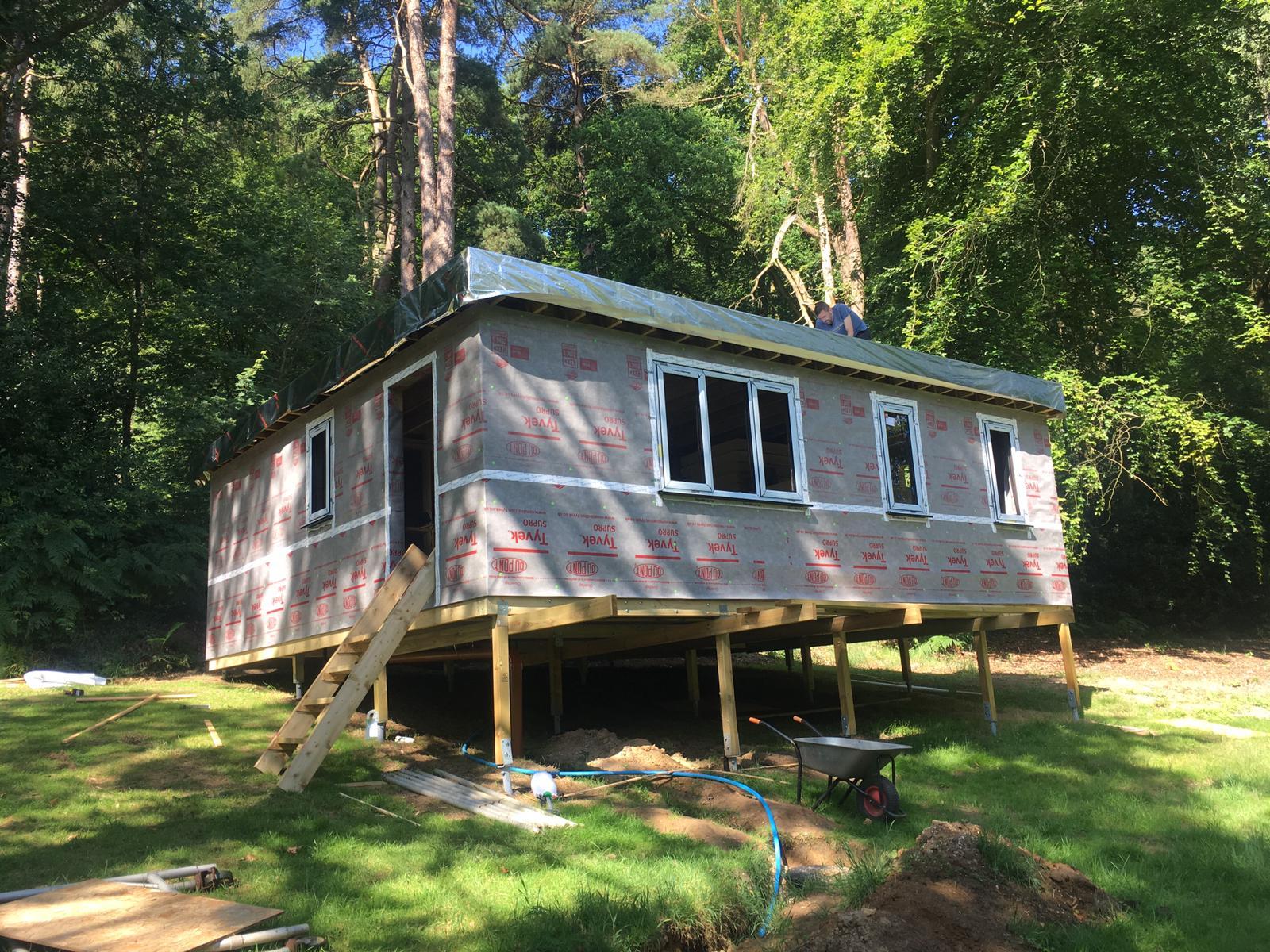
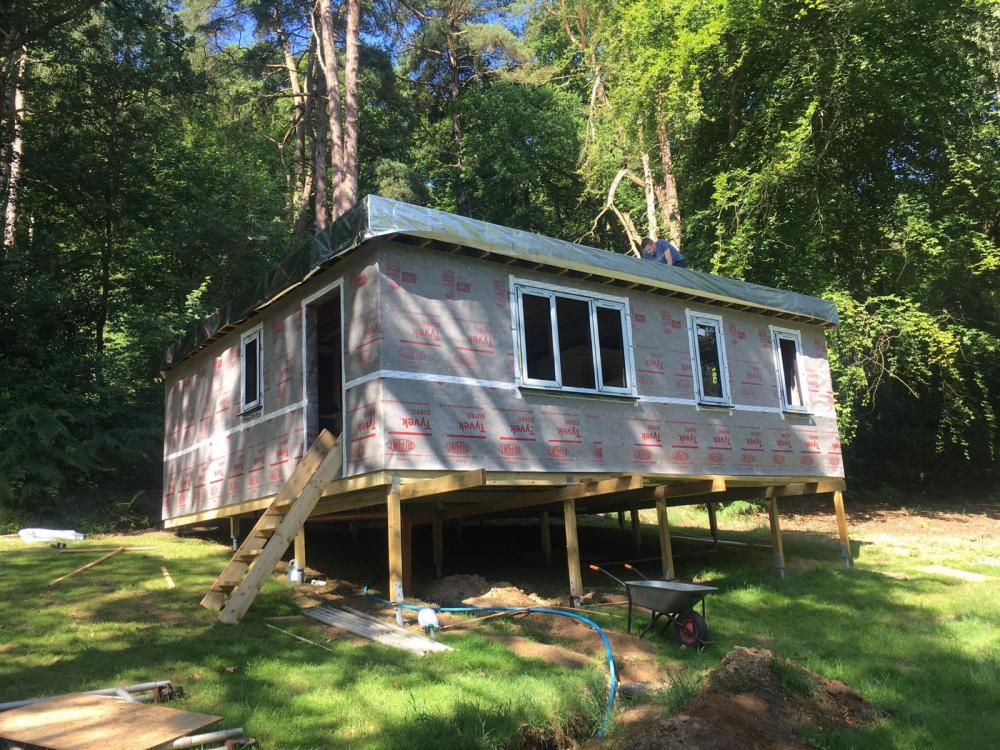
"You could heat it with a candle, mate" was what a visiting roofer told me recently. He thought we'd overdone it by installing insulation properly and (horror of horrors) taping joints. But now I AM thinking about how to heat it (our PD outbuilding) and I'd hoping for some advice/tips/sales pitches/etc. This is what it currently looks like: : It's about 55m2 inside - 3 rooms inc. open-plan workshop, yoga studio and a bathroom. Strictly incidental use as it's a PD building. The building is too small for ASHP (IMO) and doesn't have access to gas. We're looking at ways to heat it with 'leccy. Default idea was to stick some electric rads in. But my Polish plumber has persuaded me to look at Termofol, infrared UFH. He tells me it's very popular in Poland. (https://termofol.co.uk/) Has anyone used this stuff, or anything similar? Any good? Limitations? The other idea, which I'm a bit less keen on, is using wall-mounted infrared panels like those made by Herschel (https://www.herschel-infrared.co.uk/) and others. Has anyone tried these? I'm really open to ideas on this. And if nothing works out, I've always got a candle as a fallback....
-
I think your way is probably superior. Trying to wrap in the VCL is going to be fiddly and I imagine we'd end up with an imperfect seal.
-
Yes
-
In all honesty, no I hadn't. I'd only thought of dealing with the thermal bridging by keeping the studs warm from the outside. Is there much difference between your suggestion above and using insulated plasterboard? Any thoughts on the alternative below? Plaster 5mm Plasterboard 12.5mm VCL 120mm PUR/PIR or similar (in 150mm stud) OSB 11mm Breather membrane EPS 50mm Batten & Counter batten => 50mm cavity softwood cladding 20mm
-
Thanks. @Ed Davies I hadn't considered the permeability of the different types of insulation. We'd thought of rockwool as being a cheaper option than putting polyurethane between the studs. Maybe we should do two layers of kingspan, thicker one between studs and thinner over sheathing to deal with thermal bridging?
-
I'm struggling to get to grips with the various u-value calculators online. They seem to accept differing degrees of inputs. I'm really not sure where I'm at. The timber wall construction we're considering is (In to out) Plaster 5mm Plasterboard 12.5mm VCL 150mm rockwool or similar (in 150mm stud) OSB 11mm Breather membrane 30mm Kingspan or similar (this is flexible) Batten & Counter batten => 50mm cavity softwood cladding 20mm I'm getting u-values from 0.16 to 0.196 using the various calculators (see below) The most worrying thing, is that some calculators claim to show where the dew point is. In one of the calculators (http://www.changeplan.co.uk/u_value_calculator.php), if I enter 150mm of rockwool the calculator tells me the dew point is within that layer of insulation. However if I change the input to 149mm of rockwool (yes, 1mm less) then it's not a problem! So can anyone please help me by telling me what my actual u-value is and whether I genuinely have condensation issue. Calculators: http://www.thermalcalconline.com/u-value-calculator/u-value-opaque/u-value-opaqueExcel.html http://www.vesma.com/tutorial/uvalue01/uvalue01.htm http://www.changeplan.co.uk/u_value_calculator.php
-
By way of update the LPA inspector did his drive by and then wrote to us pretty much saying what @Ferdinandsaid. You'd have thought that they'd know which roads are unclassified without needing to come on site, but hey ho. He did write, that whilst we didn't require PP as the road is unclassified, that was so long as there was no "engineering" involved. He'd adjudged that our entrance repair had not been engineered. Not sure I know what that means, nor whether I care that much. Thanks all for your support and advice. I'm almost looking forward to next time we're reported! As we're currently building a PD outbuilding on a slope, with eaves at lowest point of slope around 4m, I imagine it won't be too long.
-
Please can someone give me a quick explanation of what's the difference between all the different brands and weights of breather membrane. We're putting up a timber, stick-built outbuilding, constructed on screwpiles with a crawl space underneath. I think we need to install a breather membrane underneath the floor joists but not sure what type. Most breather membranes are "certified for roof construction", I can't find many that are specified for timber floors and none that are readily available at the usual merchants/Screwfix/Tool station etc. My floor construction from outside to inside is: Screwpile Groundbeam Breather Membrane Joist 150mm with a) 130mm insulation between supported by battens or b) 150mm supported by breather membrane OSB subfloor Vapour Control Layer Floor finish (prob engineered wood) My questions: What type(s) of breather membrane can I use? Do I need to tape the overlap of the membrane? If so, what type of tape? Is there specific VCL for under floors? Do I need to tape overlaps? What type of tape? Thanks!
-
Thank you ALL for your feedback and advice. This is the first time we've been reported and so we're simultaneously furious and nervous. I suspect that it won't be the last time though.
-
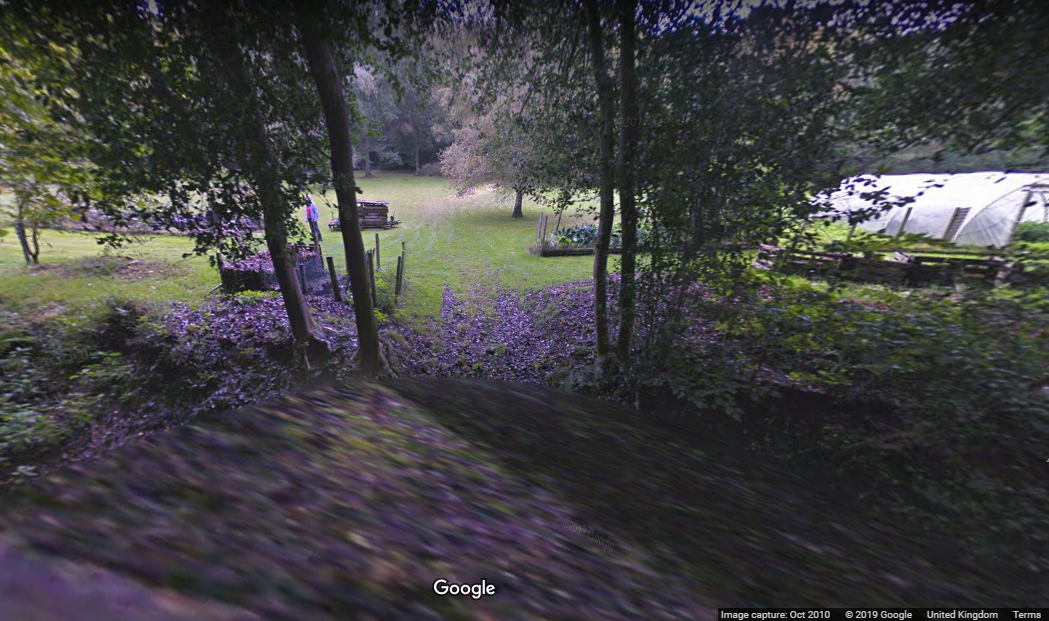
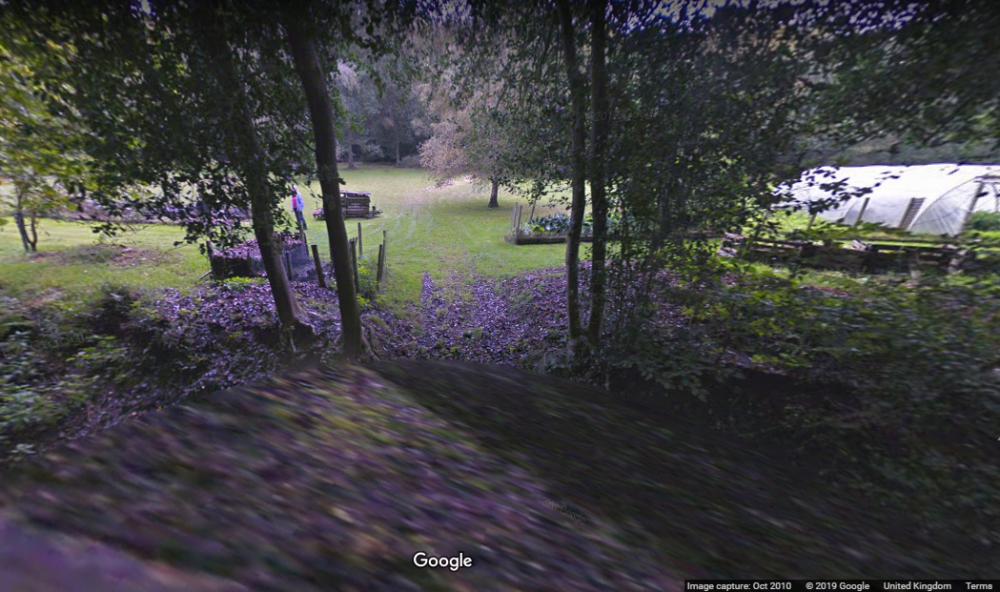
Yes, the streetview from 2010 isn't great but shows (IMO) the entrance. Thanks @PeterStarck and @joe90, sounds like good advice. The LPA have asked me to arrange a site visit. I'd thought of sending them Google streetview and satellite pics and tell them that it's an existing entrance and save themselves the trip. Or do you think I should welcome them to visit? I'm keen not to annoy them, we have our informal pre-app meeting tomorrow for our house replacement application - this couldn't have come at a worse time.
-
Does anyone know whether planning permission is required for making alterations to an existing access? I have a rural house with 2 accesses - the main one which has gates, tarmac etc and a secondary entrance straight into the garden. This secondary entrance had originally been made of crushed hardcore but after years of leaf-fall was a bit muddy and our car would get stuck in winter. So, about a month ago as I had a digger hired, we dug out the mud and put down some fresh hardcore. At the same time we took down a pair of holly trees on one side of the entrance and removed the stumps, widening the access by around a metre. Today I received a letter from the LPA telling me I'm being investigated for a potential breach *gulp* The allegation is that I've created a new access and laid a hard surface. I know that the first part is untrue (but I might have to prove it and who takes pictures of an old dirt track!) and the second part depends on the definition of "hard surface". I understand that usually means non-porous (such as tarmac) so I should be ok with crushed hardcore. Nonetheless it's a worry and I'm conscious that I might just be trying to reassure myself.
-
It's something I've certainly thought of but more in terms of litres/cubic metres for storage. Hadn't considered surface area as the metric. Some it will depend on how you store stuff, and whether you have lots of devices (and if they're built in or freestanding - microwave, boiling water tap etc). For unencumbered work surfaces we like to have minimum of about 4 sq. metres to prep food etc. The general rule of thumb for me is that our tupperware collection expands to fit all available cupboard space
-
It all sounds quite heavy duty to me. Have you considered building using timber frame? You could use helical pile foundations which require no digging and no concrete. If access is an issue you don't even need a digger for these as they can be installed with a hand-held machine.
-
Yes, good idea.