Garald
-
Posts
1113 -
Joined
-
Last visited
Everything posted by Garald
-
Polyurethane is great (lower heat conductivity than BioFib Trio or rockwool), but I've had it used mostly for details - polyurethane sealant and so forth; I will also use it if I have a door padded. I did discuss possible large-scale usage of polyurethane (PIR) with more experienced users in this forum. The impression that I got is that it's not a product loved by firemen (even compared to some products rated F). It may be that my fears were exaggerated; discuss the matter with people with more technical experience and/or with those who have actually insulated their houses using mainly polyurethane. I no longer recall how it compares in terms of cost with other insulation materials. BioFib Trio or Rockwool is what you use if you have at least 15cm to spare (ideally more like 20cm). Recall that the current standard in France (for new construction or a truly succesful renovation) is R=4.
-
PS. If you look at the thermal-camera picture of the stained glass closely, you will see some sort of frame within the wall. That's one of the walls where I have 5cm of BioFib + reflective insulation (which comes with its own insulating backing). As you can see, it works well enough (surprisingly so given @SteamyTea's experiments), but you do see the metal grid there, whereas I don't think I ever spotted it in the thermal-camera pictures of the walls where I have a thick layer of BioFib. Not sure how to interpret that.
-
Well, obviously. Prices (particularly in the Paris area) do not yet reflect DPEs enough, but that ought to gradually change as people realize how much it costs to raise a DPE even by one single grade. The point is that you want to lose as few m^2 as possible for a given insulation performance. Right - similar performance to rock wool, fully "natural" (whether rock wool really poses any sort of danger or not is up for debate - no doubt it's a lot better than fiberglass, and any fibrous material, natural or not, poses *some* risk if not properly sealed - but better safe than sorry), moderate cost. The only downside I can see is its fire rating of F. I guess it's fine behind fireproof plasterboard? Good sound absorber too (so is rockwool), for what that's worth.
-
You should still be able to get CEEs. They'll be in the low thousands for a major renovation, though - not counting 3k for replacing a boiler by a heat-pump, but for that, as I said, the installer must have been there when the boiler was removed.
-
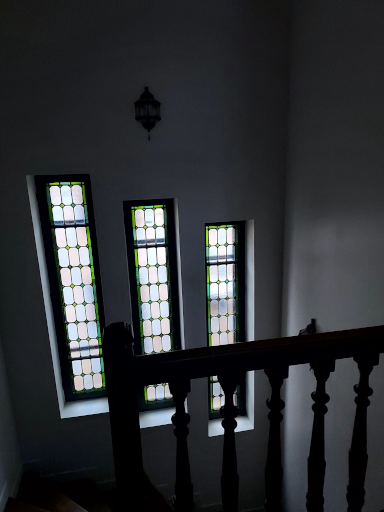
Yes, did that with stained glass. The secondary windows (on the outside) are really not great, though (just a couple of degrees warmer than the outside) - I wasn't keeping tabs on every single detail at that point. Still, it helps. Outside temperature = - 2C. Of course, because of the secondary windows, the stained glass is now less visible from the outside.
-
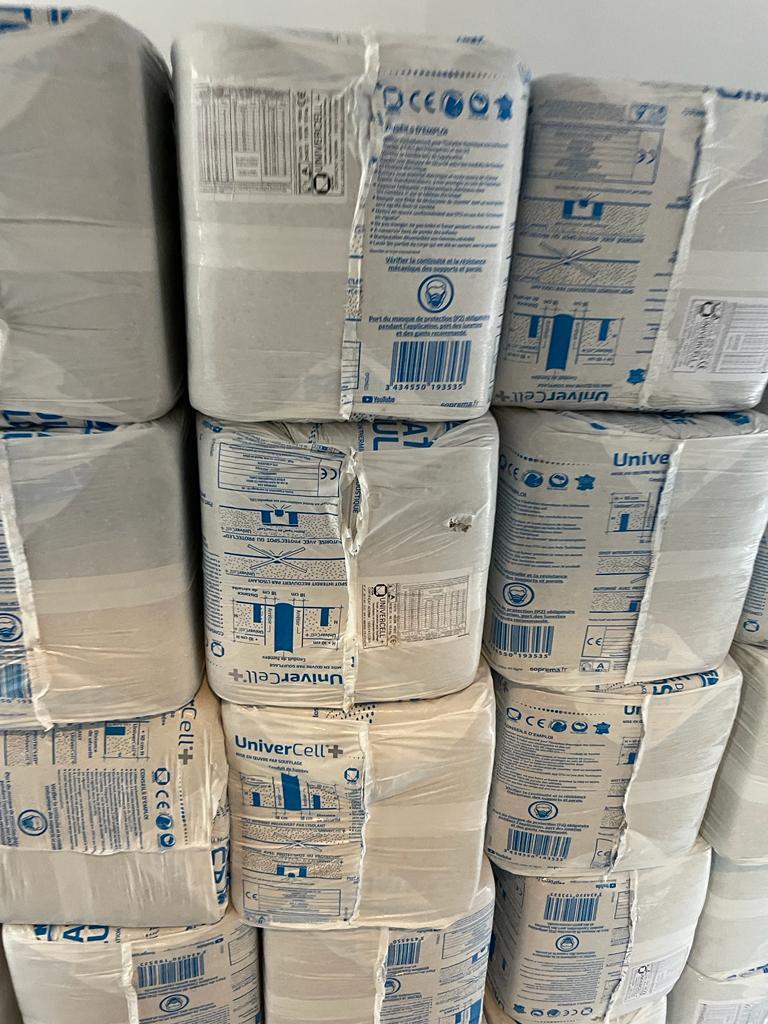
Used BioFib Trio on some walls (seems to be working well; the conductivity is similar to that of rockwool), a thinner layer of BioFib Trio combined with reflective insulation in walls where I had less space to spare (seems to work very decently, considering it's mostly north walls - but, as I said, insulating on the outside would have been a good option) and cellulose insulation in the combles perdues (I'm a bit unhappy (see other threads) - I think it has settled). In the roof, the contractors just opened things up and replaced insulation that had gone bad by new rock wool. I'll do a more thorough job on the roof if we ever raise it. Another thing I would do differently: I would add a thick layer of insulation on the floor of the groundfloor (as opposed to 1-2cm polyurethane, which is what we did). Of course that would mean a Japanese-style entrance, but surely that's a good thing if you don't wear shoes at home. The DPE was F at the start; it is B now.
-
And yes, the contractor/head builder should have RGE certification for you to get any subsidies. Mine got it at the beginning of work because I insisted - it's a symbolic one-week course (partly deontology, I'd imagine) that he needed to take sooner or later at any event.
-
1. In order to get Ma Prime Renov, you need to have been a French taxpayer the previous year (I'm not sure this was intended, but that's how it works out because of how their arcane website is set up). If you weren't, there's an alternative - less generous but still not a completely trivial amount - the Certificats d'Économie d'Énergie (which I should get as soon as the contractor sends me the remaining technical specifications! grrrr). 2. I hope you had the ASHP installer get rid of the old boiler himself? Otherwise the CEEs you can get for the heat-pump will be drastically reduced. 3. Right, my electricity bills were huge when the workmen were using machines - and space-heaters to heat themselves (the heat-pump went into operation fairly late; early in the renovation, I had the "help" of a supposed professional about whom the less said, the better - I had to take charge at that point, with the help of the good people of this forum). 4. Of course insulating is worthwhile. I mean, do your own budgeting, but, unlike a heat-pump, it should last for many decades, if properly done. Insulating walls is particularly cost-effective - what you have to worry about there is not so much the cost of insulation or even the cost of labor, but rather the fact that losing m^2 means losing property value (though obviously the extent depends on the area). If I had to do things again, I would seriously consider insulating on the outside on the courtyard side. (Didn't happen because of what I mentioned in point 3.) 5. New windows are expensive, but getting them on the street-side was a no-brainer, since I am rather sensitive to noise. On the courtyard side, I mostly left the old windows, which are double-glazing and less than 10 years old. Their performance seems to be very reasonable. 6. Take advantage of cold waves to measure current performance. Get a thermal camera now! Less than 200eur on Amazon. Hunt for defects in the insulation - thermal bridges and so forth.
-
Fun and joy with a thermal camera, part I: Attic
Garald replied to Garald's topic in Heat Insulation
Well, for consistency (since I decided not to use rockwool either to insulate walls or the "combles perdues" we are talking about) I would have to push in strips of BioFib Trio, which is what I've used in the walls. I don't think I have nearly enough - I guess I could order more, though pushing enough insulation through half-inch holes sounds like a task for Sysyphus. -
Fun and joy with a thermal camera, part I: Attic
Garald replied to Garald's topic in Heat Insulation
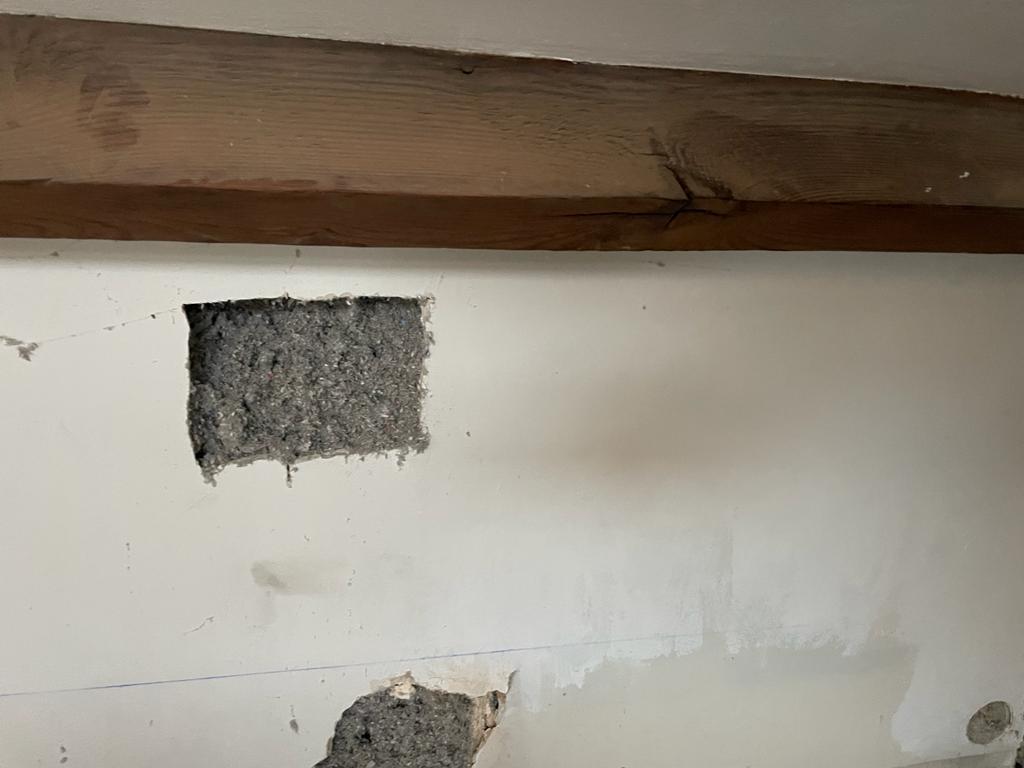
Thanks. So, wait, I should take it for granted that the insulation has slumped enough that it is ineffective (because non-existent) at the top, and so I should carve out a hole in the middle? At any rate, I think the solution is clear: 1. talk to contractor, be shouted at by contractor 2. Order a sharp tool, an endoscope, and one of those Italian cork-lined panels (3cm cork, 1.5cm plasterboard, I think?) 3. Bore hole, take pictures, show to contractor who most likely will do nothing about it (though he did come back and fix a gap under a beam once I insisted enough times that it had to exist - wasps were coming through it). 4. Wish I had a tool to blow more cellulose in 5. Pay a handyman to cut the cork-lined panel to just the right size and paste it on the wall. Or become that handyman (doubtful). 6. Either paint the cork-lined panel with exactly the same shade of Polish clone of Farrow&Ball that was used for the low walls, or cover it with that nice William Morris wallpaper that my girlfriend detests. Sounds good? -
My understanding is that reflective insulation works against heat loss by radiation - and so it makes sense to use it in a setup where that has become the dominant means of heat loss, due to measures taken against other means. Thus the air layer. Of course experiment is (or rather: experiments are) the ultimate judge. Of course reflective insulation + stopping convection are about the only things that one can do effectively with a thin layer of anything, so there's that.
-
I don't think that was my question, but my proposal would be: do a comparison of a) a 20mm air gap (change to 24mm here and in what follows if you prefer) b) a 20mm air gap + the same reflective material that is used in commercial-grade reflective insulation (would have to detach it from the rest of the insulation) c) a 20mm air gap + a space blanket (cheap and likely to be used in DIY projects; at least I would be more likely to use that than aluminum foil) d) 20mm of cork (again, good for DIY, since risks would seem to be negligible, no?) e) 20mm of rock wool
-
Fun and joy with a thermal camera, part I: Attic
Garald replied to Garald's topic in Heat Insulation
Sorry, what kind of device is this? I can't find any information about it (because of astrology). (Spelling?) -
Sure. Yet the optimal width seems to be about 2cm (somewhat confusingly, since that's the sort of gap that is commonly used in double glazing optimized for acoustics): https://www.sciencedirect.com/science/article/pii/S1876610218307963#:~:text=The optimal thickness of the,depending on the climate condition. At any rate, that doesn't mean that 2cm of cork wouldn't be better than 2cm of circulating air. I'd just like to see an experiment where the two are compared.
-
Nice. Maybe do the same with 2cm-thick cork, comparing it to a 2cm air layer?
-
Fun and joy with a thermal camera, part I: Attic
Garald replied to Garald's topic in Heat Insulation
And how do I cover it up? In the way I said? -
Fun and joy with a thermal camera, part I: Attic
Garald replied to Garald's topic in Heat Insulation
Hm, it's a bit of a pity, since everything is painted thrice over already. OTOH, if I am going to get some of that Italian cork+plasterboard anyhow, I might as well. But how do I cut a hole in the plasterboard? (I could try to locate the hole that appears in the pictures, but it seems to have been hidden carefully.) -
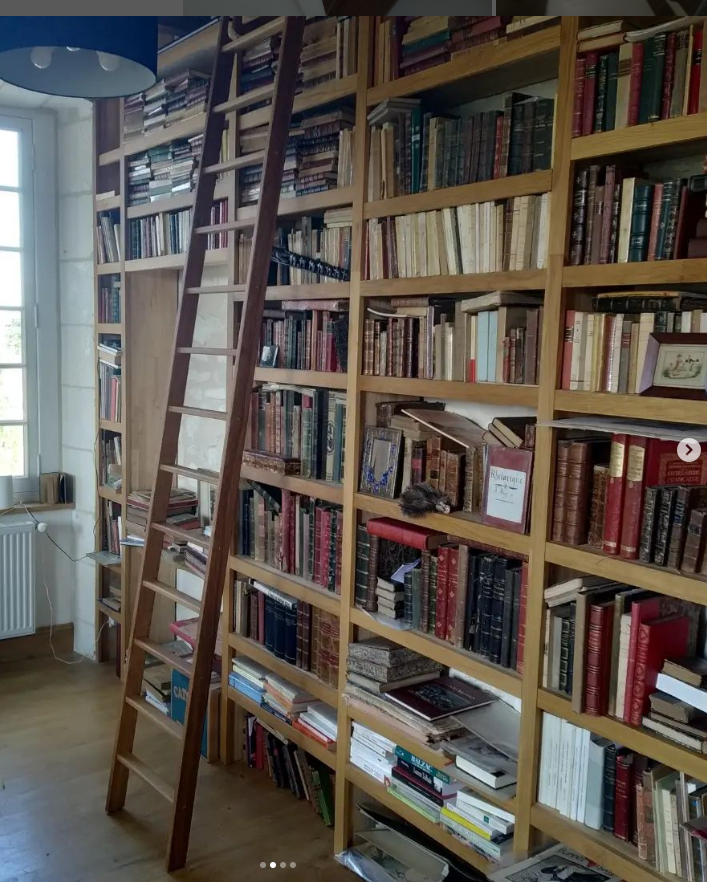
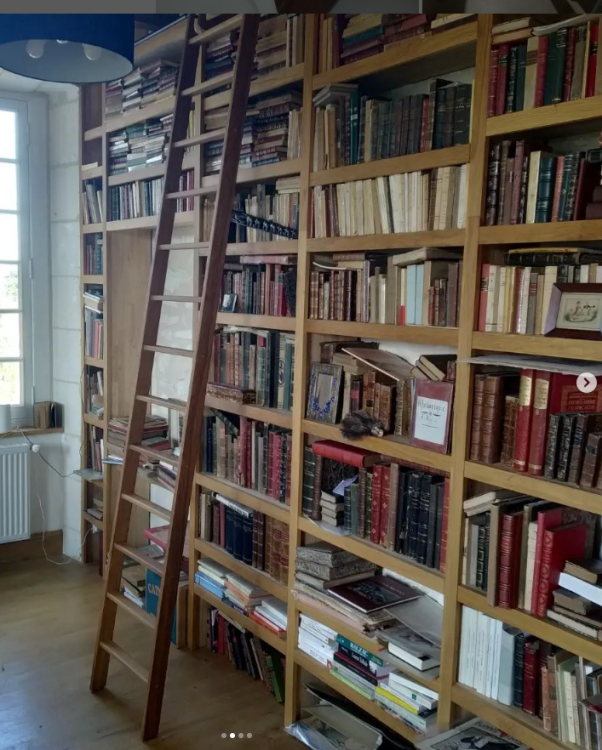
You may remember the beginning of my bookcase adventure. After a bit of searching, I found a carpenter whose fees seem a bit more reasonable and whose work I think I like more (to judge from pictures: https://www.instagram.com/pmlagencement/ ; the one I asked before is https://www.latelierdurenard.com/). The new carpenter is willing to work in pine - more specifically in "triplis pin sylvestre" with a pine plywood backing. I take "pin sylvestre" is Pinus sylvestris, aka Scots pine, European red pine, etc. Is this the same pine that IKEA uses, or is it something better? Is it a good material for built-ins for which I will pay a fair bit of money? Needless to say, more than 70% of the cost is labor, and so it would make sense to ask for quotes in other woods. One possibility the carpenter has mentioned is making the body out of rubberwood and the front part out of oak, Here is an example where he did exactly that: We are talking about a non-trivial investment (more than 5m worth of bookcase, 2.7m high), so I'd like to make the right choice.
-
Fun and joy with a thermal camera, part I: Attic
Garald replied to Garald's topic in Heat Insulation
738cea63-0534-47c5-821a-6ae3af62801d.mp4 -
Fun and joy with a thermal camera, part I: Attic
Garald replied to Garald's topic in Heat Insulation
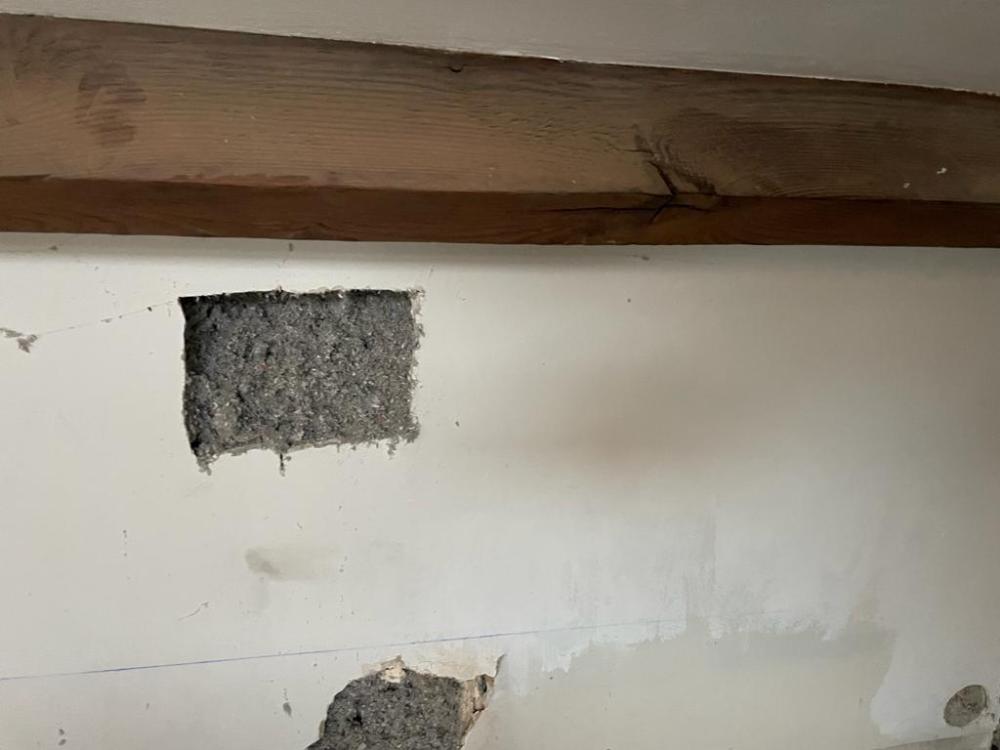
I can ask the contractor the next time I manage to get hold on him. Here are some pictures and a video he sent me at the time of the build. One moment...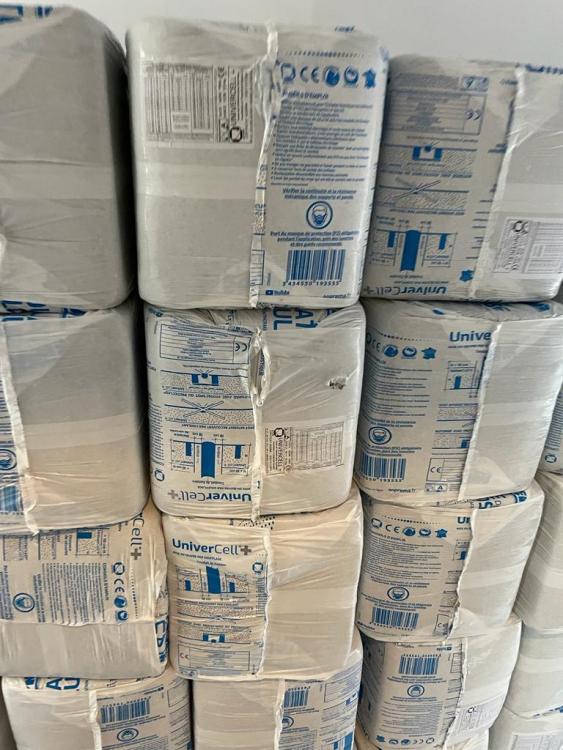
-
Thinking aloud on practical measures to take in an attic
Garald replied to Garald's topic in Heat Insulation
Interesting - what kind of foam exactly? -
Fun and joy with a thermal camera, part I: Attic
Garald replied to Garald's topic in Heat Insulation
Right - I agree. I'll let him now anyhow. I'll be happy enough if he finally sends me some missing documents that I need in order to get some promised state subsidies for improving energy efficiency. (He's actually not shy about doing extra physical work, but getting paperwork from him is like pulling teeth; we all have our strengths and weakenesses....) -
[Background: a major renovation is drawing to a close - and it finally got cold (-2 C), so I just got myself a thermal camera.] I've already posted some of the pictures below. Now let me think aloud about what they mean and what practical measures may be taken. Please correct me if I am misinterpreting something or if I am being silly. 1. Unsurprisingly, the coldest bits are mainly the windows (especially the joints between the windowpanes and the frames). The only thing I can think of to improve the situation is to get thermal-insulation shades from Velux itself. I've already got *outside* shades, which are very helpful in summer. Inside shades (which we'd presumably be using at night, as they block light; will we actually remember to draw them?) would increase insulation by up to 25%, according to the manufacturer, and that isn't that much. They work mainly by reflective insulation (the only way in which thin material can have any significant effect, really). They aren't cheap. https://www.veluxshop.fr/.../stor.../stores-plisses-isolants See also: https://avosdim.com/store-isolant-pour-velux.html If I were some sort of carpenter, I would consider creating some sort of sliding wooden shutters (a bit like barn doors in the ceiling). One can always dream. 2. Parts of the low walls, in particular near corners, are fairly cold (between 11 and 14C when the room is at around 18C and the outside temperature is -2 C or so). Now, I've been lining them with solid-wood bookcases that fit snuggly, and that actually seems effective (the bookcases show up as warm in the thermal-camera pictures, and it would make sense that having cellulose, wood and a thin layer of air in front of a wall would improve its insulation). What to do in left-over spaces? Incidentally, this is a bit disappointing, as the spaces behind the low walls are supposed to be full of cellulose insulation. Perhaps the cellulose has settled? (Note how some of the low walls seem to be a bit colder towards the top.) Not sure how one could test that non-destructively. It is also possible that there isn't a grave insulation defect here, and that the low walls are cold-ish simply because they get no direct sunlight. OTOH, the bookcases are not cold. I can see two possibilities: (a) made-to-measure bookcases. Downside: generally expensive, and would not fit well with the kit furniture I've got. (The made-to-measure make-them-yourself bookcases from Germany I got recently are not so expensive, but they lack backs.) (b) cork. It's not cheap, but apparently one can get cork panels of non-trivial thickness for less than a fortune. 4cm of cork should add 1 to the R-value, and I imagine 3cm of cork + 13mm should do not much worse: https://www.amazon.fr/Italfrom.../dp/B08MTD16G6/... My understanding is that cork is non-toxic and not much of a fire hazard (well, fire class E, but books are presumably worse). Installing panels of this type (after cutting them to the right size and so as to allow for the use of electrical sockets) sounds like a reasonable DIY project (meaning I would possibly pay someone to help me). If I don't like the white of the plaster cover, I can always put wallpaper on it. Just an idea. (Of course there's also decorative cork that can be left uncovered, but that's more expensive, at least if any significant thickness is wished for.) 3. There are some cold zones in ceiling-wall edges and the like. Not sure what I can do there. I might be tempted to put a couple of tapestries on the ceiling, but that may count as a fire hazard (especially when it comes to the tiny staircase leading to the attic).
-
Fun and joy with a thermal camera, part I: Attic
Garald replied to Garald's topic in Heat Insulation
I've just finished paying, unfortunately. He has fixed his own (minor) mistakes for free (with some grumbling). He's eager to put this proyect behind him, however, as it has run way overtime (mainly because of the incompetence of someone who is neither him or me). -
Fun and joy with a thermal camera, part I: Attic
Garald replied to Garald's topic in Heat Insulation
Of course cork panels will help regardless of whether the insulation is disappointing - adding +1 to the R is hardly a bad idea - but they are not cheap (just a little less expensive than I had feared).