


JamesPa
-
Posts
1899 -
Joined
-
Last visited
-
Days Won
2
Everything posted by JamesPa
-
Not when I put the ashp in. It's a 1930s house with two modest 1980s extensions. About 80pc of the otherwise solid walls have iwi. The upvc double glazed windows are from the 1980s, glass replaced with low e argon filled, frames original. There are in addition three crittal metal framed windows with perspex sheets to give a bit of secondary glazing. There is no underfloor insulation anywhere, but the loft has 30cm. The insulation upgrades have been done piecemeal over 20 years as rooms have been redecorated. The ashp install cost 6k after grant replacing an aging boiler which was nearing end of life. The dhw system, previously indirect with very noisy pumps, is revolutionised and the heating much more comfortable. Running cost 20pc less for greater comfort. It is definitely an upgrade. Does that answer your question?
-
To be clear I'm referring to a 4 port buffer tank, or indeed a 4 port llh or phe in a domestic situation other than a mansion. In principle they aren't an issue. In practice they are almost invariably, it seems, badly specified and/or badly controlled and so cause mixing between flow and return. This means you have to increase the flow temperature for any given emitter temperature, reducing COP significantly. In extreme cases the mismatch in pump speeds either side can deprive the heating system of energy and compromise defrost. They are mostly installed principally to protect installers from call outs, not for any legitimate system reason. Finally they make fault diagnosis more difficult and mask issues that should be corrected. Unfortunately many installers still use them but interestingly will not defend their position when asked to on the Renewableheating hub podcasts about buffers. A 2 port buffer tank, also called a volumiser, will still reduce cycling and suffers from none of the above problems.
-
Im not sure what you are saying. My house is 1930 originally solid brick. About 80% of the walls do now have typically 50mm of insulation. The floors are uninsulated, the loft has 300mm. Double glazing is from the 80s with the glass only replaced with low e argon filled. Certainly not a passiv haus, definitely not airtight, and no MVHR. My ASHP is 20% cheaper to run than gas because, I think, it has no buffer tank, is right sized, I operate it open loop on weather compensation without external controls. In other words its kept simple as the designers of the unit intended. All I am saying is that I don't see any good reason why almost all retrofits cant be like this as it involves nothing clever at all.
-
I completely agree with that sentiment. Selling them as cost saving is mis selling because its dependent on electricity tarifs etc. They should be sold IMHO as approximately cost neutral with better comfort and environmental credentials, and should achieve cost neutral or better - ie its a genuine heating upgrade. Its still a better deal than a new kitchen! Currently the impression many seem to have is that a heat pump will cost more to run and give lower levels of comfort, which should never be true (but, sadly it appears, sometimes is true). I do take the point that DHW may be significant, but even this can achieve a good COP if the heat pump progressively ramps up its flow temperature (which mine certainly does) rather than whacking it straight up to 55+. Very low loss houses, where the DHW might actually dominate the heating, are obviously a special case, but a negligible proportion of our housing stock.
-
Why not as a matter of interest. Quoted scops at a FT of 45 or below are well above this figure and 45 is surely generally achievable with radiators which is the typical retrofit scenario. Is it just the fact that too many installs are rubbish (oversized heat pumps, buffer tanks and external controls) or something more fundamental. Most boilers that are being replaced will not be running at optimum anyway, because of previous poor commissioning, so there is some leeway there from the get go. Seriously, it seems to me that the industry has talked itself into predicting and accepting poor performance because of its past mistakes made in the early days (when few people understood the practical application of the technology). Instead it should, it seems to me, recognise past mistakes and move forward. Shame on the industry if that is the case. My 7kW retrofit Vaillant achieves a SCOP of 4 and a cost saving relative to my gas boiler of 20%. It runs at 42C @ -2 on radiators. I have done almost no tweaking other than to get the WC curve optimised, neither did the installer, and there is absolutely nothing clever about the system design. Why cant all systems be like this? With the new Mitsubishi 2 compressor (2+6kW) heat pump you dont even have to get the system sizing particularly accurate!
-
It strikes me that (peculiarly): Designed properly (which boils down to keeping the system simple and sizing the heat pump reasonably correctly) installing a heat pump, even as a retrofit, will both reduce running costs and increase comfort, in return for some capital investment. The capital investment is, say, £3-7K for the average house after the grant, or much less if you are anyway doing some refurb or anyway replacing your boiler. The running cost and comfort improvements are in addition to environmental benefits. Many (too many?) people will quite happily spend £10K-20K on a new kitchen or new bathroom, which neither saves money nor increases utility. Yet the very same people will ask what financial gain they get from installing a heat pump. Politically one can, I accept, dispute a public subsidy, but we accept almost without question public subsidies (or tax breaks, which are the same) for airport infrastructure and fossil fuel exploration! Go figure?
-
It does feel like an over-reaction IMHO, but at the same time its probably a controversy that the BBC doesn't need, given that there are elements of the political class who appear to be very much out to get it (the BBC), and who have also either recently, or less recently, come out against doing anything meaningful in response to climate change. The underlying issue is, I suspect, this because, like it or not, heat pumps are associated with net zero which makes them political by inference. The money programme is broadcast by the BBC and is thus subject to the requirements of neutrality to which the BBC is subject and to the BBCs editorial control, the podcast in question was being done independently of the BBC by a prominent employee in 'his own time', so is not really comparable. The BBC, like any other organisation, probably wants to choose its battles!
-
That's not actually correct. The noise criterion for the heat pump was always 37dBA, but they (pointlessly) added on a nominal background figure and added together it was 42dBA. They have now deleted the nominal background from the calculation. As far as the heat pump is concerned nothing changes. What has changed is the definition of 'substantial barrier' (there now is one) and they have added a calculation for two heat pumps.
-
Cold feed feeds heat exchanger the other side of which is fed by the heat pump (thus heating the cold feed - 6kW). Now heated cold feed passes through willis heater (another 3kW) and leads to shower and other outlets. Or substitute for cold feed the potable water circulated through DHW tank/PHE/Willis during reheat, thus loading the DHW tank with both an external plate heat exchanger and an external electric element - which can then be locally prevented from sending water hotter than say 90 degrees to the the tank (circumventing the need for D1/D2 vents provided that the industry is provided to think outside the box and follow the building regulations rather than avoiding responsibility by sticking slavishly to the 'guidance'). Cheaper and in many cases more flexible in terms of configuration options than buying a 'heat pump cylinder'. Im not saying this replaces 'heat pump UVCs' altogether, but surely its a sensible additional option particularly for retrofits, particularly if suitably packaged.
-
I have for some while thought that the combination of a Wiillis heater and a PHE could be a very powerful combo in heat pump retrofits. A 3kW Willis heater and 6kW heat pump together will do 9kW which is much as top end electric showers if used for instantaneous DHW heating (no storage). Alternatively simply plumb the two to any normal existing cylinder, add a circulator pump, and you have enough heat exchange capability for the heat pump, but without having to fit a new cylinder. Better still, given that the willis heater is not physically in the tank, organise a couple of pressure relief valves as part of the package, and you could make a good argument to do away with the vent pipe arrangement which adds half a day to a typical retrofit. Better still the PHE/willis heater can be sited wherever its convenient to do so, it doesnt have to be near the cylinder. There is a packaged solution in here somewhere which has the potential to make a significant saving in time, money and disruption for heat pump retrofits. However all this requires thinking out of the box and therefore is something that's unlikely to happen.
-
ASHP - how noisy are they in reality
JamesPa replied to Walshie's topic in Air Source Heat Pumps (ASHP)
There is a description here -
ASHP - how noisy are they in reality
JamesPa replied to Walshie's topic in Air Source Heat Pumps (ASHP)
I never much liked the second law, it should be repealed in my view. Perhaps The Donald can organise this for us. -
Indeed. Thats sort of the idea of the mini-store. Once you start drawing off water the heat pump switches to reheating the stored water thus maintaining flow for longer. In principle you could do this with a UVC as well (perhaps some do), provided the design was optimised for stratification during reheat (perhaps they are!). The 'problem' is the (apparently) common 'requirement' for 5 off 10 minute showers at 20l/s in quick succession. Seems to me like a very first world problem! Perhaps we should just get over it!
-
Pretty much. A few months ago I wondered if its main advantage was the absence of the need for a vent with all that comes with that malarkey. That said most (but not all) actual applications where a tank this small was the only practical option would probably be in a location where running a vent wasn't too difficult. Excepting the cases where running a vent is difficult, the question becomes - if you have only enough space for something this small (and not enough money for/dont trust a sunamp), whats the best solution - a 80l (or smaller) UVC or a mini store? Thats a very specific problem, which likely applies to a fair number of smaller houses which currently have a combi. In either case you may be forced to reheat at times of day other than cheap periods (depending on your pattern of use). I have a feeling that a very well designed small UVC that is well stratified so you can reheat whilst running water off and maintain stratification may well work out better, but Im not absolutely sure, it may depend on run-off rate and is there such a beast? The mini-store is a solution (if its a solution to anything) to the specific problem of insufficient space for a 150l+UVC. But, in the grand scheme of things, that represents a large sector of the housing stock so the question 'is it a valid solution given these constraints' (and if not whats the alternative given the constraints) is relevant. Horses for courses maybe?
-
That's a bit of a generalisation, and note that the mini store has only one heat exchanger between heat pump and dhw not two like a 'conventional' thermal store plus it's designed for the purpose. I'm not trying to advocate it just saying I'm not sure you can dismiss it quite so simply. I think it may actually depend on use profile, bearing in mind that the alternative (in the situations of interest) is a very small uvc
-
The general rule as Im sure you know is that COP goes up as flow temperature goes down. So it comes to first order down to the question - whats the flow temperature? This comparisons will depend on which variables you keep constant. Both a cylinder and the mini store have one heat exchanger (coil). In the case of a cylinder heating water circulates through the coil, in the case of a mini store its the DHW (and the mini store itself is filled with heating water). So in principle the difference between DHW temp and flow temp is about the same, so COP could be about the same. However for any given cylinder volume and stored water temperature the yield (of DHW) from the mini store is different to the yield from a cylinder. At low draw off rates it can be more (according to the Newark specs), at higher draw off rates it can be less. If you are in the latter category and as a result have to increase the stored water temperature to get the yield you require, COP will suffer. I think the only way to work this out is to understand your demand profile and then plug in the numbers to estimate the temperature of the stored water required and hence the flow temperature required. This should probably be done anyway to be certain that the mini store/small cylinder is big enough, or whether you need to consider additional measures like water saving shower heads, waste heat recovery, or just not showering for 10 mins at 20l/min (if thats what you do - Im not suggesting it is, but apparently some people find this necessary!).
-
ASHP - how noisy are they in reality
JamesPa replied to Walshie's topic in Air Source Heat Pumps (ASHP)
From discussions on another forum different ASHPs do different things. eg Vaillant has a PWM pump which it adjusts down at installation time to match its max output @ approx DT5, then leaves constant. There is also the possibility to manually adjust in the installer menu. Samsung, if you fit a PWM pump, apparently adjusts to constant DT depending on load, but with a floor rate. Daikin does something different still. Mitsubishi is constant speed I am told, although it does support a pwm pump so maybe same as Vaillant. The question, to which I have yet to find a satisfactory answer, is whats best for efficiency and/or is that itself heat pump dependent. Pure Carnot thermodynamics would argue that low emitter DT = higher average emitter temperature for any given flow temperature = better COP, so make DT as low as possible (consistent with noise, pipe erosion etc). The folks on openenergymonitor trade this equation off against water pump consumption to get an 'optimum', which is fair enough. Some others argue that there are compressor related factors which aren't just the Caront equation, however they arent specific and until they are the argument has only limited credibility. If anyone has a 'chapter and verse' on this with the physical principles on which the argument is based id be interested! -
ASHP - how noisy are they in reality
JamesPa replied to Walshie's topic in Air Source Heat Pumps (ASHP)
Vaillant 7kW here, double glazed living room window just 30cm from the unit and adjacent utility room window immediately behind the unit. Most of the time its totally silent indoors and whisper quiet outdoors, inaudible from >3-4m away. When it working really hard, which it does for typically 5-10 minutes after a defrost at - temperatures and very occasionally for longer periods up to say 30mins, its just audible indoors, but still quieter than the fridge in the same room and quieter than the gas flue was in the bathroom to which the flue was adjacent. Outdoors in this relatively rare situation there is a buzz which seems to appear at compressor modulation >80%. I've turned on noise reduction mode at night out of respect for the neighbours, however I only did this about a month in and after some quite severe defrosts, and they now tell me that they didn't even know I had the heat pump! Their bedroom window is about 6m away, albeit screened by the building. No noise from pipework, which is odd because there was pipework noise with the gas boiler when it was heating DHW. Overall, for me. no more of a problem than a gas boiler. -
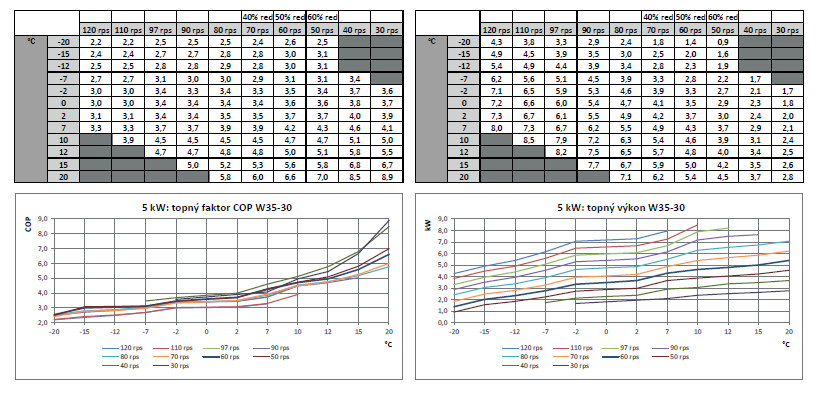
@berkshireselfbuild If the heat loss calculation is about right then the 5kW Vaillant is a pretty much perfect fit. It claims 6.5kW at -3/35C (as you have UFH I presume you will be operating at 35 or less), but note these figures may not include defrost.. Its a nice unit with good and very capable controls - better than many). As your installer says there is no point in going for the 3kW model its just the 5kW one software limited at the top end but identical at the bottom end. Your installer sounds like they may be a goodun! As @Johnmo says keep it simple 3 port diverter valve, UFH/radiators. Minimal zones ideally one, no buffer/LLH/PHE separating heat pump from emitters (2 port volumiser OK - but with the house area you have even that probably isn't necessary - but no harm if it is)
-
There seem to be lots of people who still believe that weather compensation is a third class control mechanism specific to heat pumps solely to overcome their limitations, and that micro zoning in both time and space is the one true and ultimate control system.😒 Perhaps the installer is in this deluded camp?
-
ASHP built-in pump control method
JamesPa replied to siletto's topic in Air Source Heat Pumps (ASHP)
Not sure you would want to do that, two different flow temperatures (heating or cooling) means you have to operate at the least efficient of the two (the colder for cooling, the warmer for heating) and mix down/up which sacrifices cop/eer. I don't know how effective fancoils are at 16-18 TBH, hopefully someone will. I don't get to find out until summer when I will try it on mine! I can't see why they wouldn't be pretty good, after all you are forcing air over the fins pretty quickly. -
Assuming lg support the function you could use the wiser controls to set the demand for heat on the heat pump, then set an appropriate bivalent point on the heat pump controller and use that to control the third party boiler. Obviously I can't tell if that's what your installer did. Whether that is wiser (sorry couldn't resist it) than just optimising the system for the heat pump is another matter. I have a suspicion that optimising the controls for the heat pump and selecting an electric tariff will work out about the same or cheaper, assuming you have a reasonably sensible heat pump set up. If there is a difference it's likely to be small and the risk is that by being 'clever' you degrade the heat pump performance and thus end up costing more.
-
Doesn't that depend on the design objective eg: to run at minimum cost (if so what electricity tarrif) because the heat pump alone isnt enough even at the design temperature because the heat pump alone isnt enough at some extreme temperature sub design temperature to run at minimum carbon emissions something else or some combination I cant see how you can design a control strategy until you know what you are trying to achieve and why the system is so complex (presumably one and the same thing - the system is complex because you are trying to achieve something complex)? Also whats the objective of having wiser - is it micro zoning or just dealing with extreme events like solar gain?
-
ASHP built-in pump control method
JamesPa replied to siletto's topic in Air Source Heat Pumps (ASHP)
Not sure what the problem is. As I understand it you want to combine (for heating) fancoils and UFH. Both will run at a low temperature so thats OK No performance crippling mixing or buffer needed, just some valves so you can balance (not that you will need a lot of balancing if the fancoils have built in thermostats which modulate the fan - they will look after themselves!). One water pump (the one in the heat pump) only unless house very large. For cooling you want to run both fancoils and possibly UFH at at 7C - the problem is you will get condensation on all exposed pipework and the fancoils. The fancoils probably have condensate drains which will need to be connected up, you may have to insulate and seal the exposed pipework. Alternatively just run above the dewpoint for light cooling - some heat pump controllers handle this natively. Still cant see why you need a buffer. What function is it that you think is needed and that only a buffer can perform (I cant see one personally). The only problem comes if you want to heat and cool at the same time. You cant. -
Like it. No system separation for the heat pump, only for the boiler, max efficiency. Why cant installers think like this? (rhetorical question) is the boiler used to reduce cost or because the heat pump does not have sufficient capacity?

