


low_and_there
-
Posts
81 -
Joined
-
Last visited
Everything posted by low_and_there
-
After an earlier agreement to build on to the party wall that our neighbour built 5 years ago (before we bought the house), things have gone sour and we've decided to build a standalone wall on our side to avoid the Party Wall Act (PWA) process entirely. Looking for opinions/experience/ideas on how to weatherproof the exterior of the wall we'll build when the gap left will be very small. I know that it is not good practice to leave a gap too small to maintain but I'm afraid we will be doing just that because it's a narrow mid terrace - 4.6m wide. I am looking at leaving around a 50mm gap. Obviously I don't want to create problems for the future so keen to understand just what those problems might be and how we might mitigate them - for example, to stop debris falling in, presumably we can use some mesh; to stop water pooling, we can ensure water is directed away and if it does collect there, we can perhaps have some kind of tilted fillet at the base to ensure water is directed away can be directed away. This whole approach was suggested by Building Control, who have indicated that they'd be happy with Raft Foundations instead of traditional trench ones (meaning we don't trigger the PWA), and Fireboard (9mm Magply) on the external face of a Timber Frame structure. As such, what I'm thinking is that we construct the external wall lying down, with the Magply board attached, and then lift it into position. Constructive suggestions on alternatives or ideas on what issues we may run into would be appreciated. (And yes, we have really really tried to resolve the Party Wall issue with the neighbour but it has reached an impasse.)
-
Redoing our rear sloping rear addition pitched roof and on stripping have realised that the timbers - including the wall plates - aren't sound enough to reuse, so now have the opportunity to rethink the insulation a bit. I had been planning on PIR between and above the rafters (200mm total - aiming for 0.12u (in line with the Mannok design referenced in several places on this forum) and felt that was better anyway than between and below rafters - given that the rafters essentially become internal to the thermal envelope - but wanted to sanity check if I'm missing something? Is there any obvious better approach - above+between or between+below? We could move the Rafters 100mm higher and go with between and under instead. I have done a warm flat roof already and understand the debate there about cold vs hybrid vs warm but with pitched roofs it seems to be a different kettle of fish. In case relevant, the roof is pitched to meet a firewall parapet rather than a ridge, and I'll be insulating the wall internally (it's a party wall to a cold loft at the top). Related question - my builder has said he always leaves a 25mm cavity on the inside of the PIR before the PB layer to avoid condensation there. I'm placing a AT/VL in front of the PIR so had thought no need. No need for a service void on this roof. Also - have considered using mineral wool rolls instead of PIR between studs as I'm aware it's hard to get a good fit - but can't find 0.032 u value rolls anywhere online (excepting in vast quantities). Thanks
-
This box ply method sounds interesting - we're having our windows fitted a couple of months after our timber (dormer) frame is put in - do you have any further detail on this approach?
-
I am grateful for the time you've taken to respond but it seems like maybe I didn't entirely convey my question very well - I am not suggesting retaining the strings. I am saying that I would like to change the strings. I am aware of how most staircases are constructed, but thank you for your explanation about the wood triangles.
-
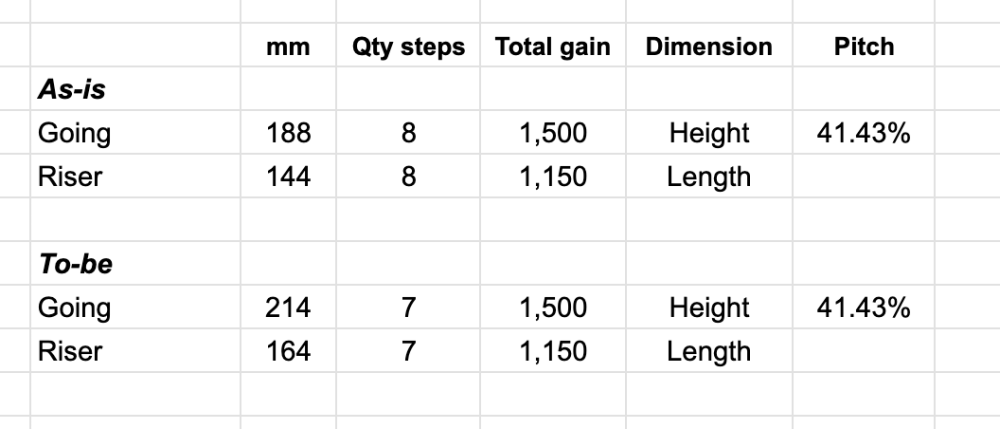
No, not so - to illustrate what I mean I've pasted a screengrab from a spreadsheet with some calcs in.
-
hi @Big Jimbo yes they are cut strings - planning to replace like-for-like. No issue with head height. Thanks for your warnings - I don't think I suggested that I thought this was a small job. To your comment: It's not strictly the case - if you change the number of treads and modify the going and the rise then you can maintain the angle, which is what I outlined - hence I can retain the handrail because that is directly related to the angle. My question was about the process of installing and having never done that before, I was wondering if anyone has any advice on that front.
-
Hello. Part-way through a whole house renovation and extension and I've been pondering on what to do with a staircase we've got and wonder if BH folks may have some thoughts on whether it's possible to change the strings, treads and risers but retain the newels and handrail. One of the staircases has a perfectly reasonable pitch of around 40 degrees but for some reason when it was built in around 1905 they built it with 8 steps with extremely minimal goings so it is very uncomfortable to walk up and down and since we're doing so much to the place, we thought we'd sort this out too. Initially I assumed that we'd need to increase the overall span of the staircase to achieve this (it's currently 1500mm in length, and about 1490 in height gain from FFL to FFL) but it turns out we can keep the same shape and just change the number of steps*. This has led me to wonder whether we can retain the original newels and handrail (all three of which are in good solid sturdy order). I don't quite get the sequencing of the stair installation to know whether it's possible to take the old strings out but leaving the newels and handrail. From what I have seen online it seems the strings are installed first then the newels - so I guess if that has to be the case, is there any chance we could first remove the newels (the handrail I think will be fine to remove) without damaging them in the process? *I checked this with both the Pear Stairs and Stairbox stairbuilder sites online (I didn't believe the answer I got the first time so validated it with another site!). I'll add some photos to (hopefully) make this clearer. Thanks in advance
-
Building Control Plans Submitted for Extension
low_and_there commented on MikeGrahamT21's blog entry in Back on the self-build waggon...
Hi @MikeGrahamT21 thanks for sharing your building regs plans - it's hard to find good examples online. I just wondered what software you used to prepare this - in particular the insulation detailing? Thanks -
No, this is a pitched roof we're building. Our neighbour is about 80cm below us, and we've agreed - to be neighbourly - to not exceed the height of the parapet that is there (within PD we could've gone higher) so it's a pitched roof. But if we had that height internally we'd have a very very low ceiling. So not an option, but thanks. No - we've checked, not necessary. Thanks though Sorry @bassanclan, I may not have understood your question but if by 'depth' you mean how long it is sorta thing, then yes - it's the same depth - the rear walls will be flush. In terms of height, no - his roof is pitched, running into the gutter as described and shown and ours will also be pitched, terminating at the same place - but the highest point on our pitched roof will be higher, as our ground level is higher (we're on a steep hill). don't follow the question? Our side return will be completely infilled - we won't be leaving the little courtyard they have. If by depth you mean the length of it - yes, it's the same length - the rear walls will line up completly.
-
Adding a sketch to show where the mid-point is on the party wall.

-
hello all, we're doing a mid-terrace side return extension and have some items to figure out with our neighbour (who we're on good terms with) regarding how we enclose onto the existing Party Wall they built a few years ago (before we bought) - looking for suggestions for how to handle some of these build issues. For context, our neighbour's side return was partial (they didn't want to loose the window on the back room) - it doesn't circle all the way back to the rear of the house - I'll include a sketch to make that clear. 1) There is a parapet at the top of the Party Wall, but it's not the full width of the cavity wall - it's offset a little - and our neighbour's gutter sits slightly on the the Party Wall, which it shouldn't really do. For context, our terraces are relatively small - ~4.6m wide - so kind of a case of 'every centimetre counts' when thinking about our new structure, and it potentially has some implications for our build. 2) They've got the gutter formed of lead, which is continuous with the lead flashing going over the parapet, and falling both towards front and back. i.e. Some water falls to the garden proper, and some to the mini courtyard that is shown on the diagram attached. 3) Because of the fact that the gutter is on the Party Wall line, the hopper on the top of the diagram is ever so slightly encroaching. The gutter to the bottom of the diagram is too actually... -- I believe that they should not have built the gutter on the Party Wall, but it's there now.. I'd like to figure out a solution that involves the least change possible but without actually restricting the width for us - of course we could just build another brick course in, and be done with it - but as mentioned, that space is pretty premium! Opinions very welcome. Thanks in advance


-
hi @AliG, yes, on our side we're removing the chimney the whole way through, for which we're going through the whole building control process. But for our neighbour, who is NOT removing the chimney internally, but rather we're paying to remove the 1m that protrudes above the roof line (and filling in their roof), at present I am trying to understand what process is required. From the opinions on this thread it looks like the view is that neither PP nor BC/BR applies.
-
Hoping someone could help clarify this for us: We've got a mid-terrace victorian house and looking to remove the rear chimney above the roof line. It's a stump above the roof line, and the chimney pots themselves are long gone. We've agreed with our neighbour who shares the chimney that we can take the whole thing down above the roof line since they're not using it either (and much easier than putting steel in to support the remaining brickwork of a redundant old chimney!) We're doing this because we're taking out the whole stack on our side. I know that if this were on the front of the house it would be require Planning but as this is at the rear of the house - and is not visible from the highway - it seems less clear if required or not. We'll be doing building regs for it as part of wider full plans, so this question is just about the Planning Permission side. Thanks!
-
LDC and Planning apps at the same time?
low_and_there replied to low_and_there's topic in Planning Permission
Thanks Alan, I’ll ask on those points, but indeed they have simply said: Could you please remove the dormer on the outrigger – we would be unable to support this -
LDC and Planning apps at the same time?
low_and_there replied to low_and_there's topic in Planning Permission
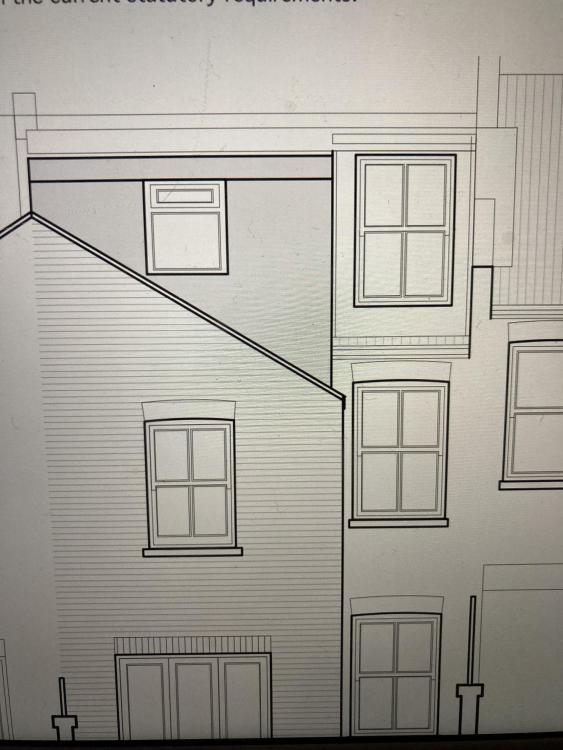
Added our proposed elevation (it’s the one with some yellow highlight) and then an elevation from a house on a nearby street which has received a Cert of Lawful Dev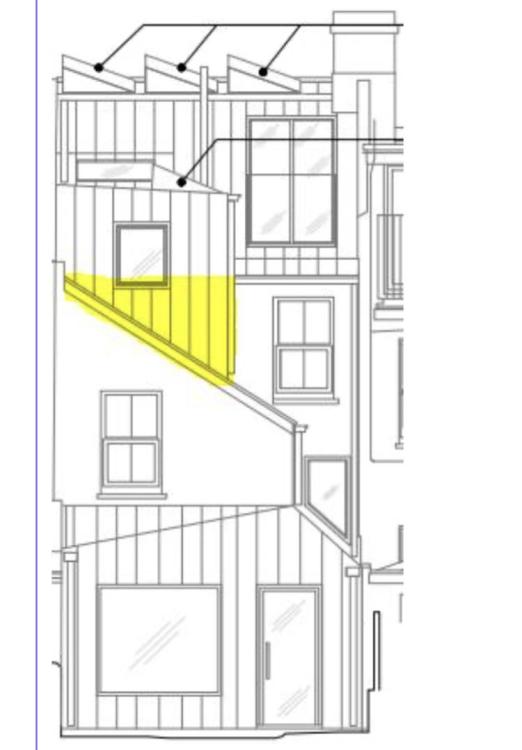
-
Hi folks, we made a planning application in September and have been asked to modify it to remove one element of it - a dormer on the rear addition - ie not the main dormer but one on the outrigger (I’ll attach a pic). I believed the dormer to fall within PD, and therefore (perhaps naively) thought it would be fairly straightforward to cover it all in one Planning application, alongside other changes we’re requesting. It seems the council do not like the appearance of the rear dormer so from a planning perspective will not allow it. However there are several examples of a Certificate of Lawful Development being approved for the exact same rear dormer on neighbouring streets. So it seems that even if something is Permitted Dev, planning can say no. Which kind of makes sense in the weird and wonderful world of British bureaucracy. Now im thinking maybe we amend the Planning App to exclude the loft entirely, and then separately submit a request for a LDC to cover that. The disappointing thing is that we can’t then include the solar panel request in the LDC as it’s one of the conditions. So I’m wondering how we cover that - without delaying the planning application itself. I thought I’d share this here in case anyone else has faced such a nuance in an application before and if anyone has any thoughts - might we run into different issues having two applications run in parallel? I’m concerned this may appear that we’re “gaming” the system, and indeed that is exactly what we’re doing I guess. But it feels silly that just the type of application submitted can result in a different decision. ___ PS. House is not in a conservation area, nor listed.
-
How to drain the dishwasher into this under sink pipework?
low_and_there replied to low_and_there's topic in General Plumbing
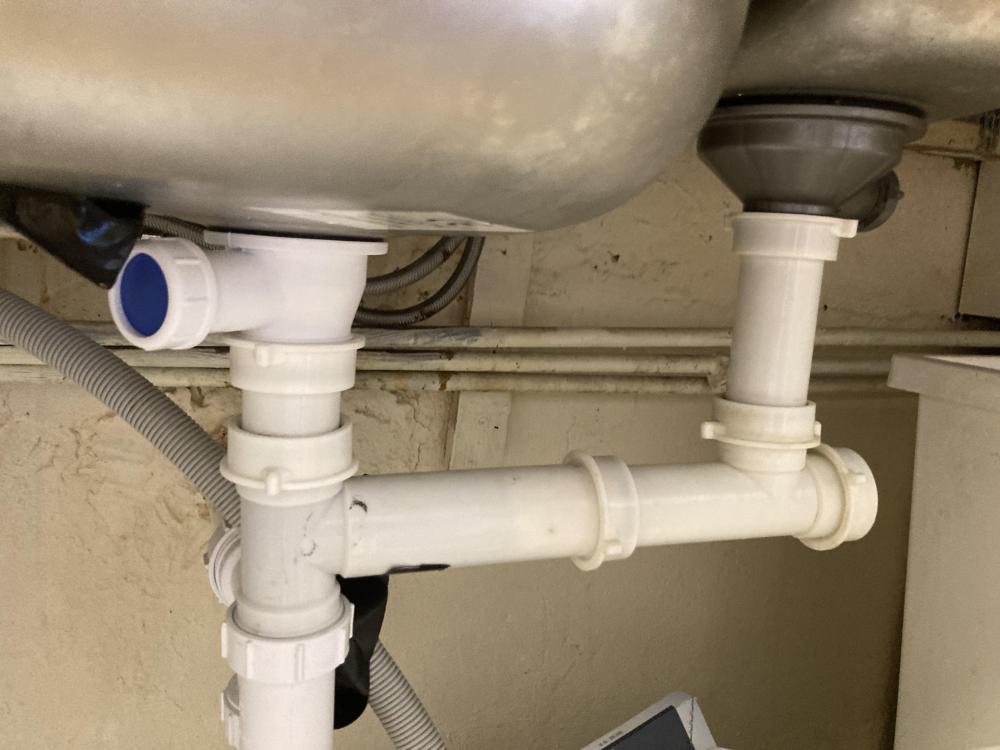
Ah ok, I actually thought it had to flow in vertically but if it can work horizontally then I should be able to add the fixture there. it would work on the far right side but the existing hose won’t reach that far - I imagine that there’s a possibility to extend the hose? Really appreciate your help @joe90 -
How to drain the dishwasher into this under sink pipework?
low_and_there replied to low_and_there's topic in General Plumbing
thanks @joe90. trouble is that the part on the left is too close to the underside of the sink bowl to allow for an attachment like that to be added. Can I add an extender piece to take it out beyond the sink bowl do you think? Thanks! -
Hello folks, would appreciate advice on how we can connect our dishwasher outflow pipe into the drain under the sink (photo added). The washing machine empties into a stand pipe. I’ve previously added a dishwasher into a spigot under a sink but this pipework here hasn’t got one and I can’t see how to add one.. I’d like to avoid buying a whole new under sink set there as this set up is only for about six months while we wait for planning permission to extend. thanks in advance!
-
Excellent, thanks for the steer @Nickfromwales. In terms of installing it, I put that up on the studs first, then the SoundBloc on top - is that right? Do I want the rubber to be sealed at the perimeter and at joins in the sheet as well? thanks (a thanks for now and a thanks for every time my kids watch loud movies while I’m working late in the room next door!)
-
I can’t (or rather don’t want to!) rebuild the studs, but what if I alternate the verticals and/or horizontals that I secure the SoundBloc on each side to..? They’re at 400mm centres horizontally, 600mm vertical.
-
This looks to be a brilliant idea - adding to my list for when we come to install the new pipework, thanks for sharing the photos @Nickfromwales
-
right, cool, noted! Thanks @JohnMo
-
We've got a 100mm timber stud in an aperture between the front and rear reception rooms (it's about 80% of the wall - the rest is solid brick), and as part of wider works, the plasterboard is off (on one side), the floor is up, it's all bare bones, and I have the opportunity to improve the acoustic insulation / sound absorption it provides. One of the things I'm trying to figure out is whether to rip off the remaining plasterboard on the other side to replace with SoundBloc. We've not got particularly loud noises to absorb, just TV noise / music from front to back rooms, so I don't believe it's necessary to go down the Resilient Bars route. Any thoughts on how you would tackle this? Current thinking: a) wool insulation between studs (100mm gives 40db reduction, or so the technical spec claims) - personal preference not to use mineral wool b) 15mm Gyproc SoundBloc boards either side - apparently a density of 840kg/m3 c) Isolation strip (like 'karma') under the skirtings along either side of the wall (but could / should I use it elsewhere?) What else? Is it worth using any 'acoustic' sealant on the edges for example? Or what about a 12.5mm SoundBloc, combined with something like 6mm Ply (I've got the depth to do this on one side) - I've read that different materials layered can be better than thicker of the same material - is it worth it / necessary in this context do you think? Thanks! --- Bit more detail on the context: - Stud wall is standalone and does not sit on joists (joists stop short of the stud on either side, resting on sleeper walls) - I've made sure the electrical sockets are not back-to-back and have placed acoustic putty pads in the socket boxes - new OSB structural deck aligns to the end of the joists, so is 'decoupled' from the wall - will ensure rest of floor construction is also kept apart (UFH in 35mm biscuit mix dry screed 8:1 sand:cement) and 15mm engineered wood boards) - we've got wool insulation under floor (200mm) which I'm thinking may dampen impact noise - The stud was originally built above the original floorboards (there would have been doors between the rooms when the house was built), and is actually only secured to the side and upper walls; the base plate is currently floating 100mm above a brick sleeper wall - as I do not want to rebuild the stud I'm planning to wedge noggins under the base plate to give it something to rest on when laden with weight. - I'll put 100mm wool under the base plate of the stud between noggins (which I've staggered from joists)



