SBMS
-
Posts
1064 -
Joined
-
Last visited
Everything posted by SBMS
-
Can we also fill between the rafters with Rockwool or PIR?
-
Good question, we are only at draft stage and I know the architect has a detailing for it. However I am inclined to agree that a warm roof is looking like a better option. am I right in thinking there is no ventilation requirement for a warm roof? Is there anything stopping us putting Rockwool between the flat roof joists as well to further lower the u value? I am wondering about whether to abandon the idea of cellulose on the pitcher vaulted roof as well if so and go for a warm roof there too..
-
Thanks @ADLIan I can see your point especially with the wall junction. What would one typically recommmend as a makeup to achieve a circa 0.12 u value? Can you insulate between the joists with rockwool and then above with PIR for a warm roof?
-
Sorry, I see what you’re saying. Architect has specified 50mm ventilated cavity above the insulation and below the final roof deck.
-
Why can’t the flat roof joist void be fully filled with insulation?
-
We are doing a cellulose full fill so we shouldn’t need a ventilation cavity as long as use a breathable membrane. You’re correct, the beam is on steel columns down to foundations.
-
Having re-read my question... is my steel beam entirely within the thermal envelope? Am I worrying over nothing?
-
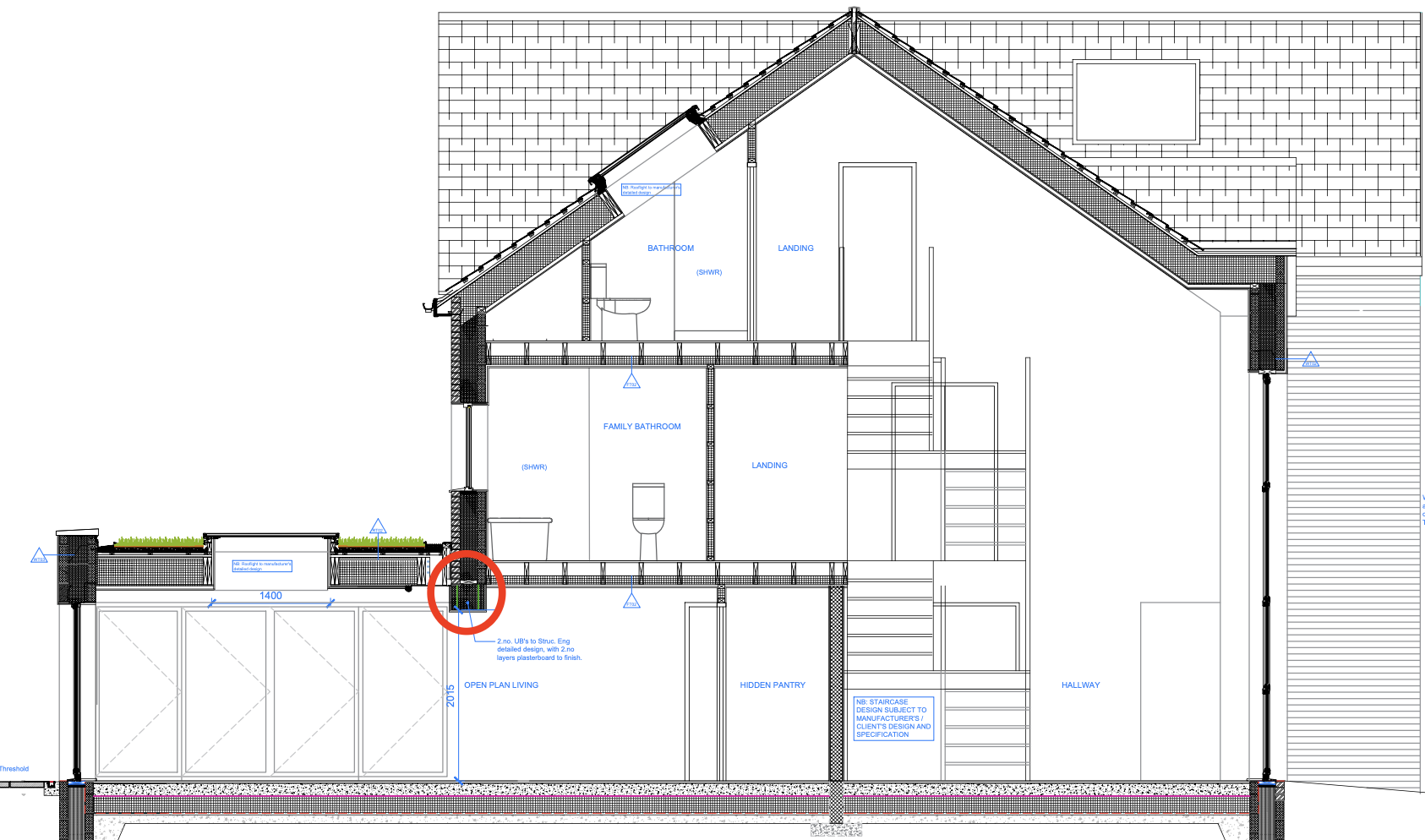
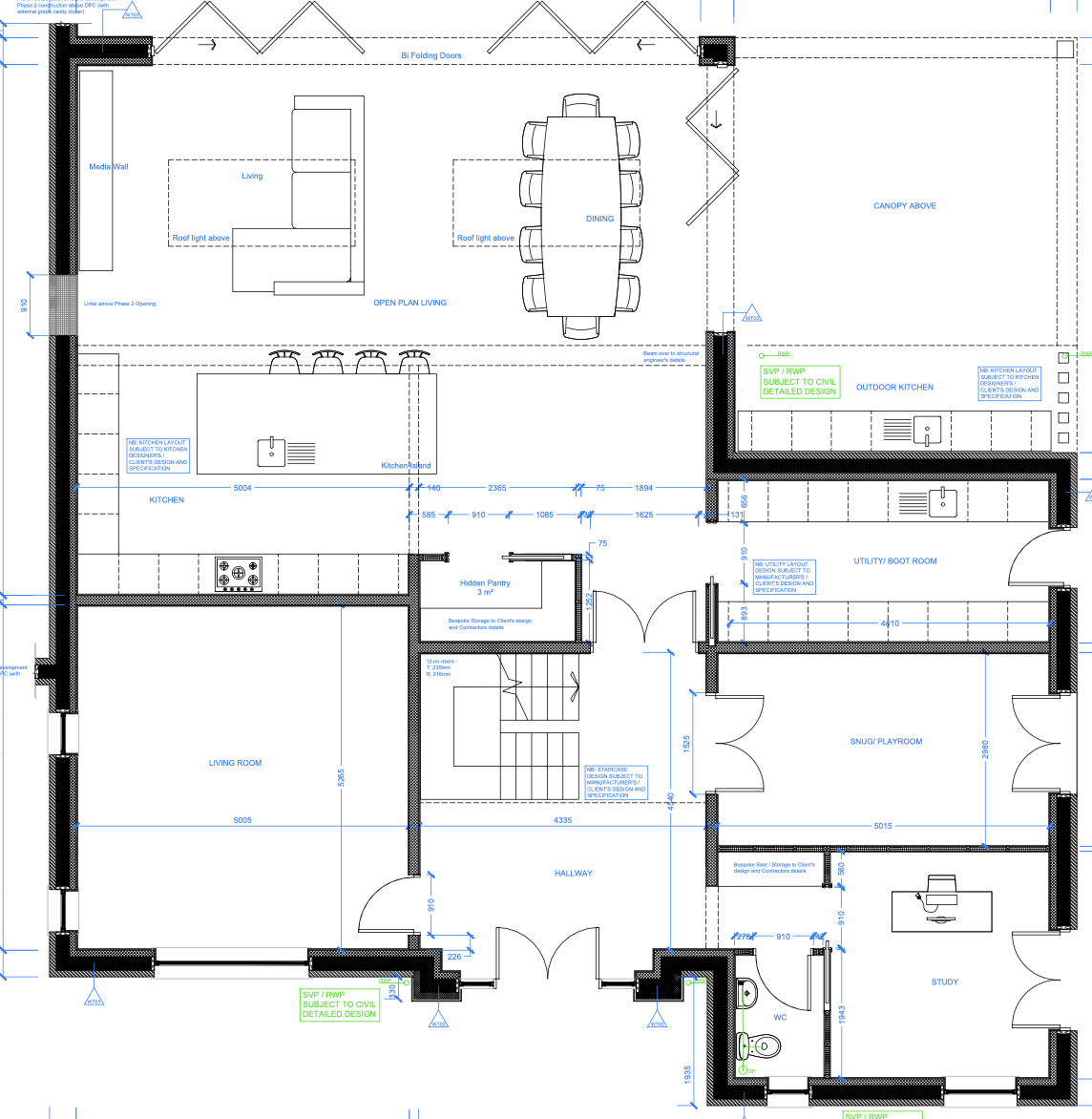
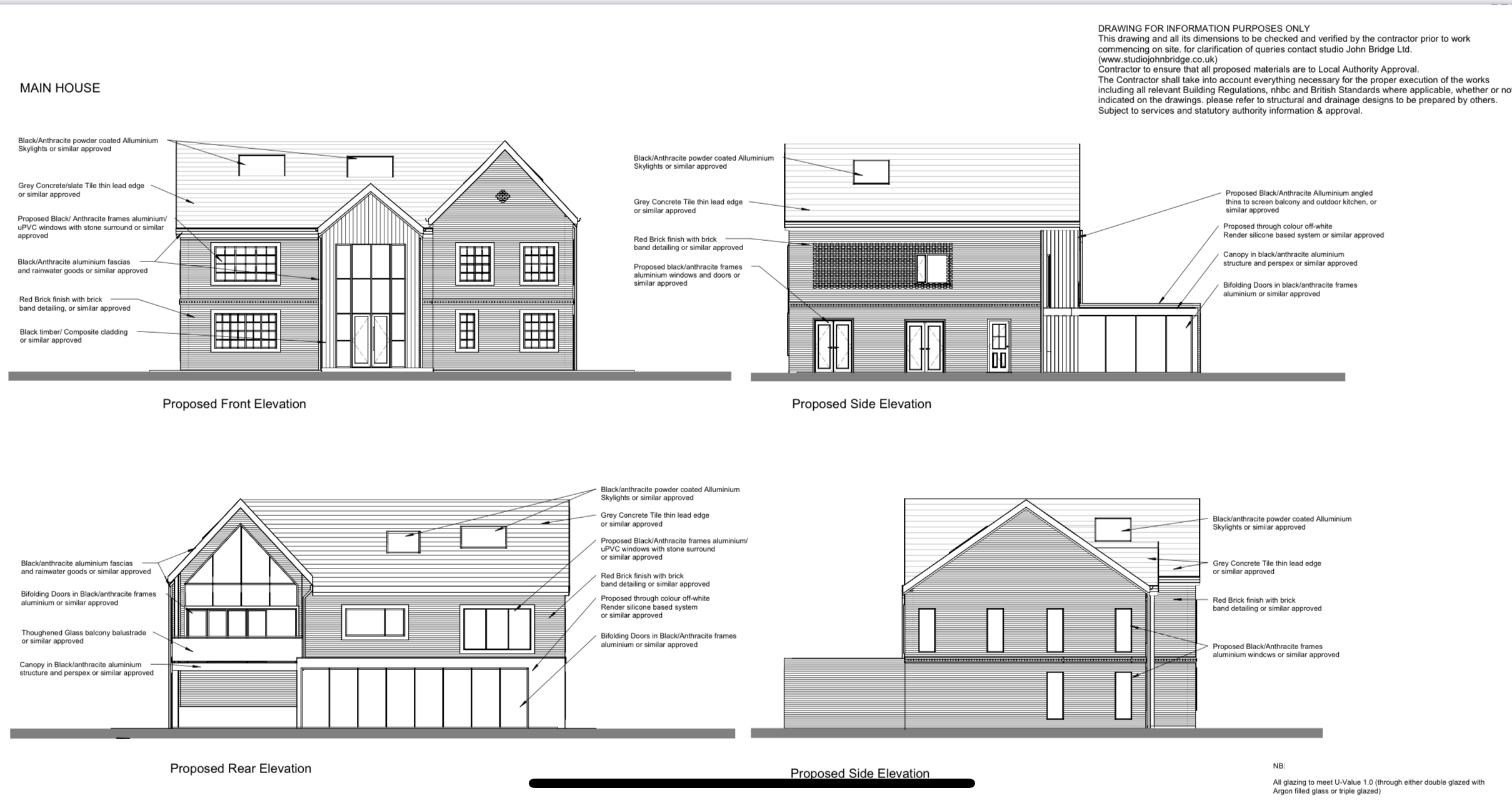
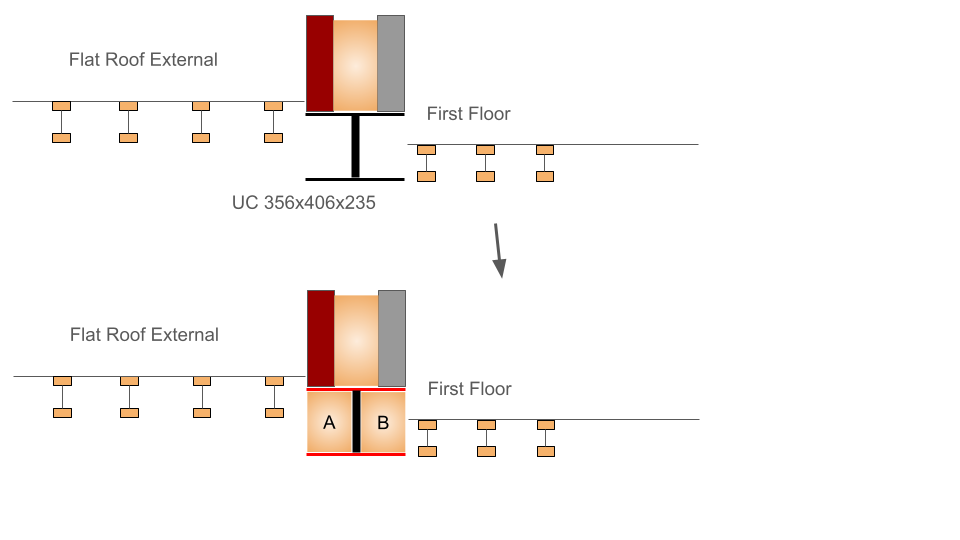
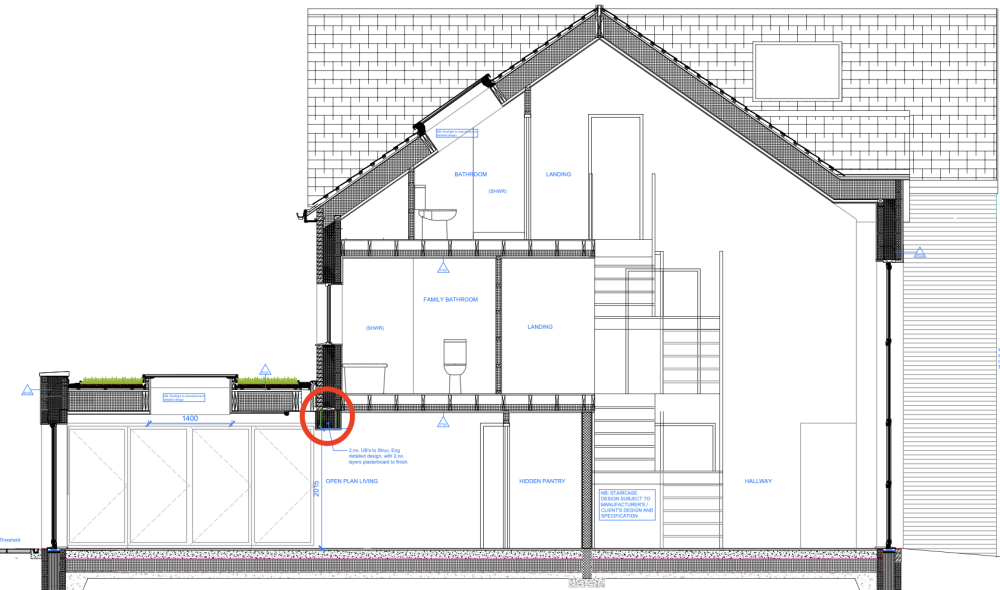
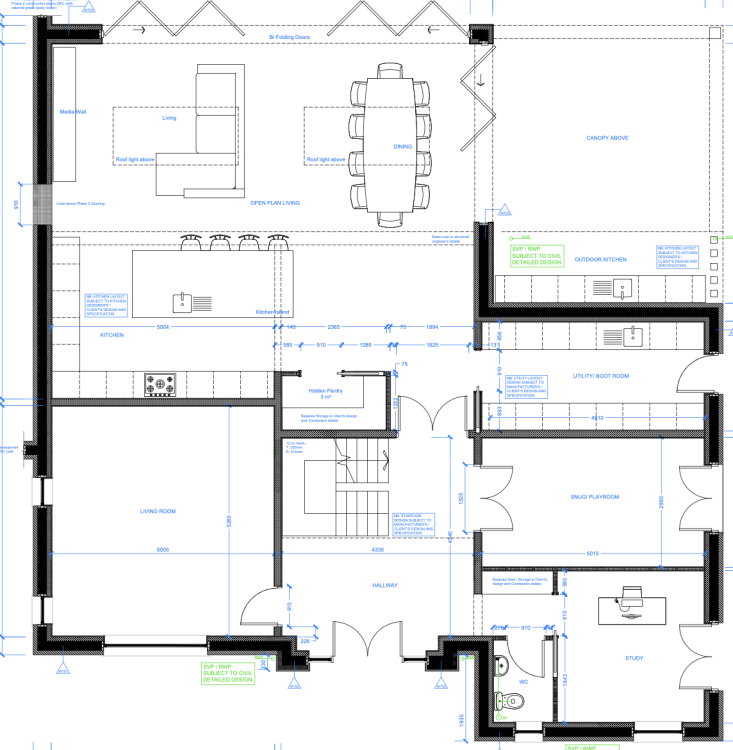
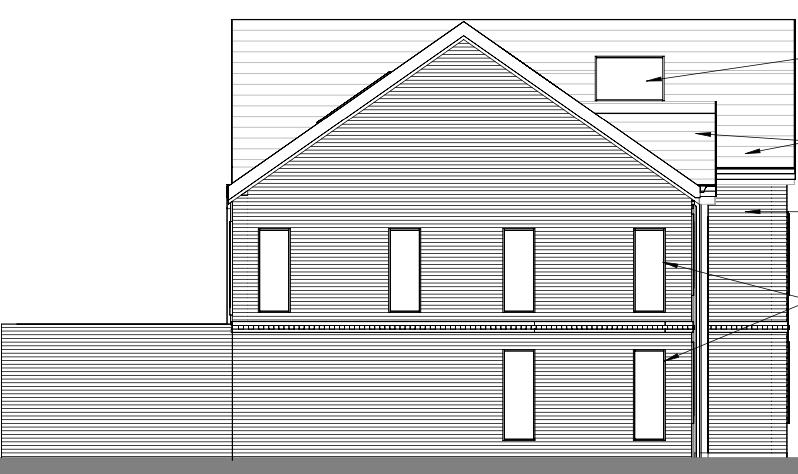
Hi all Will be speaking to our architect to get advice, but he's away at the moment and keen to understand what's possible. We've designed something which requires a fairly large steel to carry the rear of the house where a single story flat roof intersects at the rear. The smallest height steel we can get is a UC 356x406x235 - spanning about 10meters. To minimise any boxing in, in the kitchen, we are looking at moving this steel as far up as we can - ideally level with the bottom of the first floor joists. I'm trying to understand how we insulate the steel and prevent as much thermal bridging. I've drawn a crude diagram of our ideal profile of this beam. Our cavity is 200mm and the beam is just under 400mm wide so we can presumably pack some insulation into the face of the beam as shown in A and B below. I assume that we won't be able to do this where the first floor joists run into the beam, and also the top and bottom flange marked in red: Are there any other options? Rear elevation of the house, floorplan, and section drawing with the beam marked in red:
-
We’ve got windows that range from 2300x1300 to 600x1660 So It’s a bit tricky to post particulars @G and J as we’ve got all sorts of different size windows, I was just wondering if there’s a rough formula? You can end up obsessing about u values…
-
Does anyone know if there is a general rule of thumb for how the u value of the glazing unit affects the overall window u value. This is just for some rough calculations whilst doing some cost benefit analysis for different windows. In particular, say that a windows total u value is 1.4 based on a window u value of 1.0. If that window was changed for a triple glazed unit with a u value of 0.6, what might one expect the total u value to decrease to? My simple logic (probably wrong) makes me think that as proportionally the majority of the surface area of the window is glass, the majority of this 0.4 reduction in u value is conferred across the whole unit, possibly bringing it down to 1.0 overall u value. The bigger the window, the more pronounced this might be. Is this in any way correct, is there a way to approximate how lower u values of glazing might affect the overall frame u value?
-
The first option is interesting - the staggered timbers looks good for thermal bridging. How would you go about connecting the 97x45mm To the 220s above?
-
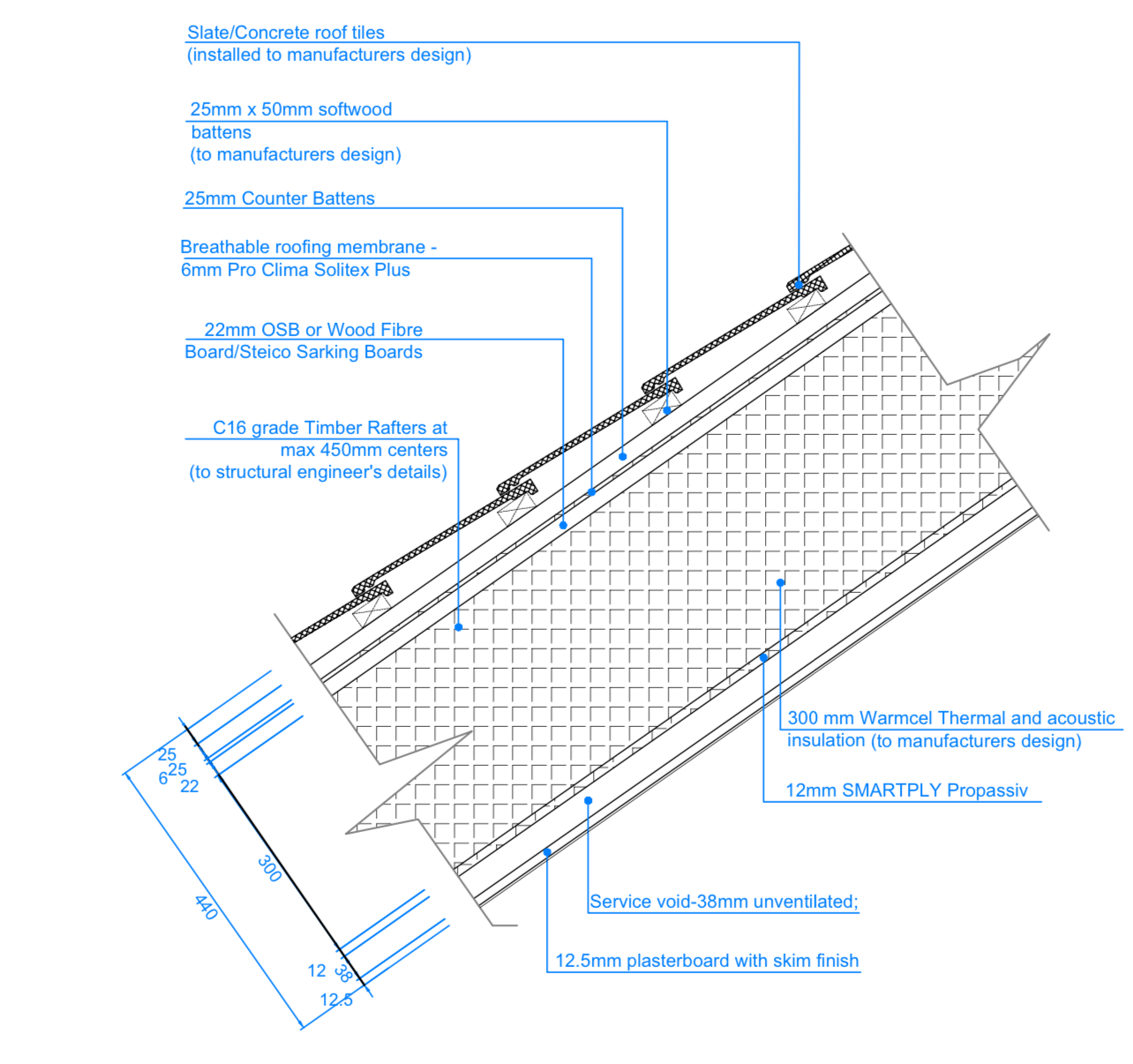
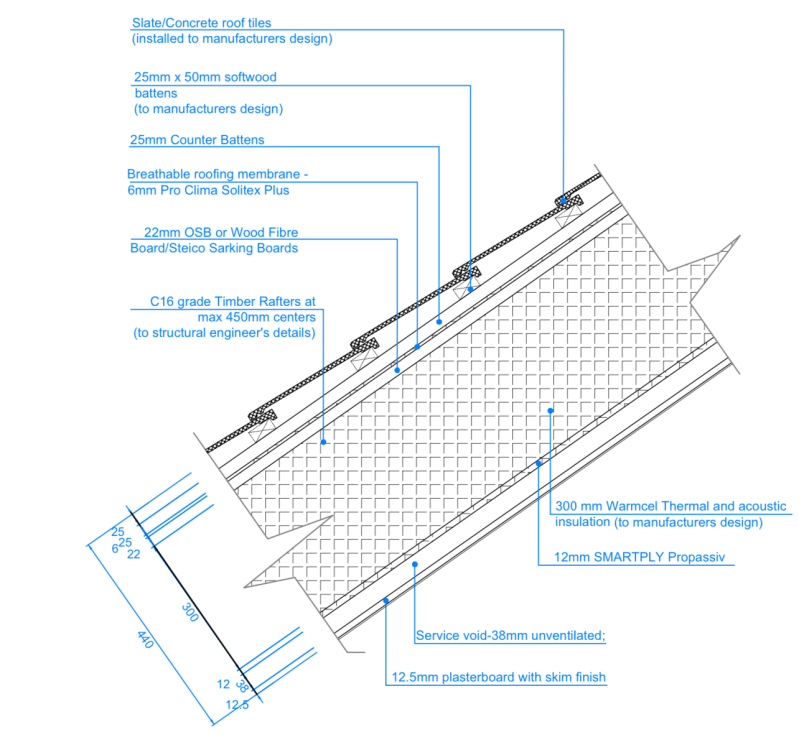
Hi @Iceverge I have attached full roof makeup showing depth below. I suppose I felt that 0.1 would be a great target and so every point I move away from that is psychologically difficult! But your logic makes sense.
-
I wonder whether the valleys and complexity of our roof are making blown cellulose a difficult or suboptimal option? I keep trying to work out whether there are going to be a lot of ‘nooks and crannies’ to fill with cellulose?
-
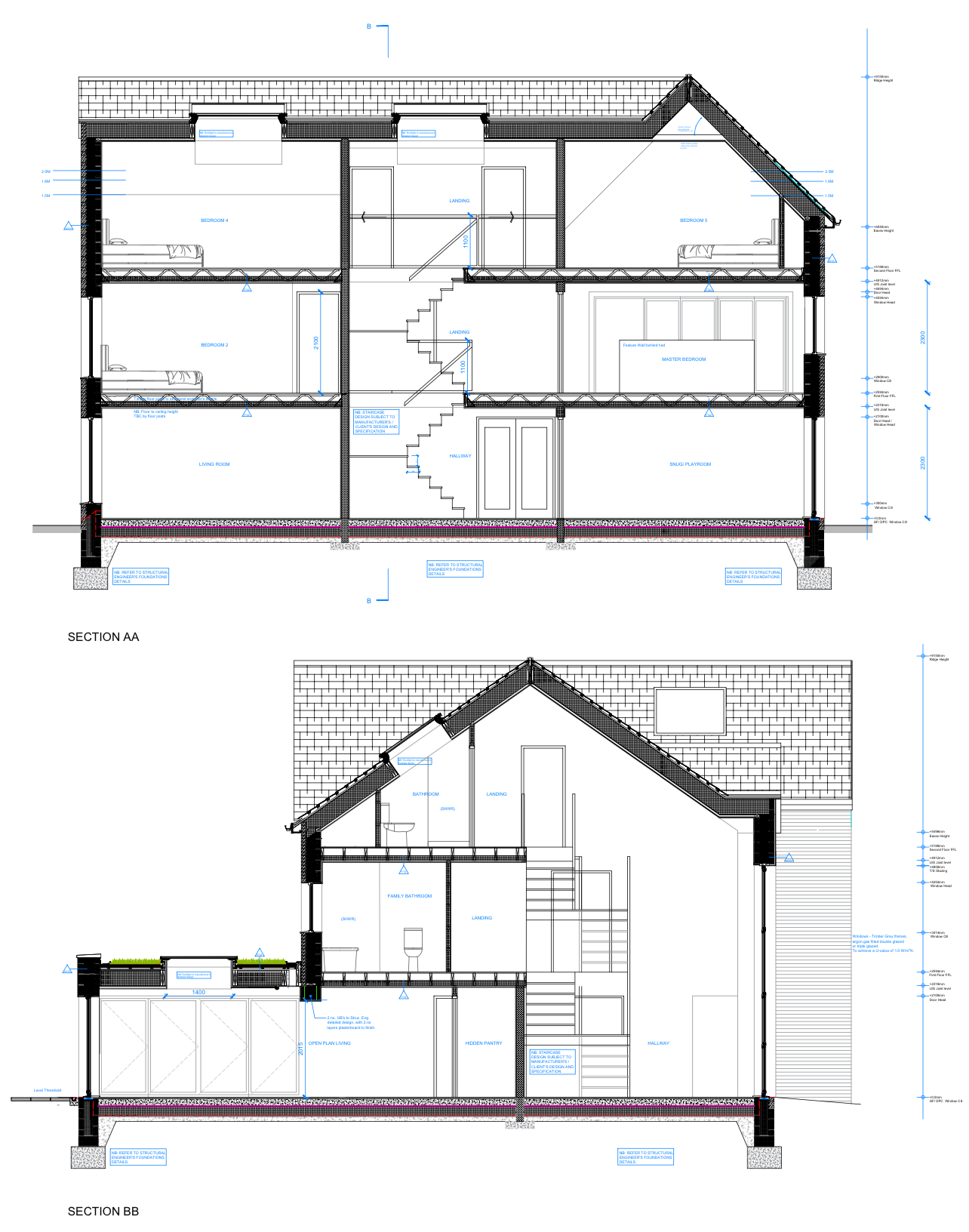
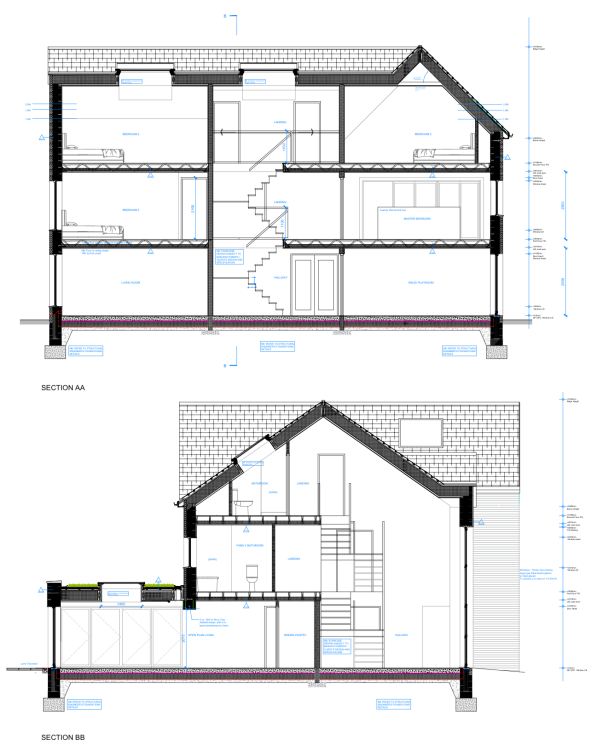
Posted a section.
-
Architects are currently doing full drawings. 200mm cavity wall with platinum eco beads. We cant really go much more than 300mm rafter depth for planning ridge height. I had planned to put wood fibre Steico board on top of the rafters which helps a bit with bridging. This makeup, with a 300mm cellulose fill based on an I beam rafter yields about 0.12 u value for the roof which I was trying to hit. I think solid rafters increase that to about 0.13 so that might be the route we go. We could also do a hybrid - loose rafters round the valleys and then post rafters for the simple sections? I was trying to avoid insulated plasterboard internal and was going to with propassiv on the internal side of the rafters with a cavity then plasterboard and skim.
-
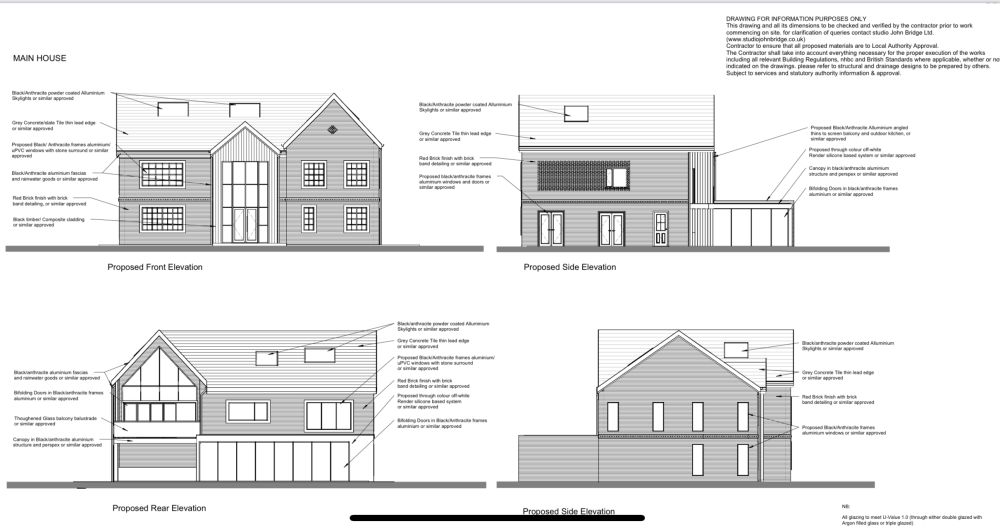
Hi all @Iceverge as requested - posting up some section drawings here. We’ve had a number of different options in terms of engineered roof including an attic truss with quite a lot of loose rafters around the valleys and a posi rafter design but now they are having to double check if it’s possible due to the way the posi rafters connect into the valley steels. We need a 300mm rafter depth for blown cellulose and would prefer not to have to extend the rafters to get this depth. we could do it all in loose cut timbers but we don’t quite hit the u value I wanted with 45mm solid timber so an I beam or posi rafter design would have been ideal.
-
Did you blow the cellulose in yourself or get an installer to do it? Worrying there was voids that you discovered if using an installer?
-
What airtight membrane did you use? Did it withstand the pressure of the cellulose pumped in?
-
We are planning on a steico wood fibre board on exterior and passivplus interior serving as the vapour and airtightness barrier. Just wondering how we detail the junction of the board at the wall plate
-
We are looking at propassiv as the internal substrate for our vaulted roof makeup. Blown in cellulose. Has anyone got a specific detailing for where the propassiv board meets the wall plate at the eaves. If the board is tight up against the inner leaf/wall plate it seems there’s going to be a tapered gap - is it best to foam this and then tape over? Anyone got any photos if they’ve done similar?
-
Is it holding anything up? Got a drawing?
-
I think I priced up the celotex to be more than the cellulose? Granted I could have shallower rafters with celotex but then id need insulated PB to hit the same u values? maybe I’m over engineering / thinking it
-
@JohnMo we were told that where the rafters hit the valley they'd need cutting at angles and not ideal for pozi rafters? We've got two 45 deg roofs connecting at 90 degrees to each other - all vaulted. You got a picture of your roof? I've heard issues with spray foam and mortgages as well?
-
Thanks @Dave Jones - have you used before and if so which would you recommend? Struggled to find any online at least for a 200mm cavity.
-
Just looking at detailing around the windows and doors and was looking at the Eurocell cavalok cavity closers (the ones where it's a single piece and tied in to the inner block during construction (see video below) More money, but I wonder whether its useful for the window fitters, and better for airtightness.. Worth the added cost?