pstunt
-
Posts
102 -
Joined
-
Last visited
Everything posted by pstunt
-
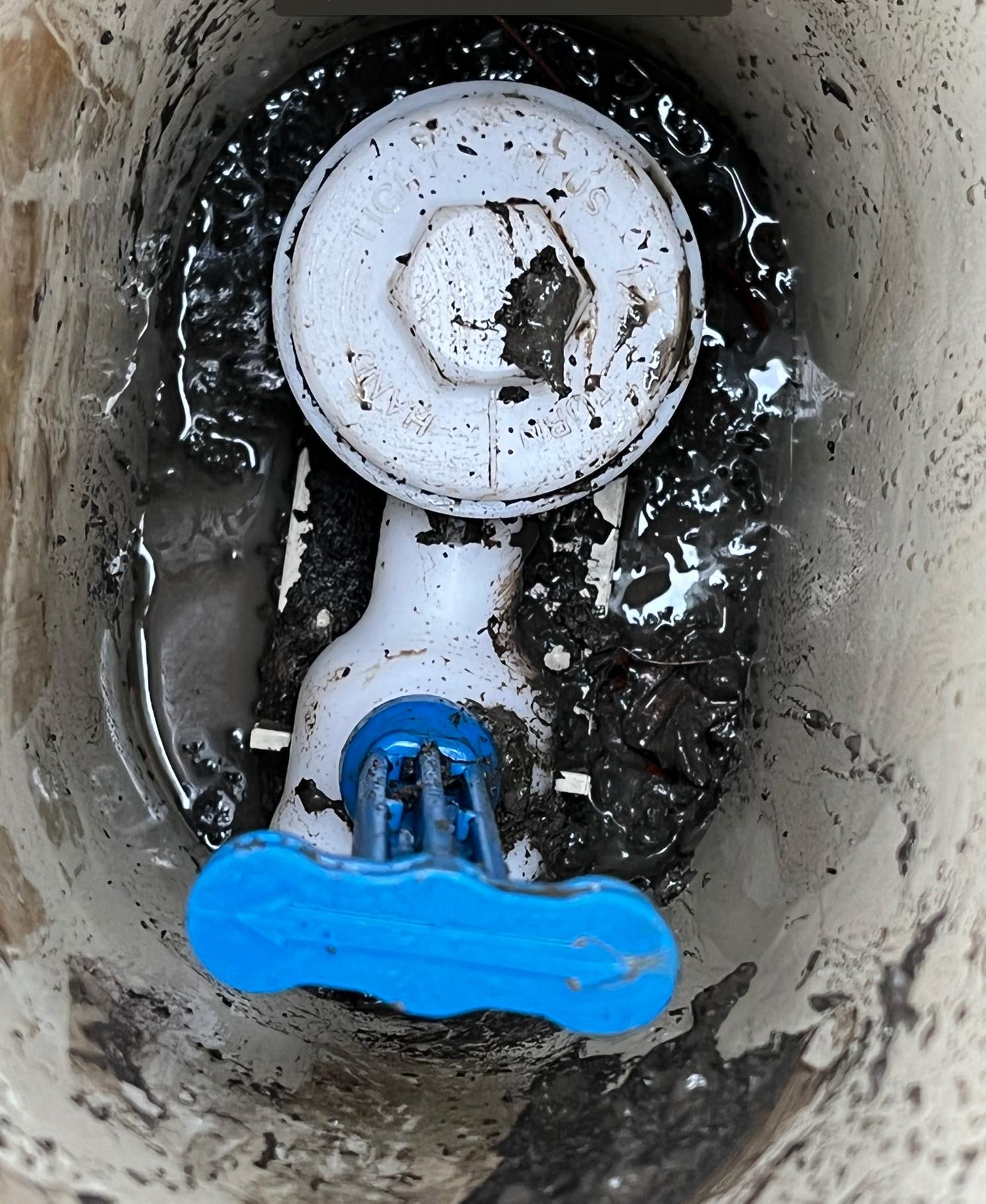
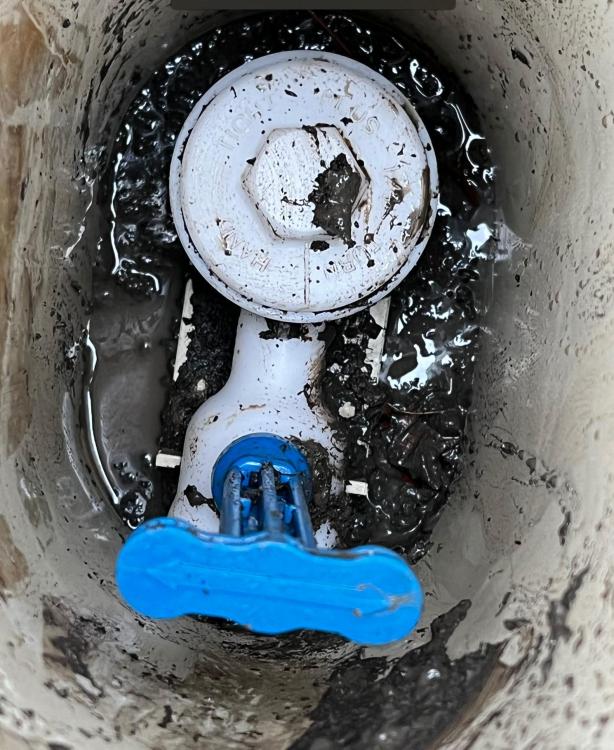
Hi, is anyone able to tell me what this connection is specifically called ? It was fitted at the end of a water polypipe ending on the edge of our building line a few years ago, as part of a series of 4 builds nearby. The connected pipe runs about 200 yards to where the water will be. We have only just bought the plot and I am sure I can get in touch with the builder who installed it to ask but I thought the collective minds here would know. In essence we want to test the pipe and I want to put a stand pipe, or something similar on it. The cap unscrews and there is a screw fitting with some sort of ball valve inside. Would this be something a water meter would typically go ? On the top side out of shot slightly buried is also what appears to be a cap inserted in what I appear is where the outgoing connection goes. It's not clear to me how that cap is removed. This connection is eventually going to be removed but I just want to test the pipe before I get the waterboard in to connect the other end. Thanks
-
PV and Battery to power security camera options
pstunt replied to pstunt's topic in Photovoltaics (PV)
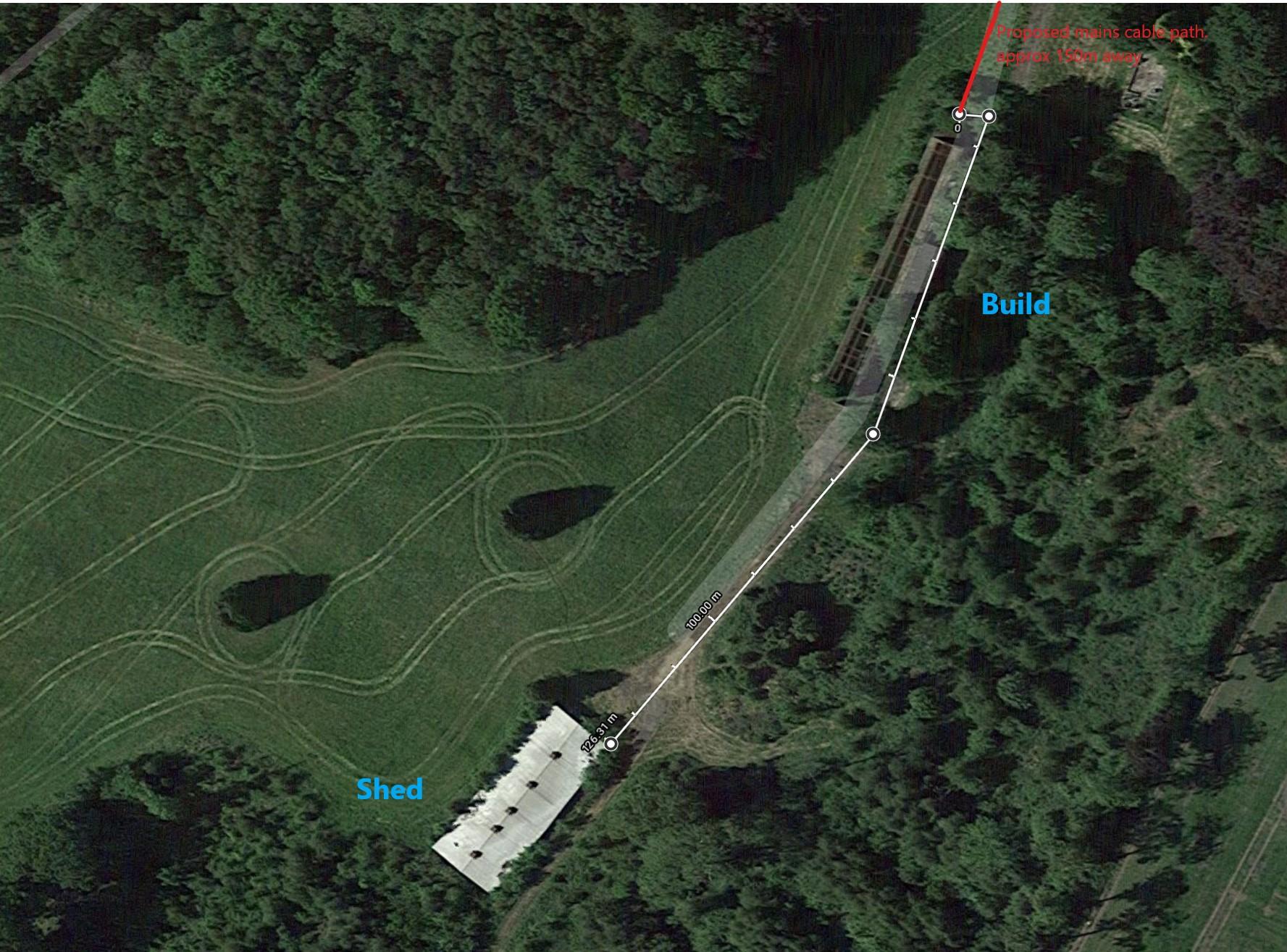
Having looked at Damon's off grid solution it truly looks impressive, although bewilderingly complicated to me. Although it seems to me that perhaps PV's may not give the power required during the winter ? At least not on a small scale. I'm having too rethink the whole approach. I will try and better explain my dilemma and have attached a crude picture to help set the scene. This is a rural location with our selfbuild hopefully to begin in the spring. The end goal will be to get mains power to the shed, which is about 120 m away from the future house. The nearest electricity pole is about 160 m in the other direction to the house. We were not intending to go live with the electricity until towards the end of t he build. Figuring the build will take 12+ months, that means at least 18 months of no power to the shed hence my initial question to get cameras up an running. We are not having PV on the house but having read the replies here, I was wondering if it would work if I put a typical PV setup on the shed now and then have that link in to the house once completed. Possibly with some sort of battery setup which would be enough to power lights and cameras / router in the shed ? I am weighing this up against the alternative option of having a temporary meter and digging everything up now. This will be the most effective way and possibly the cheapest in the long run but there is something attractive to being self-sufficient.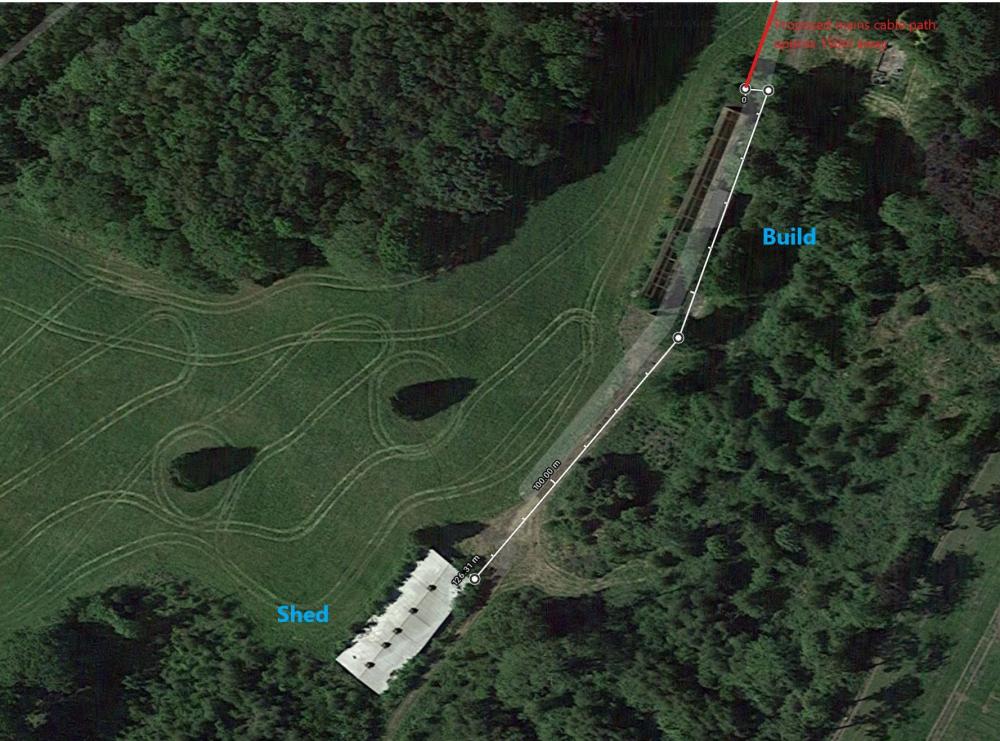
-
PV and Battery to power security camera options
pstunt replied to pstunt's topic in Photovoltaics (PV)
Sorry about the delay in responding to these messages. Unfortunately I had an unexpected few days in hospital following a farm machinery accident. On the mend now Anyway, I was looking at the battery powered ring cameras as mentioned by temp. I have a few of these already in other locations and they had proven to be pretty good. So really I need to focus on being able to power the router. I don't currently have any solar panels but I am very willing to get whatever is needed. I am not short of space on the shed roof so perhaps panels would be the answer? Presumably this would require some sort of battery storage which the solar panels would trickle charge? -
Hi, I have a large shed about 100m away form where my build is going to be, which I would like to put a security camera on. Mains electricity is not an option yet but I am looking for ideas on how best to run the camera on a combination of using PV and a battery to power both the camera and a 4g router. Does anyone have any recommendations for such a setup ? I was thinking of using a couple of Ring cameras. I know its not to everyone's tastes but as I have some in use already I thought they would work quite well. Thanks
-
I think we have decided to go with the Pagurek standing seem roof but at the same time as coming to this decision, I received an email from Patrick ( Pagurek ) which I thought was super helpful / informative and wanted to share the comments on this group. If their product is anything like their customer servcie then everything should work out great. "The roof you are planning is quite unique - so it depends on how visible you picture that it will be (from the top) to choose the roof - our lengths can’t be done in the full lengths - so if the full lengths are vital to you, you probably better off to go to one of the companies that do longer then 8m lengths . Just to give you a bit of understanding how this all works - maybe it helps your decision: -Roof panels can be produced in any lengths - a roll of steel is around 1000m , so theoretically- 1000m is the limit. Now, every company chooses to have a different cut-off point for lengths they offer. Ours is 8m , others is 9 or 10, some even 12 meter. The issue that comes with longer panels is 1. Transport 2. Installation 3, Precision in the Panel production I think No1 is quite clear as well as NO2 (installing a long panel is more difficult/needs more men to get it right and manoeuvre the panels onto the roof) No3 is the part that is not thought about in depths by most consumers : A Panel is usually formed in a large forming machine. If this machine (like in our case) is producing a click mechanism - this mechanism has to be spot on within a few mm tolerance over a distance of X meters. The longer you produce the panels in- the more likely it is that a very small (few MM) discrepancy is working out as a major fault and the panels are put under stress when putting them together on site (as not every distance is the same by the mm) This is less of a problem with classic Zinc that is rolled and formed on site (as the upstand/standing seam is connected on site = with seaming machine. Meaning the panels do not need to align 100% by the mm as the closing of the upstand happens after they are put down ) So this is the main difference between any click system and any traditional system (even when preformed off-site … without click system the panels are more “tolerant” towards widths discrepancies ) Therefore our decision to cut it at 8m lengths - and really try our best to convince people to go for a 5-6m max. Lengths . I hope that helps understanding the “why” a bit better- The rest- to decide what panel to go with- is partly an aesthetic one so nobody can help you to make this decision. "
-
Thanks. I had not heard of Sarnafil before. I will take a look. Perhaps foolishly, I was of the understanding that if the roof construction was done in the right way, then rain noise wouldn't be any greater an issue than standard materials like slate tiles. We also have vaulted ceilings
-
Thanks for the responses We have had a zinc quote, supply and fit, in the region of £96K and around 80K for the Merlin Snaplock. Pagurek was substantially less. Interesting idea on how to test the metals by standing on them. The Pagurek sample is a healthy sized off cut of a panel but the Merlin metal is a small purpose made sample the size of a playing card, so it's so hard to compare the differences.
-
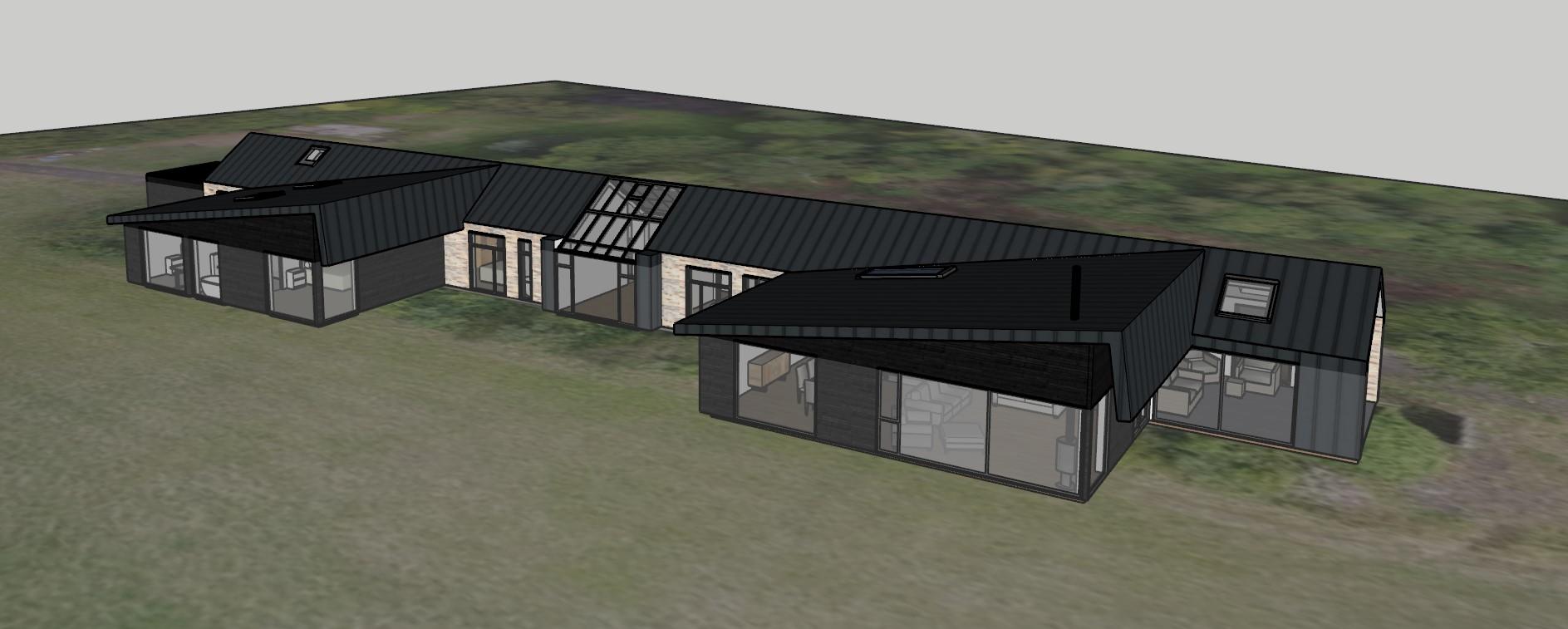
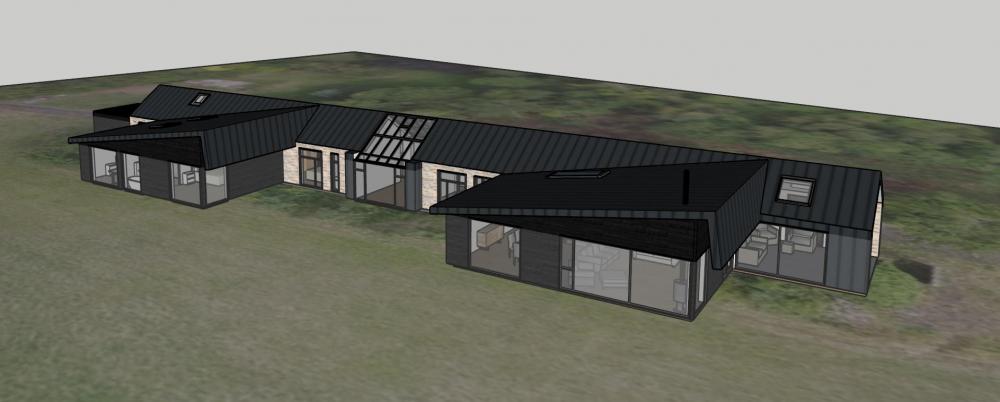
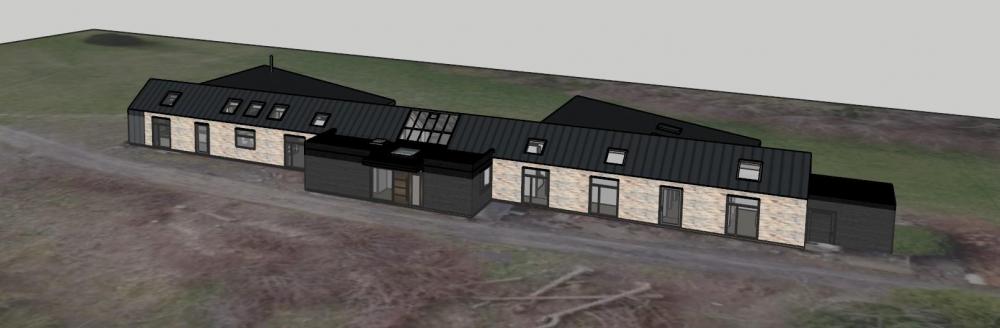
Hi, I am looking for peoples opinions / experiences regarding Pagurek Standing Seem roofs. First off, I should say that I appreciate Patrick is on this site and he has been extremely helpful, so in asking these questions I am not being critical. We have full planning to convert and extend an old stable and have identified a possible builder who has suggested using Pagurek for our standing seem roof, as opposed to Merlin Metals Snaplock panel, which is what my architect is proposing. I have included a couple of mock up CAD pictures which give you an idea of the build. One downside to Pagurek is that 8m lengths is the biggest they do, where as Merlin do 12m lengths. Our extensions are about 11m in width. Which would mean having staggered seems. Not a deal braker per se, but not ideal. I should state that Pagurek ( Patrick ) advised that they suggest having no more than 6m lengths any way as they become difficult to handle. Which makes sense to me. Obviously I would like to keep costs down but not at the price of losing quality / finish. Areas that also concern me are how the rooflights would fit and the flashing around them. Love to hear your comments and thoughts Paul
-
Confused on electricity supply needs and ASHP
pstunt replied to pstunt's topic in Air Source Heat Pumps (ASHP)
Thanks. I am getting on the case, as yourself and others have suggested, which is to speak to other suppliers. -
Confused on electricity supply needs and ASHP
pstunt replied to pstunt's topic in Air Source Heat Pumps (ASHP)
Would be good if they did provide 3 phase regardless but I am never that lucky. I did have an initial site assessment from Northern Power who informally told me that the cable for single phase was something like £140 per meter and not too much more for 3ph but couldn't be more specific and I am led to believe there was a price cap on cable cost then ( 6 months ago ) which has apparently been raised since. Sounds like I will know for sure when I actually get my quote. As a side note, BPC have come back to me and said if I only have 1ph then I cant have this model anyway as it does require 3ph and they will quote for 2 alternative units. This is where my lack of knowledge starts to show, but does it make it ok to have say 2 x 8KW units running in parallel. Does this still not present a load issue ? To be clear they have provided an alternative solution yet just said they would suggest 2 smaller units instead. -
Confused on electricity supply needs and ASHP
pstunt replied to pstunt's topic in Air Source Heat Pumps (ASHP)
Thanks all. You have highlighted areas I need to look into more and then if you don’t mind, I will come back with some updates. One of those areas is working out the heat loss. -
Hi, To set the scene, I am converting an old stable to a 5 bed home up here in County Durham. The site does not currently have electricity but I am in the process of jointly getting a single phase provided in conjunction with the owner of the plot next door ( Who happens to be a builder building for himself. ) We are doing doing it jointly as it's a fairly long run from the nearest pole ( 120m ) and and an extra 30m for me on top. We chose single phase purely down to cost as it will be at least £20K and more even for that and to have 3 phase cable will be even more cost. I dont know what the cost difference would actually be as I was told you cant actually be told without making a formal application which costs several hundred pounds. Accepting that single phase is the only option does that realistically restrict my options on choosing an ASHP ? I am raising this question as a result of a quote from BPC Ventilation which included a 16KW Panasonic Aquarea Mono-Bloc T-CAP for our 373m2 single story build. My concern is that I think this needs 3 phase ( something I am querying with them ) and assuming it does then even if I went with 2 smaller units ( for arguments sake, 2 8kW units ) does that still present me with a load issue. Clearly I slept through my physics classes all those years ago. So apologies up front if this is basic stuff.
-
Thanks for this i will take a look at them
-
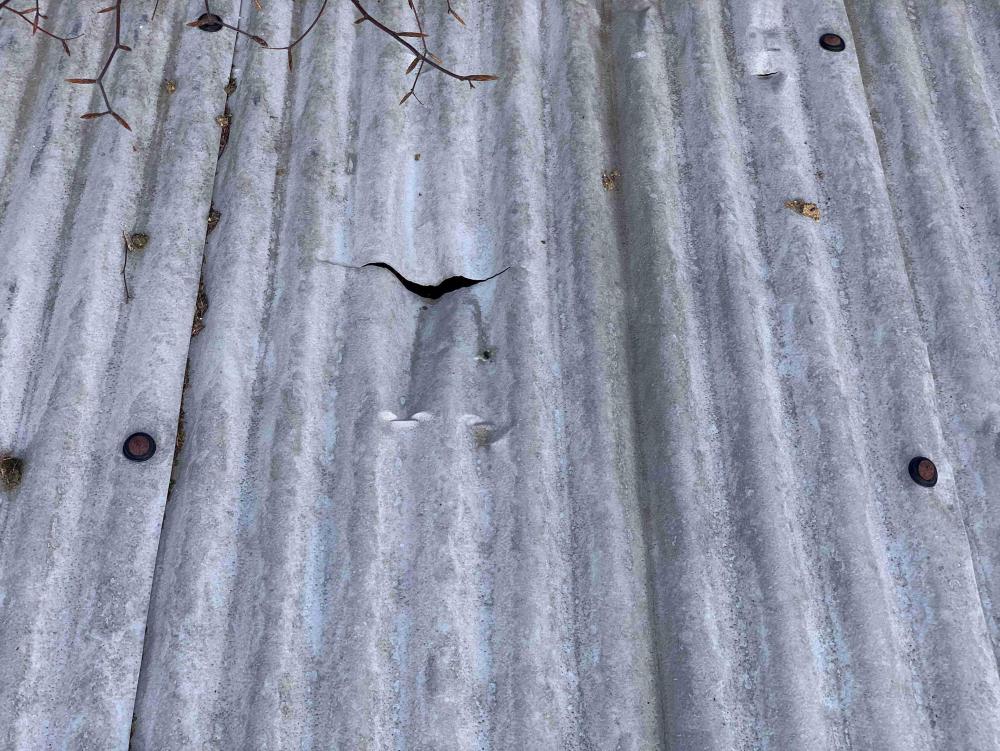
Sounds like it’s worth a go. Looking at the product there is a recommendation that it can be used on holes in metal corrugated roofs in conjunction with a fleece type material, the type you use to protect your plants from frost. I guess it’s purpose is to act as a support whilst the compound is wet.
-
Wow! That is a poor response. In fairness, when I eventually got to speak to someone they were very helpful and answered all my questions. I had also submitted my questions via a web based submission service but this was before I has spoken to them. It will be interesting to see what they come back with and nice for me to have something in writing.
-
Not really that bothered about the look. I haven’t heard of torch on felt before but wi l have look.
-
Thanks to all. The advice is really appreciated. Coincidentally, I have also managed to get through to HMRC and have confirmed the happy news that you guys are right, in that it would be 5% initially for labour and supply and fit and the standard 20% for materials but I can claim it back afterwards. Which is the piece I wasn't aware of but happily am now. They also underlined the importance of correct VAT invoicing, as some of you rightly pointed out.
-
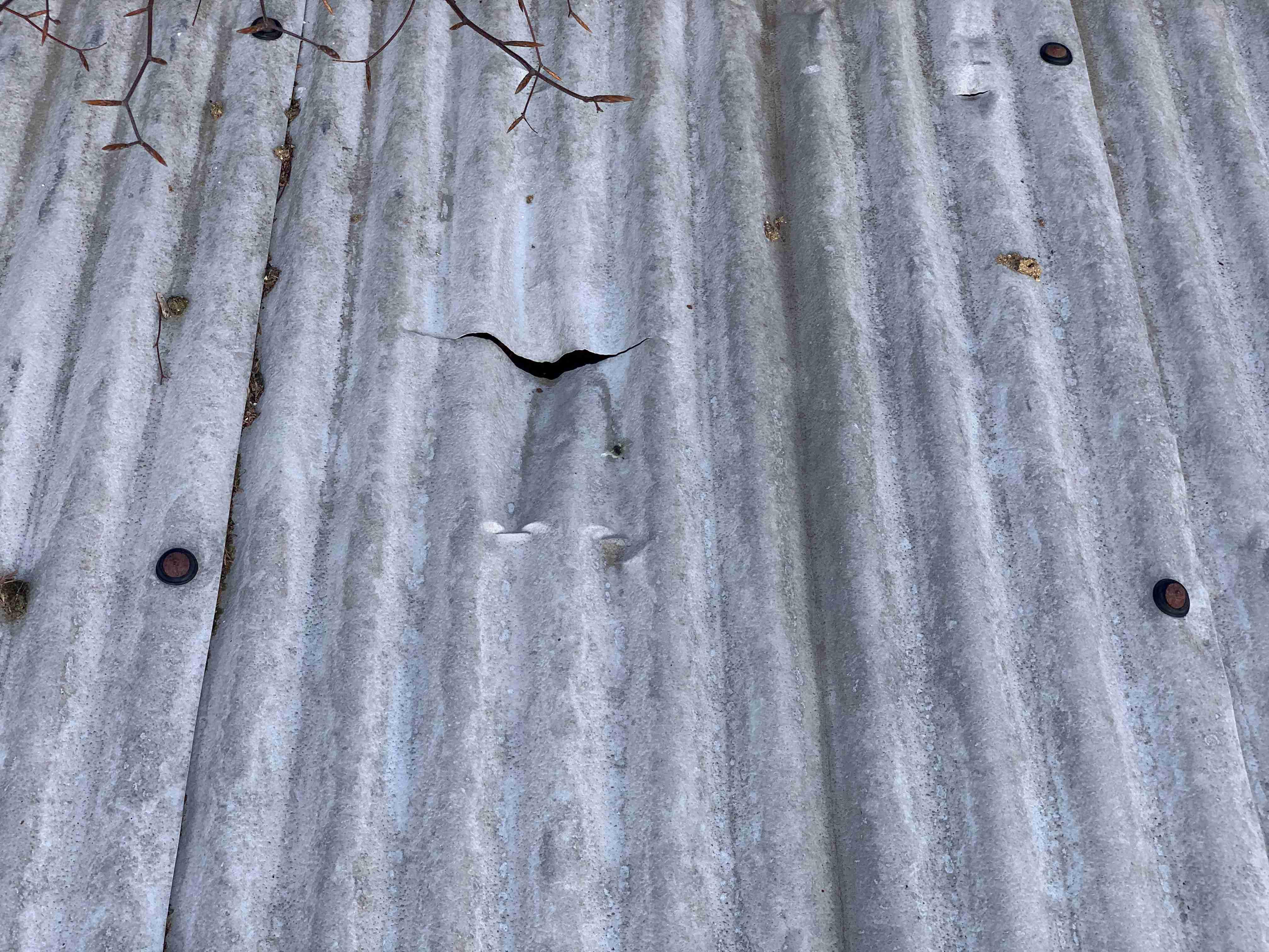
Thanks for the responses. It is aluminium. It will be a long term fix ideally and whilst it may be at a stretch feasible to replace some of the panels I wouldn't consider all of them as it's a big shed ( 30 x 12 m ) it used to be for Turkeys. Oversheeting sounds like an interesting approach, as that would potentially not disturb greatly what's already there. Perhaps I could then get them over sheets under the ridgeline cover. I totally get that the best way would be to replace the roof but that would cost a small fortune.
-
Hi, I need to fix a few holes on a corrugated aluminium roof on my shed. Can anyone advise the best way to go about it. Should I try and find similar aluminium, cut them up so they are oversized to the hole and apply them with some sort of roof sealant ? Or I have read about various mesh patches which you also use in conjunction with roof sealant ? Many thanks in advance
-
Hi, Please can someone put me right on some key points. I have tried to follow other posts in this great forum but I have been left even more uncertain. I have tried for some days to get through to HMRC to obtain guidance but cannot get through. The situation is this: I have planning for what will be my own and only house to convert a derelict old stable into a residential property. Although, the building is derelict I have to retain some of the walls. The part that is confusing me the most is whether my situation means I will be 0% rated VAT or 5% VAT ( ie reduced rate ) or 5% which I can claim back ? It is this statement on the HMRC website that confuses me Conversions The building being converted must usually be a non-residential building. Residential buildings qualify if they haven’t been lived in for at least 10 years. You may claim a refund for builders’ work on a conversion of non-residential building into a home. For other conversions builders can charge a reduced VAT rate. My current belief is that I will not be 0% as it's not a new structure. Therefore I will be subject to the 5% reduced rate but given the above statement am I right in thinking I can claim the 5% back at the end of the build ? Any guidance would be greatly appreciated Thanks
-
Is anyone able to recommend anyone who operate up here in north of the country Co. Durham ?
-
@SteamyTea Thanks for such an informative response. There just seems so much to consider and it's a challenge, for a novice like myself, to know how to apportion the limited budget.
-
Sorry, I should have been clearer but in simple terms I really mean an overall running costs comparison. I was reasoning on not having MVHR because I am only going with standard insulation. I guess my question should be whether to increase the insulation thus reducing heating costs whichever technology I choose. By having better insulation does it follow the question of MVHR needs to be revisited for ventilation ?
-
I dont want to hijack puntloos original question but in answer to SteamyTea's question, for me it's about initial cost vs longer term expenditure ( Rising fuel costs / maintenance ) along with reliability and comfort levels. My initial quotes for a 360 sqm single story stable conversion ( No gas mains ) are coming in similar to puntloos and whilst I would morally prefer to go down the renewable route. It seems to me it would make financial sense to go LPG but ensure the infrastructure is there ready for when costs come down for ASHP/GSHP. I need to look into more as to how effective ASHP would be along with how much electricity it would use compared to an LPG boiler.
-
Hi, I am having the same questions for my new build but as I won’t be starting the build until later in the year, there is no way I would make the RHI cut off date. Which raises the question is either approach better financially ?