ashthekid
-
Posts
356 -
Joined
-
Last visited
Everything posted by ashthekid
-
@ProDave already well under way in the project so cold roof is my only option. Roof has been felt, battened and slate tiled already. They are quite substantial rafters(not sure if exact size off the top of my head - would need to check tomorrow) and there is 100mm in everywhere else leaving a 25mm air gap I believe. This is the last bit to do after my original contractor disappeared on me. In the Rory I could get away with 75mm in between to save money to put towards a thicker layer underneath? The main reason for us wanting to increase the PIR underneath is to cover over the purlins so we have a nice flat ceiling. The purlins are 175mm so in my head I’m thinking 130mm solid PIR, then double batten (2x25mm) which would get me to 180mm and able to plaster over the lot. So you think definitely put a layer of breathable membrane on again underneath the rafters before the next layer of insulation? Even though there is a layer under slate tiles?
-
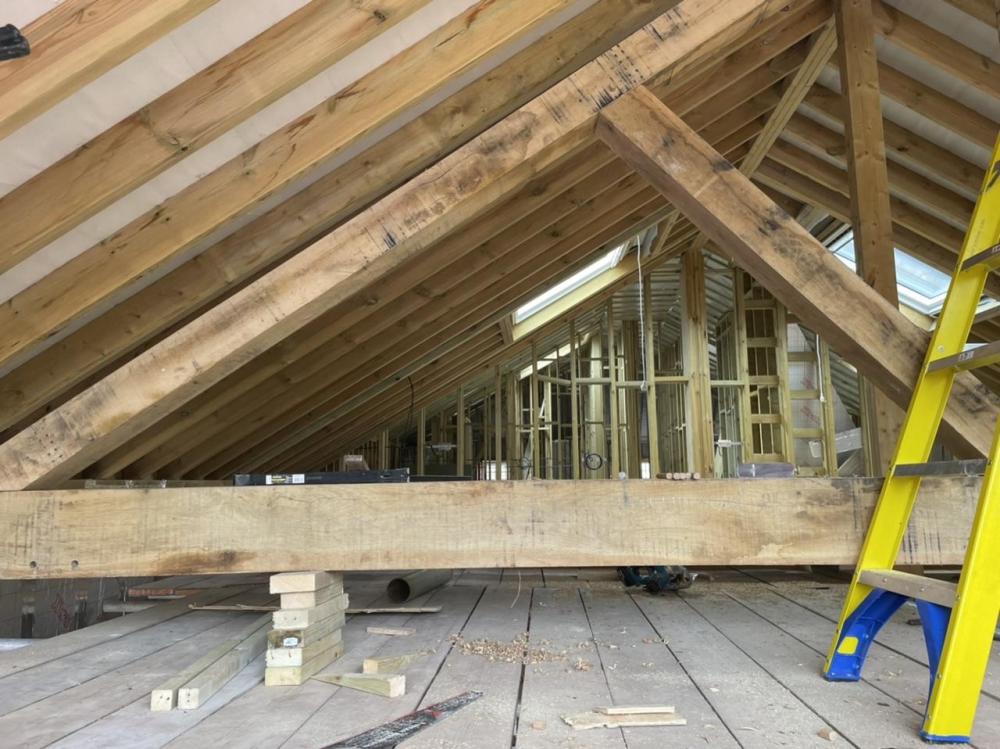
Hi, I’m currently having a discussion with my builder about what makeup of insulation is best for our large open plan kitchen dining lounge area which has high vaulted ceilings with exposed oak trusses. The original plan was to put 100mm PIR in between the rafters, then 100mm underneath the rafters before battening and plasterboarding. He has suggested we not bother with any insulation in between the rafters and just up the mm to 150mm underneath which obviously makes his job a lot easier and quicker but will I suffer any issues with such a large gap between the rafters being left just open? It would be approx 100mm open gap. surely I need something in there or would it actually be better with that large gap. It’s worth noting I am concerned about heating this large open room so want to insulate as much as possible to retain the heat etc. Just wasn’t sure what difference this change may make. Thoughts?
-
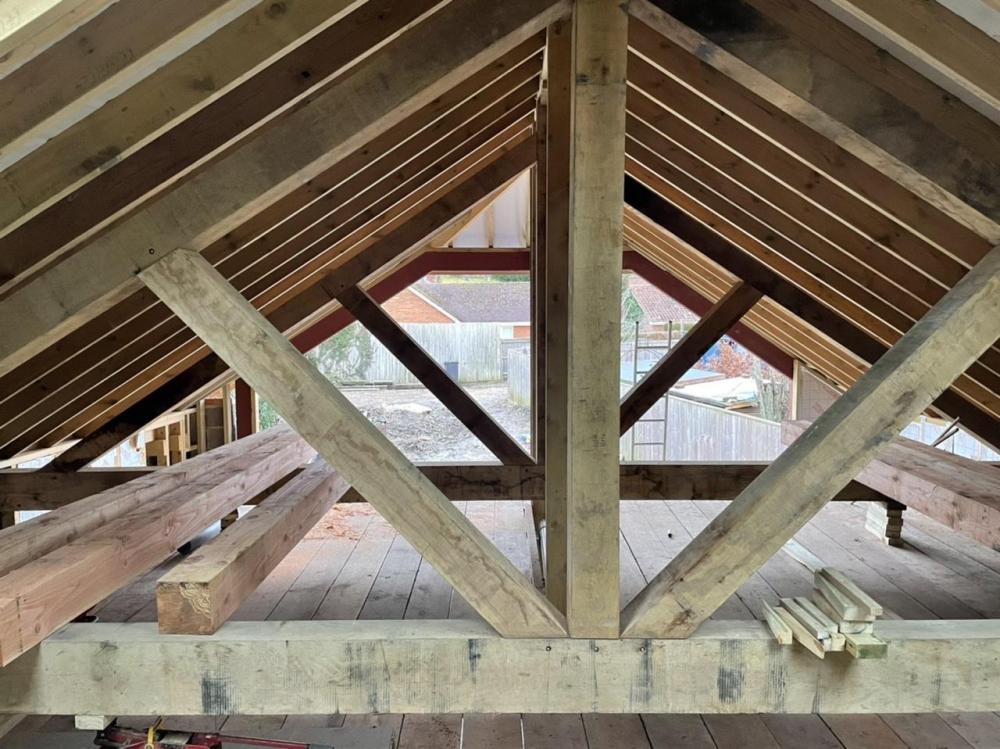
I suppose they aren’t too bad but all the videos I see makes me think Oxalic acid will work really well.
-
Now comes the question of ply or OSB?
-
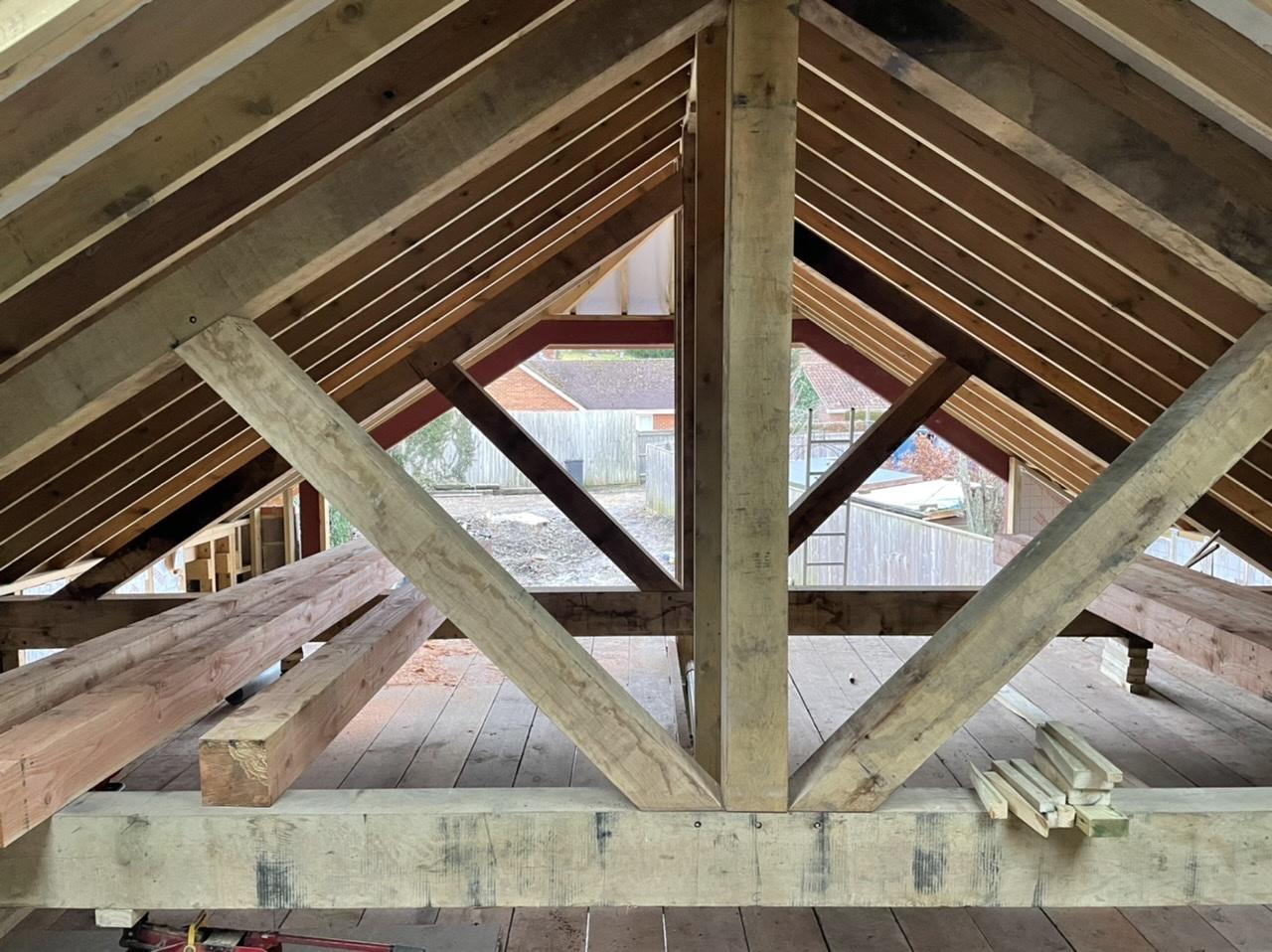
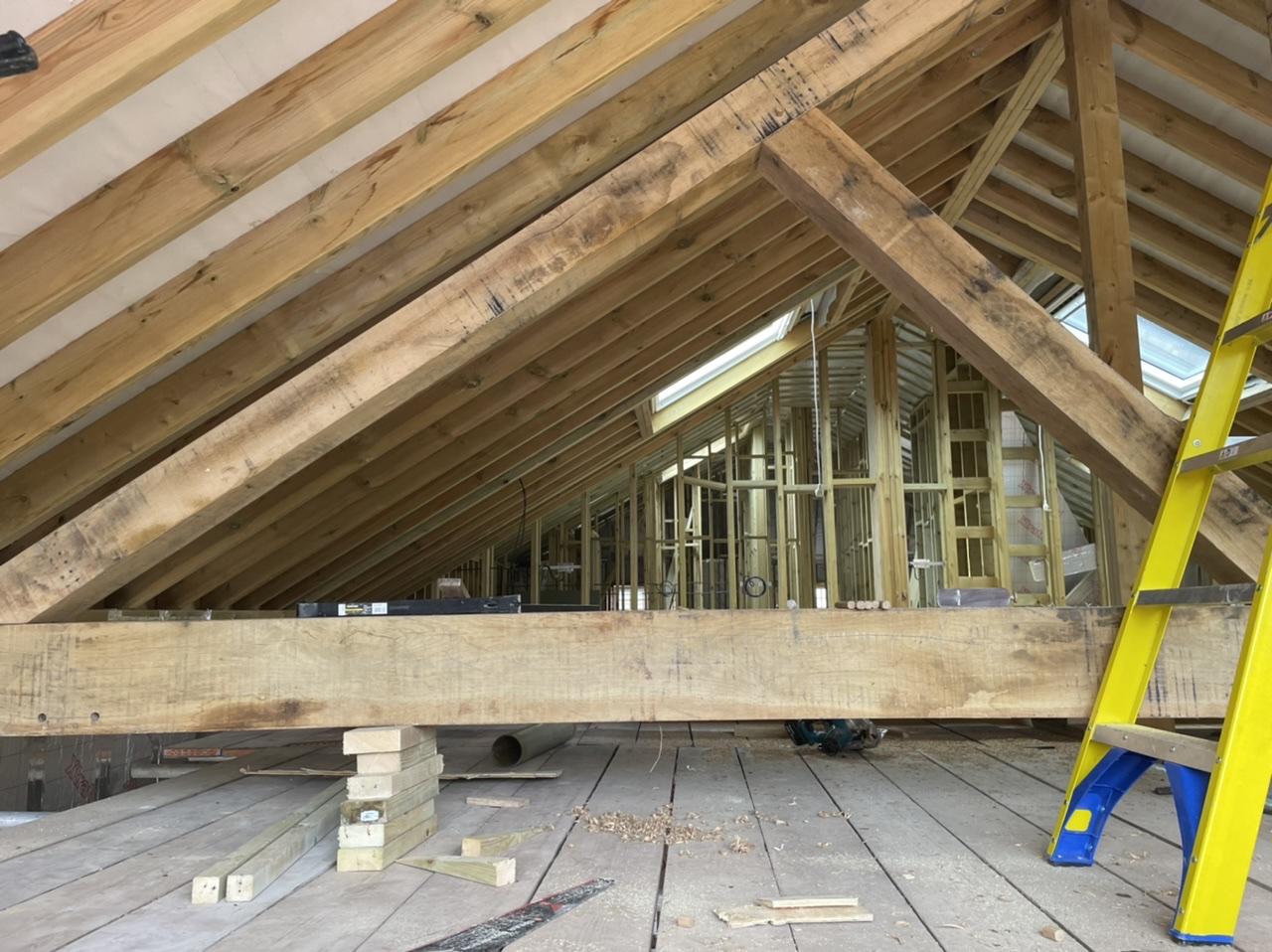
I’ve been recommended to use Oxalic Acid to clean up my newly installed oak trusses which have all sorts of black marks and water tide marks from where they were stored for so long. Apparently it’s nasty stuff to deal with and after you’ve used it to treat your oak you must wash it off with soapy water. I’ve also read somewhere that it can bleach the oak badly unless you make sure you treat the whole truss evenly. Is this my only option? Sand blasting sounds like a waste of time and messy.
-
Studwall sits on new solid top grade concrete base foundation of approx 1m depth.
-
It's a timber frame new build within the walls of an old 200yr old property so essentially the new timber frame is creating the second skin inside so no direct weathering or forces from that but it is of course load bearing as it's now taking the majority of the weight of the roof etc. it's all been signed off my Building Control but I believe it was my initial contractor (who's disappeared on me) who started putting the OSB on the inside of the stud work saying it helps to reinforce the structure of the building which makes sense. it's been done of 70% of the property but since he has disappeared and a few people have asked me why I was still doing it when it wasn't essential, I'm now doubting whether to do it. Especially when you consider thing like mould and mildew as mention above.
-
It's on my perimeter structural stud work. I'm basically building a new timber frame home within the walls of a 200yr old property. The old walls we are not touching and therefore due to structural engineer instructions we have created a sizeable cavity of 200-300mm. The layers are as follows: - Brick wall (or cob wall is some areas) - Cavity space of 200-300mm (of which there is a ply and fibre resined box gutter sat on top of - I'm mentioning in case it makes a difference to temps inside the cavity space) - 2x4 structural timber with 100mm PIR insulation in between studs - 9-12mm ply (or OSB now instead) - 20-25mm PIR insulation (to stop any cold bridging) - 19-25mm batten (for services) - 12.5mm plasterboard There is little to no ventilation for the cavity space. Do I need a membrane layer or is the cavity big enough to stop any mould coming through? Do I use OSB or ply? Do I even need a OSB or play layer?
-
Thats very interesting. so the 12mm ply I had in my basket I should really replace with a decent OSB. Or still a membrane layer on before putting the OSB on?
-
Condensation on inside of external brickwork inside cavity
ashthekid replied to ashthekid's topic in Damp & DPCs
There is a sizeable cavity between the exterior brickwork and the beginning of the stud wall - approx 20-30cm - this was required by structural engineer because the brick wall is so old. Does that cavity size make a difference? And where exactly would you put the vapour layer? If the order is: brick wall, 20-30cm cavity, timber stud work with 100mm PIR in between studs, 9-12mm ply, 20-25mm PIR, 19-25mm batten, 12.5mm plasterboard. I'm assuming before the ply goes on? Is the ply important? -
I have to put structural ply onto my exterior stud wall but I'm not sure what is best to use before it becomes a waste of time and money. I was thinking 9mm but a carpenter said it's really not thick enough to make any benefit. He suggested 12mm. And how about areas where I'm hanging a towel rail for example, a wall hung TV, a big heavy picture frame, kitchen high wall units etc. 9mm, 12mm, 18mm? I'm obviously plasterboarding over the top but want to make sure I have a strong enough base to fix upon. The original plan was stud wall, 100mm PIR in between the studs, then 12mm ply on top, 25mm PIR, 25mm battens to allow for services, then 12.5mm plasterboard. Now I'm thinking just 9mm ply, 20mm PIR(or none at all), 19mm batten(or none at all) then 12.5mm plasterboard. But where I need the extra base strength to fix to I replace the batten with 12 or 18mm ply although that won't balance depth wise.
-
Condensation on inside of external brickwork inside cavity
ashthekid replied to ashthekid's topic in Damp & DPCs
I’m hoping we get some good weather soon as I will be needing to put the insulation in soon. -
Condensation on inside of external brickwork inside cavity
ashthekid replied to ashthekid's topic in Damp & DPCs
Sorry yes that was meant to be elements.??♂️ Normal as in I don’t need to do anything? Treat the brickwork with anything? Make sure there is some kind of ventilation? -
Condensation on inside of external brickwork inside cavity
ashthekid replied to ashthekid's topic in Damp & DPCs
Have to add that this is a historic party wall that I share with the neighbour and it's open to the elects on the other side. There is no leak coming from above, around the box gutter detail. -
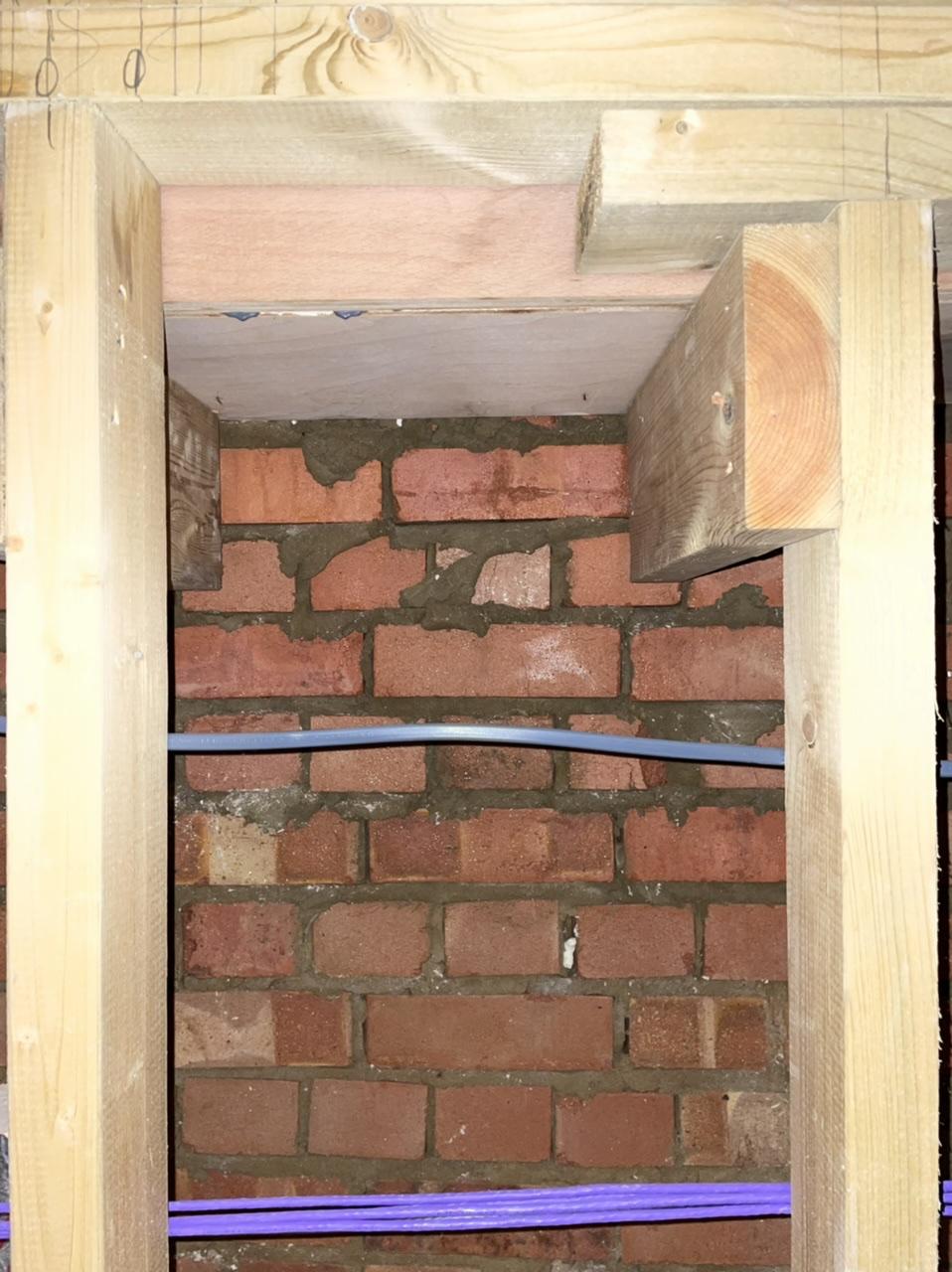
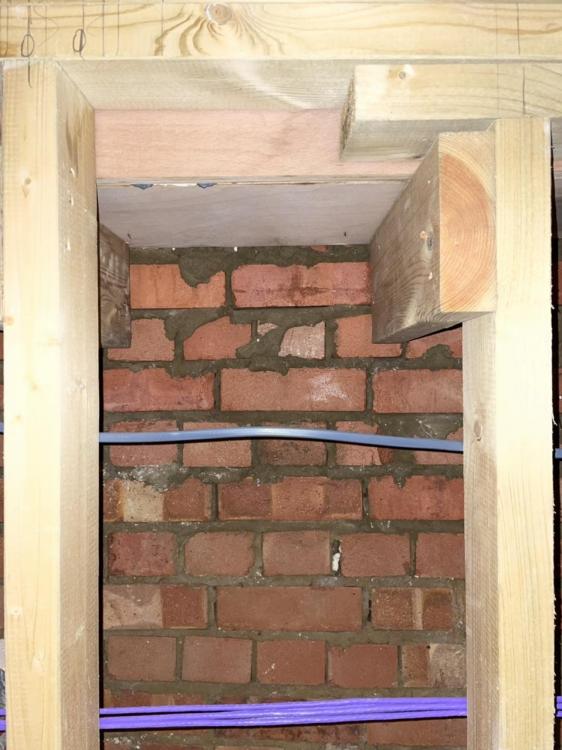
I am almost at the stage of putting insulation in between the timber stud work that is up against the external brick walls. We have a sizeable cavity space due to requirements of structural engineering specs but I've just noticed some serious condensation on the brickwork directly underneath the box gutter. Ok it was after the recent cold weather we've had and the property isn't totally airtight yet so its' pretty cold inside as well but is this normal? and will it stop once the cavity is closed up with this insulation between the stud work and plaster boarding on top? I don't know if it's anything to be concerned by and therefore easier to rectify now before covering up. I will attach a photo.
-
Knauf vs Soundbloc vs GTEC vs Corex With so many to choose from, where is the cheapest place to get a large volume of acoustic plasterboard? I'm after approx 700 sheets of 12.5mm 1200x2400. Insulation Express, Insulation Superstore etc? Does anyone have any secret supplier at good prices? The best I've found so far is between: Insulation Superstore: Knauf Sound Panel 12.5mm @ £11.74 per sheet inc VAT or Insulation Express: Soundbloc 12.5mm @ £12.14 per sheet inc VAT
-
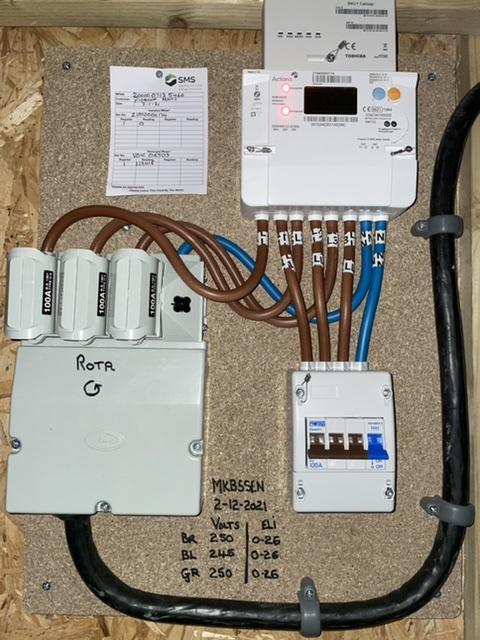
The meter is a SMETS2: Alcara SGM1433-B which I believe has net-metering. How do I check for sure? I can’t find anything online to confirm if it is. What I did find is this pdf on SolarEdge: Single Phase Solution for Three Phase Residential Sites SinglePhase_Solutions_for_ThreePhase_Residential_Systems_AUS.pdf
-
@joth yes meter got changed when they moved it recently. I didn’t know they were going to change it to a smart meter.
-
I’m starting a new thread as a previous one started to get a bit sidetracked. I’m looking at putting a single phase SolarEdge HD Wave inverter onto my 3 phase supply coming in. 11 panels x360w = 3.96kW with SolarEdge Optimisers already installed and 3 phase smart meter already installed(photo attached) - this was already existing at the property with its old commercial usage. My plan is to maybe have the single phase inverter assigned to the one phase that has the air source heat pump and perhaps electric cooker and main appliances on. I will then leave the other two phases for all lighting and other common household electrical stuff. Does this seem a logical? Rather than going for a 3 phase inverter whereby some of the electricity generated may be wasted if directed into phases that may not use as much during the daytime. I know there maybe some balance issues but none that will effect the usability or standard building regs.
-
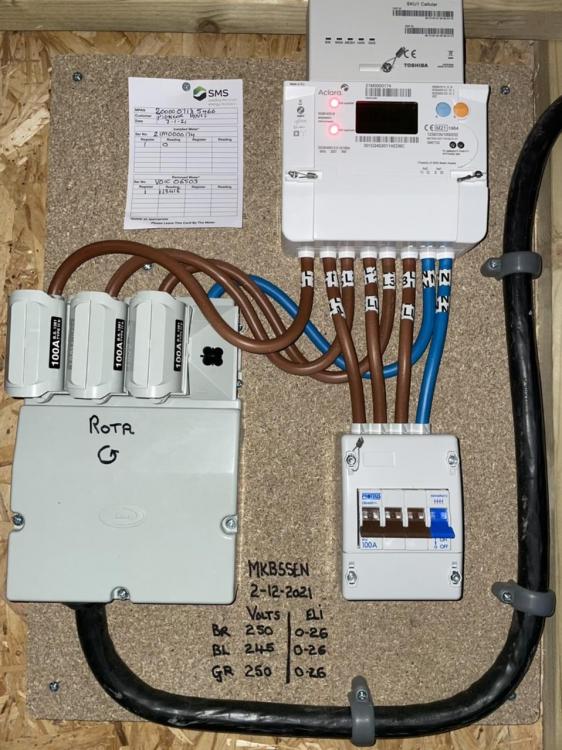
Update: Attached is the 3 phase meter setup which I believe a smart meter. My plan is to stick with the 1 phase SolarEdge inverter and assign it to the phase that will have the ASHP on as that’s likely to be the biggest draw. Would I be correct in assuming that? I suppose aI could put the main elelctric cooker and few appliances onto that phase as well. Then just have all lighting and minimal loads onto another phase. Would that seem logical?
-
Ok so to help with answering some questions on the layout of the property of my property, we have an ashp, an annex which has its' own kitchen/bathroom/lounge/bedroom and then a 4 bedroom property with 4 bathrooms, kitchen, utility, pantry and study etc. The whole property is on electric as no gas in the village so that means electric cookers too. The plan is to have an EV charging point although it will be unused for now. My thinking was to have the ashp/EV point on one phase, the main house on another phase and 3rd phase for the annex which seemed logical. My previous contractor who has since disappeared had his recommended energy guy install 12 panels(4.320kW) but we sadly had to remove one due to velux being too close so down to 11 now (3.960 kW) with SolarEdge optimisers because I wanted to make sure it ran as efficiently as possible. After installing the panels the contractor and energy guy have since disappeared leaving me to finish off the project. In his solar summary it was planned to have a single phase SolareEdge HD Wave inverter, which is why I then thought it odd to not have a 3 phase inverter to match the input to the property. I also have full planning permission for the panels which may or may not help with determining what inverter to use. What would be the simplest thing to do here without having to touch the array as they are currently set up as? And does it matter that I plan to use myEddi diverter for any unused generation directly into my DHW cylinder? I have no intention of feeding anything back into the grid so does that mean I don't have to change my meter which is currently a standard 3 phase analogue meter?
-
Yes already installed with optimisers with the cable hanging down inside ready for the inverter etc. @joth analogue meter. Wasn't planning MCS as I am planning to keep all generated electricity. I think the little i'll have left over won't generate much back from the grid in terms of payback so i didn't think it was worth it. I'm planning on adding a myEddi to my water cylinder to use up any excess. I've not heard of any G99 paperwork before. Will I need to consider that even if I'm not feeding back to the grid? Array is 3.960 kW. I've just paid to have a service alteration to move the 3 phase coming in, I've been strongly advised to keep the 3 phase because of the potential loads of the property so i won't be changing that.
-
What model SolarEdge inverter would be best suited to have my 11x array with Optimisers run most efficiently? So I know what to ask for. I don’t want my installer to install something that’s more convenient for him over what should be put in.
-
No smart meter, just a standard 3 phase meter.
-
I must admit I don't totally understand. I suppose i just assumed it was always best to match the 3 phase with a 3 phase inverter. I am planning on future-proofing the property and having an EV charging point but don't have an electric car to use it yet. The 11 panels and optimisers are already installed. The installer is planning to come back when the rest of the project is finished or at least the 1st fix electrics are in. I'm in a strict conservation area so 11 was all I could fit on a particular roof within the planning criteria. At some point when battery costs come down i am planning on adding some sort of battery storage onto the setup. And have plans on installing an air source heat pump for UFH and hot water. Am hoping this PV array go some way to helping with that. Just need to make sure i have the correct inverter though before it's too late.