larry
-
Posts
169 -
Joined
-
Last visited
Everything posted by larry
-
Agreed. Our house feels massive for a large family and it's about a third of that size!
-
Fair enough - nod has mentioned cost which is a consideration. We have done wood fibre and lime plaster (and one room wood fibre flexi between battens with plasterboard) but the price has really rocketed up and I am also wondering about Rockwool between battens for the next room. It is breathable although of course doesn't buffer moisture in the way that wood fibre does. I worry most about the top surface though - seems to me you have to be quite careful if you are trying to keep things breathable, both with the paint you use, and if you are using plasterboard, to avoid using PVA first. In my internal mental model you might as well be covering the wall with cling film.
-
How do you tell it is wet? By looking? Or do you have a damp meter? And presumably you mean from outside? I'm just trying to differntiate between the walls getting damp outside from rain and the risk of interstital condensation depending on whether or not you have a vapour barrier. I have to say I don't think I can help your specific question about the specific impact of a burner, but it seems to me you've already at least half answered it if the wall is drying out...?
-
Oh, and if you go without a vapour barrier, what do you plan to cover the plasterboard with? i.e. do you plan to simply tape and fill or are you covering the plasterboard face with.... gypsum? lime? something else? And paint?? I suspect the surface above the plasterboard could make a big difference to vapour permeability.
-
Two questions as I don't think these are your only variables: Are your walls rendered or just solid brick/block? And how thick - 9"? When you say 'dynamically dryer' since putting in the wood burner, what do you mean and how do you know? Was there evidence of a damp problem before? What's the venilation like in the house and are you likely to produce less/average/more than typical humidity (e.g. showers, drying clothes etc).
-
George- thank you so much. I wasn't aware of a potential risk about using helifix with lime mortar but I'm glad that even though you've introduced this you think it could work! Re the infill - it's a LOT harder than the mortar used around the bricks, and to me seems similar to the Quoins that I've uncovered around the edges of the wall. Sounds like though the key thing is to work out whether there is a anything within the infill or not given the views so far. I have to say I'm a little bit worried to go at this heavy with an SDS drill to try to find out but maybe I need to drill a few holes this weekend and see what I hit...
-
This is just so useful - thanks so much for sharing. To be honest I'd sort of mentally written off EWI - partly as we have already started IWI (the top half is done with Woood Fibre), but also practically I worry it would be a tricky (expensive) job - would need to add a new line of roof tiles to the gable end that has , and move two toilet stacks - one cast iron - and a drain that abut the house. Plus the dwarf cavity walls mean a 50mm protrousion from the house already about 80cm up the wall. Maybe this is just par for the course and to be fair I haven't had any quotes in to look at this - which I should probably do.
-
Another vote for doing this in a house that remains unquestionably leaky - we've been very happy. I can understand the argument above in that in a leaky house you are getting background ventilation anyway, but in our case we were also routinely pulling in a lot more cold air from outside through bathroom/kitchen extract fans every time I had a shower etc. For me I suspect the energy savings from being able to take all the extract fans out and not send warm air out the window is the key saving, the fact that energy then remains useful is just a small added bonus. Also love the fact that the smell after a roast dinner just disappears...
-
Well, at least the wooden lintel made it easy to fix curtain poles?!! Goodness, yours does look very similar indeed. Similar windows too!! Did you go for the Helifix in the end? And what did you end up doing to the rest of the wall?
-
Thanks so much Peter - that's really helpful though I'm not sure I'm quite that brave!! But it's good to know it's not a mad idea in general.
-
Ah yes, I'd wondered about that... the top room though now is already IWI'd (wood fibre) and my guess is that for our case (at least on this wall) an EWI install would be a bit fiddly - extending the roof line over the gable end, moving two soil stacks (one cast iron original) that abut the wall... dealing with the fact the dwarf cavity at the bottom protrudes by about 50mm, and we quite like the bricks on the dwarf wall, so does that mean brick slips... yada,yada I'm sure these are not insurmountable issues but am trying to keep down costs. Or am I being too pessimistic?
-
Thank you so much for a quick and honest reply - that's hugely helpful.
-
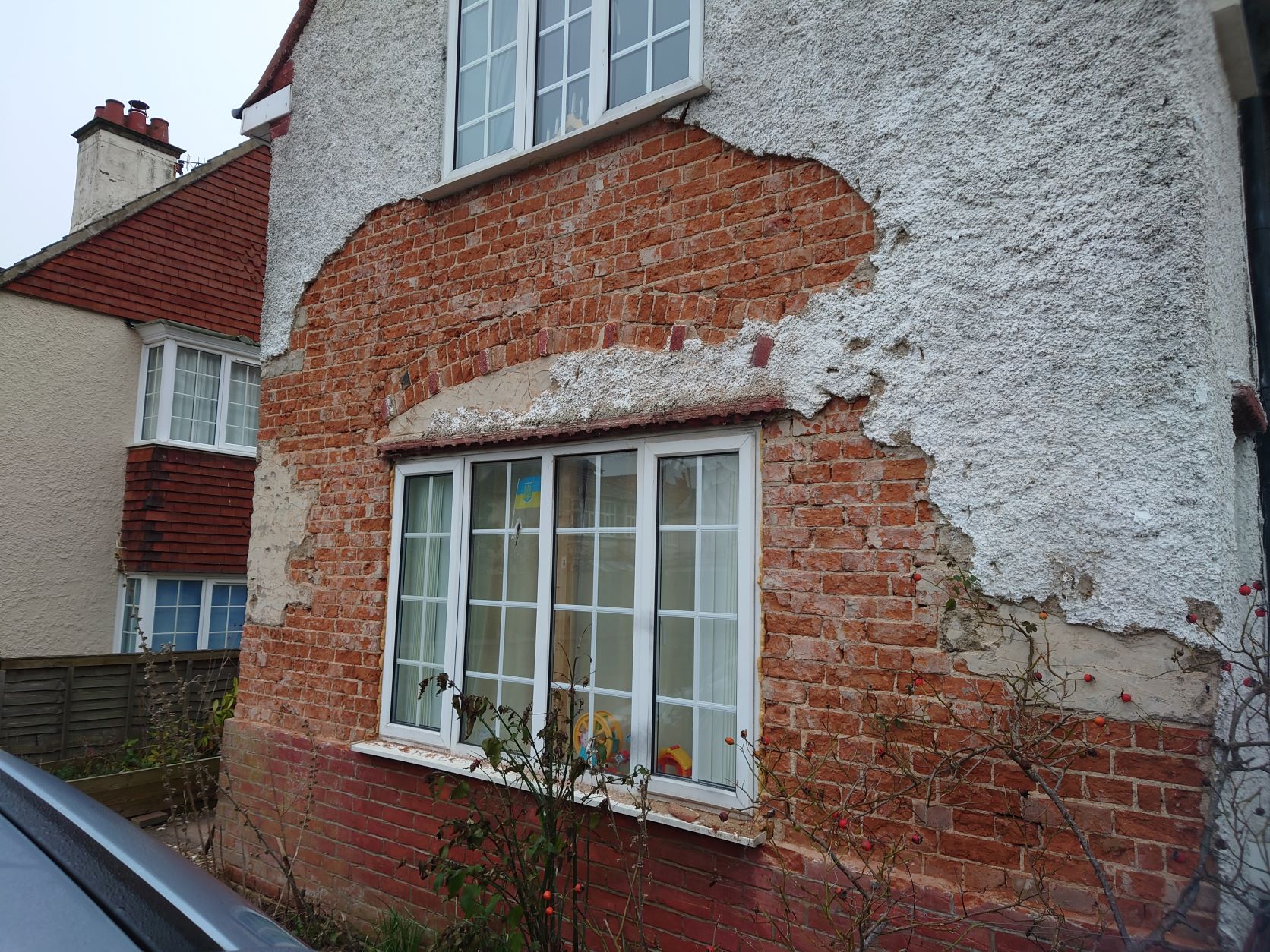
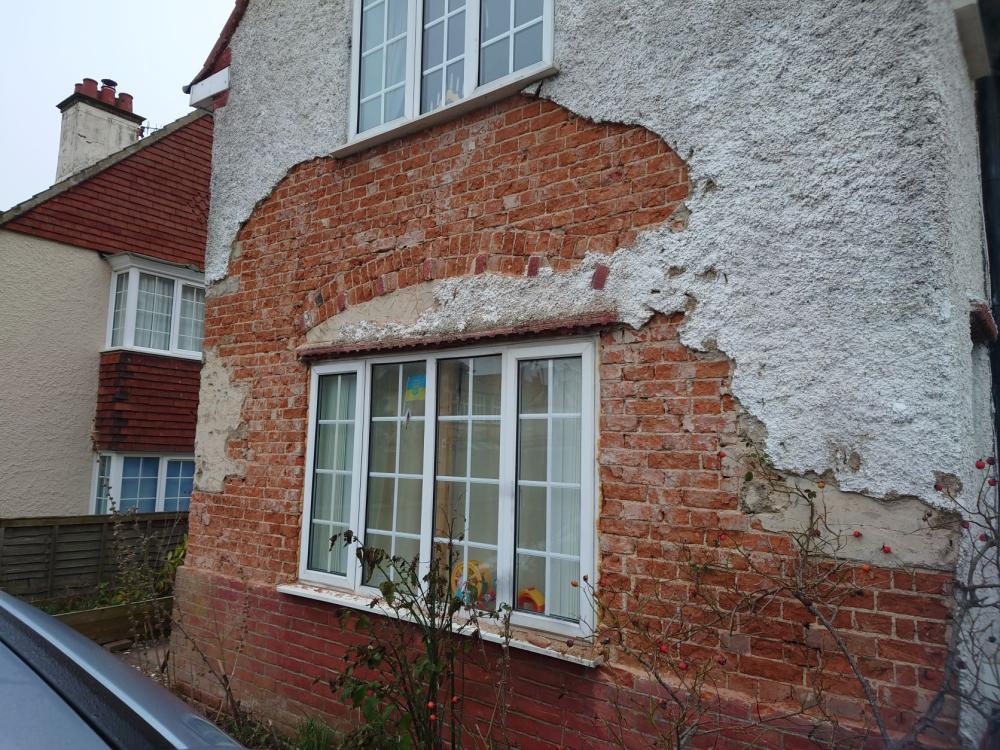
Hi, I've just posted a question about my solid walls where I have been hacking back old cement render (link below) But I'd also like to ask about advice about what render to use and likely prices. I've had one quote back for lime render to be done at £160/sqm+VAT which frankly is over double what I was expecting and not really affordable. I've been looking at various options and came across this monocouche render which promises to be breathable https://www.vimark.co.uk/products/one-coat-through-coloured-render-monochrome/ It isn't lime, but it is about a third of the price - and monocouche has the big advantage of not having to paint also! Does anybody have any experience of this product or similar? I can get scaffolding reasonably cheaply locally. And as you can see I can hack off a good amount of the render myself (I hate ladders but have managed to get to the bottom of the 1st floor window with my A-Frame ladder, SDS drill, and a long pry bar - the advantage of the render being knackered is it comes off very easily!). so questions are: 1. Recommendations for render to use for solid walls - is lime the only option? 2. Rough cost for rendering, it's approx 50sq/m in total that needs doing (am I being unreasonable?). )
-
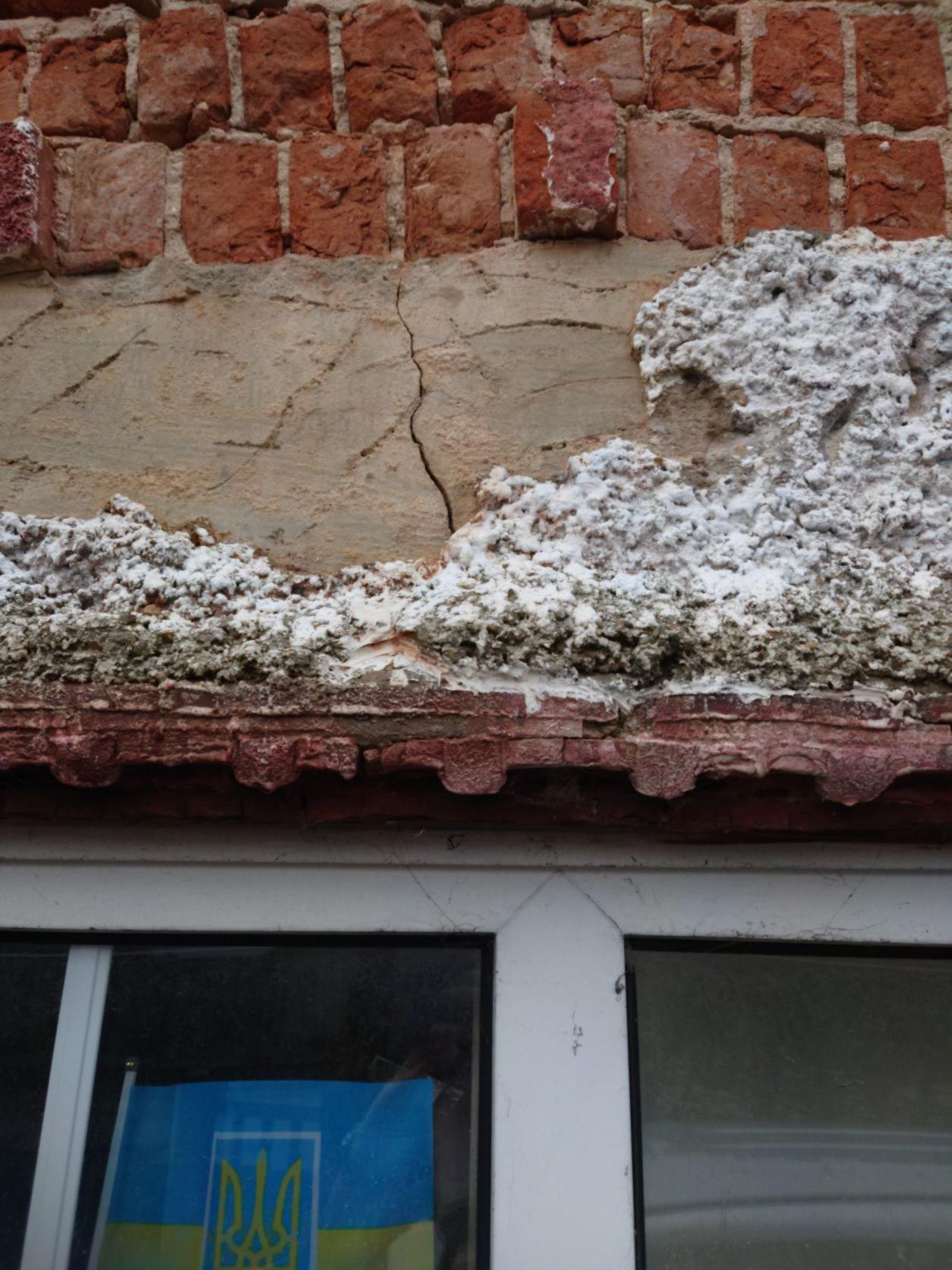
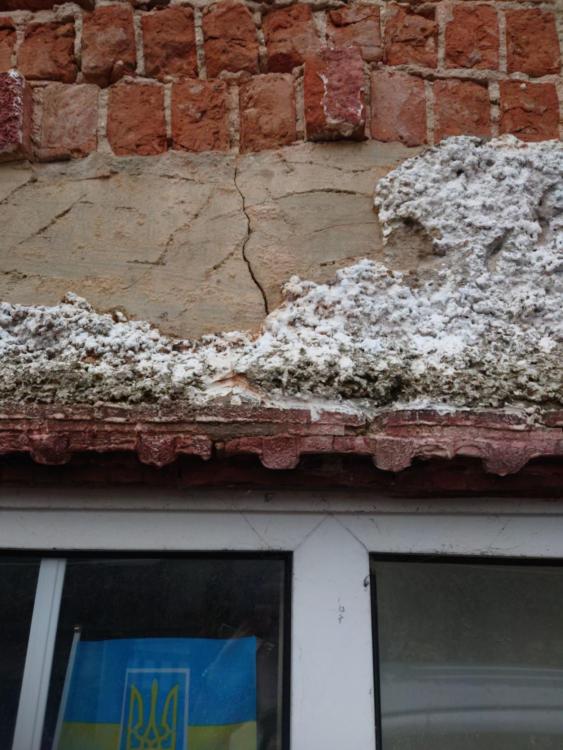
Happy New Year everybody, I wonder if I could please call on some advice and opinions from the many wise minds on here. So we have had a problem with penetrating damp. Solid walls, cement render. So I have hacked off some of the render (well, quite a lot of the render!) and that has solved the damp problem. Hurrah. Of course, one issue is that all the bricks are spalled... and I need to put back some kind of breathable render on the top... but my main question is about my lintel, I don't understand it. So I have an arch, with concrete infill underneath - I'd always presumed a steel lintel was in there as well, but I actually have no idea. The concern is that the lintel has cracked in the middle, I gather/presume from replacement of original frames with uPVC windows. But the uPVC windows have been there a long time and the wall hasn't fallen down. You can see the vertical cracking either side of the frame and there was historically on the inside evidence of a vertical crack underneath the middle of the window. We filled that in several years ago and it's not reappeared, so I am working on the assumption that it hasn't moved/cracked any further. The crack is at least 45mm deep having poked a bit of earth wire in it. Extends perhaps 3mm across at widest point. It's a gable end wall, but the 1st floor joists are sitting on this wall so it is taking some weight. Above the first floor window there's also looks evidence of an arch but the lintel is timber, and, from having looked at this from the inside of the house (when putting up woodfibre boards) in good condition. It's a 1920s house. Dwarf cavity walls with solid walls on top. Have people come across this sort of lintel arrangement before? And do I just ignore it or should I get some work done to strengthen it? I've had one company indicate they could reinforce with helical bars which sounds great but I've got no experience of this. Any easy way to work out if there is a steel in there without hacking back the concrete? (I've tried poking a tiny magnet in to see if it magically got picked up - no dice) I'll ask a question about render separately...
-
Viessmann Vitodens 200-w - initial impressions
larry replied to larry's topic in Boilers & Hot Water Tanks
Sorry for a slow reply. If I'm honest I can't remember exactly where that setting was, but the manual is here - I can't remember if it was the setting on page 59 or page 71, but try one of those options- you access from menu --> service --> password 'viservice' http://viessmanndirect.co.uk/files/9dda3bd0-9827-4190-9cfc-a6790125f008/5776863 Vitodens 200-W B2HB B2KB 35kW Installation and Service Instructions.pdf Hope that helps -
V helpful V helpful. Does that model work the same way? I e. Alternate extract/supply cycles over a heat exchanger? Looks like there might be more gubbins in the wall unit on that one.
-
Oh, one more thing to add. The noise is not entirely constant. When the fan changes direction, you hear it quieten and then speed up again.
-
Updating on outcome here. I ended up using an Europlast EER125 single room heat recovery which I got on eBay for £110. Fitted today. Easy fit, like an extractor fan. Works by reversing directions of air flow every 70 seconds. There's a ceramic heat exchanger inside which presumably collects the heat on the exhaust cycle and reuses it when it pulls the air back in. Two modes of operation fast and slow. Slow is not too noisy at all. You wouldn't want fast in a bedroom but fine in a bathroom/kitchen. Only issues I can see. You have to in theory wash the filters every three months so that means unclipping the grille and pulling out the heat exchanger. How many people will be bothered to do that in reality I don't know. Second issue, you definitely need a 127mm hole not a 125mm one, and you need the hole to be dead straight. I had a bit of a small bend on the hole when it crossed the cavity (was reusing an existing hole) and it caused the plastic tube to bend slightly which meant that the fan caught on the edge and made a noise. Needed to remove and expand the hole slightly. Will wait for real world performance in the winter but so far so good and certainly a step up from putting in an extractor fan. Hope this helps somebody considering a similar option.
-
http://www.greenbuildingforum.co.uk/newforum/comments.php?DiscussionID=9580 Thanks Roger. I'd read conflicting things, if I'm honest. This link is interesting reading. Certainly can't be worse than the multiple layers of wallpaper, lining paper and vinyl paint that I stripped back before.... The good news is though I've got a natural experiment having tried both approaches. I promise to report back on here if the plasterboarded room falls down in ten years!!!
-
Thanks for clarity - but yes had guessed that. As much as anything I guess the polybeads wouldn't last long through the ventilation holes?! I suspect venting externally and insulating internally with IWI is probably what I will do - the chimney pot is a long way up, I hate ladders, and trying to find tradespeople around our neck of the woods is about as tricky as finding a dentist...
-
That's super. Thanks. Glad that's not a completely off whack idea! Very appreciated.
-
Thanks. Sorry to be dense, but 'from the top', you mean literally pour a load down the chimney pot? Yes, that was my worry, hence the suggestion about trying to introduce the ventilation externally and just keep it all cold. Thank you!
-
We've started putting in Woodfibre IWI about a year ago. I've used both the rigid boards (e.g. Steicotherm) and the cheaper flexible boards between battens (e.g. Steicoflex). I didn't use a VCL; for the rigid boards used the ready mix lime plaster you can buy and did that myself (low standards!) and for the flexible boards just put PB over the top on counterbattens (taped and jointed and then painted with breathable paint ontop). Found that Tikkurilla paint did a good range of breathable paints at a not completely ridicilious cost and seemed good quality. No problems so far but it's only been a year. Has made a noticable difference to otherwise cold rooms and very much looking forward to doing the rest of the house when work isn't quite so busy...
-
Hi all, I've had some great advice on here before so I hope people don't mind helping me again. Have started on a new room now for insulating with wood fibre board. I have used both Steicoflex (flexi wood fibre) between battens and Steicotherm (rigid wood fibre) in the first chunk of the house done so far, and very pleased with the results already. The new room has a fireplace and chimney on an external wall. It's a solid brick wall. 1920s house, detached, East Anglia so quite dry, and we have fitted an MVHR. It is a first floor room. Below is the living room which also has a fireplace and a single flue. We don't plan to use that fireplace either but might try and retain something when we eventually get to that room in about 2028... Today's job: I have removed the fireplace and 100 years worth of soot, dust and sticks from bird nests. I think I must have removed something like 70kg of crud, it was pretty grim! But all bone dry and no evidence (to my eyes) of any damp... Chimney is already capped - one of those half round caps so stops rain coming down at least but allows ventilation. We are not planning to reinstate the fireplace in this bedroom, so ideally would just cover over. . My questions (which are all linked as you will see!): 1. Can I cover the builder's opening on the fireplace over directly with rigid wood fibre board and lime plaster skim and just be done with it? (Or if not, can I cover it with anything else?) 2. How worried do I need to be about causing condesnation in the chimney/flue? What can I do to mitigate that? 3. Would a sensible plan to avoid condensation in the chimney/flue be to drill a few holes through the external wall at the base to then allow for through ventilation in the flue itself? Or is this just stupid by making the chimney colder? 4. Or do people fill their chimneys with insulation? If so, what and how? I have temporarily shoved a pillow up there and boarded over the front in eager anticipation of the forum's collective wisdom...
-
Thanks both, very helpful for starters, will let you know where this ends up !