


Jeremy
-
Posts
65 -
Joined
-
Last visited
Everything posted by Jeremy
-
Thanks @markc and @Moonshine for quick and unanimous advice - much appreciated!
-
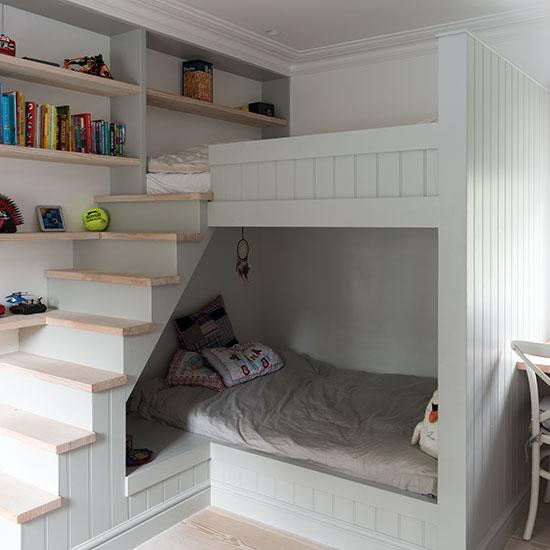
I'm putting in some built-in bunk beds for the kids room which I'll be starting reno on soon. We're also putting in carpets, but I'm wondering if I should carpet the whole room and install bunk beds on top or carpet around them? Happy to hear anyone's thoughts!
-
anything you'd recommend specifically?
-
Epic. Will check in with c2g tomorrow! Re: pre-plumbed, not surprising I'm off in my estimation - that was just based on a few comparisons across other vendors. But would you agree that it's probably easier and cheapter to get a pre-plumbed cylinder?
-
I've settled on a Telford unvented cylinder to replace a 30 year old (or more!) vented tank/cistern. After contacting Telford, I've learned that they don't do direct sales, so I'm wondering who folks on the forum have purchased theirs through. Pricing with online vendors for these seems quite idiosyncratic - e.g. I'm looking for a heat pump / solar tank, probably pre-plumbed, and these should be just a hundred or two pounds more than the basic uvc, but from some sellers they're £500-800 more. Any tips on how you purchased yours? I've already got a local G3 certified plumber/installer lined up to do the plumbing work and hand-off to heat-pump guys to finish the job. I just can't see any upside to paying the installer a 30%+ markup for a pre-plumbed cylinder...
-
Ah, ok. Well, that's good to know. But seems like all these conditions would probably end up increasing my budget by much more than 15%, so I guess not worth the trouble, alas. Might see if I can get this applied for a single big ticket item (in-wall insulation maybe).
-
Haven't moved in yet - plan to do 8 weeks of reno first - so ok on that front.
-
I've gotten official confirmation from local council that the former occupant of a home I'm just about to start renovating was deceased more than 24 months ago. I'm pretty confident this means that I qualify for 5% VAT on materials used in the renovation. I gather this will certainly apply with those trades that I can get to apply the 5% rate for materials they use, but I'm also planning to do quite a lot of work myself. Has anyone found a vendor or supplier who can provide timber, sheet goods, insulation, plasterboard etc. at 5% VAT for self-build work?
-
Calculating heating and thermal transferrance per room
Jeremy replied to Jeremy's topic in Central Heating (Radiators)
Gotcha. Thanks for the clarification. Definitely plan to get this all on RHI (thus solar thermal as well), and then get Solar PV installed in a few years (hopefully we get a decent subsidy regime in place soon as feed-in scheme is pretty dismal), so cost not as much of a concern overall for me. But point taken re: cheap gas! -
Calculating heating and thermal transferrance per room
Jeremy replied to Jeremy's topic in Central Heating (Radiators)
Ok, am back with a question: I did a quick check on the tech specs for performance on the Samsung 12kw ASHP we are looking at. At -2C ambient temp, running the pump at 55C, for 5.33kW in it will produce 8.73kW of heating. Isn't that still almost twice as efficient as gas? -
Calculating heating and thermal transferrance per room
Jeremy replied to Jeremy's topic in Central Heating (Radiators)
Do you mean this: https://re.jrc.ec.europa.eu/pvg_tools/en ? Fab tip. Had not run across this! -
Calculating heating and thermal transferrance per room
Jeremy replied to Jeremy's topic in Central Heating (Radiators)
What's the JS Harris calc? -
Calculating heating and thermal transferrance per room
Jeremy replied to Jeremy's topic in Central Heating (Radiators)
Ok, this is good to know - will rate radiators based on 45C flow temp then. We do have mains gas, and an old gas boiler, but not sure if I want to bother connecting it. The whole point is to get off fossil fuels. Will probably also have solar thermal feeding in to unvented cylinder for hot water. And I hadn't thought of dynamic responsiveness of the whole system. Will have to contemplate that a bit. We do have woodburners in several key rooms, and will probably have them going during the winter for ambiance, do you think that might possibly make up for sharp thermal drops? -
Calculating heating and thermal transferrance per room
Jeremy replied to Jeremy's topic in Central Heating (Radiators)
This is a great point. Will calculate max need based on more uniform house temp. -
Calculating heating and thermal transferrance per room
Jeremy replied to Jeremy's topic in Central Heating (Radiators)
I'd been thinking about this, but is timber framed on ground floor, part of which is suspended over a cellar, so seemed like rads would be simpler to install, albeit swapped for bigger models. Was thinking we might do electric ufh in the Small kitchen (4x4m). Is there a budget conscious option for timber subfloors? -
I'm working on planning a heating system for a Victorian remodel. For the heating system, I'll be putting in an ASHP, so I'm in the process of calculating the kW I'll need for the pump, and where I might need new radiators. I'm planning to fully draught+damp-proof the house as well as bulk up insulation (floor + loft + in-wall)to get u-value of 0.3 or so and replace windows with high-end double glazing (centre pane U-Value of 1.2). I'm planning to work with a qualified heating engineer to get exact kW ratings for rooms and house overall, but would like to work out ballpark figure myself in the meantime. Here's how I'm calculating my "ballpark" so far - any corrections would be most welcome: (1) Room air volume in metres * air changes per hr * temperature (where temperature = difference between desired room temp and outdoor temp of -1C) + (2) Surface area in metres of external walls (excluding surface area of windows) * u-value of insulated walls / 1000 (for kW) + (3) Surface area in metres of windows * u-value of windows / 1000 (for kW) (4) Surface area of ceiling * u-value of roof with insulation / 1000 (for kW) I'm not quite sure how to sort out thermal inputs (woodstoves, kitchen appliances, human bodies, heat passing up through floor from room below), so I've just left that out. Also, I'm just estimating air changes, as this house won't have MHVR or anything fancy like that. Using 2/hr for kitchen and bathrooms, 1.5/hr for hallways and 1/hr for bedrooms. Ideas welcome on both of these details. For the sake of the math, I'm using figures of 20C for living room, 18C for bedrooms and 16C for hallways. So, to give an example of how this is working out in practice for me: An upstairs bedroom is 4m by 4m with 2.7m ceiling with 1.92m of window surface and 5.79m of (2) external walls. I'm estimating air changes/hr in those bedrooms will be 1. This gives me: 4*4*2.7*1*21/1000 (5.79-1.92)*0.30/1000 1.92*1.2/1000 4*4*0.30/1000 This gives me an overall of 915w (or 0.915kW). In terms of measuring for radiators, I gather than BTU/kW ratings for radiators is based on flow-temp of 70-80C, so with an ASHP running between 40-65C will be going for radiators which will give me +33% or so, in this case a radiator specified at 1.216kW. I suspect something is missing here. Happy to be corrected by the proper experts!
-
I'm trying to spec out a central heating solution, and looking at either: (a) 250l unvented direct cylinder (b) 450l thermal store OR (c) combi-boiler with integrated store (like the Viessmann Vitodens 111/222) These vary quite widely in price, so a key deciding factor for me is how efficient the upgrade to a thermal store or the combi will actually be compared to the unvented cylinder. I've found it surprisingly difficult to chase down explicit ratings for standing heat loss on thermal stores. For the unvented cylinders, I'm looking at something like a Telford Tempest Indirect Plus at 250l which they suggest has a standing heat loss of 1.34kWh/24hrs. I'm planning to steal an idea from @Jeremy Harris to have the manufacturer add additional external insulation and see if I can get that down to 1kWh or so. It stands to reason that someone else has already worked this out for different models of thermal store, but I can't seem to find it "out there" - can anyone advise?
-
Should I use 12.5mm plasterboard for this? Or is something thinner ok? And how much plaster is usually added on this? I'm assuming 10mm base + 5mm skim might be excessive...
-
So looks like, for about 75 linear metres of wall with 3m per floor, I'll need: - 25 Gypliner GL8 steel tracks (for floors) - 175 Gypframe GL1 Lining Channels (vertical) - 2x 100 packs (for 175) GL2 gypliner brackets - 6x 200 packs of gypframe GL11 GypLyner Anchors That's under £1k at https://mybuildersmerchant.com (£888 including VAT), which isn't too bad. And the system is designed so that I can install 20/25mm conduits in the gap for services, which is nice. Their integrated panels are, however, *very* expensive. Around £10-12k for Gyproc ThermaLine super / PIR for the 200m2 that I'll need. So, seems like sticking with generic foil-lined PIR boards and plasterboard, which is around £2.5k is a preferrable option, unless anyone thinks the £7-8k difference is somehow worthwhile. Thanks for the tip!
-
Probably 0.25 or so. Replacing windows with PVCe double paned, adding loft insulation, membrane and osb boarding to attic to get around 400mm and floors with 100mm PIR or thicker wool, but not quite sure what the final figure will be at.
-
Nice! I'll check that out. Had a feeling I might have been missing some updated info based on my internet research.
-
Just getting my head around wall construction and the balance of vapour, heat and draught resistance and how they work together. I'm planning to renovate my walls (internal, as neighbours in the terrace aren't necessarily enthusiastic) house-wide - the solid double-brick victorian design (basically just bricks with plaster on it) has some significant room for improvement. But there are a dizzying array of options and configurations for internal wall insulation and it seems like information "out there" hasn't quite kept up with our developing understanding of water vapour and airtightness. Here's my current understanding, am hoping folks can correct me where I'm wrong (from outside to inside): 1. The air outside: The weather here in the UK is rarely on average over 21C, so the inside of the house will almost always be warmer. So the design needs to address water vapour that is *leaving* the house, getting cold and turning to condensation at some stage during its exit from the inside rooms. Not much reason to worry about water vapour coming in from outside. 2. The outer structural layer, that is in my case a solid double brick layer has a Vapor Resistivity, N s/(kg m) of 45 - 70 (got that from here: from here: https://www.engineeringtoolbox.com/vapour-resistance-d_1807.html). This means that it is "semi-permeable" 2b. Leaving on plaster (or not): Most of my walls have plaster (in some cases lime plaster, but haven't done an exhaustive survey), which I gather is straight-up "permeable". I can't see a consensus as to whether it's better to remove or not remove plaster, but I gather it may be necessary to remove (a) so that one can assess damp problems in case they aren't fully permeating the plaster to the inside layer of the wall (to show on paint etc.) and (b) so as to install some sort of membrane, or (c) obviously to address where there has been damage, and it seems to make more sense to leave it off if it's already off. But it seems like some folks like to save time and energy by leaving it on if there aren't mitigating situations. I'm about 70/30 leaning towards removing paint and plaster to expose the brick and check things out properly. 3. Air gap (or not): I've noticed some disagreement as to whether an air gap is now necessary. I gather an air gap is needed so that air can circulate vapour so that it can evaporate or vent out through the brick wall rather than condensing as it might in a tighter space without air. For the air gap, I can do battens over walls - and it seems that wood and stainless steel are the likely options here, nailed or screwed. Steel is more expensive, but will avoid rotting better than wooden battens (though damp proofing should ensure this isn't happenning!). Seems like Damp Proof Membranes are also an alternative, but a bit of overkill for my purposes here as it's not a cellar and all walls are above ground. But then the 4. PIR boards. I'll get these with foil backing, as this has an astronomical Vapor Resistivity value (4000), putting it on the very high end of "vapor impermeable". But it seems that some folks prefer the more labour intensive but easier-on-battens-long-term "warm battens" approach, where a insulation is split into two layers (a) a membrane is put down with half or more in layer of foil-backed insulation and then (b) an inner layer of battens with more insulation boards inbetween. This keeps warmth around the battens and ensures that moisture will condense further out in the wall. This seems reasonable to me - and I don't mind the more challenging job if there's an efficiency to be gained. What I'm not sure about is whether to use a membrane or foil-backed insulation boards for the vapour membrane at this stage. And if I use a membrane can I skip the air gap? 5. Plasterboard. "semi-permeable" here, skim on some plaster and ready to go. With regards to thermal transfer and insulation performance, here's what I've got: 1. Air = cold 2. Brick wall has u-value of 2 W/m²K or so 3. Air gap will reduce this slightly 4. PIR boards have a very low U value, which is why they'd be preferrable in walls to various wolls, cellulose, or other good options. I'm aiming for 70mm PIR or more (if possible) to try and get as close to or lower than my target U-value of 0.30. 5. Plasterboard adds a bit here too, but not much. Compliments of diydoctor, here's a diagram of what I'm doing: Option 1 (keep plaster, cold battens): Option 2 (warm battens - ignore blocks in picture): Option 3 (with service void): So questions are: (1) Is there a way of adding internal wall insulation on a solid double brick wall using new "tech" which will enable me to skip the air gap? (2) Should I strip plaster off the wall? (3) What's the best material for battens? (4) Any tips on how/whether to do a service void? I'm going to wire the whole house with ethernet and rewire electrical, so this wouldn't be out of place. (5) I've noticed comments elsewhere by @Jeremy Harris regarding a need to do graded vapour permeability, starting with (as he suggests): "the least vapour permeable and the outermost layer is most vapour permeable". This approach seems to be pretty difficult with internal wall insulation. Or am I allowed to ignore the plasterboard for the purposes of this kind of calculation? Would love to be enlightened. Note: this was quite helpful: https://assets.publishing.service.gov.uk/government/uploads/system/uploads/attachment_data/file/658604/BEIS_-_SWI_Innovation_Final_Report_-_FINAL_Approved.pdf
-
I'm renovating a semi-detached 1880s Victorian 2 storey home. It's got 9" solid double brick walls and no DPC installed. For obvious reasons there is dampness. So I'm planning to do a course around the outside walls (8x15x8m) of something I can inject like DryZone or an equivalent. Here's my question - there is a cellar underneath part of two of those three walls (it's in the corner, around 6x2.5m) with some dampness issues as well. I'm aware that the DPC should be above ground, so what do I do for brickwork that is underground in that cellar and suffering from rising damp? I'm assuming the DPC above will trap moisture in that wall, but should I do a second DPC below as well? I'm already planning on putting in a membrane, sand, and cement pad at 4" for the floor as well as some improved ventillation / dehumidifying.
-
Heating Design on 1880s Renovation
Jeremy replied to Jeremy's topic in New House & Self Build Design
Will closed cell foam, once set allow the wall to breathe, e.g. prevent condensation from forming? Or is it because it is an impermeable barrier that condensation won't be a problem? -
Heating Design on 1880s Renovation
Jeremy replied to Jeremy's topic in New House & Self Build Design
Fab idea - will look into this! Any particular products you know of?
