


Johnny Jekyll
-
Posts
212 -
Joined
-
Last visited
Everything posted by Johnny Jekyll
-
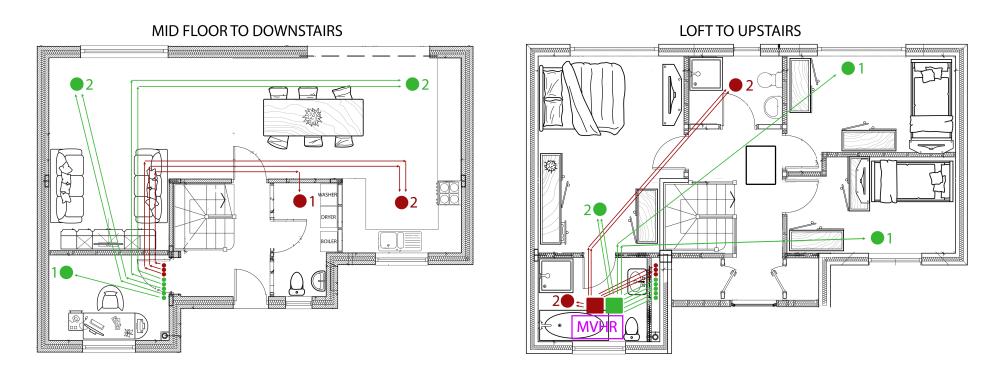
Hi Everyone, I've spent ages trying to understand MVHR and what's best for my house, I could really do with some help please? Below is my design and some calculations, would you mind casting your eyes over it and help with any of my questions at the bottom? Thanks very much. OVERVIEW Planning accepted August 2020 so falls under building regulations at that time. Small 3 bed detached house, total of 126.5 square metres across two floors. Includes a family bathroom, master en-suite and downstairs utility containing toilet. Cold loft with insulation roll at ceiling level (200mm between 9by2 joists and 200mm crossways above), and Intello+ airtight membrane. Loft legs will support a loft deck over the insulation. Posi-joist midfloor so plenty of room for ducting although only 75mm gaps around steels in certain parts. We are not officially going for Passivhaus but there has been good attention to air tightness and good results are expected. House is up and watertight, starting first fix now. Plan is to install and commission the MVHR system myself. UNIT & DUCTING The current spec (from BPC) is a Vent-Axia Sentinel Kinetic BH with 75mm Anti Static & Anti Bacterial radial ducting. The most feasible and spacious location for the MVHR unit is in the cold loft space (above en-suite) to the front left of the house (North gable wall). The intake/extract through the gable wall will be nice and short, insulated, spaced minimum 1.5m apart to avoid cross-contamination. It’s also far away from the boiler flue on the other side of the house. Being a cold loft I will attempt to insulate the unit in a purpose made box to help. The radial ducting for upstairs rooms will run between the loft mineral wool insulation. The radial ducting for downstairs rooms will drop down into the mid-floor behind a stud wall in the en-suite. DRAWING The attached drawing shows the house layout, with beds, baths, showers, toilets, wardrobes all in what should be their final positions. The purple MVHR is the unit location in the cold loft to the North gable wall (above en-suite). I've worked out and planned all the MVHR duct runs myself. The green arrows / circles are supply ducting / room valves. The red arrows / circles are extract ducting / room valves. The numbers show either one or two duct runs to that valve (specified by BPC). BUILDING REGS NOTES Document F minimum supply of air to habitable rooms should meet both the following conditions (basically whichever is higher): Minimum rate of 0.3 litres per second per m2 of internal floor area - 126.5 * 0.3 = 37.95 litres per second (l/s) Minimum rate determined by the number of bedrooms (3) = 31 litres per second (l/s) Building Regs minimum high extract rates (l/s) by room type: Kitchen = 13 Utility = 8 Main bathroom = 8 En-suite = 8 Total = 37 Building Regs minimum low extract rates (l/s): 0.3 Space under closed doors - A 760mm wide door needs a 10mm gap to give required 7600mm2 of space. Wider doors need proportionately less. CALCULATIONS House Floor area = 126.5m2 Room heights = 2.45m House Volume = 310m3 The table shows my actual calculations when measuring the rooms in the house (slightly reduced floor area and volume due to stud walls etc). BPC BPC have designed / specified / quoted a full system. I'm happy with their pre-order service and help but it's of course limited at this stage. It's quite a basic specification so I'd like to check if I need to make any affordable improvements, for example making my own acoustic manifolds (as some have done on here) instead of the basic stainless steel manifolds in their spec or the very expensive acoustic ones you can buy. QUESTIONS I'm trying to better understand my calculations in the attached table (copied how others did it on the forum). What am I looking for with litres per second? Would anyone be able to explain in simple layman's terms? Are there any building regs on air tightness? I'm planning a test soon and results should be good. Do I need to add air tightness into my MVHR calculations? Any other calculations I need to look at / understand? BPC specified a Vent Axia Sentinel Kinetic BH, which is suitable for houses up to 150 m2. Should I be looking at a bigger / better unit, considering my duct lengths (see table) and the fact that my wife wants the system very quiet? Am I daft looking at a high quality passive unit like the Zehnder ComfoAir Q350 (much more expensive as you know)? Are there any specific makes of plenums or room valves (perhaps acoustic versions) that will help with noise reduction? Am I missing anything else obvious? Sorry for the big post and thanks very much.

-
2kw DIY Solar PV Install Questions
Johnny Jekyll replied to Johnny Jekyll's topic in Photovoltaics (PV)
Great info everyone. Any more tips are very much appreciated. -
2kw DIY Solar PV Install Questions
Johnny Jekyll replied to Johnny Jekyll's topic in Photovoltaics (PV)
Thanks very much guys. Stupid question... Should we be looking at a 2kw inverter for a 2kw system? -
Gap between socket fronts and back boxes
Johnny Jekyll replied to Johnny Jekyll's topic in Electrics - Other
Thanks very much, was just worried if the gap triggered a problem with regs and wanted to check with you guys on here. -
Gap between socket fronts and back boxes
Johnny Jekyll replied to Johnny Jekyll's topic in Electrics - Other
Nothing against the plasterboard boxes, we just know our socket locations now and we like the metal ones, especially the 2 plus 1 so we can put ethernet ports neatly next to the sockets here and there. -
We are at first fix stage on our self build. On the inside of our walls will be 25mm battens > 12.5m plasterboard > skim, so about 40mm total depth. In some areas the depth will be greater (more like 50mm) because we're using plastic spacers behind the battens to plumb them for the plasterboard. The plan is to use 35mm metal back boxes screwed to the wall, so in perfect 40mm depths behind that should produce a small 5mm gap between the socket fronts and back boxes, but in greater 50mm depths behind there will be more of a 15mm gap between the socket fronts and back boxes. Does the gap matter? Or is that a regs fail? Should the back boxes be packed off the wall in those greater depth areas? Using plastic spacers or perhaps some ply? Many thanks.
-
I'd like to understand a little more about how to wire together our solar pv system? Would you mind filling in some gaps for me? Thank you. CURRENT POSITION Self-build already up and water tight. Doing most of the work myself. 6 panel 2kw integrated Marley (Viridian) pv solar panels already installed as part of the 45 degree south facing roof looking good. Two end cables with MC4 PV connectors through the roof and inside the cold loft. No other system parts have been purchased or installed yet. Inverter will be installed in cold loft onto fibre cement board. No battery required. Not interested in exporting to the grid so no MCS required. We are looking to DIY install, my boy is an electrician but not experienced in PV, I'm doing some research to help. INTERNAL INSTALLATION Panel cables to DC isolator to Inverter to Generation meter to AC isolator to Consumer unit QUESTIONS Good quality inverter recommendations for 2kw system? Is generation meter needed? What cable would be used to run from the Inverter down to the consumer unit? How best would the cable be connected to the consumer unit? RCD v RCBO v MCB? Anything else needed to connect to the consumer unit? Or does the electricity simply come down and get used by appliances (sorry for simplistic question)? Do I need to notify DNO (UK Power Networks) about the install, being only a 2kw? Anything obvious I'm missing or helpful comments? Many thanks everyone.
-
A further question if I may. The folks at Vent Axia, Airflow and BPC all say the following general comments: A smaller unit running on low speed should be quieter than a larger unit running on the same low speed. A larger unit running on low speed will be quieter than a smaller unit running on higher speed. Common sense fan noise I guess. I've had some system designs put together and I'm learning all the time. I already know my MVHR unit location and all the duct runs. But the design help at this stage before committing is of course limited (understandably so). I'm installing the system myself for the most part, so are there any tools or threads I can use / learn from to do a bit of system design myself / calculate volume and pressures / swapping models and items in and out, before proceeding further with a supplier? Thanks
-
Thanks very much @joe90
-
Thanks @joe90 couple of questions on this if I may. 1 ) Presume that's one side for supply and one side for extract? 2 ) Did you build it to a specific design size or literally make a simple airtight ply box lined with acoustic foam? If so is bigger or smaller better? 3 ) How did you attach the big (125mm) ducting this side and the 75mm radial ducting the other side? Thanks very much.
-
We are deep in the design stage of our MVHR system, and the wife has been very clear that it's got to be quiet when running. With that I'm currently looking at acoustic distribution boxes. Are they worth it? I've seen some members on here making their own, but do they need to be specifically designed / sized? Would purchasing new like the Airflow Airflex ones at BPC be a better way to go? Are there other better models? Things to look out for? Any advice much appreciated thanks everyone.
-
Delaying Rendering Until After The Winter?
Johnny Jekyll replied to Johnny Jekyll's topic in Brick & Block
Hi everyone, my renderer said it can be left indefinitely. The only thing that could really cause a problem is if algae forms on the blocks, which render doesn't like and would need to be cleaned off. -
Delaying Rendering Until After The Winter?
Johnny Jekyll replied to Johnny Jekyll's topic in Brick & Block
Just spoke to a builder friend of mine on the phone, he said it would be absolutely fine to leave through the winter and render next year, especially as I'm using medium dense blocks. Waiting for feedback from our renderer, think they are on holiday, will post their comments as soon as they reply. Any further comments from our knowledgeable colleagues on here would of course be much appreciated. Cheers. -
Hi everyone, Our 3 bed detached new build (location south London) is built from medium dense 7n block and block construction (both skins) with full fill cavity. It has been up and water tight since January 2022 and has settled and dried out through the summer. The renderer said it would be good to do most of the banging around inside the house before rendering to reduce potential cracking, so the current plan is to render in September / October time just before winter comes. With delays and having to do much of the work myself, I won't be be anywhere near finished inside in time, so do you think it would be ok to delay the rendering until next spring? I'm very happy to protect the walls from the winter weather using breathable roofing felt? Starting at the bottom of the walls, hanging and overlapping something like Cromar Vent 3 would be cheap and easy enough to do (I invested in an excellent scaffold tower early on which would work well)? Any advice / opinions much appreciated thanks.
-
Thanks guys. Blockwork above plinth is rendered with bell drip so all sorted now. Great answers as usual.
-
@saveasteading Number (2) understood thanks. Yes it will be tied to the blockwork. There will be a bell drip from the render above to push the water outwards. Sorry do you think there will be any problem with brick efflorescence or salt petering with no air gap behind the bricks? I heard someone say this and just wanted to ask someone in the know?
-
Plinth was designed at the start of the project together with half brick cill and soldier courses to windows, is just visual, nice bricks, non-load-bearing.
-
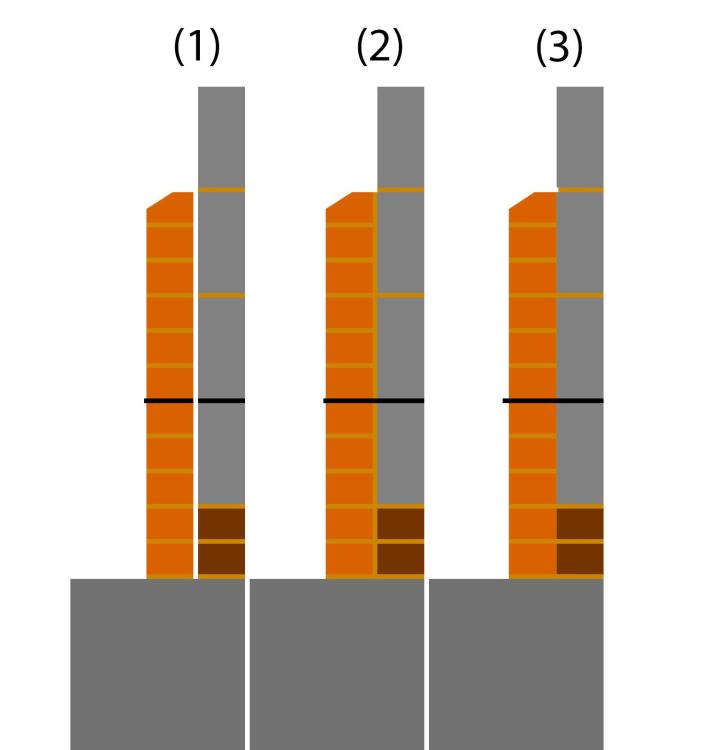
I'm building a brick plinth to the front elevation on our new build. DPC, wall ties, foundation is all prepared. My question is: 1 - should there be a small air gap between the brick plinth and the blockwork? 2 - should mortar be applied between the brick plinth and the blockwork? 3 - should the bricks simply butt up against the blockwork? See image below to help. I understand the top edge will need to be filled to stop water getting between the brick plinth and blockwork. Thanks very much.
-
@Nickfromwales thanks for taking the time to help 👍
-
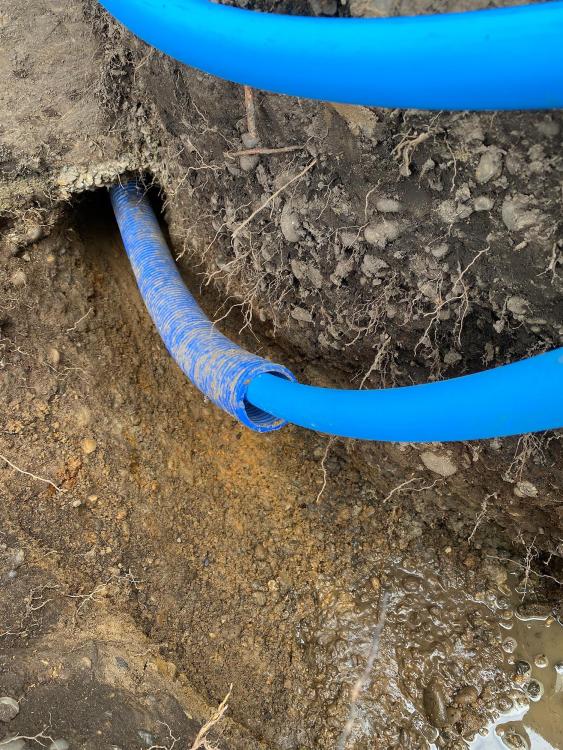
May I jump in and ask what's best to seal the end of the flexiduct/pipe after inserting the insulation? My supplier say to "seal the ducting with a non-petroleum-based product". Should I be using CT1 or expanding foam filler? Any links to specific product to buy would be very helpful thanks.
-
Sorry yes? Basically I'm looking at what's best to protect the chipboard in the bathrooms. Some sort of DPM or tanking. Plan for bathroom finished floor is luxury vinyl tiles. May need to latex below them to make it nice and flat. But I believe latex can't be laid directly onto chipboard. Hence some sort of DPM or waterproof taking over the chipboard. Hope this makes sense. I'm a flooring novice so just starting on this for my new build.
-
@Nickfromwales thanks, can these be used on my 22mm P5 chipboard flooring and under vinyl tiles such as Karndean or lino?
-
May I ask, what would you use to tank? Products / brands? Thanks
-
My new new-build is watertight. After getting watertight, I have then installed a mid-floor wall plate and posi joists at 600mm centres myself, all specified. Has gone well so far - dry, flat, neat, tidy. I'm planning to lay the entire upstairs sub-floor floor over the posi-joists and then partition the rooms on top. I have just purchased and had delivered 22mm P5 T&G from Wickes (Caberdeck) to install over the posi-joists. https://www.wickes.co.uk/Wickes-P5-Tongue-and-Groove-Chipboard-Flooring---22-x-600-x-2400mm/p/164536 I am second guessing myself. Reading the T&G won't do well in the bathrooms over time (there are two, main and en-suite). Planning to lay Vinyl in the bathrooms, maybe Karndean or Amtico if I can afford. Should I have gone for Structural Plywood CE2+ 18mm? https://www.wickes.co.uk/Wickes-Structural-Plywood-CE2%2B---18-X-1220-X-2440mm/p/252240 So the question is P5 vs Structural Ply? Will the P5 do a good job? Prices are currently similar so that's not in question. I can exchange as only just purchased. Opinion please, thanks.
-
Water Supply Pipe and Internal Stop Valve
Johnny Jekyll replied to Johnny Jekyll's topic in General Plumbing
@Simplysimon thanks unfortunately the process above needs to be completed and inspected before they will agree to start, it's on my paperwork and I have checked with their developer services, probably terms of their service.





