Omnibuswoman
-
Posts
475 -
Joined
-
Last visited
-
Days Won
8
Everything posted by Omnibuswoman
-

Have I made a massive booboo...??
Omnibuswoman replied to Omnibuswoman's topic in Garages & Workshops
We have! He is going to hang the front doors for us. ☺️ -
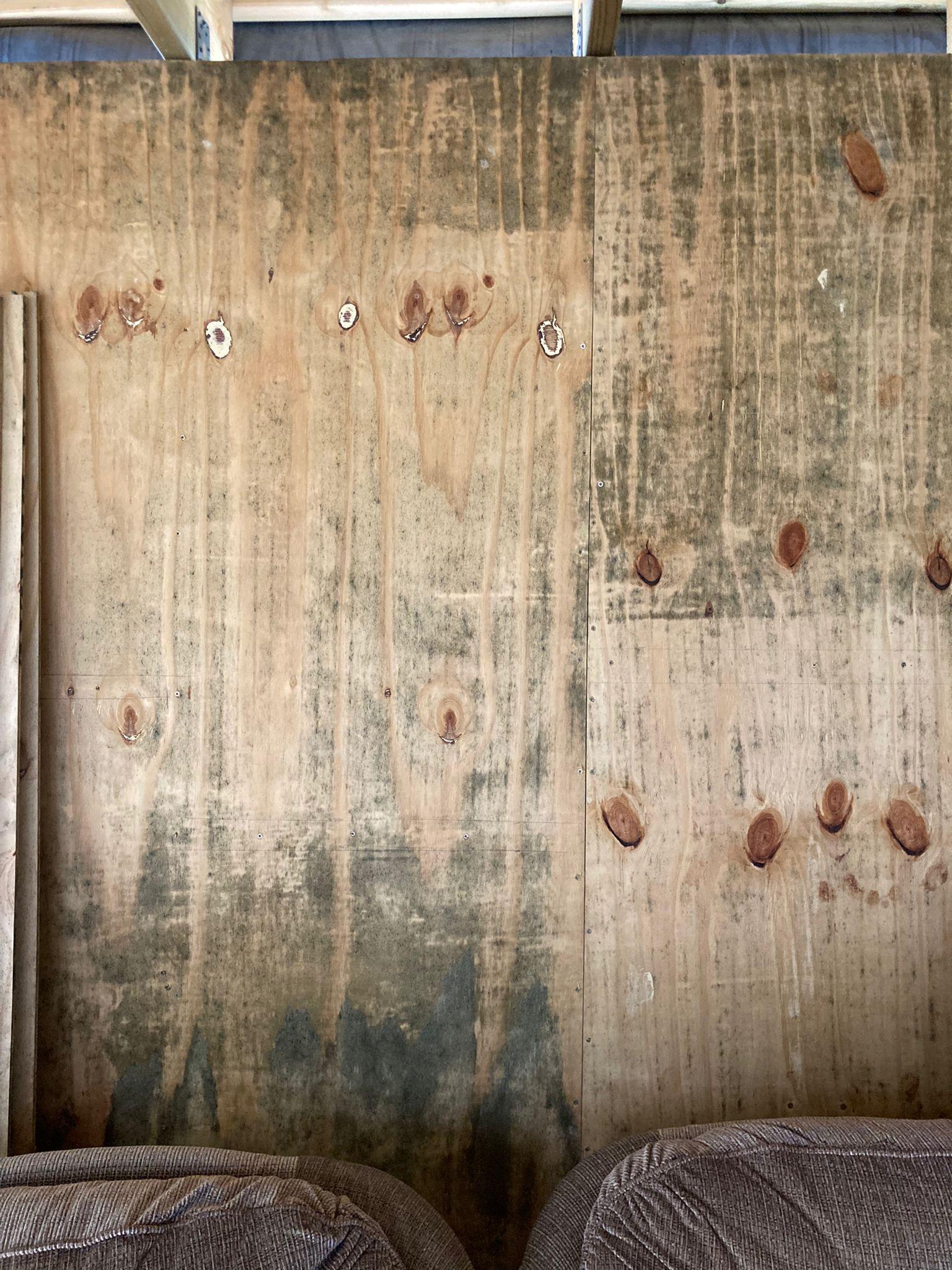
Actually, something just occurred to me about the aetiology of the mould - a month ago we moved a three piece suite and a further armchair up to the workshop which had come out of my elderly Great-Aunt's house earlier this year. Her house was full of black mould - it was a chronically cold and damp solid stone wall Victorian cottage. I wonder if the spores for this have come from us sitting on the sofa, and now that the weather has been quite wet it has taken up residence on our ply walls... that would explain why the inside of the ply is not affected...
-
Thanks all. This is our workshop which at present doesn't have leccy, or front doors, or fascia and soffits, so no option to heat it at the mo, but we expect/hope to have the front doors, fascia and soffits on by the end of next weekend. This may potentially make the problem a lot worse as then the airflow will reduce dramatically, although there will be less weather coming in I would hope, and at least then it would be worth putting in some heat. However the electricity supply hasn't been connected up yet, so no source for heat in any case. I'm not sure whether I should consider binning the lot and starting again with OSB, but as it cost about £600 for the ply I'm loath to be so wasteful!
-
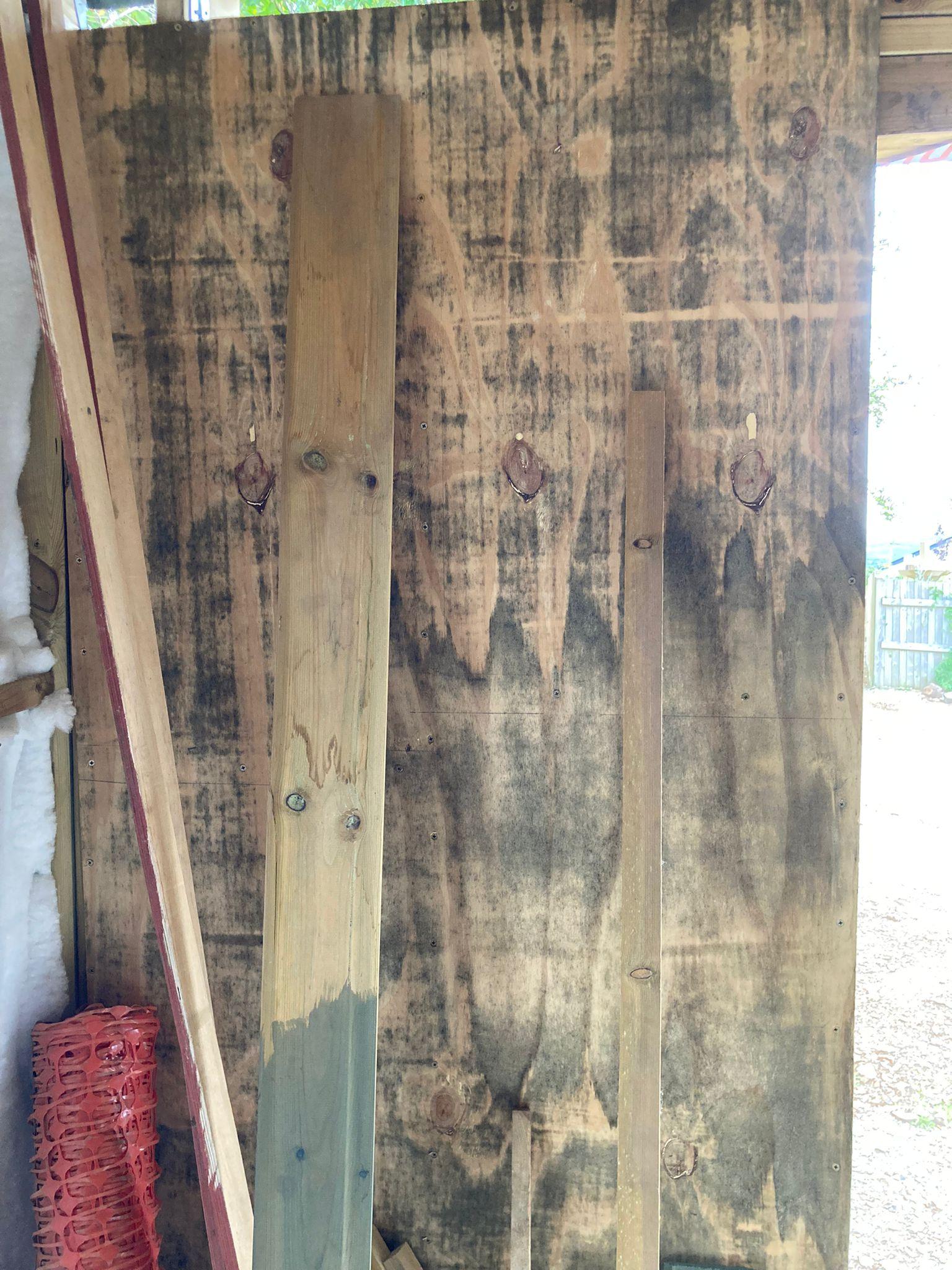
We do have insulation in already (a novel product made from old plastic bottles that made a fantastic dog bed) but not an airtight membrane - only a tyvek membrane wrapped around the outside. Interestingly, today we removed two of the ply sheets from the front wall and found that behind them (on the side facing the insulation) there was no mildew at all... That would support your theory about the inside of the ply having condensation forming on it, but I thought that ply could absorb and release a certain amount of moisture without any harm coming to it...
-
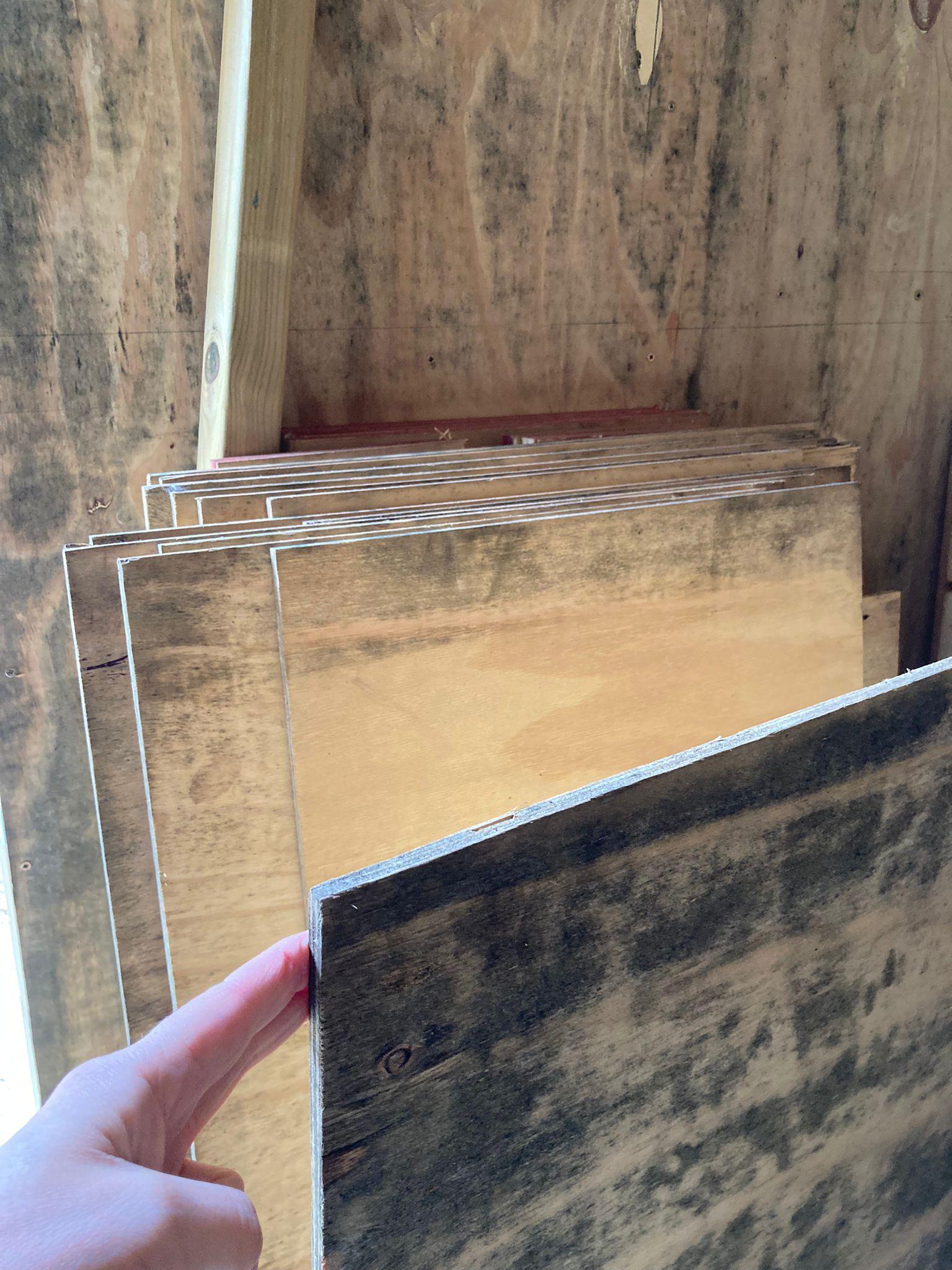
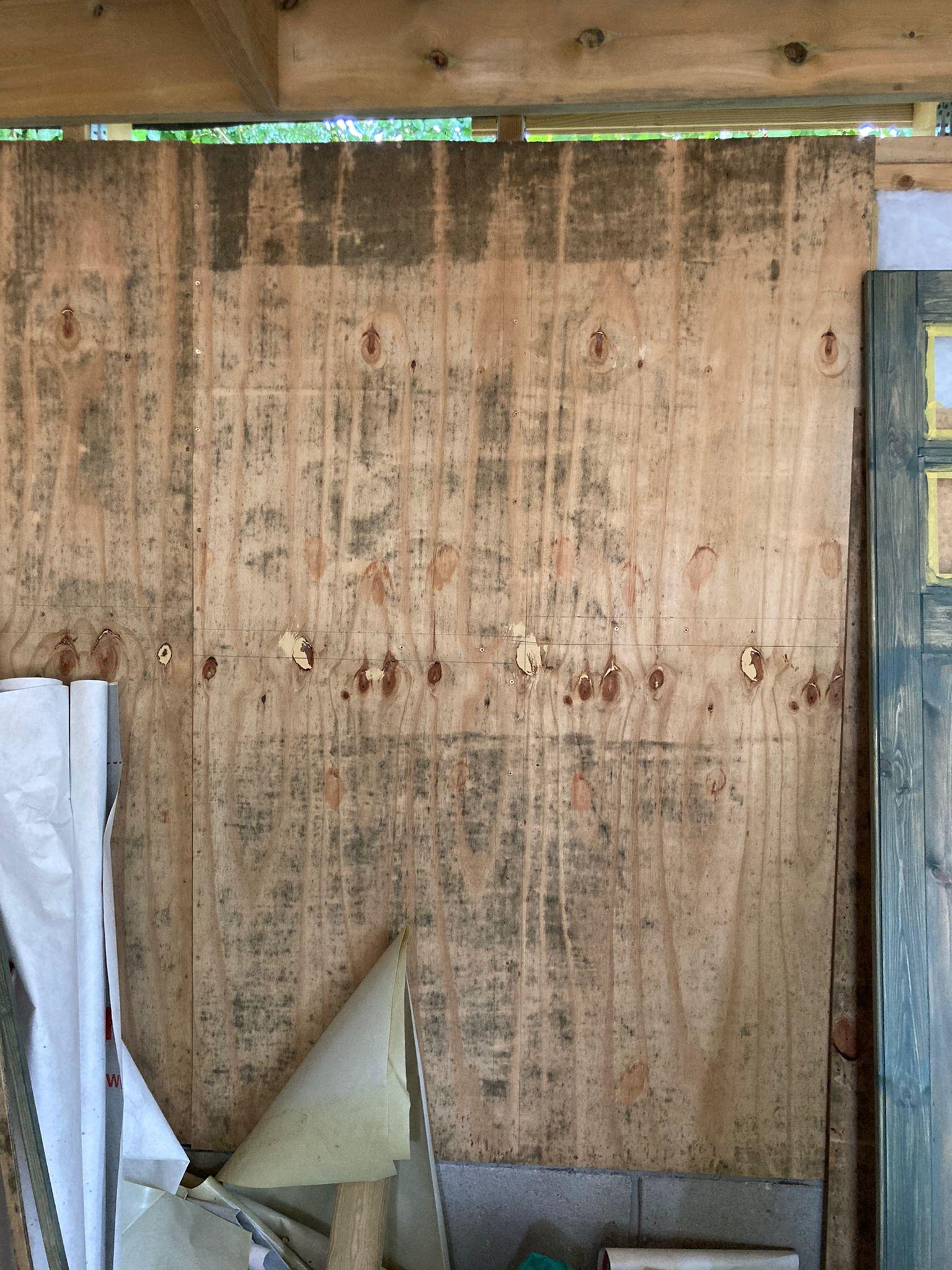
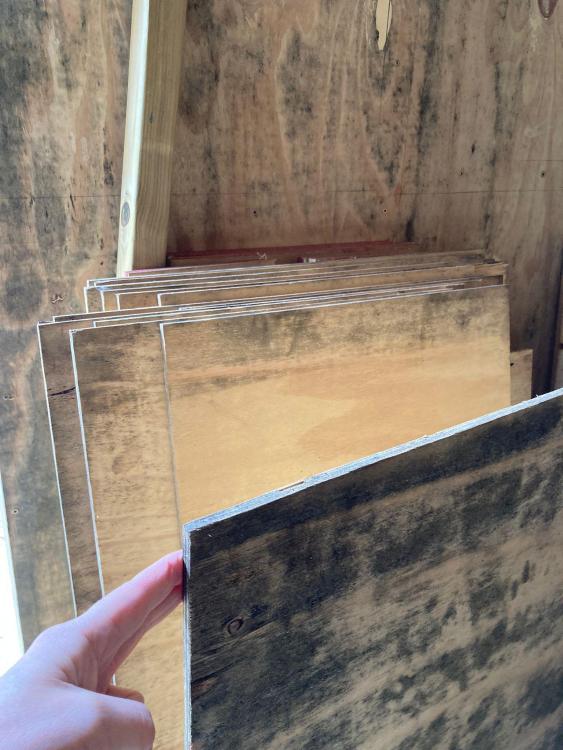
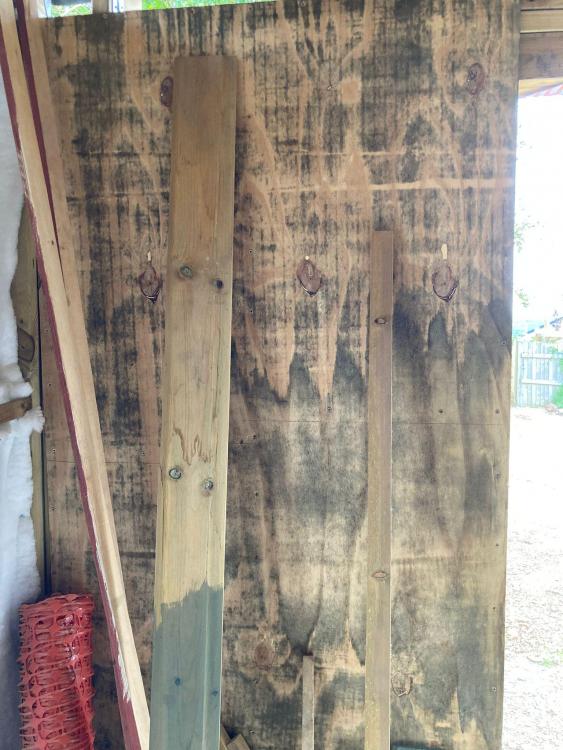
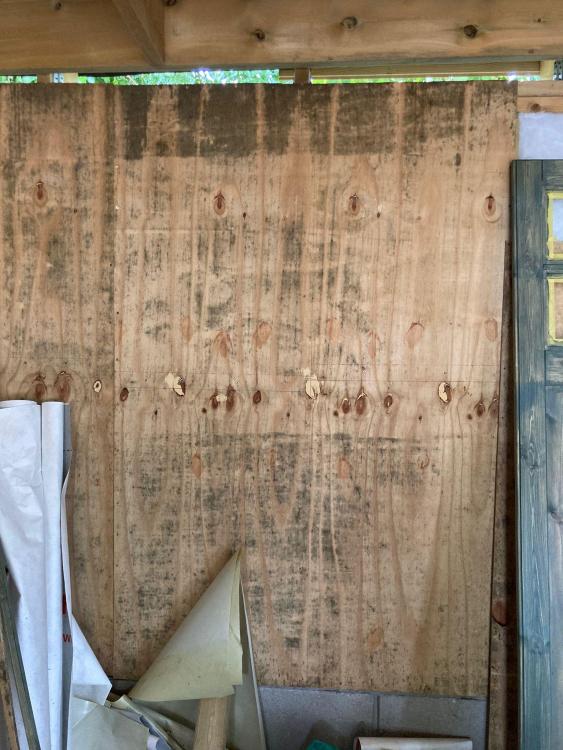
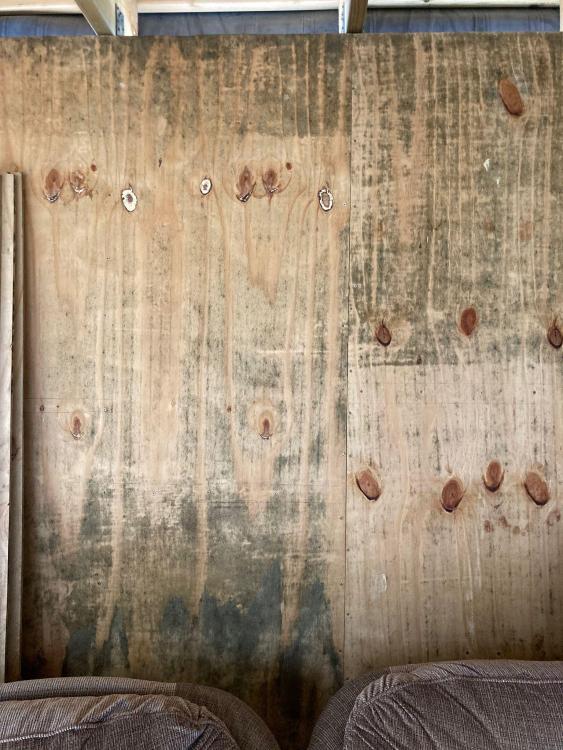
We put the plywood onto the inside of our stud frame back in June/July - all seemed fine. On Friday we returned to the workshop after a fortnight away and found every wall covered in black mildew. There has been plenty of airflow in the workshop as it has no front doors as yet. Does anybody have any ideas about why this has occurred? It has been quite stormy recently (SE Cornwall), but only normal for Cornwall, and the walls have stayed dry as the building is wrapped in Tyvek. There were also some part sheets of ply leaning against the walls, and where two sheets touched the ply was clear of mildew (photo 1). All wood exposed to the air was blackened. How can we treat or seal this to stop it from getting worse?
-
Have I made a massive booboo...??
Omnibuswoman replied to Omnibuswoman's topic in Garages & Workshops
Update: we had a neighbour pop round yesterday who is a joiner. He took one look at our external noggins, and started into one of those Harry Enfield sketches "You don't wanna do it like THAT: You wanna do it like THIS". He pointed to one of the noggins, declaring it cracked, and wacked the thing right off! Then walked around the building questioning my building choices in a way that was probably enormously helpful, but given that we have almost finished, didn't feel all that helpful..... The upshot of that rather dispiriting lecture on my half-arsed building skills was that he explained that we should cut off our external noggins (can't remove them as they are well and truly fixed on), and replace them with a gable ladder at the front and back, as suggested by @SimonD above. This actually solves the issue of the asymmetric soffit level, and in turn the difficulty of sourcing 350mm fascia (which has been unavailable at most suppliers). He also pointed us towards a local plastics company that does all of the roofing products we were looking for, available for delivery tomorrow, and at about 60% of the price we were being quoted online, so that was a massive win. Every cloud... -
This is the BBC - Bars, Bolts and Concrete
Omnibuswoman commented on BotusBuild's blog entry in South East Cornwall Low Energy build
Oh my word! That is truly impressive progress, and in the context of such a significant family bereavement, all the more so. I'm sorry for your loss - she sounds like . I just can't believe the entry of the word 'stupid' anywhere in your blog as I am absolutely blown away by your and your erstwhile wife's skills, and the progress that you have made. Well done indeed. M -
Have I made a massive booboo...??
Omnibuswoman replied to Omnibuswoman's topic in Garages & Workshops
Thanks @BotusBuild that sounds like a very straightforward solution, and I'm feeling rather "doh!" for not having already thought of it!! -
Have I made a massive booboo...??
Omnibuswoman replied to Omnibuswoman's topic in Garages & Workshops
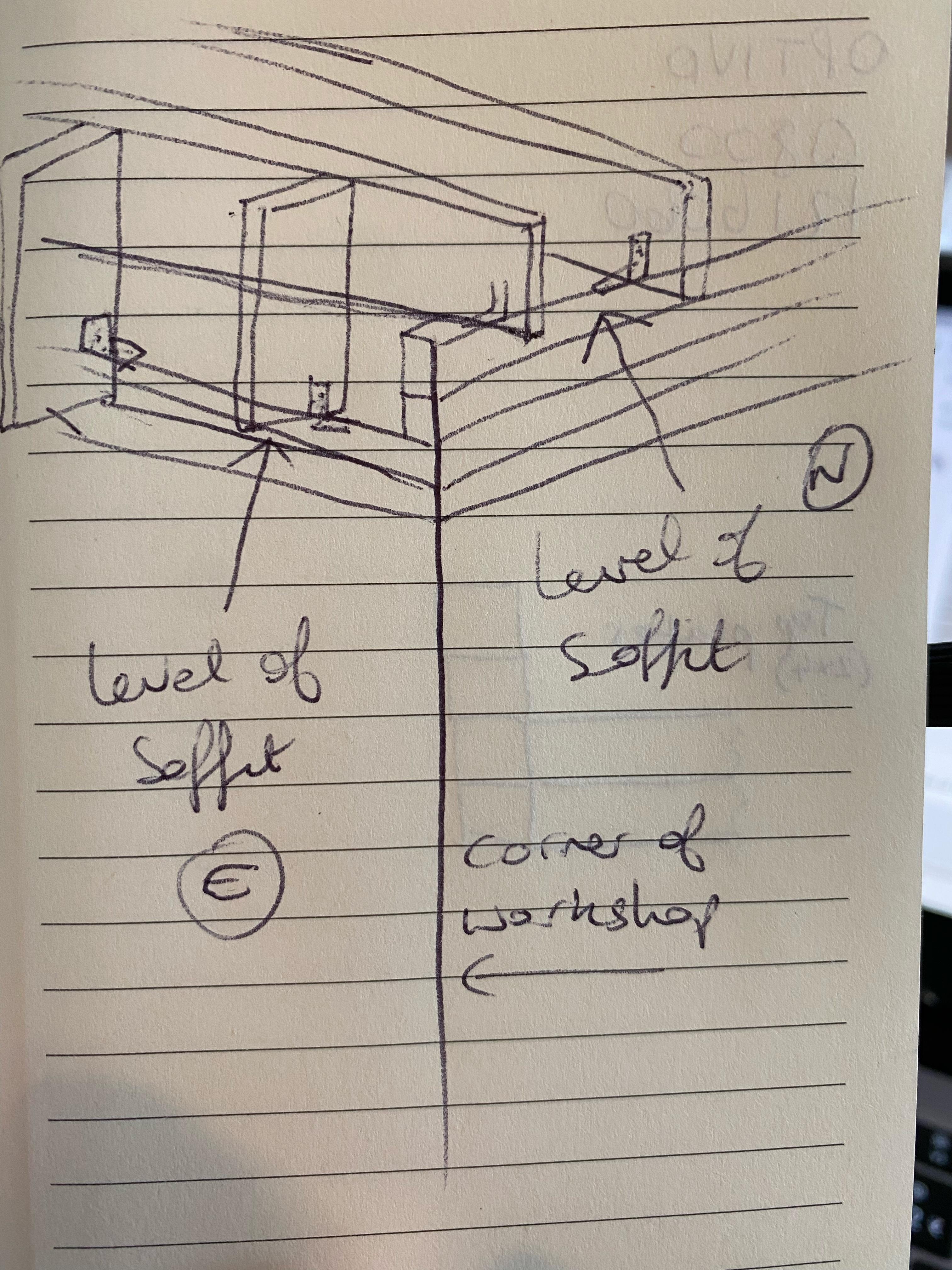
Sadly not - the noggins that rest on the top plate of the east facing wall mean that the cladding can only go up as far as the bottom of the noggins (which overhang the wall by about 20cm), whereas the bottom of the rafters on the north side sit 9cm higher up. I did wonder if I could run the fascia on the north side 9cm below the bottom of the rafters to sit level with the bottom of the fascia on the east wall, but I'm wondering what I would fit the soffit to in that case as it would be hanging 9cm below the bottom of the rafters. -
Have I made a massive booboo...??
Omnibuswoman replied to Omnibuswoman's topic in Garages & Workshops
Thanks @SimonD Are you able to draw a rough picture of what you're describing in the first paragraph please? I am struggling to picture what this looks like. We were going to order upvc soffits and fascia, so I'm wondering if what you describe in para 2 might be possible using the pre-fabricated corner joints that they sell. -
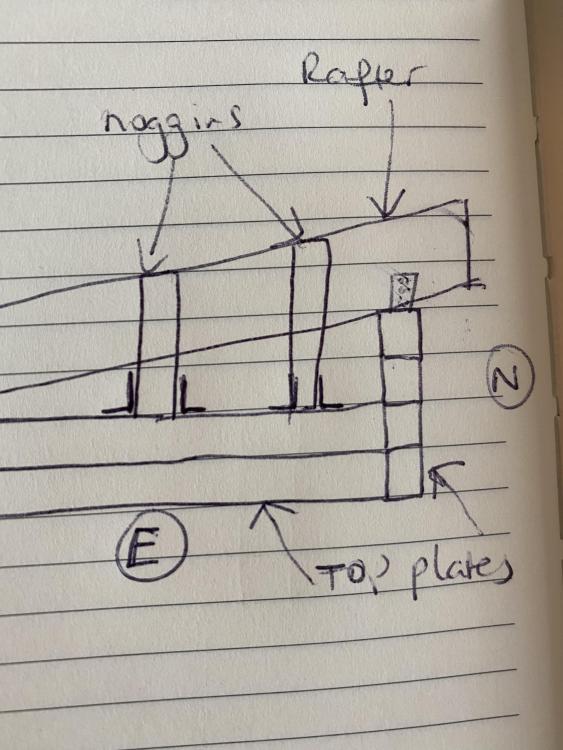
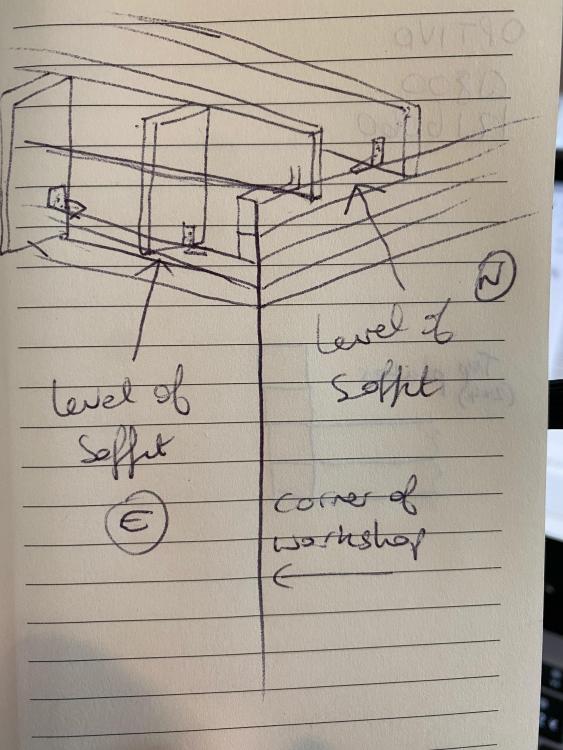
I have reached the point of ordering the fascias and soffits (again!) ready for our next stint of work on the workshop, but have run into a problem that I'm not sure how to solve, and I'm concerned it's because we (I) have made a mistake... The roof is a pent roof with the highest edge on the north side of the workshop. On the north side we put four top plates instead of two (which is what the other three sides have). The rafters run north-south fixed to the top plates, so there is a 9cm height difference between the two sides, creating the slope to get the rain to run off. On the east and west sides we fixed noggins on top of the top plates, abutting the side of the last rafter, to provide an overhang of about 20cm. Now that I'm looking at fascias and soffits, i've realised that the soffit will be sitting 9cm higher on the north side than on the other three sides (see attached drawing) because the rafters are sitting on the extra two top plates. So I'm wondering whether I should run the fascia 9cm beyond (below) the bottom of the rafters on the north side, so that where it abuts the east and west corners there will not be a difference in the level of the soffit. The question is, if I do that, what do I fit the soffit to?? Have I made a massive boo boo?? All advice very much appreciated. Cheers, M
-
I think we will need a hardwood sill as the weather down here is pretty wet and often windy.
-
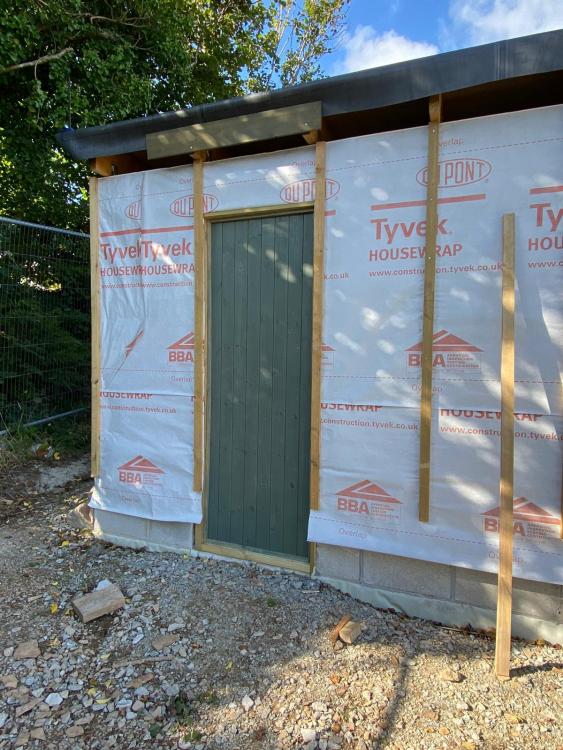
-
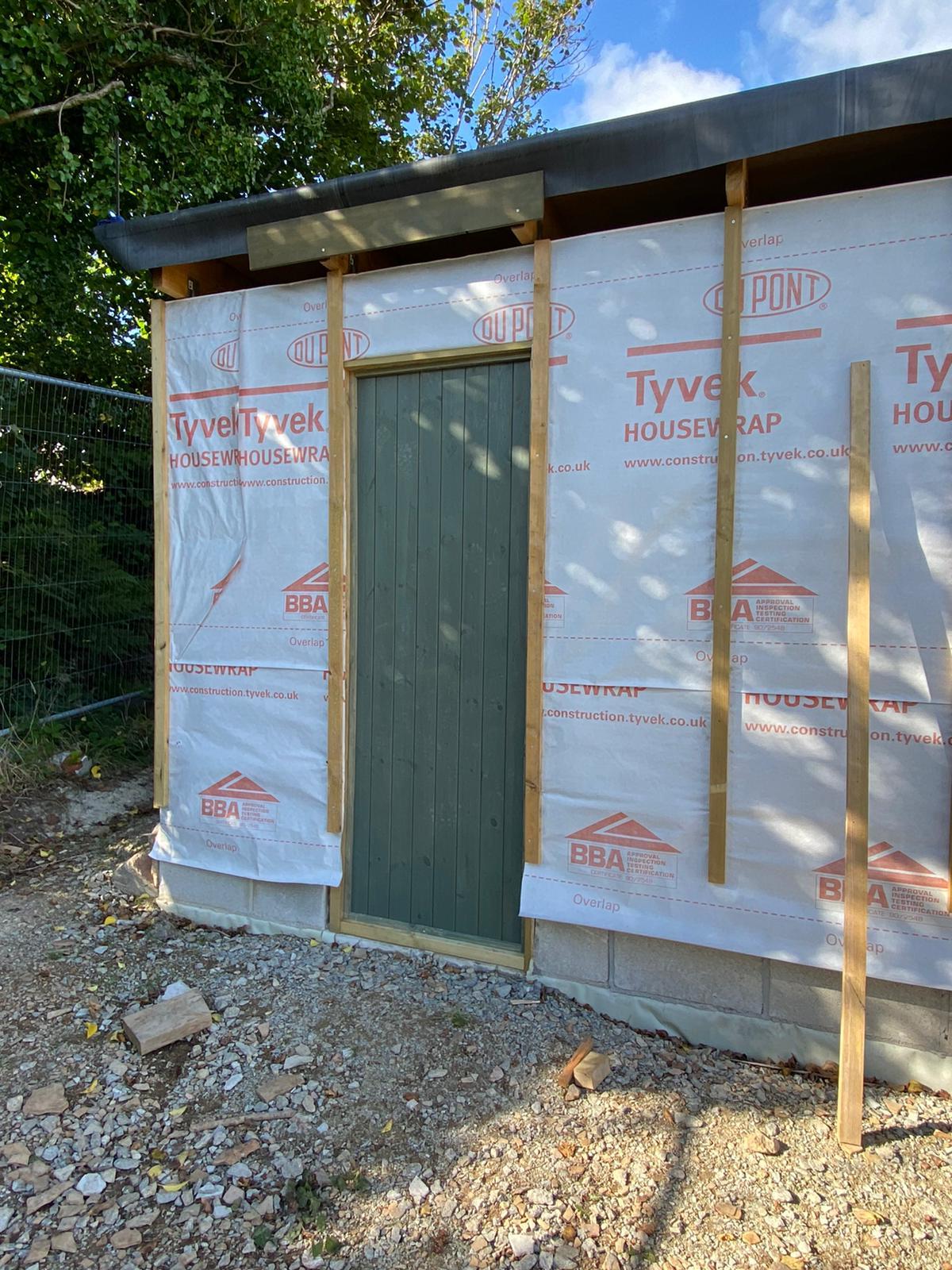
@Onoff the front of the door is flat, so I presume we will need to add some kind of weather board or something to allow rain to run over the edge of the doorframe onto the ground outside?
-
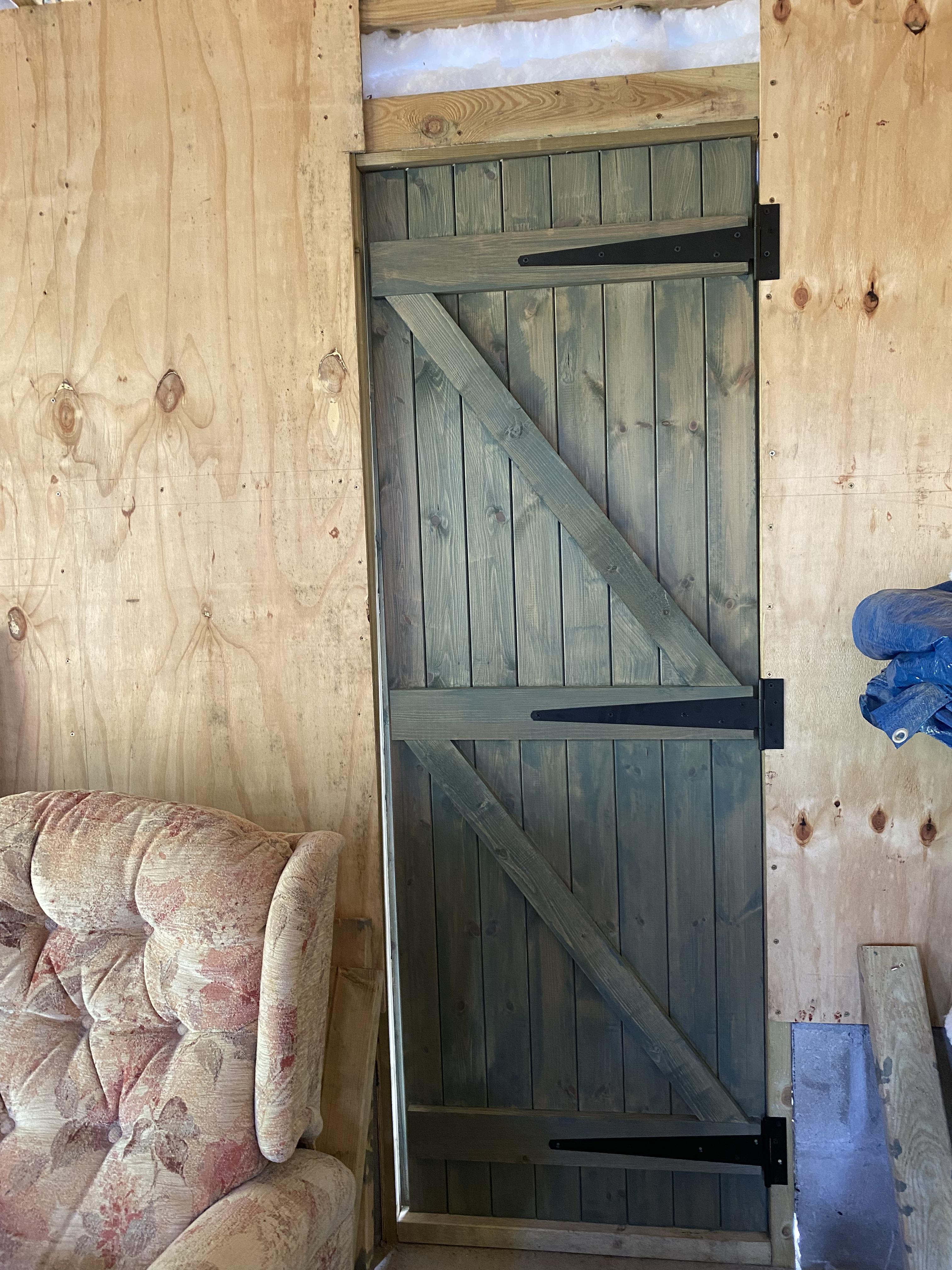
Thanks, that’s really very helpful OnOff. The doors in the picture are the front doors, not the back door. Here is a pic of the inside of the back door.
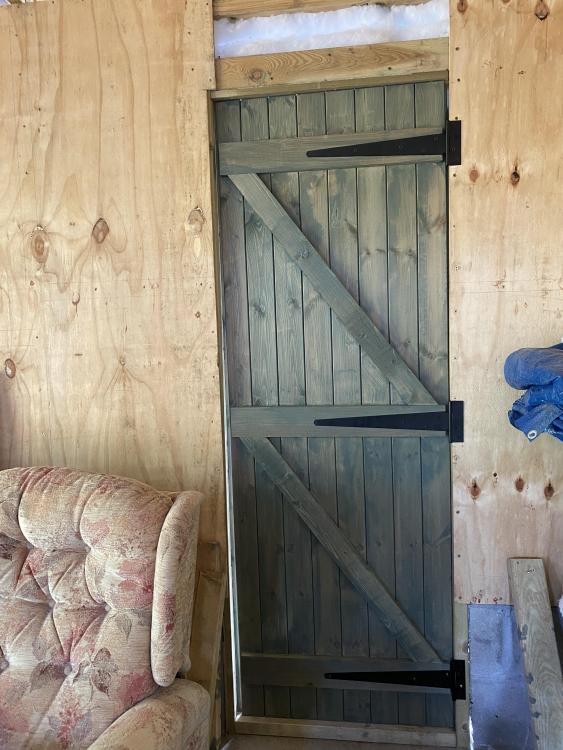
-
I should have sent HWMBO to stay there! He had covid last week. Thankfully it was only as bad as a standard bout of flu, and he has made a good recovery. I was thinking it would be handy when our builders start work - a nice spot for lunch or a brew.
-
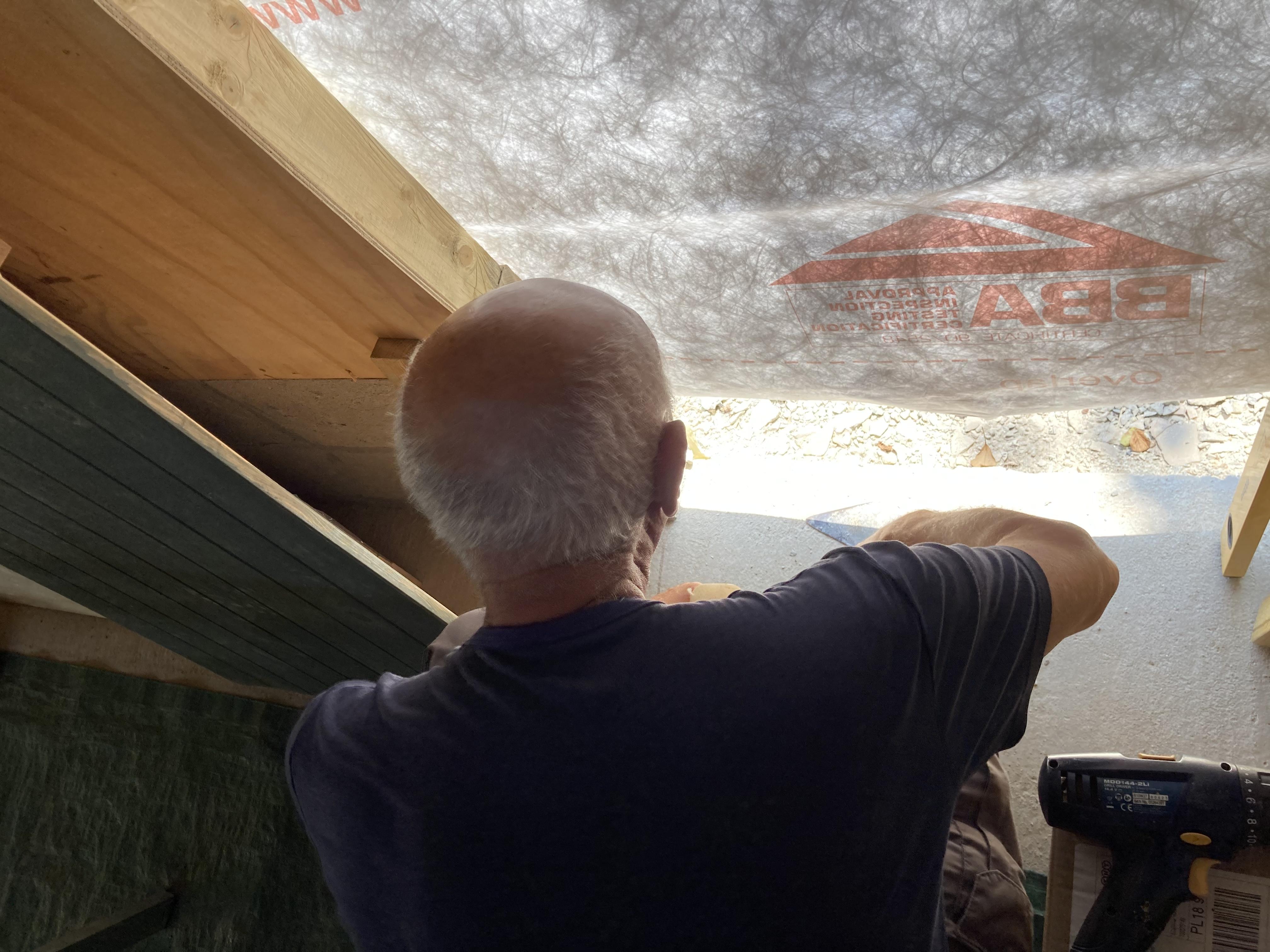
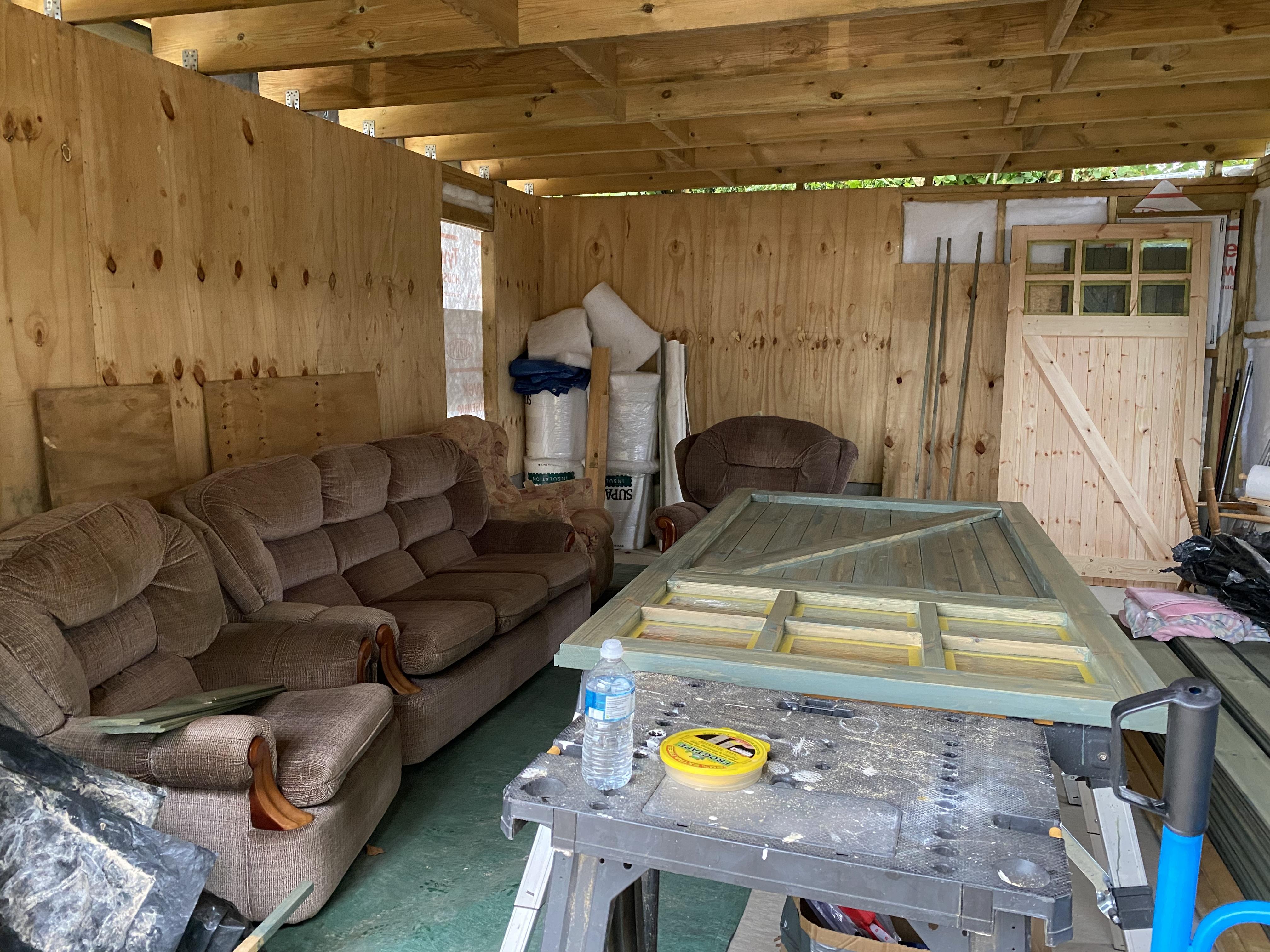
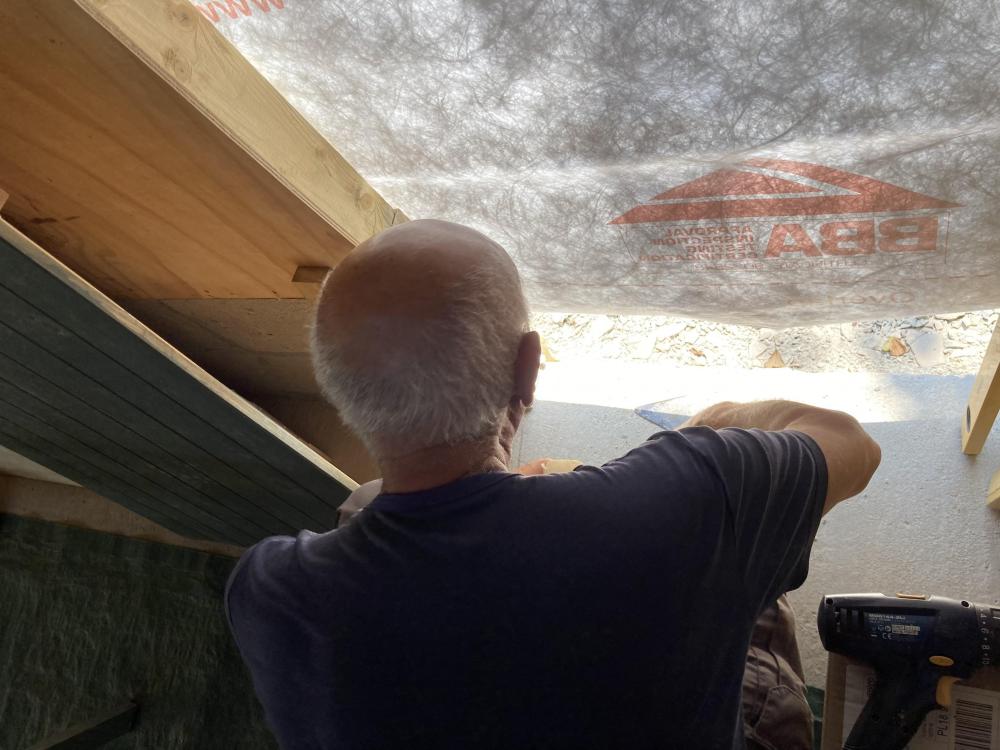
The workshop construction continues, albeit at a slow pace. We have now turned our attention to fitting the doors, and there are some details I’m unsure about. 1) How do I hide the tyvek where it comes in around the door frame? Should I fold it around the jack stud, then put the doorframe woodwork on top of it? See photo of my dad working on the bottom of the door frame. We haven’t cut the tyvek for the doorway yet, but plan to do that tomorrow. 2) How should I construct a lip at the base of the door to stop rain coming in? I had planned to use some spare 2x4 pieces of treated timber (the off cuts from the stud work), but am concerned it will perish. 3) DPM - almost all the way around the workshop we laid a black DPM strip between the block work and the sole plate of the stud wall. However, on the front wall we forgot to put that in, and now the tyvek is on the outside and the ply sheeting on the inside, I’m not sure if it’s worth the hassle of taking the ply off and unscrewing the screws to try to dig out the cement between the blocks and the sole place, and slide in a DPM. Is this worth it? How vulnerable would not having a DPM here make the wood frame? Below is a pic of the workshop with 3 piece suite we are trying to give away. It made a nice place to relax during our tea break.
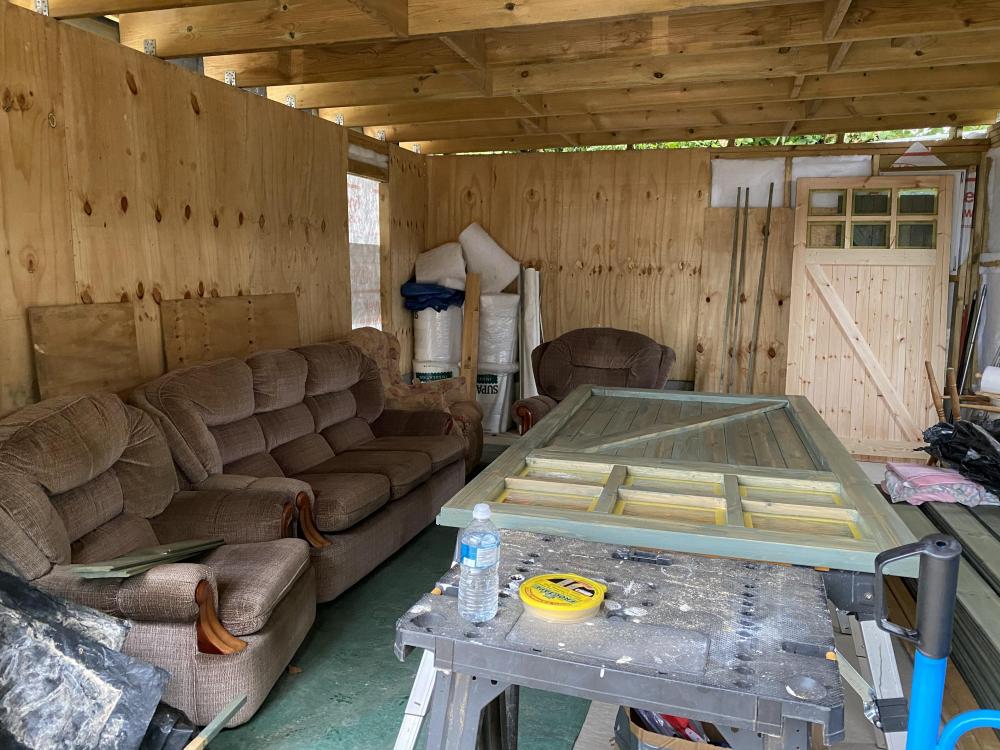
-
What does the correct drawing look like?
-
Fan Coil Units for use with a (cooling) ASHP
Omnibuswoman replied to ProDave's topic in Air Source Heat Pumps (ASHP)
News flash - I’ve just read that the planning application has now been refused again (fifth submission) so this may well not be an issue for us after all!! The local Neighbourhood Development Plan had set the area as being outside of the village boundary (the dividing line being our garden wall), and this was relied upon to decline it. -
Fan Coil Units for use with a (cooling) ASHP
Omnibuswoman replied to ProDave's topic in Air Source Heat Pumps (ASHP)
Ahhh interesting. I’m quite deaf so little of this stuff even registers with me! Our plot is already going to be pretty quiet (in my view) as it’s two houses back from the road, in a small village. But next door may get planning permission for five new houses, which will mean months if not years of construction work nearby. At 8am on a Saturday morning we may well be glad of the high levels of soundproofing!! -
Fan Coil Units for use with a (cooling) ASHP
Omnibuswoman replied to ProDave's topic in Air Source Heat Pumps (ASHP)
@joth have you built yet? Is the soundproofing level what you had hoped? -
Fan Coil Units for use with a (cooling) ASHP
Omnibuswoman replied to ProDave's topic in Air Source Heat Pumps (ASHP)
Yes, this is the issue. HWMBO is a very light sleeper and needs both quiet and darkness to be able to sleep well. So we never sleep with the windows open even in a heatwave. I’ve taken to sleeping in another room with the window open when we have a spell of super hot weather. We were hoping to overcome this in the new house with a combination of metal roller shutters over the bedroom windows, à la most European countries, plus some in-room cooling we can deploy ahead of bedtime (too noisy for sleep). -
Fan Coil Units for use with a (cooling) ASHP
Omnibuswoman replied to ProDave's topic in Air Source Heat Pumps (ASHP)
Good question! I’ve just checked and that wasn’t calculated (we only asked them for an overheating assessment/advice and the calculations and shading strategy met that brief). I have assumed that even with the shading strategy we have, excess heat would still pass through the walls during extended periods of very high temperatures, and that in periods when the outside temperature doesn’t fall below 20c at night we would want to cool our bedroom down for comfort. I had thought that MHRV wouldn’t be sufficient for this, but it sounds as though it could be. Our builder, who is passive house trained, will do our M&E work later on. I’ll ask him about this idea. Thanks! M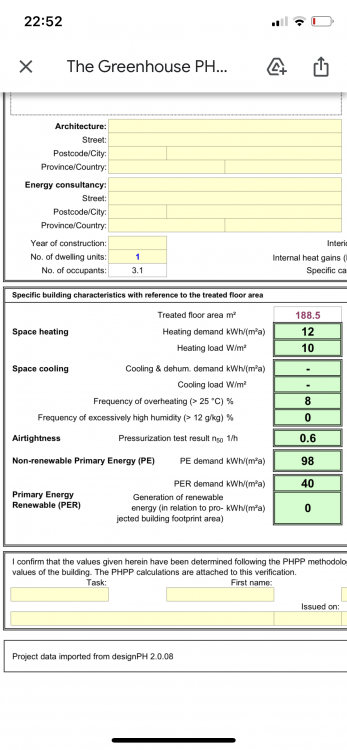
-
Fan Coil Units for use with a (cooling) ASHP
Omnibuswoman replied to ProDave's topic in Air Source Heat Pumps (ASHP)
I’m also interested in sharing an order on one of these FCUs. Not sure if it’s helpful but my brother lives in Ireland… -
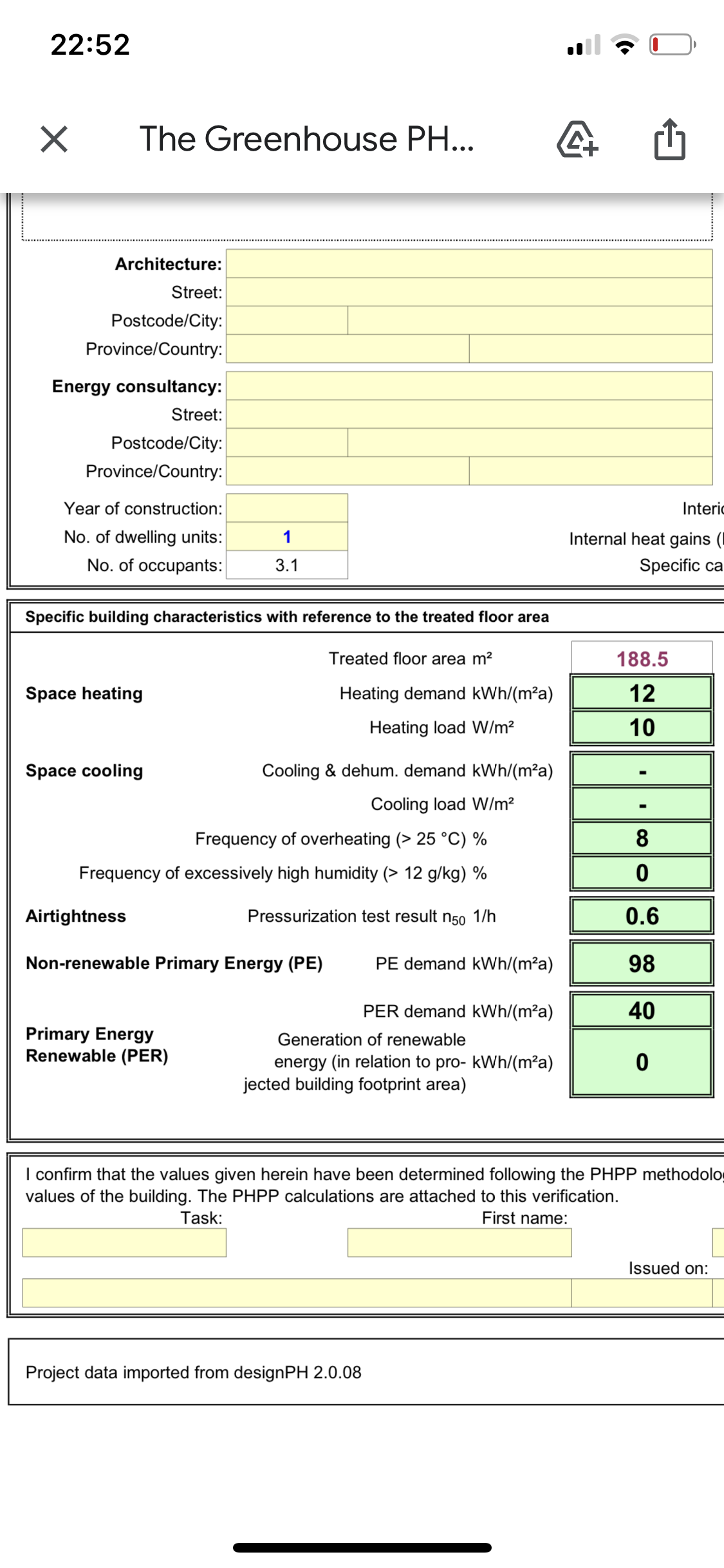
We used Greengauge Building Energy Company for our overheating modelling using the PHPP spreadsheet. Highly recommend - I was very pleased with the report they produced which helped us to make some design decisions about shading our east and south facing windows. We will have dark roller shutters on our East facing windows, and a retractable canopy over the south facing bifolds. I also plan to grow a wisteria or grape vine on the sunniest sides of the building to provide some natural shading in a decade or so. One piece of advice the engineer, Mitch, gave us was that external blinds should be dark to prevent heat coming into the building, and internal blinds/curtains should be white to reflect heat/light back out again.