
Benjseb
-
Posts
138 -
Joined
-
Last visited
Everything posted by Benjseb
-

Our Holiday Let project with renewables
Benjseb replied to Benjseb's topic in General Self Build & DIY Discussion
literally just down the road, we’re in Whitechapel/Longridge. -
Does anyone know if a smart meter is required for SEG? We’d like a tariff that’s fixed so not sure if we need a smart meter or not?
-
Our Holiday Let project with renewables
Benjseb replied to Benjseb's topic in General Self Build & DIY Discussion
Thanks CPD. Your cottage looks lovely. we’re in the Ribble Valley in Lancashire. -
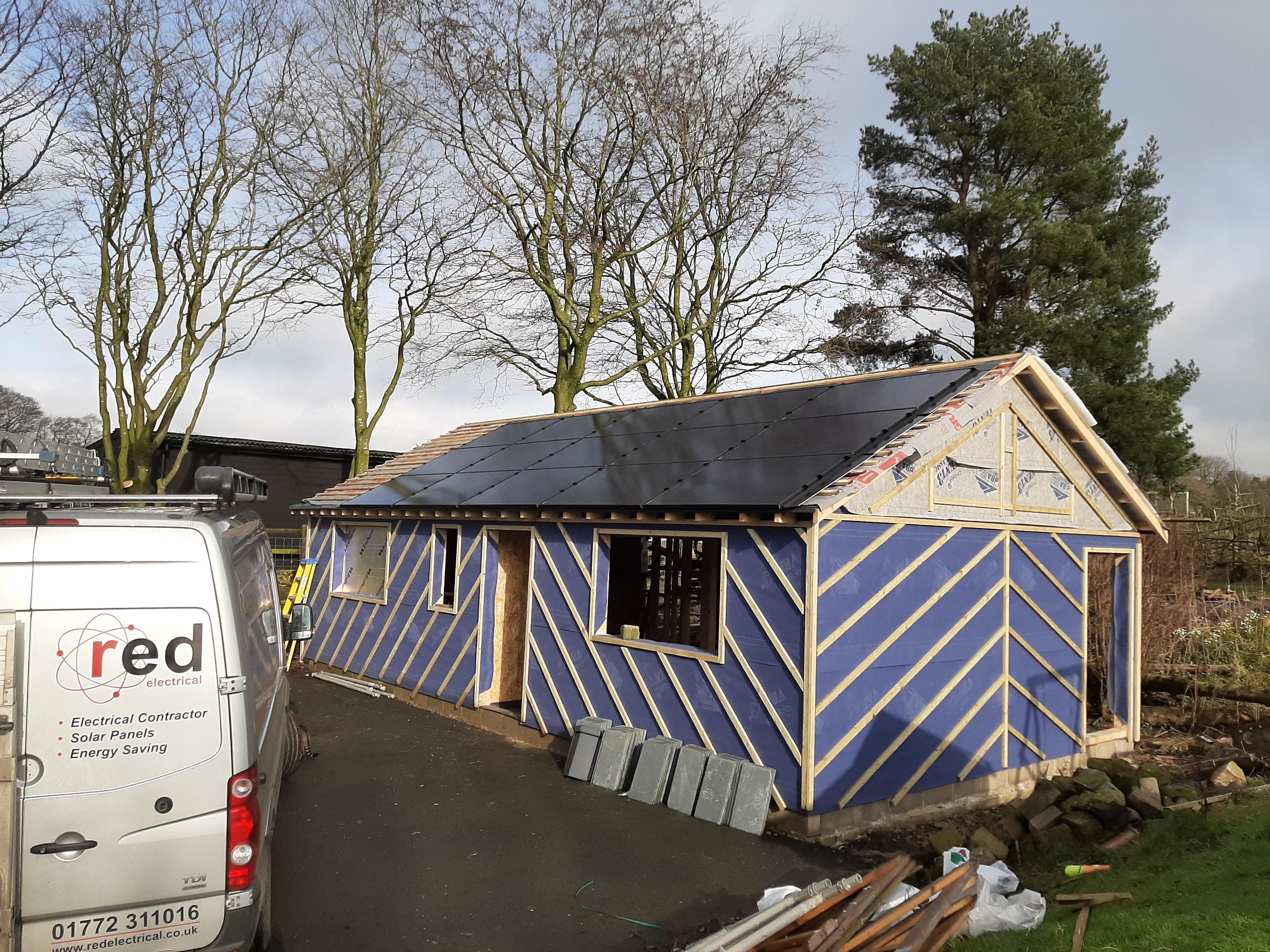
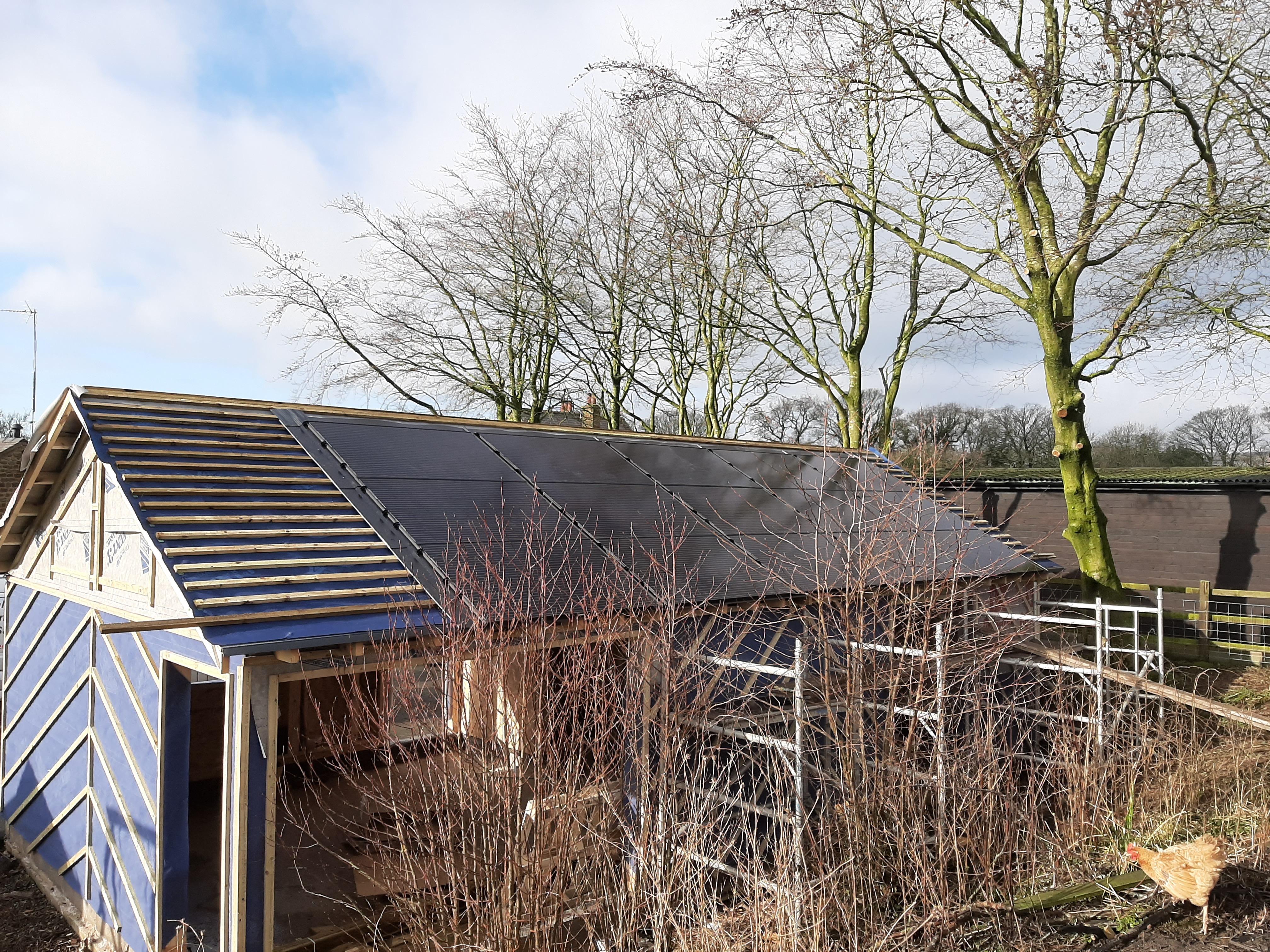
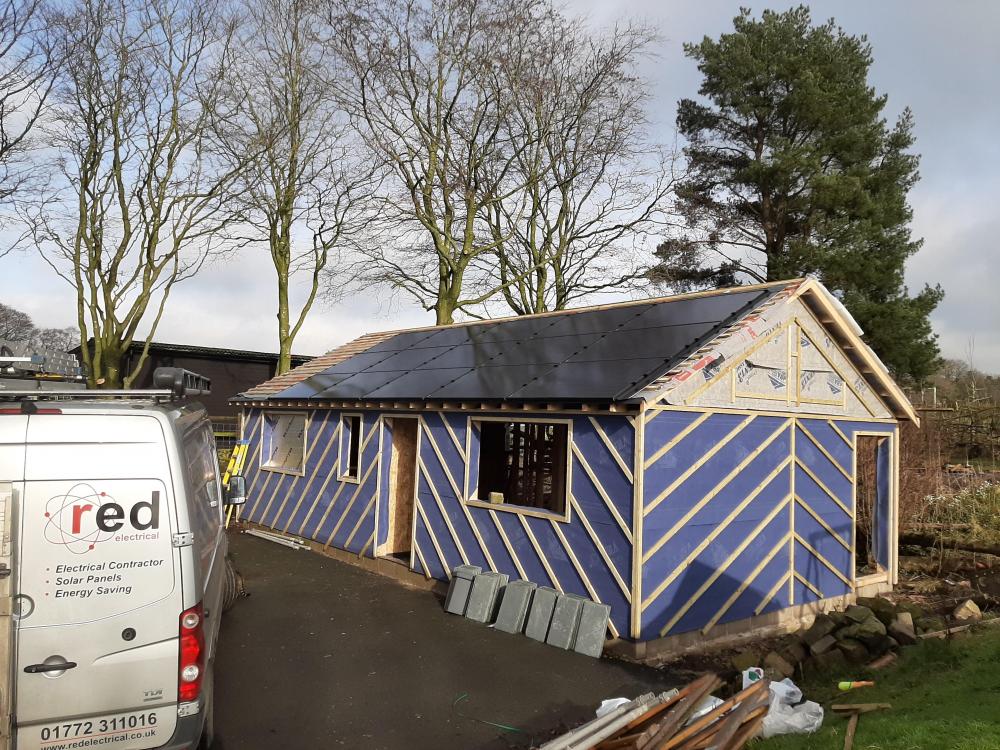
We’re having a 60sqm holiday let built, after knocking down a horrible old garage It will include triple glazed aluminium windows. Under floor heating (with minimal screed to allow faster warm up due to sporadic occupation), 8kw Ecodan (mainly for DHW) and a 9kWp in roof solar array. The holiday let will be linked to the main house via 3ph supply so we can utilise the PV excess on our main house (260sqm barn conversion, circa 1800s with ASHP) progress pics so far...
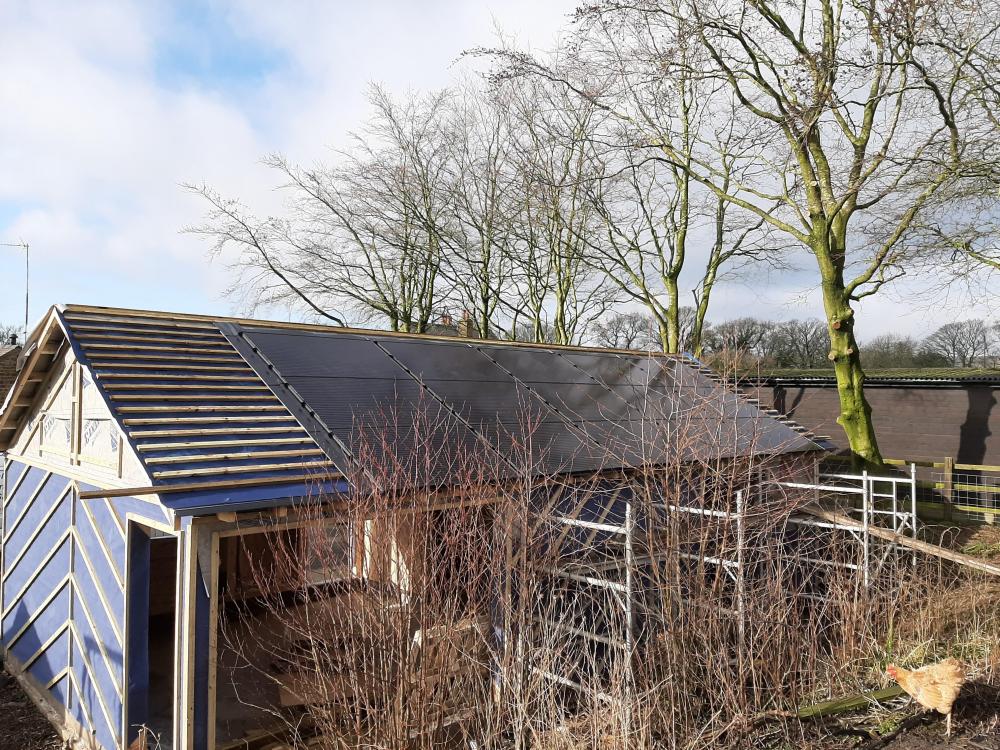
-
We have an Apollo Gem that seems well built. Metal casing etc its on a 14kW system at work. We added a temperature probe to it. I’m about to have a holiday let built in our garden with solar. We’re getting two Gems so we can push excess solar (9kWp) to wither our house immersion or the holiday let immersion.
-
Thanks @joth yes we already have a 3 phase meter, but the other two phases are capped off after the meter so presume we’ll just tap into those. Avoids the risk of trips on Christmas Day when we have too much demand! And yes I had no idea about the net metering so impressed he knew. He’s an “ex” Electrician so comes at this from a different angle to the usual double glazing salesmen turned solar salesmen! Glad to heat that sounds competitive. Just need to crunch some numbers and see if it’s worth the larger 9kw array.
-
My understanding is that with the right meter it doesn’t matter which phase the generation and consumption are on. It will just meter the net consumption. That’s what the solar guy has said? So then we don’t have to worry about exactly matching Consumption up. Makes it easier to run loads in the house or holiday let and be covered It’s hard for me to work our repayment period atm as we’ve only had our ASHp since October so hard to know our consumption over the sunshine months. does the price look fair? Ben
-
Hi all We are building a holiday let, 50sqm, which will have an electric feed from our main house. Pitched roof is perfectly east/west. planning on filling the roof with solar as our main house has just been converted from Oil to 14kw ASHP. Holiday let will also be AS. So questions Does the below quote sound good? We’re in North West UK 6.1kWp sustem with single phase investor, all black panels. In roof low profile system. £6200 ex vat or 9kWp system. As above but 3phase invertor. Didn’t get price for extra panels but invertor is +£200. I’m steered towards the larger system as we already use a lot of electric due to it being a big house and no gas. Decembers will was £400. But that’s our total energy consumption with guests staying. Obvs solar won’t help much in December but I’m thinking the shoulder months will benefit. Especially with a holiday let where the guests will likely try to heat rooms warmer than the Congo. Does it matter that we currently have a 3 phase supply but all our circuits draw from one phase? I presume when they run the new 64a supply for the holiday let they could pop this onto a different phase. Will it make a difference to the metering or payback of solar (been told we can ask for net meter so any generation will offset demand regardless of phase?)
-
We had three Husky Heat Pumps at work. Constantly coming up with errors and always at the coldest times. Or when you’ve left on a Friday evening to come back on Monday to a building that’s 12c nearly all of them were software related. When we replaced them (only 4yrs old as Husky went bust) one of my stipulations was I only wanted a mainstream manufacturer as you know the software has gone though many more QA cycles. interestingly, Global Energy Systems quoted us but decided against for that very reason. They seemed very professional but I was just very cautious due to past experience. We’ve put in 3 Panasonic Aqueria at work and I have a Mitsubishi Ecodan at home. Zero errors on any of them so far. Personally I’d be asking for an engineer visit. If it’s something hardware related or firmware then a replacement is needed. If there’s a bug in their software then they either need to fix it quick sharp or give you a full refund.
-
We have a Panasonic ASHP at work and one interesting read out on the control panel is Compressor Frequency. It gives a nice indication of how hard the HP is working. Does anyone know if this is possible to see on the Ecodan? Any see any reference to it on menus or in manual? Also, by reducing our flow temp we’re found a point where the HP runs pretty much 24/7. This seems the most economic but are there any disadvantages in it running non stop? Wear and tear etc? Our operation mode graph shows it only stopped 7% of the time. Ben
-
@Home Farm Someyhing that may interest you... Did you say you set back temps overnight? I’ve been experimenting with ours. We had a 1.5c setback overnight in all rooms. Last few days I’ve removed this (so now all rooms are either 18.5 or 19.5 all day) since doing this I’ve managed to reduce the flow temp 3c from the norm (so yesterday ran at 39c). This is because the lower flow temp is fine to maintain the room temp but can’t boost it up to recover after the set back I’ll do this for a few more days To allow for weather fluctuations but initially it seems we’ve saved about 10kWh per day using the lower temp and higher overnight room temps.
-
we had TRV on one end then closed off the other. Started at 1/8 turn (some still like that) but turned to 1/4 turn if not warm enough yours may need different depending upon how they are piped. It does show how much difference UFH makes. So thankful we decided to lay that when changing the floor, despite going with an expensive retro fit solution due to ceiling height. I’d say if we put UFH in the lounge, we could run the flow temp at 35-40 all year round as the rads in the bedrooms are set to 18c for optimal sleep health.
-
Also, on hot water we’ve played around with timing it vs leaving on When timing it didn’t work very well with extra baths. Because it wasn’t timed to go on again until later the 3rd bath was cold We switched to continuous which fixed this but used more energy. I then set the delta lower, so it waits for an 8c drop in tank temp before triggering. As such it will trigger if someone has a bath or shower. It not if just washing hands or doing the dishes. we’ve actually got out temp set to 46c now and it seems piping hot. The sensor is 1/3 up the tank so obviously the water were getting is hotter than 46 initially. overall that’s now cost effective and we always get warm baths.
-
@Home Farm interesting update your house is configured very similarly to ours. Ours is also long and thin but our main aspects are North/South so every room has a North and a South wall. Our two rooms I discussed had a similar issue. We have big tads in there but they weren’t particularly warm We know from having the walls replasterrd that the pipes drop down in 10/15mm which means they don’t support the flow rate necessary to provide the maximum heat output for the radiator at the lower temps. I wish we’d have replaced them then but it was pre ASHP To work around this we closed off a lot of other radiators lock valves to just 1/4 turn. They continued to work the same as before. Then we closed the towel rads right down. Similar yours they were piping hot with no TRV. They are also piped in 15mm so hogging the heat this helped a lot. However when the temp was <3c we did have to put the flow temp up to 50c for a couple of days. It might be worth you moving to weather compensation mode and set it between 40c and 50c ultinatwly if there’s no enough heat output you need to either increase size of rad (no use if they aren’t fully hot), increase flow rate or increase temp.
-
I’ve been monitoring our New Mitsubishi ASHP over this last cold spell in November we’ve averaged about 55kWh/day Usage and it’s been fairly cold, 0-5c mainly. Highest usage was 1st dec when the temp was -2 most of the day, with a max of 3c. 100kWh usage with 230kWh heat output. Windy too That day we ran at 50c but usually we’re around 45c We’ve added a load of insulation on our vaulted.ceilings this year. The two rooms without take a lot longer to get up to temp so we’re going to have to just bite the bullet and pull down the freshly plastered ceiling to add some insulation there too.
-
Cold spots bottom of radiators (40c)
Benjseb replied to Benjseb's topic in Air Source Heat Pumps (ASHP)
Same tapping from buffer, but separate pumps. Rads have a dedicated pump then there’s a pump in the UFH manifold. That pulls 7 l/m theoretically but UFH is just two rooms and mixed down to 30 so it doesn’t pull a great deal from the buffer. Unfortunately there’s no spare tappings on the buffer to separate this out. -
Cold spots bottom of radiators (40c)
Benjseb replied to Benjseb's topic in Air Source Heat Pumps (ASHP)
We do have a big old barn door which has been converted to double glazed window/door but currently no curtains so there’s scope to reduce heat loss there Also we have a triple window with a stone million surround. Windows within are fine, 2g, but thermal bridge on the surround is awful so will be getting a quote to replace that. so a couple of ways to reduce heat requirement, which may be the workaround! -
Cold spots bottom of radiators (40c)
Benjseb replied to Benjseb's topic in Air Source Heat Pumps (ASHP)
It’s from a 100l buffer which feeds the rads and the UFH Were running at 40-45c currently, so there is some scope to up the flow temp, but as it’s only one room that’s slow to heat up I wanted to try and fix that first. -
Cold spots bottom of radiators (40c)
Benjseb replied to Benjseb's topic in Air Source Heat Pumps (ASHP)
cheers all Its 2 new rads, with new valves and the pump is new. After a bit of investigation I can see the flow/return are 22mm but then reduce down to 15mm which feeds 3 rads (2 are large, 1500x600xdbl) I’m guessing there’s just not enough flow from this part. Obviously wasn’t too much of an issue when it was an oil boiler Unfortunately we had a new engineered floor put down in the room which has the pipe work, and a newly skimmed ceiling below too... before we decided to go with ASHP, so not sure anything will be possible to change here. -
Hi Can anyone confirm if it’s usual for large radiators that’s are running at lower flow temps (40c) to be cold at the very bottom? Ive read this could be due to the flow rate rather than sludge (which I don’t think we have as these are new rads) but didn’t know if it could just be the natural drop of temp (or 40c - 5c = 35c which may feel “cold”) Unfortunateoy some of our rads have the last 50cm or so piped in 8mm (from 15mm for most of the run) so that could be a contributor but it is only small sections to single rads. If flow rate is an issue is there any way of measuring the flow to see if the pump is adequate (we have approx 20 double rads running off a 40-70/130 pump on full speed).
-
Yeah I think they all need doing The report basically said “They’re goosed” gives me a good opportunity to install some aco drains around the perimeter of the property tho
-
Thanks guys. I’m going to give a few moley people a shout
-
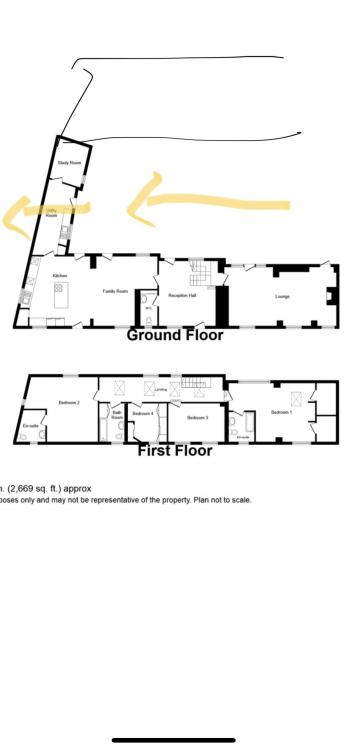
The ground levels are a bit strange. Level on the courtyard side of the utility but the ground drops about 6ft the other side where the pipes exit. the actual pipes come out under the DPC (which is 5ft up) but Just above ground level
-
the neighbours house is attached to our study unfortunately. So the only “free” place is on the far right of that diagram which is uphill or possibly at the top of that diagram which goes to next doors courtyard but not sure how happy they will be with our drains redirected through their property
-
We’ve discovered a slight problem.. We have a courtyard at the back of our property which is surrounded on 3 sides by our property and next doors. The top end is open (highest ground level) we have about 5 rainwater gulleys feeding into surface water drainage, plus some from next door. these then flow downhill towards our utility, under the utility and out the other side where they exit the wall as clay pipes and pour water onto a grass verge Except they don’t. I’ve rarely seen water exit these pipes. So got a CCTv survey. Told the drains under our utility have collapsed and need abandoning. So the surface water is sat under our utility. Obviously we need to address this. I’ve been told we can’t line the pipes as they have collapsed. is there a way of reinstating the drains under the utility (about 2.5m wide, external wall on both sides)? I’m trying to avoid digging up our utility inside but not sure if there’s any possibility of laying new pipes without doing this / can they be mole ploughed under a house if there’s access both sides? The only other option is to reverse the drains and run them up the courtyard against the natural fall of the land so it’s an awkward job and will require digging all the pipes up, raising the gulleys, etc. seeming like a huge job that’s possibly wear and tear so not covered by insurance Any tips? Ben