
dnb
-
Posts
581 -
Joined
-
Last visited
-
Days Won
10
Everything posted by dnb
-
My temporary supply is similar to ProDave's. I have 2 meter boxes bolted back-to-back on to a stake in the ground near my pole with a consumer unit and a couple of blue sockets. SSEN were remarkably easy going with it all.
-
I think you can drop the "domestic" from that statement. Simplicity usually wins. If a system looks complicated then chances are you haven't finished designing it yet! The choice of storage vessel for DHW heat is of little importance to the payback time of the choice of thermal or PV as long as it is large enough. My maths assumes it is something that accepts heat and gives it up with a nominal daily loss. I might win a bit of the loss back with some systems, but this is not the question that I am trying to answer at the moment. I really wanted solar thermal to work out. It is simple - the fewest steps to collect the energy - but the "business case" (how I hate those words!) just does not add up for my situation, even assuming zero servicing. Each ET "bank" removes apprx 900Wp of PV from the system (keeping the collector area constant) and costs more than 3 PV panels in parts alone. It might function better, but unless it can offset the cost disadvantage a simple single technology wins. About the only thing now that will tip the balance is if 3 phase electricity is required for the all PV system but not for any of the alternatives with thermal. (3 phase would be useful in the garage of course. Everyone needs a good machine shop for their own personal use!)
-
Don't forget that my conclusions are specific to my new house design. I made no assumptions on requiring roof mounting. All I assumed was that there would be a fixed area of collector and it would be filled with the most efficient distribution of PV and ETs for DHW (I am planning no wet UFH - it is a complication that the house does not seem to need if the AC system works like the predictions say). In practice, the roof is the only sane place to put solar equipment so that it is not shaded by the nearby trees. I assumed a 500 litre tank. It doesn't have much bearing on the situation because both the PV and ETs will be feeding it, and sooner or later it will be filled. I had a cunning plan for dealing with thermal over supply so this on its own does not deter me. But the bottom line of payback time for the cost of installation unfortunately does have to be a significant factor in system design. So unless I can find another few percent of efficiency from the ETs (modelling might be pessimistic?) the ET "business case" for want of better words doesn't appear to work for me purely on investment terms. Granted, it's really close. If I have over-estimated ET costs by 20% then they win hands down. Similarly, if I have underestimated the cost of PV panels by 20% then ETs win. Similarly, if I have underestimated my demands of DHW by a significant margin then ETs win. Why does it have to be a photo finish? I wanted a clear winner!!
-
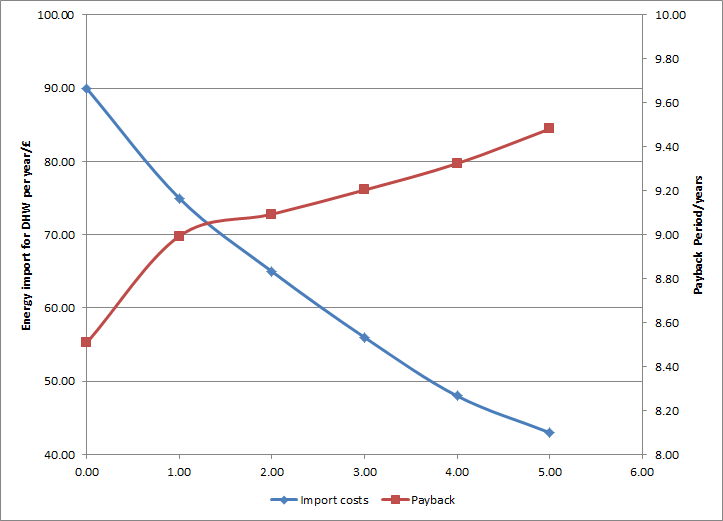
Getting back to the original topic (the diversions have been very interesting and insightful, but I have to appear vaguely sane when I tell my long suffering architect what I've decided to do next week) The latest version of my modelling tool has led me to the following conclusions: * The difference between PV and ETs is actually quite small when just considering DHW. * If there is a limit on roof space (like my current house - and that's why I'm building another) then ETs are probably the better solution for DHW - ETs are more efficient per m^2, until the store is full. * It's not just the cost of panels and ETs (obvious, I know, but let's follow the logic). If PV (or ETs) are going to be there anyway, then increasing the amount of either is a much smaller delta cost. So there's a big saving when one or other technology achieves zero presence. (and a nice saving in complexity) * I can't remove all the PV - it makes no sense at all from any point of view. So it looks like ETs are not going to be part of my build after all. A chart to justify my position. The X axis represents the number of 3.9m^2 ET assemblies on the roof. The remainder of the roof is used for PV. The roof area is held constant, and the calculations account for quantization of panels. (The numbers differ from previous iterations because I included another kW or so of PV on the SE facing roof having looked at tree heights - and my chainsaw - today) So as can be seen, adding ETs reduces the import costs at every level, even when a lot of the energy collected in summer is waste heat that has no practical use until I build the swimming pool. The best payback however comes from the simple PV system primarily because of the reduction in infrastructure and each addition of a block of ETs always extends the payback time, with the extensions getting gradually larger as the waste heat becomes ever more significant.
-
It has already included my solar PV plans - it took me to an EPC of 106. Probably 3 more panels would swing it. Good call. Thanks! I'm only looking for a small boost to the numbers, and given the wife and daughter's love of showers it will pay back well over the years.
-
But hot water is a fairly a useful trick! I take the point though - in the summer, the 9m^2 of ETs are not pulling their weight for much of the day, when their equivilent area of PV could be doing something useful like powering the A/C from my other thread. But of course only if the DHW is charged or it's more cost effective to heat the DHW over night with economy 7 (or whatever other base load incentive I might find) I have come to the conclusion that I can make whatever system I install work and meet my DHW requirements, and all I am going to achieve is to get the last few percent of efficiency out of the system. It should be worth it though. I updated the model with Ed Davies suggested ET efficiency model and used the parameters from the Navitron system I was considering. It makes surprisingly little difference to the conclusions. What I really need is a near infinite capacity thermal store that has next to no loss. Then I can average the energy across the seasons... So, a 10m^3 concrete cube buried deeply ;)in the garden ought to do it. I got the first draft of the SAP calculations this afternoon. It will change a bit, I am sure, because some design details have been entered as guesses. It indicates the house will be annoyingly close to carbon negative, but won't quite achieve it. Still, it's a good A rating so nothing too bad for a first go at house building.
-
Hmmm. Home made petrol for the classic car collection... now there is an idea.
-
I had factored in the 30 deg usefulness but had used 85 as an upper limit because there aren't any grown ups around and I assumed a thermal store... I probably should do a run with an upper limit of 65 to properly simulate the UVC case. I was puzzled by the apparent lack of legionella protection too. It is one of the advantages of a thermal store
-
I suspected you were involved in the industry somehow. My experience is mostly radars. I have been fortunate to sail a lot of miles with the RN and witnessed many missile firing trials to test the systems I have helped to build. It is as you say lots of fun.
-
Isn't that the truth! I have spent the last 15 years doing mathematical modelling work (amongst other things) in the defence industry. Different subject matter but always the same question of finding the best thing.
-
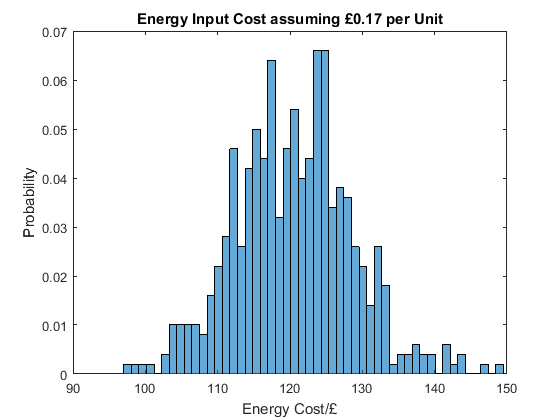
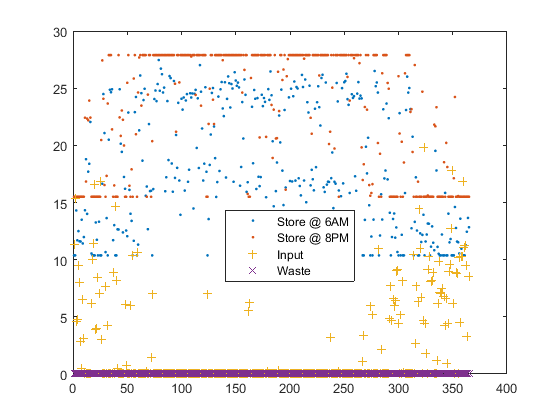
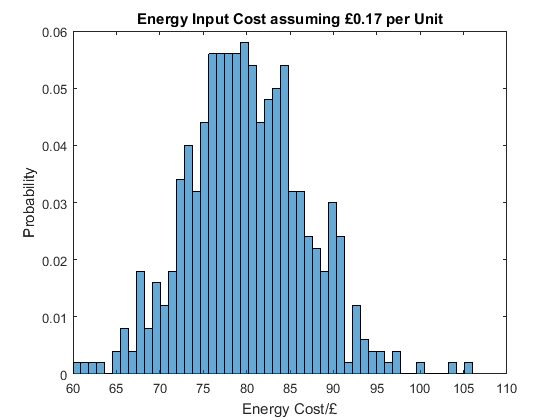
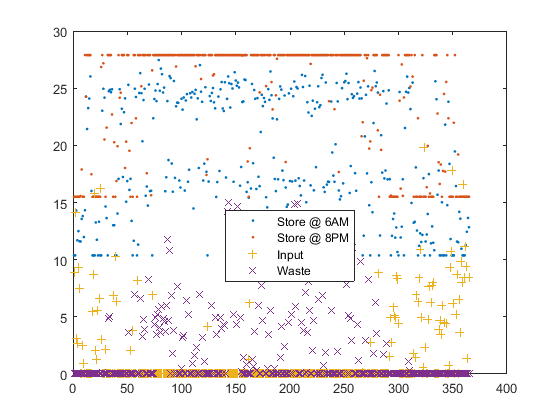
A bit more work using an updated version of my house DHW model: I created 6 versions of the house, with various distributions of PV and ST areas on the roof and ran them in parallel for 500 years using randomly generated hot water usage (according to the model I described in the 1st post) and a model of daily solar availability based on recorded data. Two cases of interest are presented here. The all PV case is for 27 300W PV panels with a nominal efficiency of 18%. The second is 18 PV panels of the same spec, and 9m^2 of evacuated tubes. This should serve to illustrate the case scottishjohn discusses - what do 2 different systems do with the same solar input. I modelled the efficiency of these as 80% when the thermal store (or UVC - it makes no difference to the model) temperature is low, rolling off as an exponential decay as the store temperature increased according to [efficiency = nominal * exp(-tank_temperature/constant)]. I set up the constant to give an efficiency of approximately 25% at 60 deg C tank temperature. I assumed the thermal store had a capacity of 500 litres. Heat losses from the tank are modelled as a basic daily loss, applied as part of the water use calculation. All heating from electricity is assumed to be a very simple immersion heater. I know it can be done more efficiently with ASHP etc, but that adds new variables and more system cost that will be looked at in a later model. Obviously take the results with a pinch of salt until I have properly reviewed the maths. I might have got things wrong. Case 1 required the following yearly energy input costs from the grid (a simple histogram of all 500 years worth of data): Case 2 energy input on the same scale: As can be seen, case 2 requires less energy input, so is in theory is more efficient. But it is only £40/year on average, so when system costs are factored in, case 1 may be the best route. This cost data is available and will be presented later. Now here are some specifics. I have taken one year from the data set and plotted internal data from the model for both cases. It concerns "filling" and "emptying" the tank with energy. The model assumes water is consumed just after 6AM and just after 8PM (It simplifies things nicely) and that once the tank is full the thermal energy can't be used. The PV might be used so I don't count it as waste, but it is not used further because it isn't doing anything for the DHW unless I make the modelled system more complex - and that's tomorrow's job. Case 1 Case 2: So on the one-of-one observation it seems the PV system generally wants more energy input throughout the year, but at a low level. Both systems can cope with demand fairly well, so if my model is to be believed, it is a case of finding the cheapest system to install that gives the fewest side effects to the rest of the house rather than DHW running costs. Any thoughts? Does the model look like it represents reality? One last thought - the wife read the comments about water saving and didn't like the idea of re-education. I pointed her at part G of the building regs. Let's just say it could have gone better.
-
You can. The roof span at 45 deg pitch was just over the maximum span for SIPs panels so 3 14 metre glulam purlins were needed to support the roof. The pitch reduction shortend the span and allowed removal 2 of the purlins and a lot of structural constraints.
-
I wasn't planning g on any RHI applications unless it was easy. Letting a short term government scheme drive system design is too much like my day job. I will read the posts in detail tonight when I am not at work. Thanks all!
-
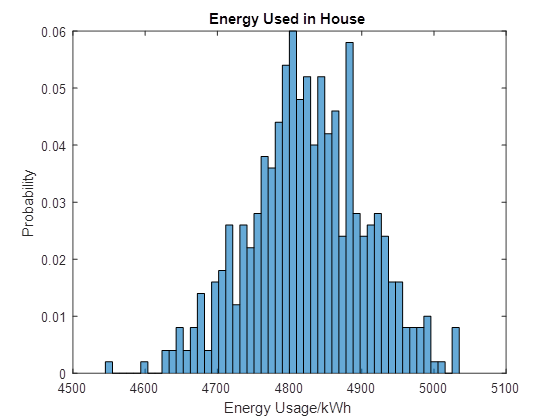
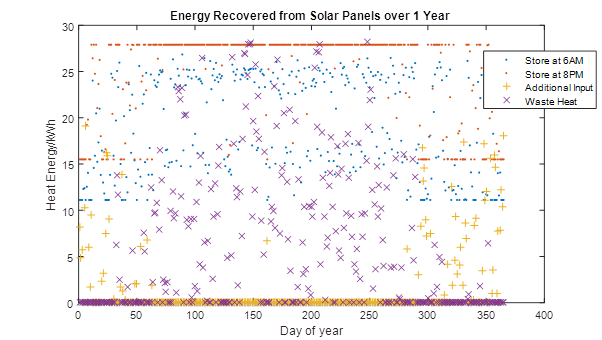
I was, until I joined the forum here, fairly set on solar thermal plus backup electrical heating for my new house DHW. Now I am less sure having read some well written arguments from some forum members. So now I need to revise my models and find what is the most suitable technology. First of all, it's a reasonably large house with 2 ensuites, a family bathroom and a wet room down stairs. I have a near teenage daughter and a wife who both adore water. (I know there is a theoretical limit of 125l/person/day but let's suggest, for argument sake that I have several children and several wives while not admitting to any wrongdoing whatsoever...) I also have elderly parents who like visiting their grand daugher(s!) on the Isle of Wight, and may one day forget to go home. The site has mains water and mains electricity. That's it for services. It also has lots of trees, but as stated in other threads, burning things in houses is a 20th century idea. Oil should be saved for use as petrol in classic cars in my opinion. My airconditioning combined with MVHR thread is going pretty well, so let's make the further (perhaps rash) assumption that this will work. The DHW system will therefore be broadly separate from the space heating. The first picture shows the distribution of energy I expect to need each year for hot water. It is based on simulating water heating loads randomly over a morning and evening. For instance, some mornings there are 2 showers and nothing much in the evening. Other times there is one shower in the morning and 2 showers and a bath in the evening. Duration was modelled as an almost Gaussian distribution centred on 8 minutes for the shower, modified with a long tail to the longer duration to model teenage daughers... So on average I am going to need to find 4,800kWh over a year, preferably mostly out of thin air. Does this seem under done to anyone? Thankfully, I have 40m^s or so (let's be a bit conservative) of south-ish facing roof with a 43.7 degree pitch. (Would have been 45 degrees, but this simple change saved me the best part of £12k in the house structure) So, how do I supply the energy for DHW? I should point out that if at any point my wife decides to make use of hot water and there isn't any then I will be fed to the sharks. Nothing like a bit of pressure is there? As I said, my first thought was solar thermal. It makes grand claims of 80% efficiency etc but these are in optimal conditions, not when feeding a thermal store up to high temperatures. But let's assume I fit 9m^2 of themal evacuated tube "panels" with a 500 litre thermal store and backup electric immersion heater, and the system "works perfectly". (Waste heat will be dumped to a radiator on the north roof without incident - it's a perfect, albeit imaginary, world.) Insolation data comes from several years of daily measurements of intensity and duration from a reputable source. This is run on a daily basis against my random usage model for thousands of years to build a decent statistical sample set. One year of this is presented in the second chart showing how the system responds on a daily basis. This tells me I need to get a decent control system for it all - or write one if all else fails. In the winter, early spring and late autumn, the system needs to use the immersion heater before 6AM in order to ensure I don't get fed to the sharks when the wife wants a shower before going to work - there being no useful sun until 9 or 10AM. This of course means that some days produce waste heat, even in winter. (Telling the wife to plan showers based on the weather involves things that are worse than sharks.) Similarly, we need to add heat with the immersion heater if the day's solar capture is less than we need for the evening baths and showers. The chart therefore shows that much of the time an excess of hotness is generated in order to minimise grid electricity consumption, and that this is a law of diminishing returns because there's no use for heat you can't store and having roof area that is only usefully doing something for 1/10th of the year is not cost effective. Perhaps a PV only system would do better? It may now be cheaper and certainly there would be less waste especially when a battery bank is considered, although currently these don't seem cost effective - but that is another story. Note that the above analysis might just as well be performed on a PV system. I will do so next time I play with Matlab because everything has changed price since 2017 when I first looked at this. So will 9m^2 of solar thermal and 18 300W PV panels do better than simply putting in 24 PV panels? (The Myford is begging for 3 phase, so I need an excuse.) It would appear my model of solar thermal needs to be updated based on the contents of the forum and some links. I wonder if it would be sufficient to use an average efficiency to derate the thermal panels in the model to get something going quickly. NB: The wife isn't the shark queen and doesn't really want me out of the way (at least until the completion certificate for the house arrives) but she does suffer endlessly for my sense of humour.
-
Thanks for letting me join. Just about to begin building my new house.
dnb replied to dnb's topic in Introduce Yourself
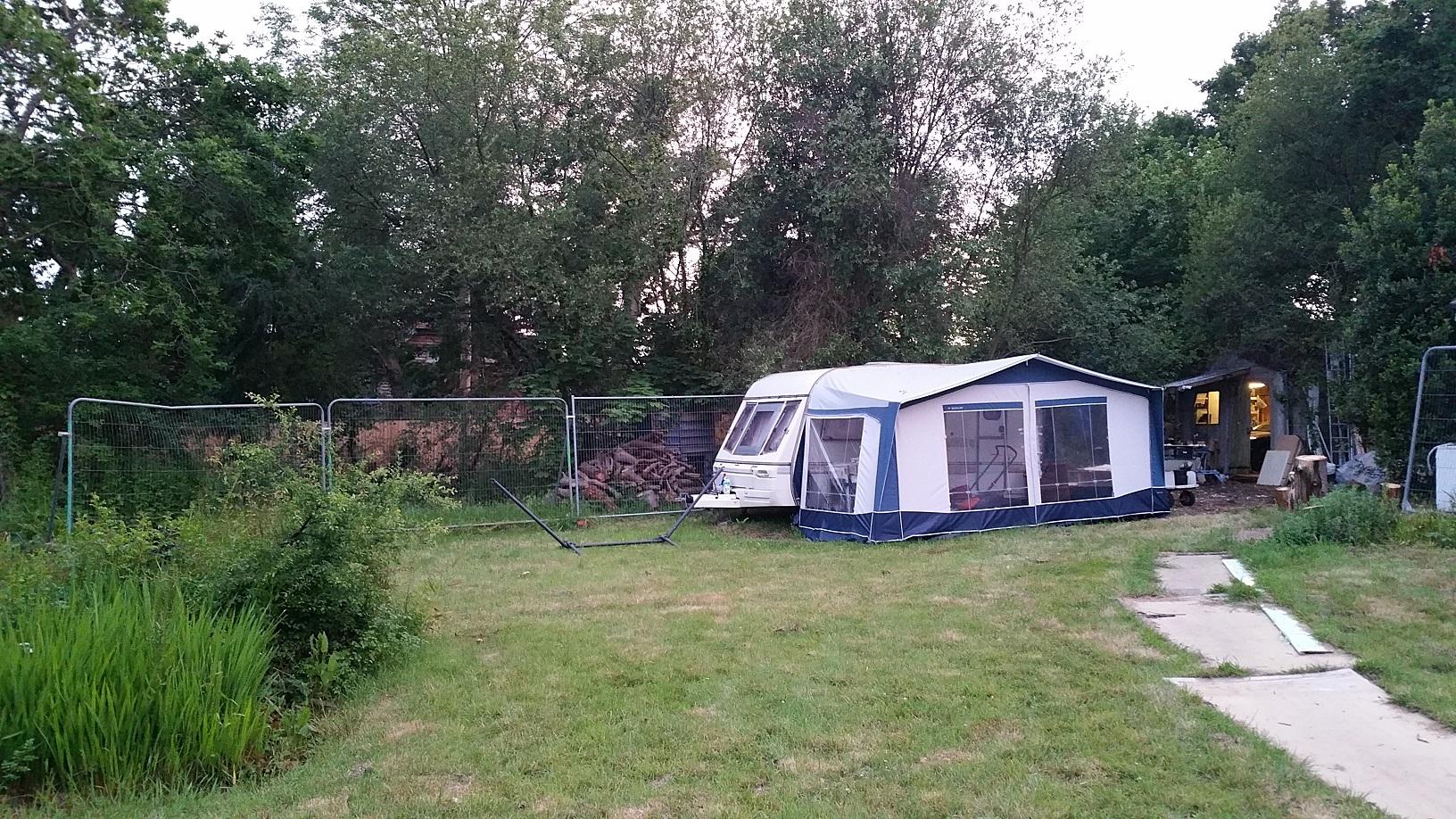
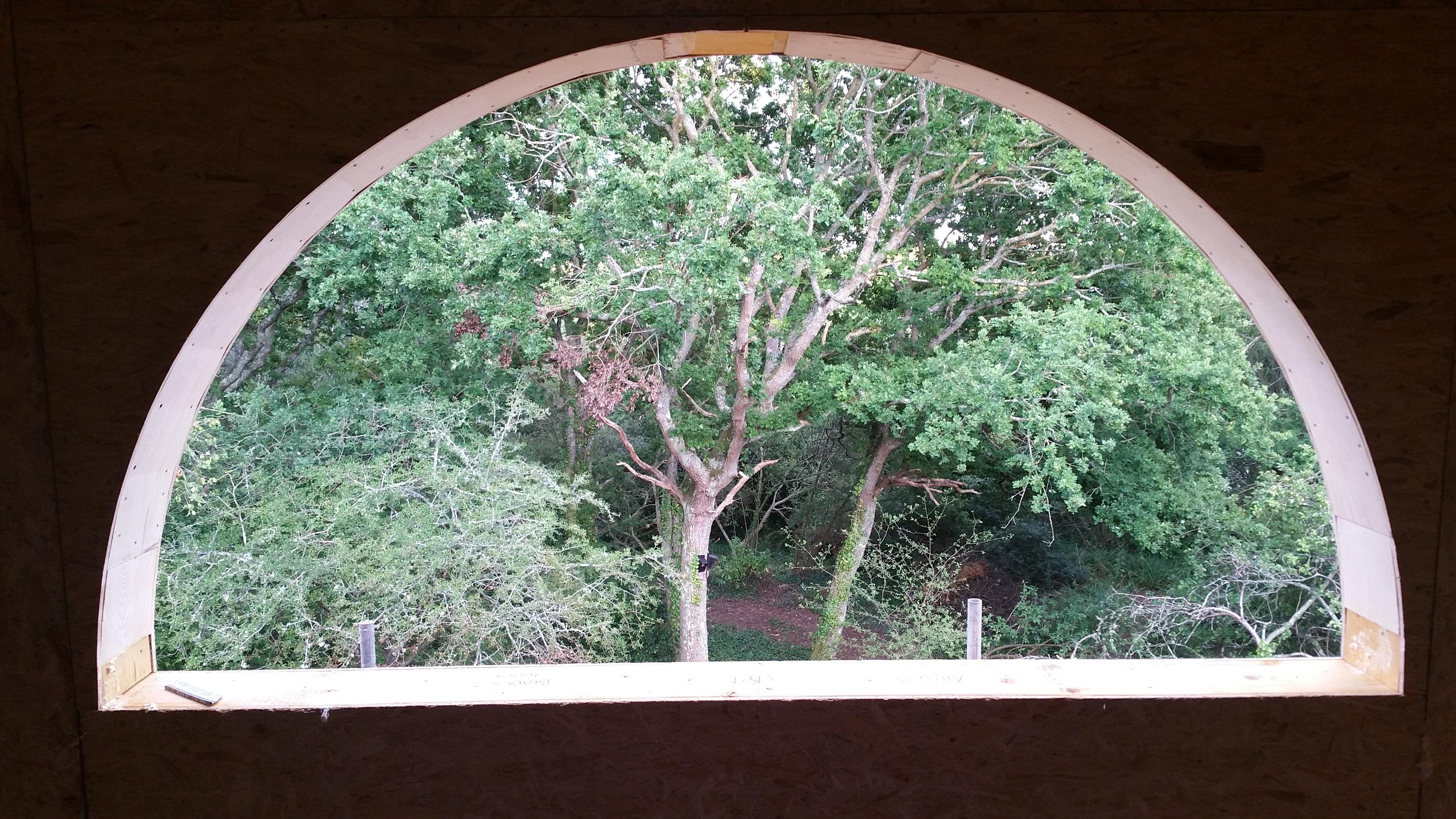
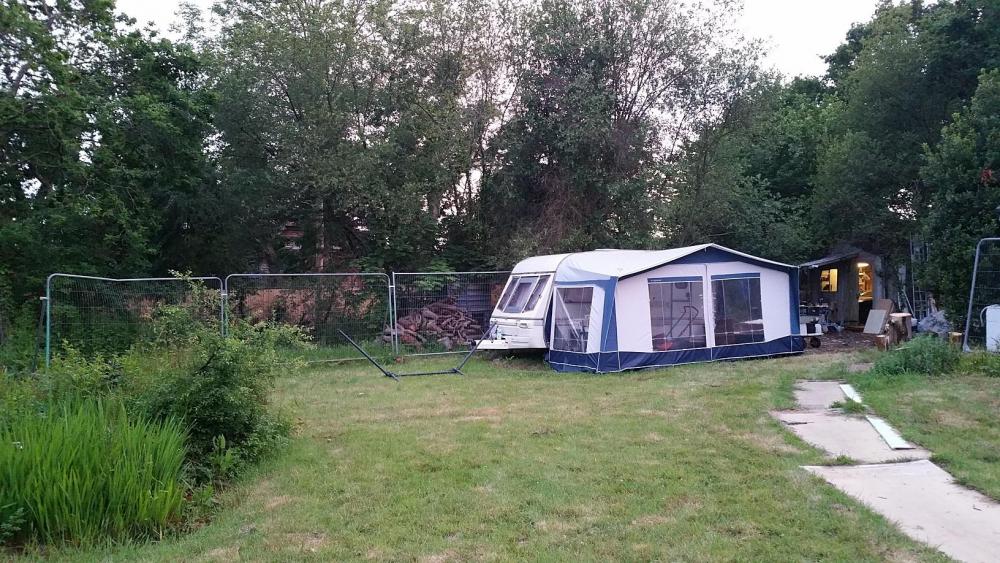
Thanks all! Lots of good information. The awning is currently serving as the garden shed because the on site garage is full of broken car. Just what I need - another job to do. I am not considering the attic space as bedrooms for the moment, but want to have this as an option in case of any elderly parent care requirement. (Not for them - they get part of down stairs) My architect was very good at helping me to get some nice large half-round windows in the gable ends in the attic to make it all possible. It will be built to all the regs with living space in mind, even though we don't plan to (can't afford to) fit it out fully. I have looked at the SunAmp system and am not yet convinced. I will have a piled foundation with ring beam and beam-and-block floor (probably using some insulating blocks), so relatively little concrete in the grand scheme to store anything - my maths indicates I have more of a cooling problem than a heating problem. I think at the moment it is solar thermal with PV and a battery bank eventually (again depending on cost-benefit analysis) for water heating and taking up the house base load for electricity. I am going for an ASHP - see the thread on integrating the MVHR with air conditioning. GSHPs do work, but are expensive to the point of not paying back in my lifetime in the house and will upset the council over disturbing the trees (even though there are no TPOs). -
Combined MVHR, heating and cooling.
dnb replied to dnb's topic in Mechanical Ventilation with Heat Recovery (MVHR)
No problem. I think I might be getting somewhere with the design now I've had sensible people to look at it. Does it look like it might work? As for the noise, it's a good job I'm getting old and deaf! Years of hearing abuse from TVRs! Seriously, the noise is a significant concern so I will be taking great care with duct sizing. This is where there might be a benefit in a "star" based system as I drew badly in my picture - as long as the duct lengths don't cause too much friction loss. This way, the ducts can be kept (generally) smaller because the "trunk" ducting is short and no rooms have to share. I can see a lot of maths and abuse of my Matlab licence in the next few days. Then I need to see what parts are easily available on this little island. -
Combined MVHR, heating and cooling.
dnb replied to dnb's topic in Mechanical Ventilation with Heat Recovery (MVHR)
I don't follow your point - I have described (or possibly misdescribed) a system that does broadly what you ask for. The MVHR is supplying 90 l/s, without any heating or cooling (only the 10% or so loss of energy - in either direction - from the system based on MVHR efficiency) in order to meet the ventillation requirements of building regs. The AC unit will recirculate 100s of litres of air (as much as necessary up to its capacity - say 250l/s for a 5kW system - I don't have the spec sheet of the candidate part to hand at the moment) to move the temperature appropriately. So that's just under 3 times the airflow rate, and a lower supply temperature if need be. An A/C unit is a bit better than "comfort cooling" tech at changing temperature, albeit with a higher cost of energy and a risk (until the temperature stabilises) of causing the feeling of drafts when the system is cooling fast. This of course leads to a discussion about dew point and condensation when you want to have large movements of temperature... But in practice one should get the house to the correct temperature and leave it there... (Fine in theory - achieving it in practice will take good engineering) What I hope to gain over the Genvex system is a decent pile of cash and full A/C (rather than "comfort cooling") at the expense of having to do some systems engineering. -
Combined MVHR, heating and cooling.
dnb replied to dnb's topic in Mechanical Ventilation with Heat Recovery (MVHR)
Not quite. I want the option to mix the air (as my car can do as standard ) Jack - I think you have misunderstood some of what I want to achieve a bit. It's most likely the lack of pictures in my explanation. I will of course size the ducts appropriately. And there's no question of bypassing the heat exchanger unless the conditions demand summer bypass. It's the MVHR fans that will be off (or very low) if the AC is running hard - there's nothing to say the MVHR fans have to put air through its exchanger. Note that I think I have found a way around this bit of the issue - and I think the new solution is a little more elegant. I have attached a picture. It shows an approximation to the ground floor of my house. The program I used to create it seems pretty good at the maths of airflow in ducts for ducted AC systems, but does not have a whole load of parts for MVHR (It's Australian, so is obviously optimised for their market) so I have "simulated" the parts I needed for trying to illustrate my scheme. There are 2 more floors of my house, but they are more of the same - introducing air and removing air - so don't add anything to the discussion of the concepts. The scheme illustrated is very slightly different to the one I first described and should be easier to implement and to show it works. There is a ducted AC system supplying air to the family room, lounge, study and hallway. It takes recirc air from the attic room as drawn, but the placement of this is open for discussion. There is also a MVHR system. It extracts from the plant room and shower room on this floor, plus all the other bathrooms on other floors. I leave kitchen extraction out of this because my understanding is that it is best dealt with separately. The MVHR system supplies its air into the same plenum as the A/C supply, obviously with suitable non-return dampers on both pieces of equipment. Therefore the MVHR can supply the 90l/s of "new" air, and the A/C can get on with making things the right temperature. All I need to do is make sure the ducts can cope with 90l/s plus the heating/cooling demands. Surely this can't be too hard...
-
Thanks for letting me join. Just about to begin building my new house.
dnb replied to dnb's topic in Introduce Yourself
I do intend to put in a battery bank in the fullness of time. And it will operate using my algorithms if nobody has properly solved the problem I am tryingg to solve... Unfortunately I have to watch the budget at the moment. -
Combined MVHR, heating and cooling.
dnb replied to dnb's topic in Mechanical Ventilation with Heat Recovery (MVHR)
Your last point is exactly why I am considering AC from the outset. I too didn't bother modelling solar gains etc too much for the fabric losses. I did however include them in a Monte Carlo simitation of thousands of years of randomly distributed house use. It indeed indicates that little to no heat is needed most of the time, but considerable cooling is required. -
Combined MVHR, heating and cooling.
dnb replied to dnb's topic in Mechanical Ventilation with Heat Recovery (MVHR)
Just had a look at JSHarris's very useful heat loss spreadsheet so I could compare it to my own. It seems I am overestimating two parameters: I assumed that the delta temperature for the slab was the same as for the outside air. This was because my understanding of soil temperature was that it was only stable at average air temperature below 1 metre in depth. Happy to be wrong on this one since it's a saving of a few watts. The next one I perhaps didn't think through carefully enough. I added an allowance for uncontrolled infiltration based on total house volume and the assumed air leakage test results. This, on reflection, is a little silly because the air leakage test is carried out at half atmospheric pressure! So "real" leakage should be next to zero when the house is similar pressure to outside. So if I remove the infiltration loss (by setting the AC/hr to zero) and use 8 degC for ground temperature my house model is in broad agreement with JSHarris's spreadsheet. I therefore think I need only 3.5kW of heat in the worst case in January, and can therefore get away with a much smaller AC unit (or whatever scheme I settle on). This is much better! Thank you for the sheet. -
Combined MVHR, heating and cooling.
dnb replied to dnb's topic in Mechanical Ventilation with Heat Recovery (MVHR)
I was. But I see no reason to ever turn on the fans on the MVHR unit when the AC is running (either heating or cooling) - I only want it for the heat exchanger. The AC unit fans will be significantly more powerful. "All" I need to do is ensure there are dampers to ensure the AC unit draws in 90l/s or so of fresh air through the MVHR system all the time it is running. The rest of the air will be recirculated as in a normal AC unit. I believe a sensible building management system can achieve this with the right sensors and data. This is where the building regs people perhaps start to get unhappy. -
Thanks for letting me join. Just about to begin building my new house.
dnb replied to dnb's topic in Introduce Yourself
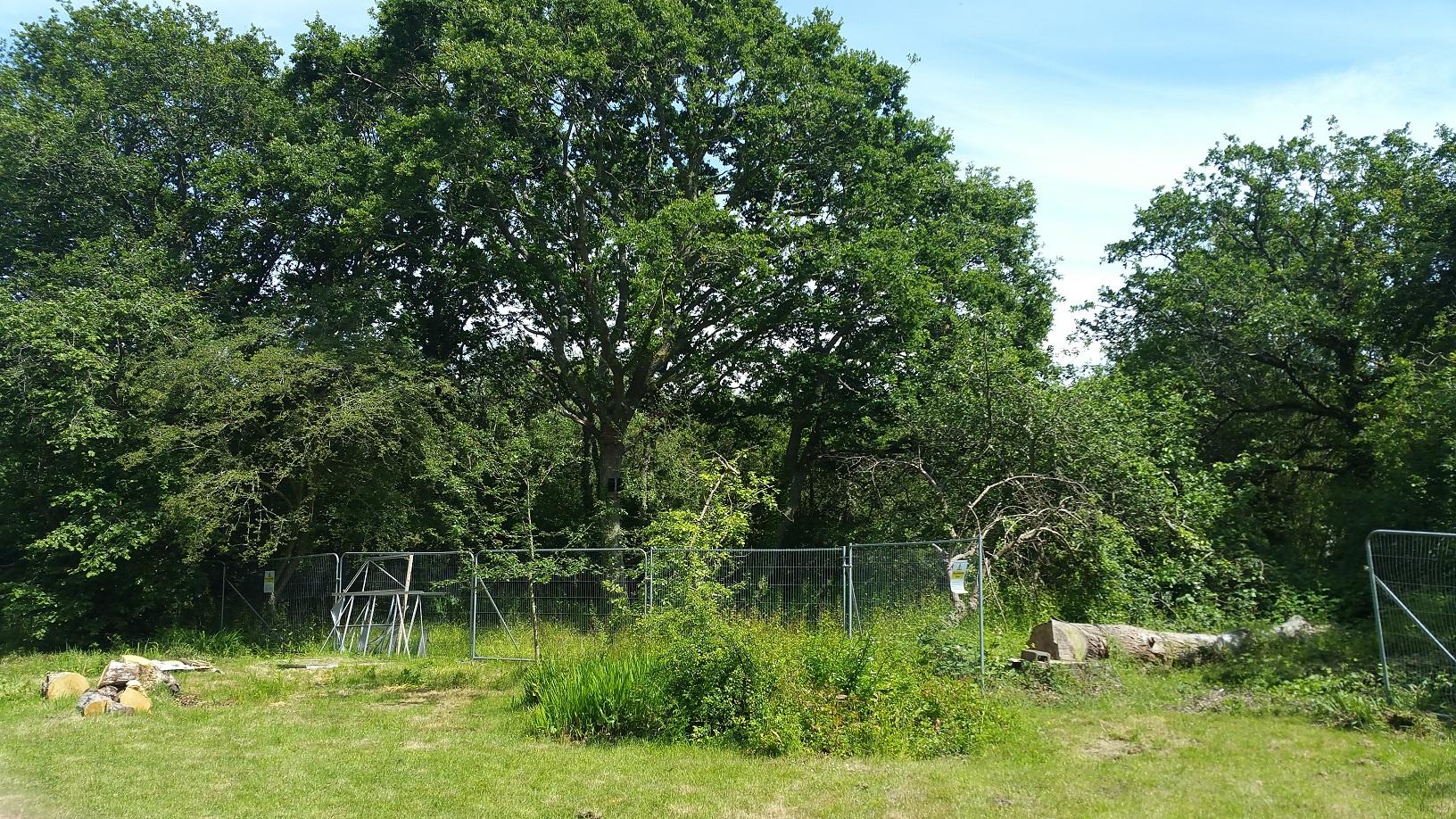
Thanks all. I plan to avoid all forms of combustion. It doesn't seem a good idea in a wooden house! (and there are other reasons too) I am going down the sewage treatment plant route no matter what - there's no mains drainage for miles. I have 45m^2 of useful south facing roof. You'll never guess what's going on it. Shame Tesla aren't going to be ready in time really. The plant in the attic is the thermal store. The MVHR will be in the plant room near the centre of the ground floor - good route for ducts throughout the whole house. JS Harris - I would really love to see what is achievable. There is always something new to learn. I took a couple of site photos while I was clearing up today - there's always grass to mow and nettles to strim! My back garden - over 100m of woodland - and my "site office" in the corner of the plot.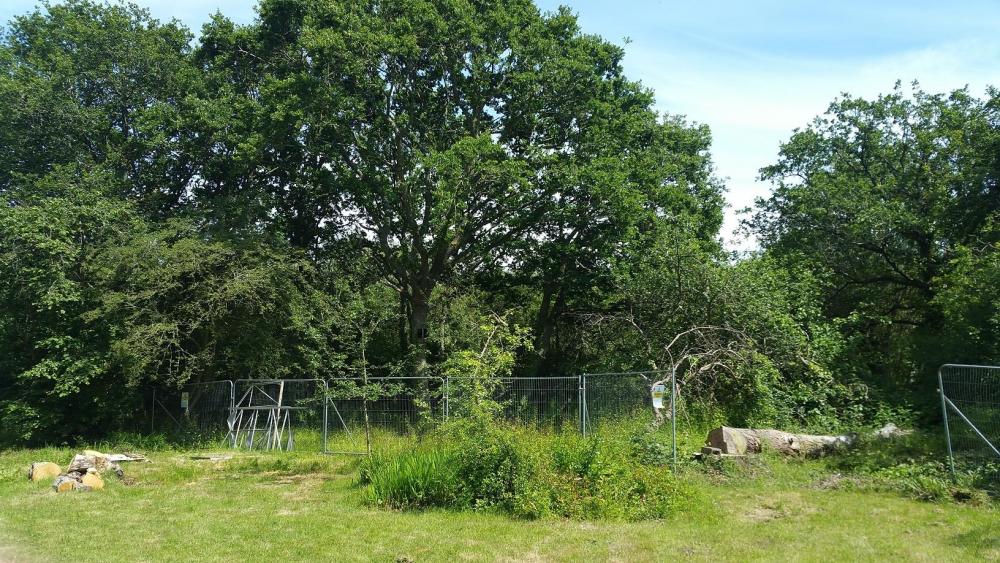
-
I read UncleQ's recent thread with great interest - his problem seemed very similar to mine. Hopefully the answer is similar too. I am at the building regs stage of a SIPs build house on the Isle of Wight. The SIPs supplier have made a really super 3d model of how the house fits together, and now want to make all the holes in it for ducting and pipework so they can start fabrication in their factory. (I do like all the difficult design stuff being done now while the house is virtual) I have worked out from first principles what the heating/cooling loading needs to be in the worst cases as 7kW heating and 3.2kW cooling. I will get more detailed data based on modelling from the SIPs supplier very shortly but until then I need something to work with. I used local weather data for the temperatures (extremes of -8degC in winter and +32degC in summer) and have made the following structural assumptions: Wall U value 0.15 W/m^2K Roof U value 0.11 W/m^2K Slab U value 0.10 W/m^2K Window U value 1.0W/m^2K House volume 735m^3, floor area 320m^2 (including attic space "hobby room") Window area is around 60m^2, and pretty much not facing North - so it is enough, but not excessive. (Note there are no veiws to the North anyway, only my excessively large garage!) Aiming for air tightness of 0.6 air changes per hour. This is tough but I am told it is achievable. All the above should be conservative estimates that we should be able to beat. But I haven't worried about accurate treatment of thermal bridging as yet so hopefully they balance out. Similarly I have neglected solar gain from the heating requirement. I am happy to share my very simple excel model for criticism so I can make it more realistic prior to real data arriving. I would be interested to know if people think the requirements for heat to be excessive or insufficient. I'm new to these new highly efficient materials. The only services on site are water and electricity, so it makes sense to use a heat pump of some kind for space heating. (Water will probably be solar thermal plus something else, and the subject of another thread) I initially thought about air conditioning the whole house, because modern systems are in fact heat pumps and have a reasonable COP for both heat and cooling. And they are relatively cheap. I then thought that if I am putting ducts everywhere for MVHR, why can't they be combined? It seems they can, but nobody I had yet found wanted to do the designs. (This was until I found Genvex linked from this forum) So the main question is - do I go for a large Genvex system - probably the HPV series 3 given my above calculations - or should I look to use something like a Mitsubishi FDUM ducted A/C system with a separate MVHR unit sharing common ducts? Both have their advantages from a system-in-use viewpoint, but I think the Genvex system is going to be far superior from a building control acceptance viewpoint because it is a single accredited package, even though it is twice the price. I plan to have heated bathroom floors (2 ensuites, 1 master bathroom and one wet room down stairs) using resistive elements - I don't like having cold feet - and possibly towel rails but no other heating if I can avoid it - fewer systems in the house is better as far as I am concerned. I will not be considering a wood burner in the house - there are very good reasons but this isn't the right place for discussing them. My Monte-Carlo simulation of thousands of years of heating says I can expect running costs of £350 per year on average based on a 3.8 COP and 17p per kWh, again making "safe" assumptions for efficiencies. Please ask if I've neglected to include vital information - I really want to talk this through with people who have done this and have practical experiences.
-
Thanks for letting me join. Just about to begin building my new house.
dnb replied to dnb's topic in Introduce Yourself
Thanks for the tip. I am always keen to minimise tax.