


ab12
-
Posts
91 -
Joined
-
Last visited
Everything posted by ab12
-
What is the required U-value according to the last (2022) building regs for pitched roof for single storey extension? Is it 0.15 or 0.13? If it was 0.15 can this be achieved by fitting Knauf mineral wool 44 loft insulation 150mm thickness between the joist and 150mm above the joists? Thanks
-
Pitched roof- required U-value for new extension pitched roof
ab12 posted a topic in Heat Insulation
What is the required U-velue to be achieved for pitched roof for new extensions according to thhe building regs applicable pre October 2024? Architect has specified 150mm Rockwool laid between joits and 150mm laid at right angles to joist to a give a U-valuenof 0.15 for the roof. Can I use Knauf 44 loft roll instead of Rockwool. I take it will need to use total thickness of 300mm as well to achieve U value of 0.15? Thanks -
Would love to avoid RFG but its a an old victorian house with solid walls so have been advised to use this over PIR...RFG manages the moisture, doesn't push it to the wall as opposes to PIR with DPM - mositure will either condens under DPM or will be pushed to the alls and cause potential risng damp? Thats my limited understand.
-
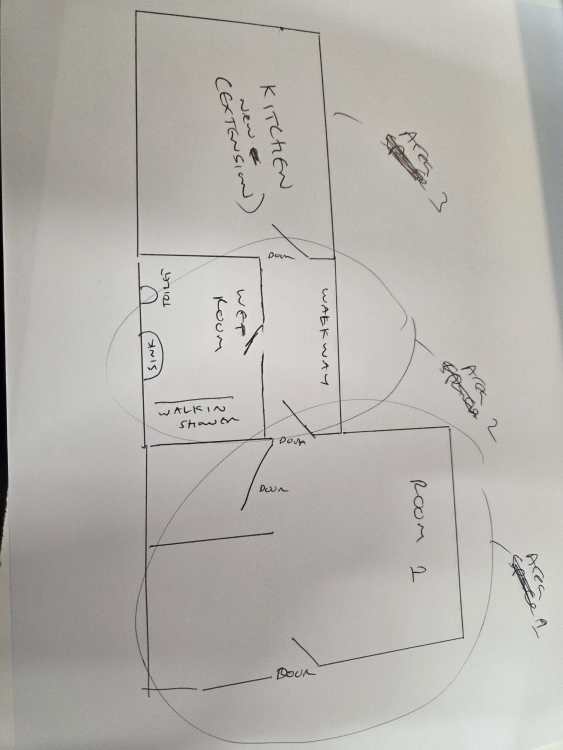
Sorry I should have elaborated Area 1 and 2 is solid construction, I plan to dig about 275mm of ground out, install Recycled Foam Glass which will be compacted to a depth of 200mm and this will be wrapped in geotextile membrane and finished with 75mm screed. The reason for partly not having the manifold in Area 3 - the kitchen- is once Area 3 is screeded I will need to run the pipes needed for Areas 1 and 2 and leave then exposed in either Area 1 or 2 and they'll get in the way whilst the ground is being dug. I take it I can install UFH first in the kitchen Area 3 and then Areas 1 and 2 later OR does it all have to be done at once if both zones are connected to the same manifold. Thanks
-
I need to get UFH done in 3 adjacent areas, ground floor, solid slab construction. Area 3 is Kitchen, new built extension, Area's 2 and 1 are are existing old structures with solid ground floors. Plan is for UFH for all 3 areas but in 2 satges. Manifold to be kept in Area 2. UFH to have 2 zones, Zone 1 =Area 3 and Zones 2= Area 2+1 Now due to logistics etc is it theoretically possible to get UFH done for Area 3 first, so have the flow and return pipes from Manifold located in area 2 , pipes pressure tested etc. and screeded Then few months later get Area 2 and 3 done. Property will get boiler installed at a later date, currently no boiler in the property. Basically is it possible for me to get Area 3 pipes installed, pressure tested and screeded and then do Area 2+ 1 simultaneoulsy at a later date? Thanks
-
There is a hybrid option available to help keep costs down. So base layer of RFG to be compacted say to depth of 100mm - 150mm and wrapped in geotextile membrane, this should help with ground floor moisture content, followed by 100-150mm of PIR slabs followed by 75mm dry screed.
-
Thank you both markc and Mr Punter. Was thinking of getting ready made dry screed delivered to the property. From estimated I got over a year ago if memory serves me right I think cost of was in the region of £400 - £450 for the dry screed. Would imagine wet screed is going to be more expensive but I will be saviung on labour costs. Regarding the dry screed , delivery will most likely be dumped at the front of the prooperty. How do I make sure it consistently stays moist of enough for installation? Keeping adding every so often and mixing it
-
I need to dry screed the an area of 21 square metres of what is to become kitchen in a newly built extension, depth about 70 or 75mm. About to lay Cellotex insulation followed by UFH and then screed to finish of. Have never done it before but watched plenty of you tube videos. Was thinking of hiring a labourer to help with install. Can hire 2 labourers if required. Any tips/advice, is it a DIY job. Off course most crucial thing is to get a perfectly level floor.
-
Option 1 is the way to go for old building with solid walls. RFG acts as a capillary break and also acts as hardcore and yes will need to be compacted. You have to wrap the RFG in a geotextile membrane. Have a look at Mike Wye and Unity Lime for drawings and detail. Out of interest you have mentioned 250mm RFG depth- is this to achieve a certain U-Value or something else. Of quoted figures for RGP depth is about 175-200mm.
-
Hi All Opinions please. I need to get UFH in newly build kitchen extension. Area coverage is abpout 20 square metres. Thinking of ready made dry screed laid to about 75mm thickness. I've never laid screed previously. Will be getting some help but essentially thinking of going the DIY route. Off course wnat to get evenly level floor. Can you share any tips. Has anyone done DIY dry screed floor? How will it take to complete the job in terms of hours? Thanks
-
Brilliant. Thank you loads ,Crofter, for the detailed response. Much appreciated.
-
Thank you Crofter. Great makeup to bulk up the insulation. Can I ask what thickness of PIR did you go for? I suppose the limiting factor is going to be the length of screws that need to go throught the PIR to affix to the rafters. Thinking aloud the some carefully planning will be needed to mark up location of screws through PIR which in turn would allow location of the longer screws throught the battens infront of VCL to be set at a different location so the 2 screws dont collide. With the batten makeup a service cavity is introduced making it a good location for any wiring etc.
-
Just re-reading though the thread again and I think I know understand what you mean but just want to clarify couple of things: 1) were the PIR boards directly attached to rafters or held in place through screws from the battens above them which were fixed to the rafters? 2) given that there are battens above PIR board to accept the PB will this cause an air gap of 30mm between the PB and the PIR Thanks
-
Fine tuning my IWI Solid wall (Warm Batten) design
ab12 replied to Annker's topic in Heat Insulation
Thank you for sharing info re: IWI. I have to get started soon and just working out the easiest DIY setup for my limited skill set. If it's going to be too much of a skill set challenge might get someone with experience to do it. Are the 4 by 2 timbers mechanically fixed directly to the brick wall without any substantial space between the wall? Are you considering fully fitting space between timbers with some sort of breathable type insulation OR leaving a sevrive cavity gap between the insulation and plaster board to be affixed to the timbers? Definitely like your setup. Thanks -
The answer below is based on non direct experience. BTW i'm in a similar position in that I need to get roof insulation done but just haven't decided how its going to be done. I think the risk with non breathable materials is that if any moisture seeps through any compromise in the air tightness then there will be risk of condensation on the rafters when the moisture reaches the cold side of the insulation. Although breathable materials won't provide a comparable U-value to PIR for the same level of thickness it is considered possibly safer route especially for retro fitting old properties. Incidently what is the depth of your rafters?
-
Counter battening sounds a good idea to create air gap above insulation if insulation is fitted flush between and upto full depth of rafters. Would counter batteining have the net effect to lif the roof line slightly and woud the eaves, guttering, offits, fascia etc have to be adjusted? The property is a semi- would abutments to neighnouring property be affected and can it be easily rectified? Thanks
-
Is natural insulation- woodfibre batts between the rafters and woodfibre board attached to the underside of rafter be more advantageous and run a lower risk for condensaation forming in case compared to PIR as it is breathable and can regulate humidity? PIR great materal but I'm thinking it's goubg to be impossible to get it 100% flush between the rafters so runs the risk of condensation when warm air from room meets the cold space beneath breathable membrane. Please share your thoughts.
-
Thank you for the suggestion. So the impression that I'm forming is that there will be a small void gap between the PIR attached to the underside of of rafters and the plasterboard. Is this void susceptible to condensation forming or am I overthinking?
-
-
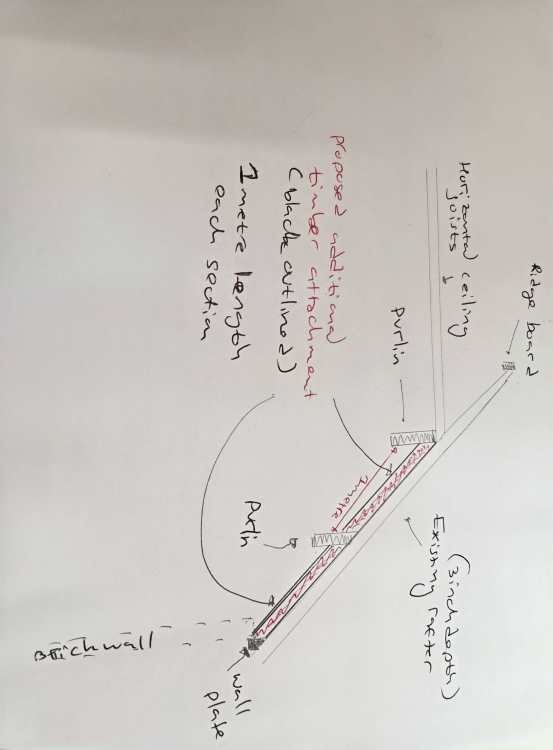
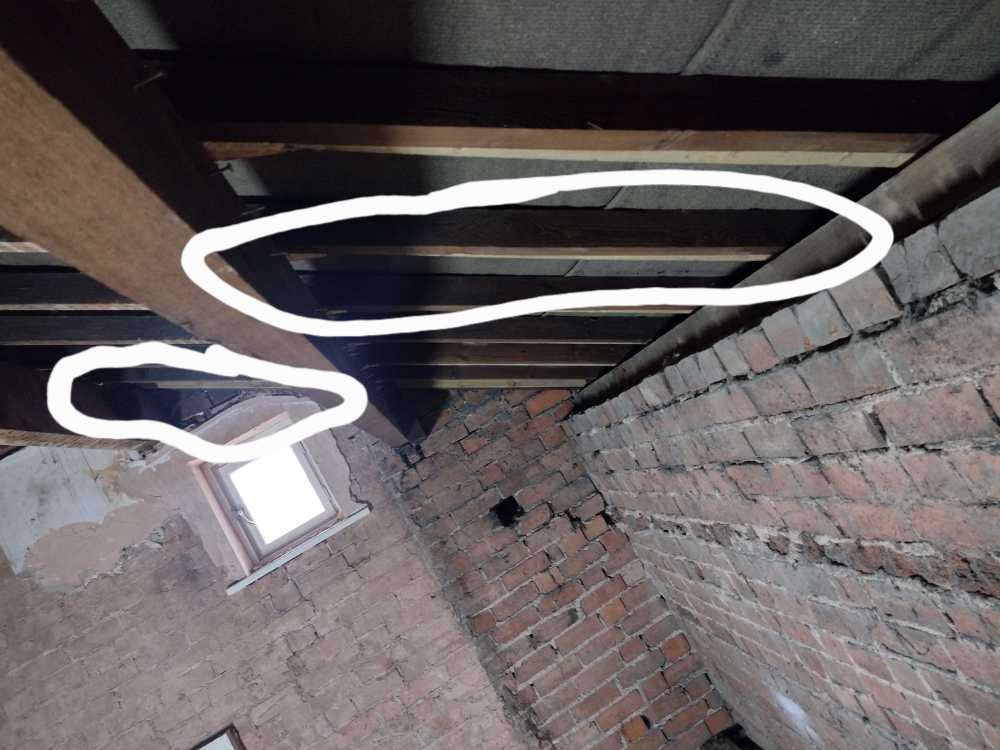
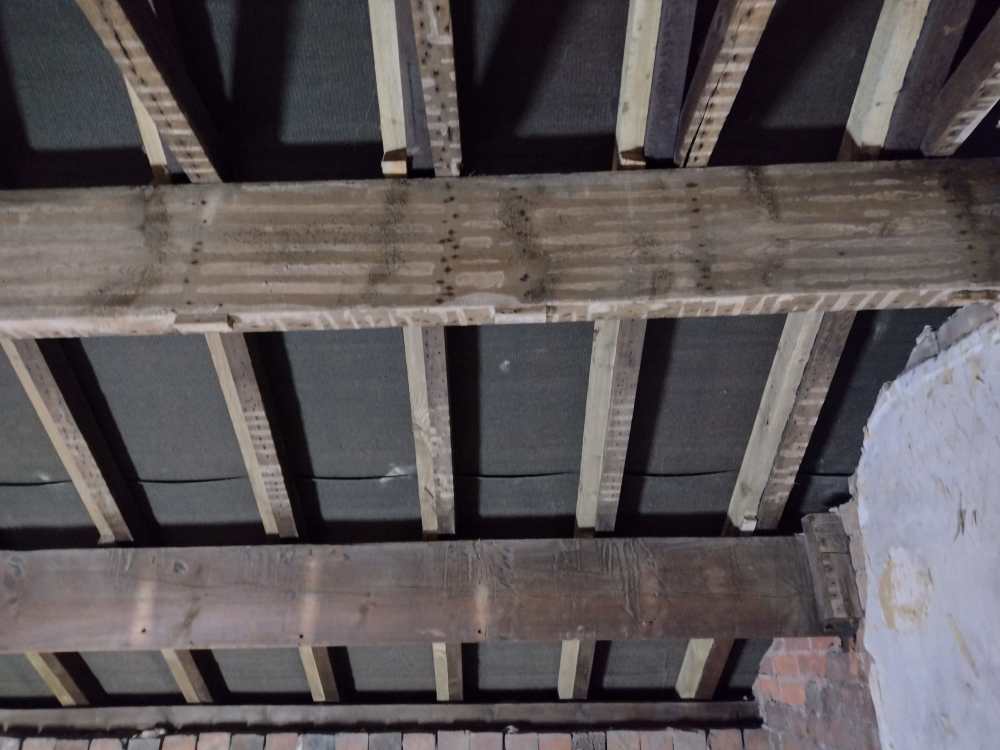
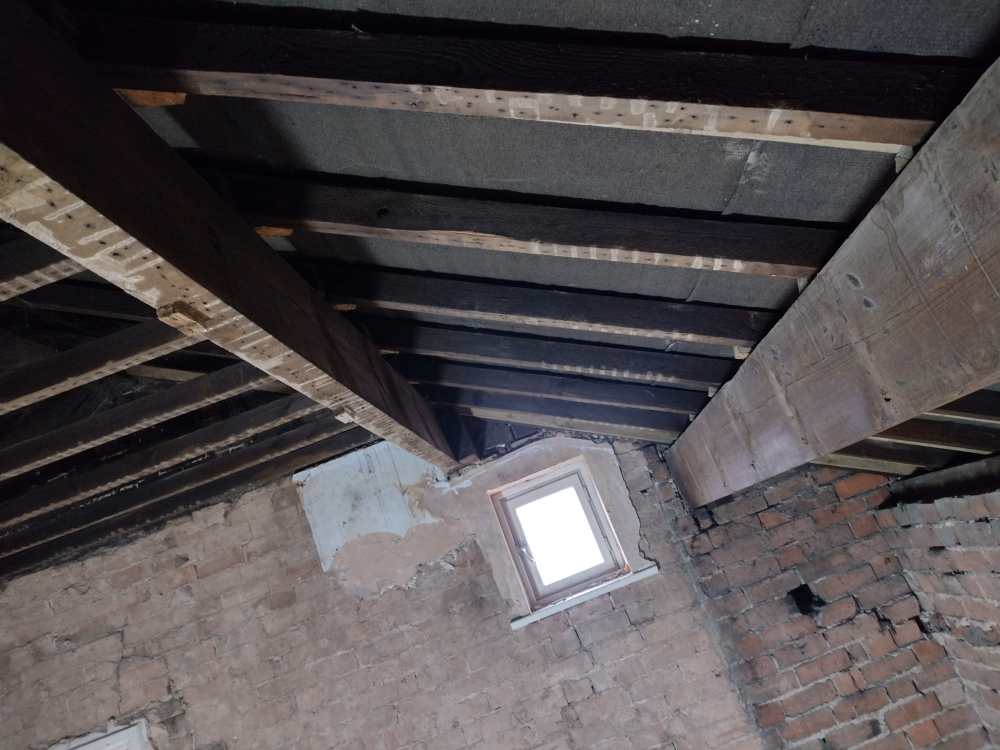
Thank you all for the replies I've attached pictures of the proposed rafter depth for extension. Essentially extension will comprise two lengths of 1 metre timber attachments to the rafters and will be separated by purlin (photo shows proposed location for the timber attachments as white ellipses) a) 1st segment will run from the brick wall/wall plate to the 1st purlin b) 2nd segment will run from 1st purlin to 2nd purlin Old rafters have been sistererd/doubled with adjacently placed new rafters as shown in the photo (old dark brown, new light brown). Now I'm unsure where to attach the extra timber for depth extensions to the old rafters or the the new sister rafters. I want to extend the timber depth as much as practicably possibly but would be happy with even say an extra 10cm depth, current old rafters are about 7 cm in depth giving me space of 17 cm which will be insulated minus 2.5 cm allowance of gap between the insulation and breathable membrane. Currently there are about 10 sistered rafters and the widht of cavity space for insulation is going to be about 45cm and there will be about 9 cavity spaces to fill up Rest of room has essentialy horizontal ceiling and this section of the room will be insulated between and above joists quite easily. However of the opposite side of the room there is a similar sloped section of ceiling. Sorry for the extra details but I thought it will provide a more clearer picture of the ambitious target. Thanks
-
Dear All Can you please advise on the following scenario. Old property with partly vaulted ceiling has rafter depth of about 3 inches. Can this depth be somehow supplemented by adding extra timbers to the underside of existing rafters to make allowance for maximum of insulation that can be fitted between the rafters. Early next year the currently worn bitumen felt will be lifted and replaced with breathable membrane by replacing all the rafters is going to be a major headache and expense as its a very complicated roof structure. Ideally I want to add extra timbers to the exposed vaulted parts of the ceiling so can pack insulating between the rafters?
-
Wall ties question- slanted or level, does it matter
ab12 replied to ab12's topic in Bricklaying, Blockwork & Mortar
Excellent. Thank you Mike. -
What's the maximum thickness of mortar that's sensible for facing bricks which will stand the test of time? Thanks
-
Thank you everyone for your advice. After much deliberation the penny has dropped, I was clearly over thinking, over engineering and couldn't see the wood from the trees. Will follow TonyL and Torrer's approach. Quick question the fact the wall ties will be slanted will this affect the structural integrity of the building, single store extension approx 5.8 m by 4m. Are level wall ties better than those place slightly slanted?
-
If wall ties are place at a bit of slant so inner leaf blocks are 20mm higher than outer leaf bricks when the wall ties are placed at 450mm centres and so wall ties slant downwards from the inner block to outer brickwork does this compromise the structural integrity of single storey extension measuring approx 5.8m by 4m? Essentially is it best to get both inner blocks and outer bricks level so wall ties can be placed level OR is the scenario mentioned above OK as well? Thank you for your help.




