Spinny
-
Posts
978 -
Joined
-
Last visited
-
Days Won
1
Everything posted by Spinny
-
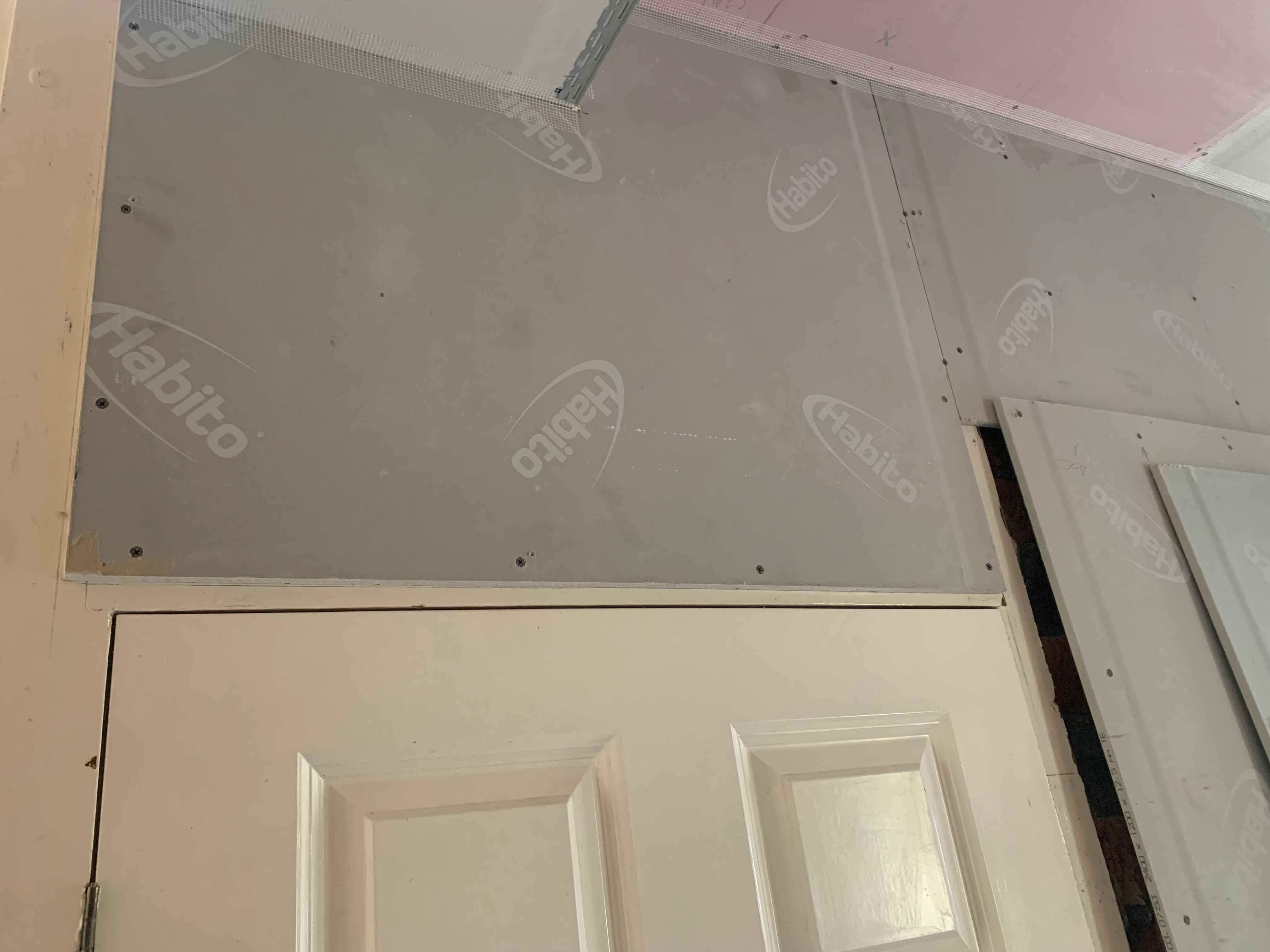
Plaster boarding going around a steel. The steel supports a 2.2m opening in the back wall of a 2 storey house. Wondering whether the fire protection requirement (would it be 30 mins or 1 hour ?) can be met with a 12.5mm fireboard. ? The problem being that the rest of the wall has already been boarded in 12.5mm, so using 15mm will create a problem with skimming the wall. There is 70mm of rockwool between the 44mm studs in front of the steel and therefore immediately behind the plasterboard.
-
Yes, have seen a youtuber doing that too. However it doesn't move the hinge point forward so the door face doesn't move forward.
-
Interesting, would like to see a photo of that. Lighting is a tricky thing. Architects don't seem to address it - ours just asked us to come up with a lighting plan. Then you are thrust into the world of lumens per square metre, CRI, CCT, LED tape, beam angles, baffles, smart control etc. Once you see the space you change your mind. Think I have over 20 switcheable lighting groups now.
-
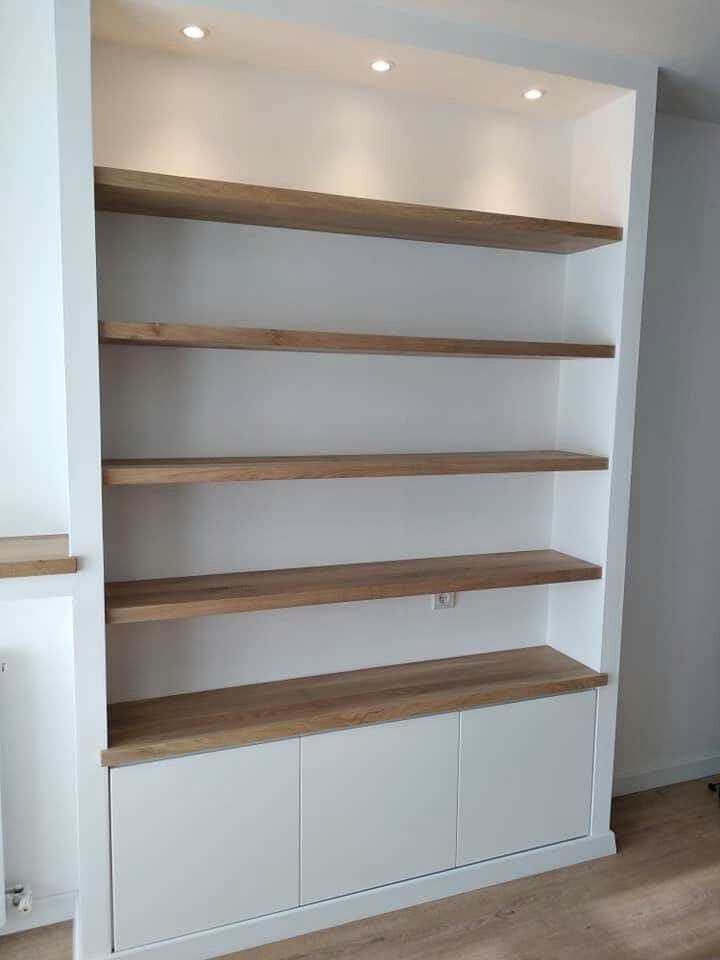
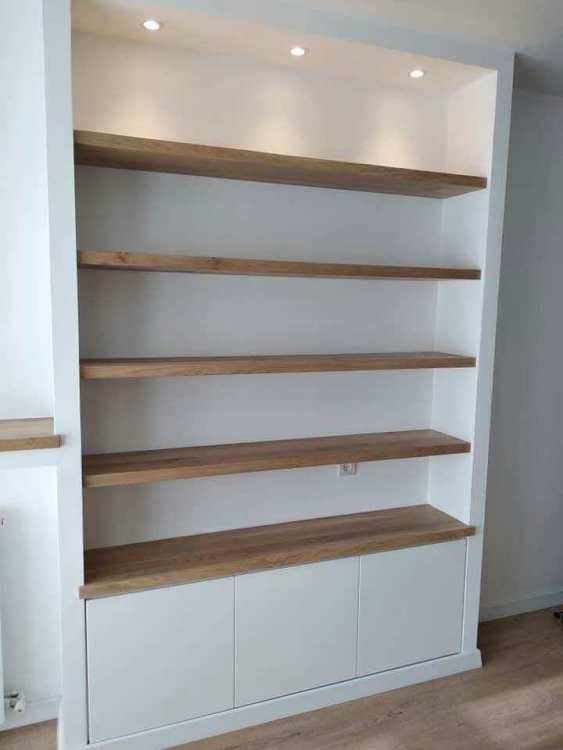
I am not sure about the back lighting, I guess ideally you might have both, but we are not planning anything other than a white wall behind at present. I have also seen them put facing upwards at the back of the shelf. It is good to see pictures of actual install like yours, thank you. Now thinking of putting a couple of baffled mini downlights into the downstand as has been done in this photo. (PS I have got some trunking put in running up the wall behind the plasterboard at the side of the recess so I can just drill into it and fish the wires through. Then as we are having a cupboard at the bottom I have had a cut out left in the plasterboard with a plywood board behind to fix the transformer and WLED controller onto. Thinking of putting addressable cob led strips in everywhere just for the hell of it.)
-
I have an alcove 250mm deep we will be putting in a cupboard 90cm high then shelves above. At the top of the alcove we want to box the ceiling down a little in plasterboard to give that 'built into the wall look'. Question is if we put LED strip under each shelf (probably oak look shelves) - should we put led strip into the underside of the plasterboard downstand ? (i.e. to light the top shelf) Thinking LED strips should go near front of shelves.
-
Apols Susie, just couldn't see your makeup from the photo. Not seen studwork going down into the insulation layer before.
-
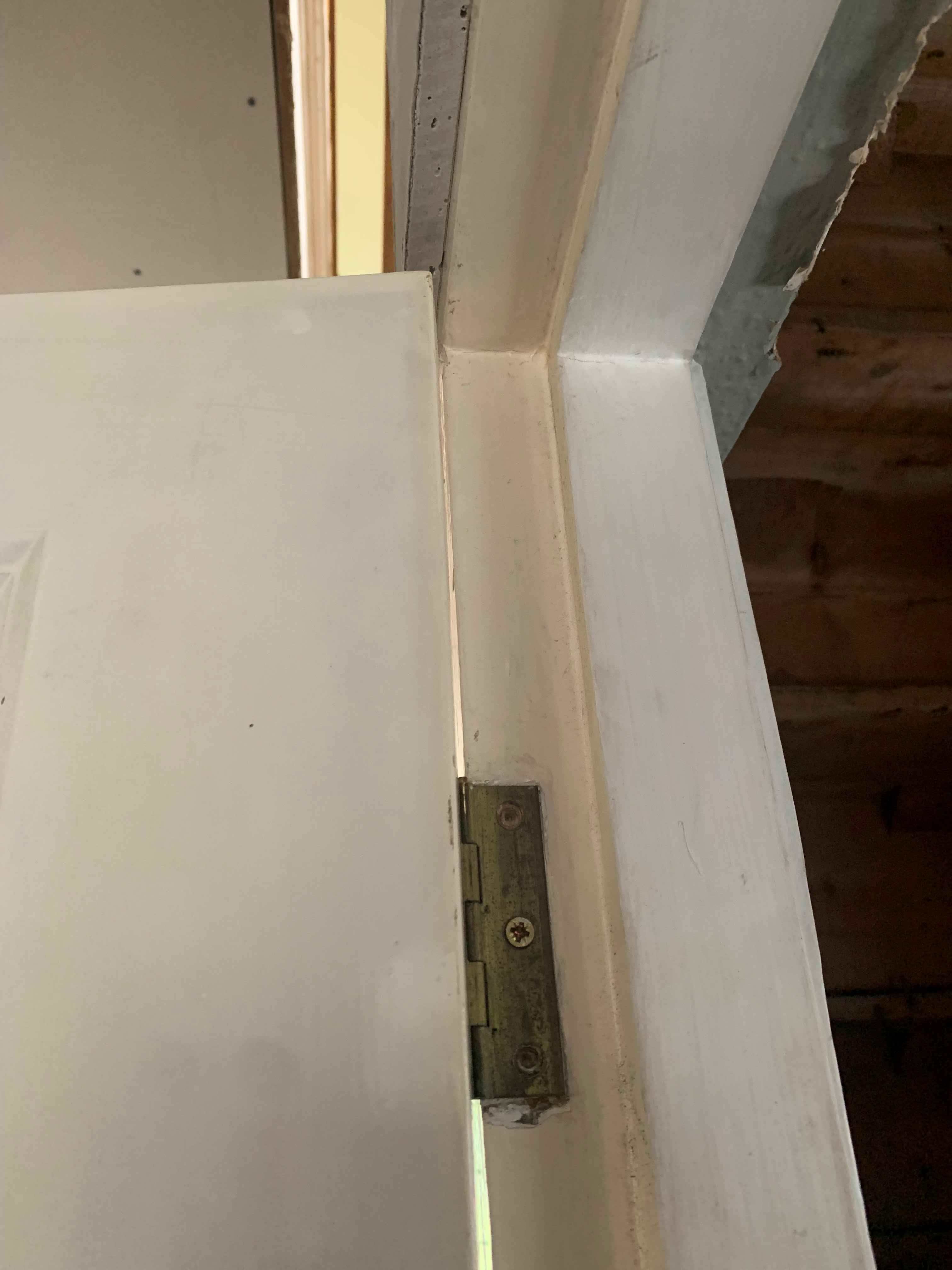
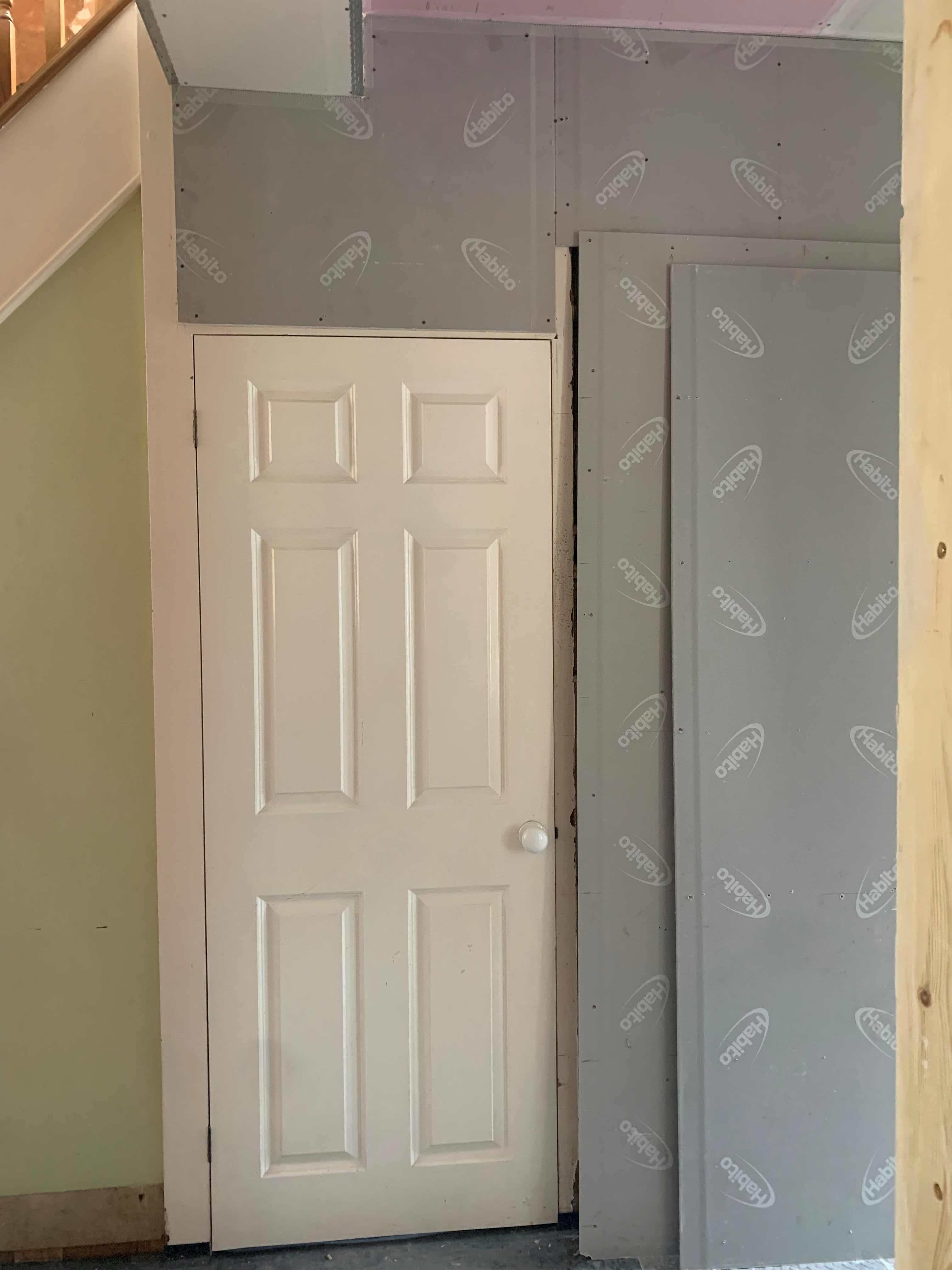
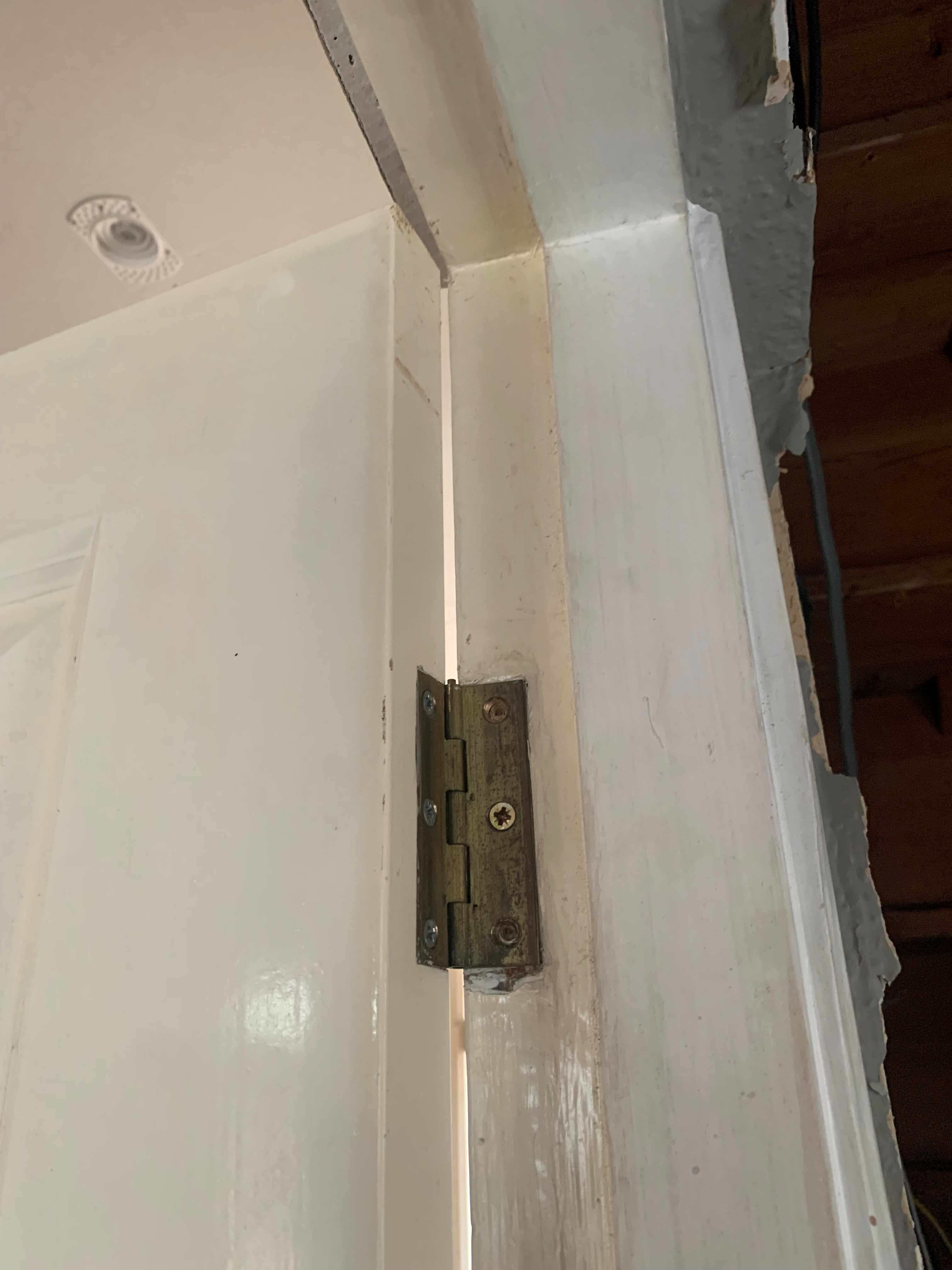
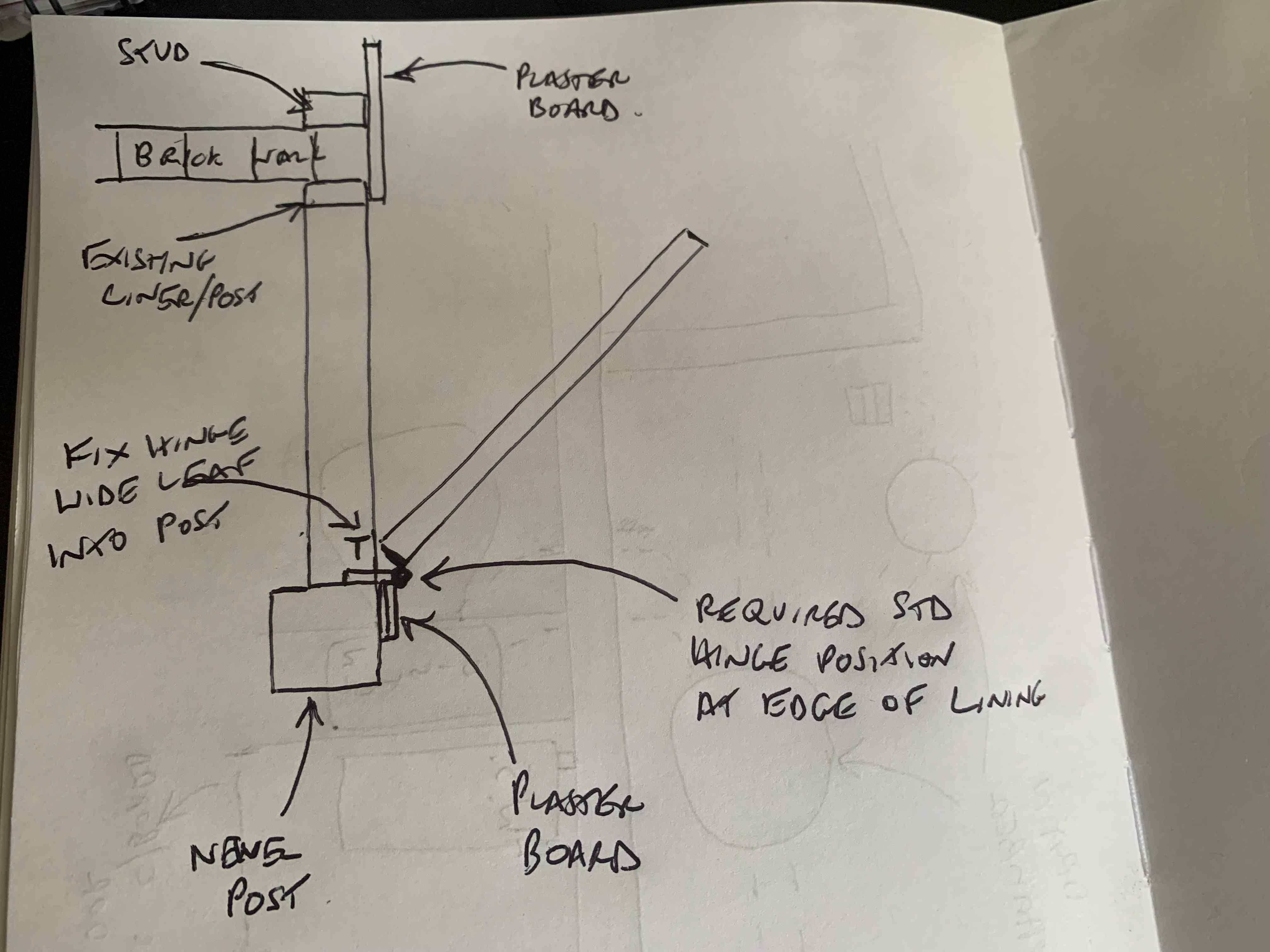
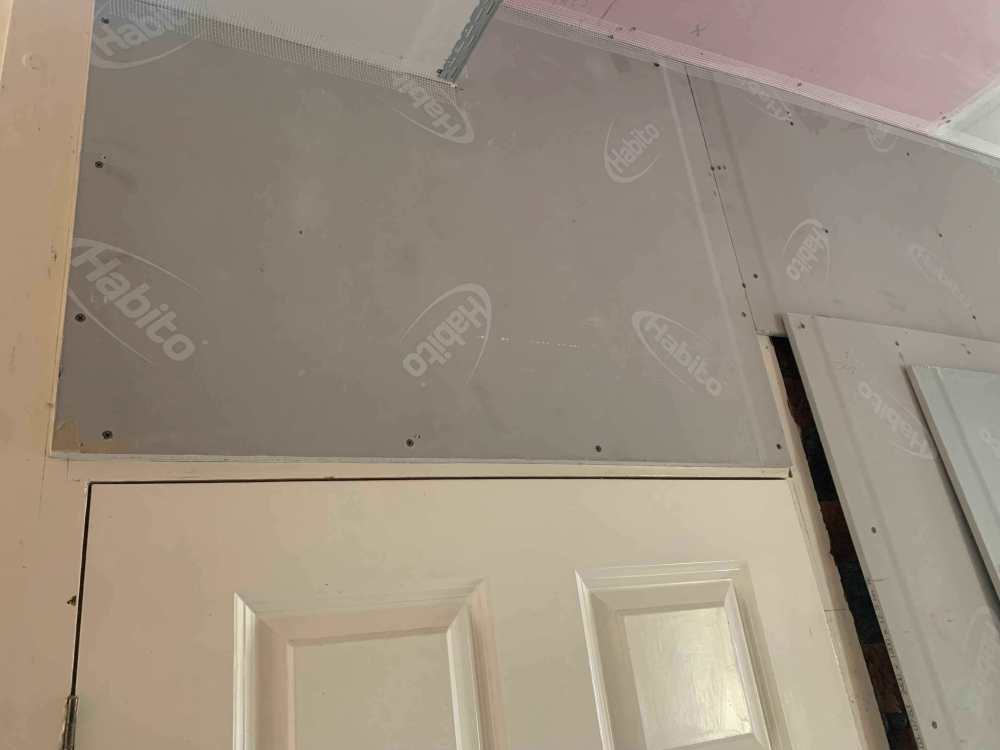
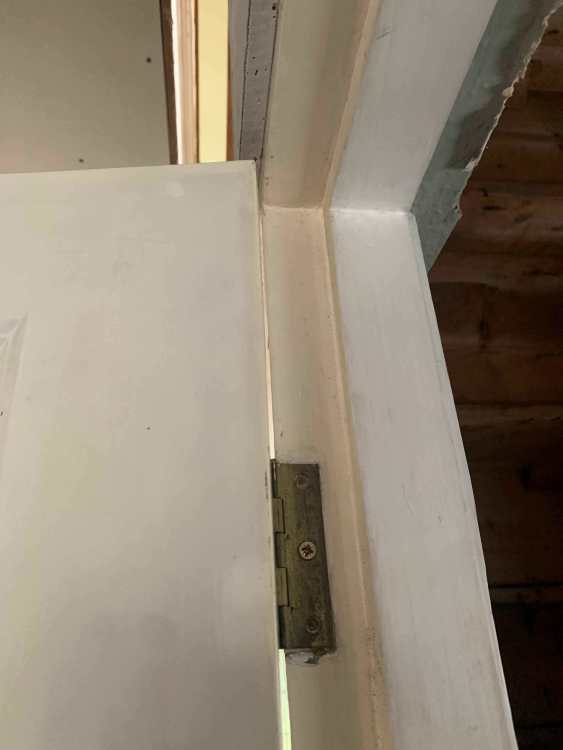
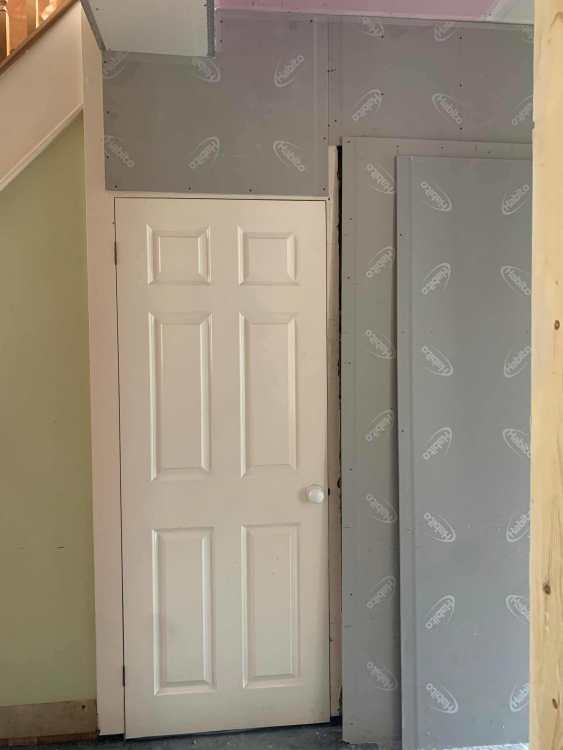
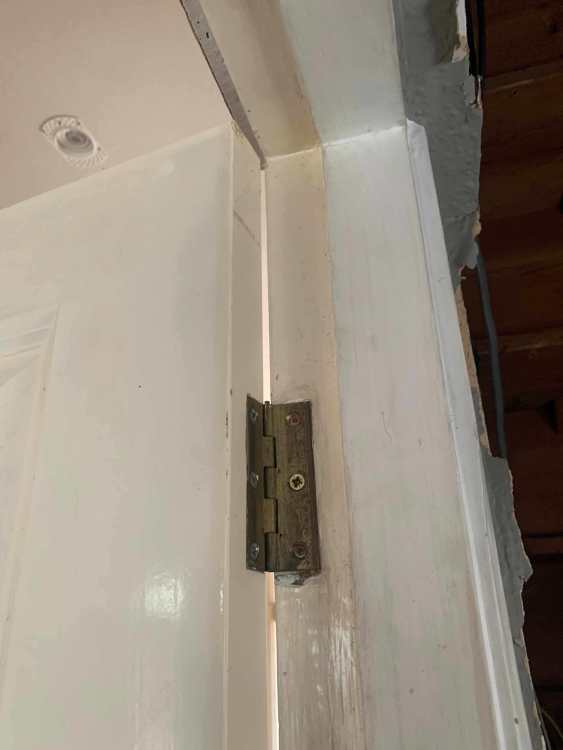
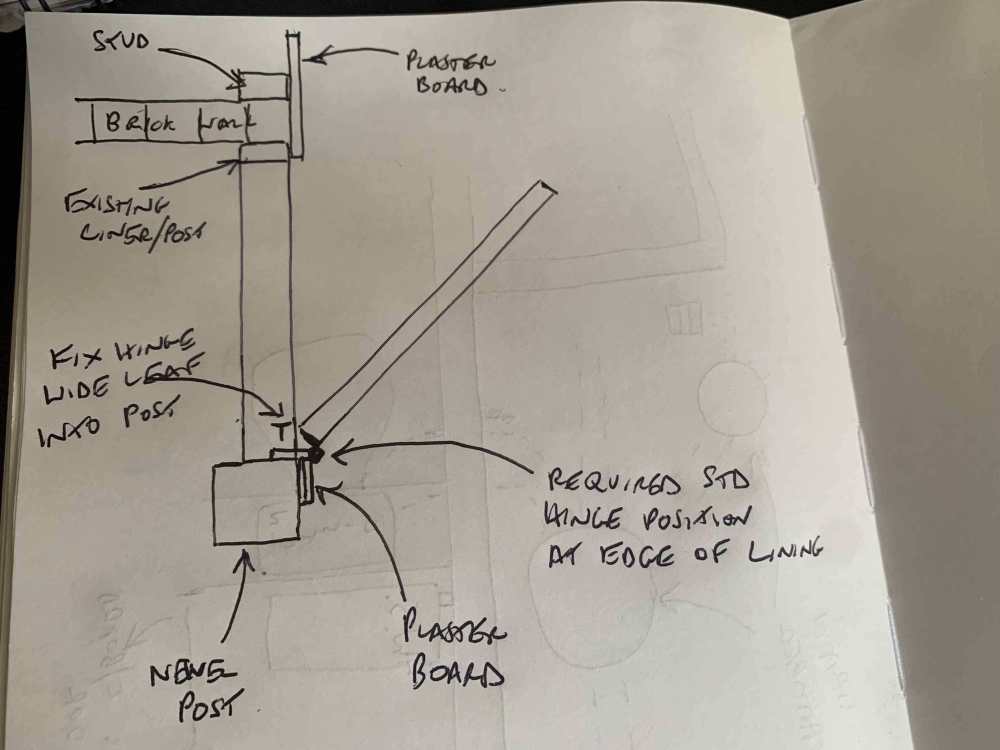
OK - photos and sketch. I am boarding around the existing u/stairs toilet door which hangs from the newel post and had no architrave. Therefore finished wall will be 12-15mm in front of the current hinge point. Best option would seem to be moving the hinge point forward to the new wall position, but screwing into the very edge of the newel post not sensible, therefore need a wider leaf on that side of the hinge. Could make door narrower by fitting new door liner inside the existing timbers but would make the door narrower and shorter - not keen on doing that. Could fit a super thick architrave around the door with the door recessed relative to the wall but will look odd - so not keen on that one. (PS I might keep it as a flush finish without architrave or add architrave as it is on the same wall as architrave less pocket door. But skirting board issues beckon)
-
Yes it needs to be forward of the lining when closed. In effect there is no door lining as such, the door lining is the timber stud, which then has plasterboard fixed to create the wall surface in front of it. I guess you can think of it like a flush door with no architrave. A normal butt hinge would have to be screwed into the very edge of the timber stud where it would end up breaking out the edge of the stud. I can see that some such hinges exist e.g. for marine cabinets.
-
I effectively need to mount a door on hinges so that the door hangs 12mm in front of the door lining. That is I need a butt hinge with unequal width leaves so that the wider leaf can be screwed into the door lining and the narrower leaf screwed into the edge of the door in the normal way. Thereby presenting the door 12mm forward. Anyone know where I might find such hinges ?
-
All the fun of the TV pattress.
Spinny replied to MikeSharp01's topic in Networks, AV, Security & Automation
You can find recessed TV mounts that have fold out arms but which fold back into a large back box which gets recessed into the wall structure. I wanted one in a concrete block wall and had the architect do a drawing with a lintel and recess built into the wall - but it was all too much for the builders. What are ''those little covers'' exactly ? The absence of any proper planning for domestic M&E trunking/conduits/service voids seems like a major failure amongst architects. It has always seemed faintly ridiculous to build something then have to spend a while load of time drilling, chasing, cutting and generally bashing about what has just been built to force M&E into it. -
So presumably this is a ground floor with a concrete slab ? If that back black wall is an outside wall I'd have thought consider digging up a piece of slab next to it to run a drain out through that wall. Maybe do this in the plant room/laundry room and then run the basin and shower waste through the stud wall and across to reach a new drain next to the black wall. You could dig out a channel in the slab and/or raise the shower tray to cover the shower waste pipe. It is a hard thing, there is so much detail, but the more that is planned in advance of a build the better, especially M&E.
-
Rear extension and nasty neighbours!
Spinny replied to Millymu's topic in House Extensions & Conservatories
It is always the right thing to do to talk to your neighbour, not a mistake - do this when you have some plans but before you apply for planning. The vast majority of people will respond positively to this. Think about their feedback and whether some minor changes could help. The tiniest change shows you can think about others. Don't do as our neighbour did - keep your plans secret - put in a planning app the day before xmas - plan to break all planning precedents and to unnecessarily maximise the impact on your neighbour - use a dodgy architect - refuse to answer simple questions - constantly claim ignorance of building regs and health & safety - mysteriously go away during the whole of the 2 week period on the day the party wall award is issued, refuse every written request from your neighbour while making contradictory verbal statements over the fence, etc -
Bit difficult to relate the house photo and the plan drawing - are they in different orientations ? Where is the driveway in the photo on the plan ?
-
Maybe you can mark on the floor plan which areas have u/floor heating and whether they are suspended floor or solid slab. Also what sort of water/heating system - gravity fed or mains pressure etc and where the cylinder and boiler are going etc. Are you siting a water softener anywhere ? It is obviously common to run pipes from the cylinder/boiler to the upstairs outlets through the ceiling void, but mains pressure systems commonly have a balanced cold feed from a pressure reducing valve sited near the cylinder. What does the upstairs layout look like ? Where are the u/floor heating manifold(s) ? Moving the supply pipe like you suggest seems like it would be better. If you are having a solid slab floor with u/floor heating pipes embedded, definitely make sure you have some conduit put in to allow insulated pipes to be run through the conduit to your kitchen outlets e.g. to the kitchen island. Where would you want a stop tap for the house - in the utility ? Where would you want an outside tap ? Do you want a tap outside a garden shed while you are about it ?
- 1 reply
-
- 1
-

-
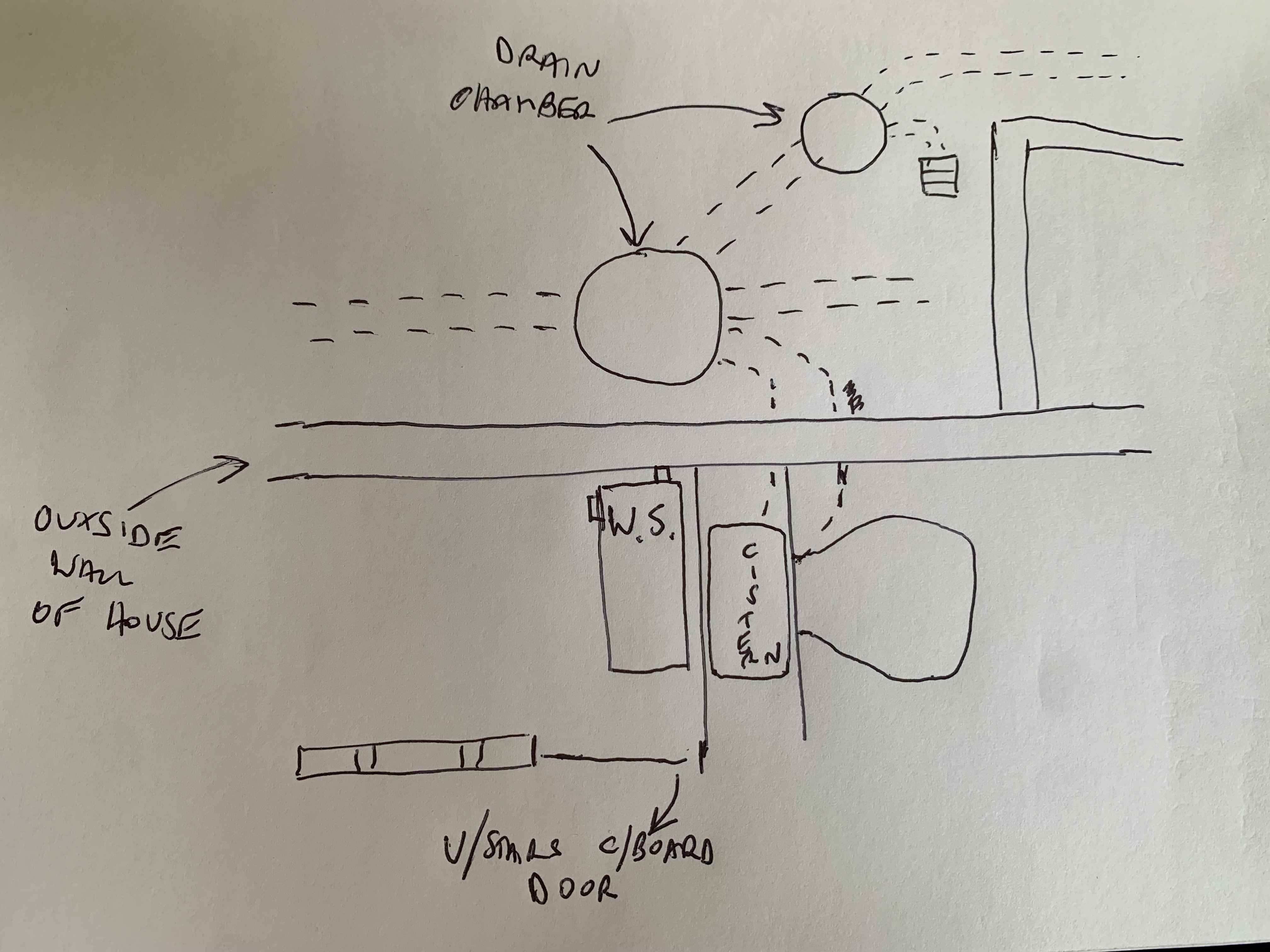
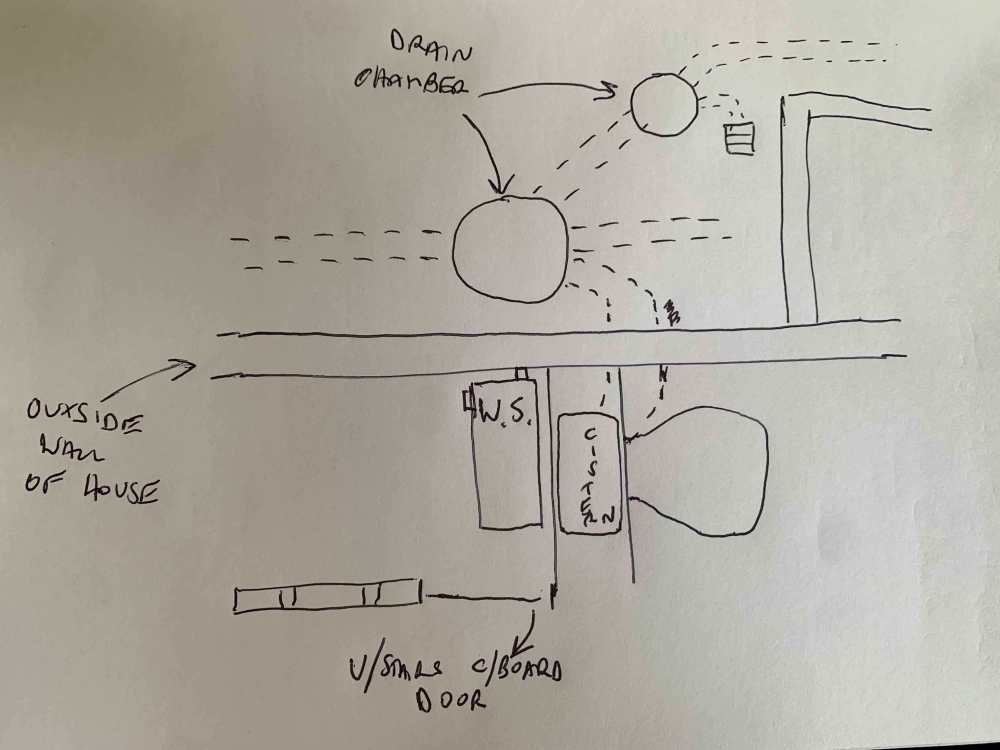
Struggling over best option for plumbing in the Monarch Water Softener - see sketch. Builders plumber has put in a stand pipe with a dry trap that is connected into the toilet waste pipe with a strap boss directly behind the WS position. This seems a pain for several reasons - it isn't visible - it stops the WS going back against the wall which then blocks the doorway into the u/stairs cupboard - is it a good idea to connect a water softener to a toilet waste pipe. Going out through the wall of the house seems like an option but would mean putting in an outside drain by digging up the hardcore and messing with the underground drainage pipe - maybe breaking the pipe run to the left of the larger chamber to put in a Y junction. This outside drain would presumably need a trap to stop smells outside from the drain. Presumably I would have to put 2 holes through the wall, one for the discharge drain pipe, one for the overflow. Then presumably neither would need a trap or tun dish or anything. Thoughts ? Anyone got any photos of neat and tidy water softener plumbing work ?
-
Eclisse Syntesis Flush Pocket Door - Help with head scratcher ?
Spinny replied to Spinny's topic in Doors & Door Frames
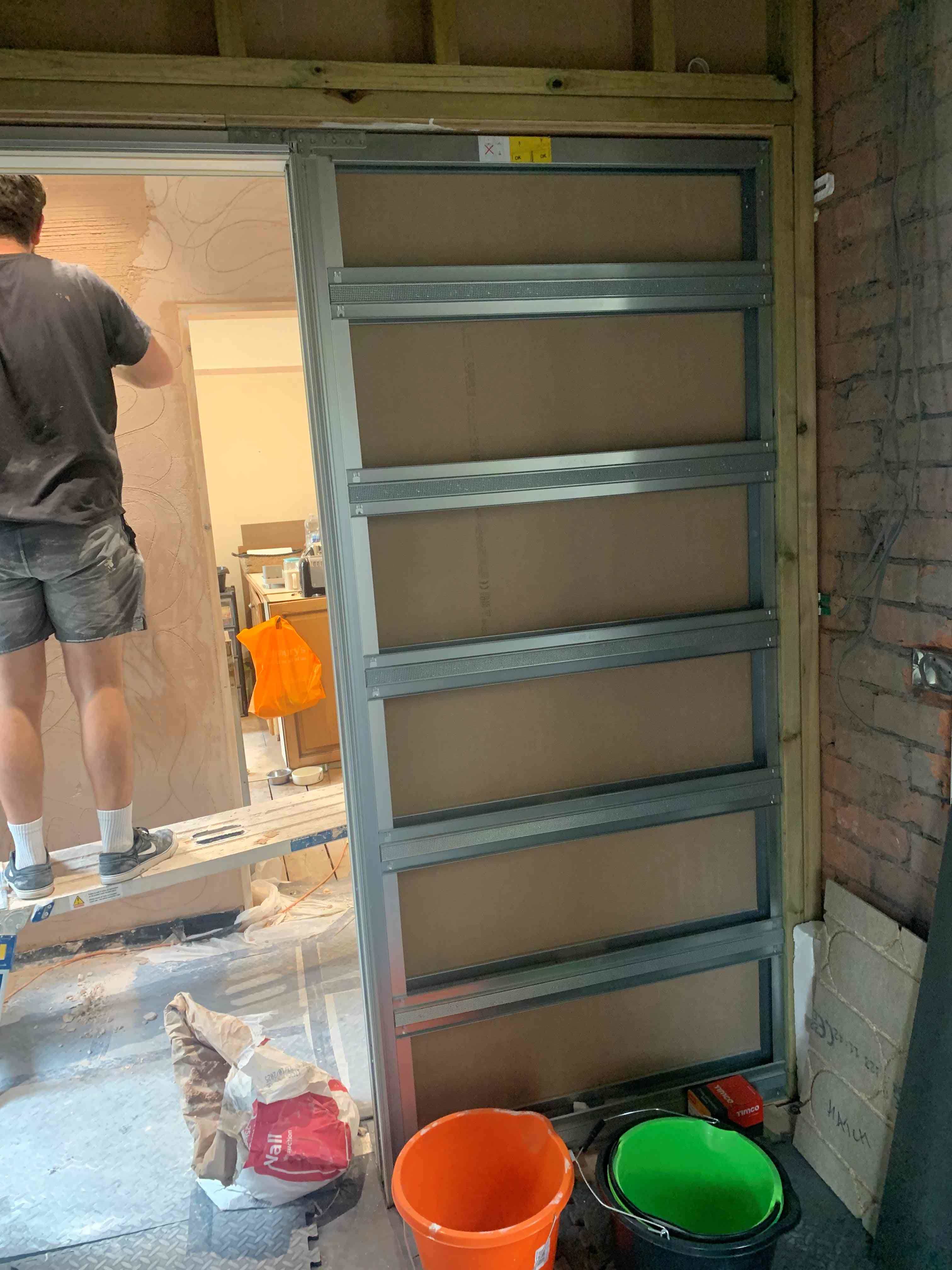
Taken the boards off the boarded side now. Guesswork correct in that the builders screwed the board back onto a timber that was not in line forcing the board into an arc shape. Also finding the door system is installed onto the timber studs slightly out from plumb upright - maybe 2-3mm out over the 2m height. Neighbouring timber stud is nice and plumb. Since the door hangs on runners this doesn't seem ideal and could look odd at the pocket end. Guess it will have to be put right. -
Eclisse Syntesis Flush Pocket Door - Help with head scratcher ?
Spinny replied to Spinny's topic in Doors & Door Frames
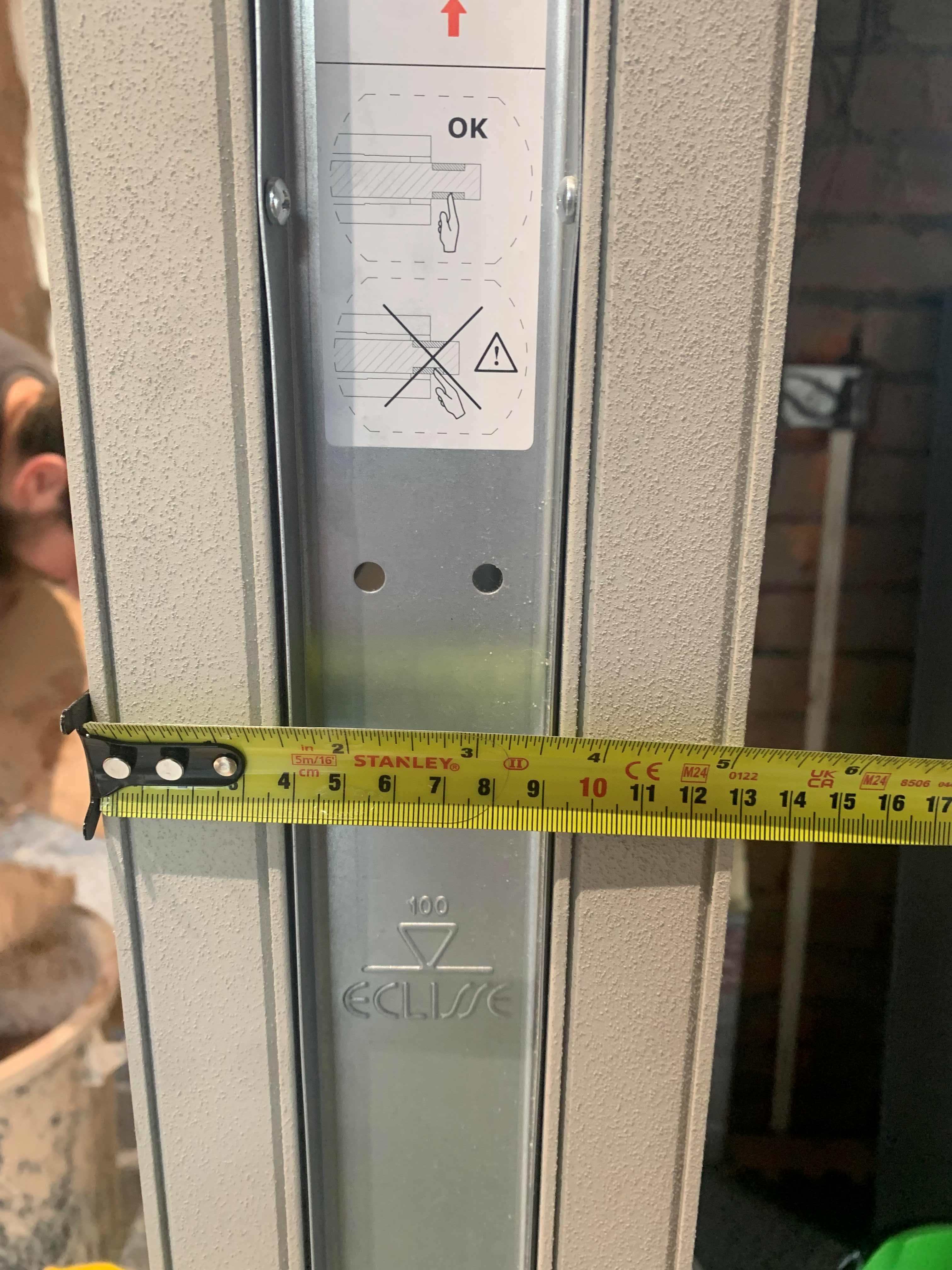
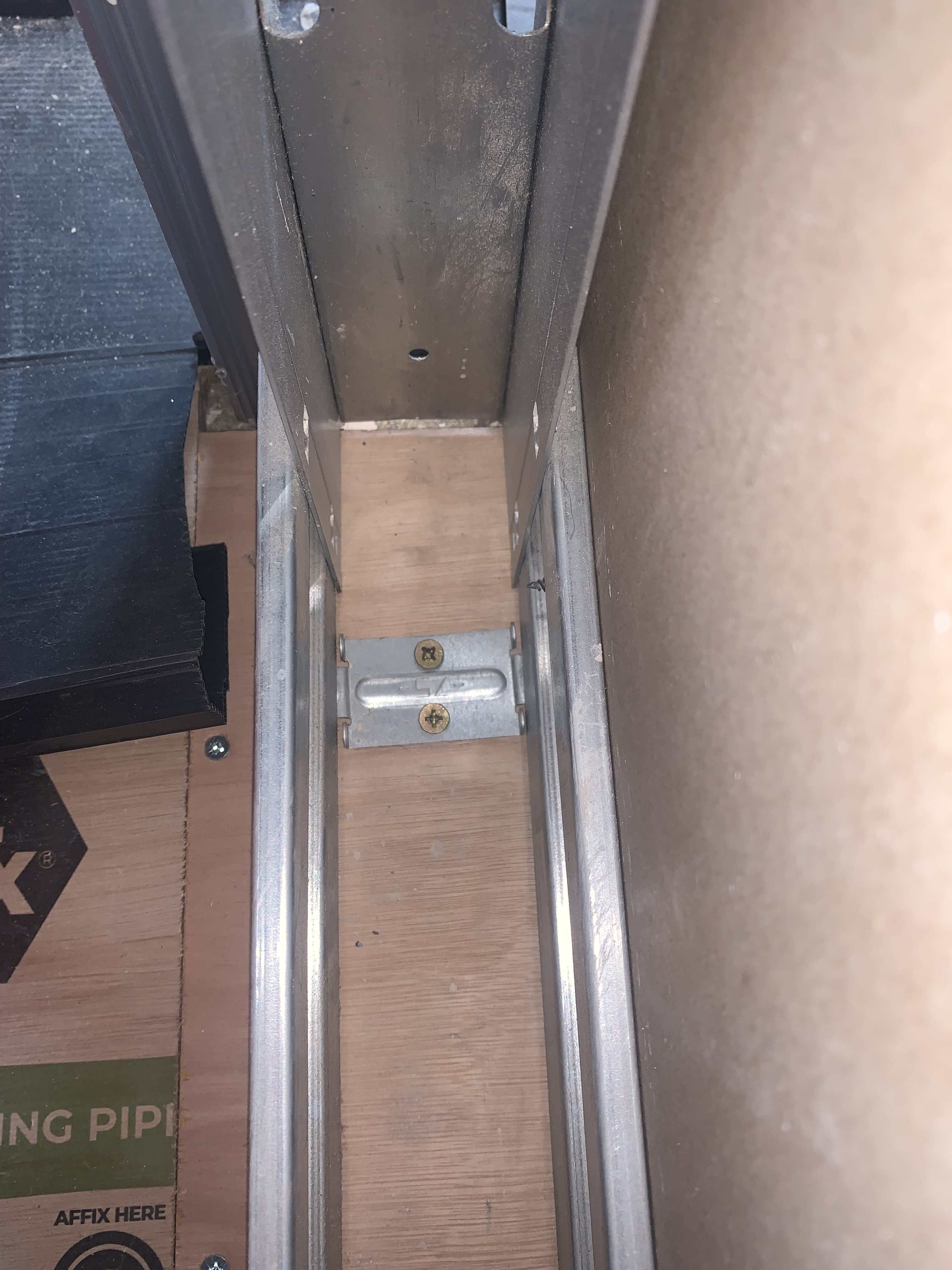
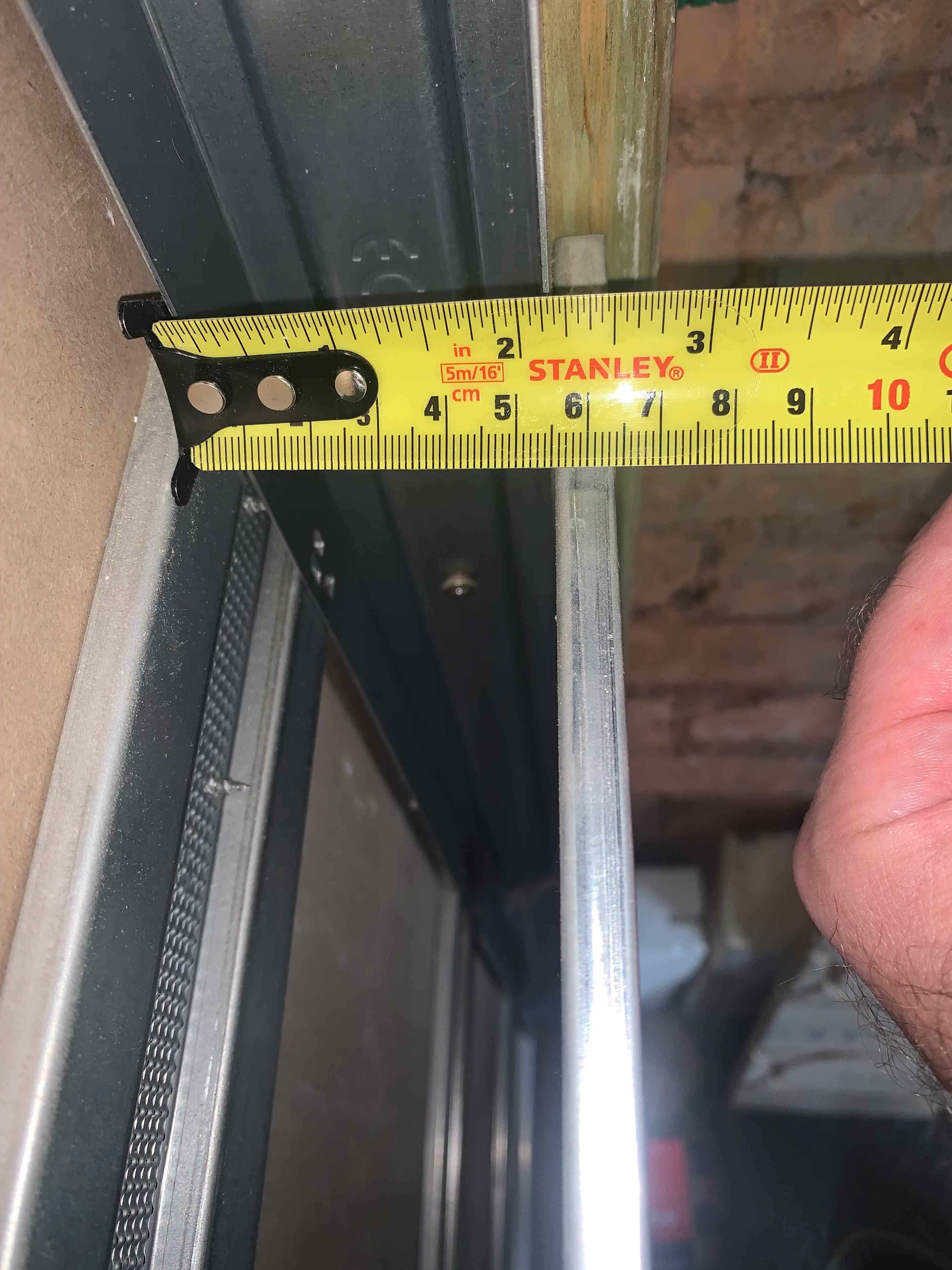
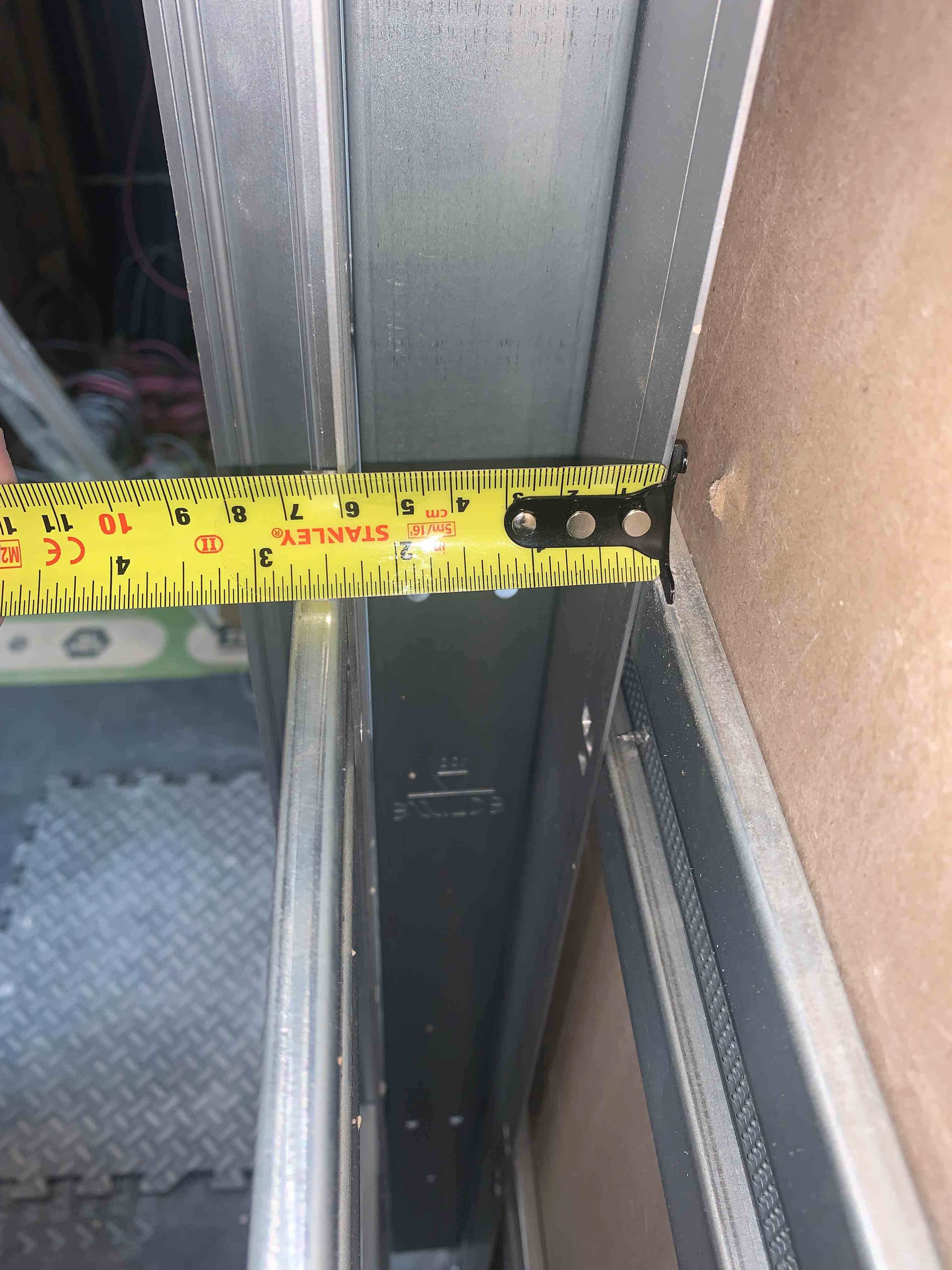
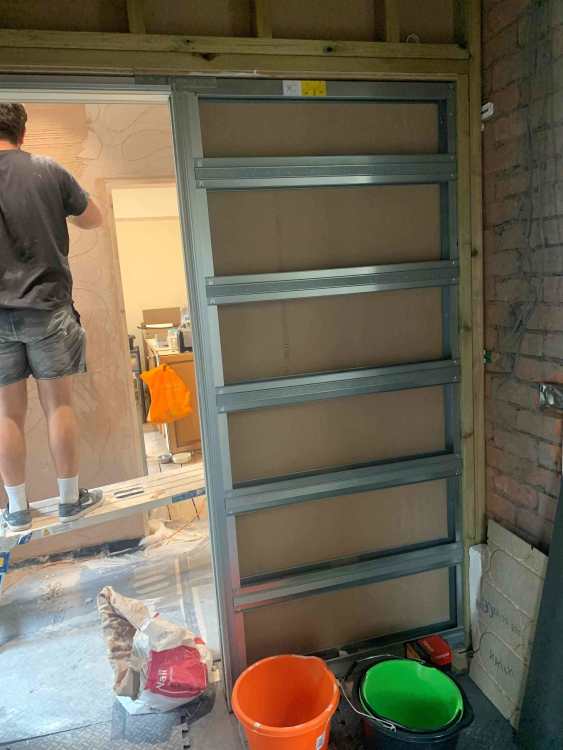
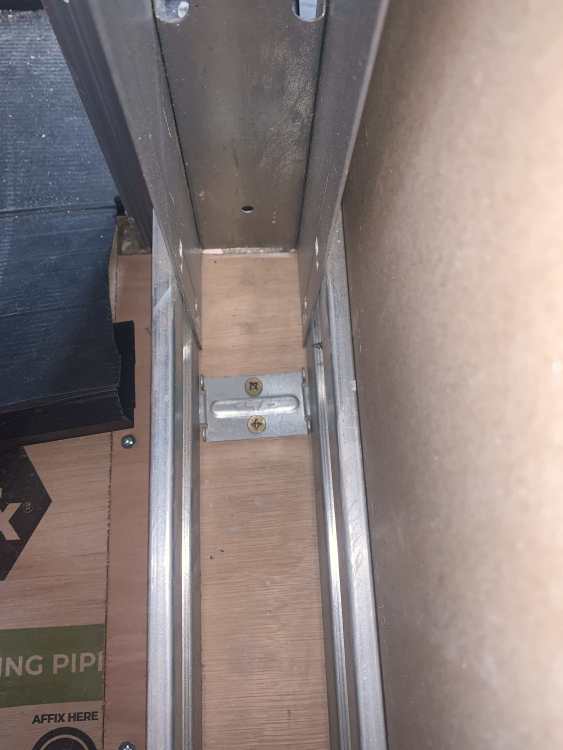
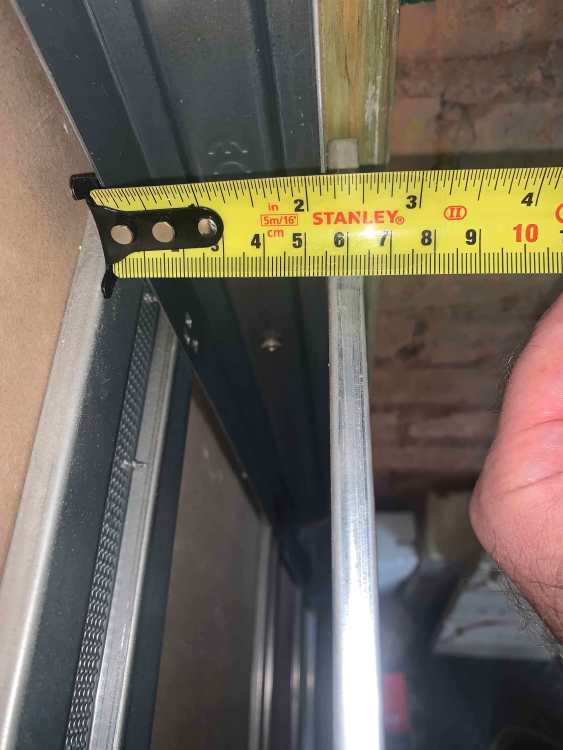
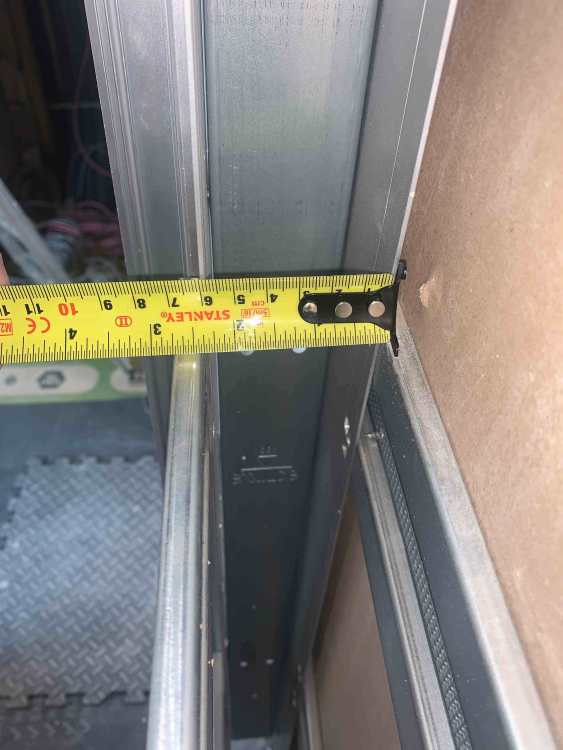
The boards should follow the horizontal rails, however the horizontal rails are not parallel between each side, they diverge by 5mm from being 55mm apart to being 60mm apart (see photos). I am now noticing the front of the board that is on seems to have a bulge in it (horizontal spirit level rocks). Beginning to suspect that the board (which is attached to a wooden stud beyond the end of the pocket) has been forceably screwed to an out of line timber stud by the builder. They are heavyweight habito boards and don't bend without a lot of force. So forcing one end back against an out of line timber stud may be levering out the other end of the plasterboard. And as the frame is attached to it this is forcing the frame outwards and widening that end. I could do with a 4m straight edge - can you buy such a thing ? -
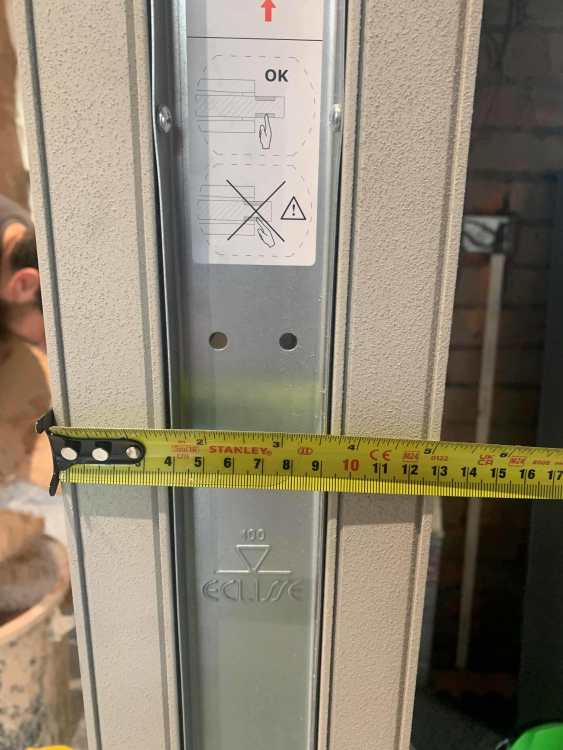
I have a 125mm Eclisse Syntesis Flush (i.e. no architrave) Pocket Door system installed by builder but not yet fully boarded. This system is to produce a 125mm wide finished wall size once boarded on each size with two layers of 12.5mm plasterboard. Thus it is supposed to be 75mm wide plus 25mm plasterboard each side = 125mm. Measuring the install the builder's chippy left me with I find the width at the wall opening end of the pocket where the door slides out is 130mm and not 125mm. Furthermore if I measure the distance between the side struts of the pocket itself - at the opening end it is 60mm - but at the far sealed end it is 55mm. So the sides of the pocket don't seem to be parallel. This is not shown in the install guide drawing. I have raised it with Eclisse UK to be told they don't know why or whether this is correct or erroneous. They are going to contact Italy but don't expect a quick answer. Anybody have any thoughts on this (perhaps someone that has fitted these things ?) ? I attach some photographs.
-
Wondering what is achievable for relocating an outside tap by concealing the pipe run within the plaster line internally ? The pipe would be running over a brick inner leaf then need to do a 90% turn and go out through the wall to the tap. It is the understairs loo, so I don't really want to make it smaller still by having the entire wall plastered an inch thick. I guess it would be best for any such pipe to be run under the floor and then vertically up the wall. Otherwise we are going to end up with a tap where we wanted to put the bin store.
-
Can Door & Window fitting shims be removed ?
Spinny replied to Spinny's topic in Doors & Door Frames
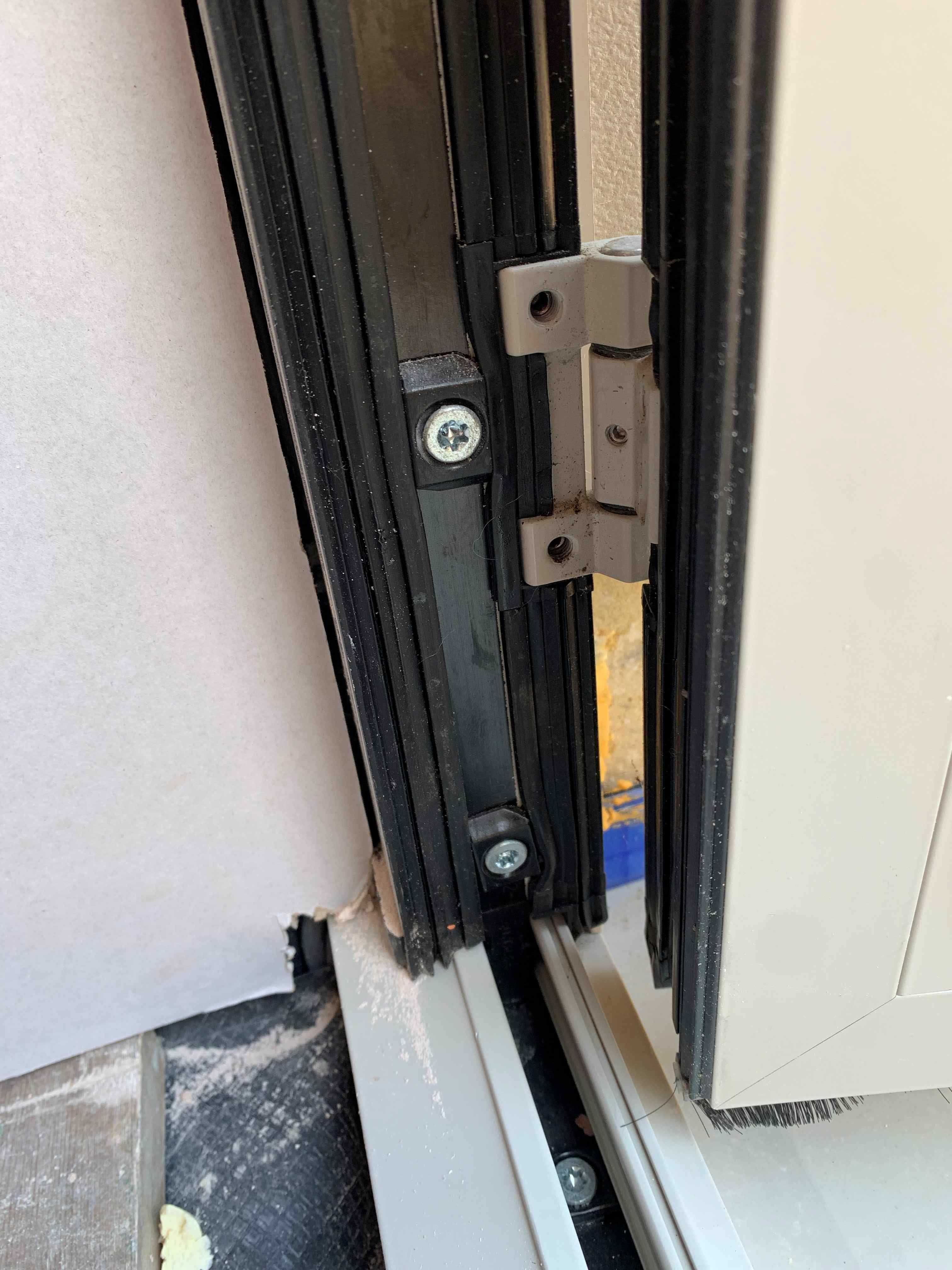
Thanks Jack. Just taken a closer look at the fixings. The frame is made up of 4 pieces of aluminium - top, bottom/cill, and two sides. Each is fixed by screws into the blockwork and seems to have shims adjacent to each screw. The hinge side has 4 fixings - 2 bottom, 1 middle, 1 top. As it happens it is effectively a single pane bifold design, so hopefully designed to be left open. I will say the plastic shims are not always tightly wedged in. I guess I am going to have to call the supplier now to see what they say.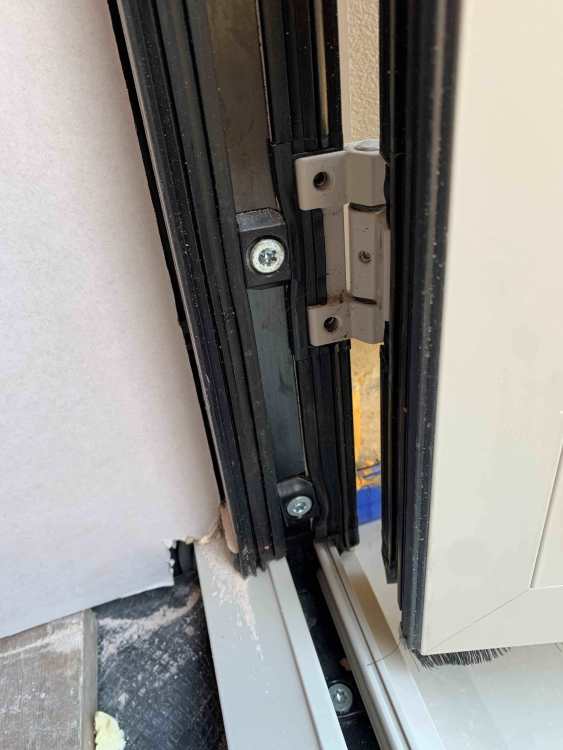
-
Can Door & Window fitting shims be removed ?
Spinny replied to Spinny's topic in Doors & Door Frames
So do I have a problem now because they have been removed not just cut back ? Shall I ask for them to be put back to help stop the frame moving in the future ?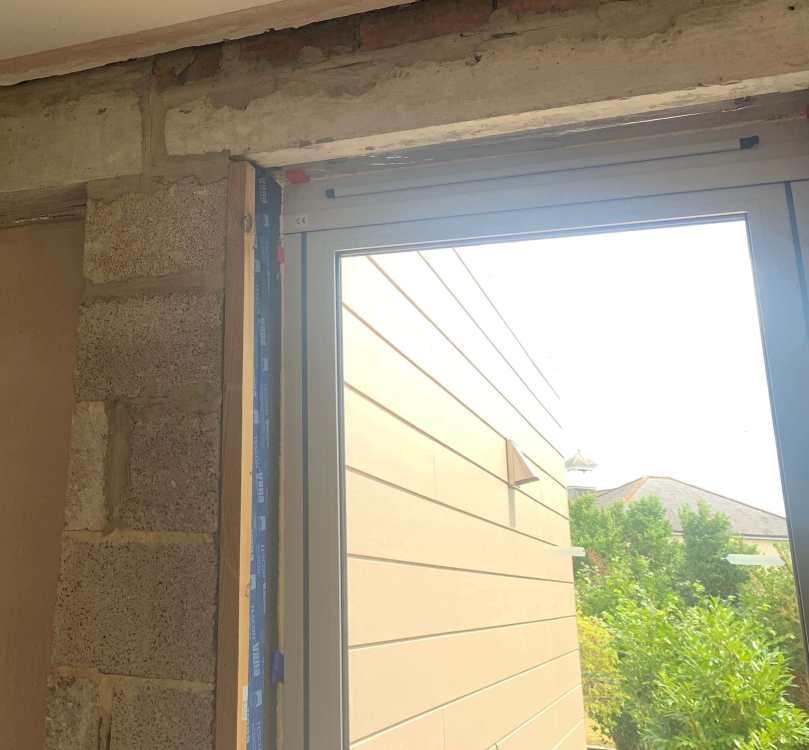
-
Wet plaster or dot and dab for my self build?
Spinny replied to Berkshire_selfbuild's topic in Plastering & Rendering
If you want strong plasterboard, and plasterboard that that you can screw straight into and mount stuff to, it is available... https://youtu.be/nQK8awMOKpM?feature=shared https://youtu.be/nQK8awMOKpM?feature=shared https://youtu.be/Ure_nvPLYks?feature=shared https://youtu.be/CUvq0QzwDzY?feature=shared my favorite...https://youtu.be/HfVqIyUpE2M?feature=shared No builder is ever going to buy this for any customer unless you specify it and make them, It costs money and it is heavy. But IMO it makes perfect sense - the public should get what the public wants, not what a builder decides they can and can't have. The world needs to move forward. (I don't work for Gyproc, just like to see stuff that solves problems - I like my Frosti tap too. -
Wet plaster or dot and dab for my self build?
Spinny replied to Berkshire_selfbuild's topic in Plastering & Rendering
I am going for wet plaster and experience so far is... Discussed work with builder's plasterer multiple times because of concerns over the need for wet plastering skills etc and explicitly asked him - can you do X, can you do Y, can you deal with this wonky wall because the 1930's plaster I knocked off was plumb even where the wall isn't. Told yes, yes, yes etc. Builder told me 'he is a good plasterer'. Twas all shown to be lies when he started work. Where he skimmed a boarded partition wall it is fine. Where he has wet plastered it is crap. 15mm out of true over the top half of one wall. Even on a section of plumb new blockwork he has managed to be 10+mm out over 1.5m. Never saw him use a long straight edge as you can see people using on youtube. So, some builder's and tradies do lie, some do lie without hesitation. No doubt builders like cheap plasterers (possibly on job and knock terms). The only way to tell if they can do a proper job is to see their work - via reference job visits and/or having them do a small piece of work first so you can see their work first hand. Now have another plasterer starting work. Learning that it is key to spell out all detail re positioning of plaster lines against doors and windows etc. Where something is boarded it doesn't mean it is square or plumb. I am double checking all the beads now with a spirit level in 3 dimensions because the plaster will follow the beads, so it is imperative the beads are correctly positioned. (Builders plasterer's bead was put on in a curve - that wall is curved and has to be corrected). Some things inevitably cannot be made right but better to decide on compromises now rather than measure afterwards when it is too late. (Just had an existing internal door lining pulled out and replaced to facilitate getting a good plaster line). Watch out for recesses - I am going to have to suck up a shelving recess that is deeper one end than the other. Have found two adjacent lintels are not set level because one is thicker than the other. Now cannot be corrected because the trickle vent is in the way. I really don't like dot and dab because few of us have large houses and I just don't like the idea of planning stuff with an architect or a kitchen supplier only for someone to dot and dab every dimension smaller by an inch or two. Then kitchen people want 30mm 'packers' everywhere 'because builders cannot build plumb' and before your know it your kitchen is 6 inches shorter for no good reason. -
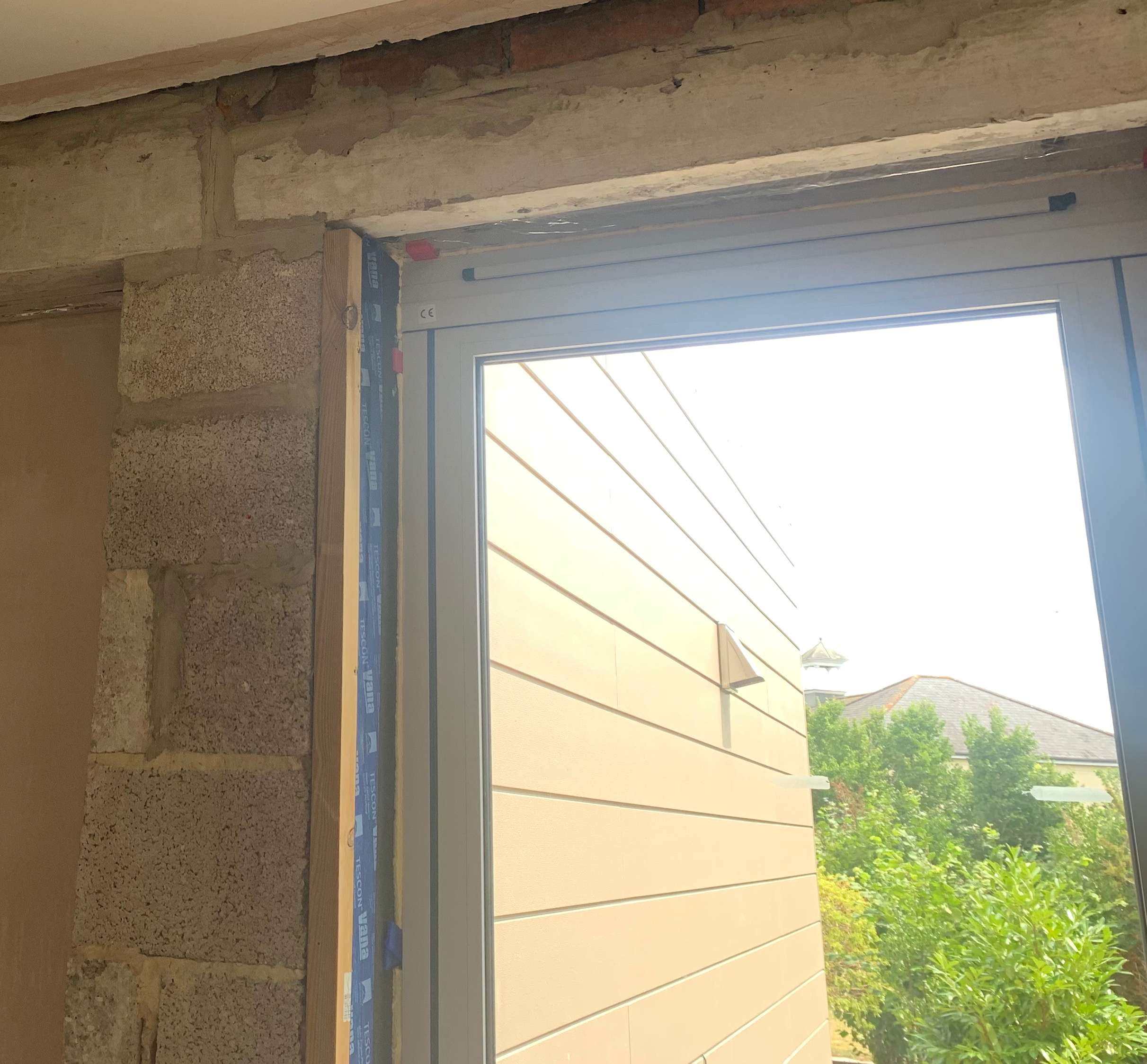
Plastic shims were used by the fitters when my doors and windows were put in to position them into the opening and plumb them up and then the frames screwed into the blockwork against the shims and the gaps foamed up. For the external rendering and cladding work I cut the shims back to finish level with the outer frame but did not remove them. My belief being that the doors and windows are effectively braced into position by the shims on one side and the screws on the other. My plasterer has now removed the shims altogether from one side of a door frame (the hinge side) as part of boarding up the reveal. I am now wondering if this might be a problem for the future because it leaves this side of the frame without the shims to help restrict any future frame movement from future years of door opening and closing etc. In many cases the doors and windows also have shims under the bottom cill/frame and people will be standing on these, so would not expect to remove these for the same reason, although I do plan to fill the under cill gaps with foam and/or slivers of blockwork or exterior filler. So should people be removing these shims and might it invalidate any guarantees ? What is normal here, what is good/bad practice ?
-
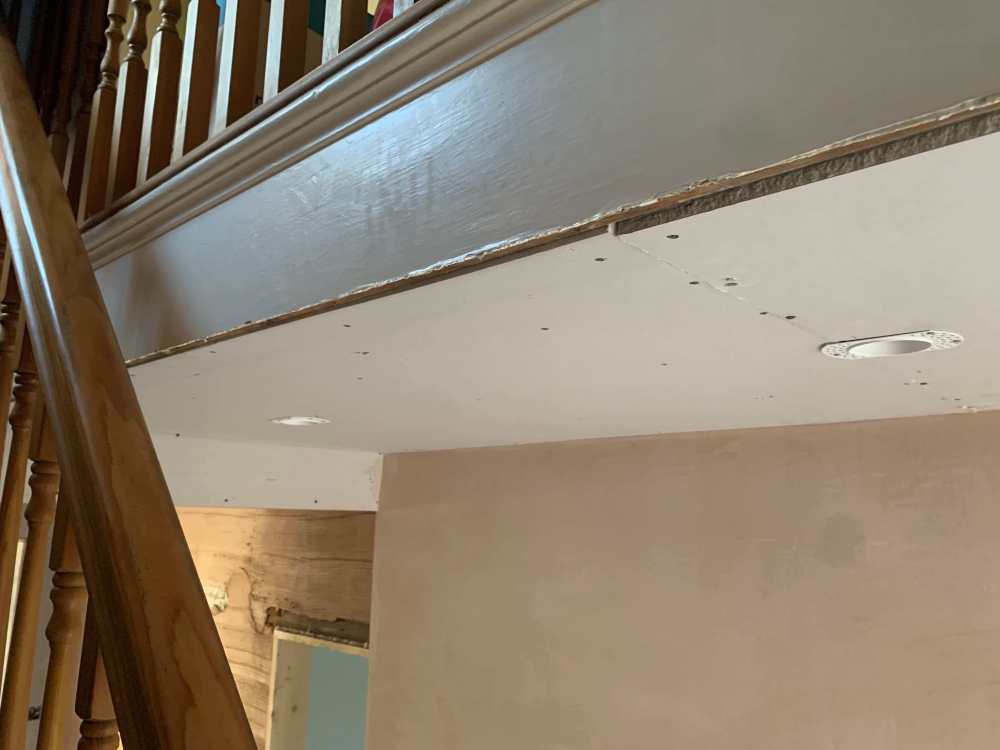
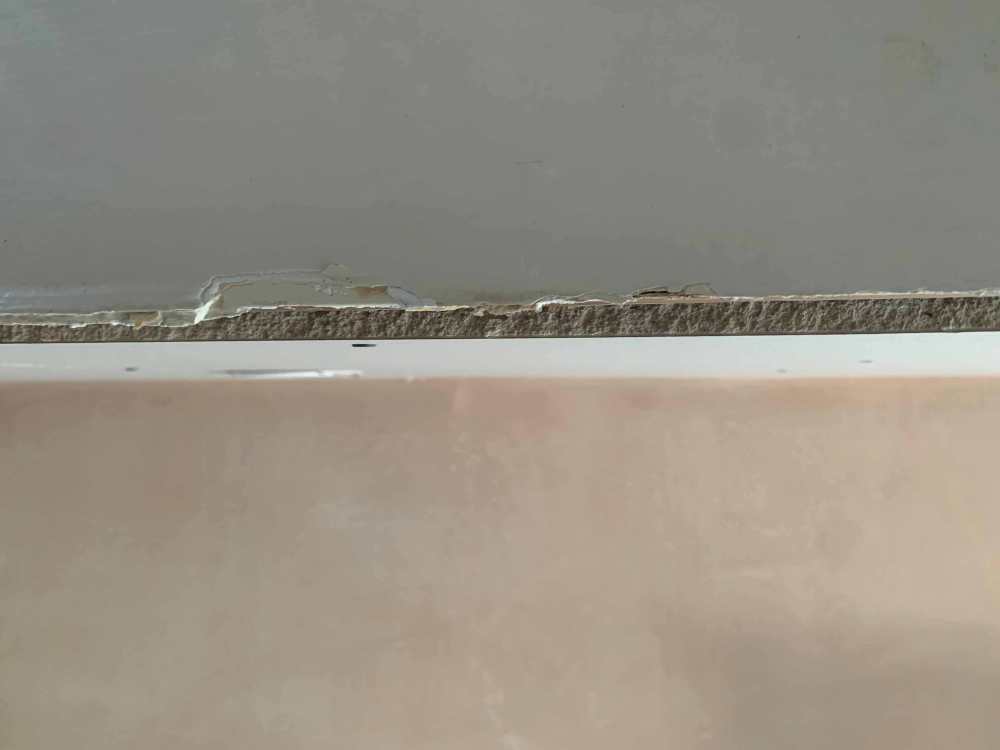
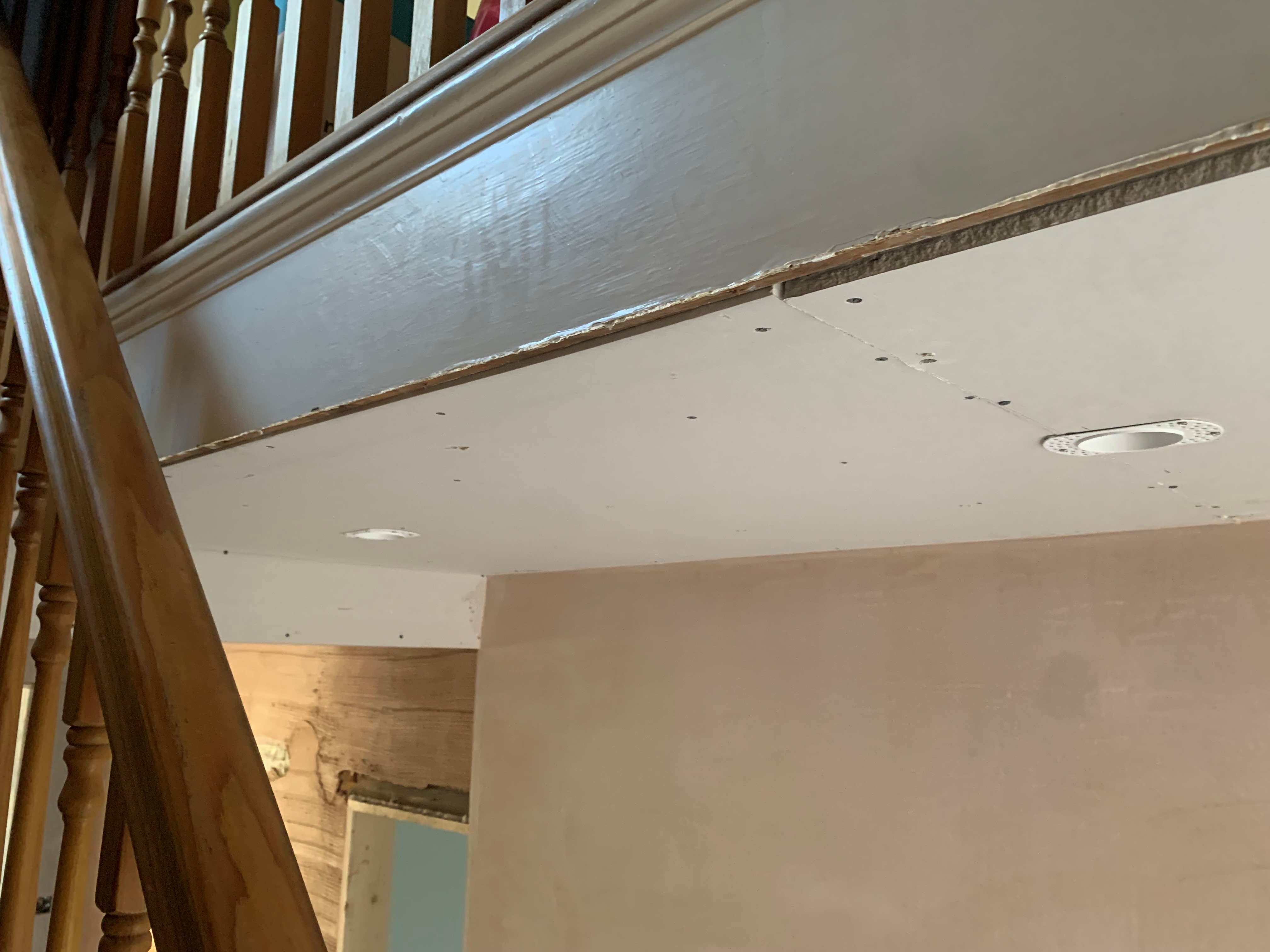
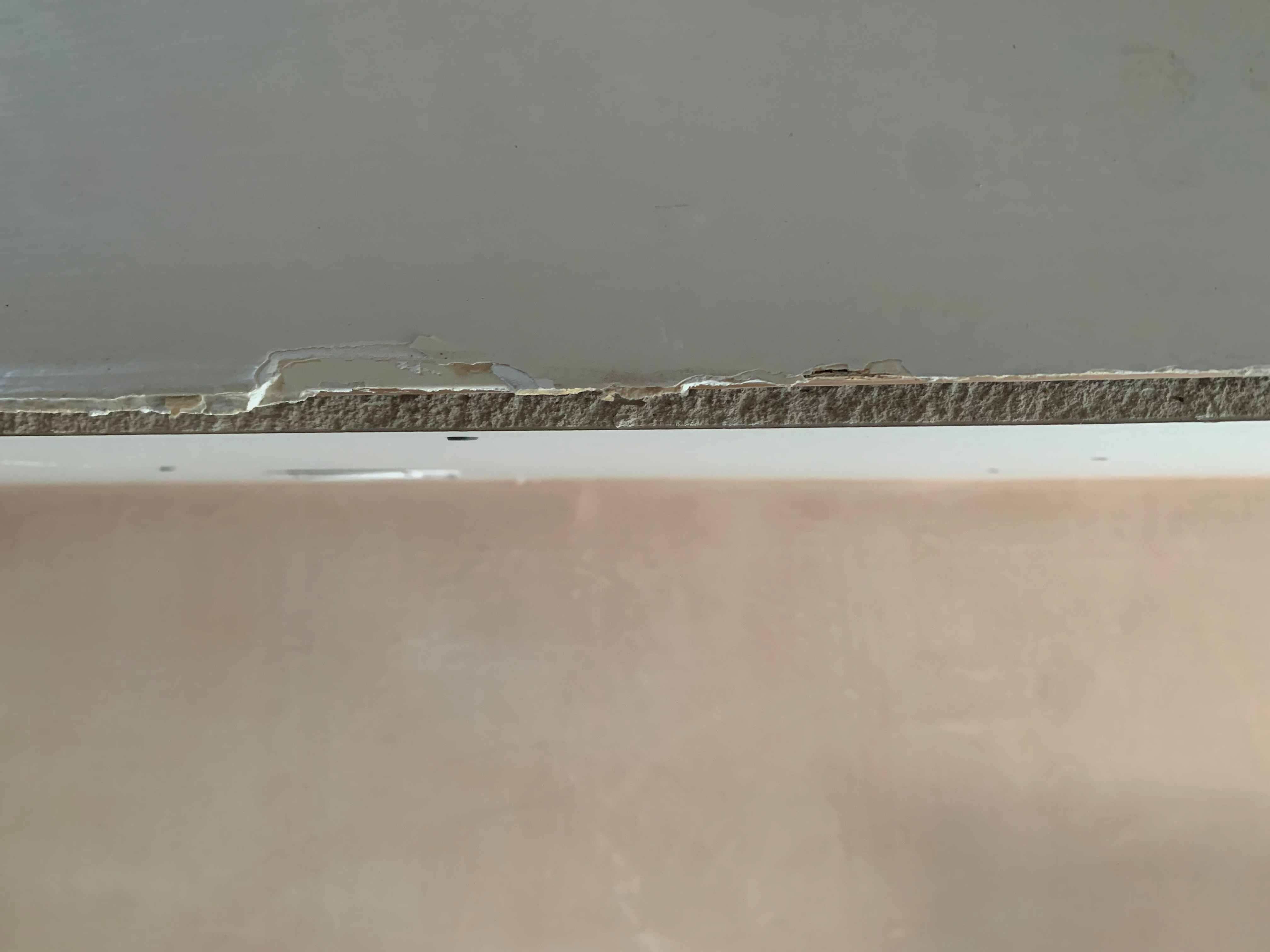
How can the edge of this ceiling in the hallway where it meets the stairwell be properly prepared for skimming and finished - see photos. We are thinking we want to look up and just see only a plastered ceiling all the way to the edge (i.e. not see a line of timber running down the edge from below). However when viewed from the side on the stairs there is a timber board, and equally we wouldn't want to see plaster on this side. There must be gazillions of houses (1930s) like this - so is there a good answer for how to achieve this and what kind of trim, timber, or profile to use for this and to provide an edge for the skim coat plastering ?