lookseehear
-
Posts
166 -
Joined
-
Last visited
Everything posted by lookseehear
-
We're trying to avoid excavating more than we have to due to site limitations (it's an extension rather than new build) so thinner build-up would be better in our case, so I assume we'd be OK to go with just PIR.
-
I often see 300mm EPS specified under a wet UFH system, rather than a thinner layer of PIR. Is this for cost reasons or for structural reasons or both? I've also seen 100m EPS + 100mm PIR. What would be the reasons for mixing and matching?
-
flat roof insulation buildup with deck
lookseehear replied to lookseehear's topic in House Extensions & Conservatories
Thank you for this. I'll look at it properly this evening. My preference is no drop from internal floor level but architect is keen on a small step down, so saving the 40-50mm could help there -
We are discussing flat roof insulation strategy with our architect for our extension which will have a deck on top of it. We are limited in that we will have to excavate deeper for the extension if we need additional thickness in the build up because the finished deck needs to be at or below the height of the internal floor level. The architect is suggesting steico wood fibre, which I'm supportive of for decrement delay reasons and has suggested the below. The vertical difference between existing ground and first floor levels is 2500mm. Building regs maximum risers for steps is 190 mm , 2 steps equal 360mm. 2500 + 360 = 2860. 360mm + 2300 ceiling headroom = 2860 2860 – 2300 ceiling height = 560 Within 560 mm we could achieve ; 50- surface of deck below bifold door cill 65 – deck boards on spacers 75 – waterproof membrane laid to falls 80 – ventilation cavity 40 – external insulation layer 200 – timber joists with full fill insulation 50 – service with plasterboard finish ------ 560 Using Steico’s technical data sheet 10/11/34 Ver 02 for this build up, giving a U value of 0.148 w/sq.mk. The builder looked at this and said he would want to put in a skin of plywood or osb on top of the joists to lock the roof together, because it adds a huge amount of rigidity to the structure, but I'm apprehensive of this and would want to go with what steico have specced, particularly with respect to any ventilation. Are we missing a trick with other insulation materials or buildups? We likely don't have the depth for a full warm roof because of the size of timbers required. I (and the architect) aren't particularly keen on using celotex post Grenfell if possible, but it might end up making most sense for practicality and cost reasons.
-
Block extension with external floor level above internal
lookseehear posted a topic in Brick & Block
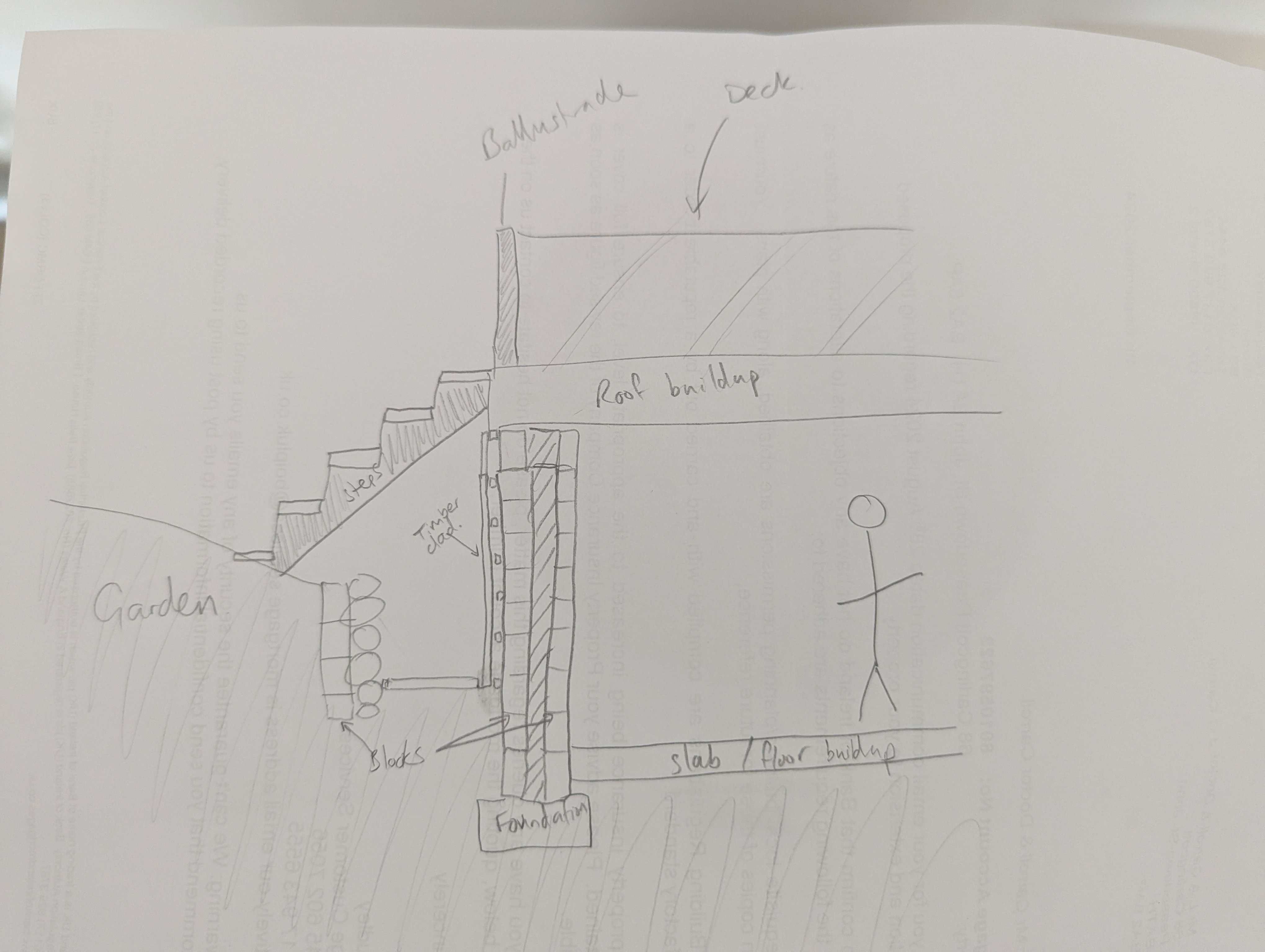
We've started excavating for our single storey extension as part of a larger refurb/reorganisation. We're on the side of a hill, so there will be a retaining wall against the garden, with a pathway running around the outside of the extension. The path will connect to existing paths, therefore it will be above the internal floor level. We're expecting to construct the wall from two skins of blocks with 100mm insulation in the cavity and clad externally with timber. How should the detail between the external skin of blocks and the earth under the path look? Does it just get painted in bituminous paint or do we include some kind of drainage gulley? Is there a standard construction detail here? See attached sketch if that helps.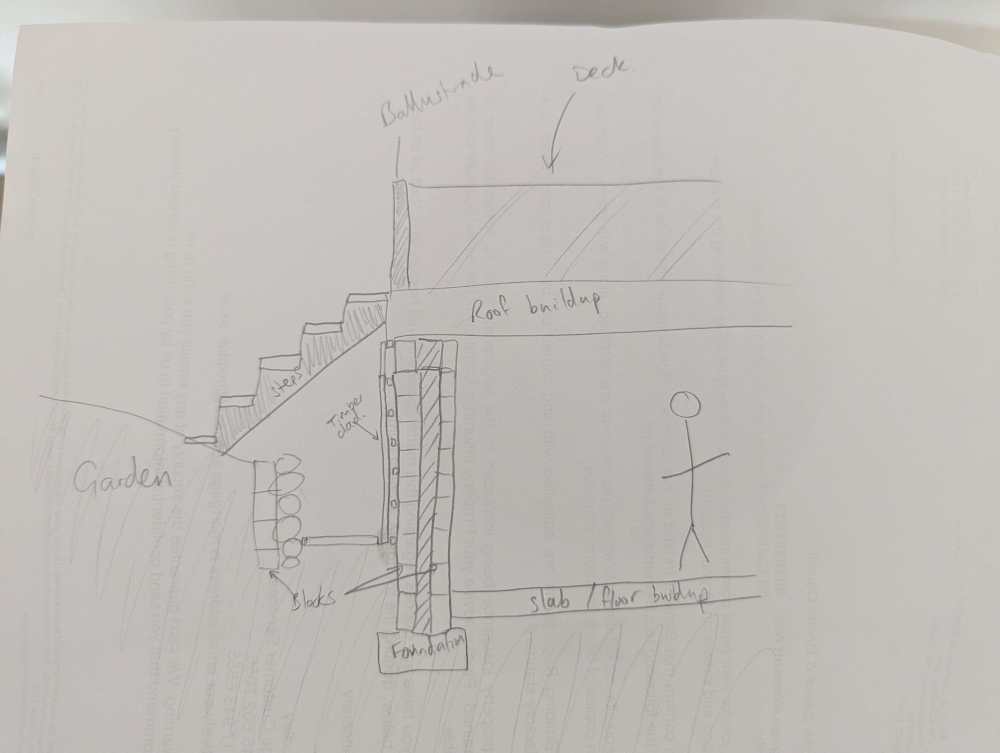
-
Renovation/extension insurance cover required?
lookseehear replied to lookseehear's topic in Self Build Insurance
Wouldn't the builder have this as the contractor? Yes there's a mortgage but we're paying for works out of savings. If the worst came to it we could fund another 50% overrun without extending the mortgage, but we hope this won't be the case. The house will remain in a liveable state at all times other than potentially a replacement roof which we would deal with as a separate contract with a roofing company. It literally can't cost a million, because the work consists of: * Single storey extension which is a discrete piece of work * New roof - to be dealt with as a discrete contract as per above * Internal refurb/reorganisation We expect the extension to cost ~£70-100k (£100k being £3k/sq m). If that comes in at double our expectation, we will have to compromise on other works and probably wouldn't replace the roof. We won't be putting ourselves in a position where we can overspend to that degree or end up with something we can't live in. -
Hi all, we're hoping to start works in the next couple of weeks on a significant extension/renovation project. We don't have all the details of the renovation nailed down yet, so we're going to start on the extension and work out the rest of it as we go along, and are working with an experienced architect on this. The builder we are working with is one that our architect has worked with several times, but doesn't operate with a contract to cover the build. He'll invoice us a daily rate each week to cover his time, and we will pay for materials directly, so no markup required. It means that we don't know how much it's going to cost us up-front but we're comfortable with the risk. I called our current home insurance provider (homeprotect) and they said they need and exact contract value, which we don't have. What type of cover should we be looking at here? I'm waiting for the builder to send over details of his cover in the meantime. Are there any recommended providers for us to go with? We're estimating £300k as the total value of works, which will be split between builder, materials provider and other contractors that will bill us directly. Thanks in advance.
-
We've previously been favouring external, given the scope of works we'll be doing, I would expect the detail around the windows etc to be straighforwards (as straightforwards as these things get!) I also really like the idea of insulating the thermal mass of the walls to buffer temperature changes. In the hot days in summer our downstairs stays pretty cool but the lack of any insulation in the loft means upstairs bakes pretty quickly! The 'box in a box' idea has me questioning some of this logic though (more below) Thanks for the detailed reply. For some context I've added a few photos/videos to a google photos album here: https://photos.app.goo.gl/4UAU488iwKtiktg69. I'm not currently at home so these are just photos that I've grabbed from previously taken. We don't know a lot about the history of the cottages, but it would have been linked to coal mining. The stone looks the same as used in lots of other local cottages. No brick in the original part - all stone. There's staining on the outside wall on one end where the main fireplace would have been from the sulphurous coal. We have no structural issues in that end that we're aware of, but do need to remove some cementitous pointing so we'll have a better look at the stone at that point. We have a log burner and the chimney has been lined for some time now so hopefully no more damage being done there. When you say the walls aren't well bonded, do you mean external walls to cross walls, or do you mean the stone making up the walls isn't well bonded to the mortar? Given it has stood the test of time so far we didn't have any major concerns about the old stone walls, although there are some cracks which don't appear to be worsening. I think we probably need to get a SE involved from a very early stage. In terms of a 'box in a box' design I assume you mean to keep the existing internal solid wall which divides the two old cottages. If so, we wouldn't get so much of a blank slate because those spaces wouldn't be that large, and there are thick solid walls on both sides of the entrance hall. Would casting a concrete slab with UFH have implications for moisture being pushed up through the walls where it would ordinarily be addressed via a breathable floor (foamed glass aggregate, limecrete slab & screed)? All I read about old buildings tells me we should avoid putting a concrete slab in the middle of it, but maybe that's mitigated by restoring the walls to ensure they can breathe. I assume we just need to find a good SE with experience of this type of building to form an opinion on the state of the walls and foundations and suitability for point loads introduced with changes to the roof structure. We don't know a huge amount about the old walls other than they're stone, with likely some kind of rubble filled void. The photos may help here. The 1970s section is concrete block faced with stone. We talked with neighbours who have similar construction and who looked at doing cavity insulation. They got a camera in behind and there's very little in terms of a void/cavity between block and stone. No concerns from the two storey extension in terms of movement (to my untrained eye). We aren't concerned about the look of the stone from the outside and have made our peace with the stone being covered by a render if that ended up being the final finish. We've talked about the idea of finishing the first floor with timber cladding and the ground floor with render. I would hope that we aren't pushed to keep this style of window, but we'll see what feedback we get from the pre-app hopefully in the next week or two. The new windows just need to be higher performing. With the internal stud wall, would you suggest to do a box within each room or remove the upstairs floors and create a stud wall from ground level to the roof line? I have to say that I notice a significant difference in how difficult it is to keep the house warm when the walls are wet vs when they're dry. If we do the 'box in a box' design I assume we'd need MVHR, because the box would be sealed. Are there challenges tying the box into existing door and window openings? Would we lose window size because we'd effectively be lining the window openings? I assume we lose ceiling height if we don't vault the roof upstairs and take a 'room by room' approach rather than stripping all internal structures out and building the house as one big box within the stone structure. I've read a bit about the research being done about performance of traditional buildings and understand they don't work well in a lot of heat modelling tools because they don't really reflect the real structure of the walls. We're very comfortable with the above in terms of investing in our architect and the planning stage to avoid problems later on. Measure twice, cut once and all that! We were expecting to subcontract any major aspects that are impractical to do ourselves due to the amount of time it would take. We'll likely be having to move out, so reducing rental and storage costs will be important. If we go down the route of having a 'box in a box' construction, I assume we chip off all the mortar internally that's either loose or cementitious and leave the bare stone behind the service void and also repoint the external walls in lime. I imagine that this approach makes retaining any existing internal features challenging (eg the fireplace). Thank you everyone for your input here. Lots of food for thought!
-
Thanks Roger. I've heard good things about diathonite - it seems to be the 'standard' breathable internal or external insulating render and has been used in a lot of properties. I intend to do my due diligence though.
-
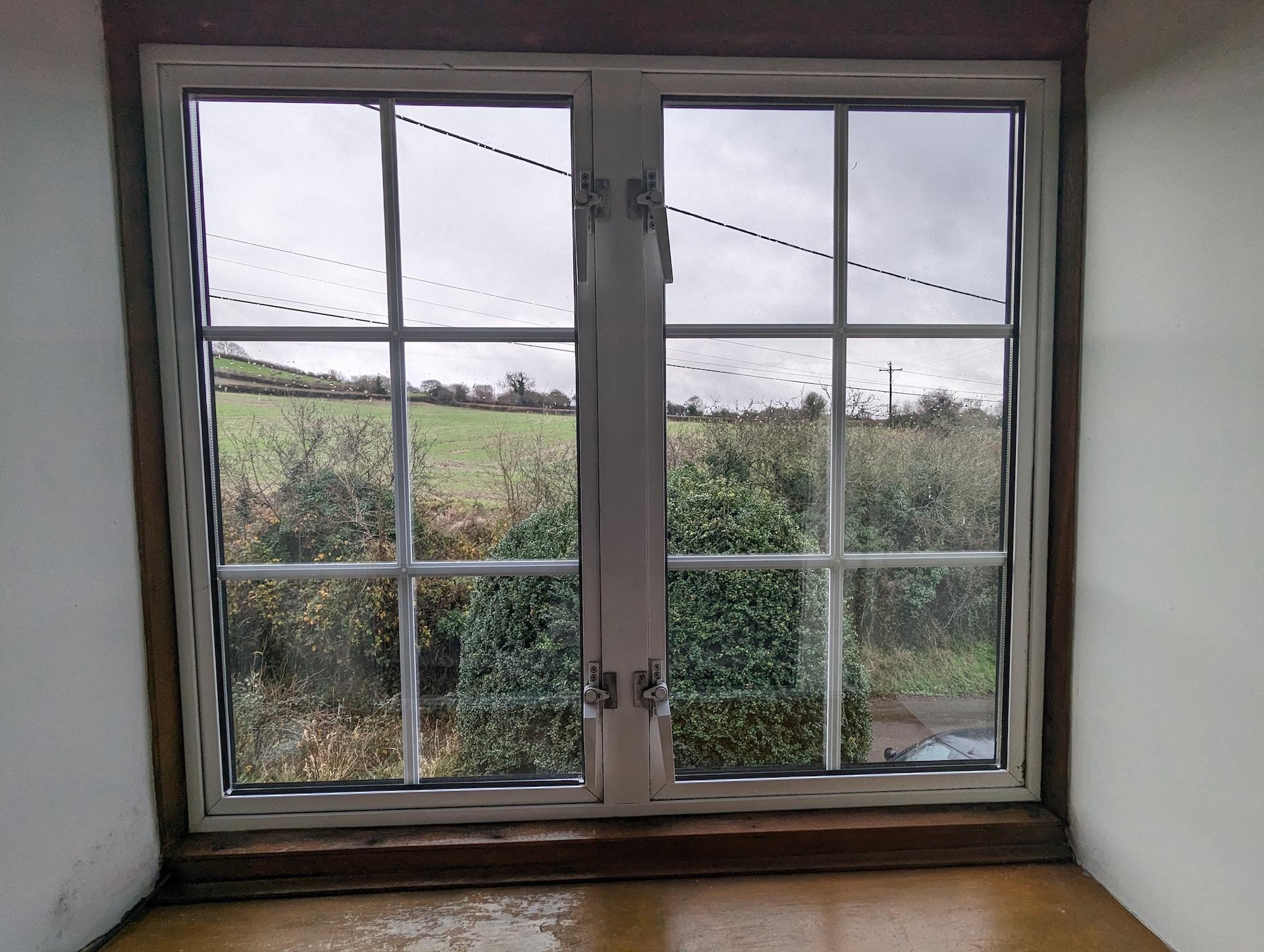
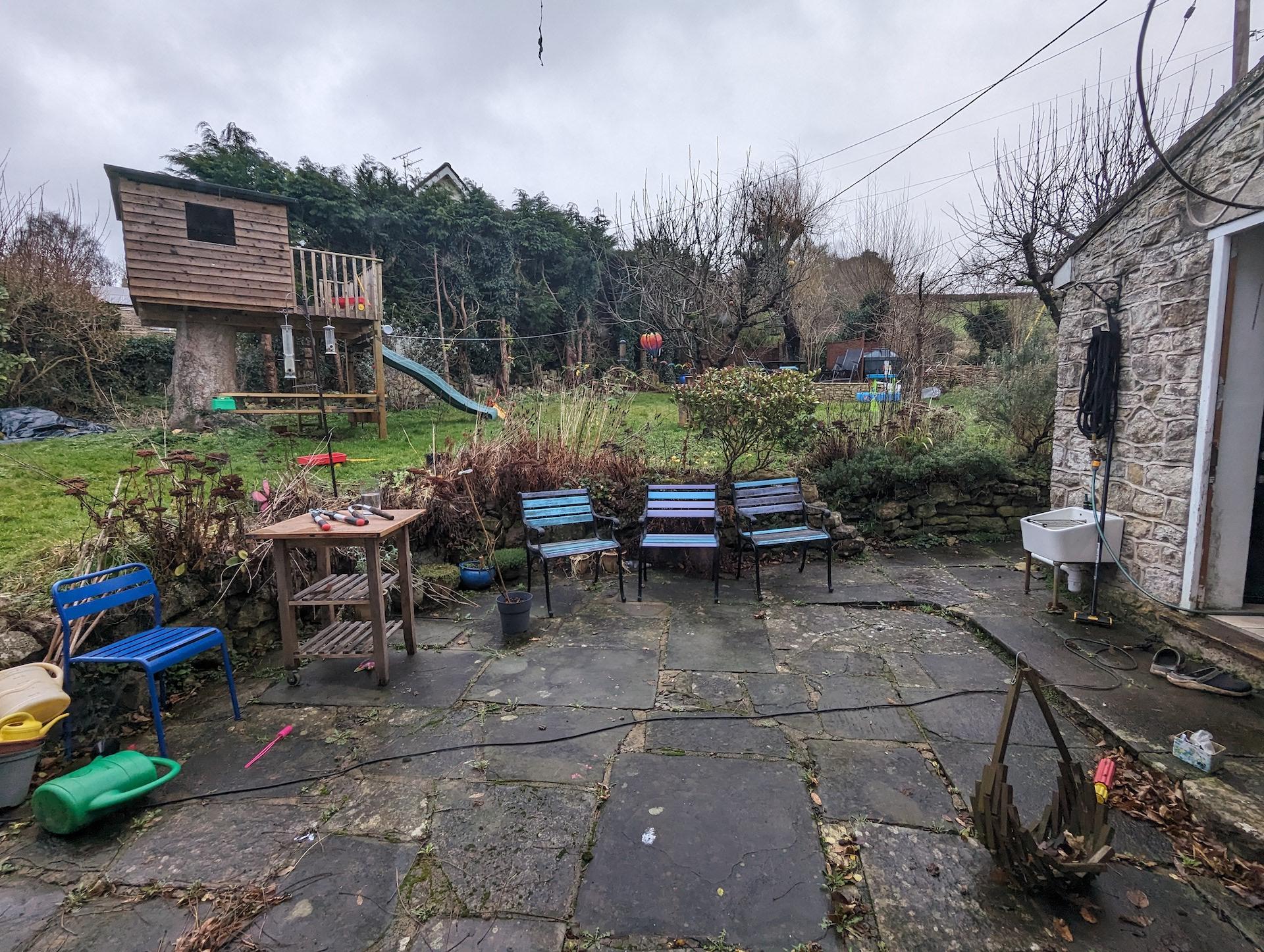
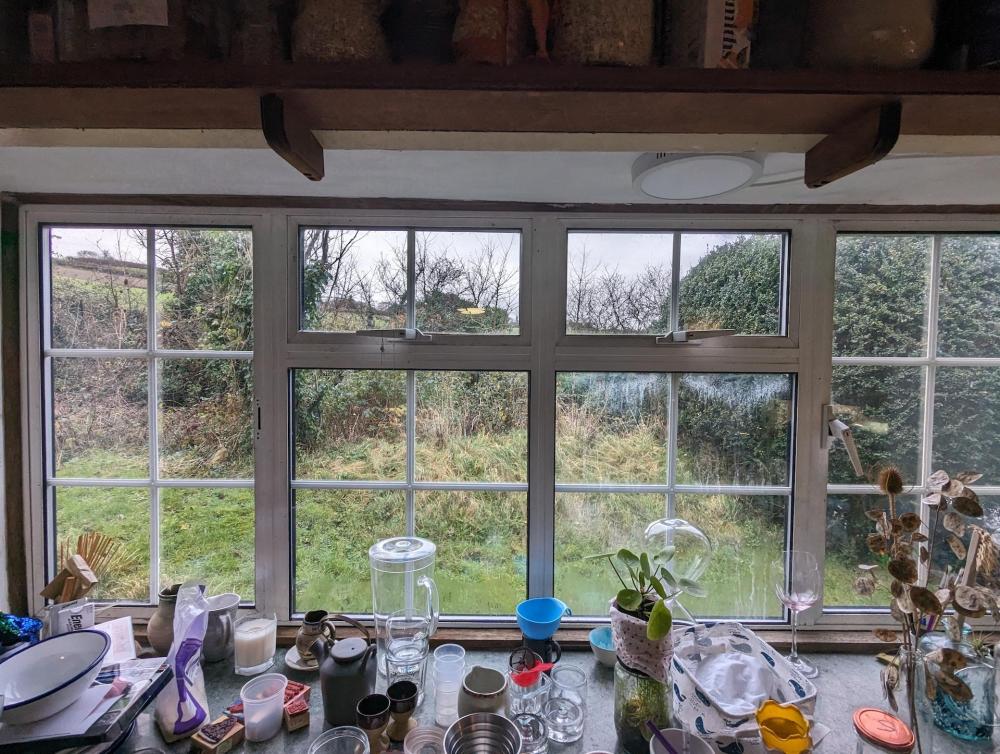
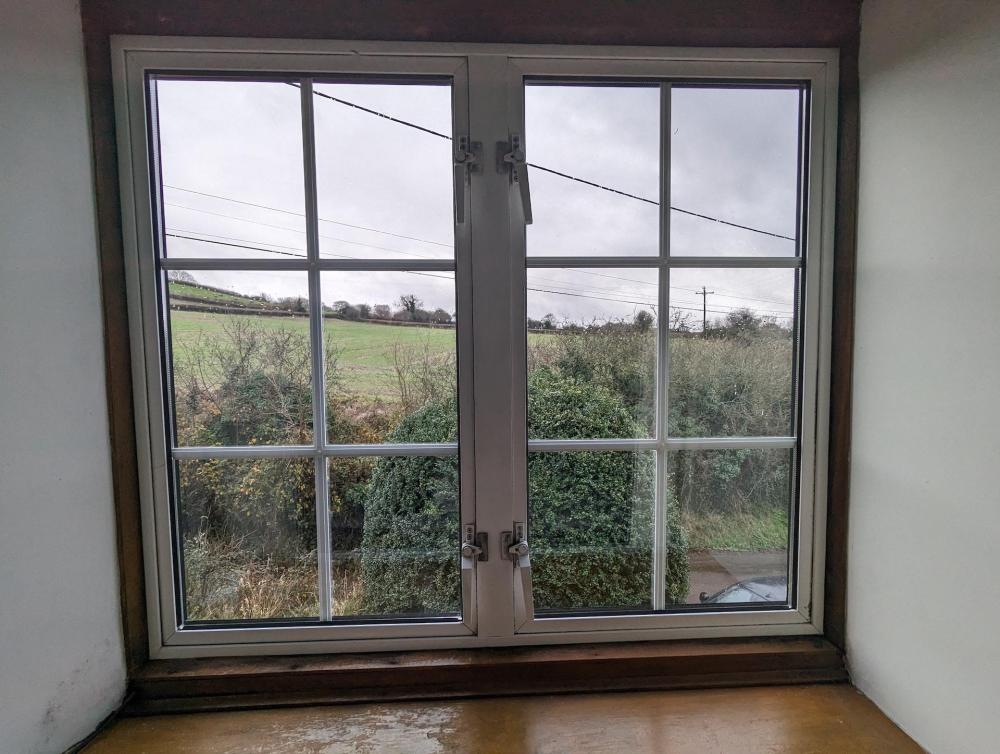
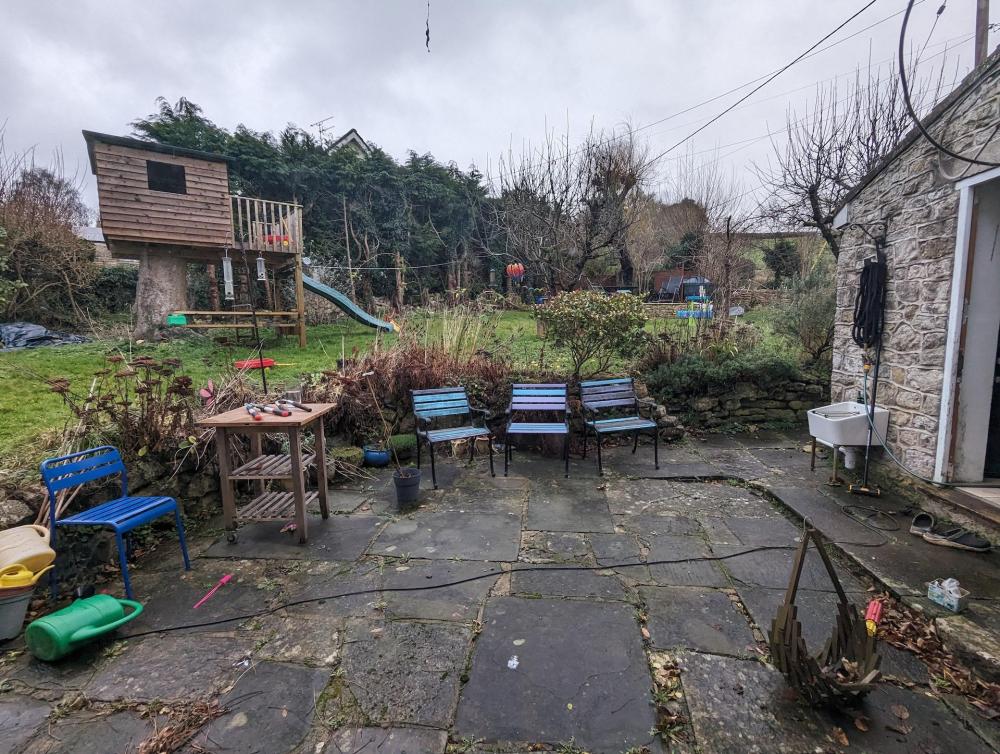
Thanks for the questions - I'll try and add as much context as I can. 1. Lots of things. I'll elaborate below, but in summary it's higher ceilings, more natural light, better views Better views - (I've attached a comparison of the view from downstairs kitchen vs the bedroom above). There's a nice vista which we don't currently take advantage of but the new kitchen would have a view out across that aspect. It would also allow good views across the garden which wraps around the house. Higher ceilings - we need to address the roof anyway because there's currently no insulation on the 1970s portion and old fibreglass wool between the roof joists for the older portion, and insulating at roof level would mean we can remove the old felt and vault the ceilings. They're low pitch so there's little to no storage space up there and vaulting the ceilings means we can also add skylights to get in more natural light. Creating an open plan space downstairs where the ceilings are mostly 2.2m and below would (in my opinion) look like a long & low space without much natural light. Connection with the garden - because we're on a hill, we have steps to go up to access most of the garden when coming from the kitchen/patio. We'd be trading this for steps down from the first floor deck which would have a lovely west/south-westerly aspect and be a nice sun trap in the summer, as well as allowing some solar gain through bifolds/glass doors in the colder months. I've included a photo looking out onto the patio which would be the site of the single storey extension so you can see the steps up to the garden and the state of the patio and surrounding wall which really needs looking at in the next couple of years. The downstairs lends itself well to breaking up into bedrooms and would benefit from the 'cosy' lower ceilings and means we can get a new master bedroom from a single storey extension. This is as close to a forever home as we can get. I'd say minimum 15 years but could easily be 25+. We're late 30s with two children under 10, so we shouldn't need a lift any time soon, and there's no step-free access to the house from the driveway anyway due to that being on the lower side, so being step free isn't really a concern. 2. Not clear at this point. We'd hope and assume that planning would be receptive to us using EWI and changing the exterior appearance, and we aren't listed or in a conservation area. We aren't adding a lot of footprint, and our architect is relaxed about how much we've included on pre-app. Not yet clear on foundations, but where we want to add the second storey I would expect this to be OK given there's already a small second storey bathroom on top of that construction.
-
I saw your DM and will respond a little later - thanks!
-
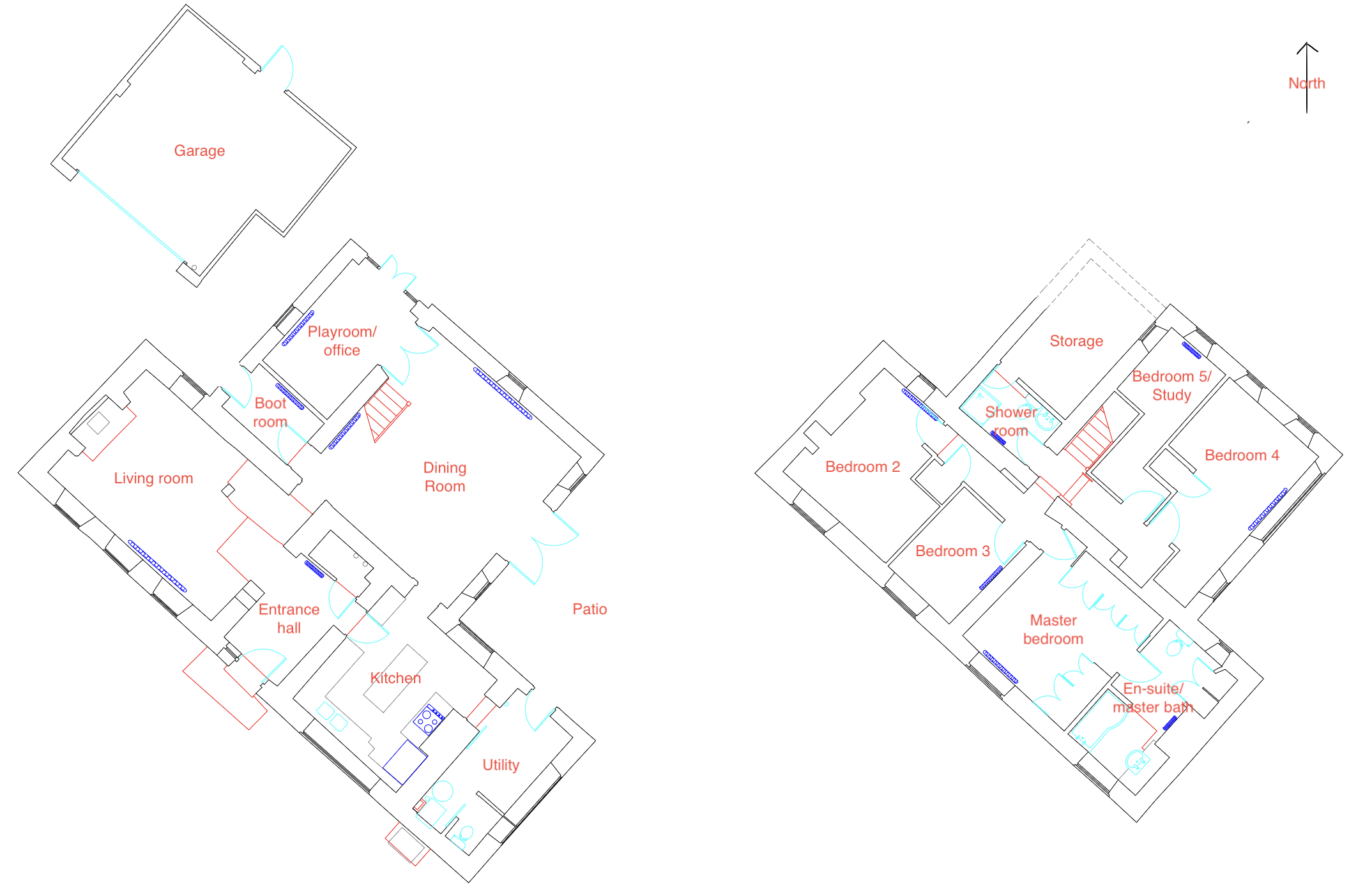
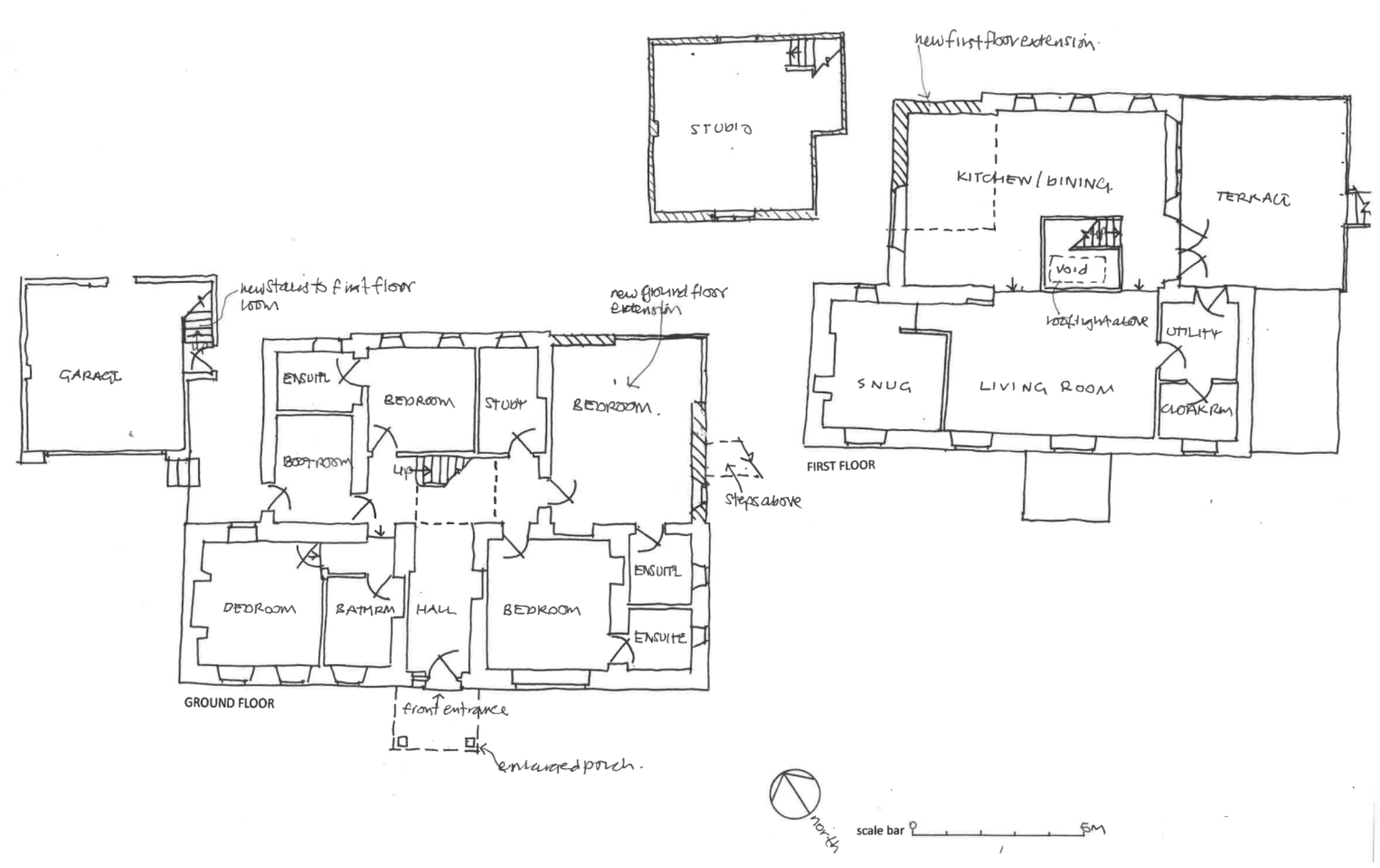
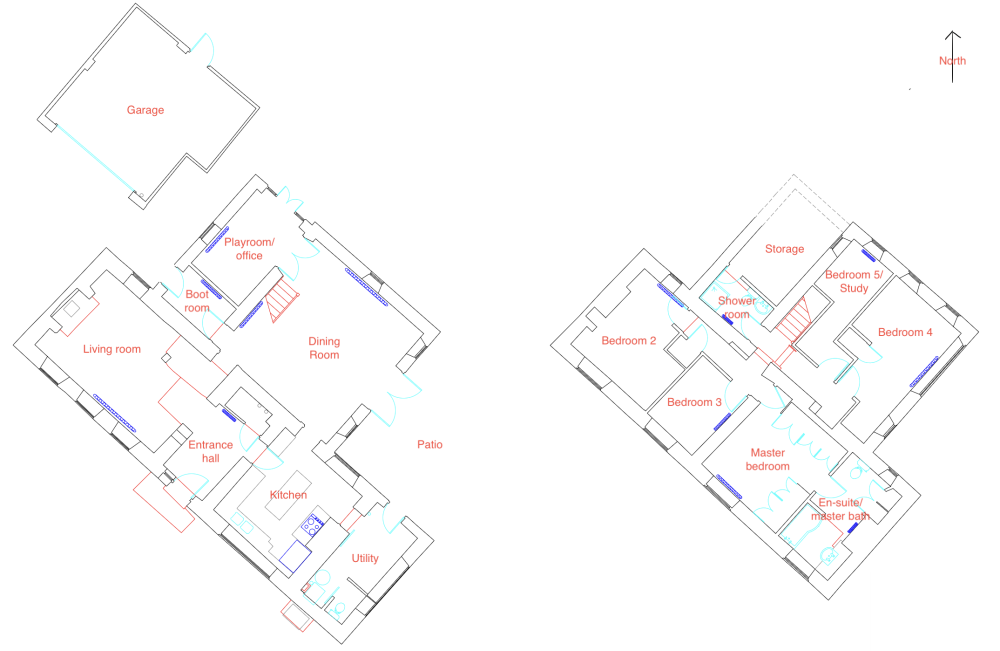
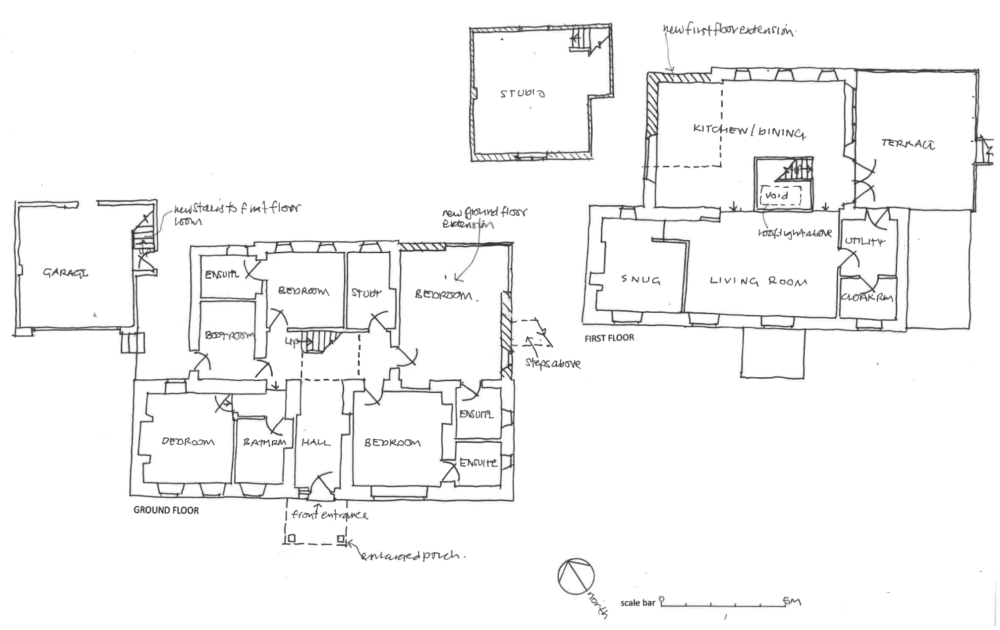
Hello all, introduced to the forum by my dad and looking forwards to learning a lot from the wealth of knowledge shared here. My wife and I have just submitted pre-app for fairly significant works, but we still have a lot of details to work through. We're working with a local architect who has been great thus far. Our house consists of two old (c1800s) miners cottages with 400mm thick solid stone walls and solid floors. At some point in the 1970s a two storey extension was added to the rear and a single storey extension to one end, both concrete block faced with stone which leaves us with roughly 200m2. The windows are all aluminium double glazing but in pretty poor state of repair, with lots of blown units and missing catches. They also have no trickle vents and have faux georgian bars which we don't like the look of. There are various places where lime pointing has been replaced with cement mortar, and we assume a lot of the plaster and paints internally are not breathable. We don't have significant mould problems anywhere other than in the utility room which is on the south-east end of the house, but is unheated, uninsulated, poorly ventilated and next to the kitchen which produces a lot of steam from cooking and has no extractor so is to be expected. We get the odd bit of mould on the north-west end in a few spots and around some window frames where condensation forms, but we manage this by keeping most of the windows open a crack. In addition to all the above, the kitchen is in desparate need of replacement and the bathrooms could do with some work, so you can see we have a lot to do! We knew most of this when we bought the house, so we always expected to do some work but we're now able to take on a more substantial project and have £250-300k to spend to make this house a place we want to live in for the next 15 years. We bought the house for £570k three years ago, and looking at rightmove for houses selling for £870k+ doesn't yield anything that would attract us over renovating our current house, so we've thought through the 'shouldn't we just move?' question. The plans from the architect involve (as-is and proposed plans attached): Moving our living space upstairs to make it significantly easier to remove internal walls to create an open plan living/dining/kitchen space building a single storey extension which will become a new master bedroom, while having a flat roof which will become a first floor deck with access out to the garden from the open plan living space Second storey extension on top of existing single storey part of 1970s extension Significant work to the roof to allow vaulted ceilings in upstairs living space and putting in roof-level insulation and updating the roof line to allow for... ...full EWI with likely a diathonite breathable product, finished either with lime render, timber cladding or a mix of both (likely render for ground floor and timber clad 1st floor would be our preference) Enlargening some of the windows as most are quite low/small Moving and replacing staircase putting in skylights Probably loads more things that I can't think of currently There are lots of questions in our minds at the moment. The biggest one is budget - we aren't expecting this to be fully finished to grand designs standard with all fitted furniture etc. We're not expecting a luxury kitchen, and are happy to manage subcontractors ourselves and to do work ourselves where we can and where necessary. I would also love to dig out the floor downstairs and put in wet underfloor heating, but again this is a question of budget. We're on oil central heating currently and would continue with this if it made sense and we could reduce energy requirements to something reasonable, with a view to putting in ASHP in the future. We spent £7k putting in a new external boiler and pressurised cylinder at quite short notice when the old boiler went 2 years ago. We expect to replace all windows and doors to improve airtightness, and would consider MVHR if we can work out where to put it and fit it within budget. We also want to address any areas where incorrect materials have been used in an old building to set us on the right course, which will involve a lot of replastering/repainting. I'd love to hear any initial thoughts on our plans, or to hear from anyone who has gone through a similar process and has experience to share.
-
Fitting wet UFH into a very old cottage
lookseehear replied to blankton's topic in Underfloor Heating
Did you complete this project? We're looking to do something very very similar and would be keen to hear your experience. Would also love to hear how much it cost if you're willing to share, but I understand if not.