Furnace
-
Posts
238 -
Joined
-
Last visited
-
Days Won
1
Everything posted by Furnace
-
So smash it up and pay for the debris to be taken away in a grab lorry rather than dismantle and remove on a flatbed??
-
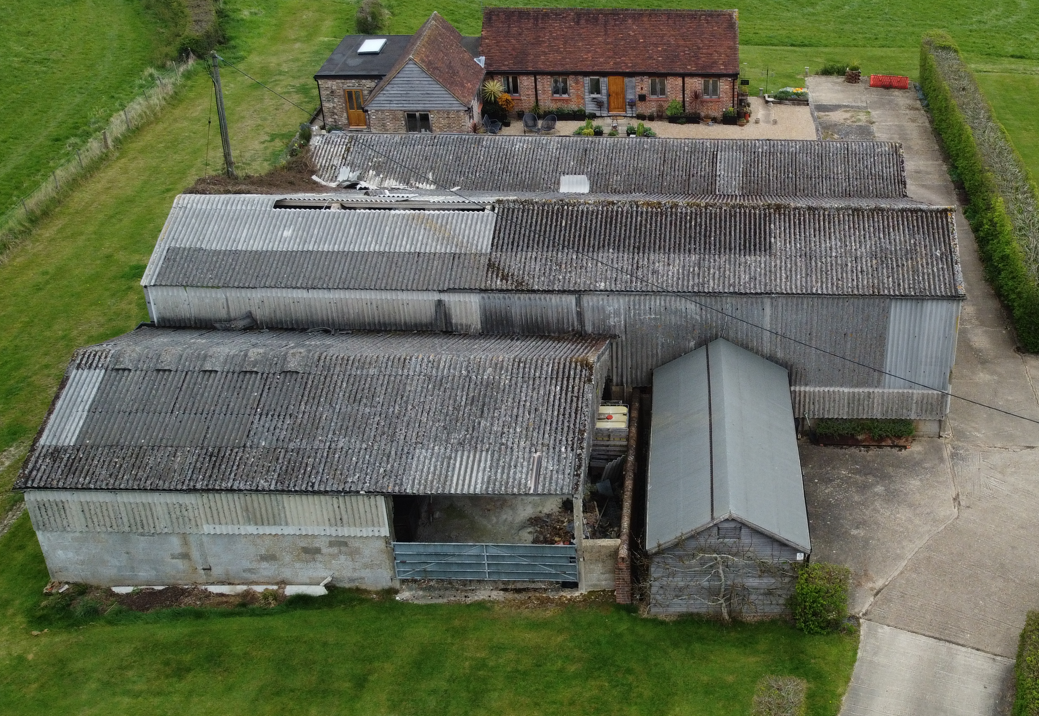
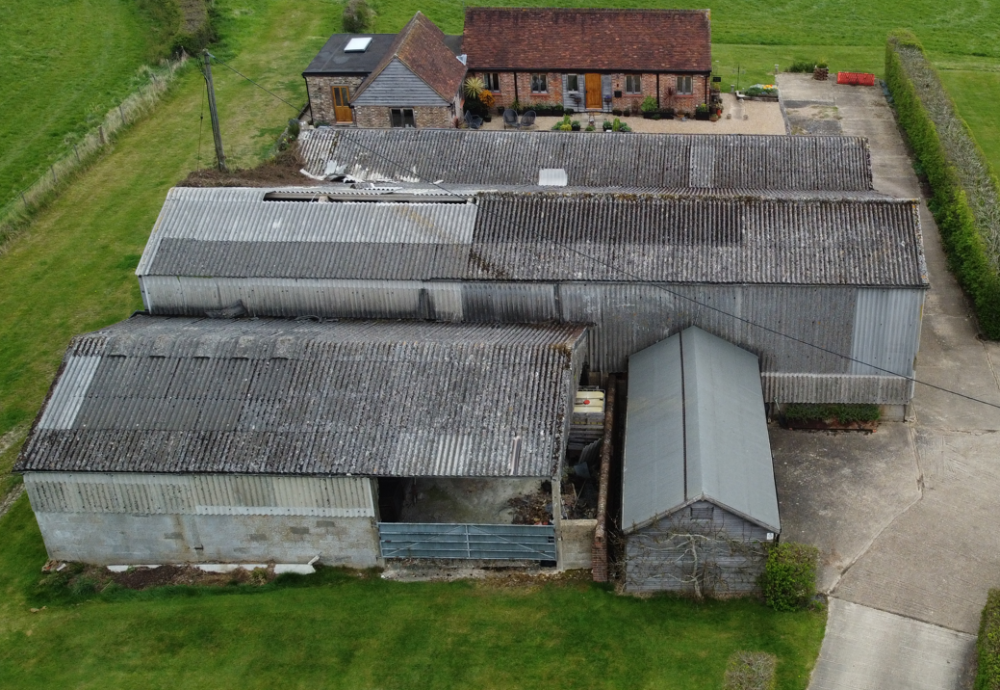
Do you mean the concrete structure might be made of asbestos cement and aggregate? The roof and wall sheets are a combination of chrysatile asbestos, and newer fibre cement.
-
MVHR is Largely Bogus
Furnace replied to DavidHughes's topic in Mechanical Ventilation with Heat Recovery (MVHR)
I reckon your eyes wandered, and your mind wondered.... -
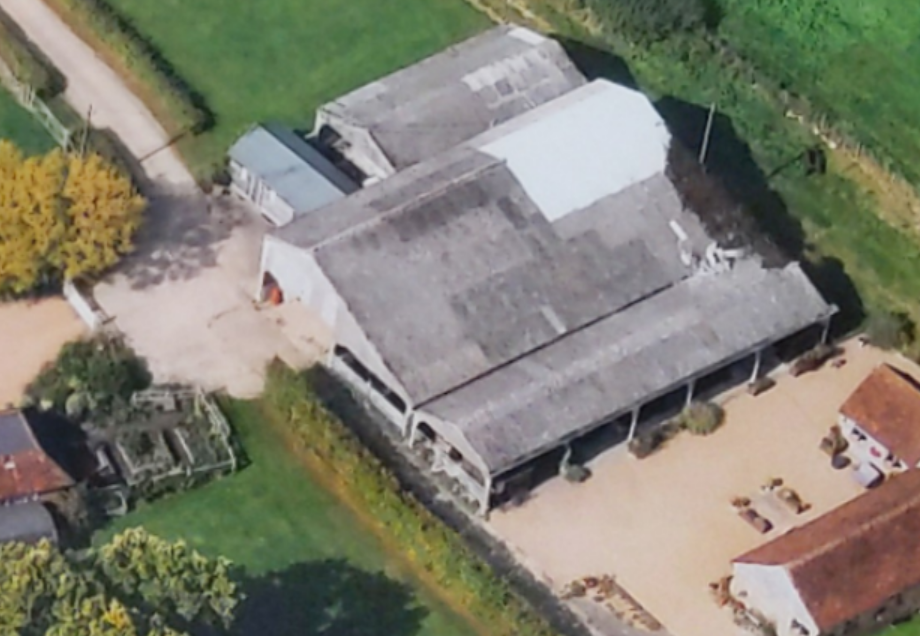
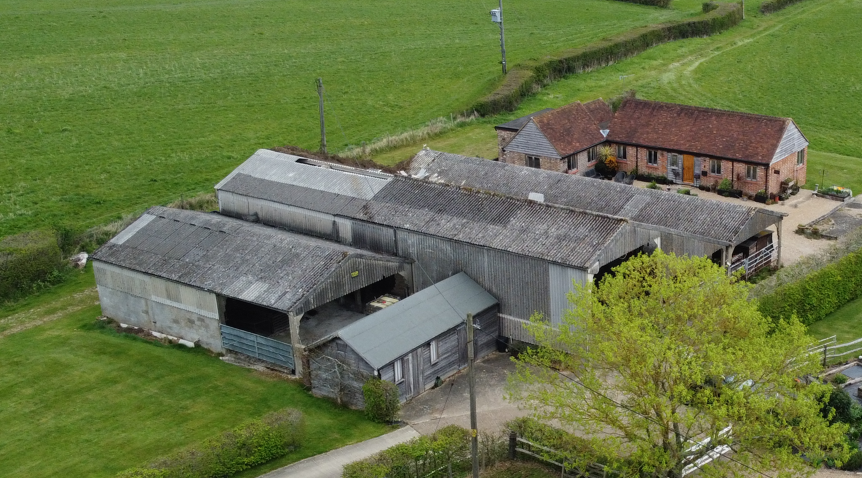
Any suggestions about ways to deal with this after all the sheeting has been removed? I'm considering: dismantling of roof trusses and purlins, posts to be cut off at ground level for potential giveway if collected. dismantling intact and arranging for them to be taken away. crushing on site for possible build use or sale as clean hardcore. Any thoughts?
-
Great Crested Newts -District Level Licensing
Furnace replied to Furnace's topic in Planning Permission
From Natural England: Thank you for completing Natural England's complaint form received by the Complaint Resolution Team on 17 March 2023 regarding you [sic] Great Crested Newt and District Level Licencing. We take all customer complaints seriously and are committed to fully investigating any issues you have raised. We will aim to provide you with a full Tier 1 response by 11th April. If our i nvestigation [sic] is taking longer than expected, we will notify you and provide you with an update. Details of our complaint's [sic] procedure can be found at: https://www.gov.uk/government/organisations/natural-england/about/complaints-procedure. I'm going to lodge my planning application, and if the DLL licence needs to be implemented I'll continue arguing the case for the methodology to be changed. I'll update the thread when appropriate. -
Great Crested Newts -District Level Licensing
Furnace replied to Furnace's topic in Planning Permission
I generally find writing allows my innate irritation at petits fonctionnaires to be largely filtered out. I aim any frustration-laden verbal ranting for my (German) squeeze. -
Great Crested Newts -District Level Licensing
Furnace replied to Furnace's topic in Planning Permission
Kafka had it easy... -
Great Crested Newts -District Level Licensing
Furnace replied to Furnace's topic in Planning Permission
It was a recommendation, however there were no self-serving suggestions for "follow on" work so I don't feel led up a garden path in this instance. I haven't spoken with the ones you mentioned. I confess I feel out of my depth in saying "I've had the result of a Preliminary Ecological Appraisal, and the conclusion is going to cost me £4.5k. Can you suggest an alternative?". I pushed back at the current report author with suggestions of "Is there another way we can present this to better serve the newts' interests?" and got a "There is an impact and that's how it must be remedied" response. There only really seem to be two ways to deal with it. One is "find" an ecological consultant who agrees it's all madness and declares there's no impact. The other is to follow the mitigation rules, but argue that they're inappropriate for this development and try to minimise them. I might get it down to £2.5k if they agree with my approach. I've never done this before so am completely open to suggestions and advice - it's my first rodeo. -
Great Crested Newts -District Level Licensing
Furnace replied to Furnace's topic in Planning Permission
Nothing ventured...... Tune in next week for another riveting episode... NEcomplaint_text.pdf -
Great Crested Newts -District Level Licensing
Furnace replied to Furnace's topic in Planning Permission
I hope he's got better things to do, but I may well raise a complaint at the lower level if my fortitude survives the interaction with the environmental consultant who wishes to take up residence to supervise all ground works. Including installing an orange geotextile membrane and replacing all top soil in areas that tested negative for contamination 'just in case'. -
Great Crested Newts -District Level Licensing
Furnace replied to Furnace's topic in Planning Permission
Solidarity in adversity. I'm particularly frustrated since I donated 3 ponds elsewhere on the farm to the NE restoration scheme. Breakdown of the £17,215 cost of a replacement pond is attached.NEpond costs.pdf -
Great Crested Newts -District Level Licensing
Furnace replied to Furnace's topic in Planning Permission
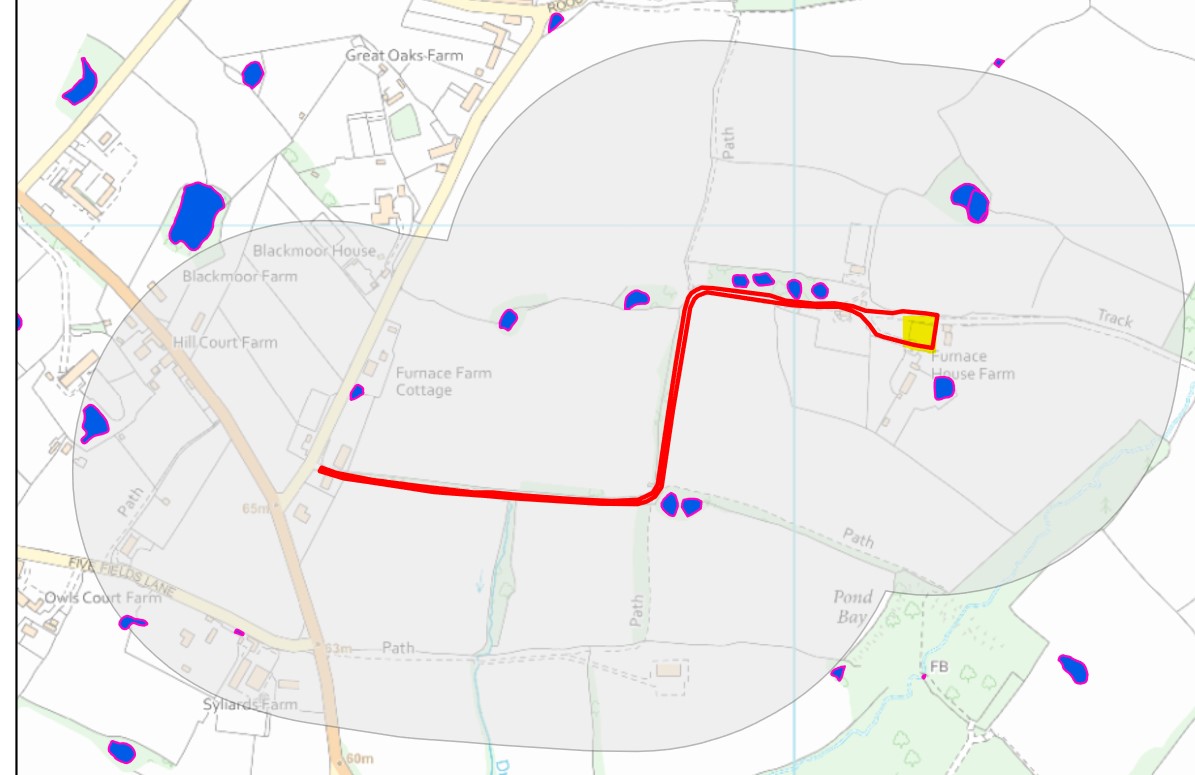
Thought I'd post a dispiriting update. I applied to the Natural England District Level Licensing Scheme for a Compensation Payment quote. £570 +VAT for the enquiry. £2754.40 +VAT for the Compensation Payment £690 (no VAT!) for the Licence Total £4679.28 This is the cost due to 11meters of hedging being removed because of an access issue. The Compensation Payment is calculated based on the number of ponds being impacted. The ecology report states that the groundworks area affects 6 ponds. NE assesses this by reference to the Red Line Boundary of the site and all ponds within a 250m buffer zone around it. LPA require the RLB to include access to the site, and since my plot (highlighted in yellow) is 600m down a drive to the main highway, it affects 14 ponds. I've challenged Natural England to review this and have been rebuffed twice. I'm suitably dispirited.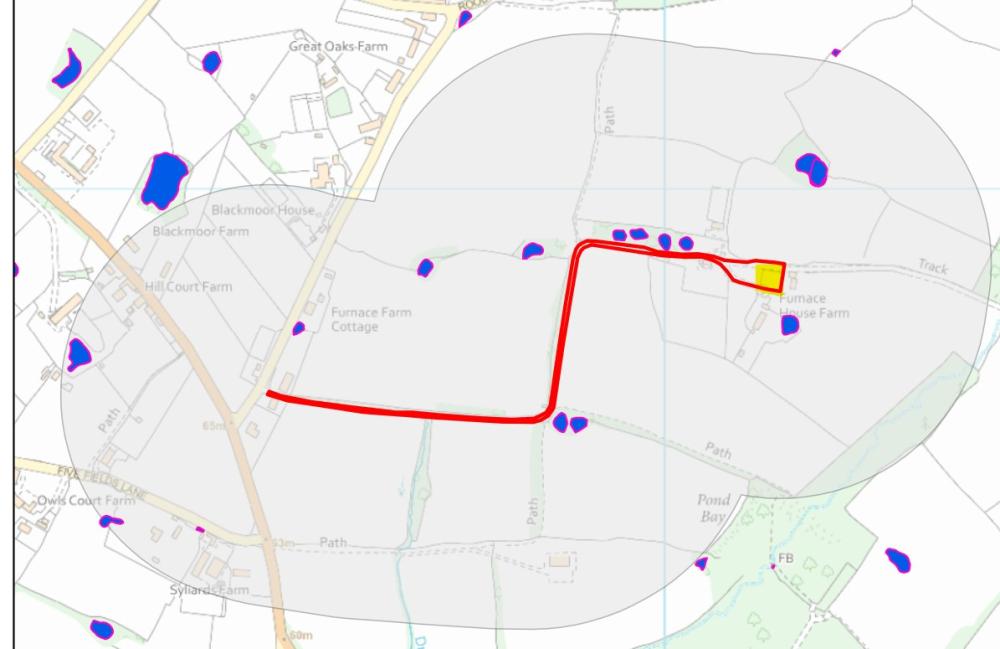
-
From the start of planning to site electric
Furnace commented on Susie's blog entry in The Old Cow Shed
I think you've made a huge amount of progress for the amount of money spent on professional fees. Fingers crossed for that Part O spreadsheet!! Well done. Do your building regs drawings include plumbing/elec/mvhr etc, or just structural? -
Yours may be the first one they've ever seen, but I'm sure it's accurate. And they may not even check it matches the drawings. And they may not check the exact dimensions when the BCO is on site. Do let us know how you get on. About £1500 for two iterations. I was very tempted to do the PHPP modelling myself since I'm a nerd, but I ended up using a local-ish consultant as he had also recently built his own house and could give advice on some other aspects of the build process. PHPP aims to provide a scientific method to guide designs to fit into the goldilocks zone without the shaky guesswork, and negates the need for Design SAP/Part O fees.
-
MVHR generally on its own doesn't help cooling or heating a great deal since the flow rates are low. I was making the point that in theory, PHPP could allow a design with no opening windows due to the presence of MVHR, whereas Simplified Part O wouldn't allow it. I'm encouraged by the response from BC that PHPP would be an alternative to Part O. Although I appreciate this won't help everyone, it shows a flexible approach to Part O and that must be a good thing. Of course, the proof is in the pudding and I haven't yet got evidence that they will accept PHPP 'in real life'
-
@Susie@Alan AmbroseEncouraging reply from Sevenoaks Building Control Thank you for your email. The regulations are what we use as a guide for ‘conventional’ construction. Where you are building a Passive House we would certainly favour the PHPP compliance as it is much more appropriate for the mechanics of a passive house. Provided that overheating is considered as it would be, we would have no objection to you demonstrating compliance via another set of principles outside of Part O. I hope that this helps
-
Yup, as long as you're comfortable doing it (like Susie and I were). But for those like @Canskiwho wish to outsource, it's worth nailing down what the quote covers since it's quite possible that multiple iterations are required. I'll let you know....
-
The iteration of even the Simplified model could end up being expensive. Similar to @Susie, my design failed at the first attempt. It then becomes a process of tinkering with sizes and openings to get a pass. It can be a challenge since reducing glazed area to meet the 'Total Glazing area for home' limit of 15% of Gross Internal Area also affects the 'Removal of excess heat' requirement to have opening apertures. Chasing your tail. Like Susie, I found that I needed to make more windows openers, and some internally opening to overcome the restriction that outward openers are limited by 'the handle must be within 650mm of the internal face of the wall' rule. That rule impacts the effective aperture, whereas an inward opener benefits from the whole aperture. I'm having brise soleils and MVHR on my passive house build, but the Simplified model allows no benefit for either. Fortunately, I didn't need to compromise on much to get a pass, but it may still cost money as openers are more expensive than fixed panes. I'm waiting to find out of the LPA will accept PHPP for Part O.
-
Great Crested Newts -District Level Licensing
Furnace replied to Furnace's topic in Planning Permission
That sounds simpler than the expense of further WAC testing and disposal. I'm hoping not to have any soil removed from site. -
Great Crested Newts -District Level Licensing
Furnace replied to Furnace's topic in Planning Permission
The location with the PAH is in an area due to be hard standing/parking. The environmental report suggested an option of 'subject to Regulatory approval, existing vs proposed site levels and proposed development design layout it may be acceptable to cap this unsuitable Made Ground beneath hardstanding to help break exposure pathways, although potential future risks would require management if this material is to remain on site it feels like the sort of approach used to repurpose an ex-steelworks than a rural barn. -
Great Crested Newts -District Level Licensing
Furnace replied to Furnace's topic in Planning Permission
Geo-environmental survey tested and classified it as 'chrysotile asbestos cement sheeting'. Apparently it's the most common type of asbestos. I had the Desktop Study for the Class Q (£900). The GE consultants are suggesting/recommending/trying to implement their involvement is all 4 stages relating to contaminated land. Lots of 'a qualified environmental consultant will be present during all groundworks to identify potential risks; a Discovery Team should be formed to monitor any issues etc.' The planning permission that was then granted for the Class Q had a condition of a Phase 2 intrusive study, and if contaminants were discovered a remediation strategy was required. Prior to any occupancy, a verification report detailing completion of the remediation work is required. The Phase 2 study(£7k) identified asbestos on the roof and walls (no surprise - it's an asbestos clad agricultural barn) although no asbestos in the soil samples. The other risk found was a localised area of raised levels of polycyclic aromatic hydrocarbons (PAH) on an area of farm track that will ultimately be a parking zone. They suggest removing the soil in that area and taking it off site to a hazardous waste landfill centre. They also suggested that : That all proposed garden / landscaped areas be provided with a cover system comprising a minimum thickness of 300mm certified “clean” topsoil. The available information obtained as part of this assessment is favourable and suggests that the existing topsoil may be suitable to provide a "clean” cover system however to confirm these initially favourable findings additional confirmatory analysis is recommended to representatively certify existing soils are suitable in all proposed garden / landscaped areas. Alternatively imported certified "clean” topsoil should be provided to all proposed garden / landscaped areas to a minimum 300mm thickness laid over a hi-visibility geotextile marker layer and should be validated by an Environmental Consultant. All imported material provided to site should be certified chemically “clean” in relation to human health and the cover system thickness should be inspected and certified All, of course, under their watching brief. They're sending a quote for a Phase 3 remediation study, but I'd dearly like to cut them out of the loop. I'm currently thinking that I may be able to address the Remediation and Verification phases by including my own version of it with the application to discharge the condition. I also currently feel like I'm being fed to the wolves.... -
Great Crested Newts -District Level Licensing
Furnace replied to Furnace's topic in Planning Permission
11m of hedge will be removed and 20m of hedge will be planted. The ecologist knows all this (and the fact I have restored ponds elsewhere on the farm and have donated other ponds to the DLL scheme) and concludes that there is a risk to GCN. Dealing with this can be via mitigation (survey, possible capture and relocation etc.) or via the DLL. DLL is far quicker and will likely cost a couple of grand. That £2k pales into significance alongside the likely cost of the Geo-environmental consultant's involvement. My current plan is to try to avoid planning conditions that require Phase 3 and 4 reports by writing a (thick) 'Summary of Risk Identification and Mitigation during site works ' document to accompany the application. This will be filled with 'we know there is asbestos, and this is how it will be dealt with', 'we know there are newts and this is how we'll deal with them' etc.... Anyone got a nice chunky asbestos removal Method of Work statement? Mark -
Great Crested Newts -District Level Licensing
Furnace replied to Furnace's topic in Planning Permission
Yup, swallowing hard is becoming a requirement. Just got off the phone with the ecologist. Apparently the hornbeam hedge I planted through geotextile membrane 15yrs ago is now high quality GCN habitat and juveniles may still be present while sexed-up adults plod off to do their stuff in the ponds. -
Great Crested Newts -District Level Licensing
Furnace replied to Furnace's topic in Planning Permission
When dealing with mission critical consultants, I'm finding the path a delicate one. The potential costs are significant for what some might feel are 'minor' changes to a plan. I've thanked the ecologist for 'helping me navigate this issue' and have asked for a call with her to confirm her advice (the DLL) and its likely cost (my estimate is £2k). I'll raise the 'aren't they all shagging in ponds from March?' question then. The environmental consultant is a different kettle of fish. They seem to want to move in and be on site to monitor the movements of all humans within 100m. Sigh -
Great Crested Newts -District Level Licensing
Furnace replied to Furnace's topic in Planning Permission
It was unsuccessful. I suggested having them on site for the 11m of hedge removal to ensure compliance, but apparently that's illegal. It looks like I will need to enter the DLL scheme. No one has yet managed to confirm my methodology and estimate of cost.