


Garald
-
Posts
1113 -
Joined
-
Last visited
Everything posted by Garald
-
Fun and joy with a thermal camera, part I: Attic
Garald replied to Garald's topic in Heat Insulation
Right, I don't have a way to check non-destructively; I'd have to convince the contractor (since he would know how to take apart the panels while causing minimal damage). On whether it's worth the effort: I wonder whether there is a way to check that the insulation is indeed defective. It could be that the low walls are cold simply because they are always in the shadow (though the fact that their top parts are colder than their bottom parts makes me suspicious). -
Fun and joy with a thermal camera, part I: Attic
Garald replied to Garald's topic in Heat Insulation
See, e.g., https://www.amazon.fr/Italfrom-isolation-thermique-acoustique-différentes/dp/B08MTD16G6/ref=sr_1_45?crid=1IGDIJRFCAN33&keywords=liege+30mm&qid=1705504943&sprefix=%2Caps%2C116&sr=8-45&ufe=app_do%3Aamzn1.fos.49fccda8-a887-4188-817b-b9a64bb30e43 or https://biosughero.it/gb/cork-s-insulating-wall-cladding/989-52881-cork-panel-biocork-thickness-from-2-to-20-cm.html#/1002-spessore_isolanti-thickness_4_cm_pack_of_4_sq_m -
Fun and joy with a thermal camera, part I: Attic
Garald replied to Garald's topic in Heat Insulation
It is also possible that the side walls are not actually that poorly insulated, and that they are cold simply because they get no direct light. (All light in the attic comes from skylights.) -
Fun and joy with a thermal camera, part I: Attic
Garald replied to Garald's topic in Heat Insulation
I am trying to get hold of the contractor to demand an explanation in the friendliest of ways. He may just not have blown enough cellulose. On what I can do: (a) What I am already doing, viz., fill the low walls with book cases. It will be tricky to fill some spaces without made-to-measure bookcases, which can be expensive, though; I'll also need access to the electricity sockets in the wall. (b) (this just occured to me) cork is a good insulator (it has about the same conductivity as rockwool) and is considered to be decorative by some. It's also easy to cut and easy to glue to the wall, I take. I could try to cover all the bits that are not covered by bookcases with cork instead. I could even line the whole of the short walls with cork (the cost would not be nothing, but since the walls are low this is not prohibitive). A 2cm-thick cork board is not nothing - that's 0.5 in added R value. Is cork safe enough in case of fire? (I see cork products are rated E - that would be fine inside a wall cavity, behind a fire-proof panel.) How does it compare to, say, books? More importantly - is it safe to breathe in the long term? (No fibrous material really is, however "natural", is it?) -
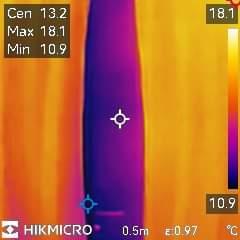
Let me understand under which circumstances a reflecting insulator may work. I just put some reflective lining inside a set of curtains. Their thermal performance does seem to improve perceptively (I took a couple of pictures with an IR camera). Yet the reflecting element is not directly exposed - it's inside the lining. Is it that, since the lining pocket is inherently baggy, and the curtain isn't very thick, a significant fraction of the heat that would get through the curtain is transmitted by radiation (and hence is stopped by the reflective lining)? Attached you'll find a picture taken after I put the reflective lining inside the curtain on the right and before I put it inside the curtain on the left. I shunted the curtains aside a bit so you can see the metal door behind.
-
... and have an air gap, so that heat is not transmitted directly, presumably? Say we are talking about an area that is covered with bookcases. Does it make sense to cover the wall behind the bookcases with space blankets, making use of the small air gap between the back of the bookcases and the wall?
-
Well, it has finally got cold, and now I have a thermal camera (as you can tell from my other threads). The renovation is all but wrapped up by now - I haven't been given the end-of-work documents yet, and I suppose I can still take matters up with the contractor, but good luck to me if I insist on major changes. I've found some spots where performance seems lower than expected (in particular, the low sidewalls in the attic; blown-in cellulose insulation may have slumped, or perhaps the space behind the sidewalls was never filled to the brim). A quick search tells me there is such a thing a "thermal wallpaper". Reading the technical documents, it would seem to have an R of less than 0.1 - i.e., it is next to useless. No surprises there. The only thing I can think of that can take next to no space and have a real effect is reflective insulators. I've found this: https://coveryourwall.co.uk/collections/thermal-room-insulation-liners/products/graphite-plus-insulating-lining-paper - but it says "20% better" (than their products with an R of less than 0.1). Not sure what the solution is. Hide space blankets behind conventional wallpaper? (If I were a better DIYer, I would do it.)
-
Fun and joy with a thermal camera, part I: Attic
Garald replied to Garald's topic in Heat Insulation
Just double-checked - the short walls are colder at the top than at the bottom, and that would seem to suggest that the blown-in cellulose has slumped, or that not enough was filled in. On the other hand, it's also the case that there necessarily has to be less cellulose near the top (that's how triangles work!). What to do? I can think of two options: - Take this up with the contractor, getting into a fight in the hope he reopens the short walls and puts in more cellulose? - Inform the contractor (in case he can think of an easy fix) and put on thermal wallpaper (but is that a scam?). -
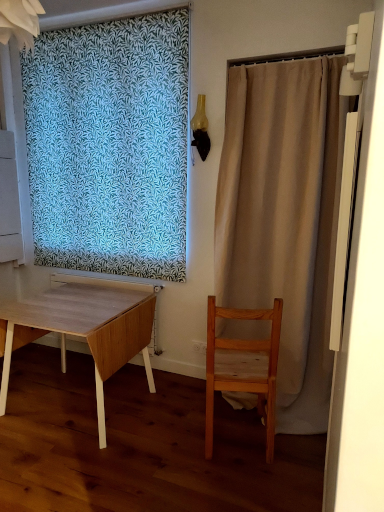
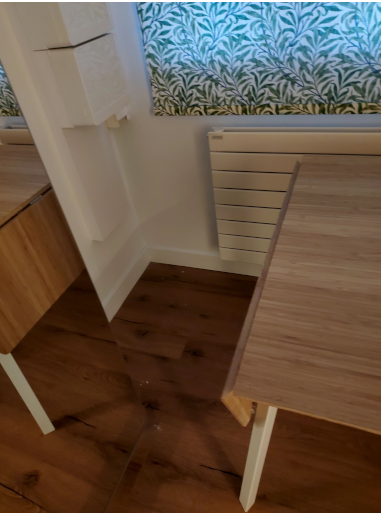
This is the ground-floor studio with the infamously cold metal door discussed elsewhere. The windows are new double-glazing. Here are a few pictures with the ugly thermal door curtain being shunted off to different sides. There seems to be a cold spot in the corner. Thermal bridge? What to do about it? Bathroom. I see nothing particular there.
-
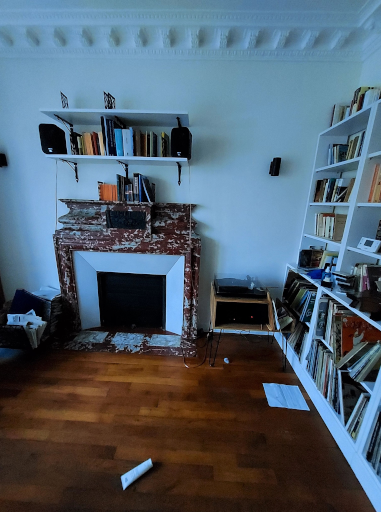
Here's a tour of the main floor, taken yesterday - outside temperature -2C. Let us start with a surprise - the two chimneys behave rather differently: Here is the one on the left: (Again, my apologies for the mess.) Here is the one on the right: As you can see, both have iron shutters. My understanding is that the first one is fully functional, whereas the second one would need some serious cleaning - but it is not sealed as far as I know. I do not know what causes the difference. I believe I have sometimes heard the wind howling through the first one. All I can think of is: - using a chimney stop such as this one (how does one size it correctly?): https://www.amazon.fr/Anti-courants-dair-pour-cheminée-33cm/dp/B00SEL5VXS/ref=sr_1_14?__mk_fr_FR=ÅMÅŽÕÑ&crid=YCB9JMDUFCP7&keywords=chimney balloon&qid=1704853489&sprefix=chimney balloon%2Caps%2C150&sr=8-14&fbclid=IwAR2OCmsZlQjP0k_4syBo2itzNmKYscrUc1DWMYPfL86fY9JMKT9ui_2ESt8 - getting a solid-wood book case with a heavy back to put against the chimney; that would add resistance while being easily removable. Let us take a few step backs and enter the first floor through the staircase from the ground floor: As you can see, the contractors put single glazing (openable) behind the stained glass. The single glazing does not have much R (I looked at it through the IR camera after opening the stained glass: the minimal temperature was about 2, and I could see my own IR reflection - I forgot to take a picture, but I can take one if this sounds hard to believe) but at least it stops convection (though I do not believe it is perfectly tight; the stained-glass windows aren't). I imagine it would have been difficult to get double-glazing in these dimensions. Is there anything I should keep in mind or do about this issue? Let us go further - a) Bathroom and shower room. This is double-glazing installed some ten years ago by the previous owners. b) This is the bedroom. Again, this is old double-glazing, and the orientation is NWN, but still, a minimal temperature of 12.4 seems low. Maybe there's an issue in the upper edge? The thin roller curtain does seem to help some - or is the fact that its surface temperature is not lower than that of the walls meaningless? c) Library This is new double glazing. No great surprises here (other than the chimney). The PVC frames seem significantly colder than the glass itself - yet another reason (other than maximizing light) why I believe it would have been better to have two-pane windows, even if opening it would have been somewhat inconvenient. The (sold wood) bookcases are noticeably warmer than the rest. I will probably put some 2cm wood on the windowsills - or is there a reason not to? d) Kitchen I do not see much to comment on here. I do wonder what that hot spot is (marked in red). e) Stairwell going up to the attic No surprises here (it is colder than elsewhere, and there is no reason why it should not be - the cat does not seem to mind) , though there seems to be something funny going on around the edge (see blue cross).
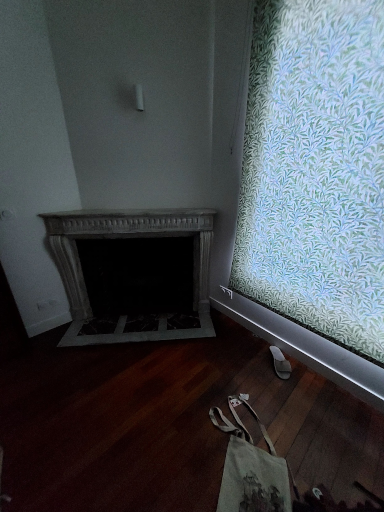
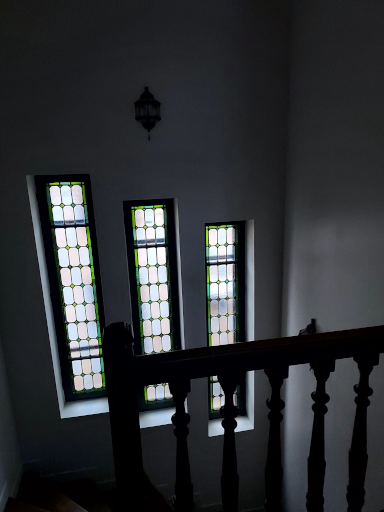
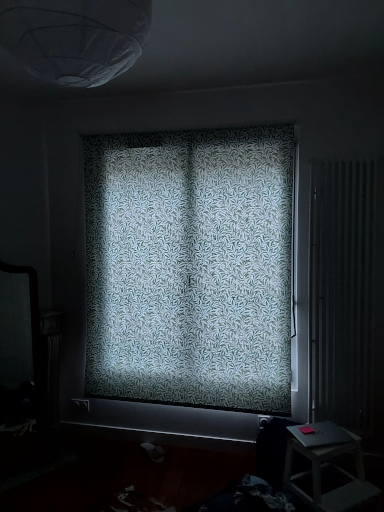
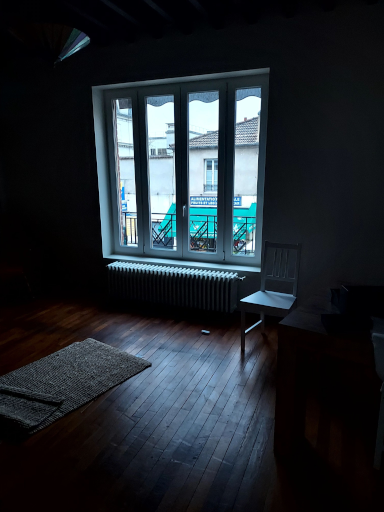
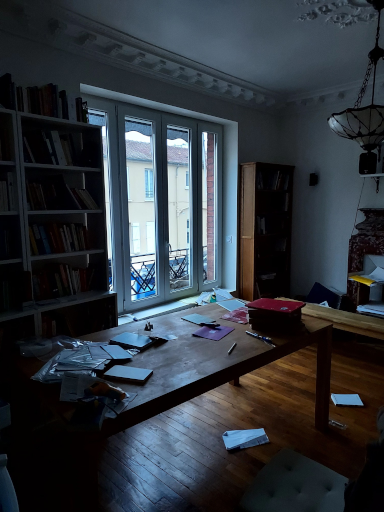
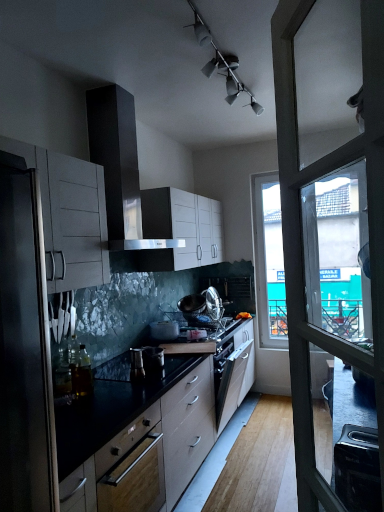
-
Fun and joy with a thermal camera, part I: Attic
Garald replied to Garald's topic in Heat Insulation
The latter. Right - shouldn't I talk to the contractor about it? Is it normal for these short walls to be colder than the rest? -
Fun and joy with a thermal camera, part I: Attic
Garald replied to Garald's topic in Heat Insulation
For the record, what is behind the low walls (called "short walls" in the above - I was falling asleep) is blown-in cellulose. I thought the R there would be at least as high as in the orher walls in the house (and, in particular, the other walls in the attic, where there is a few cm of cellulose plus a reflecting insulator). That's why I am surprised the low walls are colder. -
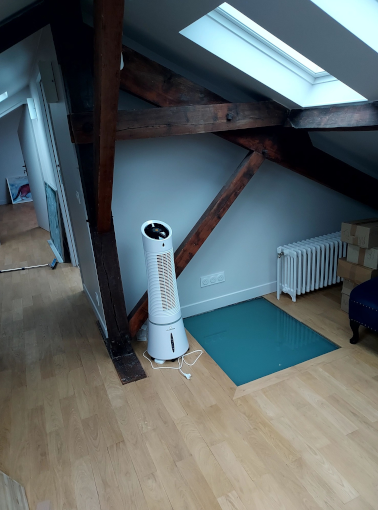
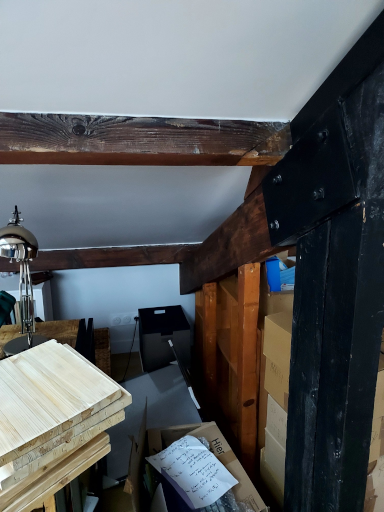
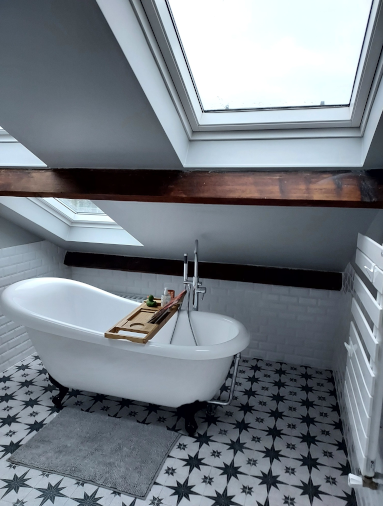
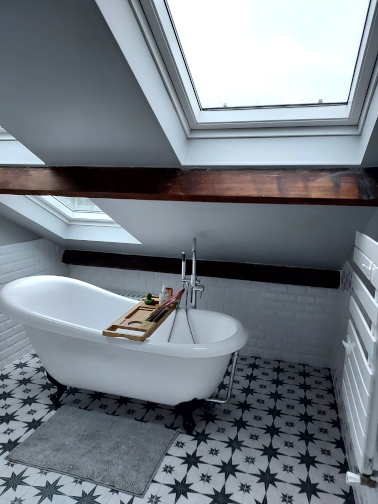
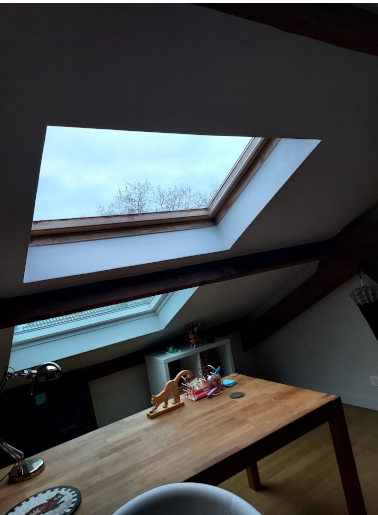
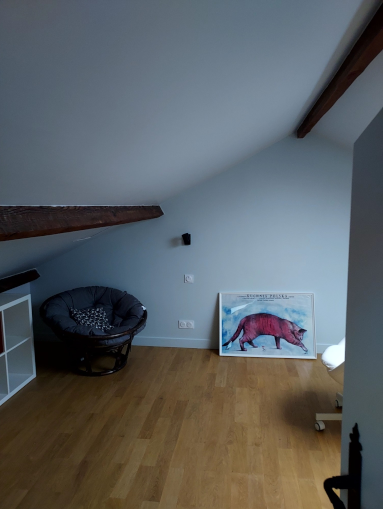
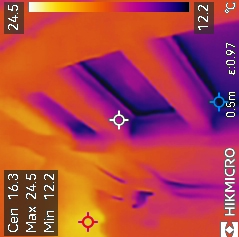
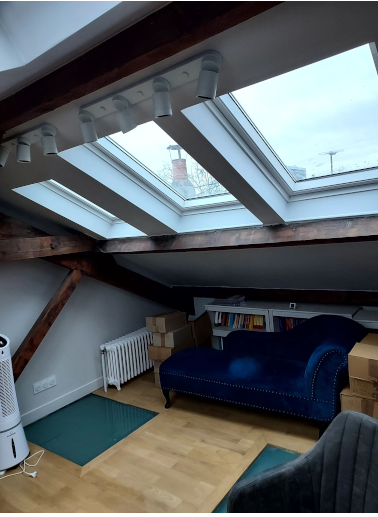
I just got an inexpensive thermal camera (HIKMicro E01, from Amazon) - and it's -2C outside, so I just had a load of fun. Here is a series of thermal pictures, with "normal" pictures of the same places to go with them, and some comments. Please tell me if I am misinterpreting things or if I am missing clues. (For context: I am at the end of a renovation carried out by what I believe to be a competent contractor, with plenty of help from here.) My aims right now are: - to evaluate the work that has been done - to see what I can have fixed easily - to know what issues remain that could be fixed in a further renovation a few years down the road. All right, let us get started. I apologize for the mess - I am still unpacking and assembling a few things. Keep in mind that the temperature->color mapping is different in each picture. 1. Attic entrance You can see the metal instruction in the wall insulation as clear as in an X-ray. (I believe I've posted pictures here of when it was being installed.) Is this a problem? 2. Home office 1 Skylights: i wanted many, and thought of heat loss as a worthwhile sacrifice. At least they are new (U=1.1-1.3 or thereabouts). Something funny seems to be happening in the edges and corners. This seems all right, but... A corner here seems very cold. Again: - the bit of ceiling immediately next to the wooden beams sems cold, - more seriously, the short walls are cold, where not covered by bookcases. The obvious solution is more bookcases. (I think somebody here said we were going way off a tangent when we started discussing the thermal properties of bookcases, but apparently they are real.) If there has to be an air gap of 2 to 3cm, that's actually better. However, I would need to let the electricity sockets show through the back, and I don't know how to do that (without calling a carpenter). 3. Bathroom I have nothing to say on the bathroom, save what I've already said - fairly cold short walls (and I would have expected the skylights' frames to be less cold: these are new skylights). Maybe others can find things to remark upon? 4. Second home-office/bedroom One of the skylights is old (with a wooden frame), from before the renovation, and it shows.
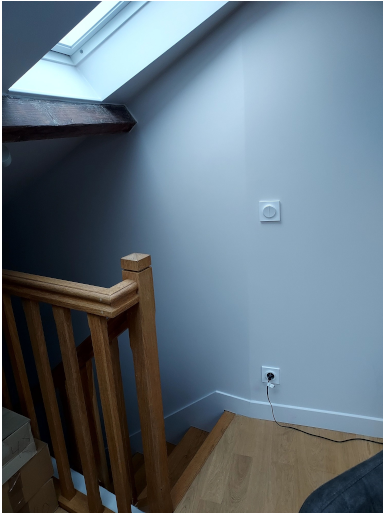
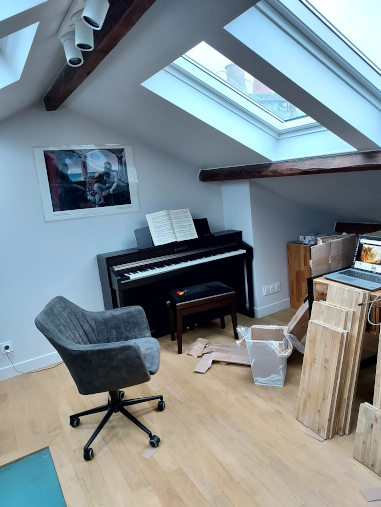
-
Wait, shouldn't there be a range of R-values for steel doors in metric units? I found a source which gave an R value that didn't survive a sanity check (see below), and a second look showed it was a US source. Of course it may be that the core of the door is not insulation but a honeycomb (which would be energetically stupid of whoever installed it; maybe they thought that, since this room was a laundry room back then, it didn't matter). Even before I put on the curtain, the inner surface of the door was clearly colder than that of the windows (I can check this again, setting the curtain aside) which would seem to imply that its R was lower than theirs. (The only other explanation I could think of would be for heat to transfer much less effectively from air to steel than from air to glass (is that true? is there any significant difference? how can there be one?), but that would *help* the steel door on the other side, so the effect would be halved.) The R-value of the window is probably about 1.3, so...
-
Right, but, if the only relation I have is the trivial one giving me heat loss in terms of those data, then I cannot conclude anything about which value is correct. There's another data point: the temperature of the air in the room. I suppose I could set aside the curtain and, after a while, measure again the temperature of the door (which will then be in contact with the main air mass; the temperature of the door will necessarily go *up* when I remove the curtain). What I would then need to look up is how well transfers from an air mass to an adjacent steel surface; with *that* in hand (but where do I look it up?), I could estimate how well the door conducts heat, in comparison. (There will be three different temperatures: room air temperature, temperature of the inside of the door, temperature of the outside of the door.) Then I would not need to conjecture what is or isn't in the door - or, better yet, I could confirm a conjecture among several.
-
Well, if we can talk of how it fits or does not fit experimental data (what data, and how?) then that data can itself be used to give us an idea about the k value, no?
-
Right, then it's easy. The problem is that I have no idea of what is inside the metal door - a void, insulation, what exactly? (It was installed by the owners before the previous owners.) Surely there has to be a way to figure out k or R from empirical data alone - what data do we need to collect?
-
Actually, how do you find the losses given just the two temperatures? Or do you need to know the conductivity of the material beforehand?
-
Just measured the temperature differences with a new infrared thermometer. (I've tried calibrating it against the inside of my fridge, but it still seems to lean towards the cold side; when applied to my skin, it gives me readings around 28.5C, which would imply I am dead.) First reading: The temperature on the outside of the door curtain is exactly the same as that on the wall next to it: 15.5C The temperature on the inside of the metal door (behind the curtain) is 7.5C. The temperature on the other side of the metal door is -2.5C. Second reading (just went back downstairs): Temperature on door curtain = temperature on wall = 18C Temperature on the inside of metal door = 10.5C Temperature on the outside of metal door = -0.5C According to the weather report, the current outside temperature in the area is -2C. Not sure what one can deduce from these figures alone - other than that the R value of the curtain (a fairly thick but not magical polyester curtain with a space blanket inside, from what I can deduce) is between 70 and 80% of the R value of the metal door.
-
I've come late to this discussion, but the 10kW model sounds like the right choice: first, it's actual output is lower than the model name (this is a thing with heat pumps in general) and second, plenty of heatpumps now work as efficiently when working at half steam as at full steam, so to speak. (That's the case for the Mitsubishi I have, for instance.) So, leaving oneself a bit of a safety margin makes sense.
-
Tufting gives one enough space for (much cheaper) polyurethane mousse. Of course the price of aerogel seems to be itself less than labor costs. Here is a DIY kit - not of the right dimensions for me (I have a taller door), and quite frustratingly no technical specifications are given for those 5cm of mousse: https://www.swaldeco.com/fr/boutique/kit-design-porte-capitonnee-blanc?fbclid=IwAR2BTgRM-87kHG1D3LFfetr2b_RnEaU9JQRPqhglEF40n6mPzwoNqGpmHTM (Price of kit: 413 eur) Apparently, having this sort of thing done by a decorator costs in the order of 1400-1700eur - not much less than a new door. https://rideaux-stores-tapissier-decorateur.over-blog.com/isolation-phonique-etude-notariale-sevres.html I'll shop around. This sort of thing seems to be advertised mainly for sound insulation - itself a very good thing, since the heat pump external unit is on the other side (though it's audible only when working at full steam). OTOH the kind of insulation that people have in mind may be mainly in the other direction, viz., privacy - notice how the clients mentioned in the blog above are psychiatrists and lawyers. https://www.isol-bruit.net/portes From a purely technical perspective, what should I insist on, then - fireproof polyurethane foam surrounded by reflective material "space blankets") on both sides?
-
Right: Perméabilité à l’air : Classe 4 / Q4 : 0.19 m3 /(h.m²) Étanchéité à l’eau : Classe 6A Résistance à la pression du vent : Classe B2 https://stdrawings.blob.core.windows.net/sapamediagallery/doc6x91gouk8k9uc75lcv3-doc This seems to mean: - permeability: very good - waterproof rating: medium high - wind resistance: medium low , no?
-
(... for a reasonable, clearly stated price?)
-
Right - where can one get this sort of thing?
-
Ah, I see, someone here I haven't yet bored to death with my neverending renovation stories. No, it ia not a rented place :). Is Aerogel safe and flexible enough that it can be used as a curtain lining (where it might be partially exposed, unless it comes already hermetically enclosed in something)? I thought silica could be a bit problematic over time. I've just read that aerogel fabrics are now a thing, but it's unclear to me whether they are already in the market. But yes, I guess aerogel blankets could make sense behind sealed tufting. Should I wear a mask while cutting them? Is that enough?
