Garald
-
Posts
1113 -
Joined
-
Last visited
Everything posted by Garald
-
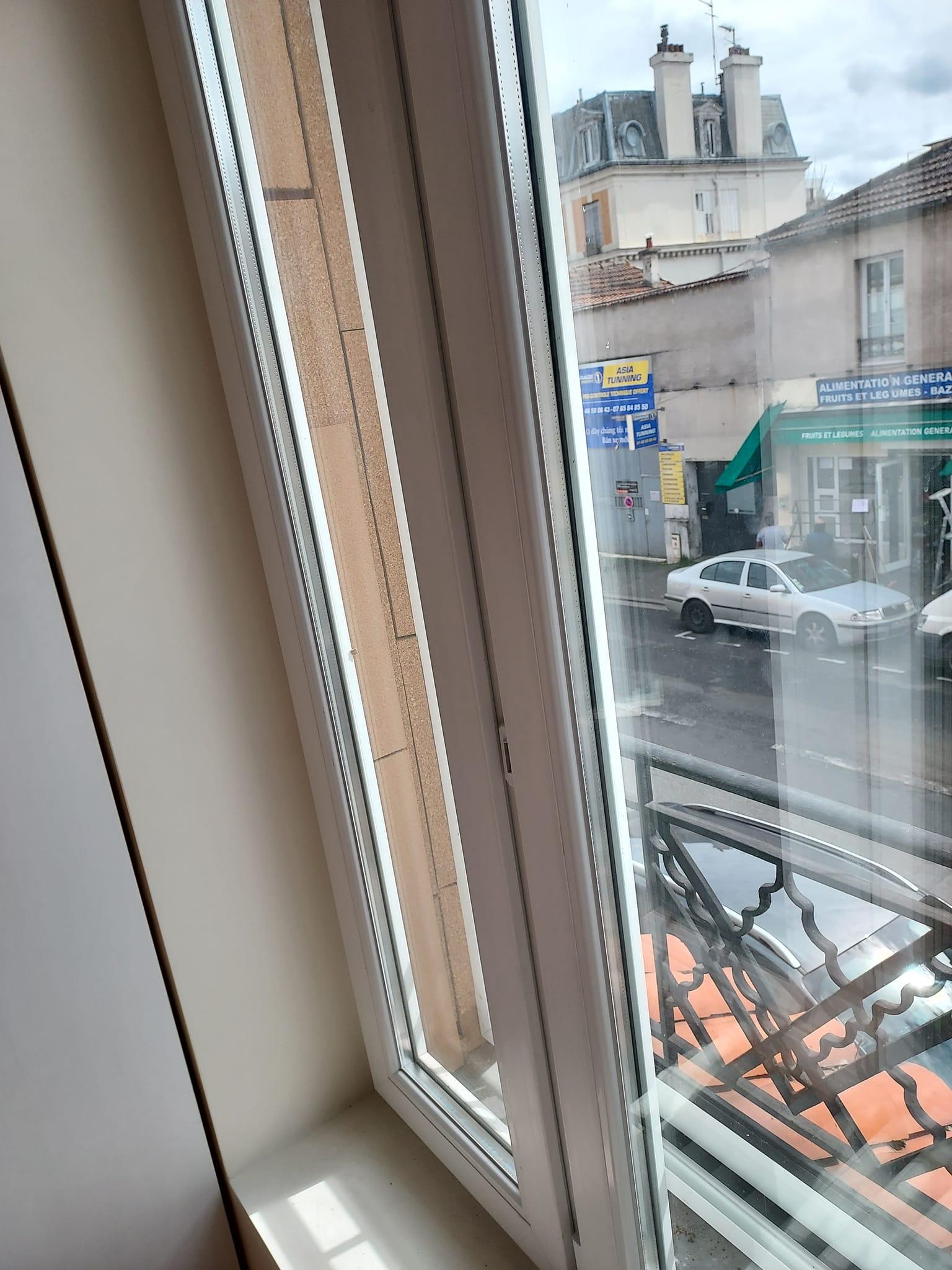
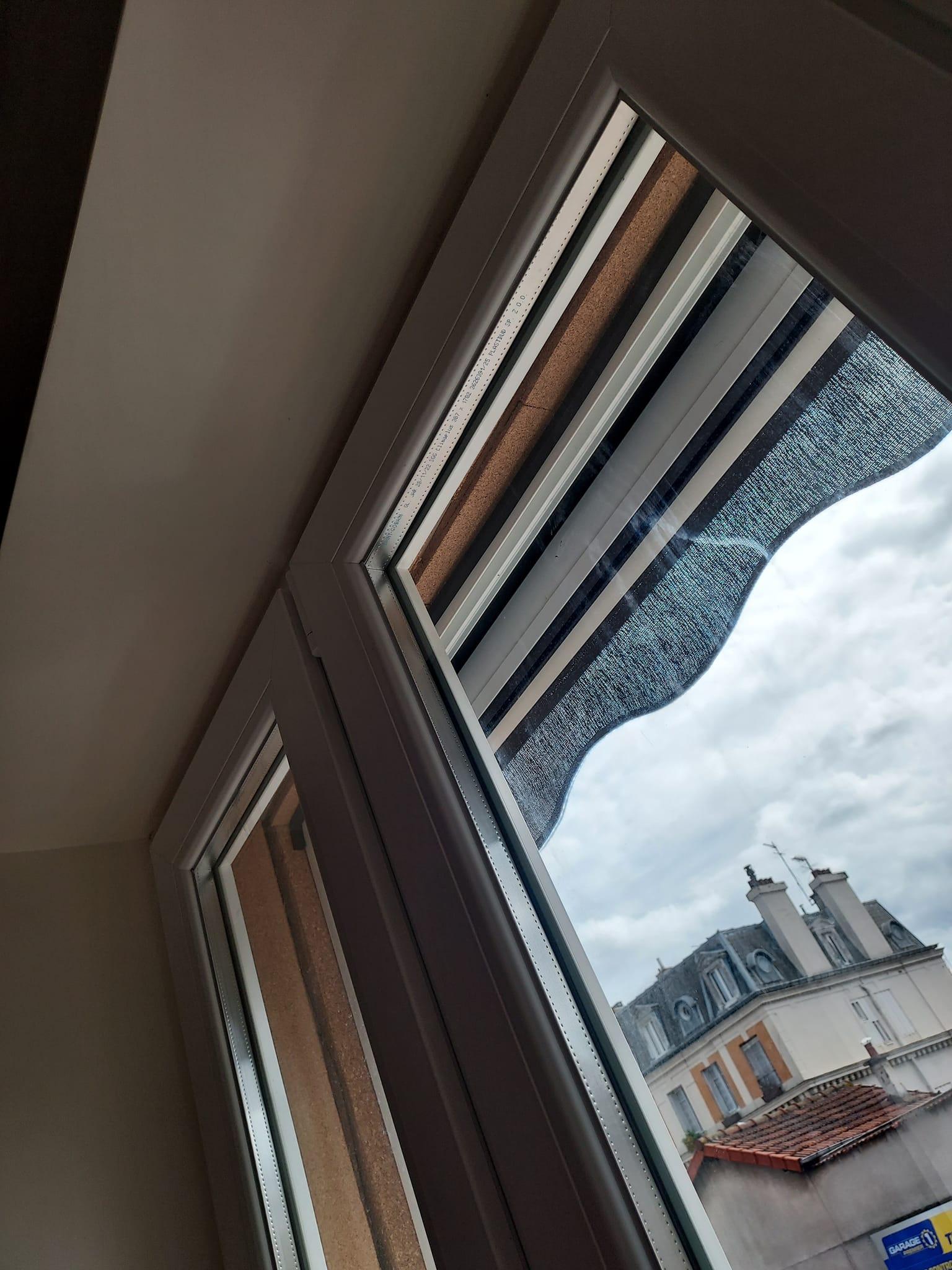
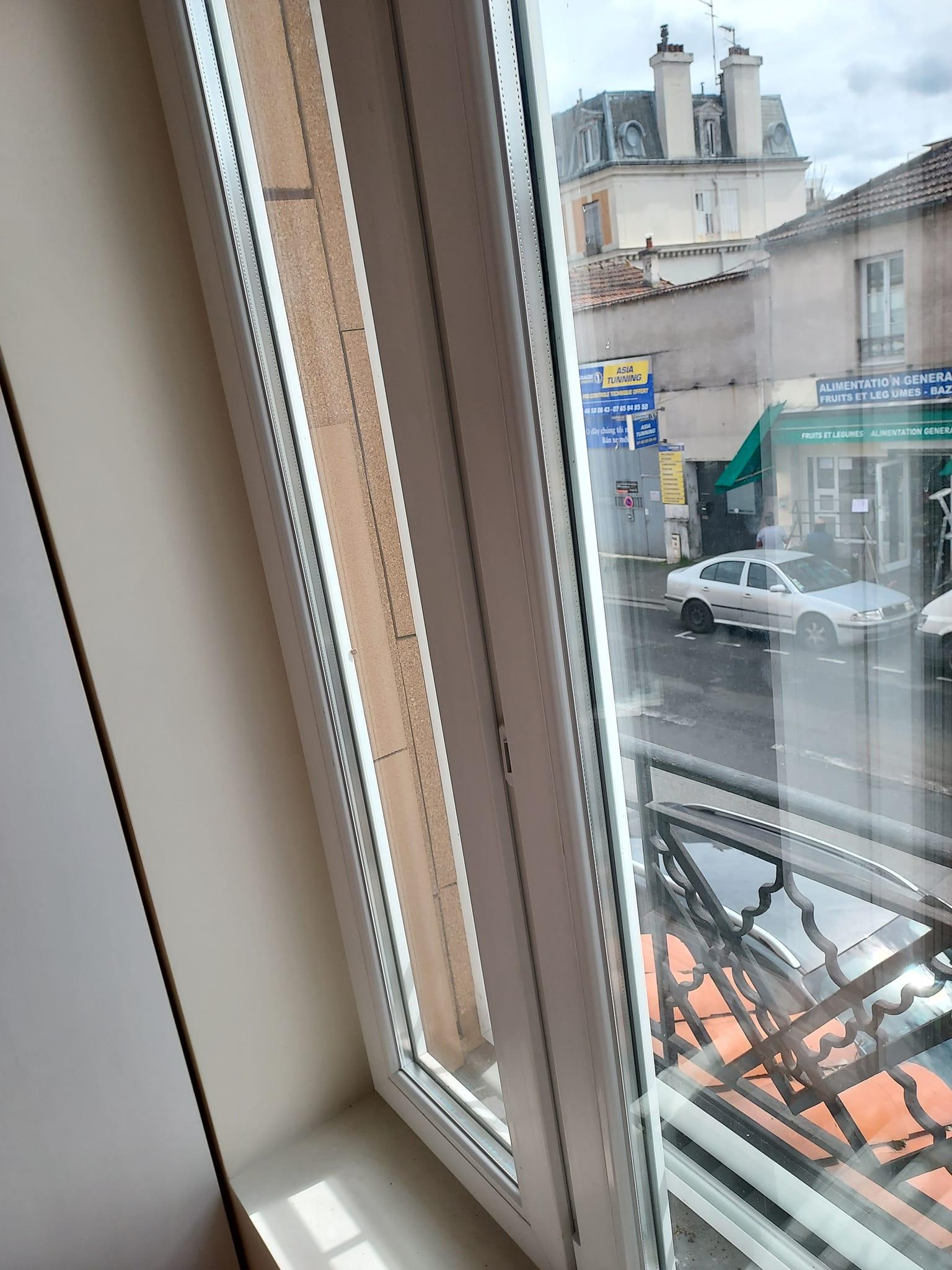
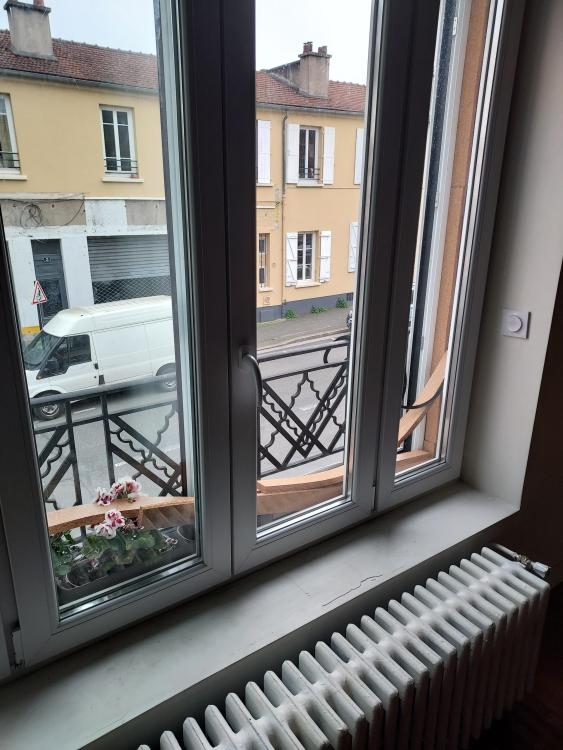
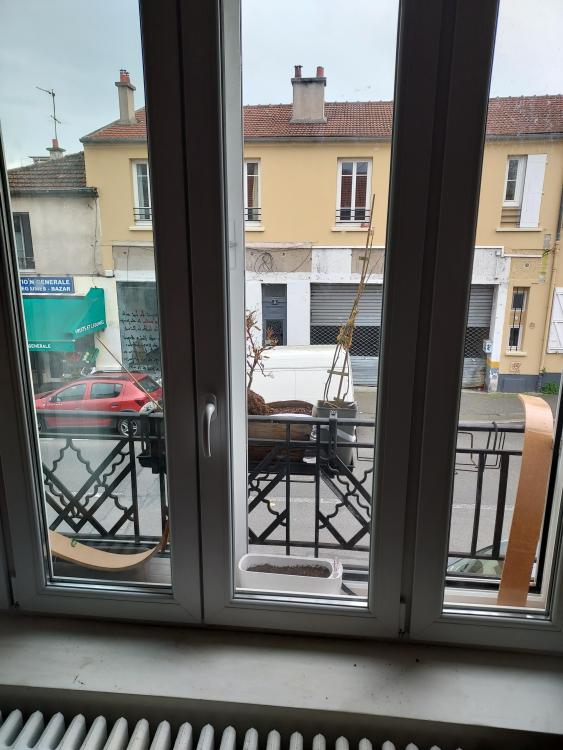
The cork I glued to the sides of the space between my windows mostly fell of while I was away. What is the best glue for attaching cork to brick and other masonry? Or is gluing the wrong approach?
-
Does ASHP work for older people on blood thinners?
Garald replied to CalvinHobbes's topic in Air Source Heat Pumps (ASHP)
Two options: - Get a two-zone ASHP, with the granny annexe being one zone, - Get an ASHP - and put a small electric radiator in the room (the least powerful you can find) for those times times when she wants an extra couple of degrees, fast. For all that I know, a towel-warmer may do. -
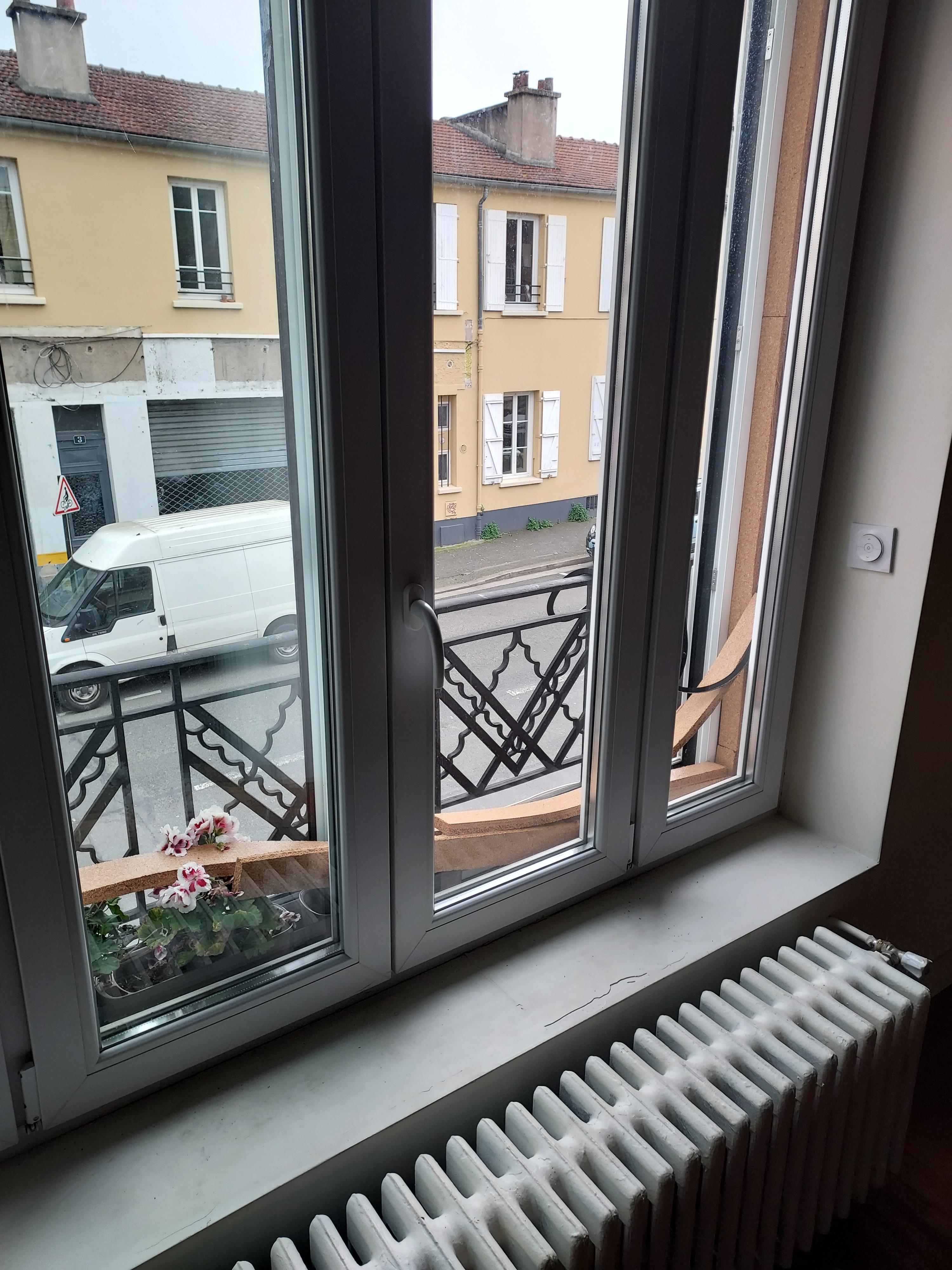
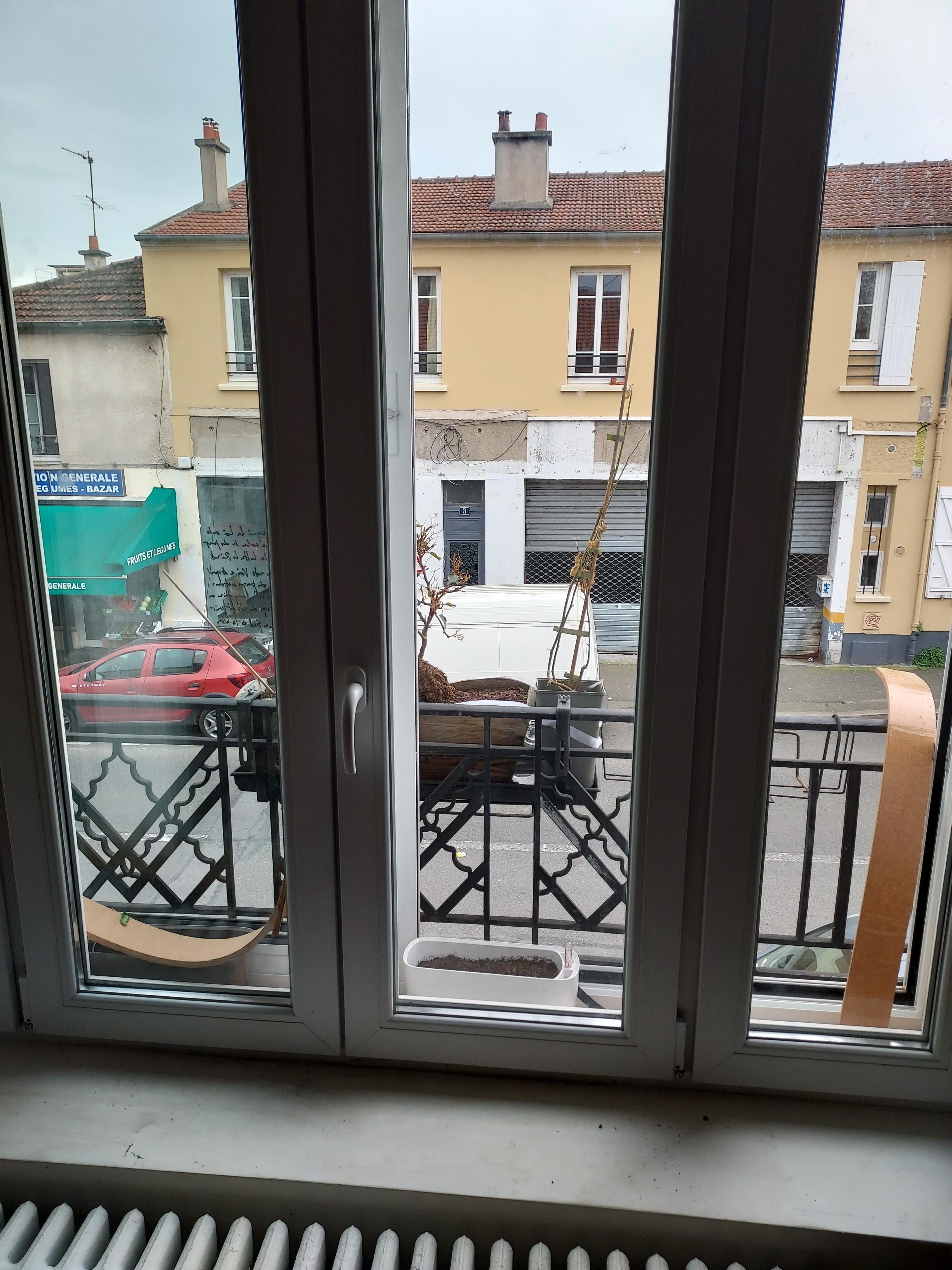
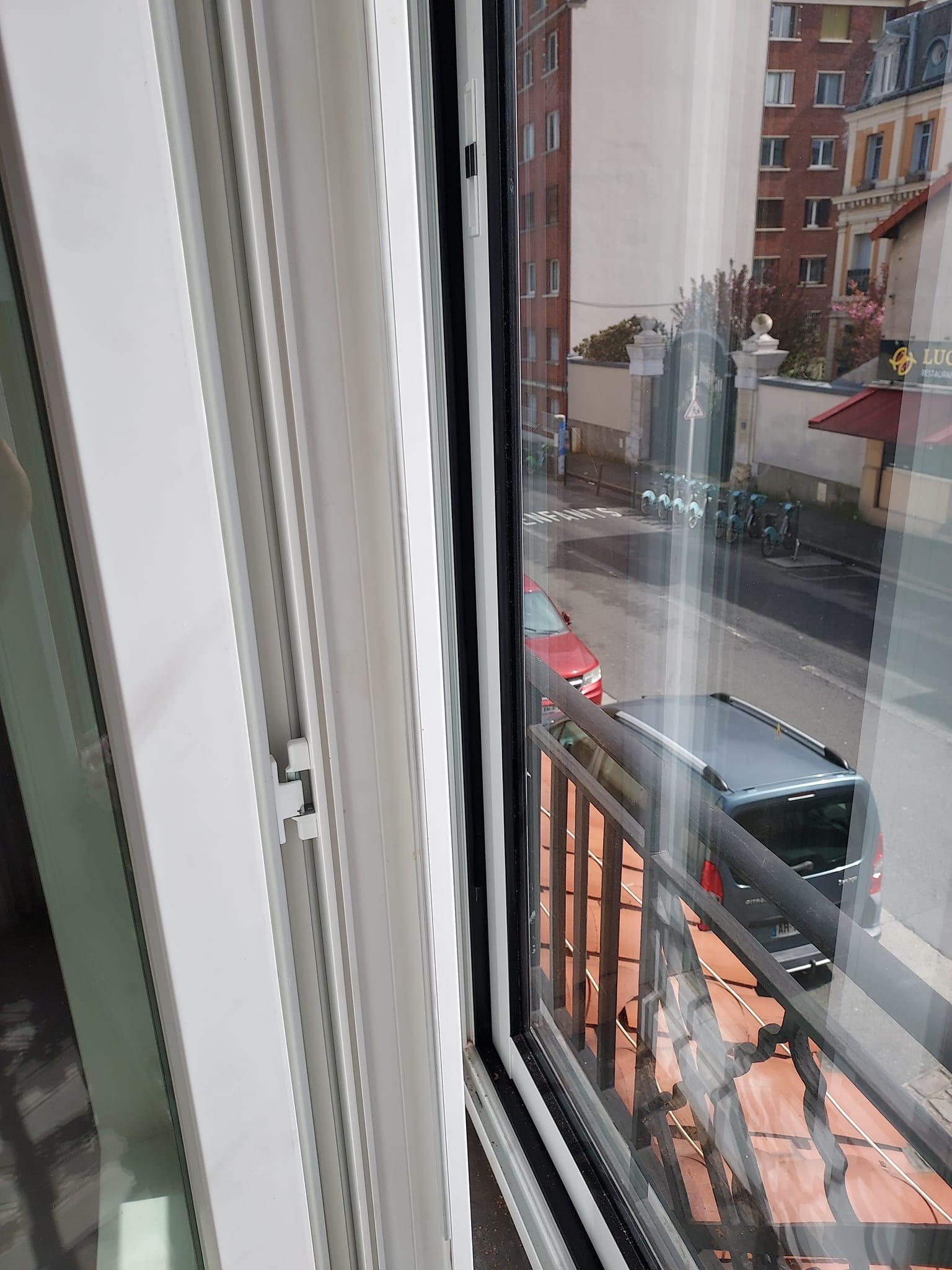
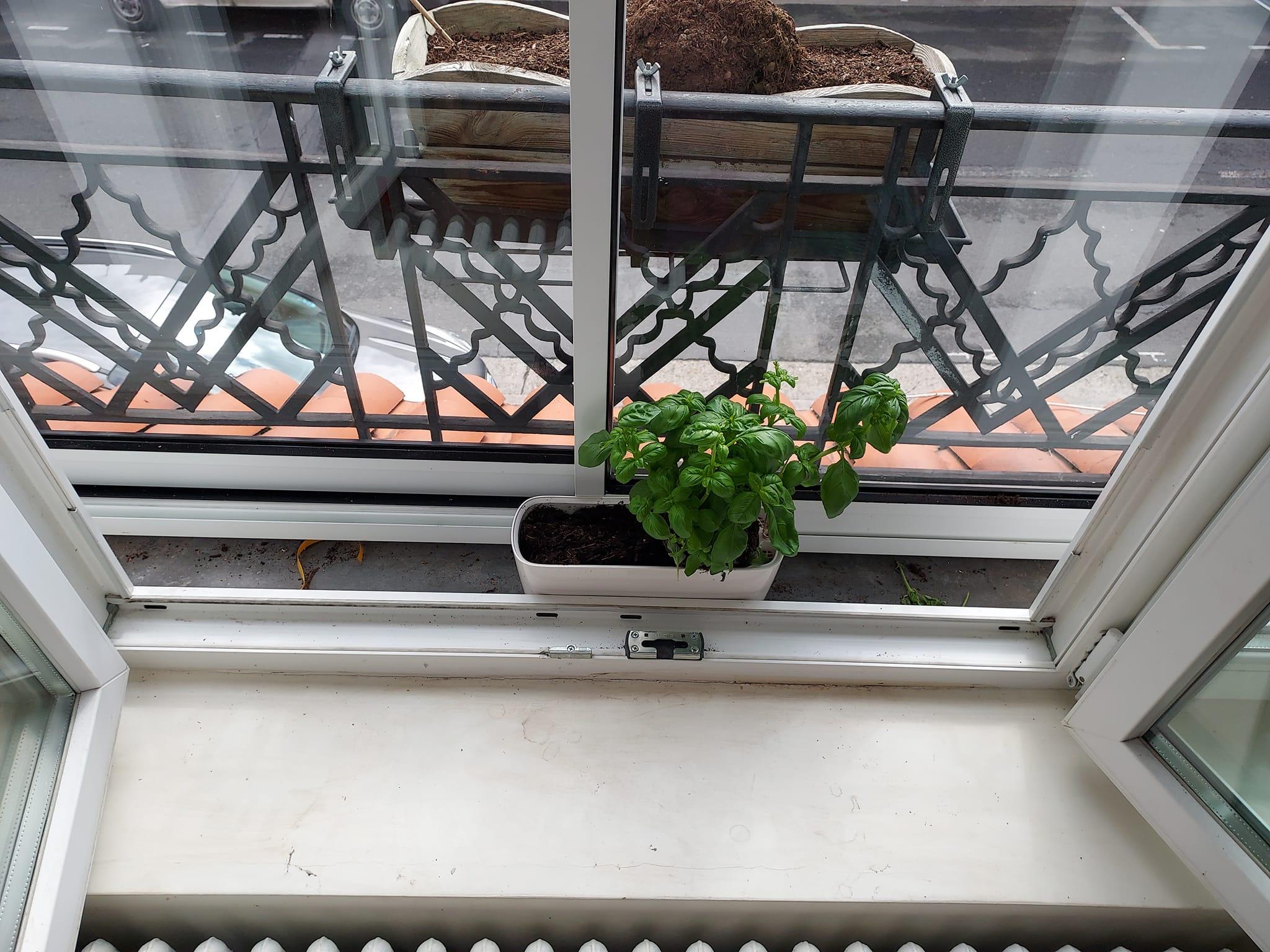
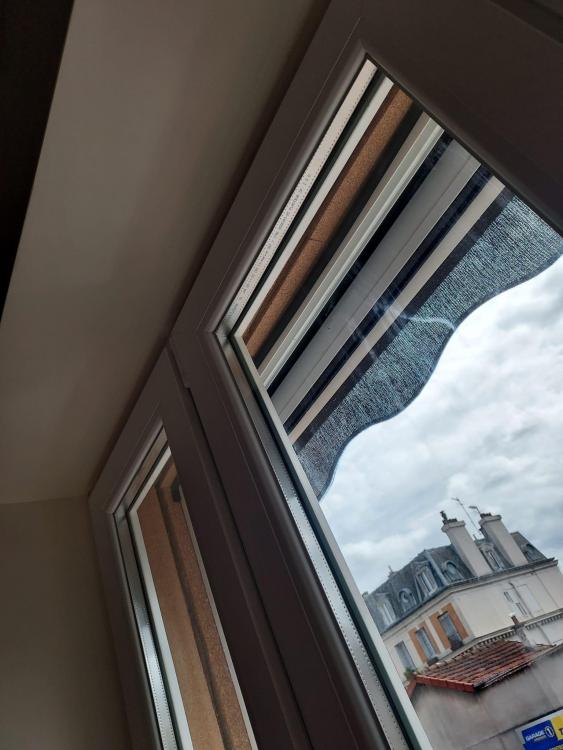
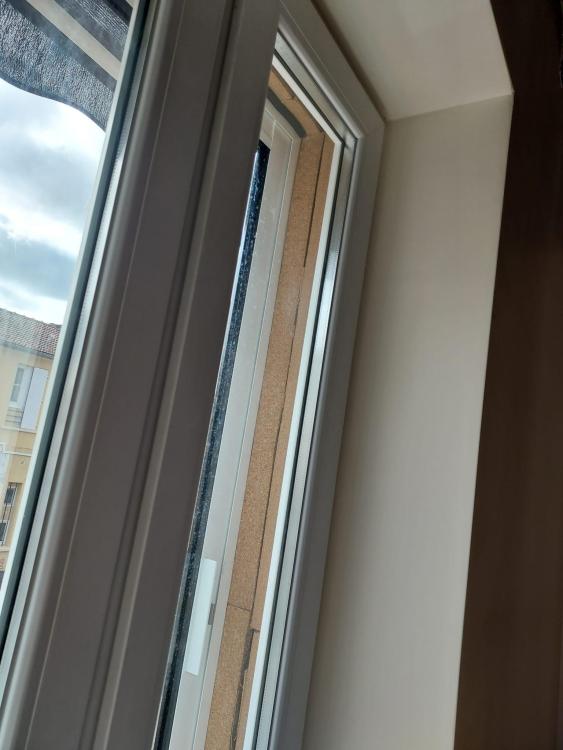
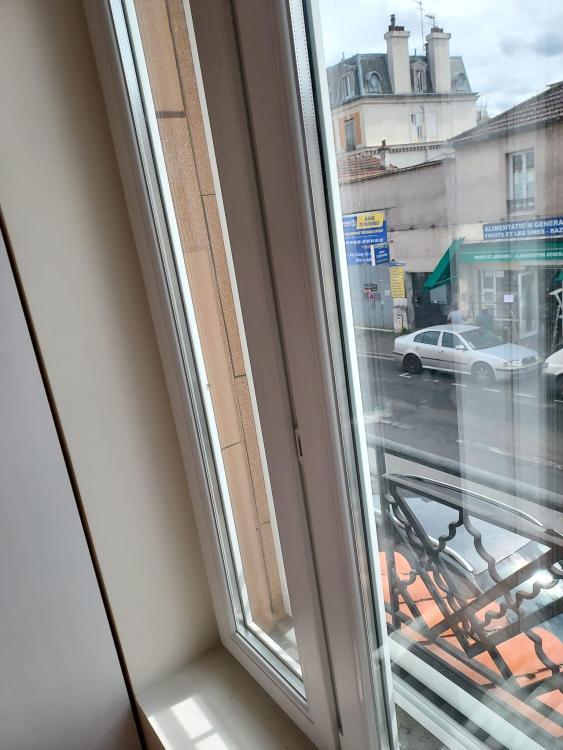
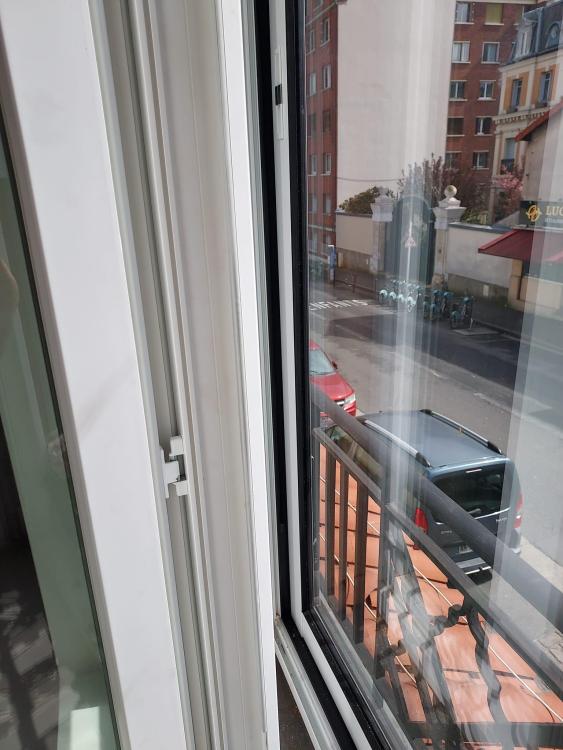
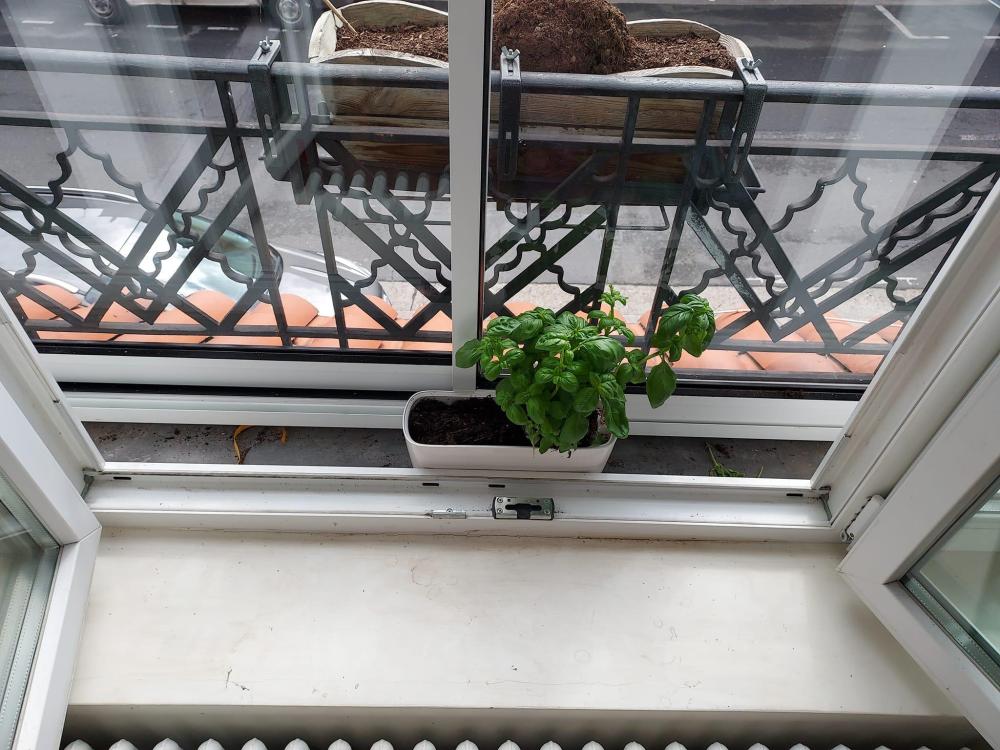
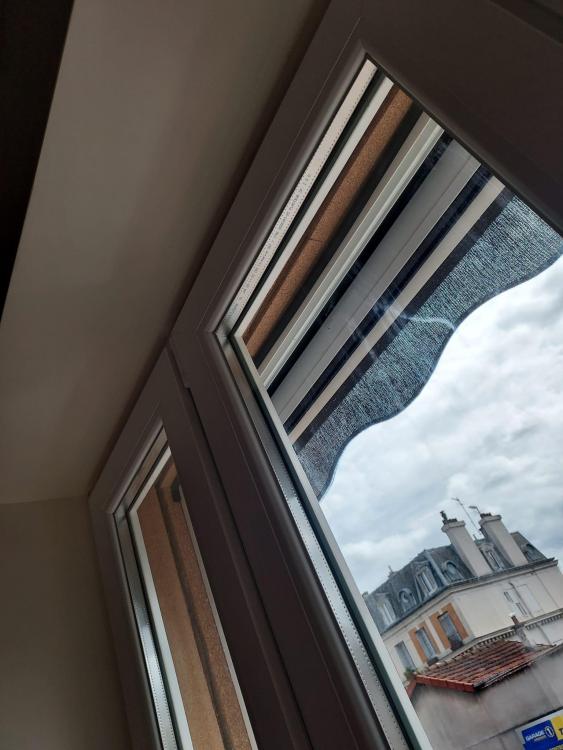
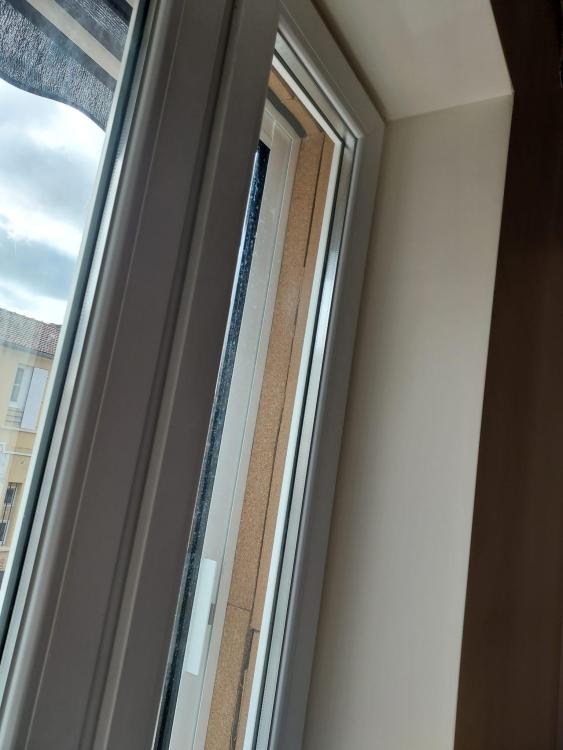
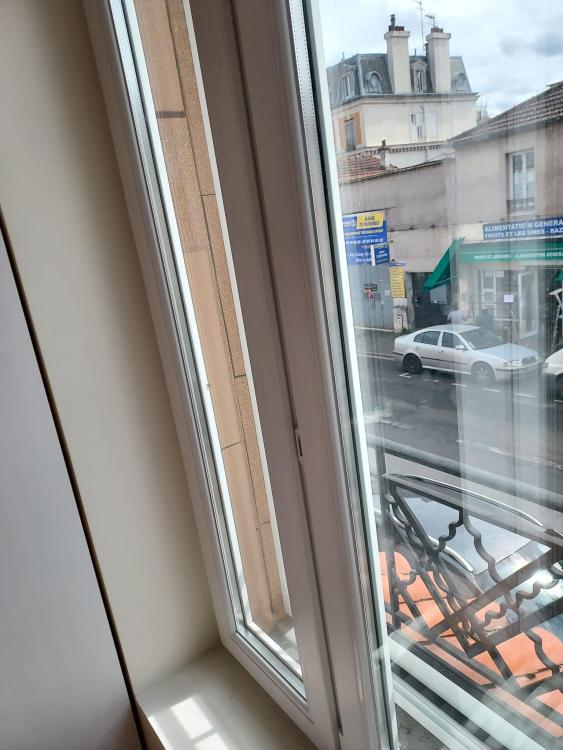
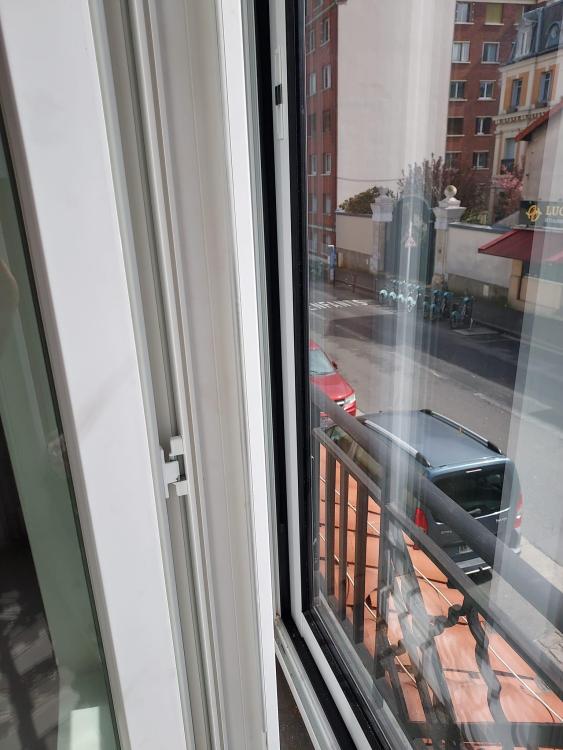
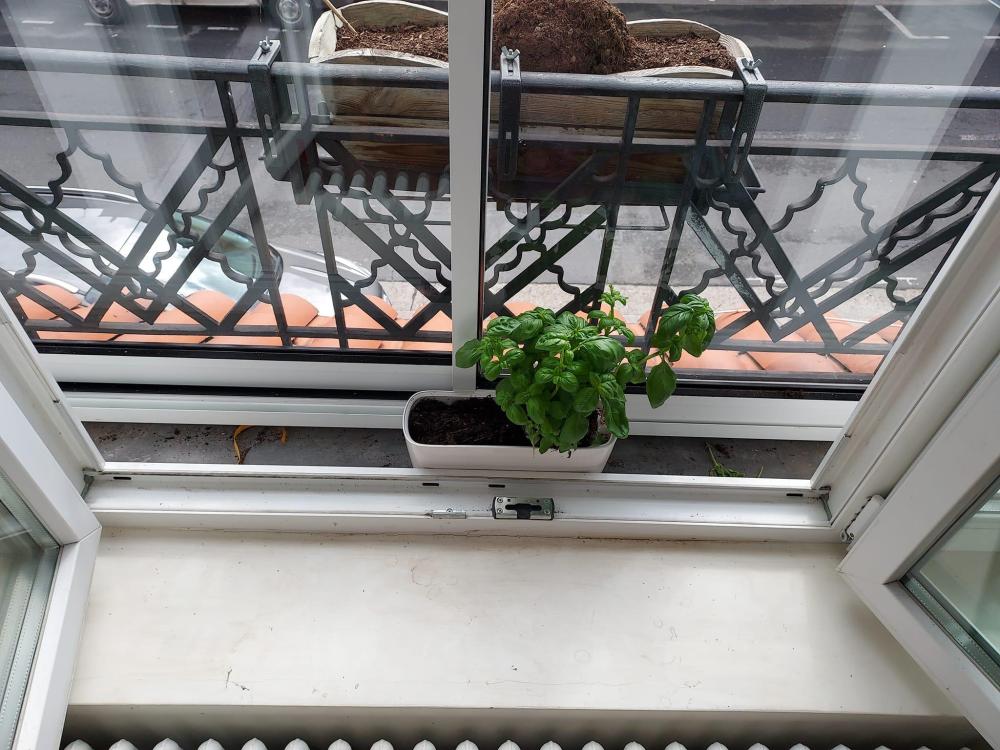
As some of you know, I was a little unhappy with my library windows - yes, they were rated at 40-45dB (with 40dB being a more realistic measurement of sound reduction for typical street noise) but these are first-floor 2mx2m windows overlooking a sometimes busy two-way street. So, I had a second set of windows installed at about 15cm from the existing windows - single-pane heavy safety glass (high-transparency of course). They are rated at 36-38dB, though again the frame takes some off that. I had calculated the resonance frequency of the resulting system would be 340/(2*pi))*sqrt((1.22/0.15)*(1/45+1/35)) = about 32.5Hz. The result was good but not extraordinary: I knew I'd always be able to hear a bass rumble, but I could still hear passing motorcycles. The problem did not seem to be coupling (both window-frames are attached to the masonry by tick-tacky) but rather (I conjectured) the edges of the frame. So, I stuck some cork in it, and also applied some weatherstripping. Then I added more cork to the sides (2cm thickness), for absorption, making sure the cork planks would not or would barely touch (to avoid introducing coupling). I'm pretty happy now. It's not perfect, but one can now hear motorcycles more clearly from the *other* side of the house (which faces a courtyard). And now I've got my own mini-greenhouse! The basil plant is happy. We shall see how the bougainvilleas do. Things I can still do: - cover the bottom with cork (but then I would need to waterproof it, since I'm putting plants there; what is good for waterproofing cork?) - put nicer-looking 1cm cork on top, leaving less or no spacing (you can see this in one of the pictures), - weatherstrip the sides and bottoms (easy, but after the first two steps) Do any of the measures here strike you as pointless or counterproductive? For instance - am I introducing coupling after all?
-
I can now, in an incomplete and unreliable way, but not for the period before I signed up for that service!
-
Semi-smart maybe? I'm paying a bit extra for it to be as smart as possible (after the January surprise) - for the period before that, daily data seems accessible for some days and not others.
-
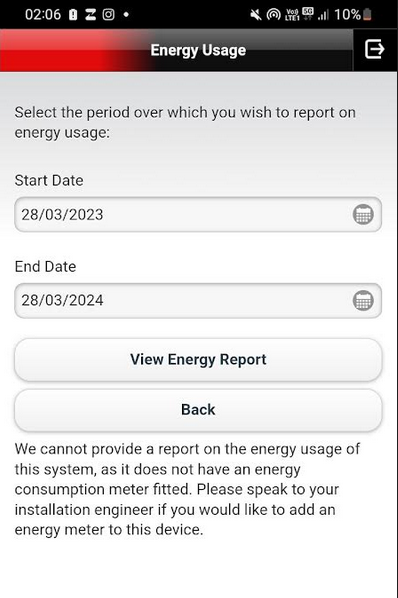
Most of a small house: 120m^2 loi Carrez (i.e. not counting most of the attic, staircases, bike garage), 180m^2 total. Just got a pretty good interior insulation done (went ftom energy class F to energy class B, by French standards) with 15cm BioFib Trio on some walls and a combination of 5cm BioFib Trio with reflective insulation (with synthetic conventional-insulation backing) on the others. Elsewhere on this site, you can find the pictures I took with a thermal camera. The heat pump was installed a year ago, begore I moved in. No other electric heating. No electric car. No rooftop snow. This is Paris-area weather, i.e., southern English weather except that the six-month autumn is slightly less miserable and the summer can include a couple of weeks of serious heat wave. Sure, and also that I made the mistake of setting the operating temperature at 45C rather than let the heat-pump choose. (I wanted to test that 45C would be rnough; of course it was.) The problem is really the difference between total energy consumption and heat-pump consumption in January. I had the wifi controller installed in the heat pump a couple of weeks ago, so I don't have day-by-day heat-pump statistics before then. The January data from the energy provided is marked as provisional and estimated, and does *not* add up to 1783 (which is *not* marked as provisional). I wonder whether the energy company thought I would use as much energy as last year in January (workmen with tools and electric heaters in a construction site) and will send me a fat refund check in a while? One can always hope... March is shaping up to be slightly over 500kWh in total. Still a tad more than one might wish for, but nothing suspicious.
-
My consumption in August and September was 233kWh and 216kWh. No doubt one can do better, but that's my baseline. (Or rather, my baseline is at most that: my parents were visiting.)
-
Sure - that was yesterday. I'm on a conference trip, returning tonight.
-
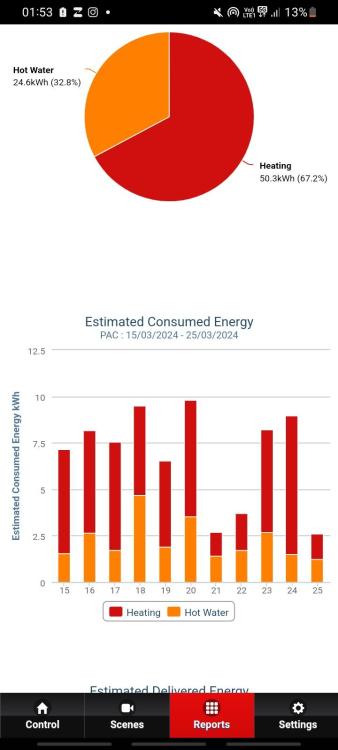
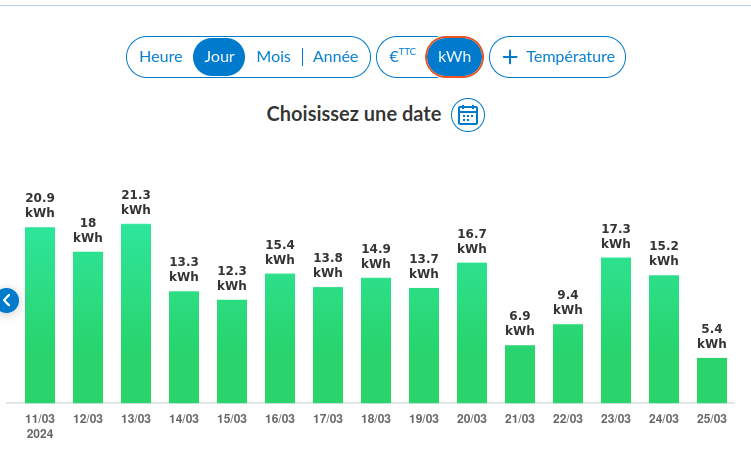
The problem is not so much the excess right now (2.5kWh to 5 kWh is not a huge lot for someone with an old, malfunctioning fridge (will replace), as well as a VMC fan I didn't ask for that is always on and that I'm thinking of having uninstalled) as the fact that the excess is much larger when heat-pump consumption is really high. I don't have day-by-day resolution for the most striking period (I had wifi installed on the heat-pump just a couple of weeks ago) but here is some monthly data. Heat pump (according to itself): energy consumed energy produced December 583 kWh 2122 kWh January 883 kWh 2698 kWh Yes, the settings were suboptimal (45C fixed temperature) and the COP improved in February, after I let the heat-pump choose its own temperature (of course temperatures also became milder). That's not the point, however. The point: (data from the energy company) total energy consumed December 709kWh January 1783kWh February 871hWh You can see the issue: non-heat-pump consumption was reasonable in December (709-583 = 126 kWh, i.e., about 4kWh per day) but non-heat-pump consumption was absolutely nasty (and very expensive to me): 1783-883 = 900 kWh, i.e., about 30kWh per day. So, in January, either (a) the heat-pump was lying and lies about its energy consumption, (b) some problem in the electrical installation leads to some sort of huge energy sink at times, perhaps especially when the heat-pump is particularly hungry (c) the malfunctioning fridge is guilty (but what kind of fridge, even an old, large fridge, could ever use that much energy? Is that even the right order of magnitude? What is more, I defrosted it at the end of November, not in January) (d) the clowns from the electricity-delivery monopoly who came in early January to change the maximal voltage from 6kW to 12kW messed something up temporarily that caused a huge January energy bill (no idea what that would have been) (e) some other possibility? My January bill was 516 eur; that's not funny.
-
It is coming on (I notice: the shower is pleasantly hot on those days), once every two weeks. No, I have set up DHW to go on auto, not on direct heat all the time. What makes you say otherwise?
-
Because I thought I had done so (from the wifi controller and the controller on the heat-pump itself, by switching to 'travel' mode) but I really succeeded in doing so only from the MelCloud app, after noticing what you just noticed!
-
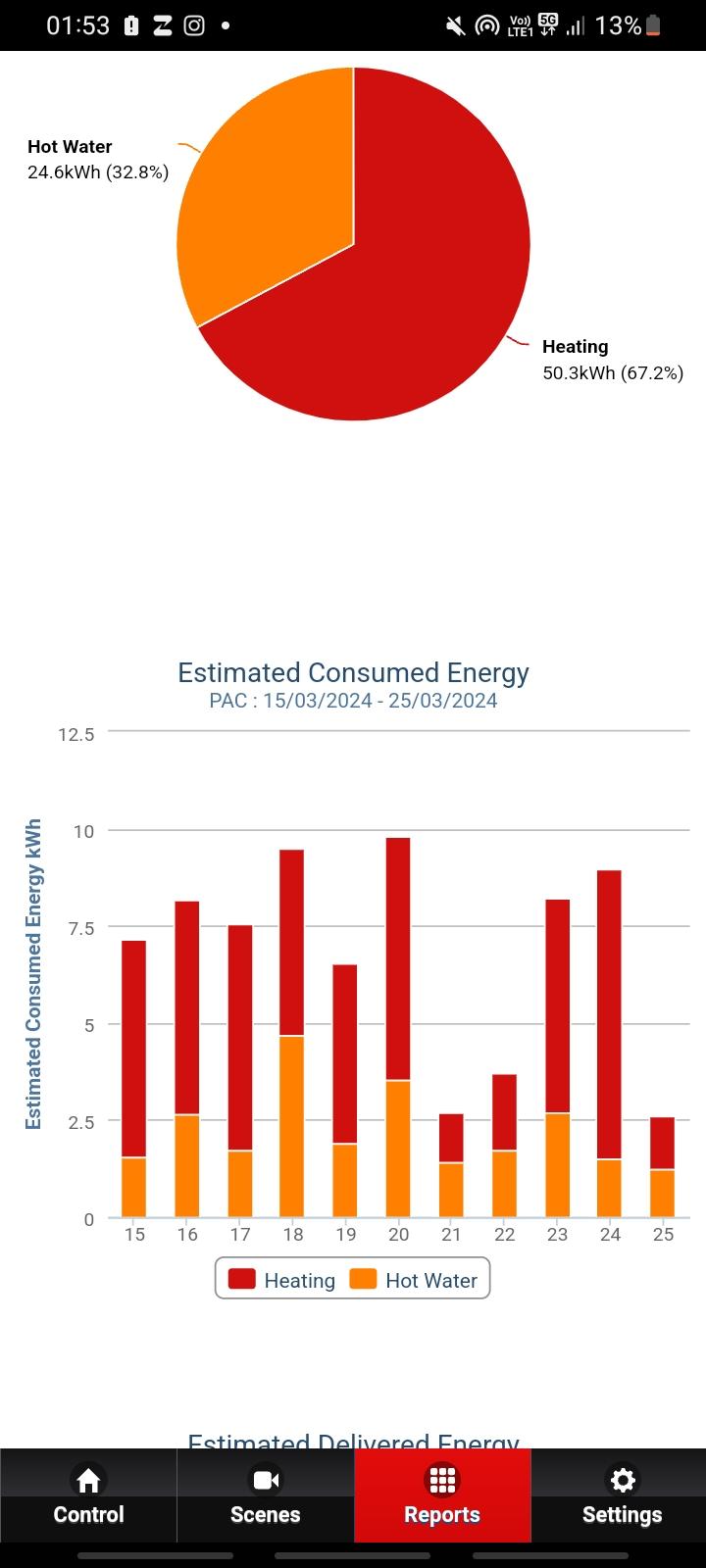
I am spending much more on electricity that I had expected. The heat pump (which should be the main consumer of electricity) is operating at reasonable temperatures - and it claims a good COP and reasonable consumption. However, notice how closely total energy usage tracks the energy the heat pump claims it is consuming - except that it's off by a factor of about 2. The world according to the heat pump: The world according to the energy company: I have been away at a conference since the 24th; all lights (which are LED anyhow) are turned off. What is going on here? Possible hypothesis: - Some device (other than the heat pump) in the house is misbehaving grossly. Argument against: why would total energy usage mimic heat pump usage? I'll get a new fridge (the current has been having issues) but I doubt that's it. - The energy company is lying. Somewhat unlikely, one would hope. - The heat-pump applying to me about how much energy; for whatever reason, it has a terrible COP, and it lies about it. I would hope that's also not the case. Could it be the case? Notice how the heat pump's statistics are only 'estimated': OTOH the figures for January and February obtainable in the machine itself (as opposed to the app) the ratio between power allegedly consumed by the heat pump and the total amount consumed in the house was similar. - Maybe there's some sort of faulty wiring that makes me spend 2kWh for every 1kWh used by the heat-pump. How would this work? Any more possibilities? How do I test these hypotheses?
-
Of course I also put seal around the edges. Well, it is one way to deal with an outside metal door that was either uninsulated or very poorly insulated. Is there really another way, given that the door couldn't be opened (it was soldered together)? 3cm-thick cork means R=0.75. A new, properly insulated security door would have cost around 4000 eur, or so the locksmith tells me (one can find somewhat lower values at https://www.m-habitat.fr/portes/prix-porte/prix-d-une-porte-les-tarifs-selon-le-type-1629_A) - and the R value would not necessarily be higher; any door with an U lower than 1.7 counts as insulated over here, and 0.75 is clearly greater than 1/1.7 = 0.588... I'm putting a home-made thermal curtain (lots of Climashield apex inside a William Morris curtain, with reflective insulation between the laters) on top - but the stuffing keeps sliding down; I'll need to take the curtain to a retoucheur.
-
- 3
-

-

-
I think I'll just leave it where it is now - a heated corridor. The library (where it was, and where I am now) has southern exposure and gets lots of direct light. It also has (as I said) relatively oversized radiators, and it will take me a little while to get the balance just right.
-
Right, it's on auto adaptive mode - and I turned the flow on the radiators in the room it used to be in quite a lot a few days ago (before, that room was usually too warm and other rooms too cold; I knew all along that the radiators there were more oversized than elsewhere - I had done the computations). So, it might be getting a bit confused. When I moved the thermostat earlier today from one room to another, the flow temperature shot up from 35 to 55. Bad heat pump! Bad heat pump! I hope it doesn't do that again. Of course the heat pump turned itself off shortly after that - temperatures had risen. Temperatures are mild here by now (today, they oscillated around 12 or 13C). The heat-pump is a bit oversized - all installers insisted, and the model (Mitsubishi Ecodan) is supposed to be able to adapt nicely (and it seems to: the fan often, indeed mostly, operates at noticeably less than full power). At the same time that the flow temperature shot up, the tank temperature plummeted, and then shot up again - I take that's an effect rather than a cause?
-
Update: got the Wifi adapter installed yesterday. For some reason, when the heat-pump turned itself on during the night, the flow temperature climbed during two hours from 25C to 40C (with the return temperature being about 4C less) and then after an hour it turned itself off (unsurprisingly, since 40C is a lot for my size of radiators and the current weather). The outside temperature barely dipped from 12C to barely below 10C. Now, the way I had set up the heat curve, I was meaning for the flow temperature to be about 25C when it's 10C outside. 1. Is the heat pump taking the heat curve as a starting point, or is it just ignoring it? 2. I was keeping the thermostat in the warmest room (big, south-facing windows), where I have had to cut down the heat flow quite a lot. I take this may lead the system to underestimate how much running things at a given temperature heats the house? I imagine I should just set the Wifi controller in a more "average" room?
-
Like this? There's also an aerosol can, but it seems to come with warnings as to how it extinguishes all life on earth in the short to medium term. Oh wait, so does the tube above. Is there something less harmful?

-
I added 2cm-thick self-adhesive cork panels on the inside of a metal door (which was either uninsulated or poorly insulated; the owners before the previous owners installed it, and I haven't succeeded in prying it open to see what is inside). They are doing their job, and I am getting an additional, nicer-looking 1cm-thick on cork to put on top. The one caveat is that the cork is already becoming unstuck from the metal at certain places (no doubt because the fit is too tight, and so the cork gets pushed outwards when one closes the door; I just cut it a little). What kind of glue would be best for pasting cork to metal? What kind of glue is best for pasting cork to cork?
-
Update: I turned the radiators in the (south-facing) library down to almost 0, and yes, now things are much better: no room is warmer than 21 (the library is at 21; it's still the warmest room) and no room is colder than 18.5. (I also insulated a cold metal door in the downstairs studio using a 2cm-thick layer of cork.)
-
Run your own heating loss calculations; multiply by a safety factor. (I chose 2.)
-
Speaking of which - yes, I have fire alarms, but shouldn't I get some fire extinguishers? Of what type? Since I don't have gas, I imagine the only real risk is electrical (and the electrical panel for the entire house is in the AirBnB, don't ask me why). Does that mean I should get a small CO2 extinguisher for the AirBnB, and perhaps the same plus some other extinguisher for the rest of the house? What about small all-in-1 fire extinguishers such as https://tinyurl.com/ms2fnww7 or https://tinyurl.com/2cshfr2c - are they nonsense?
-
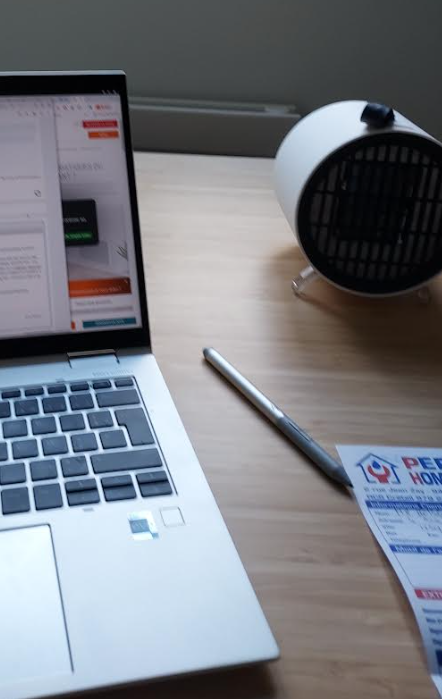
Updates: 1. Got the 500W heater (13eur+3 eur for 12-hour shipping) from Amazon. Yes, it works very nicely in this space: from 17.5C to 20C in an hour - I doubt anybody would be unsatisfied. Bit noisy, since it has a fan. 2. An impolite electrician came (I was computing 750W/220V = about 3.5 amperes (OK, 3.4 amperes), thinking aloud, and he said "sir, I do not know who has told you that, the power in electrical lines is 16 amperes" and I had to tell him in the most polite of ways that, since 3.5<16, that confirmed what he said: the radiator would be fine - one can plug it into a socket; I did not even venture the idea of converting the lighting socket that has been given here) and gave me a quote of 300eur for a radiateur rayonnant. He was extremely irritated by the suggestion that the difference in efficiency between that and a more expensive radiateur à inertie would be minor (indeed non-existent, if we are pedantic about what mean by "efficiency": it's always 0%, in that what we are doing is precisely converting energy into heat and nothing else - of course I didn't say that). A hopefully more polite and less stuck-up electrician should visit later today. I'm frankly tempted to keep the 500W heater. I'm just a little bit concerned that some problematic guest might fall asleep over it while exhaling alcoholic fumes, all while wearing a paper hat made out of Kleenex or something.
-
How many amperes do sockets usually provide? There's a lighting connection that is essentially useless, and near to where I would have to put the panel. If an electrician somehow approved of that option, I suppose I could do it - I wouldn't do it myself.
-
I suppose so, unless I soon find an article on growing better gum-trees by sacrificing kittens. Tell me more about how a crop-based approach is harmful? (I thought what one had to avoid was cutting down old forest that cannot regenerate?) Gumtrees are a crop, in effect, though their wood is essentially but a sub-product.
-
Just called the wood supplier. He said the wood comes from China, but that other than that and the technical sheet above, he doesn't know anything that we don't already know (namely, that it's what happens to gum trees once they become unproductive). Well, I suppose that, since gumtrees are not even a native species in Asia, we are talking about a commercial crop - the gumtrees were planted by somebody and will presumably be replanted some time after they are cut down. I guess I am good to go, conscience-wise?