


garrymartin
-
Posts
574 -
Joined
-
Last visited
-
Days Won
7
1 Follower

garrymartin's Achievements

Regular Member (4/5)
328
Reputation
-

Adapting furniture to become washstand
garrymartin replied to MortarThePoint's topic in Bathrooms, Ensuites & Wetrooms
It's not just water getting underneath; it's the temperature differential too. Just think about what happens to a mirror without a demister. Do you want that for your flat surface? -
You can get scraper bits for the SDS which would be much better for the job.
-
Critique my floorplan please
garrymartin replied to Square Feet's topic in New House & Self Build Design
I bet I'm not the only one that thought of Windows XP 😉🤣
-
National Grid Installation. Is this work acceptable?
garrymartin replied to jimseng's topic in Power Circuits
I think it's just a badly written 2 - looks to be 0.23Ω to me? -
National Grid Installation. Is this work acceptable?
garrymartin replied to jimseng's topic in Power Circuits
It is - there is at least one screw visible. If you mean why is it not flat on the backboard, that is how they are installed nowadays. The bottom third of the cabinet is for the provider, and because of the way the cable comes in, you can't then fix flat on the back. If you look, you can see that the plastic back is angled to allow this. -
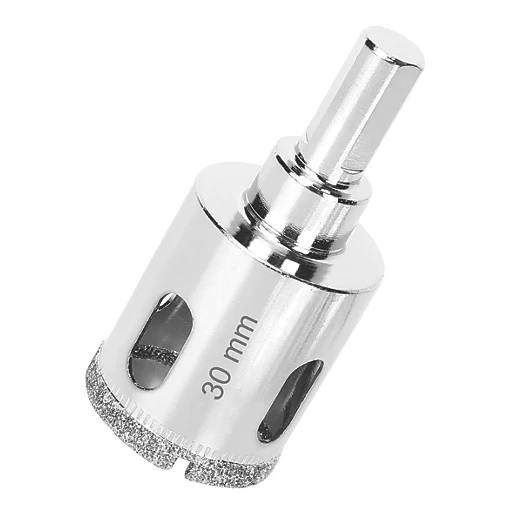
I get that, but what's your alternative? It's difficult to see how much leeway you may have and how embedded the fitting is, because the focus is on the rule rather than the fitting. What's going over the top to conceal it? Does that give you enough coverage to enlarge the hole slightly? Could you get a diamond holesaw over the top of the existing fitting to clear a little tile and adhesive/grout? You'd possibly need a template/guide to keep it from moving around, but it might be the best option to give you some play if it really is solid. Cut a hole in a spare tile. Stick that to the wall with something temporary (silicone?) to give you a guide?
-
Reverse a clamp head and use it as a spreader between the two? Couple of pieces of softwood against the threads to protect them? You may need to pick away at any visible adhesive and/or grout if they are really bedded in, but strange if they are.
-
If that's how you're doing it, S1 is the minimum if you want to use the same for everything. For the shower tray, you may want to use a flexible hybrid adhesive/sealant like CT1.
-
Interesting that they are both marketed as "flexible" as one is definitely more flexible than the other! C - Cementitious adhesive D - Dispersion adhesive (ready-mixed) R - Reaction resin adhesive (epoxy) 1 or 2 - Standard or improved performance E - Extended open time F - Fast setting T - Reduced slip (non-sag) S1 / S2 - Deformable / highly deformable "S1: Deformable/flexible adhesive capable of transverse deformation between 2.5 mm and 5 mm without cracking the bond. (Note: When written as C2TE S1, the product actually combines all of these properties into a single high-performance adhesive)." What are you fixing, and to what substrate?
-
Aco drain to take water away from dining room wall
garrymartin replied to AdamD's topic in Rainwater, Guttering & SuDS
Try something like https://www.simpleimageresizer.com/ to resize the images before uploading. -
Traditional Oak Framing or Modern Fixings
garrymartin replied to MortarThePoint's topic in General Joinery
Ah, you're making the entire frame, not trying to put vertical pieces into something that is already there. I misunderstood. In that case, definitely the bridle cut if your woodworking skills are up to it. -
Traditional Oak Framing or Modern Fixings
garrymartin replied to MortarThePoint's topic in General Joinery
If it's a pre-existing structure, will you have enough clearance to get the bridle cut post in place? -
The rules are very clear and well articulated. IKEA PAX wardrobes are most definitely furniture rather than building materials. https://www.gov.uk/guidance/vat-refunds-for-new-builds-if-youre-a-diy-housebuilder "You can also claim for basic wardrobes installed on their own with all the following characteristics. 1. The wardrobe encloses a space bordered by the walls, ceiling and floor. Units, for example, whose design includes an element to bridge over a bed or create a dressing table are furniture and cannot be claimed. 2. The side and back use 3 walls of the room (such as across the end of a wall), or 2 walls and a stub wall. A wardrobe installed in the corner of a room where one side is a closing end panel is furniture and cannot be claimed. 3. On opening the wardrobe, you should see the walls of the building. These would normally be either bare plaster or painted plaster. Wardrobes with internal panelling, typically as part of a modular or carcass system, are furniture and cannot be claimed. 4. The wardrobe should have no more than a single shelf running the full length of the wardrobe, a rail for hanging clothes and a closing door or doors. Wardrobes with internal divisions, drawers, shoe racks or other features are furniture and cannot be claimed."
-
Good timber cutting service required.
garrymartin replied to newbridgewolf's topic in General Construction Issues
Just check that one or both of the 47mm or 63mm are not nominal dimensions if you are asking for something to be cut/planed to your exact parameters. 47mm is usually a nominal dimension on C24 and would be more like 45mm "in real life", for example. If the existing rafters are 47mm or 63mm wide nominal, then you are probably looking at getting a 47mm x 200mm or 63mm x 100mm (or 150mm, or 200mm, etc.) C24 and ripping the boards down on a suitable table saw. Just call up any local C24 suppliers and ask if they are able to rip the boards to your dimensions. Plenty of suppliers and sawmills in Staffordshire depending on your exact location and whether you want delivery or are collecting. -
Exactly why the "gap" where our American-style fridge freezer goes is oversized. When I looked at all the different sizes from different manufacturers, and even different models from the same manufacturer, it was a nightmare. Something like a hob with those sort of tolerances in stone? No way.



