Ultima357
-
Posts
111 -
Joined
-
Last visited
2 Followers


Ultima357's Achievements

Regular Member (4/5)
42
Reputation
-
Heatmiser Neostat v2 temperature sensor problem
Ultima357 replied to Ultima357's topic in Underfloor Heating
You can calibrate the Neostat within the options menu to read the same. I used a reference calibrated thermometer to set mine up. -
Heatmiser Neostat v2 temperature sensor problem
Ultima357 replied to Ultima357's topic in Underfloor Heating
An answer from Heatmiser :- The thermostats use a rolling average with an artificial temperature limit of 0.1 degree rise(or fall ) every 10 seconds. if you power the device down the rolling average is lost and the device starts with an average value of 0 there are 16 readings taken each time so the average quickly rises, the process then continues until it reaches equilibrium. So its not surprising that you saw a lower temperature just after powering the device on. The headless device remain powered so didn't lose its rolling average when the system was powered down. There is a second temperature sensor in the middle of the powered unit that monitors the power supply temperature, predicts the effect on the room sensor and compensates in real time. Its not perfect but has been tested repeatedly in an environmental chamber whilst mounted on a plaster board frame with and without wall insulated behind the plaster board. The test results show that the measured temperature matches the chamber temperature within the specified +/- 1 degree or better. I've pointed out as I did originally, that it is a building regulations requirement for noise reduction insulation to be fitted in stud walls and suggested they retest with insulation. 🤔 -
Heatmiser Neostat v2 temperature sensor problem
Ultima357 replied to Ultima357's topic in Underfloor Heating
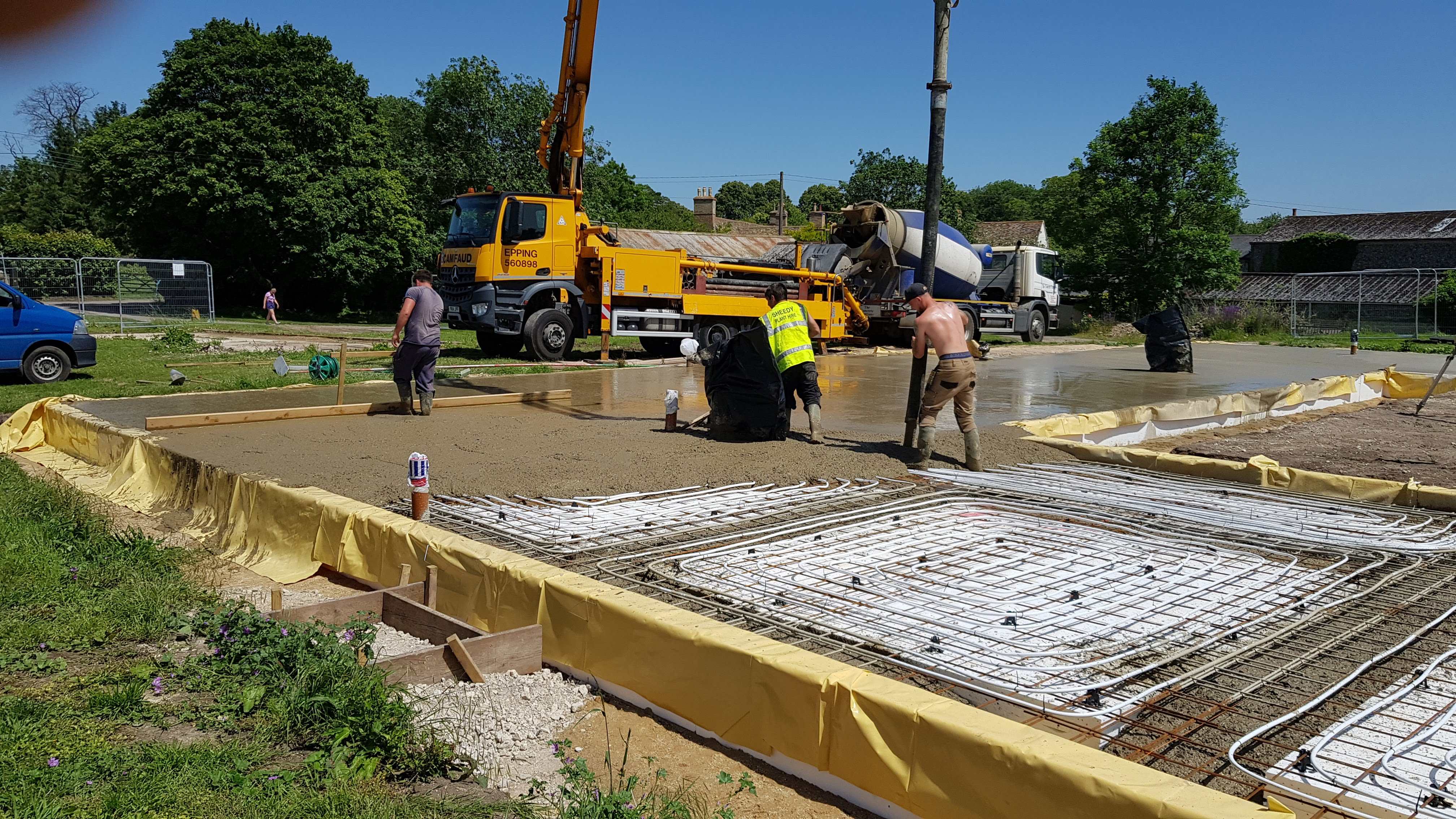
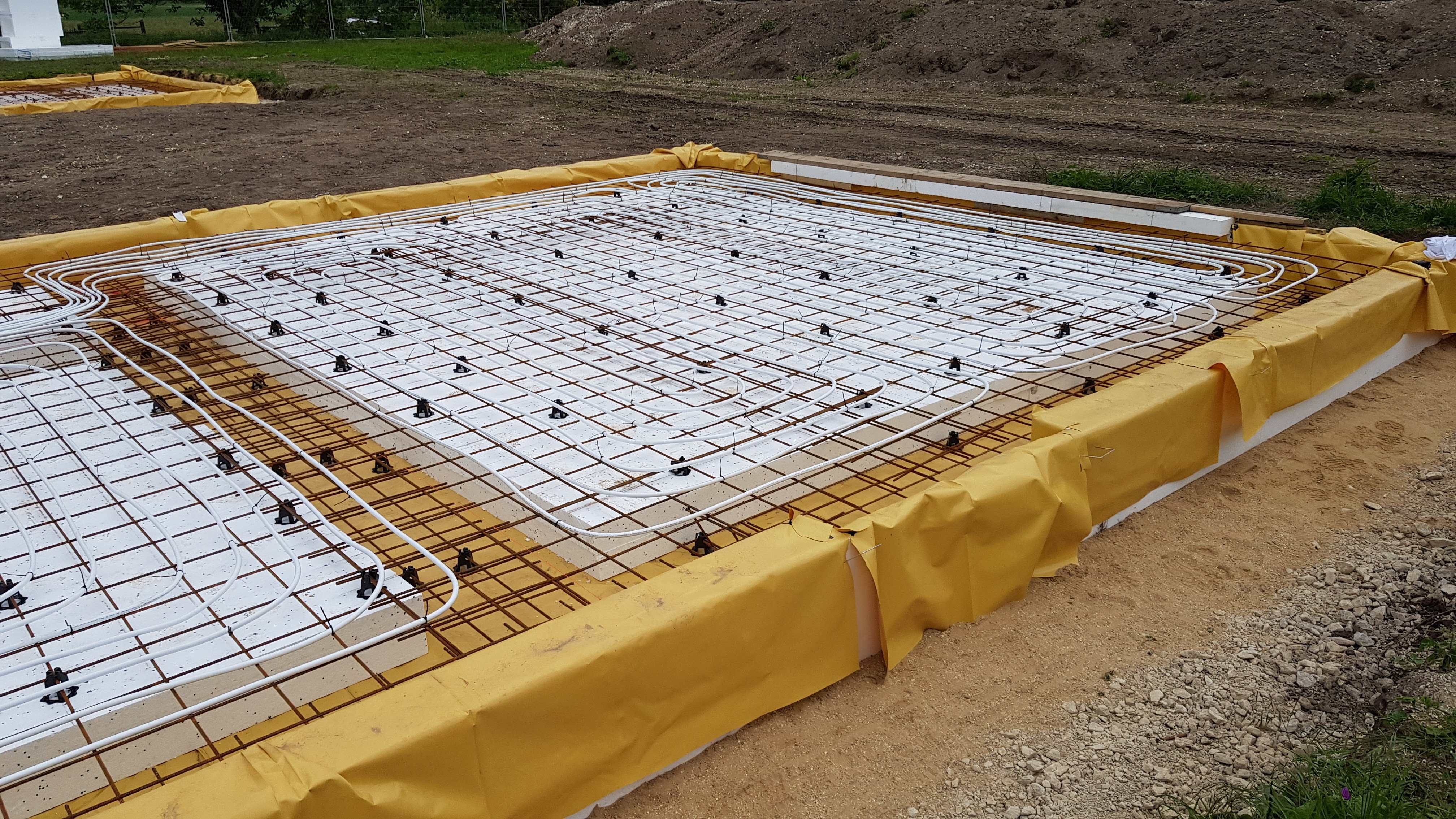
The thermostat senses the room temperature, operates the UFH zone valve to open/close the flow in that room. There are no sensors in the floor as it was impossible to cast them in the slab which was power floated to final finish on the day it was poured (yes, a long day, some 13hrs!) See photos.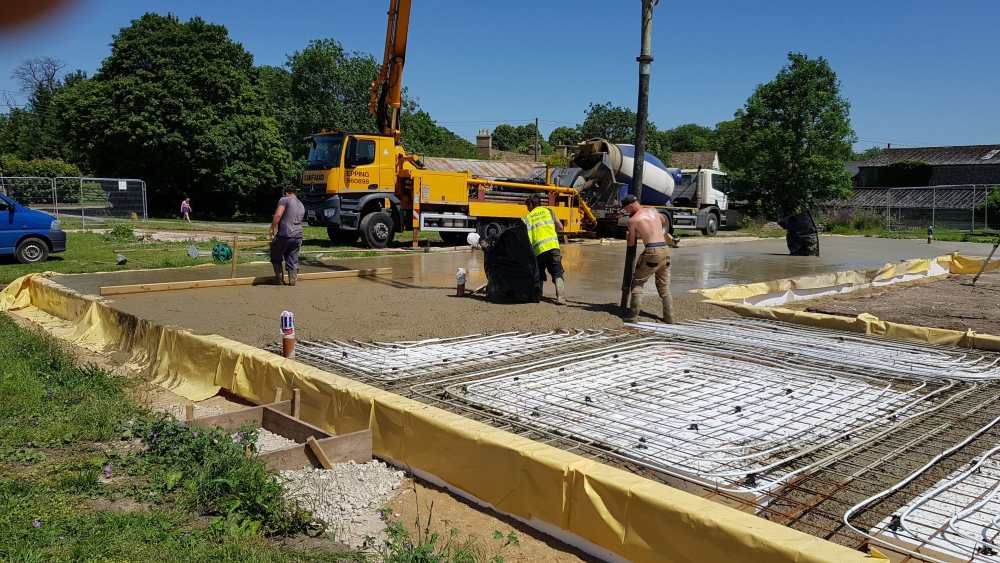
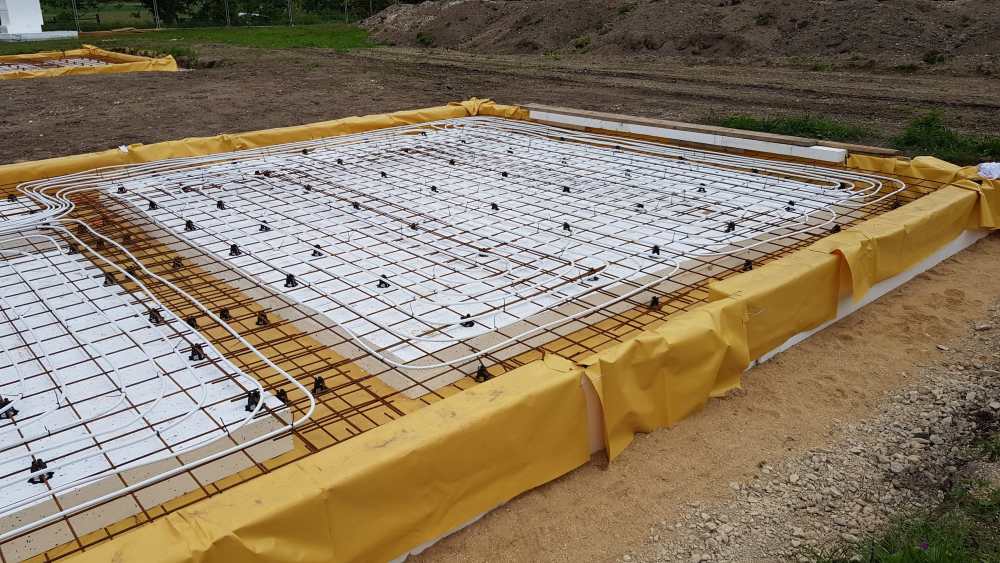
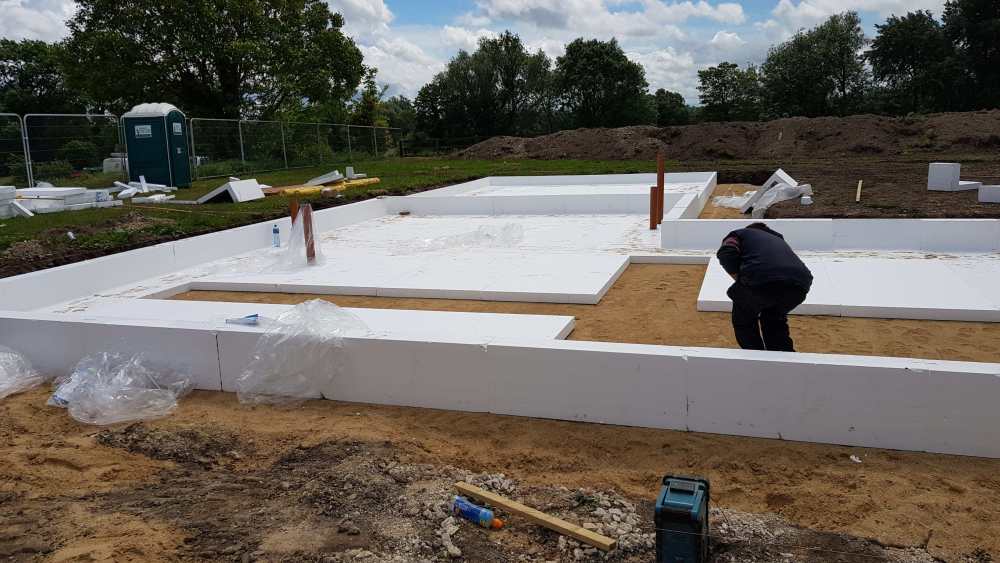
-
Heatmiser Neostat v2 temperature sensor problem
Ultima357 replied to Ultima357's topic in Underfloor Heating
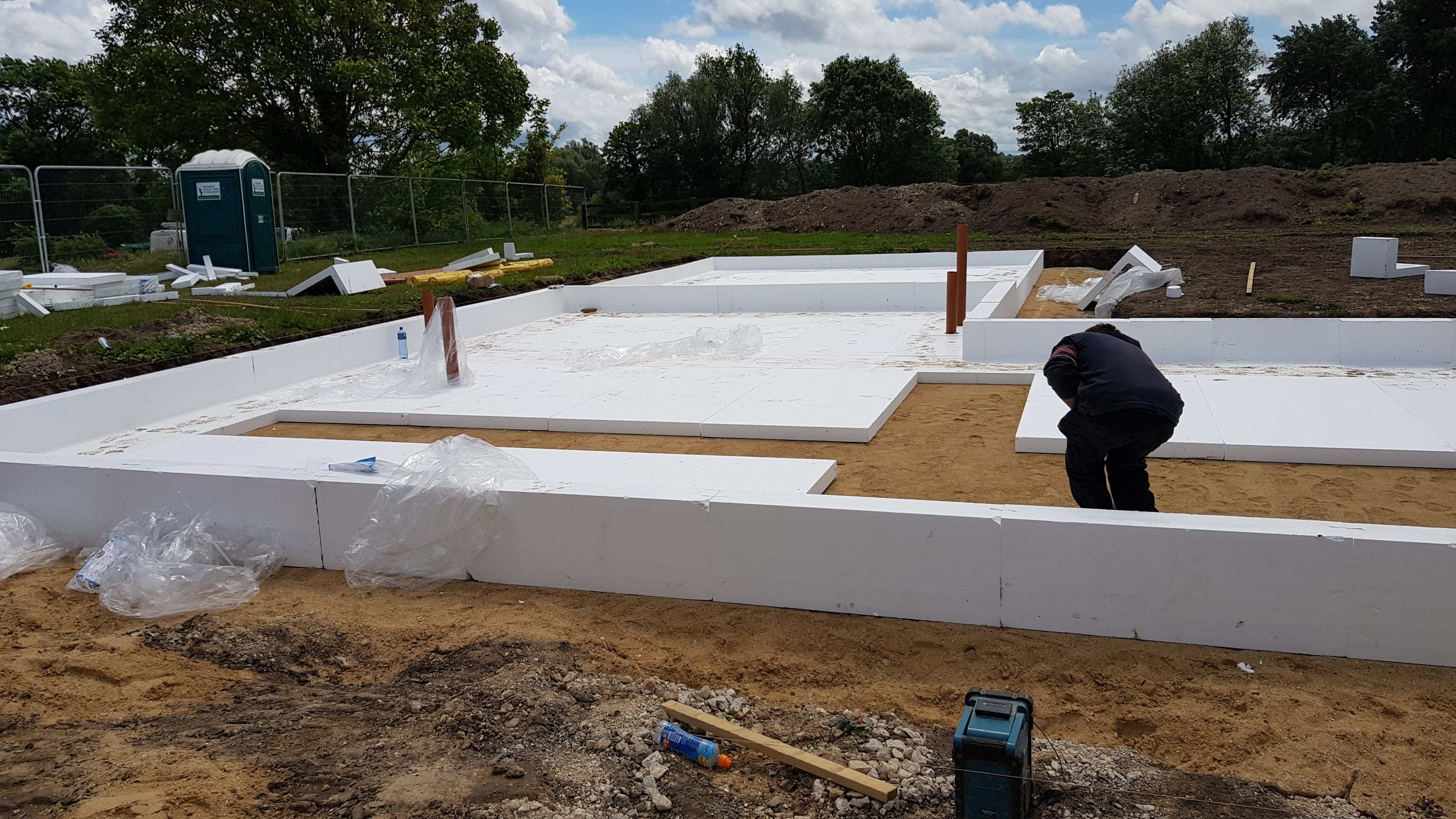
We are not thin screed. The entire house sits on and in 150 - 300mm of polystyrene, so the UFH pipes were cast into the slab, effectively a 155 ton thermal mass. This greatly improves the temperature stability. Floors are largely carpeted with suitable low tog underlay and carpet because that's what we prefer. If we run all loops at once, this is not effective or efficient as with 1.5km of pipes, it's quite a substantial system, (253m2 single storey BTW). So individual room control is very desirable and was part of the design, especially as we keep some cooler than others. By controlling when/where we heat, I can use the 6 hrs of 7p/kwhr overnight rate to maximum benefit, topping up during the day from battery and then grid when battery is exhausted. Overall, our average cost is sub 12p/kwhr and the cost of heating & hot water has averaged £227 per year over the last 3 years which is I'm sure you can agree, pretty much perfect. We run at 23deg in our active rooms and 22 in others, plus the 140m2 of warm attic as insulated at roof level in the main part of the house (400mm Warmcel). On really cold days, the rooms will heat cycle around once an hour maximum, mostly closer to once every couple of hours which is acceptable I think. -
Heatmiser Neostat v2 temperature sensor problem
Ultima357 replied to Ultima357's topic in Underfloor Heating
Well you can calibrate the Neostat to match if you want to. I used a reference thermometer. And yes, there's no real alternative to the Heatmiser system, so we are stuck to make the best of it. -
Heatmiser Neostat v2 temperature sensor problem
Ultima357 replied to Ultima357's topic in Underfloor Heating
The UFH is divided into 14 zones and something has to tell it to switch on is the reason for room stats. With MVHR too, and being super sealed (0.17ach) and the thermal performance, individual rooms can change considerably with solar gain, so we need that level of granularity in control. Doesn't seem to be any other system that challenges the Heatmiser/Neostat either unfortunately. -
Heatmiser Neostat v2 temperature sensor problem
Ultima357 replied to Ultima357's topic in Underfloor Heating
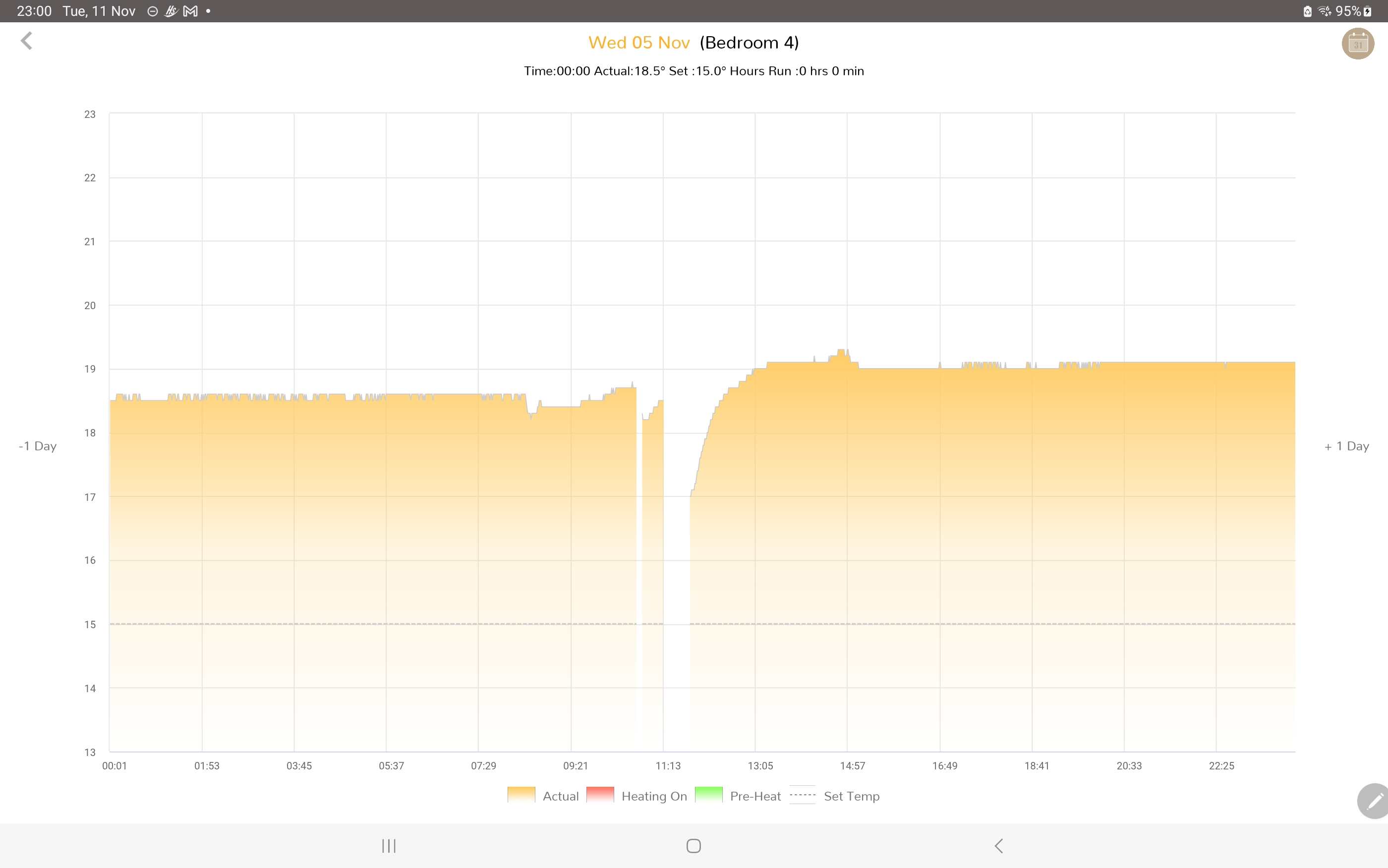
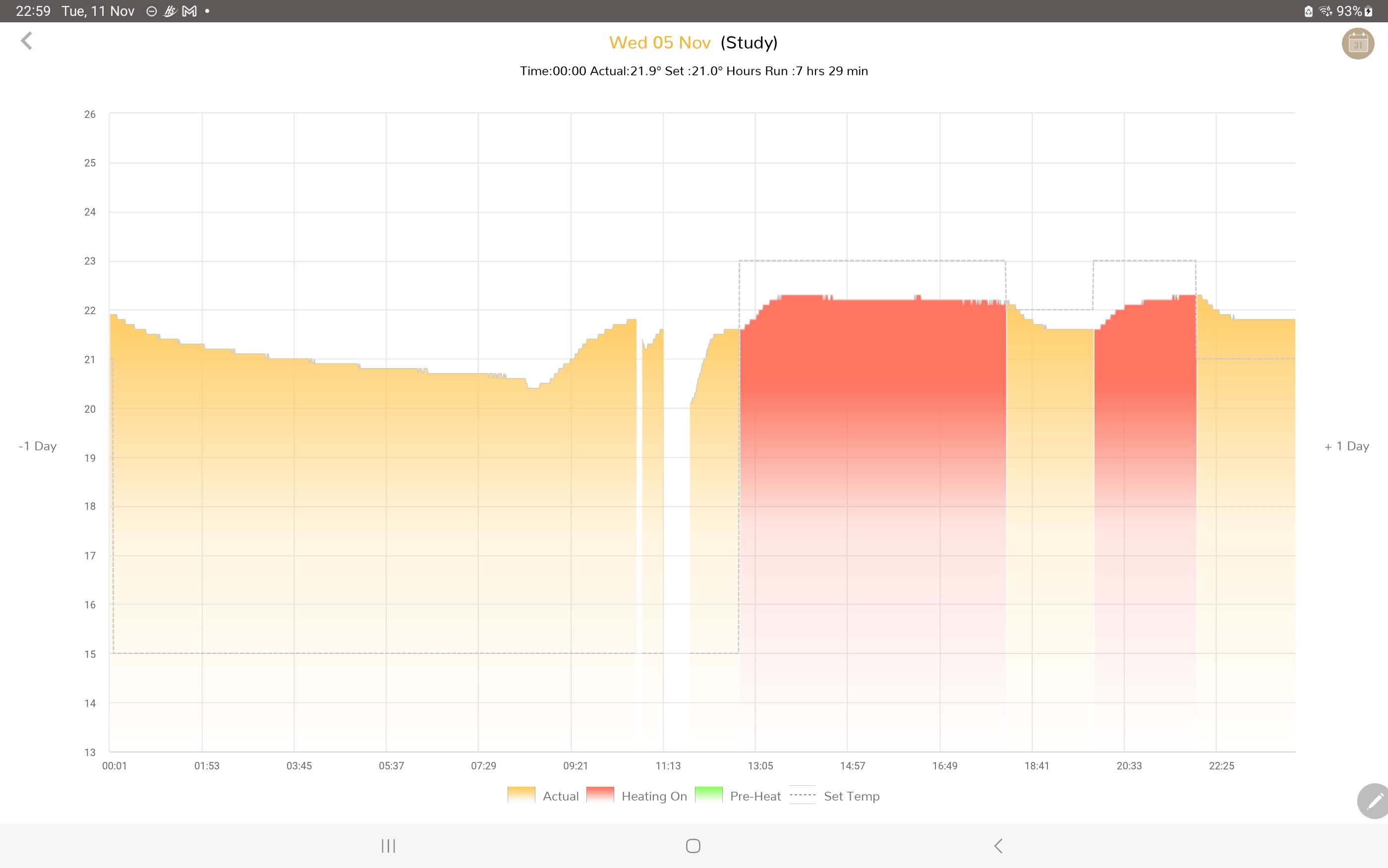
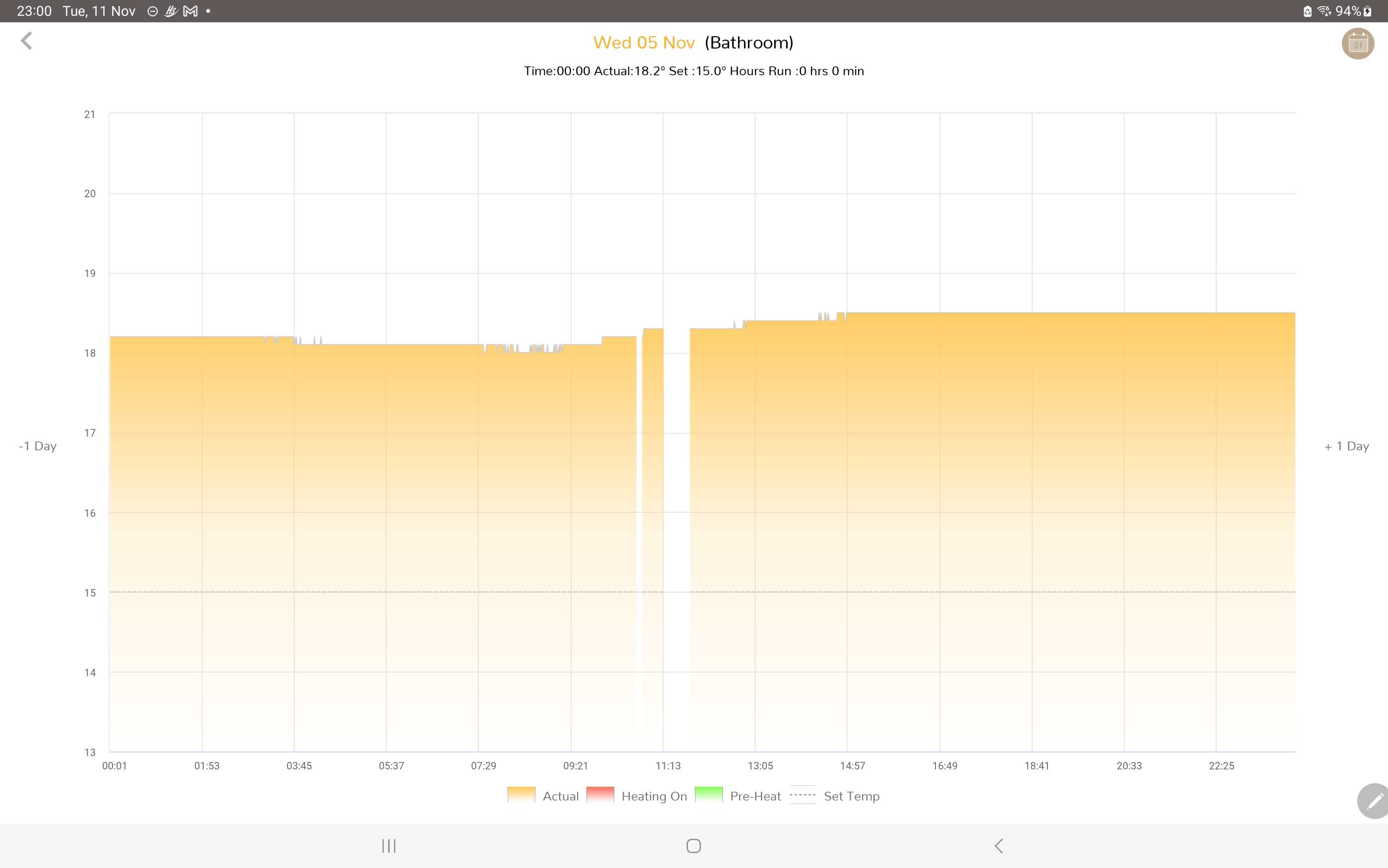
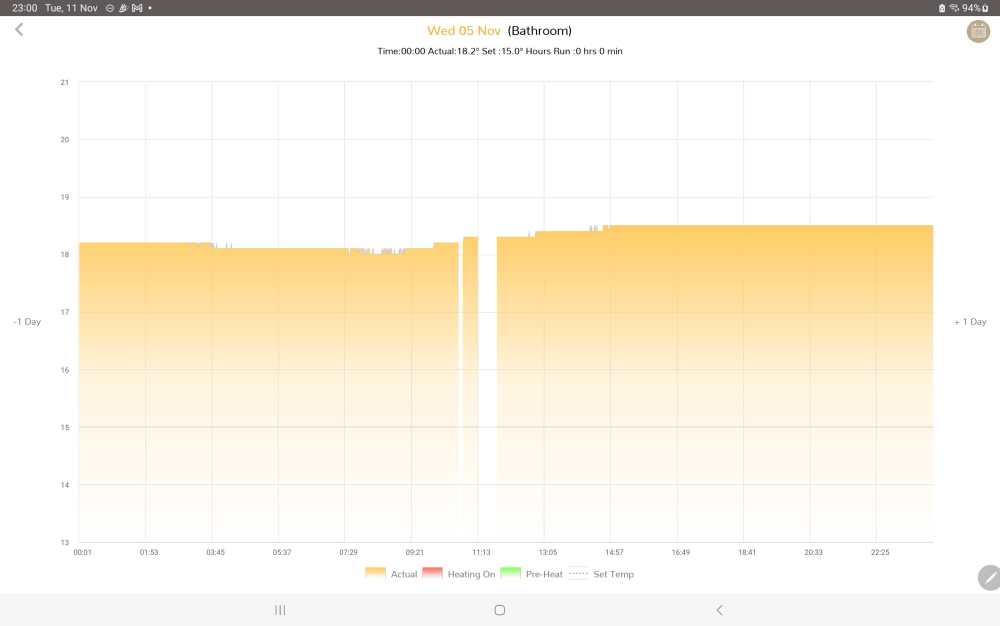
At the start of this thread, I posted the unsatisfactory temperate sensing of these units due to the heat from the transformer and came up with the modified spacer to improve it. Heatmiser never accepted that they had a problem. I don't know why, but I didn't think of a proof of this bad sensing until a heating system fault occurred last week when the Heatmiser system was turned off for a while during the fault correction (an unassociated ASHP issue). The penny dropped when I looked back at the extended profiles of the various stats and found that despite a fairly stable temperature (house is large, passive and super airtight), once switched off the recorded temperature at restart was significantly lower than the powered temperature recorded prior to being turned off. Additionally, when turned back on, even though no heating was being input, the temperature climbed back up. NB, the study climb prior to being turned off was solar gain. To prove the point, the bathroom one is a remote head unit and unsurprisingly, temperature recorded across the power break was stable. QED Mr Heatmiser!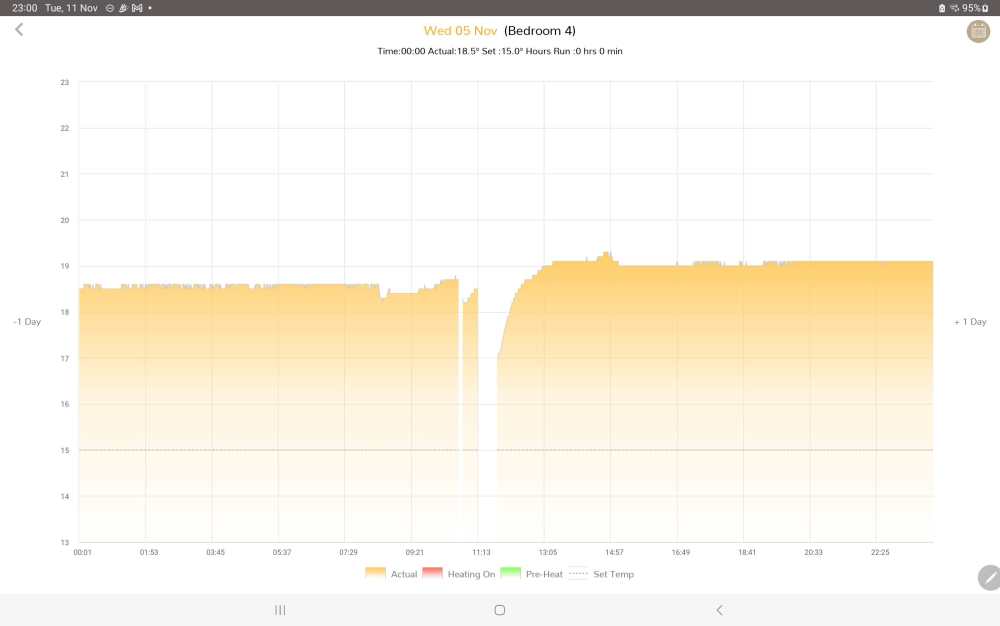
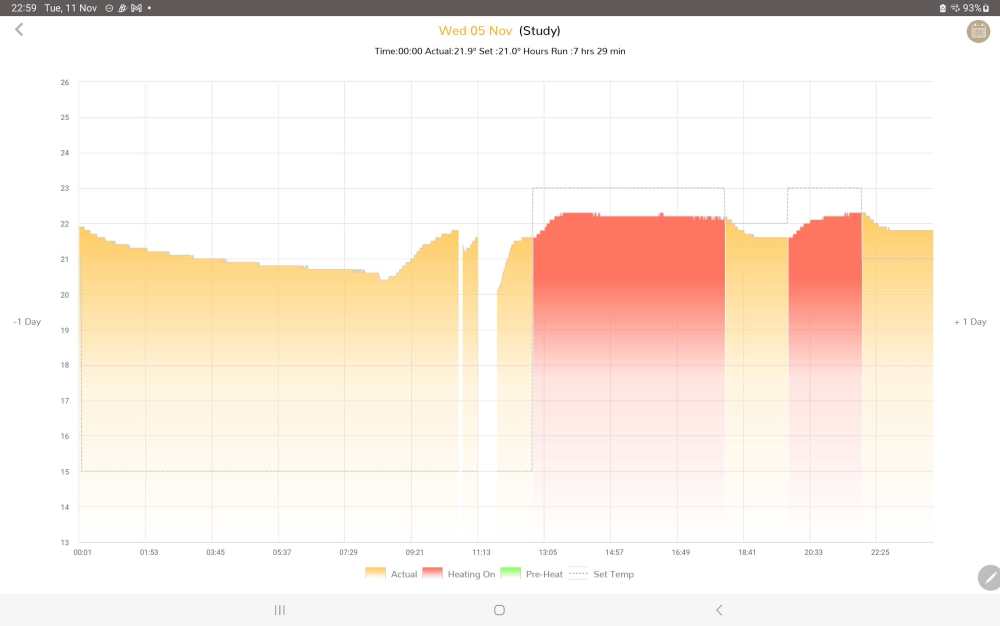
-
Sunny Boy SB3.0-1AV-40 continually rebooting
Ultima357 replied to Ultima357's topic in Photovoltaics (PV)
That's why I decided to replace them. You could easily spend a few hundred quid chasing your tail with tests etc, so simple to change out as 450w panels ard only about 84€. -
Sunny Boy SB3.0-1AV-40 continually rebooting
Ultima357 replied to Ultima357's topic in Photovoltaics (PV)
A bit of further info for the discussion. The PV system is mounted on steel frames on top of the flat roof which also has the steel framed solar hot water system, duly earthed as it also contains an immersion system. So the steel frames are also earthed and panels directly screwed to them. The panels are 14 years old, probably had 3 to 4 times the sun that UK panels have over this period. Rated at 30v, the 'good' ones showed around 26v on the day they were measured but the 'bad' ones were indicating 37v. So all a bit odd. Ground earth is flaky out there due to the rocky subsoil and immensely dry conditions. Eg, hasn't rained since April in any amount that did more than lay the dust for 30 minutes. The power grid is also flakey, giving frequent power cuts and brown outs, overvoltage spikes etc. I protect sensitive kit with regulators. As for risks earthing stuff on the roof re lightning, well the normal steel reinforced concrete frame means that the whole building will be effectively at earth potential and although thunderstorms are quite frequent, it is very rare to hear of any damage or fires being caused by strikes. -
Sunny Boy SB3.0-1AV-40 continually rebooting
Ultima357 replied to Ultima357's topic in Photovoltaics (PV)
14 years -
Sunny Boy SB3.0-1AV-40 continually rebooting
Ultima357 replied to Ultima357's topic in Photovoltaics (PV)
End solution. Well I managed to borrow a 2nd hand SMA inverter and plumb it in which proved that the issue was in the arrays. They appear to be leaking to earth. After metering each individual panel, 7 were clearly end of life and even getting an array of 10 that seemed OK, you could measure neutral to earth and see the voltage climb to more than 20v just before the inverter tripped out. So plan now is to renew the array and put in another earth rod. A job for the spring time. -
Sunny Boy SB3.0-1AV-40 continually rebooting
Ultima357 replied to Ultima357's topic in Photovoltaics (PV)
Not sure what the warranty is, but support is limited out here. Yes I meant MWh produced since installed. Just checked, warranty 5 Yr. 10 Yr if installed after October 2021. Dang! -
Sunny Boy SB3.0-1AV-40 continually rebooting
Ultima357 replied to Ultima357's topic in Photovoltaics (PV)
Yep, meant MWh. -
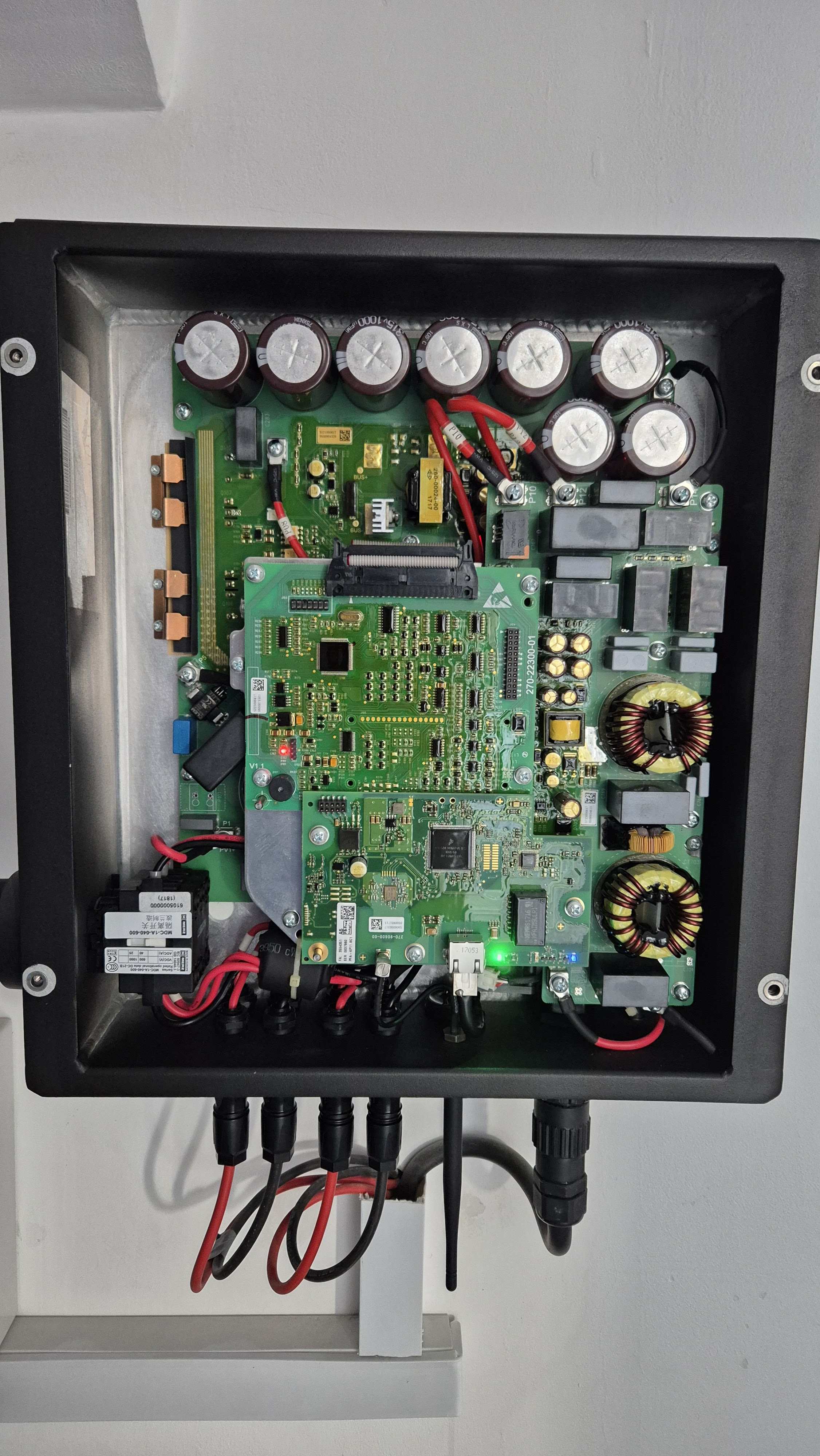
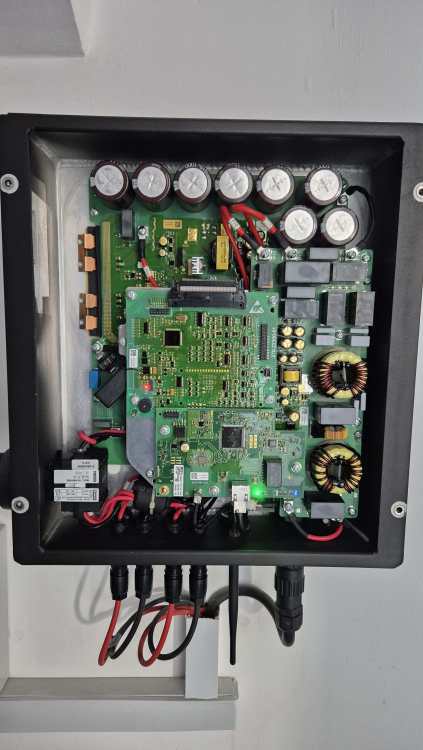
Hi everyone. I have a Sunny Boy SB3.0-1AV-40 inverter, about 7 years old now, having churned out just over 35Mw in its life. It has 2 strings of 10 x 150w panels each, all due south and no shading. (Location in sunny Cyprus, hence the power generation). I'm now trying to fault find an issue where it is constantly restarting, relay clicking in and out, sometimes a few times a minute. It's not consistent which is also a head scratcher but always occurs from around 9am to 11:30 ish but can also happen at other times too. So far I've found the strings are iffy, panels now some 12yr+ old as previously powered a battery support system. One string is 265v and the other 365v. Plan to sort that out this weekend having sourced some equivalent replacements from a similar system that has been dismantled. £0 so a good find. But, not withstanding the above, further experimentation of running on just one string, it still exhibits the same problem. I've only got basic voltmeter and current clamp and the inside of the inverter is one of layered circuit boards, so very unfriendly. Nothing obvious fried or smelly though. Curiously, the 8 large capacitors at the top of the unit are 4 at 178v and 4 at 0v. That seems odd. Measured simply from capacitor top to ground. Unable to find a circuit diagram, so at a loss as to what else to measure, but beginning to think the inverter is the issue. Oh, no great problems reported on the monitor either. Used to get grid over voltage shutdown but not now, it being typically 240 to 245v. Any ideas?
-
Yes it is a pole transformer serving around 18 properties. I've since emailed UKPN but they have not responded. May do some more tests now I have a bit of time in hand and just meter out the incomer into the house to check there's no issue on my side, but the voltage doesn't uniformly track the load, so I'm fairly sure that it is external bolt drop.