DeanAlan
-
Posts
94 -
Joined
-
Last visited
Everything posted by DeanAlan
-
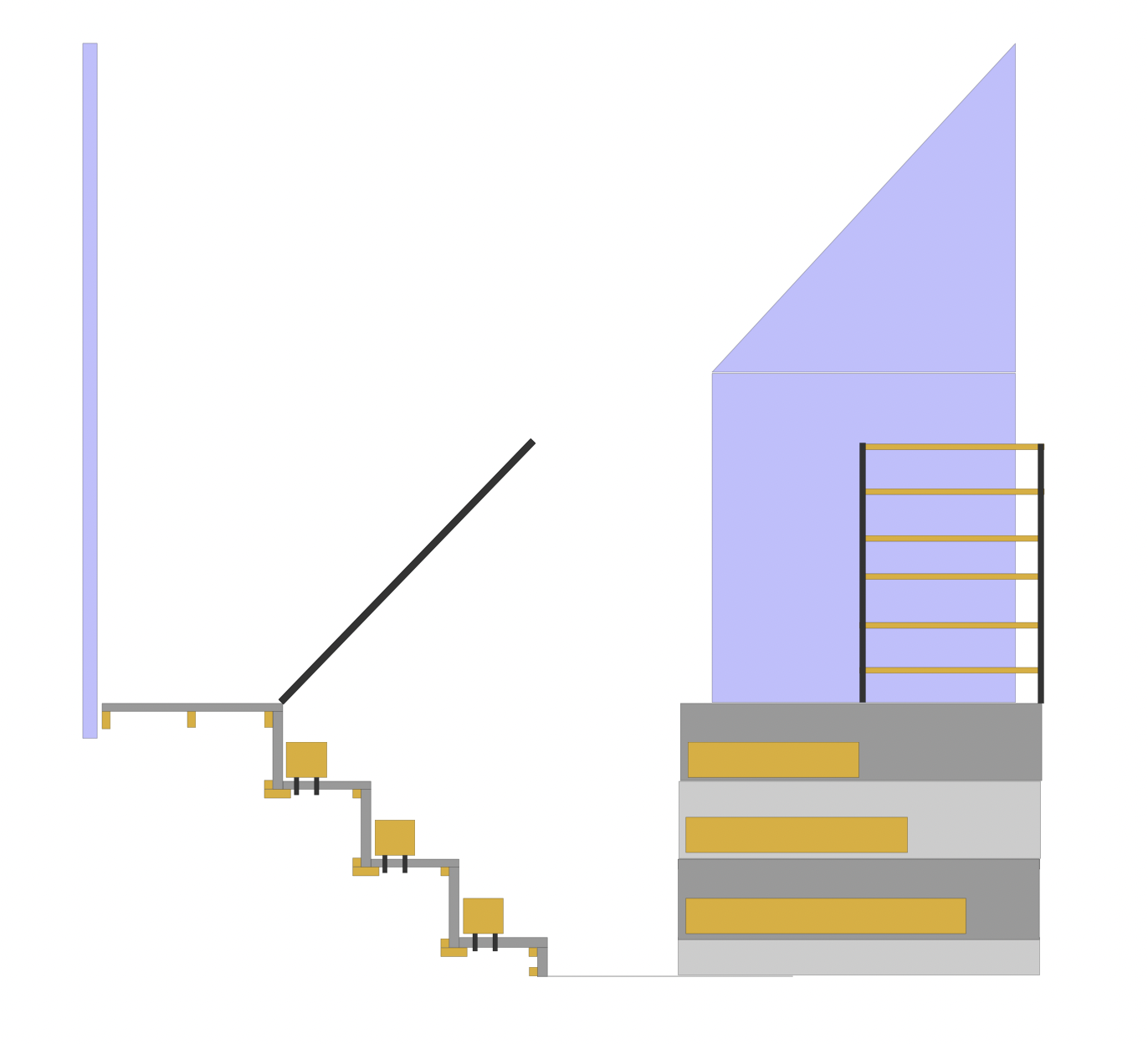
Note - correction, I want to AVOID a handrail or ballustrade, divider down the centre of the lower flight. Maybe I will have one and it will be designed for easy removal for maintenance as @Adam2suggested 🙂
-
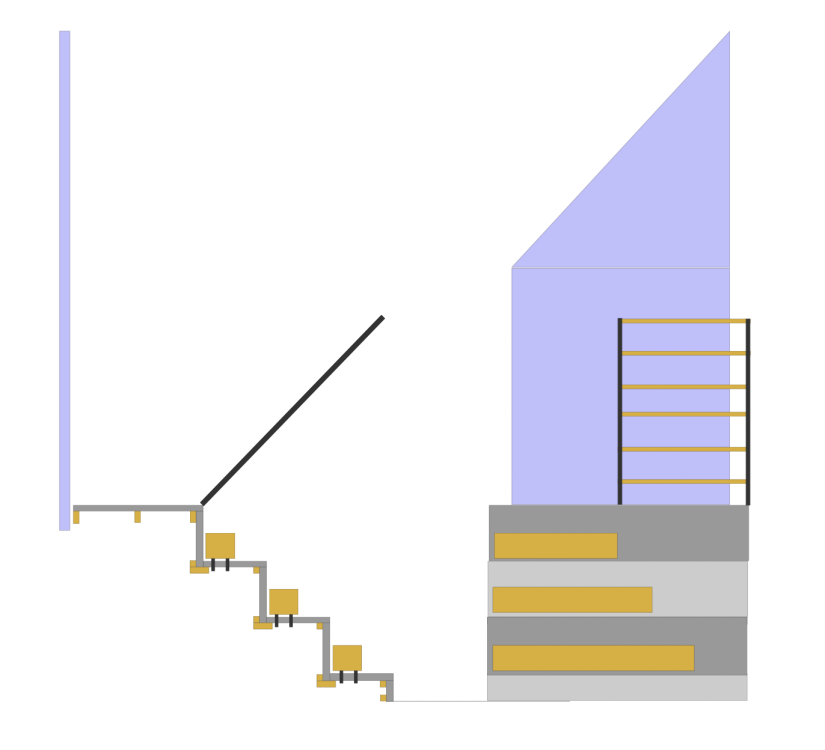
Thanks @Gus We're in Cambridge so our regulation are a little different that Scotland. This is a renovation as well - although the renovation took an 86m2 1930 3 bedroom right back to its bare brick walls, lowers ground floor, lowered intermediate floor and then added about another 150m2 is 'extension'. Basically a new house but technically a renovation and extension and I think that provides more flexibility - thinks like access as you say. The main question (and I am just preparing some material for BC to review) is whether I can get away with a handrail coming down the centre of the bottom flight where the intermediate treads are half width. Everything else will be well within regs I believe. I read somewhere that if the stairs are < 1m wide then you only need a rail on one side (ours would be on the left going up) but here there is some ambiguity about what the staircase actually is and if I don't need a hand rail do I still need a banister or some other barrier (glass) to stop people stepping off the the right side and suddenly having a 2xRise drop? Separate to this I actually want to recess the handrail on the left hand side of first flight and right of second flight into the wall as much as possible but that is a separate topic. I'll let you know what BC come back with. cheers, -Dean
-
Thanks @Adam2. Our local BC (3C Shared Services Cambridge) seem pretty reasonable folk - I know that's not always the case. Probably best I just talk to them. cheers, - Dean
-
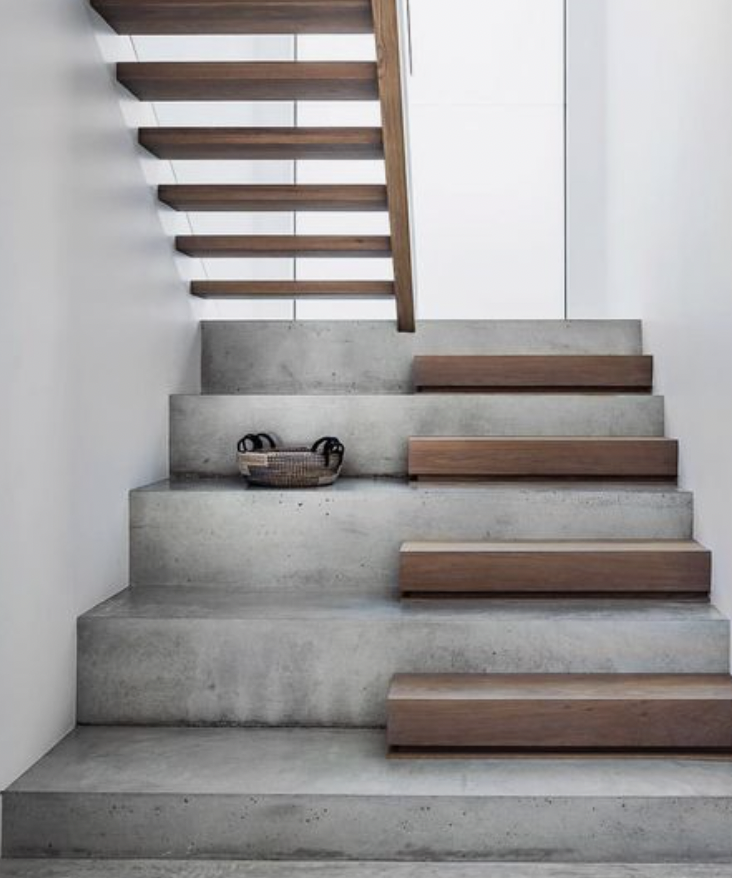
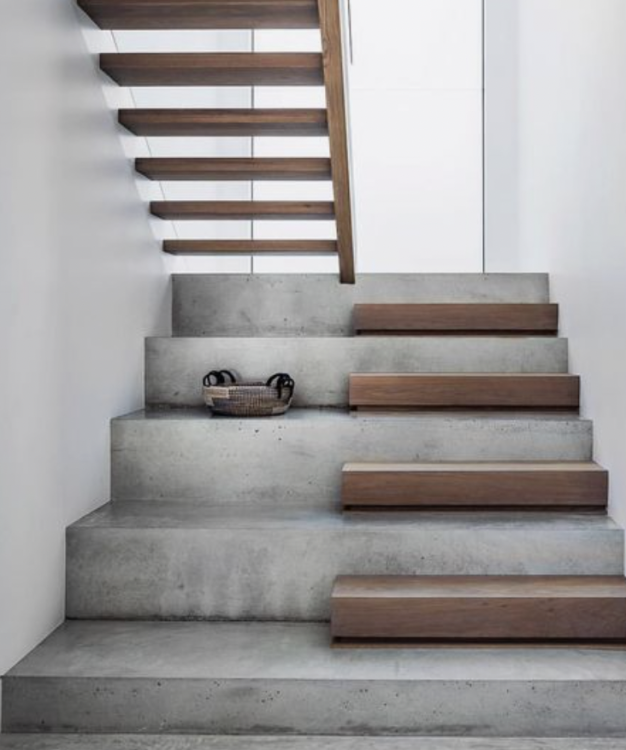
I have the outline of the design for the staircase (aesthetically) and all the calculations of going/rise based on lower and upper finished floor height and available horizontal space. I'm primarily interested in things like banisters and balustrade requirements. I used StairBox to validate my math by the way 🙂 The pinterest screenshot is what triggered my thinking for the design (although we are flipped to raise starting on the left). The graphic is my work up. The different grays are just to help me differentiate in the diagram. They will be micro-cemented MDF with American oak alternate tread blocks. I approached a bespoke staircase designer/fabricator and it was crazy money. Like £20K+. I know my steel fabricator can do the second piece of the half landing quite easily and the lower half is where the fun is from a regulatory/design perspective. Its construction needn't be expensive (MDF or HDF possibly with acoustic insulation below (in the void) to help give the impression of solid concrete). So open questions for me are 1) on the lower half, do I need a railing down the centre (yuk) or not? 2) can I embedded handrail (recess) within the wall on the left (my drawing) for thew lower half. Maybe I just need to work up the design in a little more detail and get their feedback on paper. Your continued thoughts are appreciated. cheers, - Dean
-
Hi people. 18 months since we bought our brown field site and we’re finally approaching 1st fix. Yeh! We have a general staircase design in mind but was wondering if anyone knows of a service to validate a design ahead of BC point out a bloody obvious issue! Would BC take a sketch? Are there services out there to just provide validation separate from fabrication/installation? Basic stuff like rise and going are relatively simple but there are some but around balustrades, hand rails, changes around half returns that gets a little sketchy. I’m also looking into recessing hand rail into the walls for a real contemporary clean look and the regs in this area seem a little hard to interpret. cheers Dean
-
We're renovating a 1930s semi (as well as a large SIPs extension) and having to move back in before fully completed. We're soon to build the stud walls on the first floor up to the original roof timbers. Ultimately we expect to use something like passive purple liquid membrane to provide the airtight for walls. I believe we need to put an airtight membrane above the replacement plasterboard for the first floor ceiling and have the liquid membrane connect/lap with the airtight membrane of the ceiling/loft at the ceiling/wall junction. What is the detail for stud walls connecting up to the roof joists? We need to get enough membrane in there, on top of the stud walls, so that we can then put the rest of the membrane in (lapped and taped) before we put the plasterboard in. I assume the membrane needs to go over the stud wall top, under the roof joists. Let me know where I'm going wrong here please? What products would you recommend? How does the stud wall connect to the roof joist with fixings that penetrate the membrane? cheers, -Dean

-
Block and beam floor insulation with restrictive height
DeanAlan replied to DeanAlan's topic in Floor Structures
Sounds about right @Russell griffiths! I might use 100mm where I can and then drop to 90mm in the offending area. -
Hi all, The renovation and extension project we are working on is approaching the stage where I have to lock in the height of a large set of sliding glass doors to the garden and floor level for the liquid screed pour and the block&bean is a little high in one area that is causing me some struggles. Primary issue is that about an area of around 2.5m x 5.5m (13.75sqm) is around 12mm higher than the other 90 sqm. That doesn't feel like much BUT we have a pretty tight margin. The plasterboard ceiling will be 2,559mm above the block and beam elsewhere giving me room for 100mm insulation, 55m liquid screed and 4mm decorative floor finish leaving 2,400mm to ceiling. However, if I work from the high area then if I use the same buildup of 100mm insulation, 55m screed and 4mm finish then I would have a 2,388mm heigh ceiling and in general a lot more than 55m screed for 90% of the floor areas (more like, 67mm which costs more and I loose ceiling height). I'm wondering whether I should use 90mm insulation in this area of the floor and 100mm elsewhere or put 100mm insulation everywhere and allow the screed to be more like 43mm in the high area. Thoughts? The other concern I have is that the blocks sit 2-4mm below the top of the concrete beams which surprised me. I though the block were designed to sit flush with the beam tops - all from the same block and beam floor provider (they will remain nameless for the moment) and not cheap! If I lay insulation board across this then what will happen with the void they span between beams? Should I - for example - put some sand down to level it all out? When they first laid the block and beam they then put the grouting slurry down and it all seemed level but it didn't take long for some rain to wash away the top surface. Should that surface have been more resilient, should I have expected the blocks to have been level with the beam tops? Should I go complain heavily about to the beam installer? Should I sand of lay some filler concrete slurry surface to make it all level before I put insulation boards down? cheers, - Dean
-
ASHP and Hard Water - do we need to soften/condition
DeanAlan replied to DeanAlan's topic in Other Heating Systems
https://www.dualflo.co.uk/products/ interesting, thanks @jack -
ASHP and Hard Water - do we need to soften/condition
DeanAlan replied to DeanAlan's topic in Other Heating Systems
Thanks @SteamyTea I've looked around and on this website and possibly something like a Harvey dual tank system (circa £1K) is a good idea. We're in Cambridge and the water is pretty darn hard. More than ASHP my wife loves the shiny hair she had from down in Somerset recently - a happy wife is worth far more than the longevity on the ASHP but if I can get both.... Thanks - Dean -
Hi folks, We have an Ecodan R32 ASHP on order for a couple of months from now and starting to look at water softeners and conditionares. Are ASHP any more vulnerable / tolerable of hard water than more conventional boilers? Any specific advice or experience on this topic? Water softeners or conditions seems like a minefield on its own given some of the research and bold claims out there for various devices.
-
Have certainly considered that - that was my starting point. Way simpler. But - I'm not sure I want to show the full depth of some of these steels going in. I like the idea (on paper) of exposing them - like the contemporary version of beams in an old Tudor house - but wanted to maybe hint and not make it look like the inside of a battleship. Other thing is that I was trying to think through the airtightness problem sooner than later and not put something in place that I then had to change later on. But yes, certainly the easy option and maybe I should just stop at that.... But if I were to put 100mm below current, what is the best way of mounting those timbers, the plaster board and making that the airtight ceiling layer?
-
Hi folks. Making progress on our project and within the next few months I'll be looking to tackle dropping the ceiling of our first floor. We're lowering all floors. The ground floor has been dropped by 300mm and ground bearing slab with Wet UFH going in. The intermediate floor is dropping to match. We have some big steels going in upstairs below the current roof joists in order to support the roof given some structural changes being made. We're possibly going to leave some of the steel exposed but in either case I want to use some of the 300mm drop to drop the first floor ceiling (roof) by 100mm and then put 3 x 100mm layers of insulation, 1 in the new space, 1 in the original 100mm joist space and then 100mm above the current roof joists. We don't plan on using the loft beyond storage so don't need head height for habitat space. To my question. We aren't going to lower the ceiling/roof joists. The are sound and in the correct place. I was thinking more of a false ceiling below. That being 100mm timbers fixed below those joists to plaster board across. Then, 100mm timbers above the joists to board out some space for storage. Whole thing creating a 300mm space for insulation. Am I thinking about this the wrong way? If this is somewhat sensible, my question was about fixing. Fixing timber below and above felt like it could compromise the joists structure if not done properly. So I was thinking fixing plates alternate sides that hold the timber below and the timber above in place. Am I making stuff up - is that a good / standard way of doing it or is there a much better way? Hope my description and question makes sense. cheers, -Dean
-
Thanks @bitpipe Yes MVHR system. We're retrofitting an intelligent membrane (Passive Purple) in existing (solid brick construction + new EWI) and on SIPs extension (the extension is 130sqm compared to the existing 86 sqm). Double glazzed aluminium windows, not triple. Could potentially go through 1 winter and see how we get on. We may be living in a building site for a while as it is, I could just leave the floors bare for a while so I don't damage any decorative flooring if I lift the decking and put in UFH later.
-
Hi folks, As part of a major renovation and extension we are working hard on airtightness and insulation - not passive house but expect to significantly exceed building regs - and putting Wet UFH within screed on new ground floor and considering upstairs. Not putting rads in! Either Wet UFH (clip plat system fit from above) but also considering whether we need to. Was wondering about whether we need UFH/Heating upstairs at all and wondered what others peoples experiences / thoughts were. Bedrooms should generally be a little cooler than general living spaces (all downstairs). Roof imsulation will be good (300mm at least) and very good airtightness. Have been considering IR Rads/Towel heater in en-suite and master bathroom (both upstairs). DO you think we could get away with no first floor heating and just rely on good insulation and warmth flowing upwards? cheers, -Dean
-
How to clean footing concrete in prep for trenchblocks
DeanAlan replied to DeanAlan's topic in Brick & Block
Thanks all. Overthinking - possible, paranoid, maybe. I have a big soakaway and drainage pipes all prepared, I could just pump any excess water into there. cheers, -Dean -
Hi all, We had our concrete footings poured about 4 months ago and (don't ask why such a long delay) the brick layers are turning up to lay the foundation masonry in to block and beam level then SIPs. I've had to dig mud off the top of the footings that has washed on through the rain and whilst it is dry for the next few days and mild I thought I would jet was. Yes, I knew this would leave water but there was also muddy water before and a lot more mud than when I started. I haven't made the situations worse! Clearly you can't lay blocks onto dirty concrete (wet isn't so bad I think but dirty is not good). I can't control the weather and it washing more mud on but I can do my best to clean off what is there now. Should I jet wash and get some kind of pump to take the pooling water away. If so, any suggestion on the type of pump and fittings required (only talking 5-10mm of water so not a sump pump)? I'll be browsing HSS in a moment. I'd also wondered if there are products that should be used (like alcohol although I'm drinking a lot more of that these days since we took on this project ) I could sit there with a hairdryer for days! cheers, - Dean
-
Thanks all. Our columns have just gone up (400mm base plates with resin bolts and level around 15mm in some cases with steel shims put in before being bolted down). I have just received some Silka 111G (seems 1 bag will make about 13L of grout and at a 20mm gap I would need about 3.6L per column - we have 8 cols so I've got 3 bags just delivered). I'll let you know how we get on. Thanks for all the comments. I now understand this much more. cheers, Dean
-
Oh my god - now I'm in a real panic. Where the f do I get "watter" from and what is that? ? Thanks all - sounds simple. Just confused why my brick layer says I need to order something special. If I google non-shrink grout there are loads of products. cheers, -Dean
-
It is tough sitting between trades as an inexperienced self-builder, main contractor, principle designer. My steel fabricator is installing columns this week and says bricklayer needs to grout them with a non-shrink grout. Brick layer says "sure, that is a specialist item and you need to order the non shrink grout and we can do the work" Steel fabricator says "typically sand cement mix with a c-bex non shrink additive" Brick layer says, yep I understand. I say "Do I need to order anything special then or can you obtain this with the other materials" Brick layer says "normally something which is a special order" So now I'm thinking c-bex additive, something else? Any clarifying thoughts? cheers, - Dean
-
Thanks all for the suggestions and for taking the trouble to draw a diagram as well @ETC
-
Yes, I think blocks will be used (below that plinth brick) and then look for alternative to the plinth brick. As you say, maybe a regular brick at the top of even a cut chamfer on a block (easy to do with a masonry saw) and could always put a filet of mortar. I have seen the blue plinth bricks and they are indeed a bit cheaper. cheers, - Dean
-
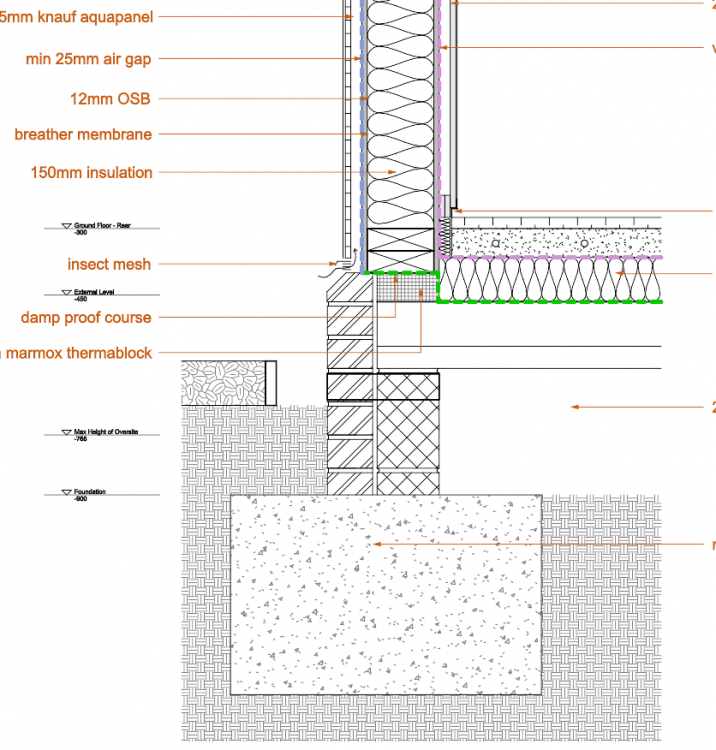
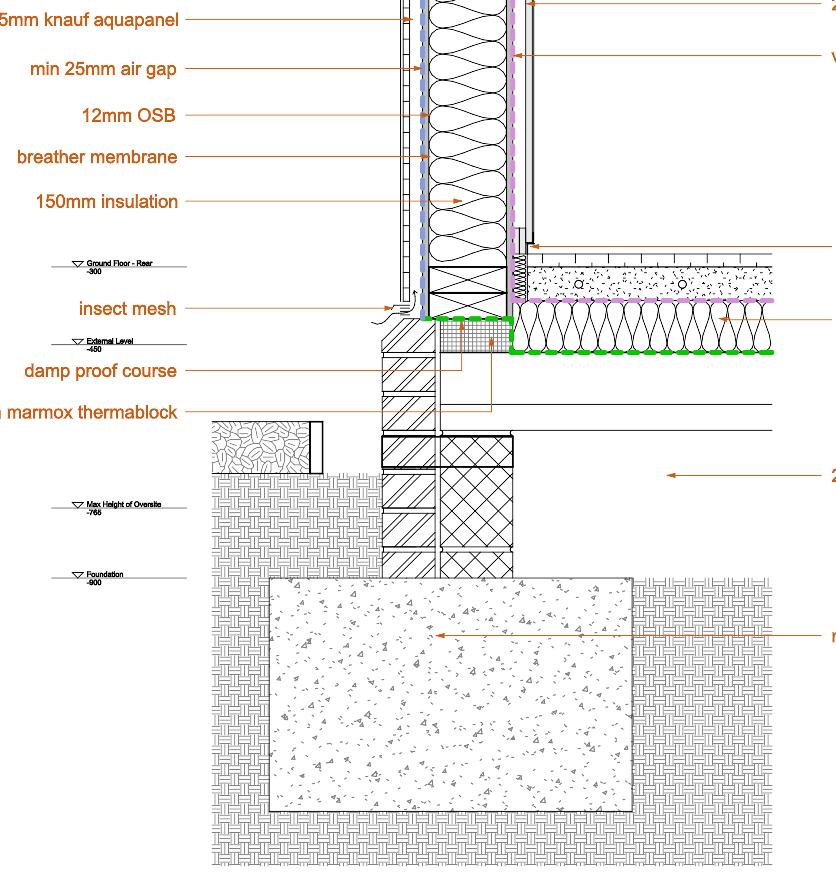
The foundation design our architect has prepared, in consultation with the SIPs supplier / installer we are using, includes the use of plinth bricks and I've just seen how expensive these are! The functional reason for them is to ensure water run off way from the SIPS and the render carry board battened to that. A deck will be constructed that comes right up to that level externally, with small gap, so the aesthetics of that lower wall are irrelevant but it needs to be structural sounds and water resistant etc. Couple with this at one point there is likely going to be a 215mm high lintel crossing a public sewer and it ain't no plinth! So I'm wondering whether normal bricks, and the concrete lintel, can be used and then with an angle grinder create a chamfer to encourage water run off and not pooling. Sounds easy on paper. Thoughts? cheers, - Dean
-
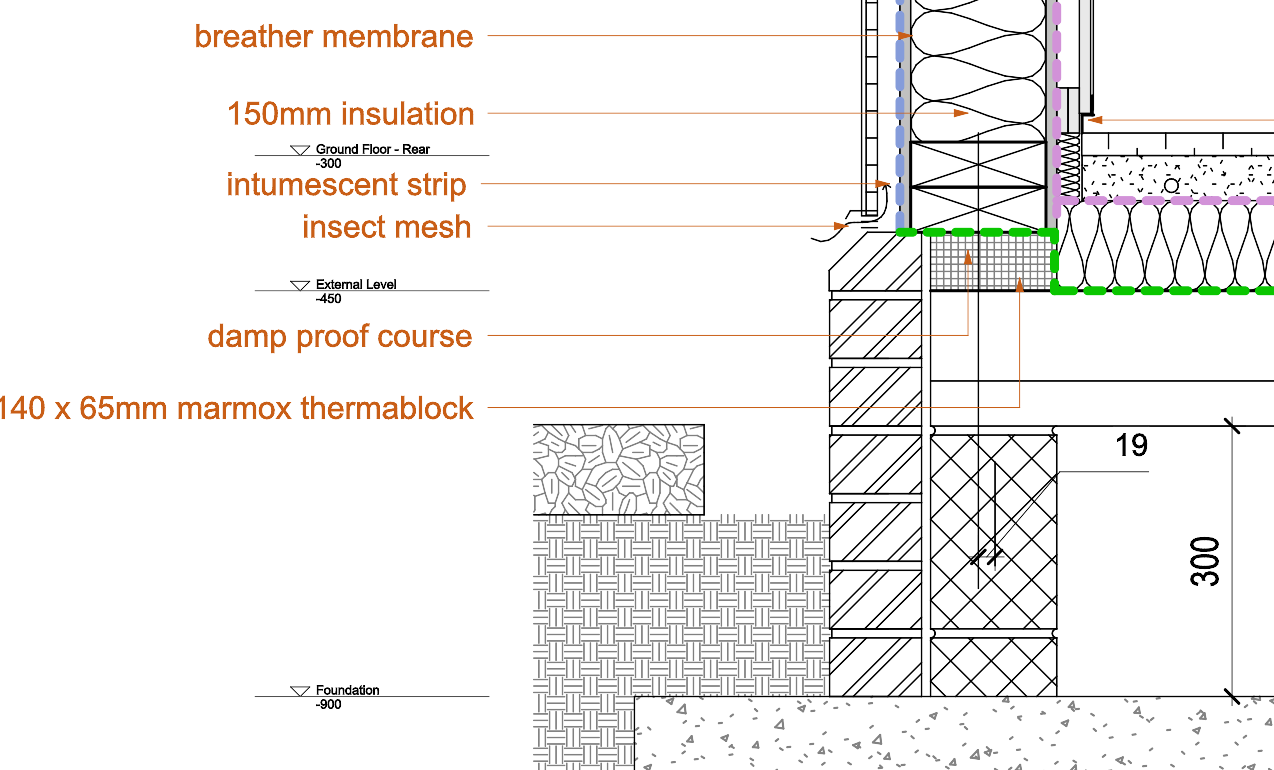
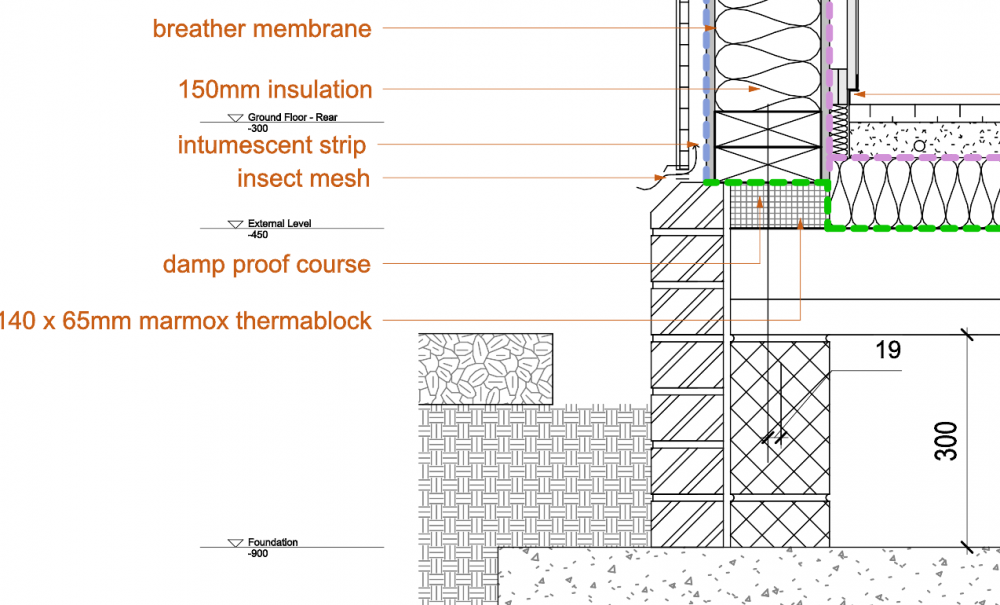
If I understand correctly then cut the floor block that is in positioned on the beam to provide the riser part of the telecope (like you say, only 50mm) to just below the Marmox to then align with airbrick below the plinth brick. I think my architect was concerned about the Marmox bearing but as you say, only taking away 50mm of 140mm and not for the whole span of the Marmox either. What are telescopic vents actually solving in this case? If the block is cut back for a T Vent but one not fitted and the airbrick is there then clear passage for airflow. In a cavity I could understand (with a squint) but here? cheers, -Dean
-
Hi All, We have an extension being planned, in final stages of building control plans, with a block and beam floor that needs ventilating. Telescopic vents I hear you say ? Well, the foundation masonry - up to the SIPs being used for the structure, has no cavity (driven by SIPs only being 175mm wide). The block and beam is at about the same level as the external ground and so we are having a challenge on how to ventilate it correctly as no cavity to put the telecopic vents in and not enough clearance from ground to put a straight through vent. I have considered a telescopic vent where the telescope is outside the building - and possibly bricked around to give it some longevity. Have considered taking the ground level down and maybe holding it back with something, masonry maybe some type of grille. Any advice / product suggestions? cheers, -Dean