


Donegalsd
-
Posts
36 -
Joined
-
Last visited
Everything posted by Donegalsd
-
Hi, I am thinking of fitting LED strip lighting around the perimeter of some of the rooms in my new build. In a false ceiling downstairs and in the ceiling service void upstairs - not sure of details of plasterboarding yet. I want to give an additional layer of indirect/soft light. Has anyone done this? I am looking for the dimensions of the channel. It will be around 10cm vertically (top to bottom) and will run the entire length of the wall but how deep? I have attached an electrical plan. I may run a curtain on the two large windows behind the dining table so I am thinking 25cm deep for the large kitchen dining living room - would give me plenty of space to put curtains and a strip in the recess. I was thinking 12.5cm would be OK for all the rest of the spaces as I will not have blinds or curtains in them. As always help is appreciated. Thanks Stephen Elec Plan.pdf
-
How do I tile around a inset/drop-in bath
Donegalsd replied to Donegalsd's topic in Bathrooms, Ensuites & Wetrooms
Hi Guys, Thanks a million. I'm in Ireland so should be good for megabad. Great advice from temp and brilliant montage from one off - mine won't be as fancy but same idea. -
How do I tile around a inset/drop-in bath
Donegalsd posted a topic in Bathrooms, Ensuites & Wetrooms
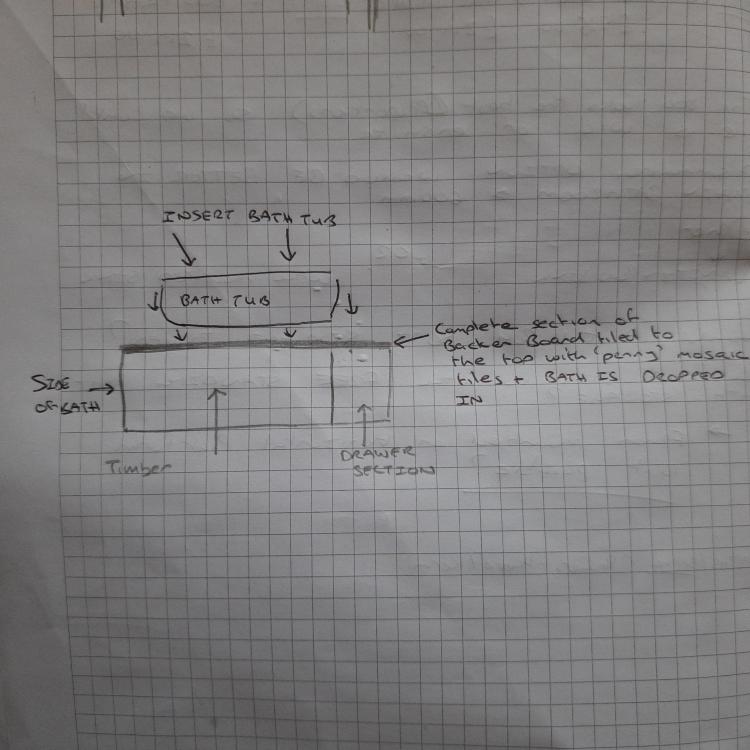
Hi, I would like to fit an oval bath probably this one, https://www.megabad.com/hersteller-koralle-badewannen-serie-t200-ovalbadewanne-a-100501.htm Into a frame in my master bathroom. I am thinking of using a timber panel on the side of the bath and hopefully I can get a joiner to make a storage drawer to pull out at the foot of the bath. The timber bath panel and the drawer face may be fluted so the drawer is 'hidden'.Pic and diagram attached. But how do I deal with the top of the frame. I was thinking, if I support the tub from below, I can cut a hole in backer board, drop the tub in, tape the backer board to the bottom of the bath rim and then tile with mosaic tiles all around the rim of the bath - over the top of the tape. Does this make any sense and will it be watertight? I won't be doing any of this myself but I want to find if the proposal is feasible. Thanks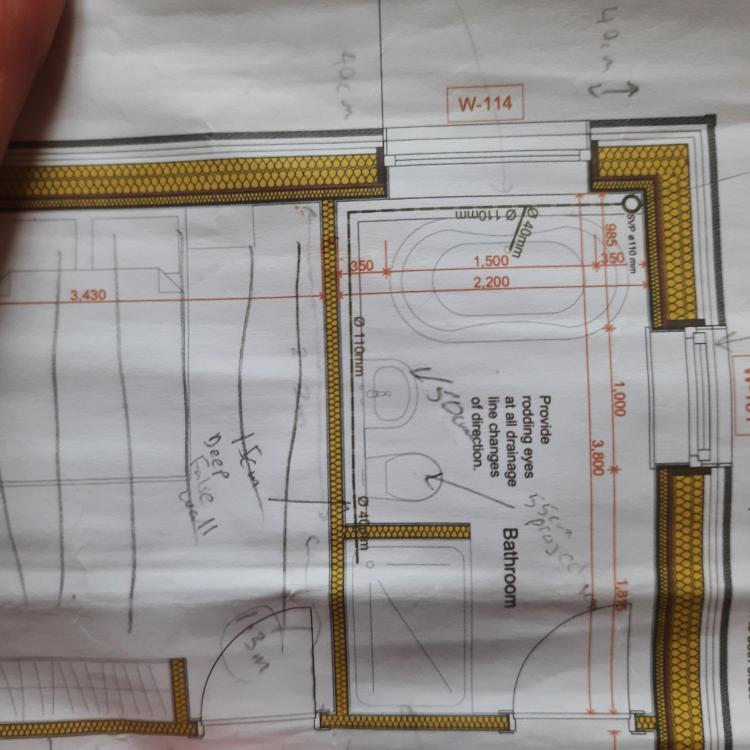
-
Go for it. I have only gas. I'm pretty sure its wouldn't be relevant experiment.
-
I'd probably keep on counter top so the kids would be at a bigger risk. I guess the problem would be that occasionally you might still want a whole kettle of boiling water (for mopping floor, general cleaning etc.)? Handy for milk for cappuccinos and hot chocolate ect.
-
Hi, Does anyone want to express any opinions on this product. It seems to be pitching itself as a new low energy, better, alternative to kettles. It looks to be an interesting concept and seems cheaper and lower energy than a boiling water tap. Looks cool too. German made. https://www.heatle.de/
-
Yes, thanks guys. My Mitsubishi supplier is not keen to activate the cooling function - so I will probably be looking for an alternative ashp supplier.
-
New Build Passive House (Donegal - Ireland)
Donegalsd replied to Donegalsd's topic in Introduce Yourself
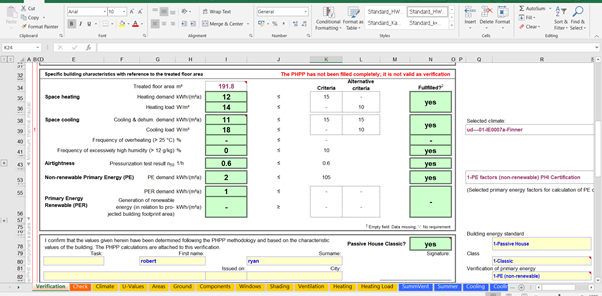
Hi, There are loads of new build houses here with overheating problems - Most people don't model or consider it - but mostly we don't have long spells of good bright days and lots of houses leak heat fairly quickly so it is less of a problem for them. I can't really blame the architect, the client (me) specified (and encouraged) the large windows fully knowing that we would have to mitigate for overheating. This house has gone through several iterations (we had already paused the build prior to 1st lockdown) and there came a time that decisions need to be made to keep the process moving - we had agreed the price with the builder (and he has started work) before we got the most recent phpp. I have some of the older models of the PHPP spreadsheets and I was able to get the overheating down to around 8%-ish with G value changes. I'll take your feedback on board though and take a proper look at some of the ventilation modelling. Perhaps low g on 1st floor windows could help. All I have to do is learn how to fiddle about with PHPP. Fun. I have only myself to blame again re. the lack of the detail of the PHPP model - I negotiated a keen price - and I suppose I paid for just enough to get assurances that we would meet spec. I agree with you about overhangs and it is risky not having any shading on the 1st floor windows but we were fortunate to get planning on the site - and probably wouldn't have if we had deviated from the council rural design guide (hence no overhangs). Part of our problem is that where we are in Ireland it is difficult to get experienced people on board in the design process and when you do they are very busy so there are plenty of delays in receiving information and the other part of the problem is me being a cheapskate and looking to save cash at every opportunity but still wanting a quality product. -
New Build Passive House (Donegal - Ireland)
Donegalsd replied to Donegalsd's topic in Introduce Yourself
Hi DanF, Thanks. I have a PH consultant (and architect) on board - The PE/PER is missing some data - I didn't quiz the guy on it. At the moment the PHPP is really just a model to ensure that thermal bridge/insulation/window specifications will meet standards, I have another installment to pay before he uploads it to the PHI (and completes it) Without the slab cooling the overheating is between 15% - 25% but that is without any allowance for opening windows or summer bypass or any internal blinds/curtains. Its hard to remember exactly as we have run so many models. Ill have to be paying my consultant again to get him to re-run them all. We had looked at solar glass but then we were running in to problems with increasing heating demand (plus a 7% increase in window cost). In reality we are pretty rural so keeping windows shouldn't be a problem and we are on the coast so don't have many still days. Our evening and nights are cool too so a night time purge should get the house cool fairly quickly. We have plenty of windows that can open to allow for both through and stack ventilation. So long as the slab can be cooled then it wont be throwing a load of retained heat up during the night. We have a house plan as single room deep and a simple rectangle to reduce build costs - but have included a brise soliel (1m overhang) over all the south facing ground floor windows. We are likely to change the 1st floor design a little to remove a void and this should help reduce the risk of overheating in the entrance hall and reduce the risk overall. I agree with you though - It is far from ideal to have to rely on active cooling - but its hard to tell the architect to reduce your window size when you are already imagining yourself living in a house with huge windows. -
@JamesP Hi, I am planning to use an ecodan to supply cooling to underfloor loops. Do you use the same thermostat for heating and cooling? Is it fairly straight forward to set up and run? I am pretty sure that my installer (in NW Ireland -cooling isn't usually an issue) will never have activated the cooling function on any previous installs so I want to be sure that the cooling function will work. I am planning to use the mitsubishi supplied wireless thermostats transmitters and receivers. I suppose I would like reassurance that the heatpump will switch from heating (in winter) to no heating (in spring) to cooling (in summer) without a lot of intervention from myself. cheers.
-
Hi all, We have just started to build a two-story timber frame in Donegal in the North west of Ireland. We are building to passivhaus standards and have an experienced passivhaus builder. I have gained loads of information from this forum and hope to get some more as the build progresses. We have a lot of south facing glazing (by design - to capture views of Donegal bay) and have added some shading to the ground floor southern windows. PHPP calculations demonstrated that overheating can be mitigated by adding some cooling from the underfloor slabs. We intend to use a Mitsubishi 8.5kW ecodan and have a Brink passive certified MHRV specified. Phpp and plans attached. Two storey-Floor Plans, Sections, Elevations 280620.pdf
- 11 replies
-
- 1
-

-
- passivhaus
- timberframe
- (and 2 more)


