Omnibuswoman
-
Posts
490 -
Joined
-
Last visited
-
Days Won
8
Everything posted by Omnibuswoman
-

How to add a DPM under an existing stud wall
Omnibuswoman replied to Omnibuswoman's topic in Damp & DPCs
brilliant! Thanks so much. We have plenty of timber, and no ceiling on as yet, so will have no problem doing this. -
Can I resurrect this thread? @AliG @Torchia any thoughts on this method? one reason this has been suggested is the ease of getting the blocks into site compared to timber - we have an 75m driveway that is at points only 2.2m wide. Difficult to get anything but a small lorry up there. I'm concerned that this system has some downsides that haven’t been put forward by the SE or builder. what are your thoughts?
-
How to add a DPM under an existing stud wall
Omnibuswoman replied to Omnibuswoman's topic in Damp & DPCs
Thanks for this Mark. Are you able to point me to a YouTube video or draw a quick sketch of what you’re describing please? I have never used a jack before and can’t quite picture what a timber on top of a jack looks like!! (Total novice here) -
where to fix twist ties in our workshop
Omnibuswoman replied to Omnibuswoman's topic in General Structural Issues
Thank you! Yes I did wonder how strong the wind would need to be to lift this lot up as it is all fixed into the blocks at the base. I’ve got a few metal plates that span the layers of the top plate holding it all together. -
How to add a DPM under an existing stud wall
Omnibuswoman replied to Omnibuswoman's topic in Damp & DPCs
Thank you! Can I use a car jack for this? I’m guessing I only need a few mm to work with to get a dpm slid in.. -
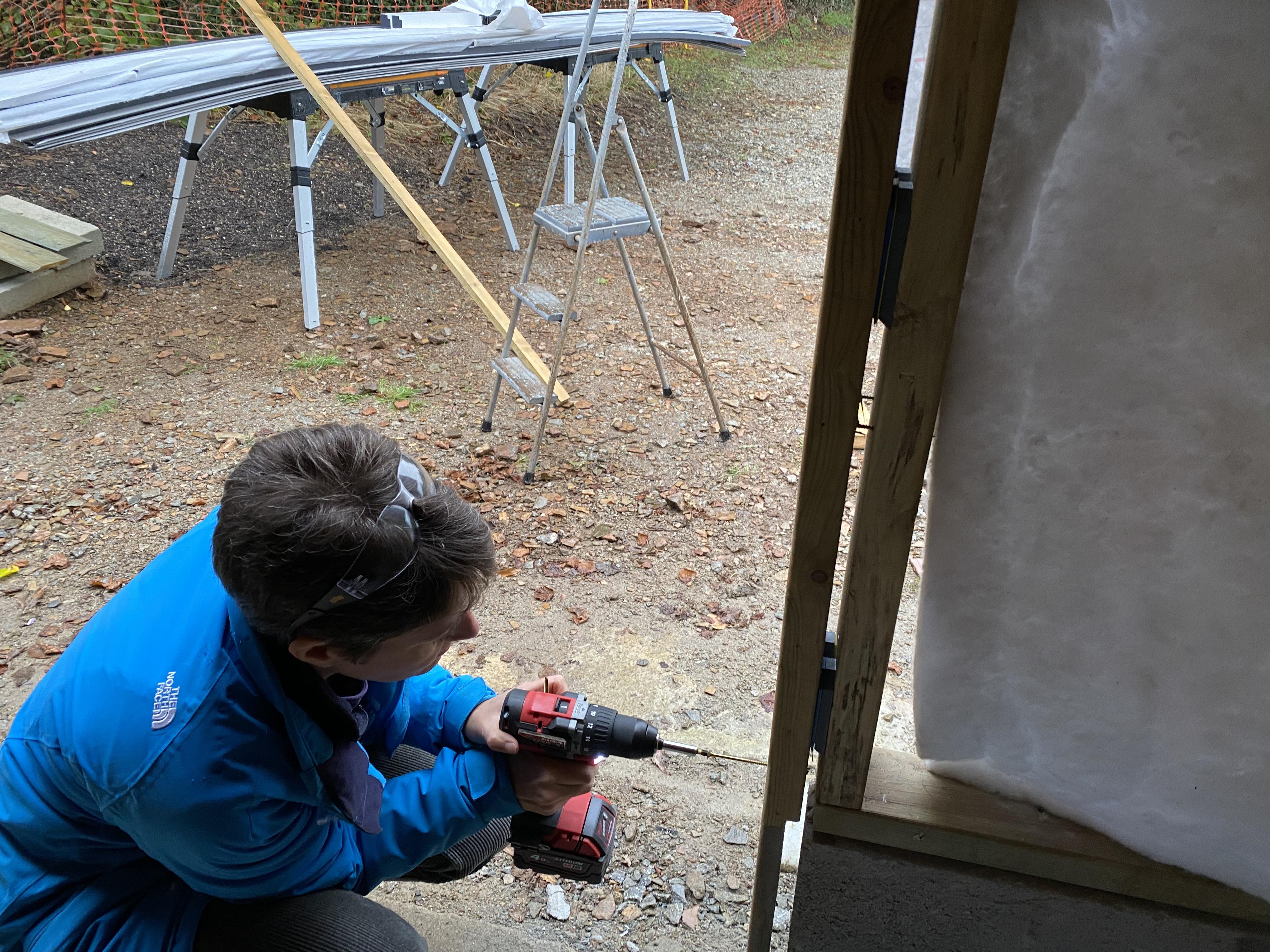
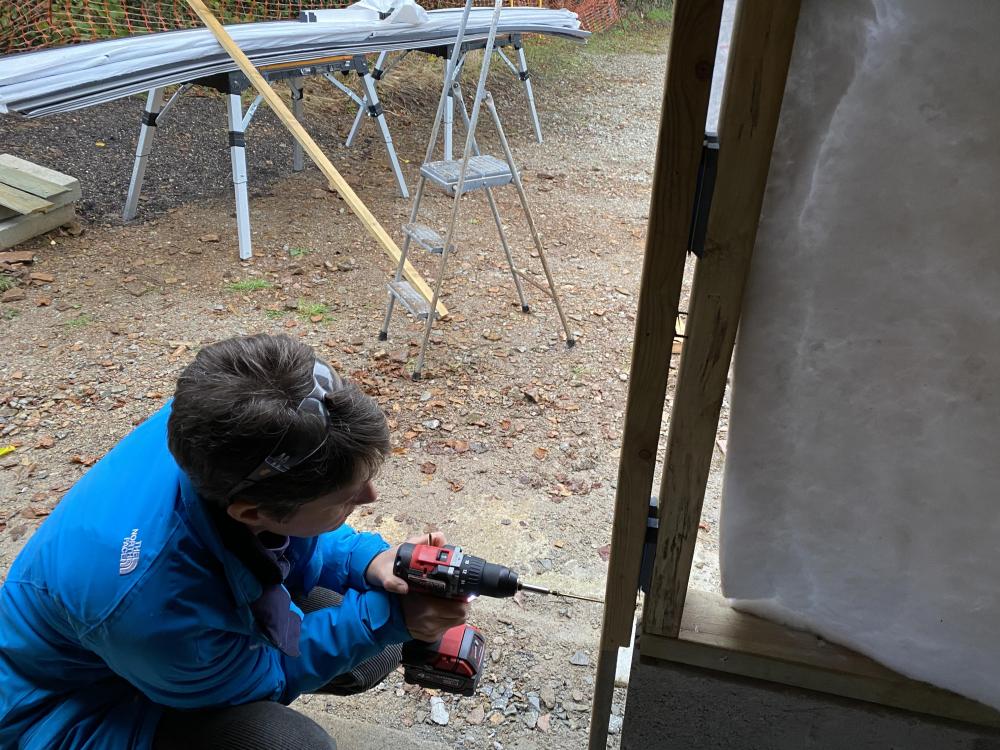
In our semi built workshop we have two rows of breeze blocks, on top of which is a strip of DPM, followed by the wooden frame for the walls. On the front wall we forgot to put the DPM on top of the blocks before putting on the frame, and now we are thinking about whether or how to add a DPM there before we add the cladding and finish the structure. I've tried digging out the mortar that sits on top of the bricks with a multitool, but without much success. I also tried to get a saw in there to cut out some mortar, but again without any real success. My questions are: how important is it that we have this DPM strip in place? Is there an alternative to removing the mortar that is easier? Should I consider just paying someone who knows what they are doing to do this? I've added a picture that has the wall in it - it isn't a picture of the wall as such but it was the best one I could find.
-
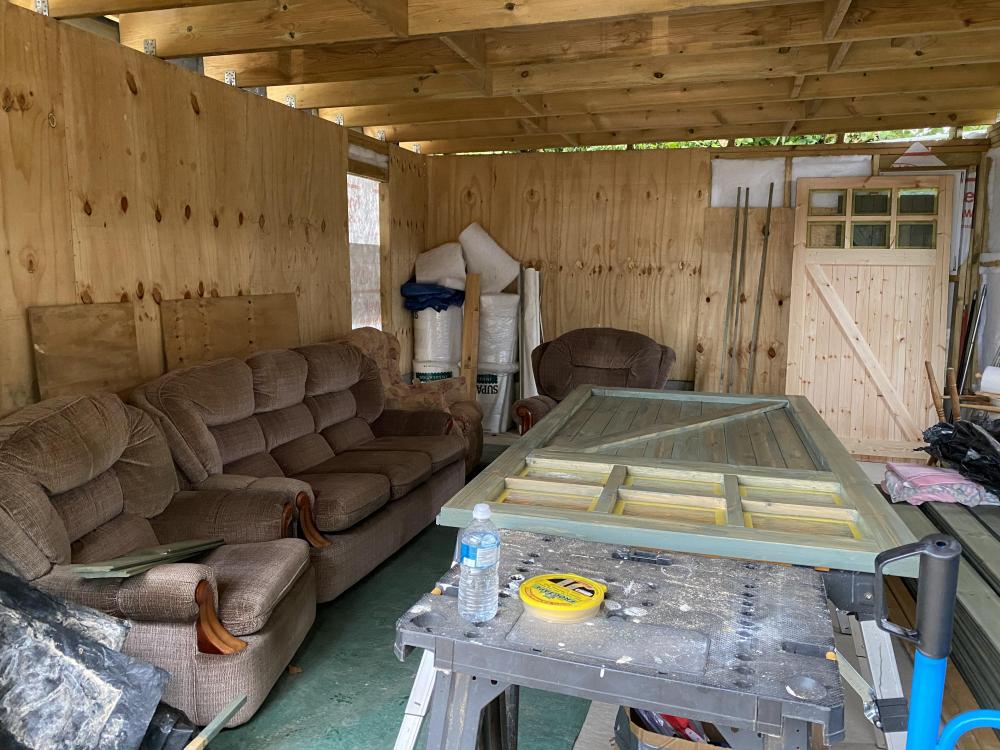
We are almost at the end of building our new workshop, but have not put in any ties to hold the roof to the structure. The rafters are fixed to the top plate with L shaped galvanised plates that are nailed down with about 36 galvanised square twist nails on each side. The top plates (4 of them) are screwed together. I've bought a pack of metal twist ties to nail the rafters directly to the frame, but am now stuck about where to fix them, and whether it is too late to add them. We have already almost finished the external cladding, so it would be difficult to nail these to the outside of the stud frame, but on the inside we have plywood screwed directly onto the studs. Should I fix the ties on top of the ply, and just have them visible? If I try to put the ties underneath the ply I won't be able to screw the ply on properly... The other option I'm considering is fixing plasterboard on top of the ply for a smooth finish on top of which to paint, because the ply boards have all gone mouldy (see my other thread about mouldy ply!). If I did that, I might be able to hide the ties behind the plasterboard. All suggestions welcome!
-
good idea. We have a blowtorch here and some ply that has stayed unaffected. I’ll do a controlled test - one Japanese charred and one not. See what happens! However, for my workshop, I don’t favour the “had a fire” look, so will be trying the zissner paint first.
-
i bought a tin of zinsser white anti mould paint a couple of days ago, preferring it over the dulux anti mould because it had more sinister health warnings on the back ?
-
Very interesting. I will have another look tomorrow, but I think it is both! Certainly there is a slight coating of the wood present, and a further type of mould which is a turquoise/green colour which is only on the surface and easy to brush off. The black mould can be brushed off (it is powdery), but seems also to be ingrained - as you describe the blue-stain mould. I may see if I can find someone interested in microbiology to have a gander at some samples under a microscope!
-
Have I made a massive booboo...??
Omnibuswoman replied to Omnibuswoman's topic in Garages & Workshops
My dad's school-age nickname was Yogi Blair *smiley face* -
I haven’t got a monitor yet, as the building is still open to the elements, and a hygrometer is therefore likely to measure the atmospheric conditions rather than the building per se. Inside mum’s cottage the RH is 68%, which mum said is not unusual in wet weather (it’s mizzly outside) even though they have taken multiple steps to try to reduce the humidity. It’s also a damp microclimate down here in the valley. We thought that our place would be drier being at the top edge of the valley, but now I’m not so sure!
-
Crikey!!! I’m going to give washing it down and painting with antimicrobial paint a go, but am open to needing to replace it all if that doesn’t work. In the meantime I’m wondering if leaving the front doors open might be a good idea rather than sealing the place up with no heating in situ yet. I’m sure it’s going to get worse.
-
To be fair, I think the house should be condemned. It’s about to go up for sale, and I think only a fool would buy it. The cottages were built for mine workers by the Duke of Bedford in the 1860s, out of the rubble dug from the nearby mines. A sort of philanthropy on the cheap. As the doors and windows have been perpetually closed since February, and there’s been no heating on, the whole place has a sheen on mildew - every carpet and wall - and the black mould is even worse than before. It’s an absolute health hazard. That said, Auntie Rene is still going strong at 94 (now in a care home) having lived in those conditions for over 55 years. Maybe it’s possible to acquire a health benefit from living in such an environment…
-
Have I made a massive booboo...??
Omnibuswoman replied to Omnibuswoman's topic in Garages & Workshops
We have! He is going to hang the front doors for us. ☺️ -
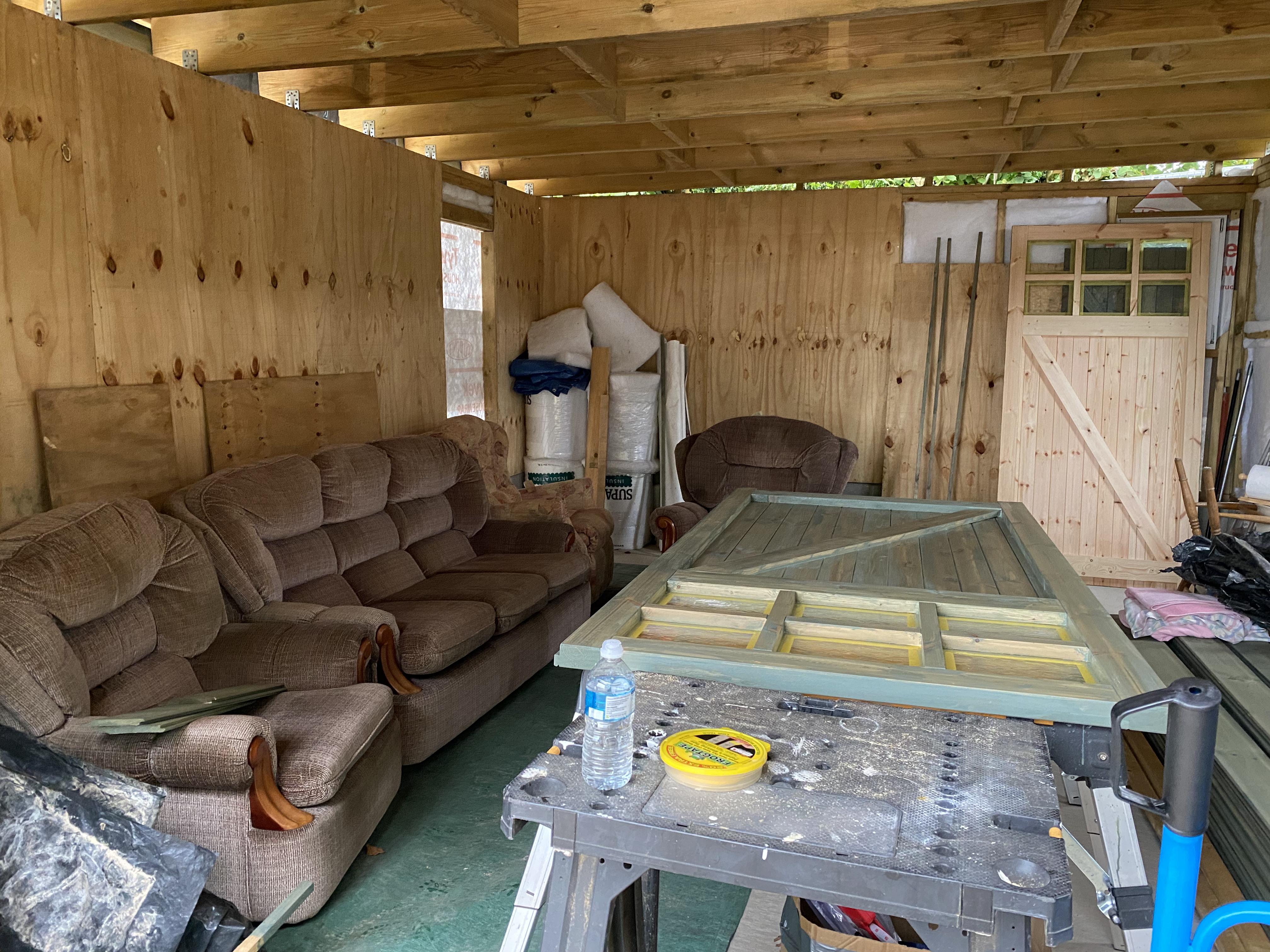
Actually, something just occurred to me about the aetiology of the mould - a month ago we moved a three piece suite and a further armchair up to the workshop which had come out of my elderly Great-Aunt's house earlier this year. Her house was full of black mould - it was a chronically cold and damp solid stone wall Victorian cottage. I wonder if the spores for this have come from us sitting on the sofa, and now that the weather has been quite wet it has taken up residence on our ply walls... that would explain why the inside of the ply is not affected...
-
Thanks all. This is our workshop which at present doesn't have leccy, or front doors, or fascia and soffits, so no option to heat it at the mo, but we expect/hope to have the front doors, fascia and soffits on by the end of next weekend. This may potentially make the problem a lot worse as then the airflow will reduce dramatically, although there will be less weather coming in I would hope, and at least then it would be worth putting in some heat. However the electricity supply hasn't been connected up yet, so no source for heat in any case. I'm not sure whether I should consider binning the lot and starting again with OSB, but as it cost about £600 for the ply I'm loath to be so wasteful!
-
We do have insulation in already (a novel product made from old plastic bottles that made a fantastic dog bed) but not an airtight membrane - only a tyvek membrane wrapped around the outside. Interestingly, today we removed two of the ply sheets from the front wall and found that behind them (on the side facing the insulation) there was no mildew at all... That would support your theory about the inside of the ply having condensation forming on it, but I thought that ply could absorb and release a certain amount of moisture without any harm coming to it...
-
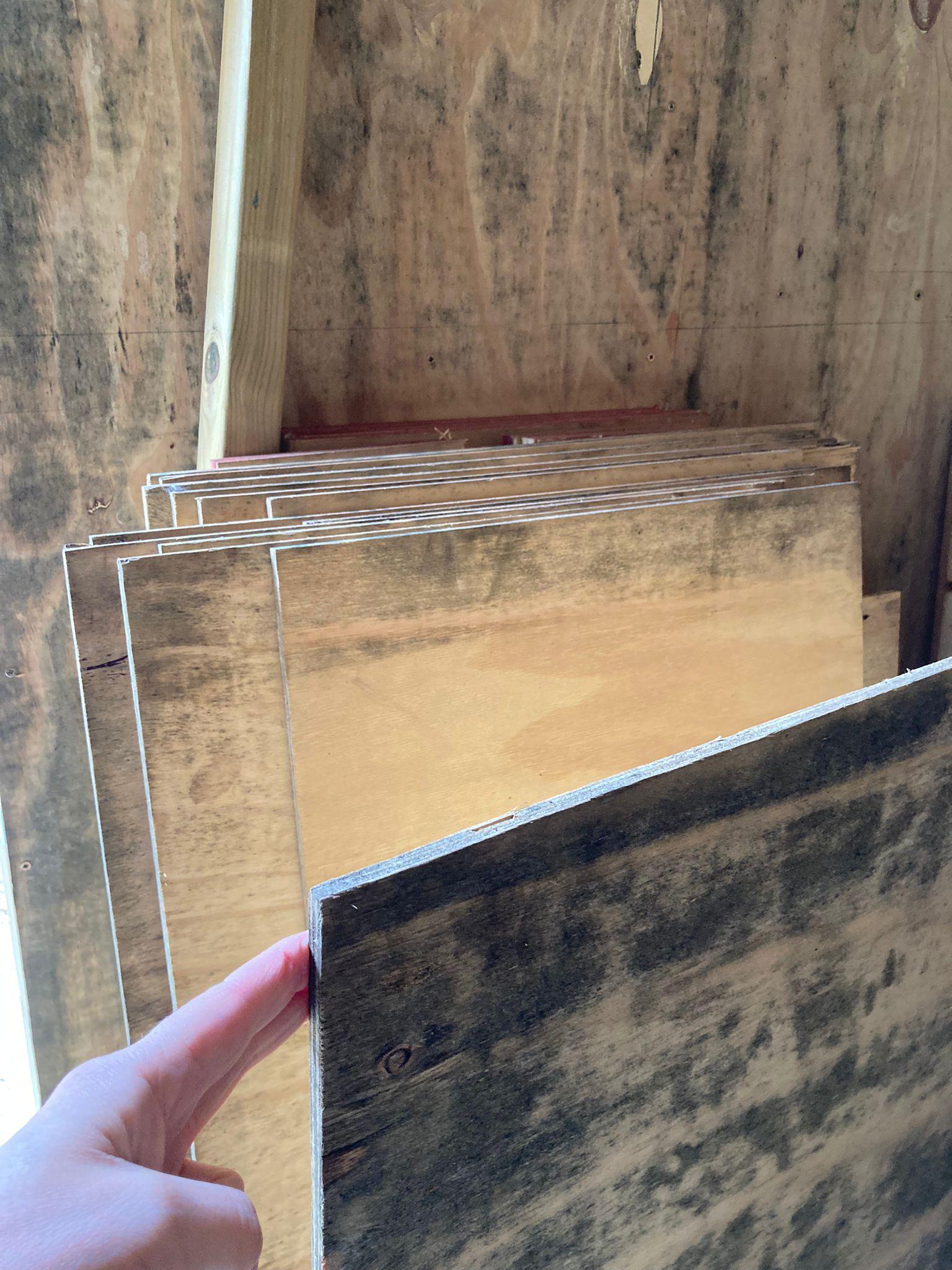
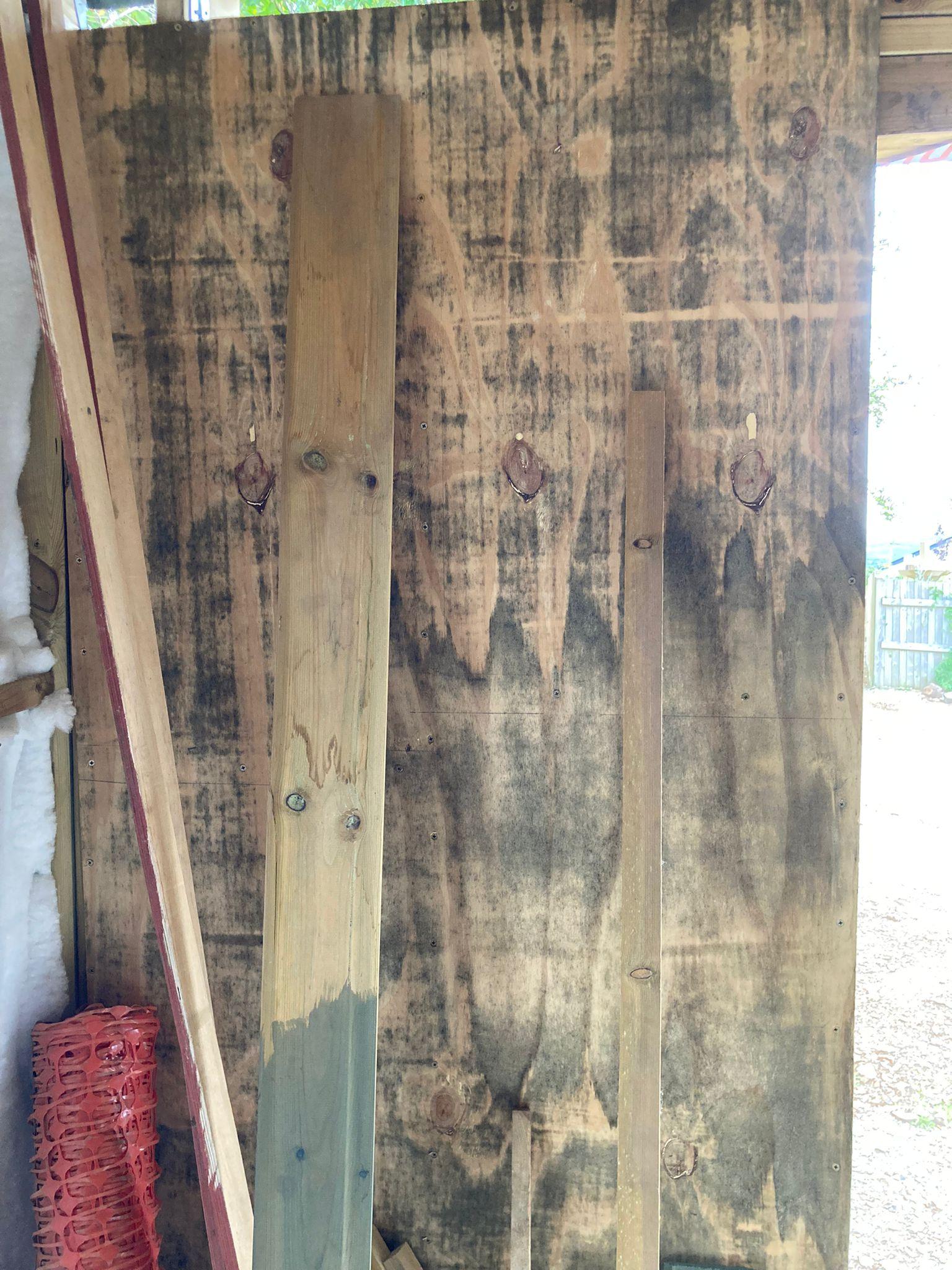
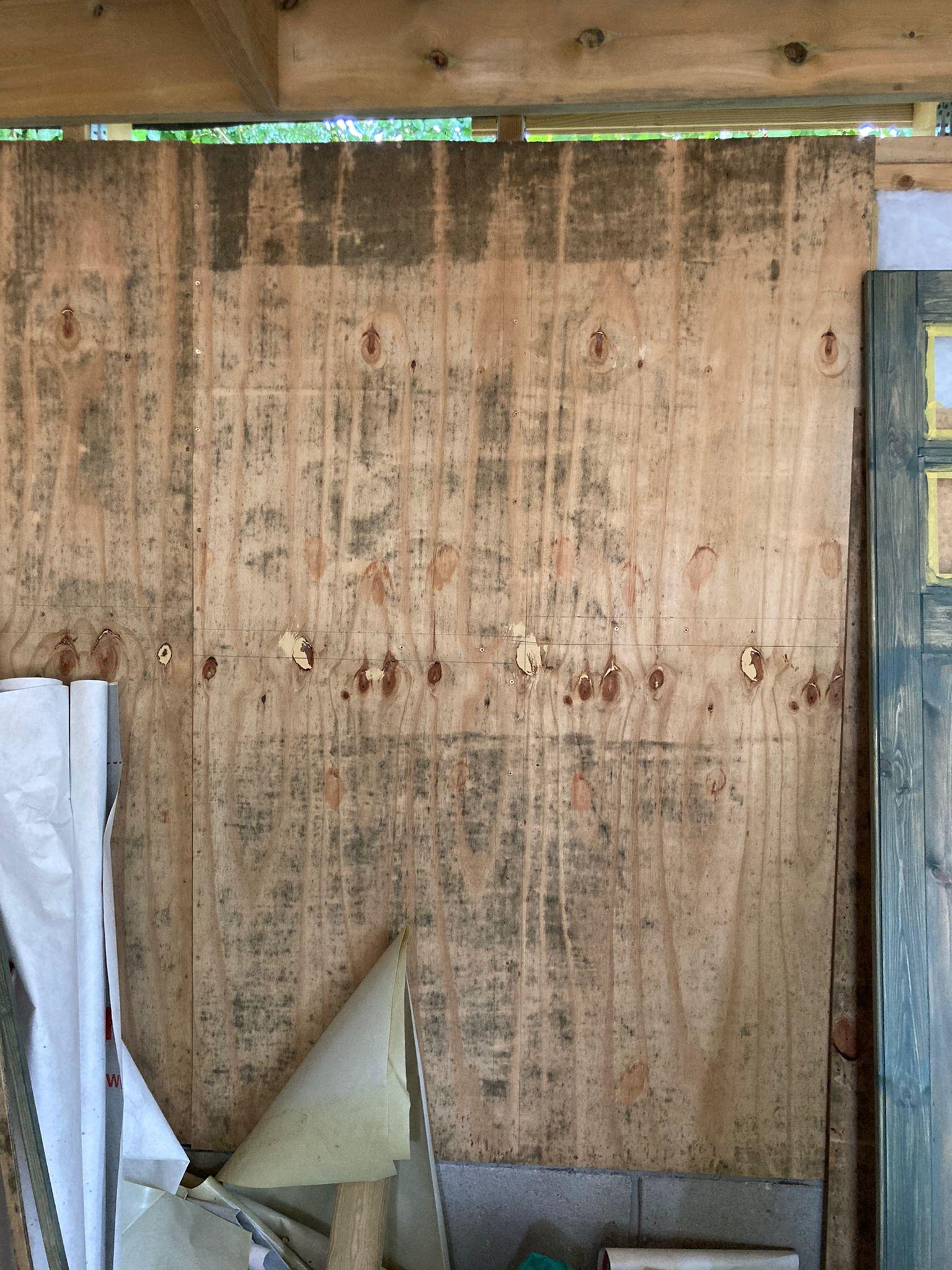
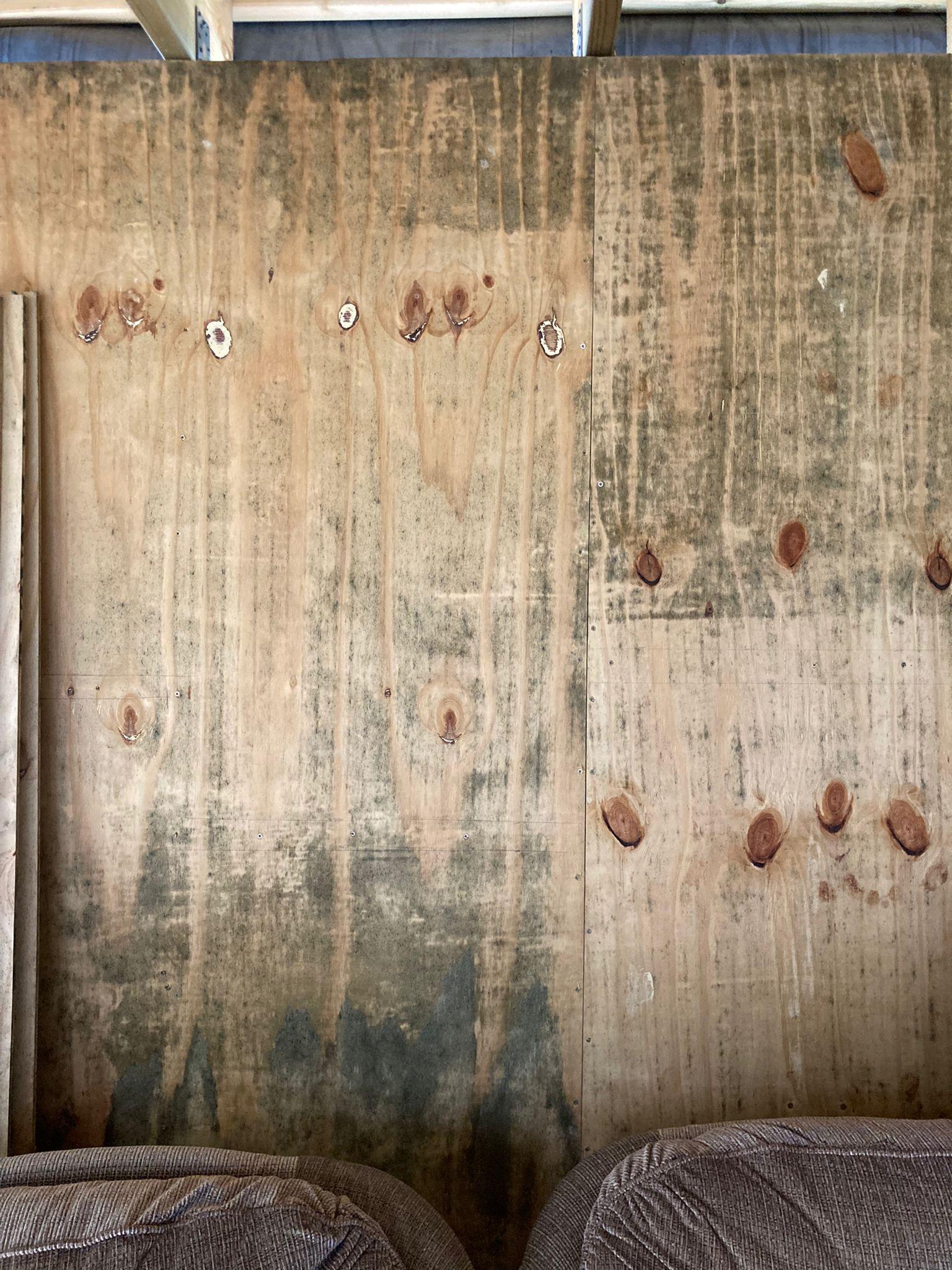
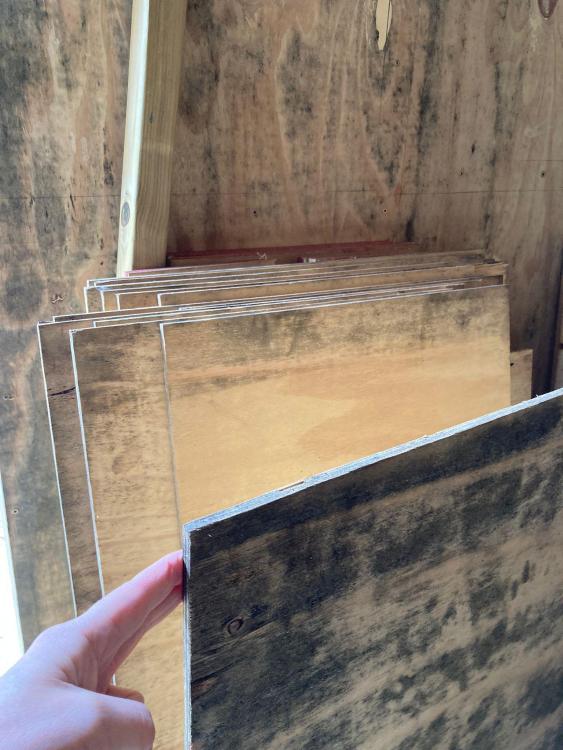
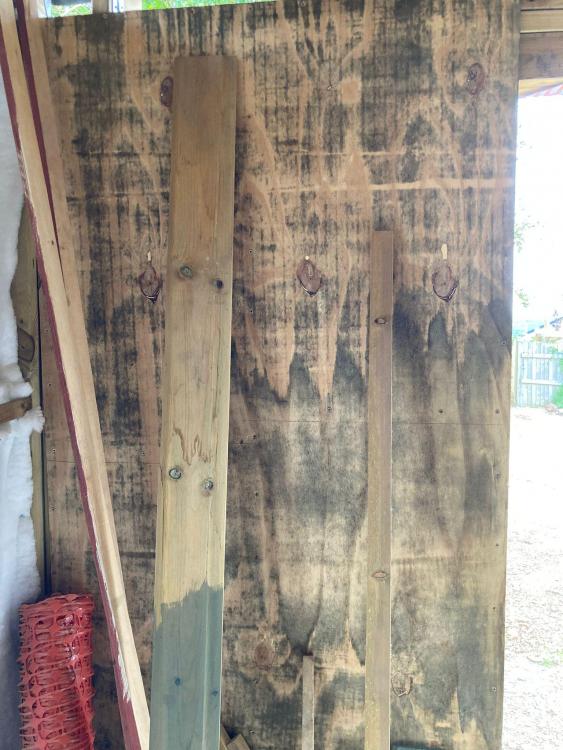
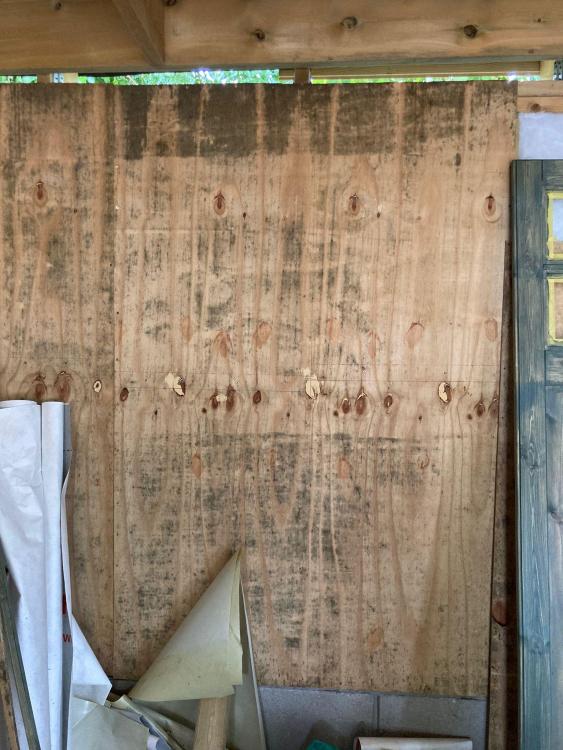
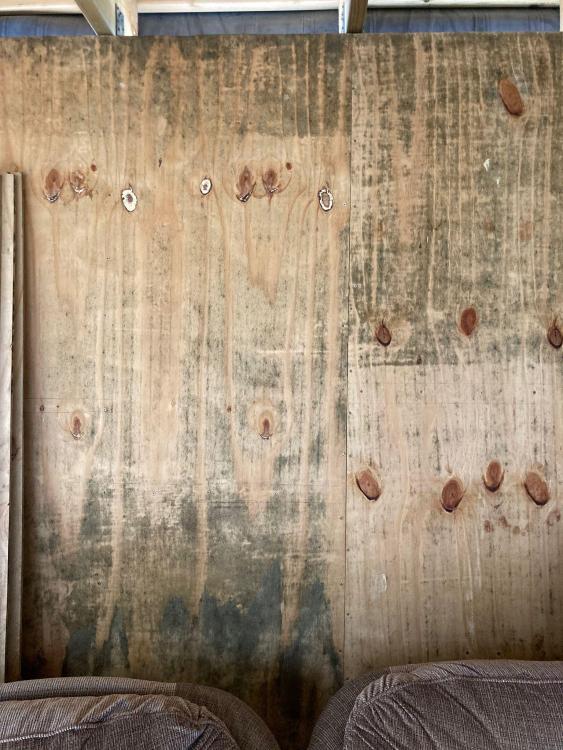
We put the plywood onto the inside of our stud frame back in June/July - all seemed fine. On Friday we returned to the workshop after a fortnight away and found every wall covered in black mildew. There has been plenty of airflow in the workshop as it has no front doors as yet. Does anybody have any ideas about why this has occurred? It has been quite stormy recently (SE Cornwall), but only normal for Cornwall, and the walls have stayed dry as the building is wrapped in Tyvek. There were also some part sheets of ply leaning against the walls, and where two sheets touched the ply was clear of mildew (photo 1). All wood exposed to the air was blackened. How can we treat or seal this to stop it from getting worse?
-
Have I made a massive booboo...??
Omnibuswoman replied to Omnibuswoman's topic in Garages & Workshops
Update: we had a neighbour pop round yesterday who is a joiner. He took one look at our external noggins, and started into one of those Harry Enfield sketches "You don't wanna do it like THAT: You wanna do it like THIS". He pointed to one of the noggins, declaring it cracked, and wacked the thing right off! Then walked around the building questioning my building choices in a way that was probably enormously helpful, but given that we have almost finished, didn't feel all that helpful..... The upshot of that rather dispiriting lecture on my half-arsed building skills was that he explained that we should cut off our external noggins (can't remove them as they are well and truly fixed on), and replace them with a gable ladder at the front and back, as suggested by @SimonD above. This actually solves the issue of the asymmetric soffit level, and in turn the difficulty of sourcing 350mm fascia (which has been unavailable at most suppliers). He also pointed us towards a local plastics company that does all of the roofing products we were looking for, available for delivery tomorrow, and at about 60% of the price we were being quoted online, so that was a massive win. Every cloud... -
This is the BBC - Bars, Bolts and Concrete
Omnibuswoman commented on BotusBuild's blog entry in South East Cornwall Low Energy build
Oh my word! That is truly impressive progress, and in the context of such a significant family bereavement, all the more so. I'm sorry for your loss - she sounds like . I just can't believe the entry of the word 'stupid' anywhere in your blog as I am absolutely blown away by your and your erstwhile wife's skills, and the progress that you have made. Well done indeed. M -
Have I made a massive booboo...??
Omnibuswoman replied to Omnibuswoman's topic in Garages & Workshops
Thanks @BotusBuild that sounds like a very straightforward solution, and I'm feeling rather "doh!" for not having already thought of it!! -
Have I made a massive booboo...??
Omnibuswoman replied to Omnibuswoman's topic in Garages & Workshops
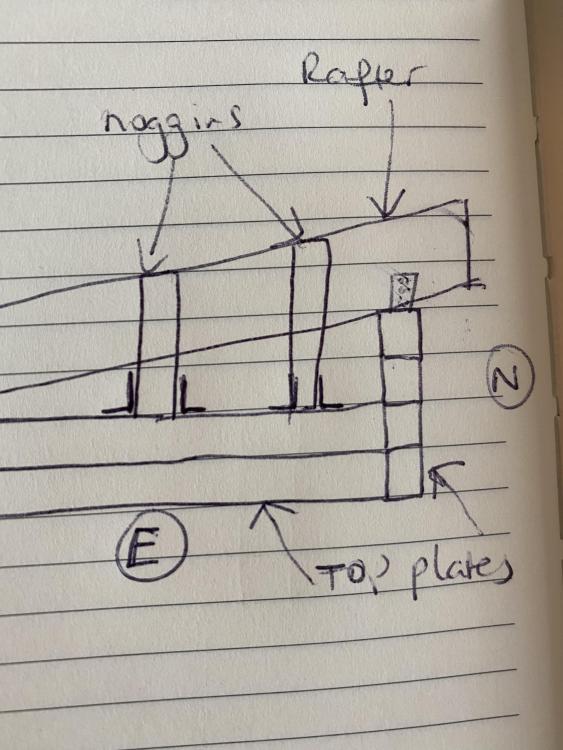
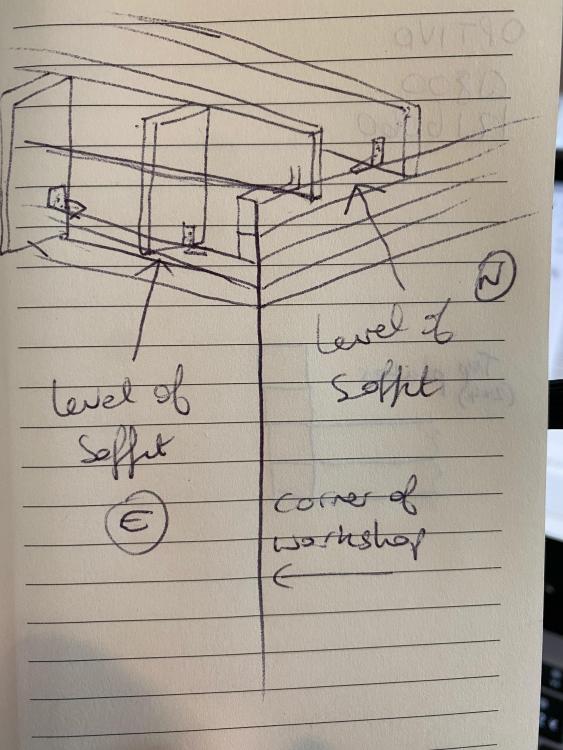
Sadly not - the noggins that rest on the top plate of the east facing wall mean that the cladding can only go up as far as the bottom of the noggins (which overhang the wall by about 20cm), whereas the bottom of the rafters on the north side sit 9cm higher up. I did wonder if I could run the fascia on the north side 9cm below the bottom of the rafters to sit level with the bottom of the fascia on the east wall, but I'm wondering what I would fit the soffit to in that case as it would be hanging 9cm below the bottom of the rafters. -
Have I made a massive booboo...??
Omnibuswoman replied to Omnibuswoman's topic in Garages & Workshops
Thanks @SimonD Are you able to draw a rough picture of what you're describing in the first paragraph please? I am struggling to picture what this looks like. We were going to order upvc soffits and fascia, so I'm wondering if what you describe in para 2 might be possible using the pre-fabricated corner joints that they sell. -
I have reached the point of ordering the fascias and soffits (again!) ready for our next stint of work on the workshop, but have run into a problem that I'm not sure how to solve, and I'm concerned it's because we (I) have made a mistake... The roof is a pent roof with the highest edge on the north side of the workshop. On the north side we put four top plates instead of two (which is what the other three sides have). The rafters run north-south fixed to the top plates, so there is a 9cm height difference between the two sides, creating the slope to get the rain to run off. On the east and west sides we fixed noggins on top of the top plates, abutting the side of the last rafter, to provide an overhang of about 20cm. Now that I'm looking at fascias and soffits, i've realised that the soffit will be sitting 9cm higher on the north side than on the other three sides (see attached drawing) because the rafters are sitting on the extra two top plates. So I'm wondering whether I should run the fascia 9cm beyond (below) the bottom of the rafters on the north side, so that where it abuts the east and west corners there will not be a difference in the level of the soffit. The question is, if I do that, what do I fit the soffit to?? Have I made a massive boo boo?? All advice very much appreciated. Cheers, M