JulianB
-
Posts
85 -
Joined
-
Last visited
Everything posted by JulianB
-
Old Cottage Restoration + Extension Project
JulianB replied to JulianB's topic in General Self Build & DIY Discussion
Thanks for explanation (& apologies if my knowledge is limited/flawed in places!). With regards to the walls getting damp, I thought this was an unavoidable situation due to the solid walls being sat directly onto earth without any form of DPC management, together with the unrendered external wall finish being pearmeable by nature and hence absorbing a degree of moisture during the wetter periods, which would gently pentrate through? -
Old Cottage Restoration + Extension Project
JulianB replied to JulianB's topic in General Self Build & DIY Discussion
Replies…success! Thanks for your comments…I had actually ‘googled’ EnerPHit previously as came across it in one of the BuildIt magazines. Will definitely have a trawl through greenbuildingforum for Shevek tonight! With regards to wall insulation, I’m not entirely sure I understand your suggestion. My understanding was that if you do place an impermeable insulation/material up against the inside of the walls, moisture would build up on this impermeable face and manifest itself as damp? By using something more like reed, sheep’s wool, hemp+lime plaster etc, you are managing the moisture in the walls by effectively allowing it to travel inside the building and dealing with it through adequate ventilation? With respect to the external pointing, we’re on the same page here…the house is currently pointed in cement mortar (DOH!), and is on my to-do list (still undecided between NHL or hot lime mortar). I will try to let the wife down slowly re. the log burner, I might need to counter it with an upgrade to another part of the house (bigger en-suite? Hehe). Agreed – I’m thinking if we go down the conventional blockwork route, we could probably get away with ‘blockwork – cavity (filled) – blockwork’ as the outer blockwork skin would then be part rendered and part clad in natural Hornton stone. I’ve only just started researching foundations, and haven’t had any input from a SE as of yet…passive raft slab comes to mind as an interesting one to investigate, but I will need to do a lot more research to understand the associated costs and complexities involved with each approach. I’m wondering if a soil survey would probably be a good place to start… -
Old Cottage Restoration + Extension Project
JulianB replied to JulianB's topic in General Self Build & DIY Discussion
In an attempt to get the ball rolling, a few questions / discussion points: 1. What is the likely level of air tightness / general thermal efficiency I can hope to achieve given the traditional construction methods on part of the house… I have had a very deep trawl through the forum and can’t seem to find a great deal of examples on what people generally do (apart from flatten them!). Is a box within a box our only viable option? Would this create issues relating to condensation & damp in the cavity between the two? 2. MVHR: I’ve read that below a certain air tightness level, it becomes relatively pointless to install an MVHR…the answer to question 1 will hopefully feed into this point, however I was also keen to use the MVHR to manage the moisture content in the house if I were to go down the route of traditional permeable materials in the old part of the house, which would require good ventilation. As previously mentioned, it would be nice to have a log burner in the old house, which could be fed by an external air source. If this still poses as a considerable issue in terms of delivering as good a thermally performing old house, then we may re-think. With regards to MVHR brands, I have seen that costs generally go up quite considerably once you start looking into units which incorporate heat pumps etc Currently I can’t see us wanting to heat the rooms via the MVHR as opposed to the ASHP / boiler, as I presume the COP is quite a bit lower? I’ve looked at a few systems such as the SystemAir and Vent Axia which don’t appear too expensive and which I occasionally see crop up on eBay second hand which could prove useful…any others that might be worth keeping an eye out for? 3. ASHP: As discussed, I would really like to invest in an alternative means of energy as opposed to my current oil fired boiler…The whole house can quite happily be UFH, which should tie in nicely with an ASHP (unsure on size at this stage). My main concern is the DHW…whilst I appreciate that each ASHP has a unique COP trend with demand temperature, I seem to recall anything over 35degC as being pretty detrimental. If so, that means that I would need to top up my DHW using an alternative source. Solar power to an immersion heater is something I have seen, however I’m concerned that this installation may blow the budget, and unsure on what the conservation officer would approve. Failing the solar panel option, would that leave me with remaining on oil to provide the additional heat required to get DHW up to the 40s, or potentially look into GSHP again if this could satisfy both requirements at a sensible COP which would make the additional costs worthwhile? Some general info I forgot to mention in my first post: · Floor area of entire house + proposed extension - 130m^2 · The rear of the house faces West/South West · Deepest excavation point to FFL should not be more than 1.5m from the current lay of the land – we’re hoping the subterranean aspect might yield a degree of thermal efficiency benefit, together with the back of the house being considerably glazed, which we’re hoping we would make the most of by keeping the UFH circulating during the day in order to distribute that solar heat gain to the shadier areas of the house (i.e. old part!)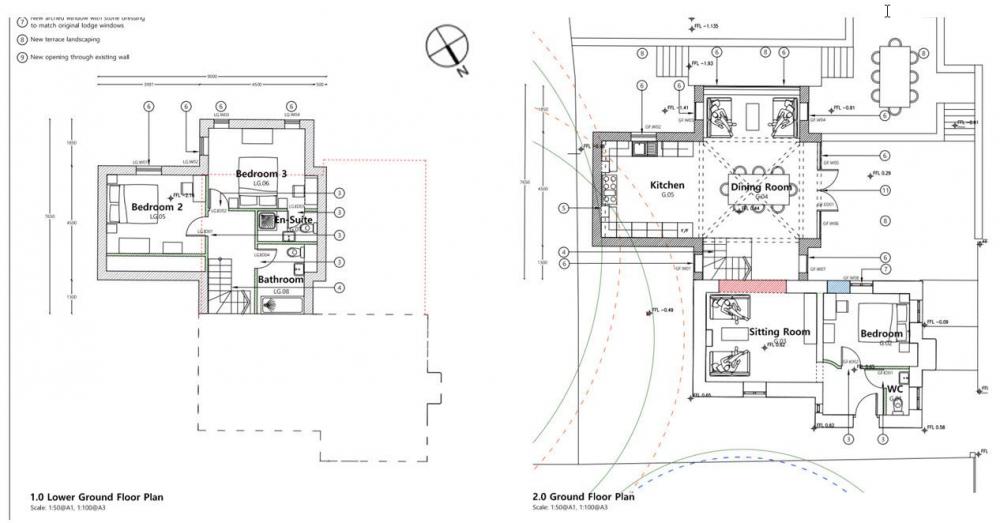
-
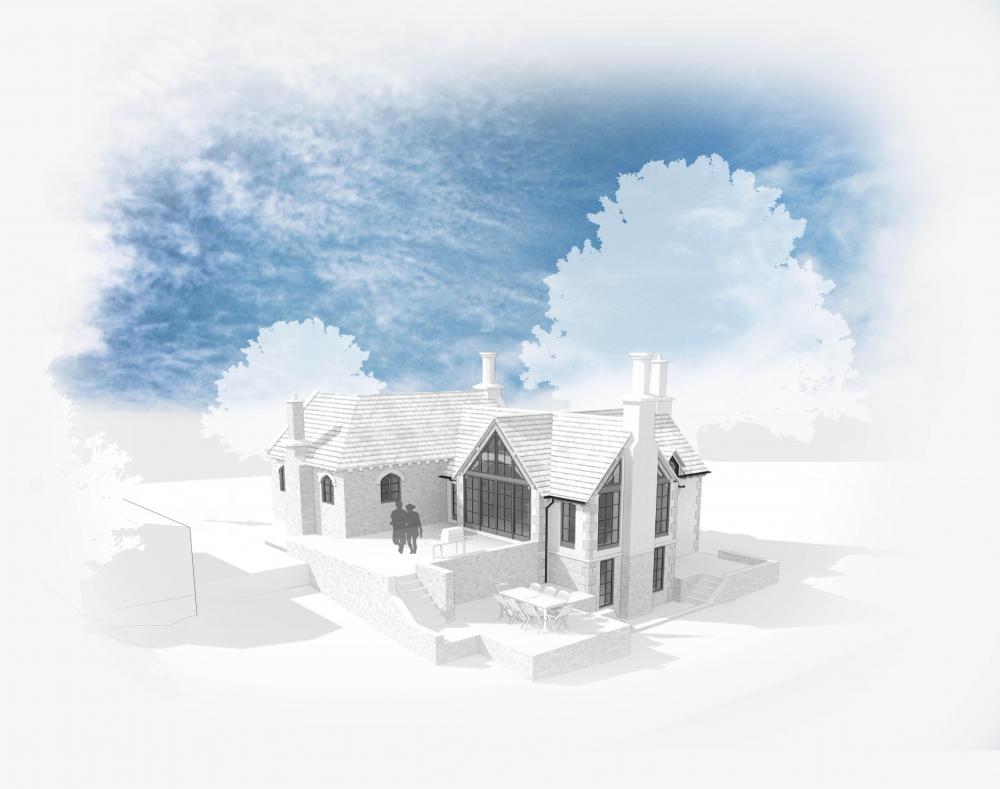
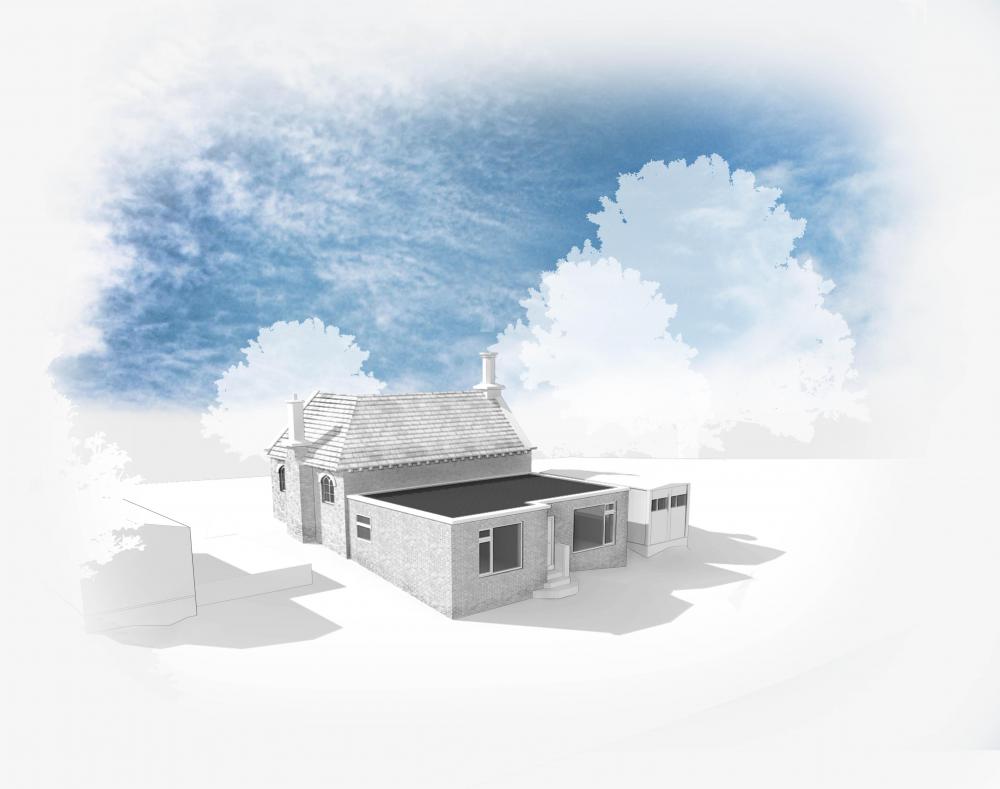
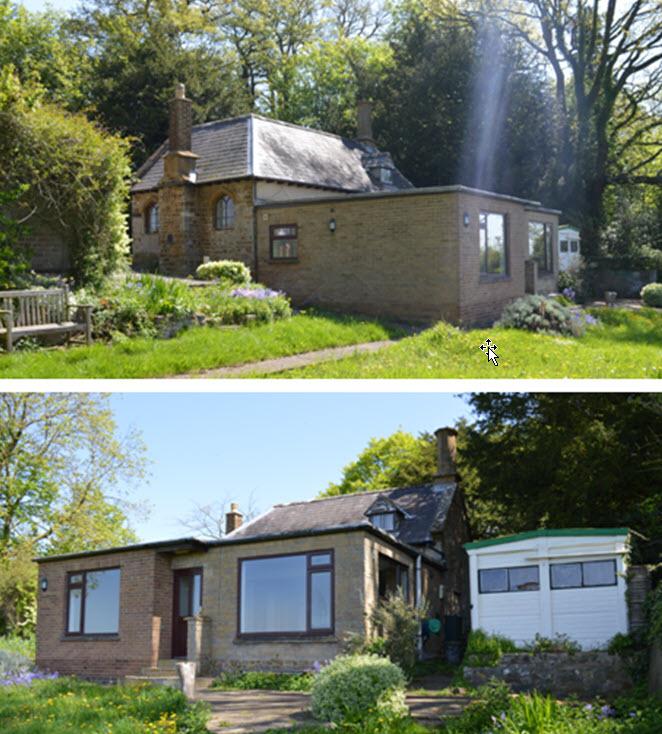
Morning All! It’s my first post on here (so be patient with me please!), but I have been lurking in the shadows for a while now! My wife and I (& our 2 daughters) currently live in a grade II listed gate keeper’s lodge (conservation area) which has been subject to some terrible building work in the past (leaky flat roof extension…). We’re in the process of trying to secure planning permission to drop the extension and build something which is sympathetic to its surroundings, larger (in terms of internal floor space) & more energy efficient. We also intend on addressing the poor condition of the old part of the house (which they will naturally be a lot stricter on given its status, but is in poor state of disrepair nonetheless). The property is currently single storey & ‘off grid’ in terms of gas and mains sewage; a good opportunity to research alternative energy sources (ASHP/GSHP, potentially PV if they allow it) as opposed to our current oil fired boiler, together with moving towards a sewage treatment plant (given the change in legislation & the fact that our proposed extension scheme incorporates an element of subterranean, and moving the tank to the lowest point in the garden would enable the system to remain gravity fed). I’m a Vehicle Dynamics Engineer by profession, and have some experience renovating our previous grade II listed cottage (stripped all walls back to stone, addressed structural issues such as roof spread, put down limecrete floor, new heating/electrics/plumbing/underground drainage/windows etc!). We’re hoping to be quite hands on through the project (partly financially driven as usual!); hoping to buy a 2nd hand digger, quite happy getting my hands dirty, using AutoCad & learning in general! I have done a bit of reading into the principals of PassivHaus which are appealing, however am aware that in its raw form might not be totally compatible with the requirements of a traditional building construction; we’ve had first-hand experience of the trials and tribulations in dealing with solid stone walls and the necessity for good breathability/circulation in our first house (we bought it riddled with damp, so much so that the mortgage lender placed a retention on their offer after the initial survey!). I have come across a few examples where PassivHaus has been incorporated into older buildings, however from memory these consisted of a ‘box within a box’ concept to avoid upsetting the balance of the old building. Unfortunately this is a luxury I doubt we can afford given that we do not have a great deal of floor space available; I’m assuming that once you take into consideration the air gap required + internal insulation to make it worthwhile, you’ve eaten into quite a bit of volume. Below is a quick and dirty brain dump of the main plans / ideas / concerns floating around: Thermal efficiency: · Improve floor performance by introducing a Limecrete base (unless there are any better suggestions out there?) – current flooring is laid directly onto earth… · Improve window performance – Main outer frames are currently timber, however window opening sections are metal, with all glazing currently being single. We’re hoping we’ll be granted permission to migrate to double glazing (slim-line most likely). With regards to the thermal bridging brought about by the metal frames, current thoughts are either secondary glazing units, or having thermally broken frames made. We’ll also need to think of ways to create the most efficient seal between the metal window frame and timber. · Improve front door performance (all timber) – currently very drafty! Thinking the frame might need to be replaced to provide an adequate sealing area – wondering if any modifications can be made to the door itself to help matters (granted that we have no chance of replacing it…) · Roof / Ceiling insulation – Currently cold roof setup, however we are thinking of opening it up to expose the vaulted ceiling. I’m minded to think that the main moisture management we’ll have to contend with would be in the walls & floor, and hence might be able to use more modern materials and methods for this area if of a significant advantage. Our thinking is that we will manage room humidity levels through an MVHR? · Chimneys / fireplaces: Currently two present, however we’re thinking of closing one off. The idea is to install a log burner in the other…not sure what people’s thoughts were on the associated penalty in doing so (vs blocking it off). Renewable energy options: · Have read quite a bit on ASHP vs GSHP and have begun to lean towards ASHP – my concerns however are whether we can bring the house up to a level where the energy requirements can be fulfilled by an ASHP without running in regions where it’s COP isn’t quite as appealing, and if it would also be able to cope with DHW needs, specifically children and baths...We’re happy to go with UFH throughout to maximise efficiency in terms of supply CH temperatures, however have not done enough research into the viability of relying on it solely for DHW. With respect to GSHP, I understand that the initial outlay is significantly higher for potentially not that much COP gain across the year – potentially the need to dig up a field to lay the drainage field for the sewage treatment plant or the need for piled foundations might mean that we could combine this work and bring costs down to a more favourable bracket? · PVs – Not really done a great deal of research into what heritage range are on offer and acceptable within conservation areas (I suspect terribly expensive though from experience?). I’m also not sure how well the house orientation + current roof design would lend themselves to this option, and the additional complexities / cost associated vs reward… Extension · I’ve mentioned earlier that we’re hoping to incorporate a subterranean element as this was the only solution we could find in order to fit a 2 storey structure which would give us the necessary floor area gains without its presence dominating the original lodge. This adds quite a few layers of complexity – we’d need to underpin a portion of the rear wall of the original lodge to create the lower level, whilst also needing to implement a suitable waterproofing system (although the rear elevation of the extension will be completely out of the ground). From the limited research I’ve done so far on this aspect, I would be more comfortable with an external solution (Type C?) to avoid having channels internally and the complexity involved in having to introduce some system to keep it clean and clear to flow freely etc. However I also appreciate that incorporating a Type C waterproofing method when one of the walls is a retaining / underpinning structure might be somewhat challenging, unless we sacrifice internal area and step another wall off that etc. · The next challenge is the proximity to two mature trees (oak 18m tall, Yew 12m tall)…we’re intending to be within 3% of the Yew tree’s RPA…I’ve had a little test dig in the RPA which looked fine and that the Arborist was happy with, but I am wondering if this might imply the need for pile foundations, or whether we could possibly get away with a different type (raft) & if this would lend itself to insulated foundation systems. · Construction method: Haven’t really made any decisions in this department…I like the idea of ICF but potentially not terribly straightforward given the abovementioned challenges? Externally, the lower ground floor level will need to be clad in stone, together with stone quoins on each corner. Upper floor level will be rendered. There is probably quite a bit that I’ve missed from the above, but hopefully I’ve made a good start on explaining the project (renders below should help!). Any comments / suggestions / observations would be greatly appreciated! Thanks,