Gooman
-
Posts
109 -
Joined
-
Last visited
Everything posted by Gooman
-
Renovating and extending 1970s house with warm air heating
Gooman replied to Gooman's topic in Introduce Yourself
Yes ... but that would only supply one room at a time and is quite ugly/industrial looking. We didn't go with the garage conversion in the end but extended the kitchen instead. We just used a 2kW thermostatically-controlled wall-mounted electric heater as a top-up for the extra space. It's only on for a couple of hours in the morning and evening, and the thermostat keeps the on-time low. -
Renovating and extending 1970s house with warm air heating
Gooman replied to Gooman's topic in Introduce Yourself
We had a specialist asbestos survey from these guys: https://safety-surveys.co.uk/. This involved them taking invasive samples and having lab tests done. We decided to keep the warm air system in the end - and we're glad we did! It works really well! It's a Johnson & Starley J50. No rads and *very* fast to warm up. None of the fears that others raised were realised - no dust circulation or dry skin or dry eyes. In terms of costs vs a traditional wet system it's hard to judge ... you could only really judge after having ripped it out and replaced it! But based on the increase in room size over our previous property, we think the bills are in-line with a wet system. Long term, we think our best replacement option is some form of electric heating into a heat exchanger that uses the same ductwork. Johnson & Starley make such a heat exchanger (called the Aquair) which works with electric boilers or air-to-water ASHPs. But the ASHP output temperature is a lot lower (35-40deg) rather than the 80deg of a gas boiler or regular electric boiler and so may not be viable unless the technology changes. We also briefly explored connecting an air-to-air ASHP indoor unit directly to the ducting, but it seems the existing ducting is too small in cross section (esp. that on the ground floor in the concrete). Upshot is that until gas becomes much more expensive than electricity, we're probably staying with the gas boiler. We haven't insulated under the ground floors. The main insulation focus so far has been from the top down. Loft insulation was fine. As it's a chalet-style roof, we have eaves cupboards and eaves voids and these were entirely uninsulated! So there's been a ton of Celotex installed there. As the heating system blows warm air in directly, insulating the floor wouldn't provide a fast enough RoI to be worth the hassle and expense. Our biggest sources of draughts have been dealt with (new front door, new kitchen extension and resealing around all windows and patio doors). One important one is the combustion air supply for the boiler. Some newer warm air boilers draw their combustion air down the outside of the flue from the roof terminal, but ours was a little older. The combustion air was previously supplied by a vent in the outside kitchen wall, as the boiler cupboard is in the kitchen. This clearly worked well as there was a fierce draught into the kitchen! After consulting the boiler manufacturer and our heating engineer, we now instead have a 5" circular plastic duct from the outside running between the ceiling and the floor above directly into the boiler cupboard. Depending on your boiler engineer's interpretation of the regs, this may also require ducting into the return air plenum in the boiler cupboard. One more point on the boiler - the timer control is very old fashioned, just being a 24 hour mechanical rotary timer. I've augmented this with a Wifi remote control that's integrated into our home automation system, so I can program different times on different days, as well as having it automatically turn off when we leave and turn on when we come home inside programmed times. We're planning to have the cavity walls insulated (yep, I know, we should have prioritised that). One other thing to watch on 70's builds is that the ground floor sockets are often dropped down from the first floor ring main, with the drops in the cavities (although not current practice this is apparently fine, but when you have cavity wall insulation done you need to mention it to your installer as they have to use blown fibres rather than polystyrene beads). This means that your sockets are backing into the cavity air, and are a source of draughts! We've plugged the holes in the back boxes with sealant to solve this. I would advise you to definitely live with the warm air system a little before you decide what to do with it. We're vary glad we did! If you have any other questions on it, I'd be more than happy to help. -
Air-to-air ASHP replacing warm air heating
Gooman replied to Gooman's topic in Air Source Heat Pumps (ASHP)
Nope, haven't found anything yet. It looks theoretically possible, but I've yet to find anyone who's done it, or anyone specifically offering a solution for interfacing with existing warm-air ducting. -
Air-to-air ASHP replacing warm air heating
Gooman replied to Gooman's topic in Air Source Heat Pumps (ASHP)
Strikes me that using the Aquair with a heat pump would end up as a hybrid of a new outdoor unit and the Aquair instead of a matching indoor unit. It could lead to a lack of accountability if you had any problems. Johnson Starley must surely be thinking of some kind of business strategy for the end of gas/oil boilers ... but there's nothing on their website to suggest what that might be. Air-to-air doesn't seem to qualify for RHI, but this page suggests that the price of the units and installation is a lot cheaper than wet systems: https://www.greenmatch.co.uk/heat-pump/air-to-air-heat-pump We're thinking of just replacing the entire Johnson Starley unit. -
We have a 1970s 3-bed house with a Johnson Starley 15kW gas fired warm air system, with existing ducts throughout the house. Hot water is from an electric immersion heater. Does anyone have any experience of replacing a similar heating system with air-to-air ASHP using the same ductwork? I'm assuming you'd simply site the indoor unit in the same cupboard where the current boiler, connecting it to the existing ductwork (somehow). Any thoughts, advice, guidance or warnings gratefully received!
-
Plastic pipe leak at compression joint on isolating vavle
Gooman replied to Gooman's topic in General Plumbing
Good suggestion, but I knew enough to do that ... and the leak is on the mains side of the valve, not the tap side. I've - carefully - tightened the nut, and it seems to be much improved. Thanks for the tips! -
I have a slow leak (about one drop every 20s) from a plastic pipe that connects to a screwdriver isolating valve that feeds our outside tap. It was fitted by a professional plumber around 6 months ago and has only just started leaking. I've read up and discovered that a common mistake is to not put a liner inside the plastic pipe at the joint. Is this likely to be the problem? There's no extra play in the plastic pipe, so if I cut it shorter I'll have to add something else. What's the best solution here? A short section of copper pipe with a push-fit joiner to the plastic pipe? I'm a novice at plumbing ... changed a few taps but that's about it. Not keen to call a plumber out for just a slow leak if I can avoid it! Thanks
-
Additional floor height, plinth and legs
Gooman replied to Gooman's topic in Kitchen Units & Worktops
Yep, was planning to have a similar depth board under the American fridge/freezer as it needs to slide out for access to the water supply and filter. I'll have an expansion gap between the flooring and the board (hidden under the fridge/freezer removable threshold) that I'll plug with something just for rolling it out and back again. Washing machine is under the utility, so that's not a problem. But yes, I should do the same with the dishwasher. -
I'm due to start fitting my kitchen next week. Done this a few times, so no biggie ... except for one thing. I'll be putting in a high quality laminate flooring, on underlay, over a concrete sub-base (which I've also done a few times, but not in a kitchen). Most people recommend NOT putting the flooring under the cabinets - it's meant to float, and if it's held down by the weight of cabinets it could buckle when dealing with natural expansion and shrinkage. The manufacturer specifically says to avoid putting it under cabinets too, and it would invalidate the warranty if I ignore that. But the additional height of the underlay and floor is 12mm. My cabinet legs are adustable up to 170mm. I'd like to avoid having to cut down the plinth too much - we have warm air heating so there are plinth grilles to be fitted which need enough space top and bottom to avoid the plinth becoming too weak. But that 12mm means I only have 8mm of height adjustment, which might be tight ... So I wondered if it would be wise (or not) to chock up the cabinets by around 12mm with some spare ply I have knocking around. I was thinking of making some square plates, larger than a cabinet foot, and gluing these to the floor at the locations where the cabinet feet will go. This seems a sensible move to me, but what's worrying me is I can't find any hits on Google or on here of anyone doing the same thing. On the basis that it's unlikely I'm a pioneering genius, what pitfalls might await me if I go down this road?
-
Raising part of flat roof - drainage issues?
Gooman replied to Gooman's topic in Garage & Cellar Conversions
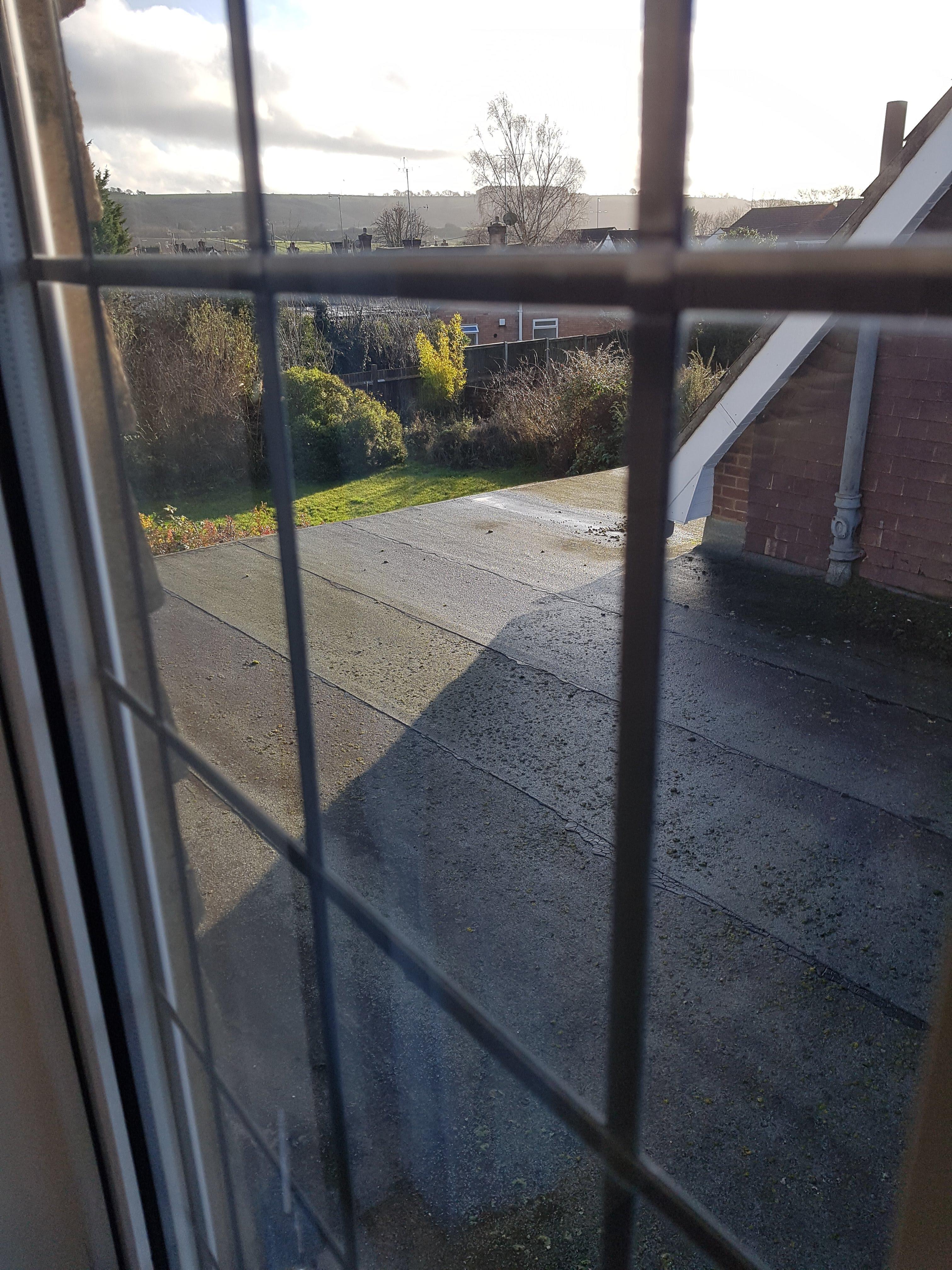
Just to close this out, I've reviewed the situation with our builder. The roof is in good enough condition to keep, and doesn't need to be replaced. The roof needs to be raised by 250mm and that is exactly the gap between the existing roof and the bottom of the fascia - the fascia can be trimmed back and flashed into the new roof height. As for the drainage, the builder agrees with me that it needs somewhere to run other than onto the neighbour's roof (which doe have guttering - hard to see on the pics as it's black). He will be running a downpipe through the roof out to a soakaway at the rear. -
Having looked into it a little further, it looks like the best option would be to replace the existing warm air boiler with a more modern version. The existing J50 is reportedly around 80% efficient, whereas the more modern versions are up to 98% and include PFGHR and are a straight retrofit. The only point where we've had sound carry is through the return air vents as the one on the landing connects directly to the boiler cupboard, which has vents into the hallway and the kitchen. But we've been told by a warm-air specialist that we don't need both of the hallway and landing ones, so we'll block the landing one which will solve the sound problem.
-
We have a warm air heating system (Johnson & Starley J50). Before anyone kicks off suggesting that we rip it out - we really like it and aim to keep it. I'm curious though about the amount of potential heat recovery that could be gained from the flue. There's a big (200mm?) asbestos cement flue that runs vertically from the boiler, through the loft and to a ridge terminal. The asbestos cement flue has been inspected by a specialist surveyor and it's all safe as long as it's not cut or drilled. The flue does put some noticeable warmth into the loft. Is there any feasible way of retrofitting a heat recovery system that would fit around the flue, providing an additional heat source to our hot water cylinder? There is no in-flue system available from the manufacturer.
-
Raising part of flat roof - drainage issues?
Gooman replied to Gooman's topic in Garage & Cellar Conversions
That's right, My main concern is to ensure that rain from the front of our garage does go somewhere, and doesn't just pool against the new raise section due to the lack of any pitch across the roof from left to right. -
Raising part of flat roof - drainage issues?
Gooman replied to Gooman's topic in Garage & Cellar Conversions
It's close, but there's enough. -
Raising part of flat roof - drainage issues?
Gooman replied to Gooman's topic in Garage & Cellar Conversions
Not enough space in the rear garden for a rear extension (and still leaving a reasonable garden. This is our "forever" house, so we're less concerned about devaluation - plus, any devaluation from it being classified semi rather than detached would be more than offset by the amenity value of the conversion. Lastly ... since we're going first, that's more of a judgement for the neighbour anyway. -
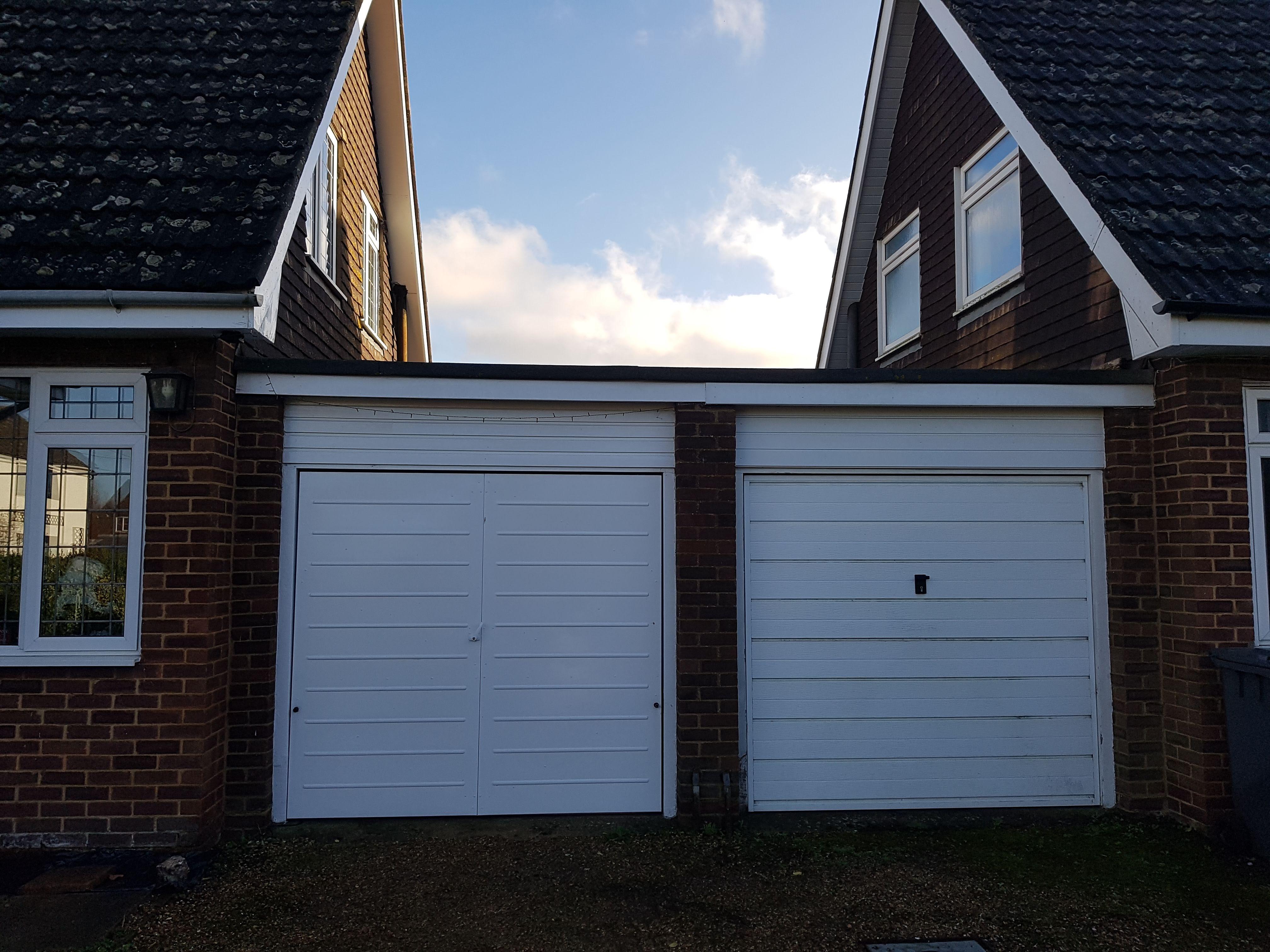
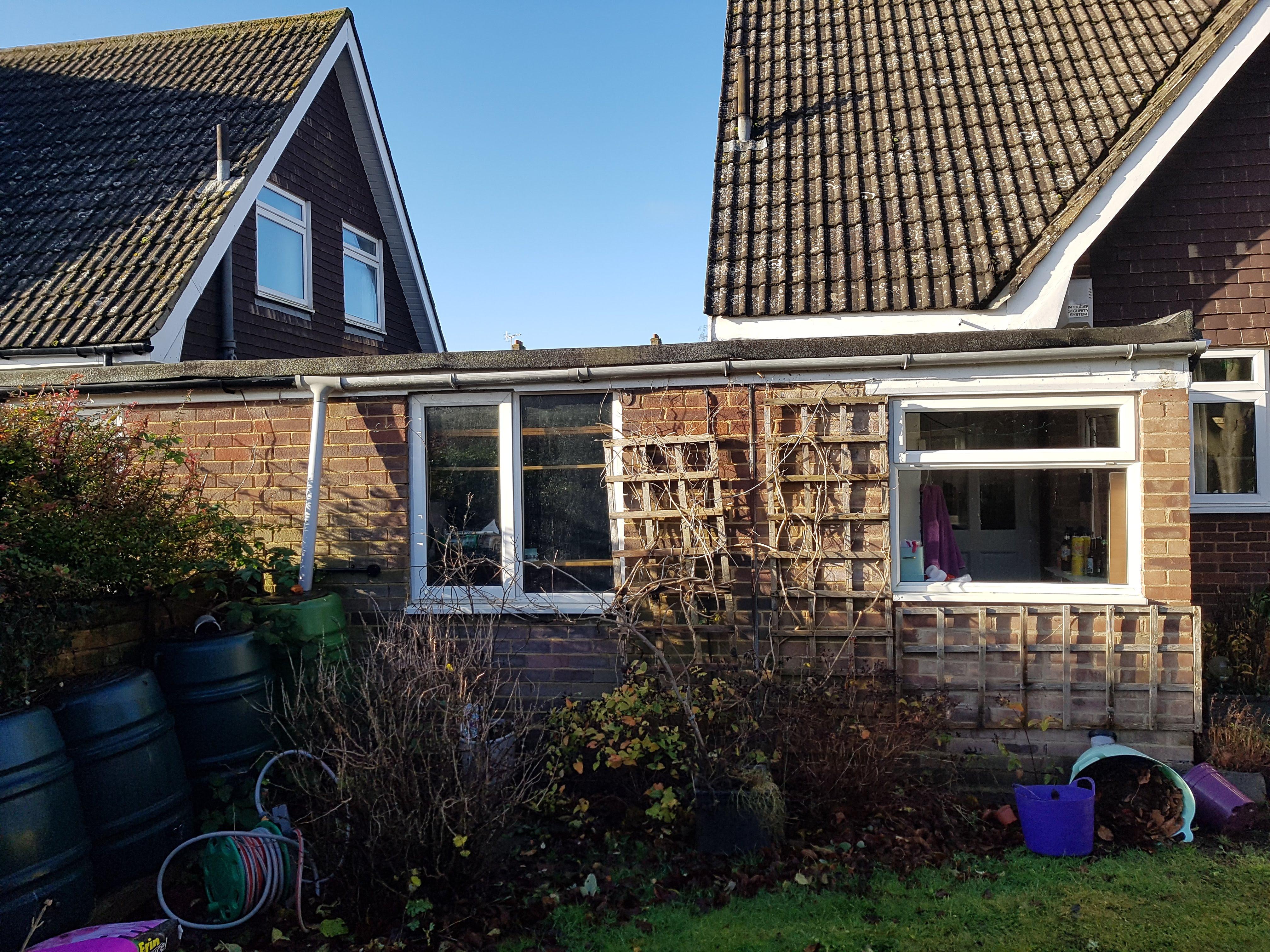
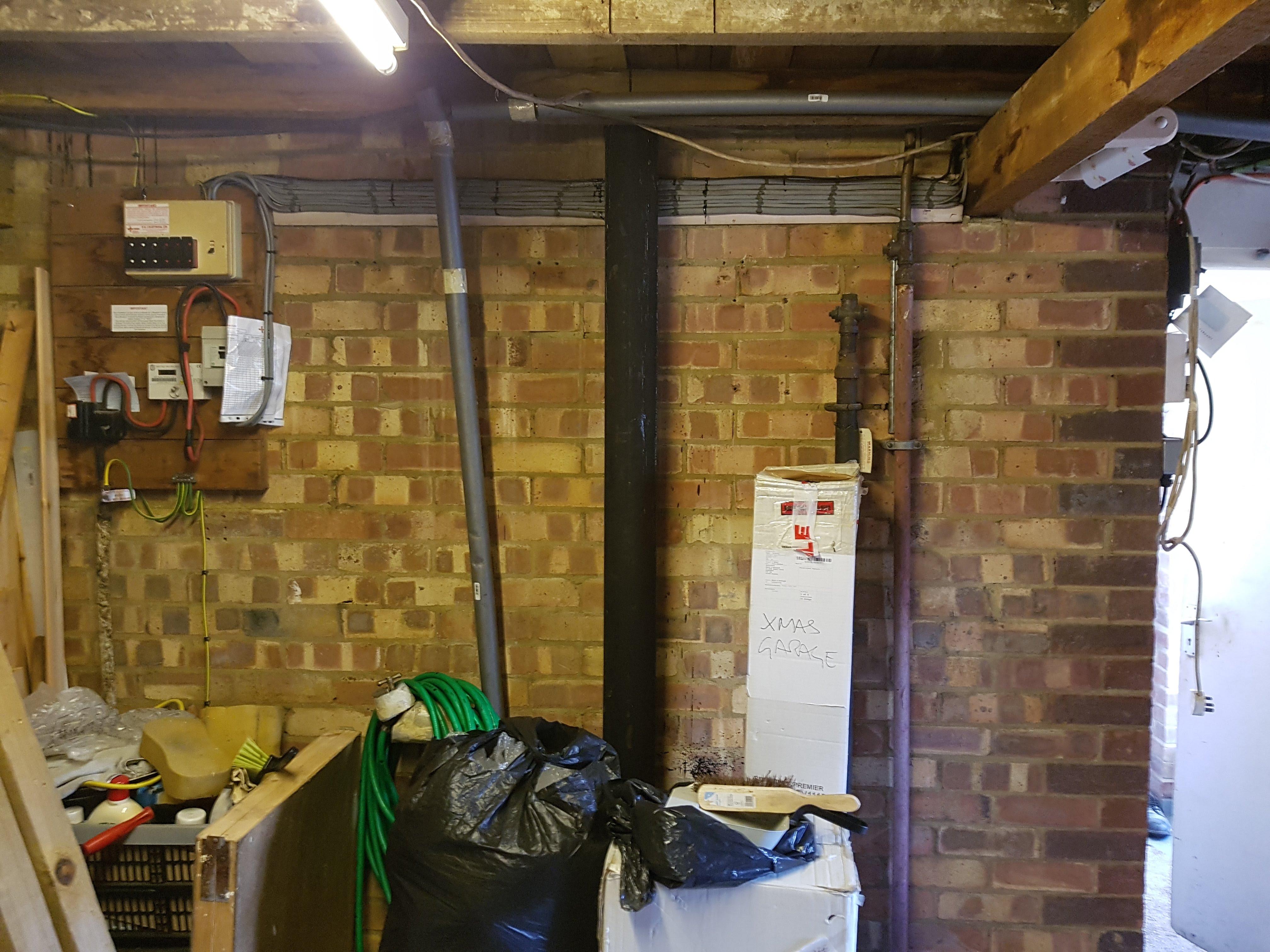
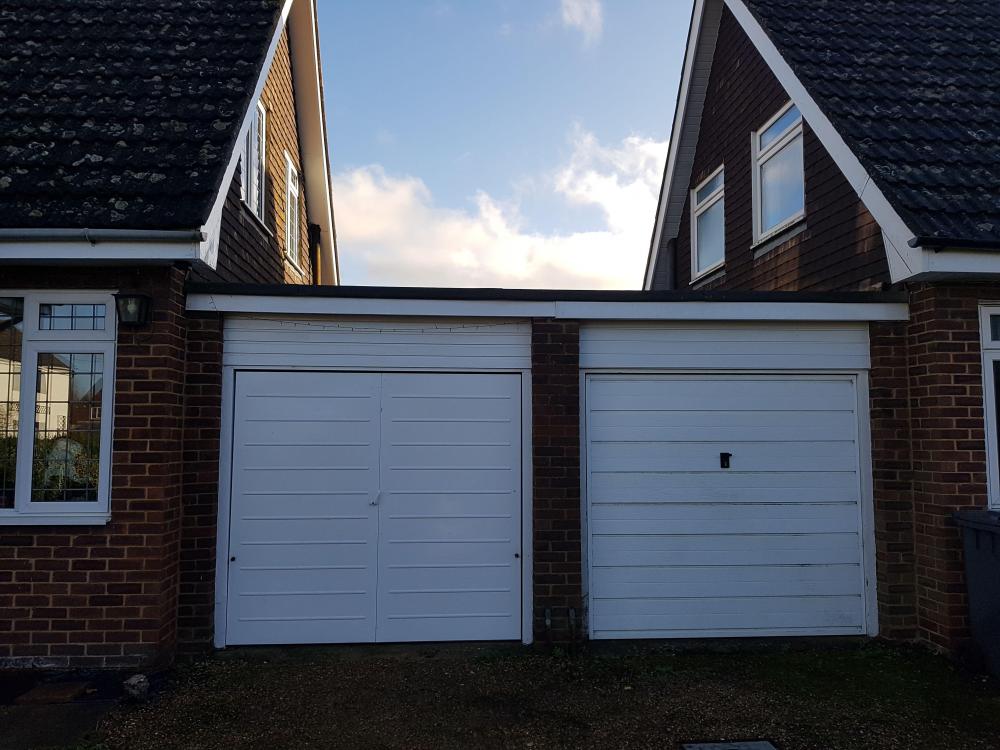
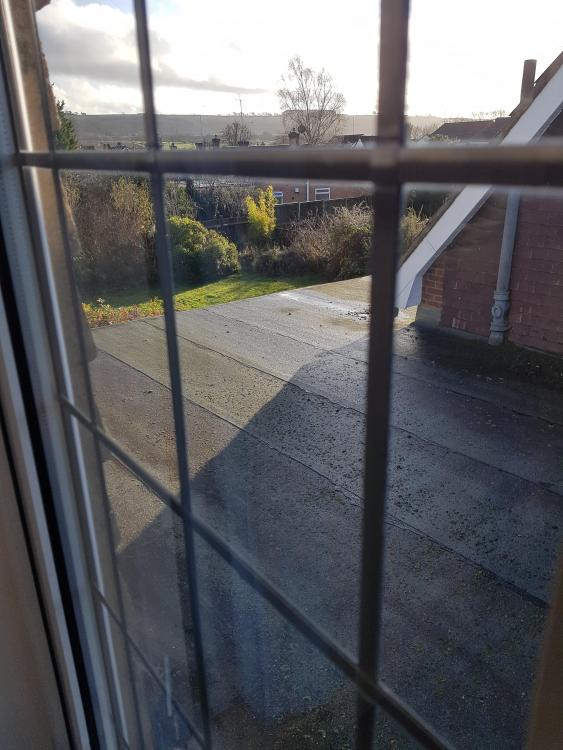
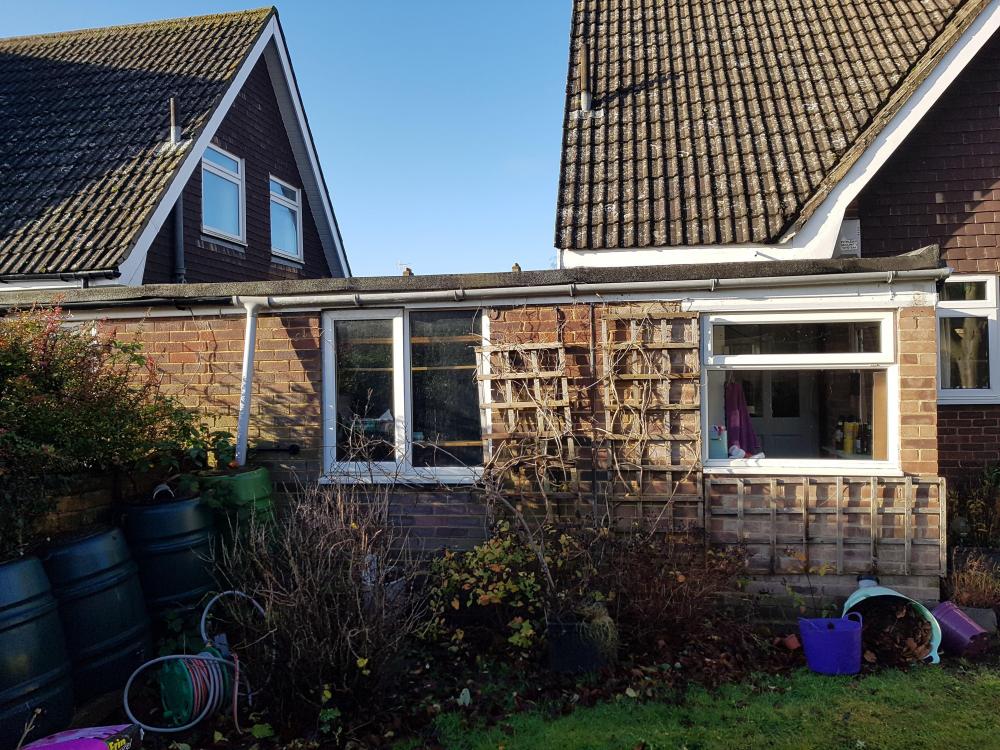
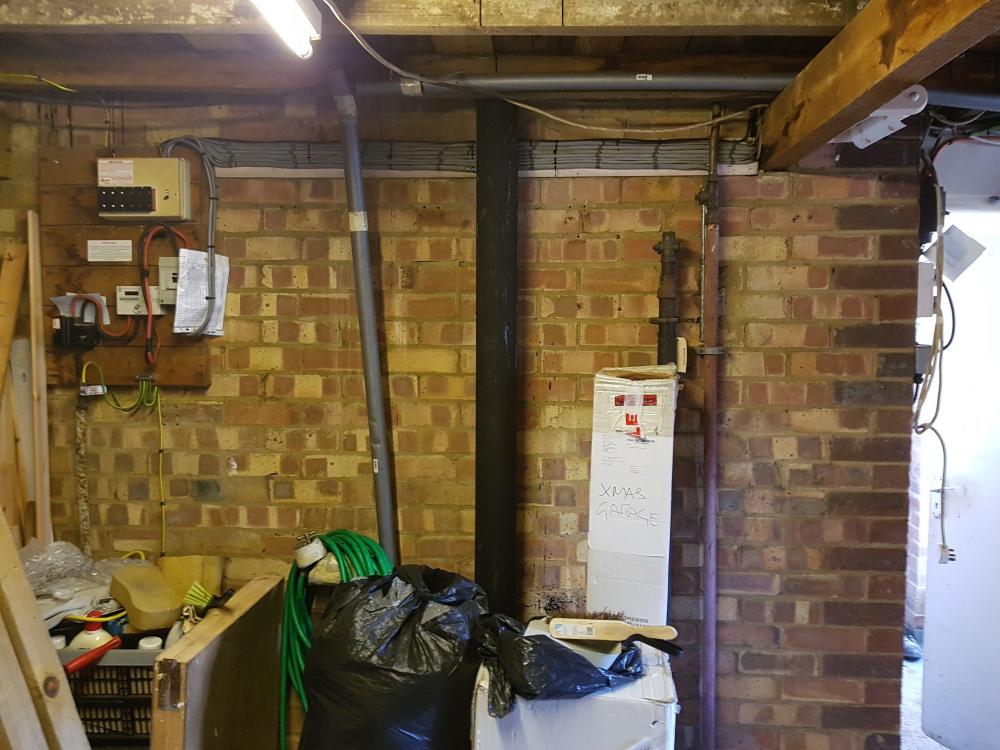
We recently moved into a detached house with an attached double-length garage. The other side of the garage shares a party wall with the neighbour's identical garage. See front and back pics attached, together with the view from our first floor over the garage roof. We're planning to take out the wall that separates the kitchen from the rear half of the garage and install a wall in the garage to create an open plan kitchen diner. You can see that wall from the garage in the attached pics. Of course, since the garage floor is about 110mm below the kitchen floor (and is uninsulated) we'll be putting in insulation and a floating chipboard floor. To enable that, we need to raise the part of the garage roof that's above the newly converted area, by about 300mm (including insulation and service void). The neighbour has agreed to our Party Wall Act notice. So far, so good. But here's the potential problem ... The garage roof has a slight pitch for drainage from front to back (you can see on the pics that the front has a raised lip and the rear has the (shoddy) guttering. So if we raise our part of the rear half of the garage, rain water will run from the front towards the new raised part. The least worst of the problem is that this will run across the front of that raised part onto the neighbour's garage roof, and they then have our run-off going into their gutter. My major worry is that the water won't all just run horizontally across to their part of the garage, since there's no noticeable pitch running across, and that it might pool on the roof next to the wall. Am I being paranoid? Our builder seems to think so. If not, what are my (reasonably priced) options here? In an ideal world I'd rather not have our run-off going across the neighbour's roof - although they've agreed to the Party Wall notice, we don't want to be unreasonable and would like to avoid any future issues. For example, could we have a gully at the base of the new raised roof section, with in internal downpipe inside the remaining part of the garage? You can see in the internal garage pic that there's a soil pipe that runs from the toilet above. That soilpipe will be moved to run diagonally from the external wall above and then down through the roof of the remaining part of the garage. Could a gully connect with that soilpipe?
-
Party Wall Act needed for Steels?
Gooman replied to Mootoo's topic in Party Wall & Property Legal Issues
"Gentlemen's" agreements are always dangerous. They don't protect either side from changing their mind. Specifically, it doesn't protect you from any future occupier raising objections about the work. This might be someone who buys their property in future - or your neighbour might drop dead and their executors are unhappy about the work and its impact on the resale value of the property. Written contracts make for good relationships. Don't scrimp on this. It could cost you big-time, but costs little (or even nothing) to do it right in the first case. -
Garage conversion and raising roof - Permitted Development?
Gooman replied to Gooman's topic in Garage & Cellar Conversions
I've been advised elsewhere that it should qualify as Class B, with the soil pipe relocation as Class G. Although Class B prohibits soil pipe work, since that work could be done independently it would then qualify under Class G. Looks like I'm going for the Lawful Development Certificate route. Good point that we could demolish and rebuild as a side extension (it would definitely qualify for that) - I'll use that as part of the justification. -
At long last, we're in our new home! Thoughts of a rapid start to the garage conversion have been put to one side as we've got to grips with some of the more mundane tasks that need sorting first: Draught proofing - precious little had ever been done, and I've already made a big difference in one week! Tuning the vents on the warm air heating system - downstairs is now warmer than upstairs Fixing the hot water - scaled-up ballcock valve meant the cold water storage tank emptied after two baths and introduced air locks - now all fixed Quotes for fencing around the garden as we want to improve privacy and security Leak-proofing needs to be done on all uPVC windows as the external frame sealant is cracked and in some places mortar fillets had been used rather than foam + frame sealant Broadband still not yet up and running Roof space is well insulated but need ventilation (lap vents will be simplest and easiest) Eaves cupboards are insulated only with fibreboard, all of which needs to come out and be replaced with PIR board Surprisingly, we seem to quite like the warm air heating. Depending on running costs, we might keep it and save the £6.5k-8k it will cost to put in a wet system. If we do that, we'll probably heat the new dining space (from the garage conversion) using electric heaters. Underfloor (of any type) is out as we can't afford to dig out the garage floor to put in the 300mm+ insulation we'd need. On my task list for the garage conversion are: Talk to our builder about sequencing of trades - what happens in what order? Before the wall comes down, electricity supply, meter and consumer unit need to be moved as they all terminate on the wall that's going Soil pipe also needs to be moved (underground and above ground) Roof needs to be raised Steel needs to be installed Wall needs to come down But kitchen sink is currently on the other side of that wall, and we still need a sink while works are ongoing Plumbing and waste need to be moved to wherever sink is going Draft plans for Lawful Development Certificate application Issue Party Wall Notice to neighbours (as the garages are attached and we'll be extending the height of the garage party wall to raise our garage roof) - might be a two month delay Apply for LDC Get steel beam calculations done Create detailed plans for Building Regs Submit Building Regs applicatoin
-
Garage conversion and raising roof - Permitted Development?
Gooman replied to Gooman's topic in Garage & Cellar Conversions
My local planning department will only provide that sort of compliance via a Lawful Development Certificate, which has a £103 fee. If it's highly likely to need PP then that would be wasted money. -
We've bought a three-bed detached house that has a double-length single-storey flat roof garage attached to one side (see existing layout below) We want to partition the garage into two and convert the far end (rear garden end) of the garage, knocking out the utility walls and from the garage into the kitchen to create a large open plan kitchen/diner. As the floor is about 100mm lower than house level, we need to raise (and insulate) it. Which then means we need to raise the roof by around 150mm (to include insulation and service void). But we also want to add a roof lantern, which will take the peak over 150mm. We will also need to reroute the soil pipe (just visible in the picture above) as it runs through the rear part of the garage. I'm confused as to whether this project is likely to fall under Permitted Development, or whether it's likely to need Planning Permission. I've read and re-read the info on the Planning Portal and the Technical Guidance on PD many times, and I'm still none the wiser. Here's what I'd *like* to be the situation: Raising the roof and adding the roof lantern is classified under Class B (enlargement of a house consisting of an addition or alteration to its roof), since nothing will go higher than the existing roof ridge or beyond the line of the eaves on the main roof. Although Class B prohibits moving a soil pipe, Class G allows it. Here's what I'm afraid might be the situation: It's Class C, and so isn't PD as the roof lantern will take it over 150mm, and Class G can't be combined with other classes for moving the soil pipe. If the wisdom of this group is that it should probably classify as B and G then I'll be applying for a Lawful Development Certificate. But if it looks highly likely that I'd need full PP then I'd rather not waste the fee for that!
-
I need to have a soil pipe relocated for the ground floor section of my new home. Our builder is fine with the below-ground works, but I want to check my options on above ground. The soil pipe is cast iron, and goes through the soffits and then through the tiled roof. As the soffits are asbestos cement board they're best well left alone,so I want to leave the first-floor part of the cast iron pipe in place, then convert to plastic to run at an angle to the new vertical downpipe to connect with the new ground-level drain. The only adaptors I can find are the SP140 but that's for a plastic upper to a cast iron lower. Any good sources or bright ideas?
-
Party garage wall insulation methods - help!
Gooman replied to Gooman's topic in Garage & Cellar Conversions
I don't think that's going to fly with my BCO. He's insisting on a 10mm gap for acoustic reasons, and the thermal rating. I think I'm back to plan A : 10mm gap 50mm timber studs infilled with 50mm PIR 12mm PIR on top 25mm battens and mineral wool (plus cables in conduit) 15mm Soundbloc 5mm plaster skim I think that's the best I'm going to get. Unless nextdoor turn their garage into a major workshop working evenings and weekends, I don't see that I'm going to have a big noise problem. Thanks everyone for all your suggestions and help! -
Party garage wall insulation methods - help!
Gooman replied to Gooman's topic in Garage & Cellar Conversions
That sounds a lot simpler. Can you give more specifics on the cross section and the type of product? Do you mean 110mm of dense mineral wool? For example, 100mm Isover Acoustic Slab and two layers of Soundbloc only gives me a u-value of 0.319 (and that's not taking account of the 70mm metal stud, as I'm not sure how to add that in Changeplan). The BCO has said that although the other side is not exposed to the outside, as it's an unheated non-integral garage it's regarded as an external wall and needs to achieve 0.3. -
Party garage wall insulation methods - help!
Gooman replied to Gooman's topic in Garage & Cellar Conversions
Ah, I hadn't realised that Changeplan handled the studwork and thermal bridging implications. Neat! Celotex PB4012 is 12mm. Not priced it up yet ... that may change my plans again. I'm in England, so unless someone else can comment positively on that route it's not going to be an option.