oldkettle
-
Posts
793 -
Joined
-
Last visited
-
Days Won
3
Everything posted by oldkettle
-
It is funny you should say this. My understanding is - and do correct me if I am wrong - that the reason the self build is not more wide spread is simple : land availability. Unlike US, where very often developer gets the land ready and then each individual project is agreed per client - here there are only standard boxes being put together to maximise profit. I do like market, what I don't like is the regulation that makes it possible to stifle the market. And the land is a prime example of the result of such regulation. Here in the South East the land is often more expensive than the house that stands on it. I do not believe for a second that people who pay 600K+ for a standard projects would not have paid extra 25-50K for a better quality or a larger size. It does not cost that much at all to make things substantially better (note, not perfect), but the first step is preventing builders from being the only owners of the land available for housing.
-
Just wrote an answer that disappeared on posting :-( It was late and I was in a rush. I was referring to "20% of men drink 80% of beer". 20% of effort deliver 80% of result. To me it sounded similar to your happy middle ground : do enough to solve most of the problems. As per cowboys I am afraid they do create 80% of all defects :-) and not necessarily because they are happy with it but because they can not do any better. Back to the topic. In winter when it's raining the humidity easily reaches 85% inside even when the house is properly heated. Opening windows does not help. With MVHR humidity does not seem to reach that level hence my expectation of a much better outcome even for these corners where I agree there may well be little air movement. It is quite possible the difference of opinions comes from the angles : you look at results of major builders and I fully expect these results to be bad. The others look at results of specialist builds. My pet hate is the fact that builders were allowed to practically become land merchants: buy in bulk, split to tiniest strips, build anything - profit. If they were just builders, producing what the customer wants, there would not be garages that can't fit a car.
-
If I am not mistaken you are replying to me :-) If so, I hope I have made no assumptions. I just asked to compare the percentage of houses with problems between well insulated and poorly insulated - since you clearly have more experience and stats available. And if you have a separate set for "happy medium" category - for those as well, as long as they are not defined as "houses with no problems" :-) I am a big fan on 80/20 principle but I don't know where 20 lies in building technology.
-
Sensus, I am a bit confused. Or rather quite confused. I lived in 4 houses in the last 7 years. 2 old, c. 1900 solid walls, 2 mid century. Apart from the current bungalow (1950), which is detached and on the slope and for these or some other reason is significantly better, all other houses were a nightmare. Built-in wardrobe to external wall in 1950 semi (that is on the first floor) was full of mould. We had mould on the wall behind a sofa - not even sitting too close to this wall. We still find clothes that we did not use (hence did not need to wash) after moving here 2 years ago and those smell musty. So what I am trying to say is all these badly insulated houses with "healthy internal environment" did not in fact feel healthy at all. At the same time I am pretty certain those who have UFH will not get mould on their properly insulated walls. When we compare leaky vs airtight shouldn't we look at the share of each type suffering from such problems?
-
First floor extension design
oldkettle replied to oldkettle's topic in New House & Self Build Design
Yeah, I keep forgetting there are jobs that are too small :-( It just feels such a shame to build using inherently bad method then try to resolve issues with it. It is brick and block and unfortunately there is fibre insulation from 1995 which is apparently quite expensive to get rid of. There are no problems with damp that I am aware of. Since we are on a slope only on the garden side the floor is one step above the ground level, at the front there is almost a meter of the wall below DPC, may be it helps with drying out. Is it internal moisture that I should be concerned about? It is a real pain finding reliable information on insulating cavity walls properly. We are only considering TF first floor at the moment. There is still an unresolved issue with positioning of the frame. I am trying to get a 300mm twin wall but then it will have to rest on both internal and external leaves which I guess is a problem if the external leaf is cold - this is one of the reasons I wanted EWI. -
First floor extension design
oldkettle replied to oldkettle's topic in New House & Self Build Design
I did think about extending this side more because it would cost almost the same and there is plenty of space. The only small downside is since we are on a slope from the garden towards the road some landscaping would be required. As long as the cost is manageable we will definitely consider it. You are right, it is only a small percentage, the main reason to use ICF would be speed - my naive understanding is it is much faster to build. Well, probably also not having to worry about finding a very good brickie and not having to think about insulation. On the other hand, I was planning to add external wall insulation downstairs when money is there, not sure how it would work with part ICF part cavity wall. Is it substantially more expensive to use ICF for such a short wall? -
First floor extension design
oldkettle replied to oldkettle's topic in New House & Self Build Design
That's what I said! There is about 50m of the garden, why not make this side longer rather than shorter is beyond me. What extra cost (very roughly) are we talking about here if I were to extend downstairs? Digging foundation very close to the existing one, building 5m of the new wall probably with ICF? Will we be able to reuse the window and the door or will we have to buy new ones? -
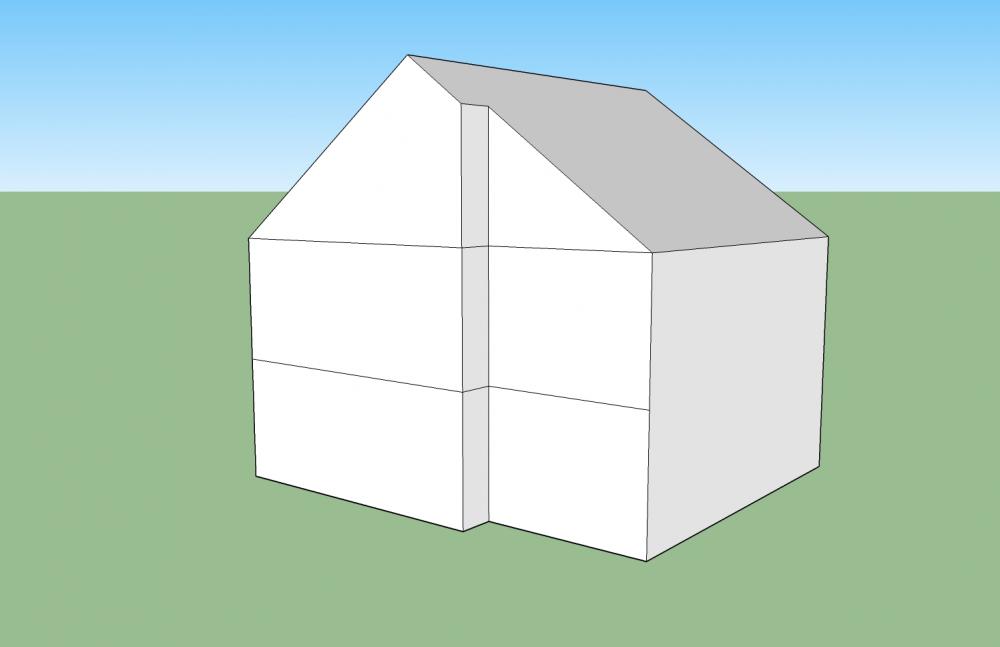
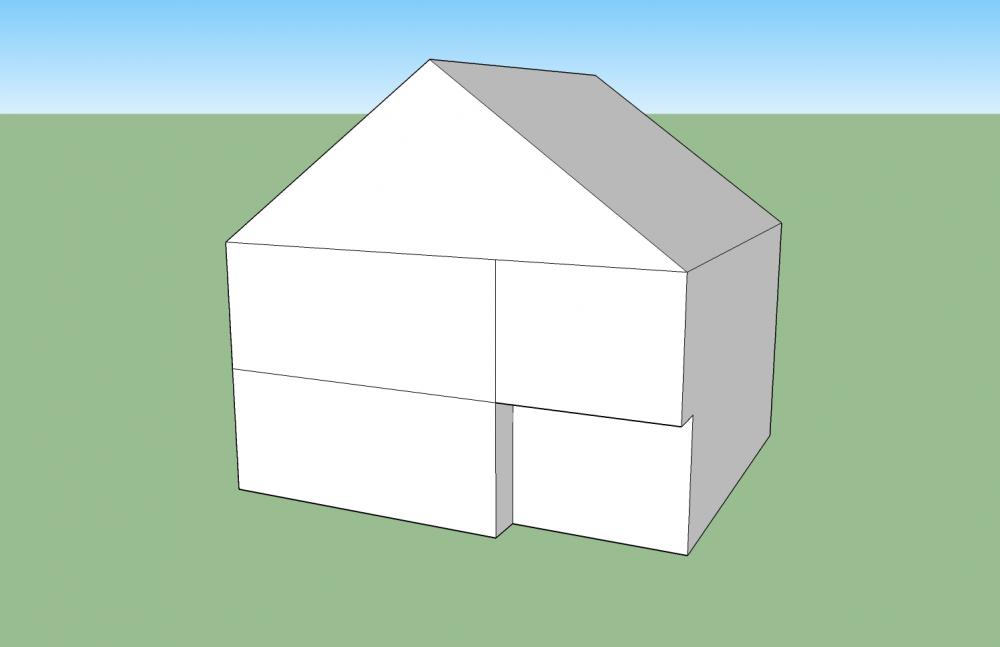
Hi, I have had a visit from a BCO who confirmed the foundation of our bungalow seems fine to take the load of an extra floor. Not sure whether I need to get it confirmed in writing but it is something for now. So I started looking at our plans more carefully. The option that we have so far is primitive : the first floor will have the same footprint as the ground floor with the exception of the bay window - see primitive sketch one for the view from the back, which is almost exactly east side. But that means we will be blocking already limited light for the large room on the right, like it is currently blocked for the living room on the ground floor. So what if we go for cantilevered option - it only need to go out by about 1m. It seems to make certain bits much simpler but probably requires a steel support. Would it be substantially more expensive to build? Any advice please? Joseph
-
Yep, I see your point. And unfortunately as I said they do not take on main contractor role for extensions anyway. The cheapest quote I have looks better and better. Although when I add insulation, roof, windows, rendering etc. it is still scary.
-
Thank you, I see your point. Well, I will just have to wait and see then.
-
Would you say it doubles the price? How much would I save by going with basic design on roughly 90m2 of our first floor? What I like a lot about MBC design is (seemingly) uninterrupted thermal envelop. Currently we have cold roof so even with loft insulation the losses are massive. One of the quotes I have received includes wall insulation but not warm roof - I am struggling to see why anybody would want to build anything like that.
-
I do understand they are businesses. The odd thing is in my business (IT) there are rates and prices and if someone does basically a standard job (supply and install X) the price is usually going to be predictable - excluding big corporate world where it is mostly "call and talk to us" approach. So the fact that for building works it is much more like kitchen sales - quote A*X and see the reaction, possibly give discounts and charge A'*X in the end - makes my life a misery since I dislike haggling passionately :-) And I don't even know whether I am allowed to haggle. I don't expect anything unique, I am looking for good enough for the price. MBC use the same (similar ?) twin studs and it works perfectly well AFAIK. I am sure it does not cost a fortune to manufacture such structure although doing it well requires great attention to detail. If MBC decide to quote (and I just called them again to check) and their quote is within my reach I will happily go with them. I wish they took the main contractor role, then I would not waste a minute of anyone's time looking for anything else. But they don't.
-
Sorry, Tony (am I right?), I am not sure whether you meant it as a serious comment or not - you know of course it is often difficult to get the meaning right without knowing the person. If you are serious then sure, I know they do and I honestly would pay not "the least" but reasonably for a good job. Even if they do make extra few grand on me. As long as I am within my budget, it is not too bad. When a company includes a separate line for TF erection and it costs a few thousand it feels OK for a week or 10 day job of several people. But when the frame costs vary so wildly I am struggling. And I still have no idea about main contractor costs since it is not clear what the scope of his responsibilities is going to be.
-
Hi Martin, Sorry, I just spent 5 minutes going over your profile again and either it is right under my nose but I fail to see it or may be it is actually hidden :-) I will not include the screenshot but the only thing I can see in personal information section is location. Thank you very much for answering. One thing I heard from BP so far was "TCosy is certainly not cheap", I can imagine they will quote in excess of 100K. Even if it is worth it we can't afford it - but I will wait and see. Here are the pictures we have : Current floor plan http://media.rightmove.co.uk/87k/86777/29957157/86777_KNA120323_FLP_00_0000_max_900x900.JPG Front view http://li.zoocdn.com/cab95ab5b00799cd7e18e369e84df91cfc14ab78_645_430.jpg I attached the proposed plans. What we are trying to do is build something within the budget, at least insulated water-tight shell, simply to get kids space they need. Bathrooms, new boiler and downstairs can wait. I understand there is a law of diminishing returns, the reason I am inclined to use 300mm structure is it is tried and tested and quite a few people seem very happy with the result. I am very pragmatic in a sense I do not expect to get a passive house nor do I need to. At the same time if the difference in the cost of MBC frame vs standard frame is say 10K on a project that I would really want to complete with <70K then I would rather pay more. So far I have had quotes from 18K to over 50K including VAT to supply and erect the frame only, including wall insulation (but not roof) in some cases. It may well be that my best bet is to go with the cheapest quote - but it rarely ends well, does it? 1229-02_E_Proposed.pdf
-
Thanks a lot!
-
Hi Sensus, Thank you for the technical details and recommendations. I remember visiting the web site of Benfield but it looks like I did not email them before. I have now. By the way, when I do talk to them, who should I say sent me? Buildhub user Sensus or should I use the name from the build picture above? :-) With regards to technicalities - sorry, further questions. 1) When TF panels are 300mm like MBC - how are they set then? One builder told me they would partially cut the inside part of the brick wall and the outside of the block and put a concrete "joining" blocks in the resulting "bedding". And do they put any insulation between masonry and TF? 2) Beattie Passive - why do you think it is not worth it as a solution? I understand it will be more expensive (I hope not prohibitively so) and without wrapping the existing building it will not be perfect but my hope was with excellent first floor / roof, one externally insulated wall and replaced or insulated slab we should be in a good position. What surprises be about TF companies is that they usually don't want to do "water-tight extension" even though they are happy to do full build. I.e. they have the technology but it seems not to be worth their while to do partial job. Or, as one company stated, since they can't guarantee anything (like air-tightness) when it comes to extensions, they don't want to get involved as the main contractor. Only one company mentioned they have subcontractors they could recommend to do the full job. And I am currently struggling to find a local builder who is familiar with the passive house approach (again, air-tightness, insulation, avoiding cold bridging etc) and whose answer would not be "no, we just put TF straight on top of the (described above) concrete bridging inner and outer leaf - that will be fine!"
-
Thank you. I actually met them at Homebuilding and Renovation show and emailed them. Thank you for reminding me, I seem to have dropped the ball on this one. Just went through the materials I brought from the show and their web site. They don't disclose much technical details, i.e. wall width and insulation type. Do you have this information by any chance?
-
Hi Mikey, Thank you, they seem very flexible. Emailed, fingers crossed.
-
Just went to read the part of your blog about TF. Very impressive - only 5 days. I honestly don't know. May be it is possible here as well. My best guess is since rates are much higher here in general hiring joiners to build the kit will be much more expensive than buying from a company. But worth a try of course. Any hints on the technical side of question?
-
Downstairs in not insulated well - I reckon building properly insulated upstairs would make the house much warmer. Again, prefabricated TF is simply faster to erect than masonry. It is one thing to send kids away during summer holidays and another rent for 3 to 6 months. What are the problems with using TF over existing house?
-
It still requires a great builder. I am positive it is much easier and faster to use prefabricated structure - less room for error on site.
-
Hi, As I mentioned on ebuild some time ago, we are planning to convert our bungalow to a house. Bungalow has standard cavity wall construction, the first floor I hope will be a timber frame. I contacted quite a few TF companies and it seems that those who are happy to build a house don't want to build extensions - only supply and erect the frame at best. Looks like there is no way for me to avoid hiring the main contractor to oversee the process as I myself have neither knowledge nor time to do it. But there are still quite a few details I am trying to understand better before making any decisions. Most TF companies seem to offer 140mm/185mm frames with different types of insulation. I was hoping to use 300mm structure like the one MBC produces if any of the manufacturers even entertains this idea - it is not stantard for them after all. What is not clear to me is how to install such a wide wall on top of masonry. Sole plate normally goes on the internal leaf. Does it mean that most of the TF is going to sit inside of the existing structure or is there an alternative where some kind of an EPS insulation is set on top of both leafs and then TF goes above? I hope not to have to use masonry for the outer leaf but rather rendering like ProDave did. Any pointers please? I don't mind buying a book as long as there are answers there. And of course if anybody can recommend a builder working in Surrey (Woking specifically) I will be very grateful. Kind regards, Joe
-
It all began many years ago...
oldkettle commented on oranjeboom's blog entry in Kentish RenoExtension
Hi, Are you converting bungalow to a house? Timber frame first floor? The reason I am asking is I have been looking to do something similar with our detached bungalow... Kind regards, Joseph