
Jump to content

Sue B

Members
  • Posts

    374
  • Joined

  • Last visited

  • Days Won

    2

Blog Entries posted by Sue B

  1. Sue B
    I uploaded my draft floor plans a while ago and I have lived with them a while and am fairly content that they will meet our needs.
     
    We have one elderly parent left  who we could easily argue needs to move in with us ( that is closer to the truth than I like to think about as it is my MIL not my own mum).  That gives us the need to a downstairs bedroom and en-suite.  Everything else is fairly normal but of reasonably generous proportions in line with most self builds. We hope to have a comfortable, energy efficient home that we can live in for as long as possible.  Our need to move as we get older and frailer will be more to do with the lane that we live on and our inability to get the 1 mile down the track to the nearest corner shop than the house with luck.  Low maintenance is a biggie for us of course - we have no wish to be doing regular maintenance as we get older.
     
    We have appointed an architect technician to look at my floor plans and check that it is buildable but we have given them permission to come up with better ideas if they can.  The house will run from east to west - the longest wall faces south and I have planned an overhang from the floor above along the entire length of that wall to keep the ground floor cooler in the summer.  The only window I have planned on the first floor facing south is on the stair well.  The east and west balconies will again give shade to the bedroom windows hopefully helping to keep them cool in the summer aswell - a woman of my age needs no help at all to get to hot, especially overnight.
     
    I've posted these plans before but as this thread is going to be all about the design i thought it would be a good starting point so that we can see the progression up to and including planning consent being granted (note the confindence in that sentence  ).
     
    My intention was to have a flat roof so the house would have a very modern look - all render and block like with maybe a little wood cladding as a feature to break up the render in a couple of places.  The architects are trying to talk me out of the flat roof as they believe we will struggle to get the plans approved as they are not in keeping with other houses in the area.  It's a bit hard to know what other houses they may consider as our nearest neighbours are horses on each side who do have stables but tend not to object to planning permission so long as they get a carrot or apple in payment.  Neither plot is likely to get planning appoval for a house in my lifetime (one side has tried and failed).  Very few plots down the lane have lawful houses on them but there are a few plots occuplied by one of more travelling caravans, most of which have enforcement notices served on them.  So finding what is "normal" is a little tricky.  The SSSI which we are close to is a hill that is home to a number of reptiles.  We have walked up the hill many times and you cannot see our house from anywhere on the hill, you can see the end of the plot, but not the house.
     
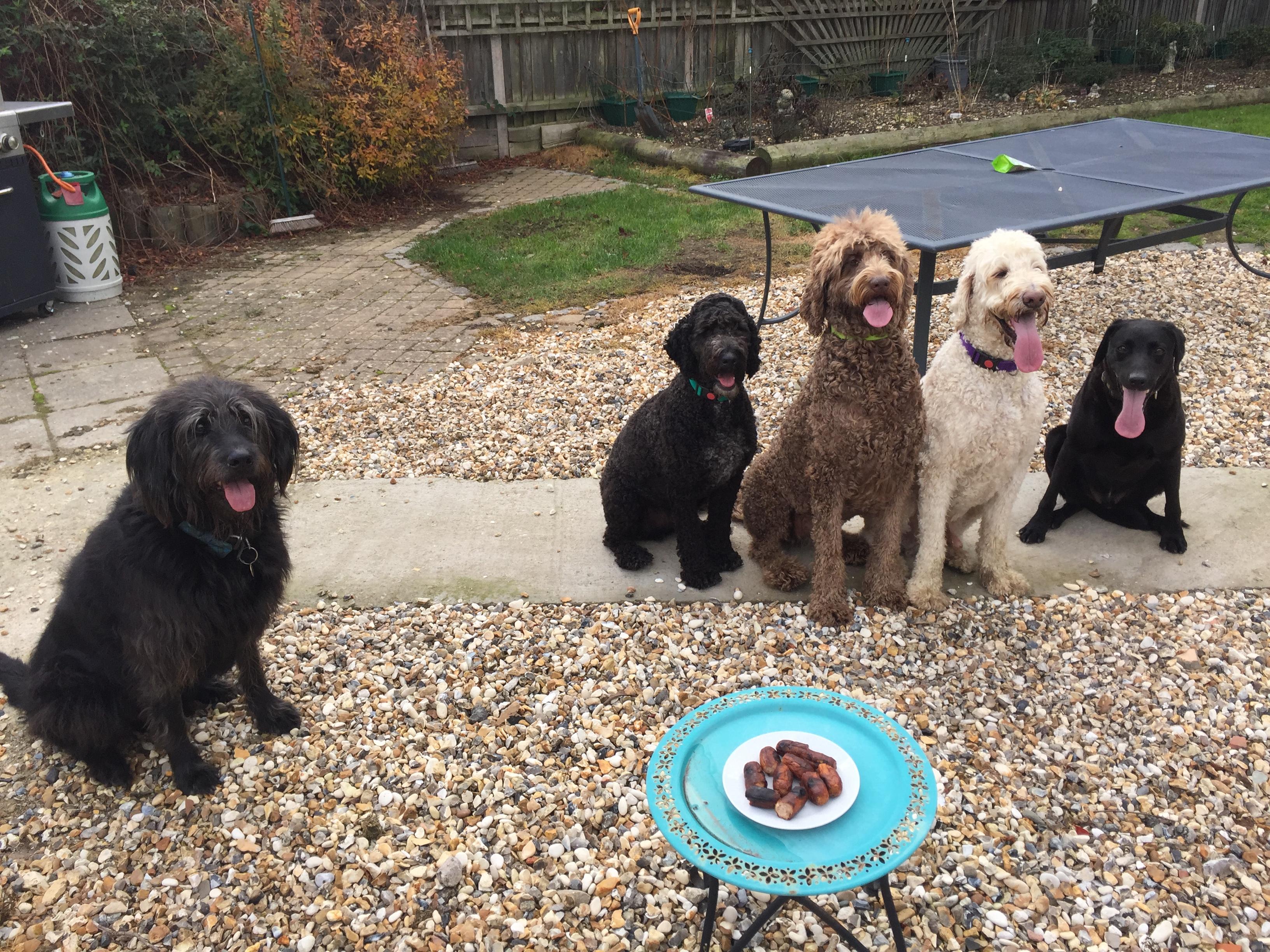
    I understand that flat roofs have inherant issues that require careful detailing by good roofers - I have been reading @pocster's thread today to remind me of how badly things can go.  I don't like flat roofs.  However I like the look of PV panels even less but I know that I want them.  We have considered putting the PV panels in one of the paddocks on a ground mount system but the dogs love rompng up and down like idiots.  Having space for them to run was one of the big drivers for our move so filling up ground with panels is not something I want to do.  A flat roof to me would be the lesser of the two evils and it means I can have PV panels facing any direction that I want.  
     
    So here are the opions I am seeking from the collective:
     
    Is a flat roof a sensible compromise to allow PV panels to be hidden from my view?
    Is it worth having PV panels facing east, south and west to get the optimum solar generation?
    What limits are there on PV generation - I saw something today mentioning 4kw and not sure what dictates that?
    I know we won't be getting the FIT tariff so is there anything stopping us going above the 4kw limit (if that is what it is) and just "wasting" the excess if that is possible so that we don't overload the network?
     
    As you can probably tell, I know very little about PV but am reading whatever I can find.  I've been meaning to put this thread up for a while now and seeing @Russell griffiths post about solar panels reminded me to pull my finger out and ask the questions.
     
    Thank you


  2. Sue B
    During the year of waiting for the planning refusal, we (or more accurately Peter) has been busy in the gardens, getting things sorted.
     
    The kitchen garden is coming along nicely.  The trees and bushes have settled down and it looks like we are in for a bumper crop this year.  We have 6 IBCs that will be filled over the winter to use in the drier months.   We have an additional 2 IBCs by the house which will collect the initial rainfall, before it is pumped to where we need it in the kitchen garden.  The connectors to link the IBCs are on order and should arrive next week.
     
    The fencing is failing but replacing it properly is eye-wateringly expensive.  The hammering you can hear in the background is Peter fixing the best bits of wood he can find, replacing the completely rotten bits.
     
     
    IMG_1904[1].MOV
  3. Sue B
    It's been a really tough few months.  Problems at work (I got the timetable finished ready for September and now they want another one ready for straight after October half term), my best friend diagnosed with stage 4 bowel cancer and then the delay in planning approval leading to us appealing to the planning inspectorate to try for a non-determination decision.  We have both been down in the dumps and on the verge of giving up.  Two weeks off work (sick leave for stress, it was so close to a resignation letter you wouldn't believe) and the dark clouds have lifted, helped by an apology from work and a pay rise.  Remembering what we did first time round, reminded me that there is a lot we can do now, while we are waiting to start on the main part of the project, that won't go to waste. 
     
    Last time round, we got the end of the garden completely landscaped - it meant when we moved into the house - the garden still looked lovely.  We also used the large wooden gazebo (built in sink and BBQ) to eat every night as there was more room in there for us and the kids than in the caravan.  The question was, what can we do this time round that isn't wasting money, can't be included in the vat reclaim (no landscaping on the planning permission), and will not be ruined during the build.
     
    Front drive and Fencing!!
     
    So...  The fence at the front of our plot needs replacing - the wooden posts are rotten and are only upright because they are leaning against the conifer trees that are there.  These conifers are of course going which will make the oak tree stand out a bit more, rightly showing how magnificent it is.  We were planning the fencing and how many concrete posts and gravel boards we were going to need when I had a brainwave ?.  How about building the wall out of the Isotex we want to build in (the one without insulation of course)?  It means we get practise on using the stuff and actually pouring concrete without trialling it on our house!  No idea how expensive it is going to be so I've asked the question to see if it is feasible or not.
     
    Other things that I am now googling and sorting out are:
    Lighting for the driveway
    Parcel delivery box
    Doorbell camera
    CCTV
    Illuminated house numbers
    Capping blocks for the wall
    Fencing for the rest of the garden area.
    Moving the electric meter to the front of the plot
    Planning the route of the new fibre optic connection under the front paddock (yes, we will shortly have fibre optic to the house after 4 years of suffering from the slowest broadband you can imagine).
     
    The parcel box that we like the look of is the Brizebox. 
    https://www.brizebox.com/product/built-in-extra-large-rear-door-pay-in-full-449-00-excl-frame/
    I want to build it into the wall but I also want to render over the bottom half of it - you can have the collection door on the front or the rear of the bottom half, however, I don't think the top half of the box protrudes far enough out to allow this to happen.  I've emailed the question today to see what they say.  Gallery picture 31 of 69 is the closest to what I want to achieve (without having plants in front of where the poor parcel man has to stand to put the parcel in the drawer!!).
     
    I want to move the electric meter box to the front wall so that it can be read without coming onto the property.  Peter wants to leave it where it is.  We are in discussions at the moment about the best way forward.  It is currently housed in a brick pillar with a little bit of slate on top - I think that when the house is built, it is going to get hit by cars driving down past the house to the end of the plot as it will narrow the driveway unnecesarily.  The pink circle is where this pillar is and where I thought the electric supply to the house ran - it actaully goes to the existing car port which is next to the purple square where the Garage (AKA sewing room) will eventually go and should miss all the excavations during the build.
     
    Now off to google covert cameras to go on the front drive somewhere!!


  4. Sue B
    When we first started on this path, we wanted a hands off, almost turnkey project.  I'd heard of SIPS and seen lots of positive stories about energy efficiency so all was set.  Then we spoke with a mortgage advisor and our world started to tumble down.  I am now 56, Peter is 57.  We will need a mortgage to build this house but because of our ages, we know that the mortgage providers will all keep the term of the mortgage down to 15 years max which will make the repayments large.  Drastic action needed to be taken so we have now decided to build using a method where we can do this ourselve.
     
    We have no experience of actual building work but let's face it, how hard can it be ? - famous last words.
     
    Our previous house was built using traditional methods.  We did have underfloor heating and a MVHR system but we struggled to get through the air-tightness test.  We have learnt a lot since then.  We nearly built that time round using ICF but I chickened out.  This time, it looks like it is going to win.
     
    We have looked at the various types of ICF.  The majority are of course the polystyrene type blocks and these do have real advantages for self builders.  They are light and easy to manage.  Our main  issue with them is the fixing ability at the end of the build.  Once the plaster is on, finding the fixing lines becomes harder and harder and so other ways of fixing heavy items to walls need to be used. Looking at various websites and you tube videos, it is also apparent that blow outs are more likely using the polystyrene and more bracing is required during the pour.  The concrete is of a stiffer consistency that with the woodcrete ICF.
     
    The woodcrete type ICF blocks solve the fixing issues - you can attach anything to it.  We have looked at three types of this type of ICF, Velox, Durisol and Isotex.  Each has pros and cons and we have yet to decide which type to use.  All three appear less likely to blow on pour day without significant bracing but of course it can still happen.  We can't get a price without plans so at the moment the comparisons are being made purely on preference but without the benefit of a cost comparison.  The concrete for this method is of a very runny soup like consistency.
     
    VELOX
    This method uses two flat panels that are clipped together as you build.  The panels are large - 2000mm x 500mm so will go up quickly.  One panel has the insulation attached to it.  The system comes with a variety of options for the depth of the wall giving different u values.  I have found getting information from the website quite difficult - the website is clunky and parts of it are not in English.  The way the panels fit together, you end up with a completely solid concrete wall inside the formwork.  I believe this gives a better chance of airtightness from the actual structure of the walls. 
    The UK supplier seems to be a little difficult to get hold of sometimes - maybe this is the result of too many enquiries but it does ring alarm bells to me.   The system has products for both internal walls and floors.  The internal walls are two panels glued together, this takes the weight to 68kg - we struggled to lift a panel off the floor so raising it above shoulder height would be impossible for us. The size and weight of the panels pretty much rules this system out for us as it is simply too heavy for us to manage ourselves. It is however, my favourite product.
     
    DURISOL
    Durisol blocks are more like a squarish 8 with the top, middle and bottom bar at less than full height to allow a honeycomb concrete wall to form during the pour.  The blocks are all 500mm x 250mm with the external walls coming is two depths - 300mm with a u value of .23 or 365 mm with a u value of .11.  There are 3 different types of blocks. A standard block with the reduced internal height connectors.  A facing block which has one end at full height - this is also used for lintels.  A corner block for ...... turning corners!  Because of the way the blocks work, the second row and above will all need a cut to ensure that your keep the "brick bond" in place. This is particularly pronounced if you choose the 365mm blocks as it is the width that causes the issues.  QUESTION - couldn't you fix the problem by making the cut on the first row instead and increasing the size slightly so that every other run works properly?  That didn't cross my mind at the training.  The blocks have male and female ends so that they lock togehter prior to the concrete pour
    The blocks are rough and gloves are definitely needed.  The blocks do shed while you are working as well so care needs to be taken to butt the blocks up properly as the debris can move things apart a little.  The design of the blocks means that there are the 3 woodcrete bars, each end of the block buts together with only a small amount of concrete bonding the blocks together. 
    The blocks are produced in this country so less likely to suffer with issues to do with Brexit.  Lead time is in weeks.  Free training is provided (we have done the one day training course) and they will come to site to help you get the first row laid, ensuring that you get a nice level row.  Purchase of the blocks over £10k gives you one free site visit (need to check if that is the initial row or if you also get the first pour day).  Other visits are by negotiation but they rely heavily on facetime calls to see your site without actually being there.
    The anecdotal evidence that I have is that Durisol will discount heavily but they do not talk about a standard price - you only appear able to get a price from the drawing that you provide. 
    I believe this will be our third choice of block based on properties but is probably the cheapest of the three.  It is also the one we are most likely to use due to the price.
     
    ISOTEX
    Isotex is a very similar produce to Durisol.  The blocks are mainly 500mm x 250mm but there are "pass" blocks to match the block depth that you have chosen.  This gets around the issue of "brick bond" issue.  The blocks come in depths of 300mm with a u value of .23.  330mm with a u value of .19.  380mm with a u value of .15 and 440 with a u value of .11.  There are more options for shape of block - not sure how much that will help on site - will it be more difficult to find the right type of block while doing tricky areas?  
    The shape of the blocks is like an H but with 2 horizontal bars not one.  This means that the blocks allow a freer flow of concrete between the blocks than you get with Durisol.  It will still be a honeycomb but less so, there is roughly a third less woodcrete in the way of the concrete wall.  Butting the blocks together mean that they just sit together without the benefit of the locking togethre - this means that there are two short unsupported parts of the block holding the concrete - does this make a blow-out more likely?
    Insulb the UK supplier provide similar training to Durisol - we are attending in February half term at Swindon NSBRC.   The blocks are slightly smoother than the Durisol ones and seem less likely to shed.
    Jamie has made it quite clear that the price is non-negotiable.  £55m2 for the 300mm block (I think I wrote down the correct block size but not 100% certain) against £62m2 for the 440mm block.
    I believe that this will be our second choice block based on properties and probably second choice one price comes into play - time will tell.  
     
  5. Sue B
    This week is half term in school so I have had two days at work, in splendid isolation, making the many many changes to the timetable ready for the first day back.  Today we have the architect round to do a proper start on the plans and while I'm waiting for him to arrive, I started to do some batch cooking of things to last me through the next 6 weeks or so.  Being in the kitchen, turned my thoughts to what I really wanted out of the new house in terms of cooking, eating and washing.  This blog entry is likely to go on the longest - after all, the kitchen will be going in quite late in the process but I don't want to forget what I really want.  I remember the further into the build we got last time, the easier it was to lose sight of the end goal.  The photo attached is the kitchen oin our last house, 3 years after we started building.  I've put it here to remind me of just how dog tired of the whole process you become.  We just stopped for about 2 years and regained our strength to get to the final rooms.  How we lived like that for 3 years is a mystery to me now.  We had family parties and fed 20 people easily (slow cookers and large BBQs are wonderful things),.
     
    So here goes another thread in this very unusual way of blogging.

×
×
  • Create New...