jpadie
-
Posts
184 -
Joined
-
Last visited
Everything posted by jpadie
-
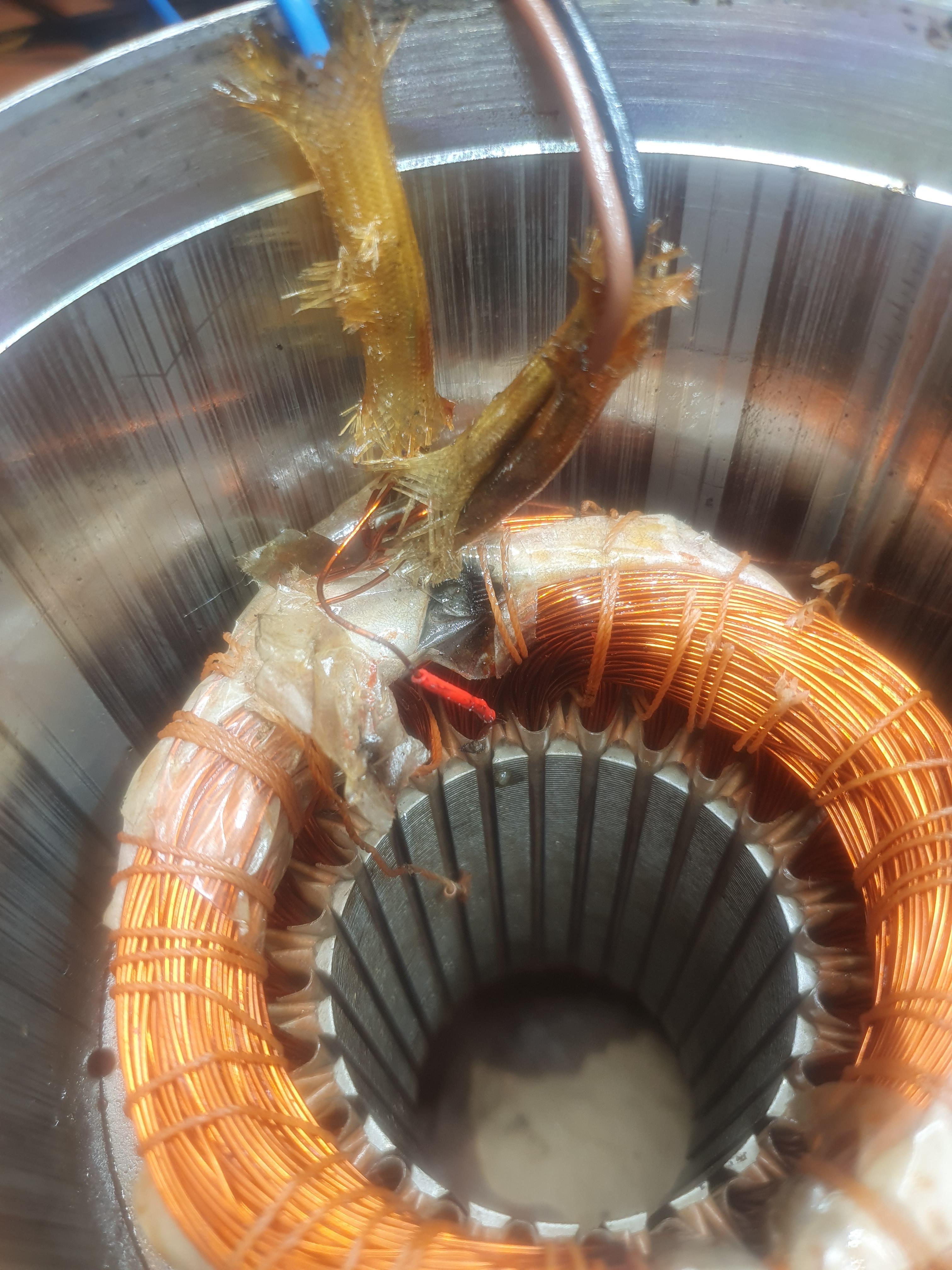
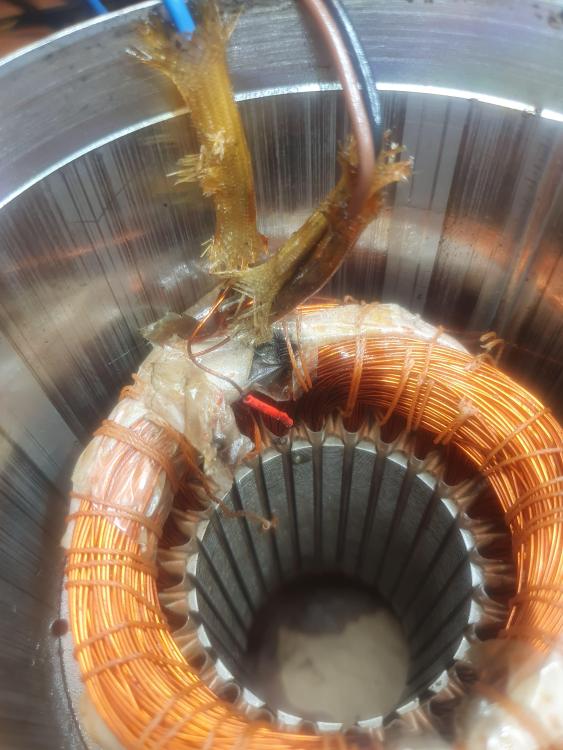
The pump came to bits surprisingly easily. Difficult to manhandle a 25kg pump whilst being delicate about disassembly. Even with the "foot" removed it's 18kg. In all the many times I've tried to chase faults in motor coils I've never been successful. This time I found the break close to the neutral and was able to create a good solder joint. The wire around the area is blackened and I don't know how compromised it is. The coil resistance is 7Ohms which is twice the other one. I've not tested black to brown (resistance across both coils) but that would be an interesting measurement to have. I will test the pump tomorrow. Fingers crossed it's resurrected.
-
Blue to black = 3.5ohm Blue to brown = 750MOhm Dead windings. Oops.
-
I've lifted the pump and brought it in to the basement where the control is. Control is now bypassed with the pump working on just the breaker. It's four cores with the cap bridging black to brown. Sadly no change. Still possible that it's a wiring issue but the cable doesn't have any obvious issues. Despite my previous optimism it now feels more likely that the motor is unhappy. I'm out trying and failing to buy a replacement but will measure the resistance when I get back.
-
new cap measures good but the issue remains. i've bypassed the thermal cut out switch and recorded that the current maxes out at 19.8A. voltage is ok so far as I can tell (it's hard to measure 50m away from where I'm running the tests!). any advice? feels like a wiring issue rather than a dead pump but i'm open to suggestions!
-
I measured the cap and it was reading 17uF. The rating was 20uF +/-5%. Which is a bit silly since that's the tolerance of the average meter... I've got a new cap and will keep my fingers crossed that this resolves the issue.
-
thanks both! the pump is submerged in a 7m sewage pit. pumps out to town waste. however the control box is in the basement about 50m away. easily serviceable. which is annoying as I spent yesterday afternoon pumping out the sewage pit and lifting out the pump! the pumps mates with a concreted-in union and getting it to drop back precisely onto the mating pins is not something to do when the household has a swear-box policy. an irony is that this sewage pump went at the same time as a rain water evacuation pump. I serviced that yesterday too - working now but I discovered. that the cistern into which the rain water is pumped has magically sprung a hole into the sump. so the pump is pumping happily but the water is going straight back in the bottom (pic below). quikcrete it is, I think. at least that explains the higher than normal leccy bills.
-
morning all, my sewage pump is no longer pumping. the motor hums then the protection box conks out. rotor spins freely. no evident short to earth. The pump is a horizontal discharge Semison 450L is this likely to be the cap or if not are there are tests I can do before stripping the pump or more likely buying a new one? thanks justin
-
The new screed is down. I didn't have enough bags sadly (despite buying two more than the calcs said were needed). Poured slow and left to pool before increasing the pour, stopping three inches before the perimeter of the low spots. Then feathered the edges with a "flamand". Not sure what these are in English but they are a type of concrete trowel that's about 2ft long and have a pointed snout for corner and more detailed work. I think I'll still be a wee bit off in some areas due to the missing bag. But probably only a mm which is within measurement tolerance and will be absorbed by the 3mm foam and foil that goes down. I forgot to leave a gangplank so it's down tools for a few hours before going back to measure the door frame height and decide whether to thin down the door header. It's in a partition wall so not load bearing.
-
there's no puddle. the colour of the screed is patchy though. the gauge is for wood and relies on probes that will only really measure surface humidity on a solid substrate like concrete. it's the wrong approach so I'm going to trust the manufacturer and have spread the primer this evening for a pour tomorrow morning. fingers crossed.
-
two days later and the moisture content of the screed is 30%. fan on all the time. question is whether i can still prime some patches before laying some more SLC or if it has to be dry. the primer is mapei primer g - the info says it can be used between levels of SLC but the layer must be "perfectly dry". does that mean down to 3% RH or just not puddling with water? seems really odd since the primer needs diluting with water too! also seems odd that a quick setting SLC poured at 5-9mm is still at 30% RH after two days when it's supposed to be ready for wood flooring after 2 days (which requires 4% moisture or lower).
-
I hear you! I live in a 16th century cottage with beams traversing at 170cm. I'm 178cm with a wood print impressed on my forehead. The head height of the garden room is low. I can put my wrist against the ceiling and the floor is not on yet (another 18mm). It's livable but the door height of the internal rooms is hard up against the limit that the door can be cut down. I have a feeling that I will need to remove and trim the header down before fitting the liner to make it all work. Which leads to redecorating that area and then also redoing another door that needs to match height for aesthetic reasons. All a b***ock ache, truth be told
-
Great answers people! I've gone with a 1mm mapei SLC and marked out the low spots. I'll pour slowly and carefully so I don't overfill. Will think about the rim idea overnight. Am going to prime the areas that need a second layer although they are currently too damp to do so. I could probably get away without it given the moisture in the floor but it's an extra 20 quid that I've already spent. The wood is already on site and has been for a few months now. So no changing to tiles or a thinner board to get more headroom. Another thing I'd do differently second time around!
-
Coming back to this post, I have laid good quality screed down and it's taken pretty well with a good, solid adhesion to the sub floor. Sadly, even with extra liquid the SLC has not created a level playing field and in some places I'm 4mm out. Seems there is one relatively small area of about 40x40cm that's a couple of mm low and one large area of 2x 1.5 thats sloped to about 4mm low. What's the optimum for releveling this please? An ultra fine SLC? In which case do I have to wait a week or so for a full cure before laying? The thickness of the current screed is 3-8mm. NB I have almost zero headroom allowance so overboarding is not a solution here. Every mm counts and I'm looking to fill the low spots. Thanks in advance
-
All fine. Thanks. Provided it is permitted in the UK to dig the meter on public land. Which is where the thread started.
-
Definitely no non return valve at my place. Other than the ones I've installed more recently, and those are only on the inside circuits. Externals (garden taps and pool taps) are directly connected to the mains. I'm not "allowed" to use the isolation valve on the mains side of the meter. So need a way to isolate from the meter to the house and garden appliances) in my place on France this is 200m). The UK may be more practical about permission...
-
I don't think stainless steel likes chlorine gas too much. Brass suffers less and titanium is ok
-
To isolate each side of the meter. That's normal where I've been living for 25 years.
-
As promised here are some pics. Too large to upload so they're in a Google album. https://photos.app.goo.gl/FMsGXZprY5Pcg5z78 Now that I've pumped the water out I can see the stop cock on the mains side of the meter. None on the consumer side though.
-
It does look a bit like a tie rod type thing yes! I wonder whether I could get one of those eye rods that you linked to and put a thread on the inside. I'd have to find a brass or titanium version to prevent corrosion. At least I've something to search on now. Thanks!
-
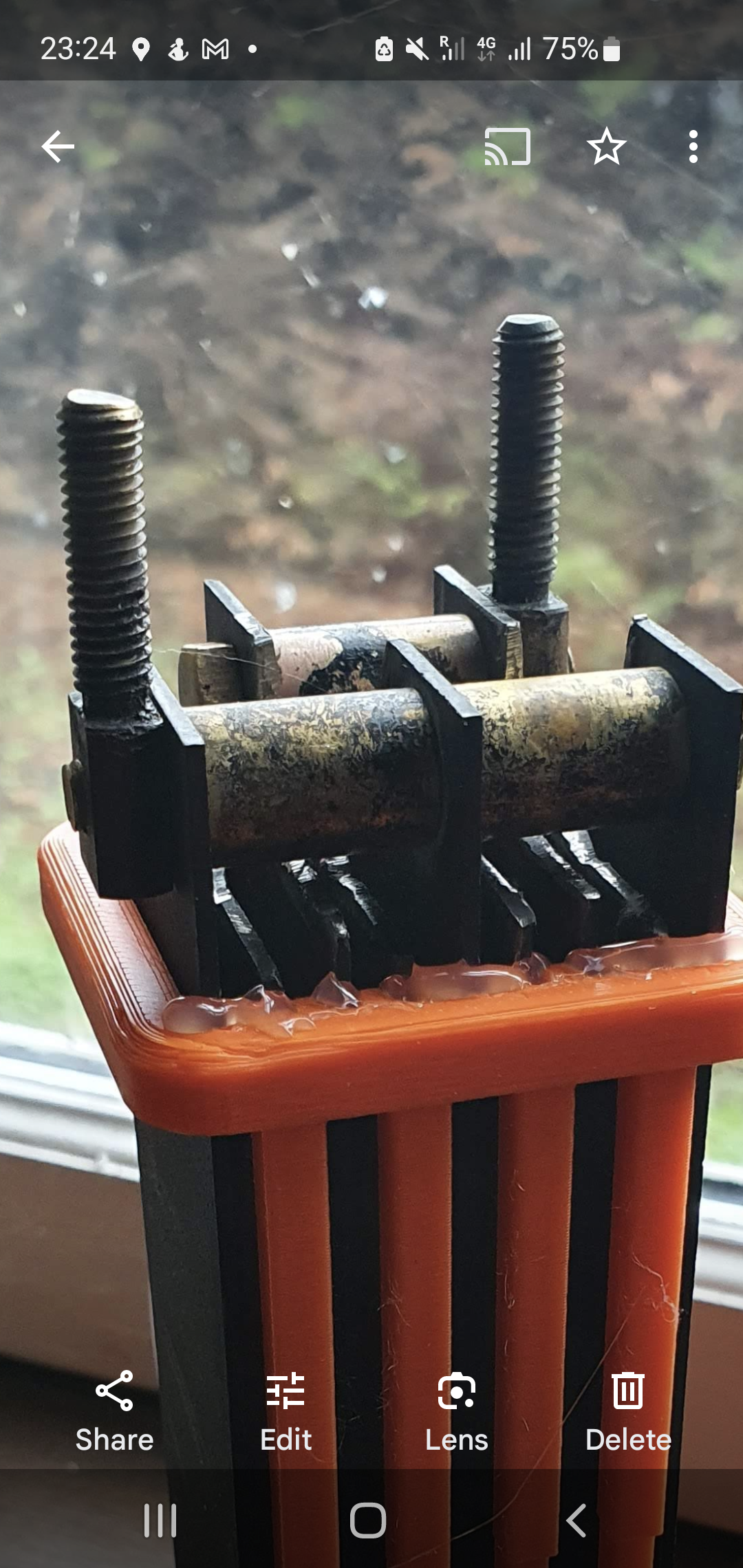
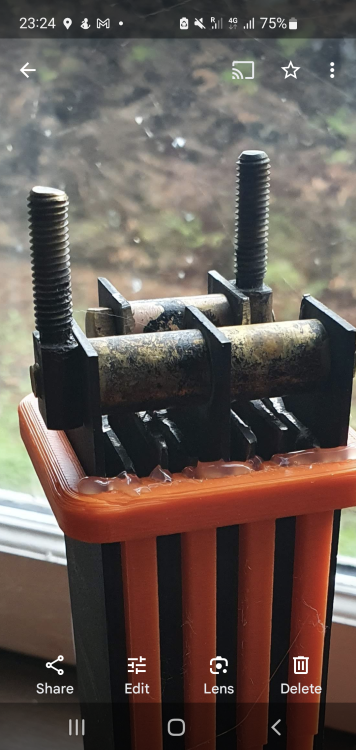
The device is an electrode for a salt water chlorine generator for a pool. It's home made by me. I can't remember where I got the original nut/bolt combo nor what it is called though. I keep thinking of a barrel nut but that is something a little different.
-
Hello all I'm looking for replacements for the threaded rod + nut combos (they are one piece). Can't think what they're called to search for them. They're in brass and used for connecting through bulkheads in this case. hopefully the hive mind will come up with something!
-
I'm in France today but will take a snap on Monday morning. The access is a small covering on the verge. About 150mm. Then a polystyrene panel to remove and then the meter under about 200mm of clear water. I will try pumping out the water to get a clear photo.
-
Update on this is that the water company has refused to get involved as the leak is less than 10L an hour (Thames water). The last test we did was 50L over night (12 hours). Stopcock isolated of course. So now we are stuck with no way to fix the leak it seems. Cant dig up the meter as it's on public ground. And the leak is unlikely to be on our property as there's a single length of relatively new MDPE from the meter to the stopcock. Unfortunately there's no visible shut off valve in the meter box (buried in a small inspection chamber). In my place in France there are isolation valves at both sides of the meter. Any thoughts other than put on a hi-vis and some old jeans and dig up the connections to the meter?
-
Thanks Bozza. This is what I was thinking too. I will give it a go as it seems the thinnest method to create a flat surface for uniclic hard wood boards and if it all goes pearshaped, 12 sqm is not too traumatic to break out and remove. Did you find PVA better than SBR? There are so many conflicting opinions!
-
Total area is 11 sqm. Joists at 400mm. Spans of 2000mm max. The 6mm deviation is across 1200mm. Using a 600mm level everything seems more or less within a 1mm.