Del-inquent
-
Posts
170 -
Joined
-
Last visited
Everything posted by Del-inquent
-
old paint pulled off wall... in places. Best way to prep?
Del-inquent replied to Del-inquent's topic in Decorating
That would make sense, it does have a nice sheen to it. Any special prep needed for painting over, if it is enamel or coach paint? -
old paint pulled off wall... in places. Best way to prep?
Del-inquent replied to Del-inquent's topic in Decorating
Only a dusty back to the paint in those places, so I suspect poor prep when originally painted. Will give the wallpaper steamer a try on the bare paint, cheers. I think I might also give the "throw some easyfill in the paint" suggestion I had before and see if that smooths out the edges a bit. -
old paint pulled off wall... in places. Best way to prep?
Del-inquent replied to Del-inquent's topic in Decorating
I've borrowed one, it doesn't seem to want to touch it. It's like putting the sander on a plane of glass! The exposed paster it eats through, of course, so if anything that seemed to make it worse. Unless I'm being inept using it which I'm totally open to learning. -
The hall in our place appears to have been painted with a very special paint. Rubbing it with sandpaper you'd think it's painted with tungsten carbide. In places it's come away with the wallpaper, in other places it's stuck solid and won't budge. Other than having the whole lot replastered, what's the best way to approach it so it doesn't end up a scabby mess? I've had a suggestion of throwing easy-fill in the emulsion, putting a couple of coats on and sanding that back instead but the person was rather vague about it, I think it's something they heard rather than have done!
-
Yes they said DNO have to move their supply points first.
-
They’re both on one wall in a corner but they are in just the wrong place and prevent the kitchen we want, from fitting. There is slack in the incoming supply cable but to move it it needs disconnecting because of the board it’s on. I don’t touch DNO’s stuff, and they are not allowed to reposition in a kitchen even if only a few inches. If moved at all they have to go “elsewhere” so they said easiest was in a flush box. The gas they could move but said it would involve a new pipe cutting back either way due to its age and type not meeting spec, so it would be more sensible to move it completely (as it would still be less than ideal in the proposed position, just not a make or break). Both are being done by the relevant DNO so no issues as to if they are competent I’d hope 😂 but both said I can do the box installs as they won’t.
-
I need to move both my electric supply and gas supply. I only need them moved a few inches, but both DNO’s have said they can’t be, both have suggested best solution is flush fit boxes on external wall. they are giving conflicting info on mounting them though, and it is something I’ve never done before so looking for suggestions on best practice. They need to be as close to each other as can be safely and acceptably done. Any tips and rules to stick to appreciated! one particular question I have is regarding fitment. We have 100mm external skin and 60mm cavity. The boxes I’ve looked at require 150mm from outer face so whilst we have that, there is only 10mm to spare. Is that enough? Can the box be spaced off the wall a little to increase that? I know my parents had a flush fit box fitted and they also have 60mm cavity but theirs was done some years ago. basically any info past “chop out bricks, screw in boxes” appreciated 😂
-
Outside stopcock, direction of mains pipe?
Del-inquent replied to Del-inquent's topic in General Plumbing
Well that would explain why my trench didn't reveal it then... I believe my pipe is Black Alkathene - house build is around the 50's - 60's and at the internal stopcock it's got black pipe. The main reason I wanted to find the other end is that inside the house where it comes up inside, the pipe is run inside a large conduit and appears to go diagonally from the mid side of the house, toward the front door, underneath the slab. A relative (retired developer) mentioned that he's seen the conduit nearly all the way to the meter in similar properties. This is the main reason I wanted to find the meter end - if it does, I'm wondering if I can replace the black pipe with MDPE simply by pulling it through the conduit. The current position of the stopcock is less than ideal, it could do with being 3m further away and if I could get it through the conduit could simply be run under the floor to the ideal position. I don't really want to have any joins in the pipe under the floor. Currently my trench is full of water ,of course, and it was filling up with ground water even while I was digging it so I'm a bit stuffed now until the weather gives me a break. -
Outside stopcock, direction of mains pipe?
Del-inquent replied to Del-inquent's topic in General Plumbing
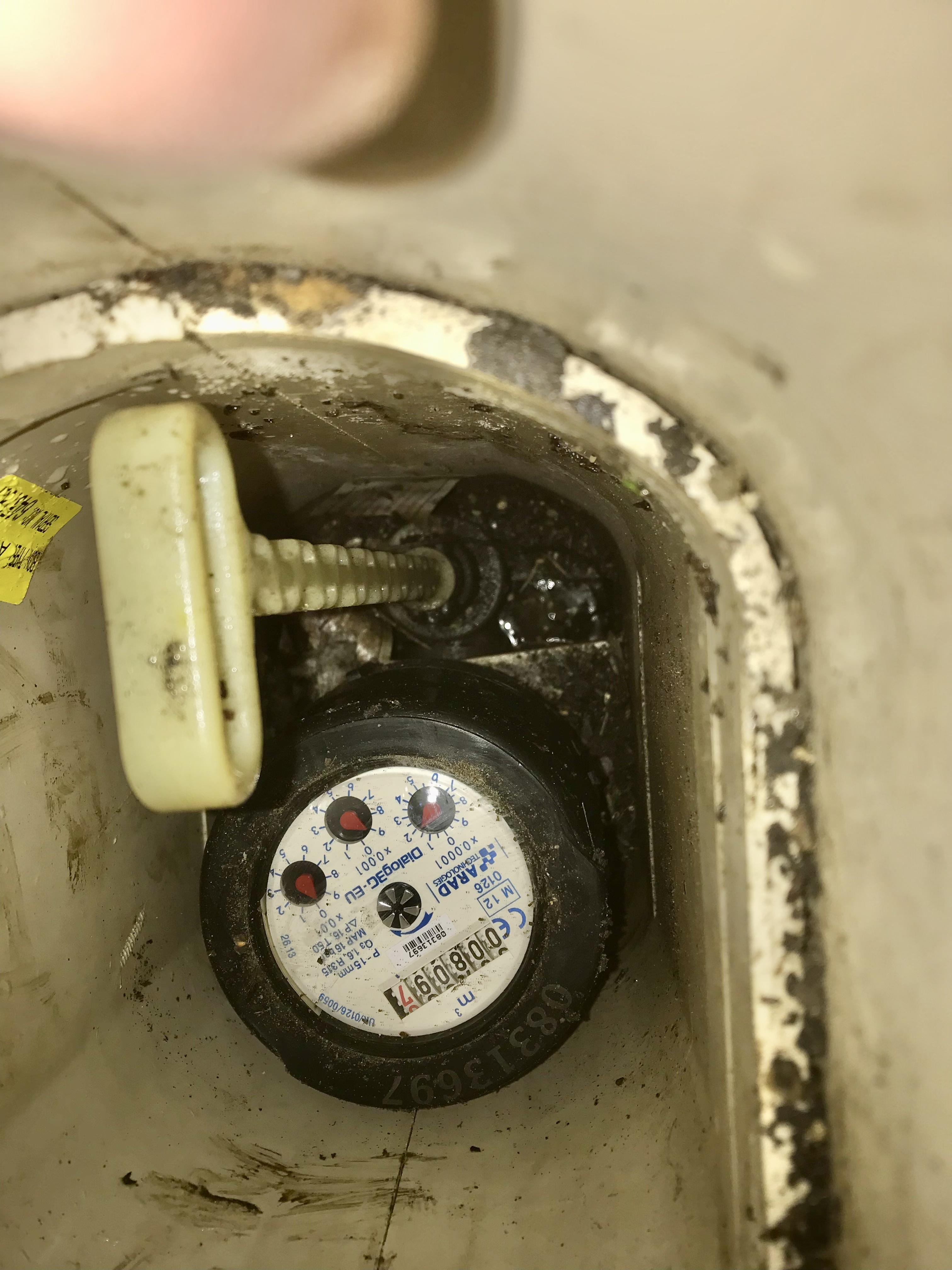
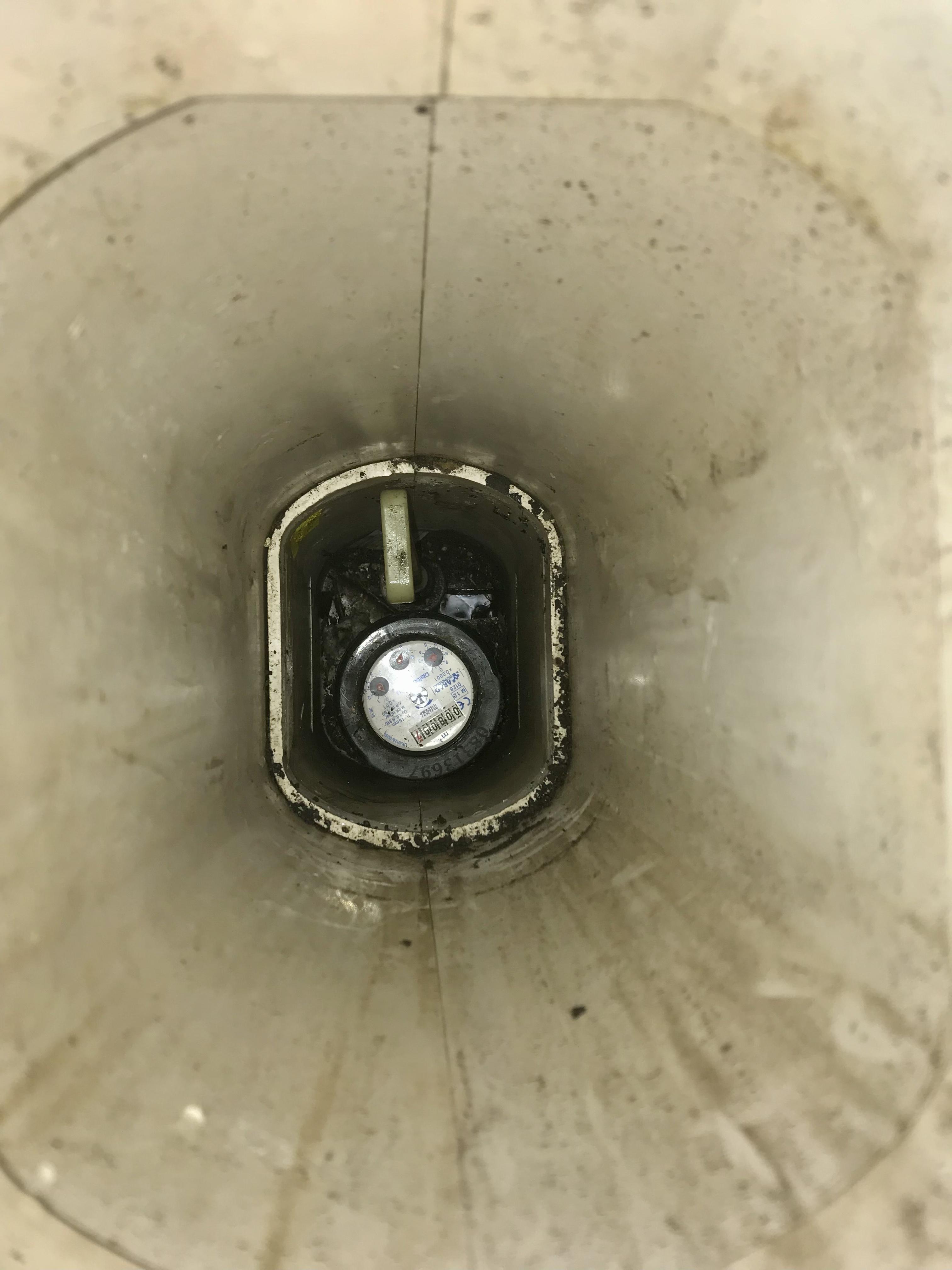
Definitely my meter, the stopcock turns off our property anyway 😂 I’ll try and get a photo when it’s not torrential rain, in the meantime, the red line is the road direction, the blue arrow points to the house.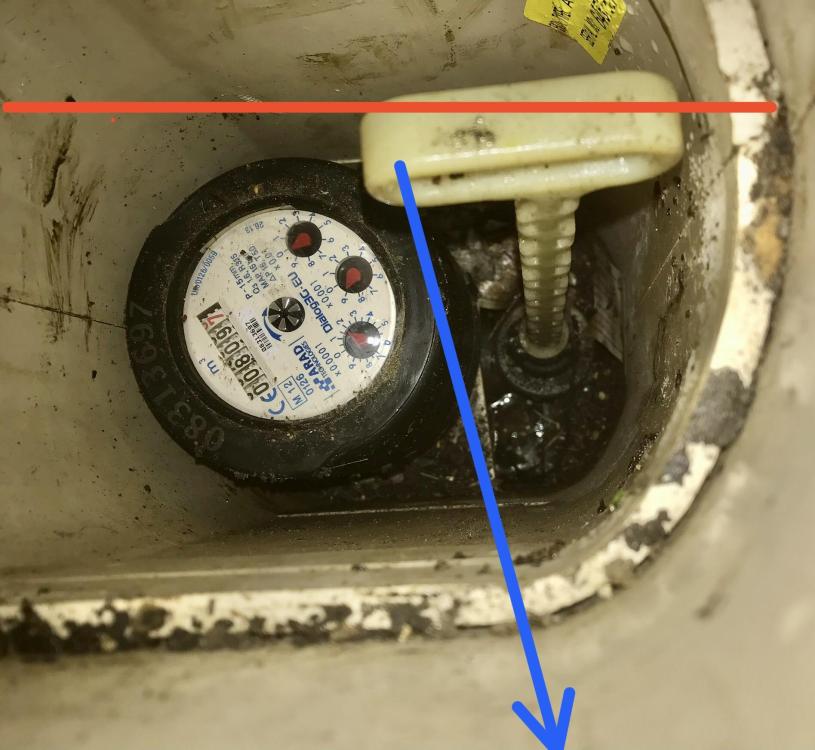
-
Outside stopcock, direction of mains pipe?
Del-inquent replied to Del-inquent's topic in General Plumbing
Nobody got any hints, or is it a case of “could be any direction”? -
I’m trying to find my mains pipe at the point it exits the stopcock in the road. Closest I can dig a trench is 18 inches away, so I stupidly assumed it would be a 5 minute job… looking at these photos of the stopcock in the pavement, what direction would you expect the mains pipe to run? I’ve dug a 5ft long trench to the depth as the stopcock plus a bit… no joy. Would it be likely to do a 90 deg turn or anything immediately outside the box?!
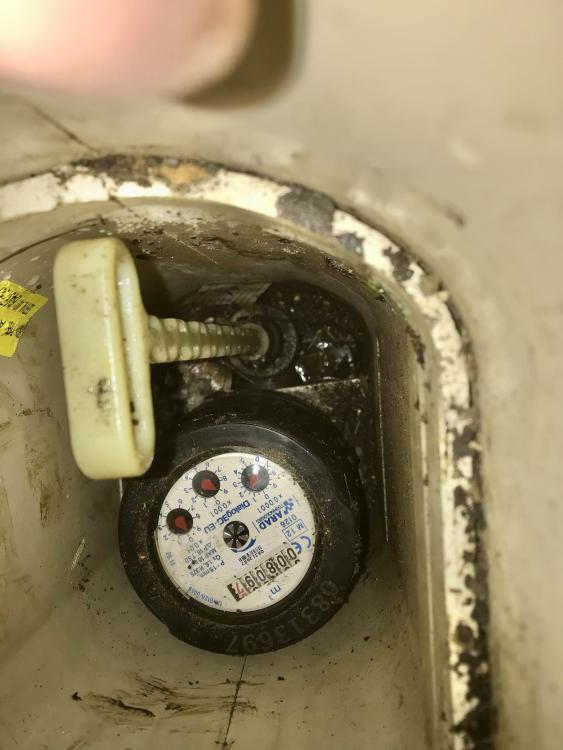
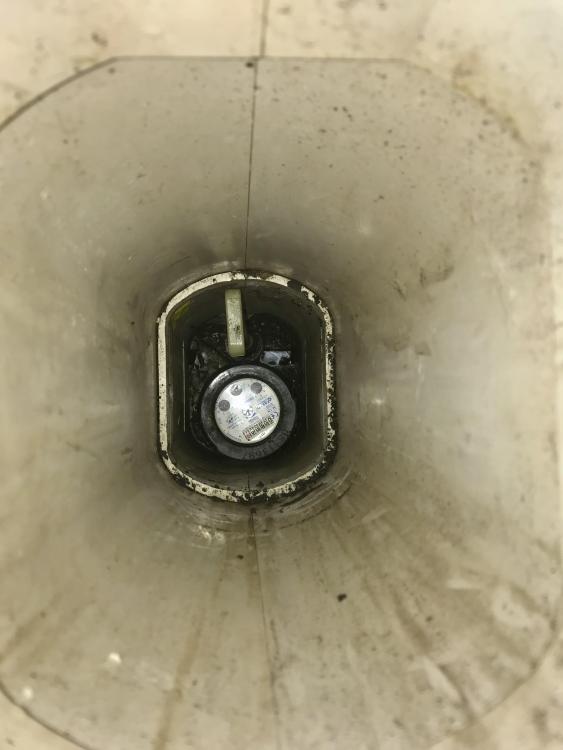
-
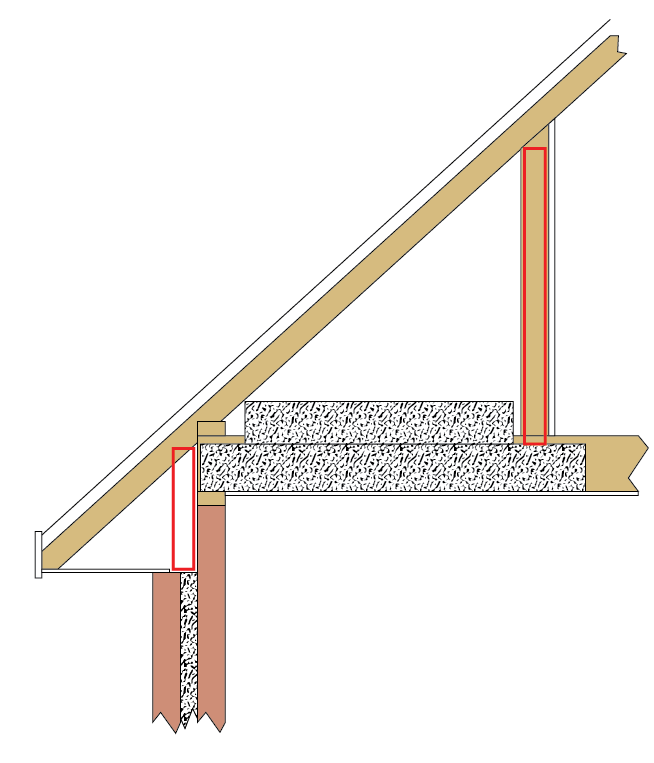
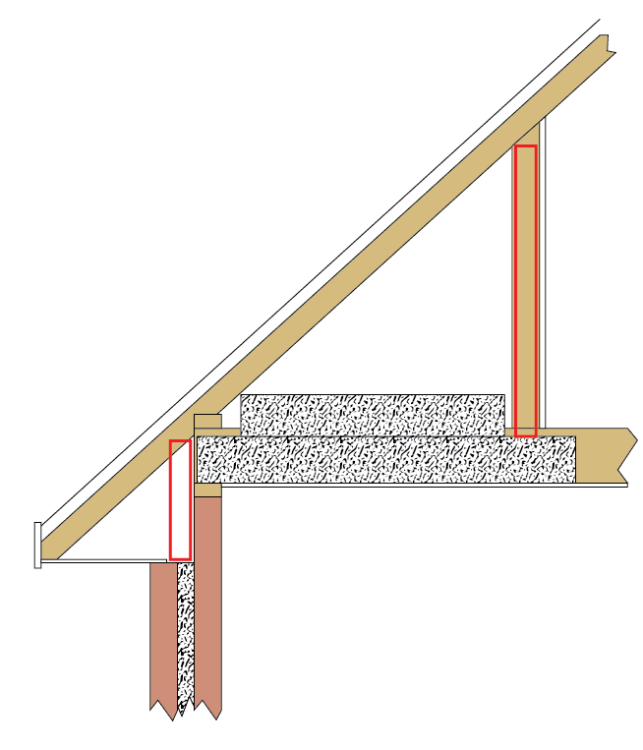
Our Chalet bungalow has a hell of a lot of cold areas. Notably, the stud wall upstairs and the tops of the walls downstairs. There is currently insulation above the ceiling and in the cavity walls, but the areas with a red border have nothing at all. I've got (limited!) access into the eaves for a short while and am wondering how would be best to approach insulating these areas, particularly the bit between the cavity / soffit and the ceiling. I can just about get my hand down into that area by pulling back the current insulation between the floor joists. Please excuse poor diagram, hopefully you can work out what I mean from it.
-
Recommendations - Storage combi or Normal combi?
Del-inquent replied to Del-inquent's topic in Boilers & Hot Water Tanks
I'm not saying we are tight on space, but put it this way; at the moment, the expansion tank fitted by British Gas for the previous owner, is screwed to the bedroom wall... nice touch, I thought. -
Recommendations - Storage combi or Normal combi?
Del-inquent replied to Del-inquent's topic in Boilers & Hot Water Tanks
My house is also from the past... a neighbour (identical property) had a heat pump fitted. Then they had a gas boiler refitted when it proved entirely incapable of keeping the place warm. That is very interesting on the pre-heat cylinder. Nobody has mentioned that. Looking at the photo, I might just be able to squeeze that in somewhere! -
Our new place is a bit lacking on spaces to put tanks / cylinders, and our planned extension removes where the storage tank sits, so we can either go for an unventilated tank or a combi. Combi would save a lot of hassle with plumbing and free up the space the tank currently sits for some (much needed) storage space. Every time we've been somewhere with a combi before, it's p****d my wife right off. Turn on a tap, shower goes cold or messes around. New place has family bathroom, ensuite and obviously kitchen tap. I've got some people saying a high flow combi will be fine, others saying a storage combi would be way forward, others saying neither and go unventilated. Thoughts of the esteemed members here? I should point out my wife is Latina, therefore my very life is in danger if she gets blasted with cold water. 😅 If a storage combi is the way forward, any recommendations? There don't seem to be that many out there.
-
very helpful, thank you!
-
Yes, they'd like all the modules and fronts to be the same size. Cold eaves, yes. Modules are clad with 150mm PIR on the backs, and 50mm stuck between each as they go in, so pretty snug. The plate (I can't remember the name for it when it's used like this! Binder?) is just a 4x2, there isn't anything below at all. I'm going to try and get a proper look at the Purlin, at the moment I can only see an edge of it!
-
Just been asked if I can help with something but I'm not sure on it, so looking for a bit of guidance. In their loft conversion, a stud wall runs from the purlin down to a plate on the floor joists. Half the wall has studs at 400mm centres, half has 600mm. All studs are 4x2's They'd like them all to be 600mm so they can put storage in. I'd assume the wall is spreading the load out, but why they have a mix of centres is what is concerning me. Can those 400mm centred studs be replaced with 600mm?
-
I've had mixed messages on this. Originally I was going to go for PIR, but several people with far more knowledge on this than me (not hard, my knowledge on it could be written on a postage stamp...) have said that whilst the base figure of PIR is much more effective, movement, gaps, difficulty in effectively sealing in a retrofit with warped and twisted joitss etc drop the efficiency quickly, and it's not breathable so can introduce problems with moisture retention against the joists, which does concern me as last thing I want to do is bring more problems to a property that has plenty already lol
-
This is possibly a really stupid question seeing as I couldn't find anyone else asking it with a search, but... Our ground floor is suspended timber floor. The joists are 100mm deep. The void below is 100 - 150mm. I've got to take up several floors for other reasons and as there is no insulation under there I thought I'd put some in. I am looking at using rockwool or similar under there using a membrane draped over the joists. If I made the drapes deeper, or tacked some timber underneath the joists, I could put 150mm insulation in. But would that actually achieve much given the joist depths there currently?
-
Consumer unit placement and clearances
Del-inquent replied to Del-inquent's topic in Consumer Units, RCDs, MCBOs
Just in terms of what alterations would be needed, it's construction has been modified a couple of times and made it awkward to do without significant disturbance, and we're living in it. -
Consumer unit placement and clearances
Del-inquent replied to Del-inquent's topic in Consumer Units, RCDs, MCBOs
I definitely agree it's not ideal putting it in a cupboard, the problem is the next most suitable place is a long way from it and difficult to route to. One thing that both electricians have said is that they will have to mount a new CU at current regs height - is that not the case? If it can go literally anywhere, it could move just 15cm... to the other side of the wall, in my office, but only if it can go up at the same height it currently is (2m) -
Consumer unit placement and clearances
Del-inquent replied to Del-inquent's topic in Consumer Units, RCDs, MCBOs
Explanations were “thin” shall we say. He was pretty adamant that it had to have clearance around it and couldn’t be within a kitchen cupboard. ideally I’d move the supply, meter and CU elsewhere but the budget has been swallowed by a nasty surprise -
It looks like we might be having a rewire on our new place. I've had a chat with a couple of electricians as the current placement of the consumer unit it is less than ideal - it's in the kitchen, in a rather awkward place and severely hampers the layout of the (not particularly big) kitchen. Electrician 'A' has told me that it would be fine to have it within a kitchen cupboard and that there are no requirements for clearances either side of the CU. Electrician 'B' has told me that's not permitted. I've been searching but can't find any guidance on it. Keeping it within a reasonable distance of the supply / meter, it would be very simple to put it within a 400mm full height cabinet (which also fits in to our favoured kitchen design), so I'd like to believe Electrician 'A' but... well I don't want to have a nasty surprise!
-
Building control drawings for dormer extension.
Del-inquent replied to Del-inquent's topic in Building Regulations
I've drawn them up from others specs, not done the calcs myself, I'd be getting some help on that front from a friend.