MarkyG82
-
Posts
40 -
Joined
-
Last visited
Everything posted by MarkyG82
-
So it seems I did leave some critical info out. The reason for taking the door apart is to convert the single up and over to a pair of side opening doors. Reusing the skin will help maintain the style similar to the other door. I will build a doorframe and a pair of door skeletons on which the skins will be fitted. Then filled with some sort of insulation and a rear skin added. I can design in plenty of seals to help with cold bridging and drafts. Soundproofing will be a happy side effect. Hopefully that gives a better idea of what I'm trying to achieve. Also plan to fit a multipoint lock like in a front door. Should be able to build it for about £300 and be better performing than a door 3x the price. Expanding foam sounds like a good starting point. The main issue I can think of is condensation on the inside of the outer metal skin. The adhesion of the foam might help combat this and also be a bit waterproof at least against major ingress. Thanks for the responses btw.
-
So I'm either an numpty for planning this or asking the wrong question 😉
-
My up and over door is cold and drafty thin metal (steel?). The skin is in 2 pieces, so I have a plan to pull it apart and rebuild the pair of skins into individual doors with an insulated core. This will then have seals around the edges to limit the drafts etc. The second door (double garage) will be blocked off on the inside as we dont use that anyway. Mechanically I am fine designing and building a custom frame and door to mount the skins to, which will be glued (with sealant) and screwed to said door blanks. I plan to fill the void with insulation. Question is what type? And how to layer it? Do I go with cheap loft insulation or panels and should it be kept away from the steel skin? How I insulate it will inform the design of the door. Mainly the thickness. Construction of the door may or may not include a diagonal brace depending on how much I trust the front and back face to keep it square. SO the insulation may need cutting. Thats no big deal but again may inform the materials used. Thanks in advance.
-
@Redbeard this is an amazing tip. I'll be doing this. Many thanks 👍
-
Basic component and setup Q's
MarkyG82 replied to MarkyG82's topic in Mechanical Ventilation with Heat Recovery (MVHR)
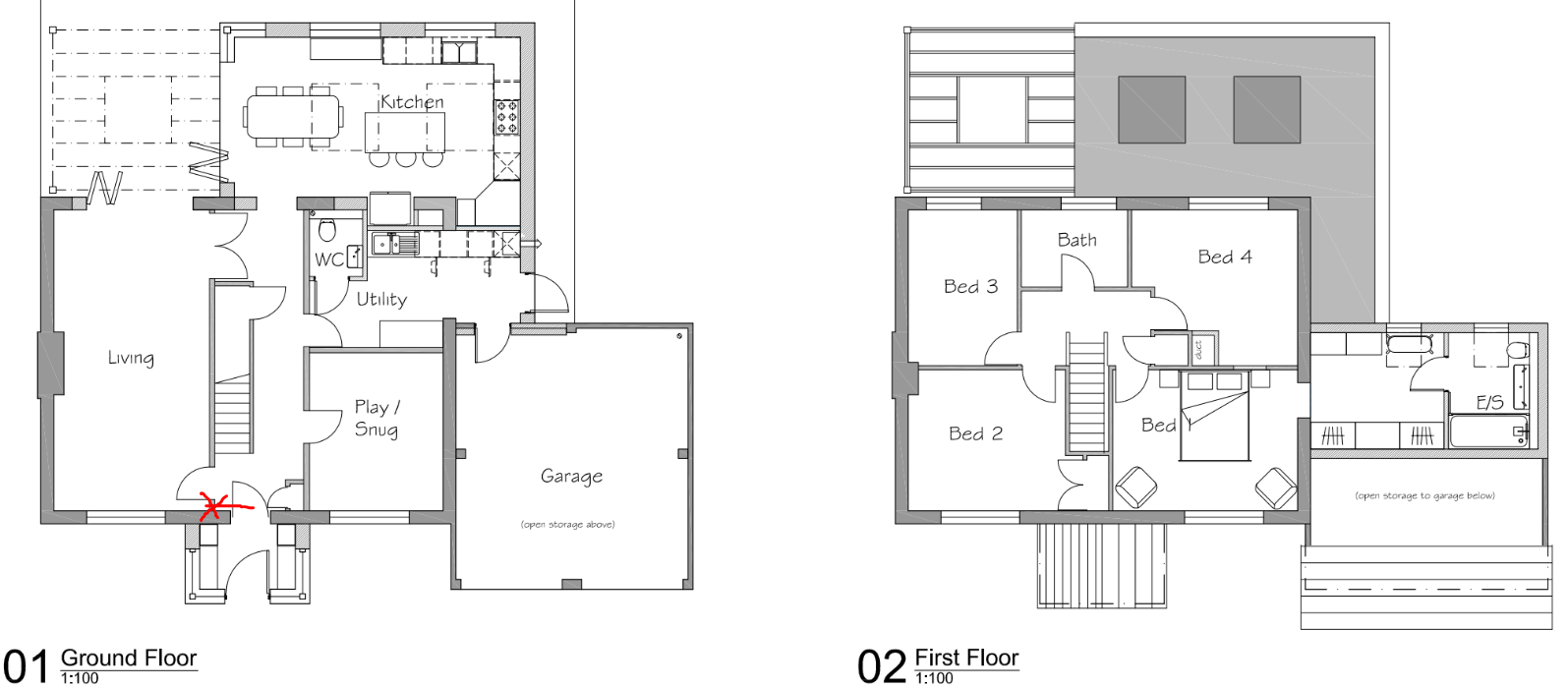
Thanks! Should have probably mentioned it's a retrofit and we are extending. Not started yet. Currently getting quotes from builders. The utility is the current kitchen with the current wc the other side of the wall to the location in the above plan. All internal walls are block. As part of the extension we are replacing all windows and external doors. This alone should give us much improved insulation. I just need to figure out the fireplace as that is the final gaping hole. -
Basic component and setup Q's
MarkyG82 replied to MarkyG82's topic in Mechanical Ventilation with Heat Recovery (MVHR)
So I'm getting more info together slowly. I understand how the systems work now and with extension designs changing the routes for the ducting have changed a little. As a result, I have a few more questions that general research fails to answer. 1. How do you seal where the ducting penetrates the ceiling? (assuming the main system is in the loft) 2. Is the air tight envelope generally the outer skin of the house? If inner, how do you seal penetrations like plug sockets? 3. Is there a way to cleanly route a duct from vertical to horizontal without a humongous box-out? Am I going to require a 90 bend fitting to achieve this, with a smaller box out? 4. This will probably need answering by our builder/structural eng. If I wanted to site a outlet in a block wall high up between a door and external wall would drilling an 80mm hole reduce the integrity of the house? For points 3 and 4 see the attached. Red line is my proposed route from the cupboard space above with the cross being the outlet site.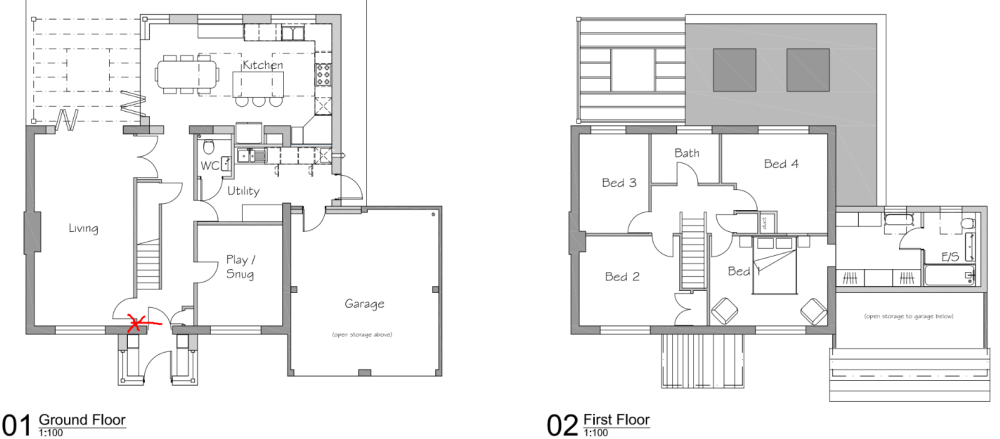
-
Recently had a new unvented tank put in the loft and the old vented tank removed from the airing cupboard. The whole of the loft is insulated so there is currently no transfer of lost heat into the house other than the pipes running through the now empty AC. The new tank is a good super insulated one but the pipework only has basic foam lagging on with gaps all over. I will improve this of course but also wondered if it was worth bagging or boxing the whole setup and if so how would I go about it. Any thoughts very welcome.
-
Jerry-rig an MVHR unit - how?
MarkyG82 replied to Dreadnaught's topic in Mechanical Ventilation with Heat Recovery (MVHR)
On the subject of mounting, what about a hanging platform? Nothing fancy and maybe on 3 cords (chords?) to allow for self leveling. Should offer a good level of isolation. Horizontal supports could be used to counter any rotation offered by the unit boosting. -
Replacing bathroom fan with dmev
MarkyG82 replied to agamemnon's topic in Mechanical Ventilation with Heat Recovery (MVHR)
In a previous house I simply took the power supply for the in-ceiling fan and applied it to the new in-line fan and left the old fan in place as it was so weedy. Does the light have a separate supply to the fan? -
Thanks @JohnMo. Makes more sense. We have an order in for PV +battery so running costs would be reduced. We aren't doing it for a purely financial gain. Air quality is a bit one for us. We have the windows open year round when sleeping. Hoping a system like this would mean we can keep them shut. Also the house is quite stuffy when getting home each day (no trickle vents) so again this would help. Our kids are also quite noisy so being able to keep the racket from going to the neighbours would be good. Also need to redo the wet room ventilation anyway so makes sense to have a central system. yes I have convinced myself. I just want to make sure I am covering as many based as I can without having to knock the whole house down.
-
Hello from Hampshire. We have just put our planning application in for a 1½ storey extension for a new kitchen, utility and ensuite (the ½). Plan is a flat green roof over the extension and some other eco stuff like solar PV +storage, MVHR, insulation etc. Already learned lots from the ventilation section. Just waiting for the madness to really kick in with kitchens and finishings etc.
-
Basic component and setup Q's
MarkyG82 replied to MarkyG82's topic in Mechanical Ventilation with Heat Recovery (MVHR)
@joe90 Thanks. Love that you took the photo on the table saw too! Often the only empty surface in my garage. -
Appreciate that. Also not all houses are built the same. At what point would you suggest a system be installed? Do the benefits fall off a cliff or are they on a sliding scale as the air tightness reduces?
-
I'm thinking the same thing and seen your comment @JohnMo a few times. How can we know/predict the air tightness of a building without doing a test? Can we make a broad statement that doing the stuff in the list below will seal a house enough to qualify it under your stated leak rate? The jobs below are all relatively normal/simple tasks so should be in the realms of most who are making improvements to their homes. - Second front door (i.e. porch) with no letterbox on internal door. - Blocked up chimney. - External breaks in the shell (pipe entry points) sealed. - Light fittings sealed.
-
Hi all. Been reading a load of great stuff on here and elsewhere online. There are a few things that I cant get my head around so I'd like to ask a few Q's. Hopefully no question is a silly question!! I'm a DIYer by the way. Engineer and keen woodworker so happy in my abilities. 1. How do you get semi-flex ducting to be square to the inlet/outlet? Seen a few comments saying try to position the vent so the duct is straight on to it. What about in the loft, do you have a length of duct looping up from the fittings and then routed through the roof to reduce the bend radius? Seems prohibitive to insulating. What about if you have the duct running horizontal along a ceiling, how do you get it to turn 90 down through a vent? 2. I'm looking at a Brookvent unit but they don't seem to get much mention on here. Nearly 200m2 house (by the time we have extended) so looking at 200/300 m3/h flow (trickle/boost). Happy to be pointed in the direction of a good value unit that has all the usual bells on (summer bypass, boost by humidity and switch, etc). 6 in 5 out with some doubled up depending on type/duct length. Is there a reason not to use the Brookvent unit? 3. There also seem a mix of views on here regards use of MVHR in an older house. Lots on here suggest anything less than Passivhaus there is no point. I'm working on our house but it definitely wont be a Haus. In the design stage right now and hoping to start putting a shopping list together soon. Probably going for 75mm ducting due to the limits on retrofitting. Comments very welcome. Thanks Mark