Garald
-
Posts
1113 -
Joined
-
Last visited
Everything posted by Garald
-
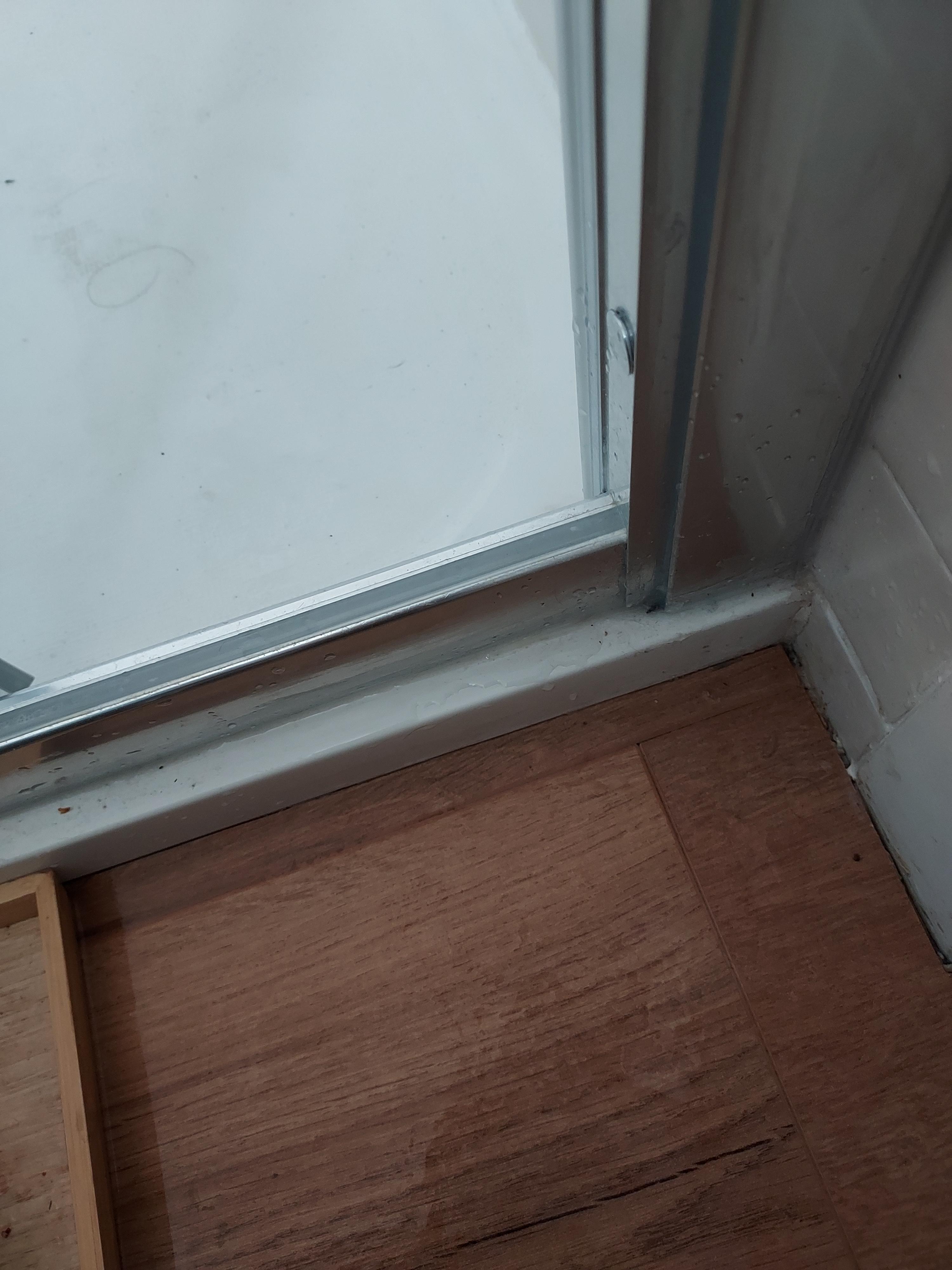
My shower drain is partly clogged (will fix that tonight), and I notice the shower frame was leaking on its bottom right corner. How to fix that?
-
I have a Mitsubishi Ecodan heat pump with a wifi controller; I've been using the MelCloud app (and the wireless thermostat). So far I've been using the app just to monitor energy usage and to shut down heating and hot water remotely when I don't remember doing so before leaving for a couple of days. I'll soon switch to an energy plan with different rates for off-peak and peak electricity usage. Obviously, I would like electricity to be consumed during off-peak hours (eight hours; they will probably be late at night). a) What should I aim for: have a target temperature (with the system choosing flow temperature) during off-peak hours, and just shut off the heat pump during peak hours, unless the temperature drops below 17C, say? I think a post somewhere in this site suggests setting a fixed flow temperature during off-peak hours and a target temperature during peak hours; is that better? (I should add that, while I am aware that it would be best for the heat-pump to run on low settings during long periods of time (and a Mitsubishi is supposed to modulate well), what I find when I let the heat-pump have a target temperature and choose flow temperature is that the heat-pump heats water to a temperature higher than that given by the curve I set, and then it stops. The heat-pump is probably overdimensioned; I did the calculations, but I couldn't find an installer who was willing to do a tighter fit.) b) MelCloud does have a "weekly programming" menu that allows one to "add events", but the documentation is very sparse on what to do there. Are there more detailed or useful third-party instructions on how to use MelCloud to do whatever you recommend for (b)? Or should I get Home Assistant instead, say? (I take it must work with the Mitsubishi WiFi controller?)
-
I'm considering getting batteries in addition to a set of solar panels. A friend of mine sends me this link: https://www.nature.com/articles/d41586-021-01735-z I'd heard before of problems associated to lithium batteries (pollution, sourcing in the DRC with all that implies, etc.). I suppose a cell phone doesn't make that much of a difference, but storing energy from a set of PV panels is on a different scale altogether. What do people do about this question? Refurbished batteries maybe? Some sort of fair-trade sourcing?
-
Is it easy to program the battery so that it charges only when the solar panels are producing a surplus?
-
Uh. I wonder whether one can get a deal like that in the Paris area. The lowest quote I've got is 7181 eur ( = 5681eur + 1500eur for the installation) for 3kW. (Then there's a 10% tax and a subsidy that will cover the tax if I'm lucky.)
-
Well, this is France: there's lots and lots of nuclear (86.9% of EDF's production), one can pay a company a bit extra to ensure that one is consuming only renewables 'but are they telling the truth?), there are renewables-only companies (I am considering switching to one of those), etc. Does the battery system just plug into the mains? Link? What is the efficiency? Since the price I get for selling electricity to the network is half of the peak price of consuming electricity off the grid, consider the no-battery option as being equivalent to a free battery operating at 50% efficiency.
-
1. A PV installer visited today. We talked a bit about batteries. He said, basically - it's not worth installing batteries today (from a cost/efficiency or environmental perspective), there will be some that are worth it in the future, actually, they already exist, but we want to make sure they work well before offering them, etc. Perhaps more to the point, he said that I should have no difficulty installing batteries in 5 or 10 years time, as one can just plug them into the main, and charge them with the electricity produced by whatever I install now. Is this how it works? (For context - here one sells excess electricity produced by solar panels at half the price one has to pay to buy electricity.) 2. I am getting three very different offers. Two are more or less in the same range - I am attaching the technical information for one of them (the other one is from IKEA - they'll send me more precise information letter). The third offer, from a large state-owned energy company, costs about twice as much (technical information sheet attached as well). Said the installer (same as the one above): we don't have the least expensive or the most expensive solar panels in the market, our products will last 30 years, our panels are two-sided, our panels are just better, our panels are French rather than Chinese, etc. The two panels look very similar to me. Anything I am missing? (Can you guess which one is the one that costs twice as much as the other one?) (And yes, guess what, the panels from the less expensive supplier are also French.) fiche dualsun 425 (1) (1) (1).pdf PW54M10-BB 425W FR Définitive.pdf
-
Hm, but that's direct electric heating, no? (I have a heat pump.)
-
Ah sorry. Yes, it makes next to no difference. Excellent point, though a hot water tank is a battery of sorts. Presumably things can be set up so that water in the tank is heated mainly when the sun is out. I understand batteries of the more conventional kind have become much more efficient as of late. I.imagine some folks with PVs here have batteries? What is their experience?
-
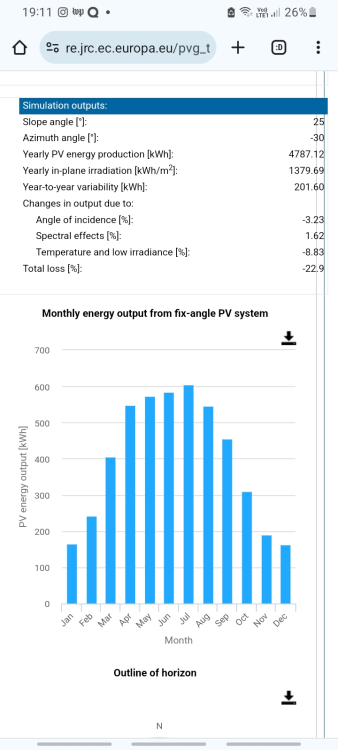
Sorry, I meant: My consumption should stay beneath what is portrayed here between March and October
-
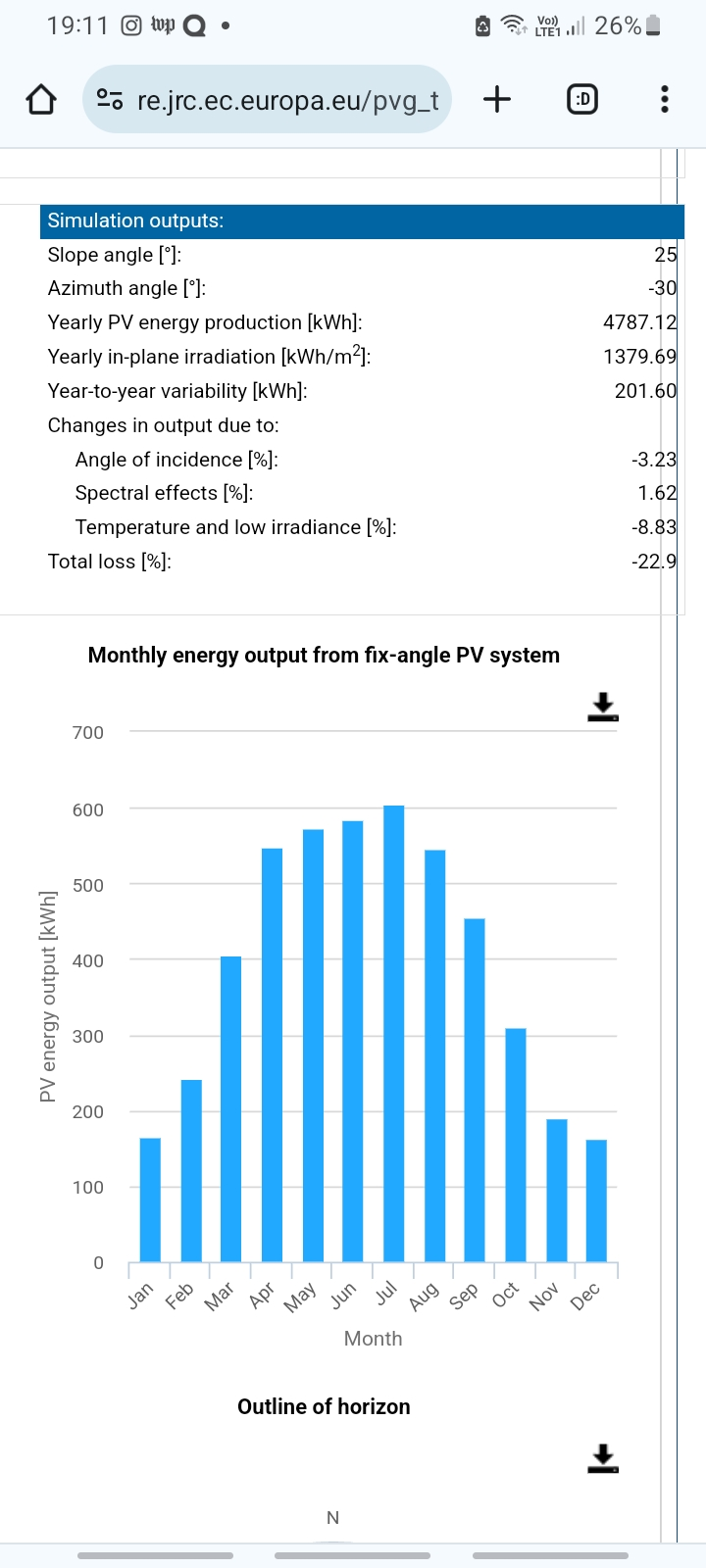
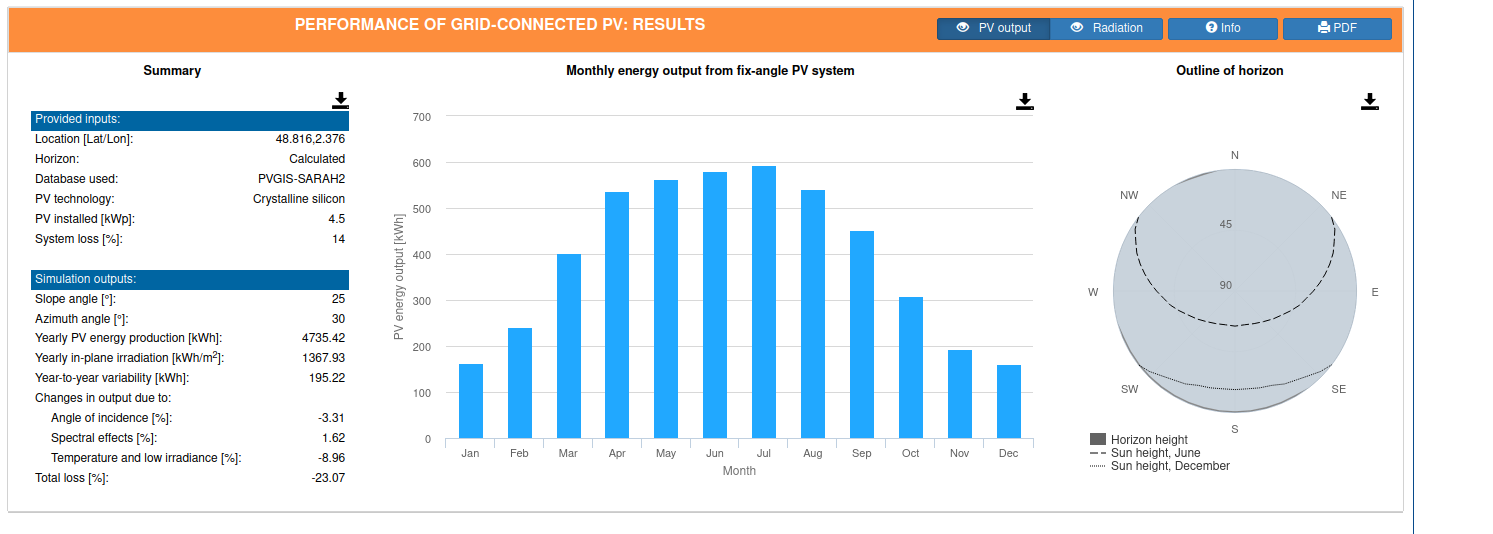
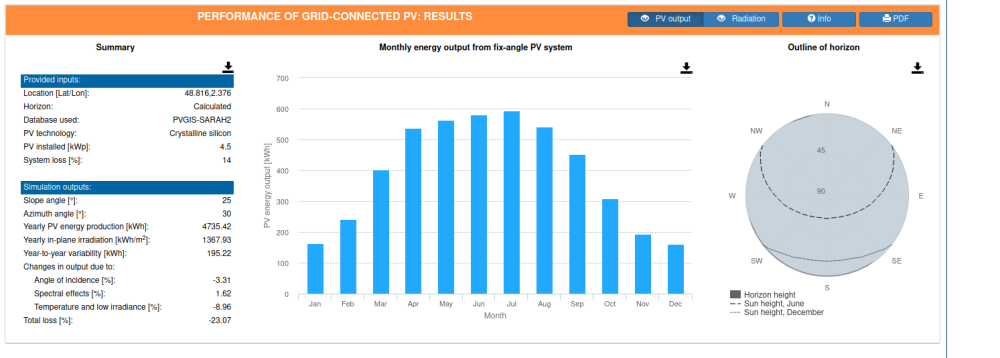
This is what I get from PVGIS for a system with 4.5 kW peak: Is this too much? Roughly right? My consumption should stay beneath what is portrayed here except for December and January. I don't expect much shading. This is my place - or that this is what it looked like from above, before I put in a fair number of additional skylights, postly on the NWN side: I mean the red brick house. (The garden is not mine).

-
I think I'll have solar panels installed after all. (For anybody who has not been following: I'm finishing renovating a very non-flat flat that is most of a smallish house in the Paris area; I have a heat pump; the roof has SES and NWN exposure) I've got two quotes and will get more. Questions: (a) I take it is in fact better to have a separate controller for each panel? (b) Different installers suggest different installation sizes. What is better for me: 3kW, 4kW or 4.5kW? My energy consumption for the last three months: 374 kWh in February, 168kWh in March (I was away a bit), 292kWh in April (I was also away a bit but I have two AirBnB guests). November was 809kWh and December was 709kWh, but that was when I was having the heat pump heat water at 45C rather than let it choose its own operating temperature. (January was an anomaly that I am trying to get sorted out.) Most of that was the heat-pump. Looking further back: my August and September consumption last year was 233kWh and 216kWh. I can sell the electricity I don't consume myself back to the energy company, but the rate is not fantastic (0.13eur/kWh or so). (On something else - the offer from IKEA is not the lowest one. Do they have a good reputation in this business?)
-
Have PIV (VMI), what next? Humidity-sensitive ventilation? HRV?
Garald replied to Garald's topic in Ventilation
-
Have PIV (VMI), what next? Humidity-sensitive ventilation? HRV?
Garald replied to Garald's topic in Ventilation
This sounds like a good, simple idea with minimal cost. Since the PIV unit has a remote control, there has to be a way to do this all on software - but I'll have to see whether the PIV manufacturers made it easy. Right, but the reality is that I *have* PIV (because I was very poorly advised IRL - that's a story for another day). So, even though the diagnostics guy recommended 1, the real options may be 0. existing PIV with minor improvements ((a) shelly H&T as above, (b) dehumidifier (how?) as SteamyTea suggested, in part to make direct adiabatic cooling more effective during summer - I know, I know, let's keep on the subject of heating) 3. MVHR as above. I'd be willing to pay 500 eur for a professional assessment of ventilation, or 1000 eur, say, if it includes a blow door test, a good look at the insulation (I may want to insulate the north wall from the outside eventually; the inside insulation on that side is not to the same standard as the insulation on the south wall) and so forth. Is that realistic? Of course this is not the right season for a good look at the insulation (took lots of thermal-camera pictures myself, but that it was in January). But then it seems that MVHR is more of thing to do on the next renovation (if at all), together with insulating the heating ducts (and above all the DHW pipes), *possibly* insulation the north side, etc. Or am I wrong? -
Have PIV (VMI), what next? Humidity-sensitive ventilation? HRV?
Garald replied to Garald's topic in Ventilation
But how *do* you find a specialized assessor for ventilation? All I know is how to find people who do DPEs (and audits energetiques, but those are crap). -
Have PIV (VMI), what next? Humidity-sensitive ventilation? HRV?
Garald replied to Garald's topic in Ventilation
The assessment was done in July 2023 - I (new owner) paid for it, just to double-check that everything had been done correctly. I've already boasted plenty of how the place went from a B to an F. The windows themselves are mostly new; it's just that the builder left some well-concealed ventilation outlets somewhere around the frame on the advice of the PIV installer. How noisy and bulky is it? My current PIV unit is hidden above the false ceiling above the kitchenette in the ground-floor guest room. The advantage of that spot is that it's close to the (cool) courtyard, but obviously I can't have a noisy machine there. Other possible spots for the unit: garage, space behind the attic WC. Can you recommend a specialized assesor who does a good job and charges reasonable prices? The assesor I used for the DPE gave "VMC type B hydroreglable" as one of his suggestions, but he's an all rounder who keys things into a program. The guy who did the audit energetique at the beginning of the renovation (required for MaPrimeRenov) was useless - he barely spent any time on the spot. -
Have PIV (VMI), what next? Humidity-sensitive ventilation? HRV?
Garald replied to Garald's topic in Ventilation
I (OP) was thinking in terma of ventilation heat loss; summer cooling is a bit of a tangent that has come up (and is useful to think about). -
Have PIV (VMI), what next? Humidity-sensitive ventilation? HRV?
Garald replied to Garald's topic in Ventilation
I've been doing the exact opposite in the hottest weeks (which are the only ones with low relative humidity) - I'm using a column fan/humidifier (direct diabatic cooling). Of course if I install a dehumidifer in the PIV (how?) the column fan/humidifier will become more effective - that's a thought, thanks. (Remove hot water, mix in cold water.) -
Have PIV (VMI), what next? Humidity-sensitive ventilation? HRV?
Garald replied to Garald's topic in Ventilation
Well, I have a manual remote control for the PIV: I have it on low or medium when I'm alone, on very low when I travel, and on high when I have a birthday party, say. (Sounds sensible?) As SteamyTea pointed out, humidity is always above 55% in Paris, except on those short periods when it's very hot - and then you want as much ventilation as possible! I think that what the energy diagnostics guy was recommending was ventilation fans that would be sensitive to *interior* humidity. Incidentally, there's a little fan that works all the time (the only non-PIV bit of the ventilation system) - the builder installed it on his own initiative in the tiny laundry room (really more of a laundry closet + coat room; 2 m^2 or so). His notion was that extra ventilation would be needed there. However, I have a modern heat-pump dryer that doesn't diffuse humidity into the air (it deposits it into a container) and doesn't produce much heat. Should I have that fan taken out, or replaced by, well, a humidity-sensitive fan? -
Have PIV (VMI), what next? Humidity-sensitive ventilation? HRV?
Garald posted a topic in Ventilation
Hi, As some of you know, I'm wrapping up a rather long-winded renovation. I'm thinking of what I can do to improve energy efficiency further. Sure, solar panels are an important (and expensive) possibility, but I am also thinking of some other measures. I have PIV (VMI), i.e., positive-input ventilation. According to the official energy diagnostic (which may make some sense or be useless, I can't tell), half of the heat lost in my house is lost through ventilation. There areas around the windows that are deliberately not airtight, as PIV needs an exit. What can I do to improve matters? (a) Install (humidity-regulated?) negative-input ventilation on top of the positive-input ventilation system; make things airtight. (How much efficiency would I gain?) (b) more ambitiously, I could have MVHR installed (again, leaving the PIV in place, presumably; for one thing, it ought to help during the summer, as it draws air from the (cooler) courtyard). Is this a realistic goal? Would I have to rip everything apart? The attic has been turned into home offices (I'm typing from the attic), so it's not empty space I can exploit. (c) off-beat idea: install a water-heater with its own little heat-pump (such models exist) to place in the attic bathroom (it does get hot during the summer), the idea being that I'd use it instead of the main PAC's own water-tank during the summer, in part so as to cool the attic. OTOH a plumber would probably ask for too much Comments? Further possibilities? Reality check? -
What about this? https://www.natureliege.fr/fixer-coller-les-rouleaux-de-liege-aux-murs-et-sols/562-quelyd-colle-speciale-liege-bostik.html#/conditionnement-pot_de_1kg_unite
-
That was my doubt - I saw it described as being used for outside insulation. Are there no problems with fumes and the like?
-
All right. What about gluing cork to the top part? Will I need to hold it for long before the glue acts? I haven't mastered antigravity.
-
How harnful is CT1? Is it enough to air it well?
-
Sound absorption. Well, the cork stuck on the sides of the external frame should also help with (sound-insulation) weak points in the frame without coupling it much (I think), but those cork strips haven't fallen out.