PhilC
-
Posts
32 -
Joined
-
Last visited
Everything posted by PhilC
-
Hi Everyone, I'd appreciate any advice or guidance you can share. I've been putting together a project to convert our detached chalet bungalow into a house. We have householder development planning granted and I have a 3d structural design/SE calcs done (not a building control application completed, was looking to go via build notice) and quotations from timber frame suppliers and builders. The new first floor would be timber frame (or SIPS). It's been very hard to get builders engaged, I guess a state of the market generally but also I think because of the complexity of the build around matching the ground floor masonry to the timber frame 1st floor and handoffs between different people. The full costs of the quotes were way above our expectations and are not now realistic to our budget. We have spoken to the timber frame suppliers and received quotes for a full build for our design and it's only a small increase in the previous extension quote. When I factor in other aspects around the timber frame structure with industry per m2 rates for foundation, veneer wall, render, windows, roof etc, the build cost and VAT reclaim makes this look significantly cheaper and enables us to avoid complex retrofits of the ground floor to achieve the insulation/airtightness we are looking to get, so the new build seems a more viable route and probably a better outcome. I did do some reading on new build early in the project but dismissed it as too complicated and thought it would be cheaper to re-use the ground floor. Appreciate if any of you can share your advice on what I should be thinking about here I have a few areas I am researching but I am pretty sure I am missing important things I should consider. Thanks in advance for your time to respond.
-
Sorry bit of a hi-jack question, I have householder planning granted for a bungalow to house conversion, but it's looking like it's going to be cheaper and easier to rebuild the house. Did you have to do a full planning app again? Did you just resubmit your drawings as a full planning app?
-
I had a response from MCS saying they wont comment on how the wholesaler determines the COP of a product. But, they did confirm to become MSC certified the product has to be sent to a certification body, in this case the BBA. Its they who list the COP on the database. Your comment on having different COP in different regions makes sense, although the tests are performed with given air and water temperatures (which are the same on the Chofu details), so that still make we scratch my head, would have to dig down into specific testing details to understand. Its seems irrelevant though as long as the BBA is applying testing consistently and results for those products listed is relative, which I don't have any reason to doubt. Thanks for thoughts on volumizer/LLH etc. I've been watching the heat geek vids on utube mostly seems to suggest LLH are not great for efficiency and a lot of installs contain unnecessary stuff. I would like to just throw this issue to a heating engineer but i am dubious i would necessarily get the design that's in my best interest. Also i am looking at KNX and home assistant integration so i will need to understand the control points in enough detail to do that.
-
Researching grant Aerona as part of renovation, looking at that Chofu document the COP is different (4.30) on the 12XU ( I presume the 13kw grant unit). The grant lists this as COP 5.25 with the same air/water temp. The MCS site shows the SCOP listed in the grant document. At 5.4 SCOP the Aerona seems ahead of the field if I am understanding that right, but if the Chofu document is correct then its average to slightly subpar for the R32 based ASHP. Looking at the MCS test certification process it looks like they take evidence from the supplier rather than conduct tests themselves. I am misunderstanding something here or could the MCS details be wrong? I am hoping to use the system for some amount of cooling in the summer so would be interested Kevm how that would be best achieved in your view. Had a bit of a research on buffers/volumisers/LLH. If I have a large open loop in the system (probably ground livingroom+open plan kitchen area ~60m2) then would i not necessarily need one? Even if I have other controlled loops. As this is largest ground floor central space, its unlikely it would not need heating/cooling if the system was running.
-
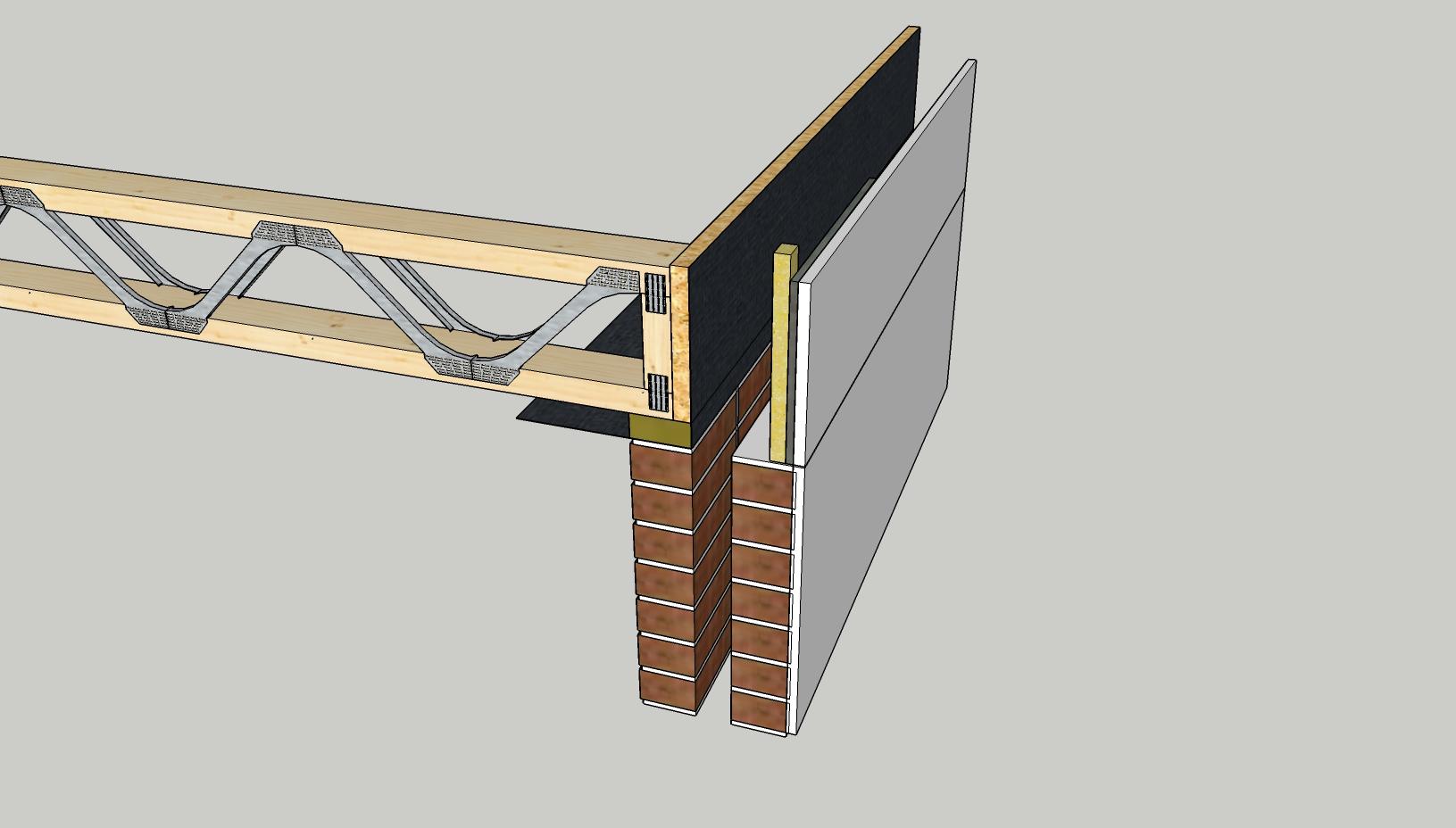
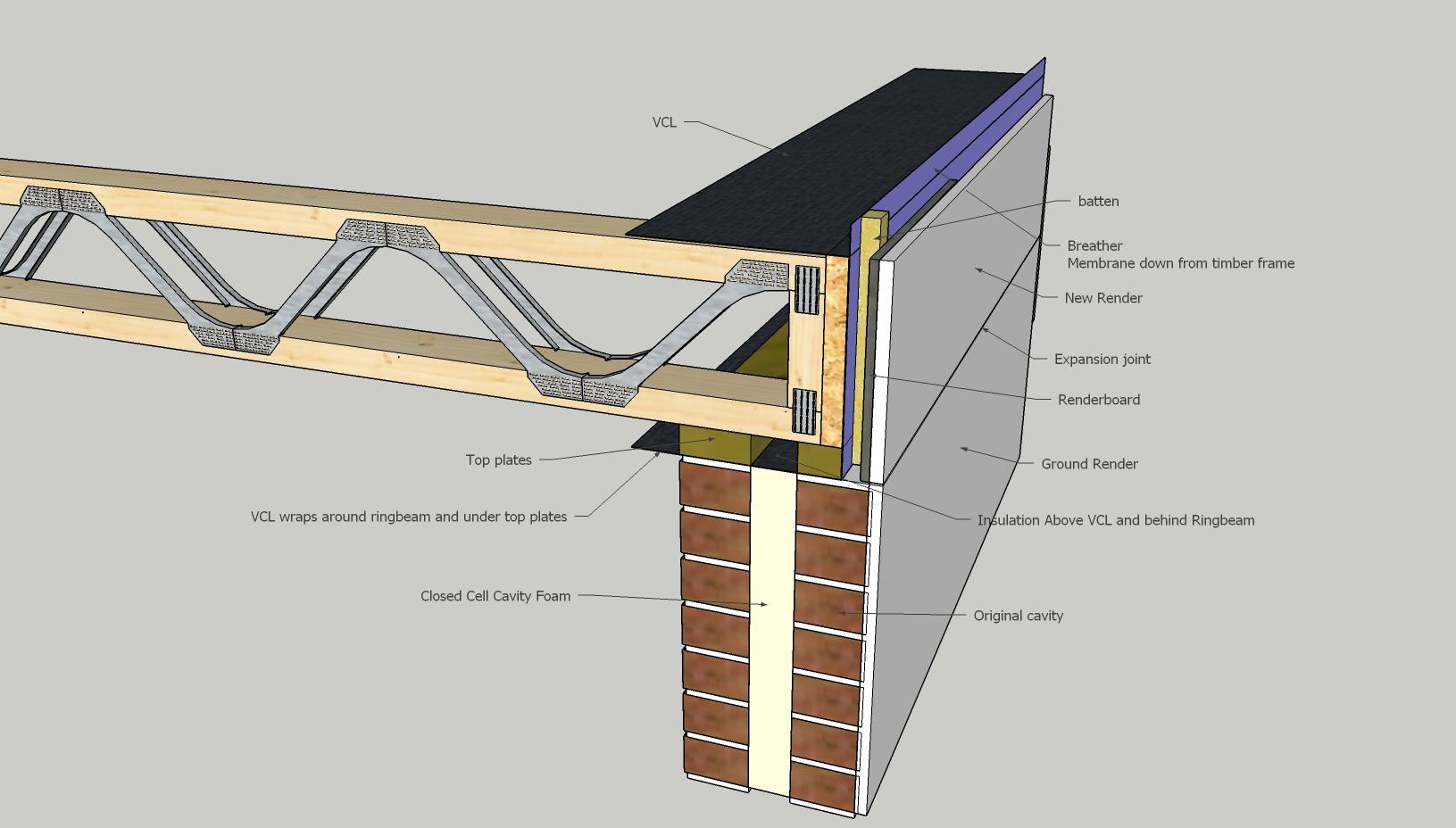
Hi JohnMo, Thanks for the response and interest. I am not sure how that applies directly to my query though. I dont want to site the ringbeam on the inner leaf (1st picture i inserted) as it creates a large void over the cavity that has to be spanned somehow to present a flush finish with the ground floor, essentially will need another brick course outer leaf, something i would like to avoid. I would like to span the cavity with the floor joist if possible, then i can present the ring beam closer to the outside wall to batten/renderboard or woodfibre sheath and render. I guess you have no cavity to span with ICF?
-
Couple of diagrams i made to highlight, top with the 'void' lower with what I would like to do.
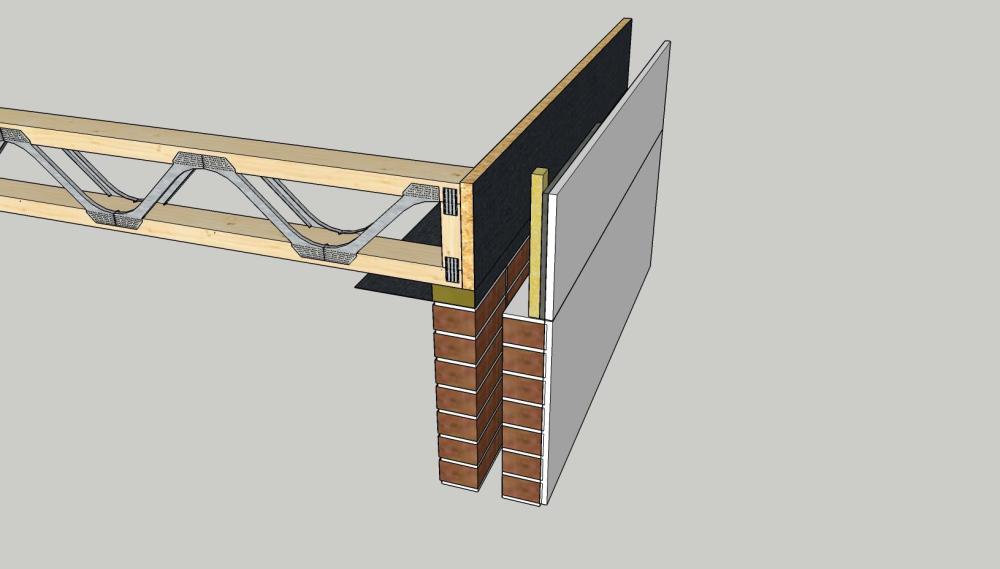
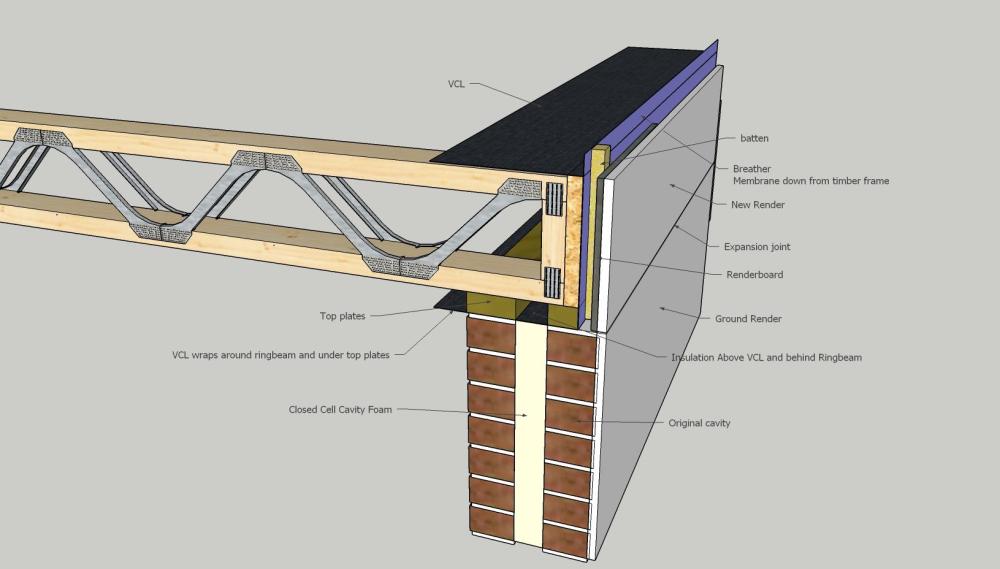
-
Hi Oldkettle, everyone, not sure if you will be able to answer 8 years later but what did you go with. Have planning and I am looking to do the same thing with our bungalow (standard inner/outer single brick cavity wall) and scratching my head over timber frame positioning and build up. If i need to stay off the outer leaf (don't really see why there's concrete footing under both leafs) then have to absorb ~190mm (less batten/renderboard/render) from the outside render finish on the ground floor. I could fill this with PIR (seems counter intuitive as then there is a breather membrane in most designs) or perhaps woodfibre (breathable) and direct render onto that (seems a good option although maybe expensive). If position over the outer leaf is not an issue then some of this headache goes away..maybe? Any help appreciated!